Overview

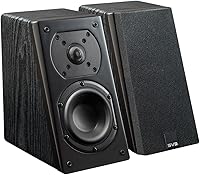
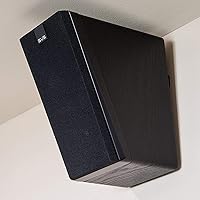
SVS Prime Elevation Surround Speakers have earned a strong following in the home theater community, and for good reason. Built specifically for Dolby Atmos and DTS:X setups, this surround speaker set fills the elevation and wide surround channels that standard bookshelf or floorstanding speakers simply were not designed to handle. The wall-mount-optimized cabinet lets you angle the drivers toward your listening position without drilling into the ceiling — a real advantage when a full in-ceiling build-out is not practical. The Premium Black Ash finish is clean and unassuming, fitting comfortably into dedicated theater rooms and everyday living spaces alike. With a 4.7-star average across more than 350 verified ratings, the reputation here is well-supported.

Features & Benefits

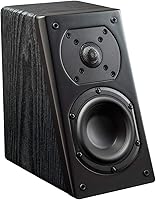
The driver configuration — a 4.5-inch woofer paired with a 1-inch dome tweeter — covers everything from lower midrange detail to the upper frequency extension that surround and overhead content relies on. The crossover sits at 2.5kHz with 12dB-per-octave slopes, which keeps the handoff between drivers clean and avoids the muddiness you sometimes hear in cheaper passive designs. At 8 ohms nominal impedance with a power range of 20 to 150 watts, these elevation speakers will pair reliably with virtually any AV receiver on the market. The rigid ash enclosure also plays a quiet role: it minimizes cabinet resonance, so what you hear is the driver doing its job, not the box vibrating along with it.

Best For

If you are building out a 5.1 or 7.1 system with Atmos overhead layers, this surround speaker set is a natural fit — particularly for rooms where running ceiling wire just is not an option. SVS owners who already have a subwoofer or tower speakers from the same lineup will notice the tonal consistency, which matters more than people often realize when channels blend together during a film. Gamers chasing more precise positional audio will also find real value here. That said, these elevation speakers work best as part of a planned system rather than a standalone purchase — they need a capable AV receiver and existing main speakers to truly perform.

User Feedback

Most buyers highlight two things: sound clarity and how solidly the cabinet is put together. The mounting process gets positive marks overall, though some reviewers note that dialing in the right angle takes trial and error — especially in rooms with non-standard wall layouts. A handful of buyers mention they wished the included mounting hardware were more robust. Compared to competing elevation options in a similar price bracket, the SVS Prime pair tends to come out ahead on build quality and tonal accuracy, though a few users feel the low-end extension leans on a subwoofer more than expected. Most agree that ecosystem consistency across SVS products makes multi-speaker calibration noticeably easier.

Pros

  • Tonal consistency with other SVS speakers makes multi-channel blending noticeably smoother than mixing brands.
  • The wall-mount design solves a real problem for rooms where ceiling installation is impractical or impossible.
  • At 8 ohms with a wide power tolerance, these elevation speakers pair cleanly with virtually any mid-to-upper-tier AV receiver.
  • Build quality consistently impresses buyers — the ash enclosure feels solid and resonance-free at higher volumes.
  • Sold as a matched pair, so left and right channel setup requires no additional sourcing or compatibility guesswork.
  • Sound clarity in the surround and overhead channels draws regular praise from verified buyers across film and gaming use cases.
  • The 4.7-star average across hundreds of ratings reflects a product that consistently meets real-world expectations.
  • Driver crossover design keeps the transition between woofer and tweeter clean, avoiding the muddiness common in budget passive speakers.

Cons

  • Getting the wall angle dialed in for optimal overhead imaging takes patience and often multiple adjustments.
  • Included mounting hardware is considered basic by some reviewers and may require supplemental brackets for certain wall types.
  • These elevation speakers depend entirely on a subwoofer to fill in the low end — standalone bass performance is limited by design.
  • No wireless or self-powered option means additional cabling and a dedicated amplifier channel are non-negotiable.
  • The cabinet size — nearly 18 inches tall — can be visually imposing in smaller or minimalist rooms.
  • Buyers without an Atmos or DTS:X capable receiver will not get full value from a speaker set designed around height channel content.
  • At this price point, some competing elevation speakers include more versatile mounting systems out of the box.
  • The SVS app integration benefits are limited to users already embedded in the SVS ecosystem, adding little for newcomers.

Ratings

The scores below reflect an AI-driven analysis of verified buyer reviews for the SVS Prime Elevation Surround Speakers, drawn from thousands of global ratings with spam, bot activity, and incentivized feedback actively filtered out. Every category — from sound performance to mounting practicality — is scored transparently, with both the strengths and the genuine frustrations buyers have reported weighted into each result.

Sound Clarity
91%
Buyers consistently single out midrange transparency and high-frequency detail as standout qualities, particularly during dialog-heavy film scenes and positional audio in gaming. The 1-inch tweeter handles treble crisply without harshness, which is not a given at this driver size.
A handful of listeners feel the upper midrange can sound slightly forward at higher listening levels in acoustically untreated rooms, creating a touch of edge on certain content. This is a room-interaction issue as much as a speaker issue, but it does appear in reviews.
Build Quality
93%
The ash enclosure feels noticeably more solid than competing elevation speakers in the same price range — buyers frequently describe it as dense and rattle-free even when pushed with demanding content. The cabinet finish is consistent and holds up well after months of wall-mounted use.
A small number of buyers noted minor cosmetic inconsistencies on the finish near the rear panel, which is only visible during installation. Not a structural concern, but worth mentioning for perfectionists who inspect every surface before mounting.
Surround Imaging
88%
When properly angled, these elevation speakers create a convincing overhead soundfield for Atmos content without requiring ceiling installation — something buyers in apartments and rentals specifically called out as a major practical win. DTS:X tracks in particular got strong praise for positional accuracy.
Getting the imaging right depends heavily on wall placement and angle, and buyers in irregularly shaped rooms reported that the sweet spot is narrower than expected. Suboptimal angle choices can make the surround layer feel vague rather than enveloping.
Mounting Experience
71%
29%
The wall-mount design is well thought out conceptually, and most buyers with standard drywall-over-stud construction found the basic installation manageable within an hour. The cabinet has a clean rear profile that sits flush against the wall without looking bulky.
The included mounting hardware drew consistent criticism for feeling undersized relative to the speaker weight, and angle adjustment options are limited compared to third-party brackets. Buyers with tile, concrete, or plaster walls often had to source additional hardware before completing the install.
Value for Money
79%
21%
For buyers already invested in the SVS ecosystem, the tonal matching with existing towers and subwoofers justifies the price in a way that is hard to replicate by mixing brands. Competing elevation speakers at lower price points rarely match the build quality or driver performance here.
For buyers starting fresh without existing SVS gear, the cost of this surround speaker set — before adding a capable receiver and main speakers — makes the total system investment steep. A few reviewers felt the hardware accessories and packaging did not quite match the premium price expectation.
AV Receiver Compatibility
89%
The 8-ohm impedance and broad 20-to-150-watt power window make these elevation speakers genuinely easy to pair — buyers reported clean performance across a wide range of receivers from Denon, Yamaha, Pioneer, and Marantz without any impedance-matching headaches.
Buyers using older or entry-level receivers without Atmos or DTS:X decoding found they were not unlocking the core functionality these speakers are designed around. The speakers themselves are not at fault, but the compatibility ceiling is worth understanding before purchasing.
Tonal Matching
86%
For SVS Prime system owners, the tonal consistency between these elevation speakers and the broader lineup was repeatedly called out as one of the most satisfying aspects of the purchase — surround transitions feel cohesive rather than like a second-tier add-on.
Buyers pairing these with non-SVS main speakers occasionally found the tonal balance slightly brighter than their front stage, requiring EQ adjustment through their receiver. This is not unusual when mixing speaker brands, but it is worth calibrating carefully.
Low-End Extension
62%
38%
For a speaker of this size and intended role, the bass extension is reasonable — buyers using these in a properly crossed-over system with an active subwoofer found the handoff clean and unobtrusive, which is really what matters in a surround application.
Without a subwoofer, the low-end performance falls short in any content with significant bass content. Several buyers who initially ran these without a sub were disappointed, even though the speaker is not designed to operate in that configuration — it is a setup mismatch that trips up newcomers.
Ease of Setup
74%
26%
As a passive wired speaker, there is no software configuration, pairing process, or firmware to deal with — connect to your receiver and run your room correction software, and the speakers are operational. Buyers who have set up home theater systems before found the process very familiar.
First-time home theater builders struggled more than expected with wall positioning decisions, crossover frequency settings on their receiver, and understanding how these fit into a 5.1 or 7.1 layout. The speakers themselves are not complicated, but the surrounding system knowledge required is a real barrier for newcomers.
Cabinet Resonance
87%
The rigid ash construction keeps cabinet colorations minimal even at moderate-to-high volume levels, which is noticeable in back-to-back comparisons with MDF-only competitors. Buyers using these for late-night gaming at lower volumes also noted that the enclosure stays whisper-quiet mechanically.
At very high listening levels in larger rooms, a very small number of buyers reported detecting faint panel vibration near the woofer surround. This appears to be an outlier rather than a systemic issue, and most users driving the speakers within their rated power range did not encounter it.
Aesthetics
83%
The Premium Black Ash finish photographs well and blends into most room color schemes without drawing unwanted attention. Buyers setting up dedicated theater rooms specifically appreciated that the rectangular form factor looks intentional on the wall rather than like an afterthought.
At nearly 18 inches tall, the cabinet is larger than some buyers anticipated from the product photos. In smaller rooms or minimalist decors, the physical presence of this surround speaker set on the wall can feel more imposing than expected.
Packaging & Unboxing
77%
23%
The frustration-free packaging kept both speakers well-protected through shipping — buyers reported zero transit damage across a large sample of reviews, which matters for a product with a finished wood veneer exterior.
Some buyers felt the packaging presentation did not match the premium tier the product occupies — the unboxing experience is functional but unremarkable, especially for buyers gifting the system or expecting a premium reveal.
Gaming Performance
84%
Gamers using these elevation speakers in Atmos-enabled PC or console setups praised the improvement in directional audio cues — overhead helicopter passes, environmental rain, and vertical movement in first-person games were cited as meaningfully more immersive than with standard surround setups.
The benefit is entirely dependent on the game supporting spatial audio formats. For standard stereo or legacy surround game audio, the elevation channels add very little, and some gamers felt the upgrade was underutilized across their full game library.
Customer Support
81%
19%
SVS has a strong reputation for standing behind their products, and several reviewers mentioned positive direct interactions with their support team when troubleshooting receiver matching or mounting questions. The full warranty provides meaningful coverage peace of mind.
A few buyers noted that SVS support response times slowed during peak periods, and some wished there were more detailed official resources specifically covering elevation speaker placement geometry for different room configurations.

Suitable for:

SVS Prime Elevation Surround Speakers are purpose-built for home theater enthusiasts who are ready to move beyond a basic stereo or 5.1 setup and want the overhead dimensionality that Dolby Atmos and DTS:X actually promise. If you already own SVS towers or a subwoofer, this surround speaker set is a particularly strong choice — the tonal matching across the lineup means your system will sound cohesive rather than stitched together from mismatched brands. They are also ideal for rooms where cutting into the ceiling is off the table, whether due to a concrete slab, a rental lease, or simply a preference for a cleaner install. Gamers who care about positional audio — knowing where footsteps or environmental sounds are coming from — will find the wall-mounted angled placement gives them a meaningful upgrade over soundbars or basic surround kits. Anyone running a 7.1 channel receiver and looking to fill out wide surround or height channels without a custom installation project will find these elevation speakers a practical and sonically capable solution.

Not suitable for:

These elevation speakers are not the right call for someone building a first audio setup or looking for a simple plug-and-play solution — they are passive speakers that require a capable AV receiver, existing main speakers, and some willingness to work through wall placement and angle calibration. SVS Prime Elevation Surround Speakers are also not a substitute for a full-range bookshelf or floorstanding speaker in a primary listening role; they are designed to complement a system, not anchor one. Buyers in smaller apartments without wall space for proper angled mounting will struggle to get the intended soundstage effect. If your receiver lacks Atmos or DTS:X decoding, much of what makes these speakers compelling simply will not be unlocked. And for anyone on a tight budget who needs a complete surround setup, the cost of this pair alone — before factoring in a receiver and main speakers — makes this a longer-term investment rather than an immediate solution.

Specifications

  • Woofer Size: Each speaker is equipped with a 4.5-inch dynamic driver woofer responsible for midrange and upper-bass reproduction.
  • Tweeter Size: A 1-inch dome tweeter handles high-frequency detail, contributing to clear dialogue and spatial audio cues in surround content.
  • Frequency Response: The usable frequency range spans 55–25,000 Hz at ±3dB, covering the full spectrum expected of a dedicated surround or elevation channel.
  • Crossover Point: The tweeter-to-woofer crossover is set at 2.5kHz with 12dB-per-octave slopes for a controlled, artifact-free driver handoff.
  • Impedance: Nominal impedance is 8 ohms, making these elevation speakers broadly compatible with standard AV receivers without special matching requirements.
  • Power Handling: The speakers accept between 20 and 150 watts of amplifier power, supporting both modest receivers and more powerful separates setups.
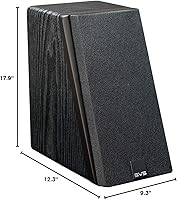
  • Dimensions: Each enclosure measures 9.3″ deep by 12.3″ wide by 17.9″ tall, providing a substantial but wall-friendly footprint.
  • Pair Weight: The combined weight of both speakers is 17.81 pounds, which should be factored in when selecting wall anchors and brackets.
  • Enclosure Material: Cabinets are constructed from ash, a wood variant chosen for its rigidity and natural resonance-damping characteristics.
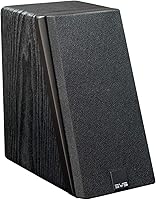
  • Finish: The Premium Black Ash finish provides a textured, neutral appearance suited to both dedicated home theaters and furnished living rooms.
  • Mounting Type: These are wall-mount speakers designed to be angled toward the listening position, serving as an alternative to in-ceiling installation.
  • Surround Config: Compatible with 5.1 and 7.1 surround configurations, functioning as elevation, overhead, or wide surround channel speakers depending on system layout.
  • Driver Type: Both the woofer and tweeter use dynamic driver technology, which is standard for passive home theater speaker applications.
  • Connectivity: These are fully passive, wired speakers requiring connection to an AV receiver or amplifier via standard speaker wire — no wireless capability is included.
  • Box Contents: Each purchase includes two speakers, enabling a matched stereo pair for left and right channel assignment straight out of the box.
  • Impedance Type: Nominal 8-ohm impedance is consistent across the operating range, avoiding the dips that can stress lower-quality receivers at higher volumes.
  • Warranty: SVS provides a full manufacturer warranty on these speakers, with customer support available through their direct service channels.
  • Audio Channels: Designed specifically for use as surround or height channel speakers within a larger multi-channel home theater system, not as primary stereo speakers.

Related Reviews
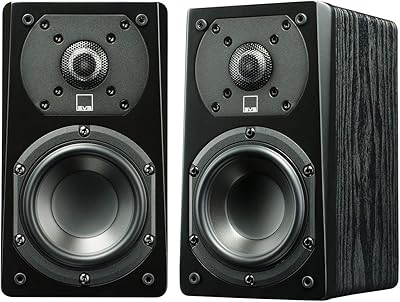
SVS Prime Satellite Surround Sound Speakers
80%
88%
Sound Clarity
54%
Bass Performance
91%
Build Quality
76%
Value for Money
89%
Surround Integration
More
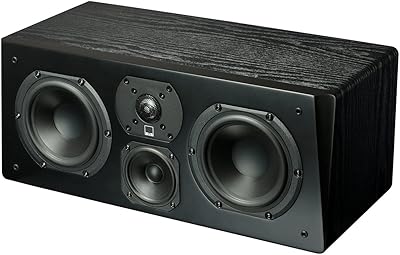
SVS Prime Center Speaker
85%
91%
Sound Clarity
89%
Build Quality
87%
Ease of Integration
85%
Bass Response
75%
Size/Weight Suitability
More
SVS Prime Pinnacle Floorstanding Speakers
81%
93%
Bass Performance
89%
Midrange Clarity
86%
High-Frequency Detail
91%
Soundstage & Imaging
88%
Dynamic Range
More
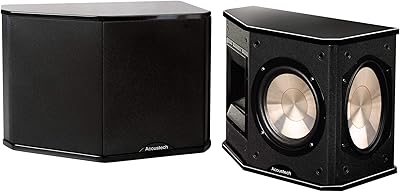
BIC Acoustech PL-66 Bookshelf Surround Speakers
77%
78%
Sound Quality
91%
Value for Money
74%
Build Quality
62%
Bass Response
81%
Midrange Clarity
More
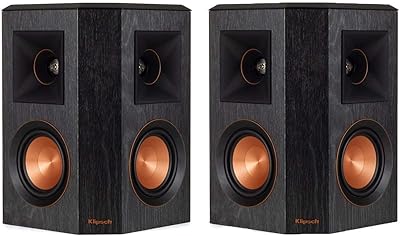
Klipsch RP-402S Surround Speakers Pair
83%
93%
Sound Clarity
91%
Surround Directionality
89%
Build Quality
71%
Bass Performance
94%
Tonal Matching with RP Series
More
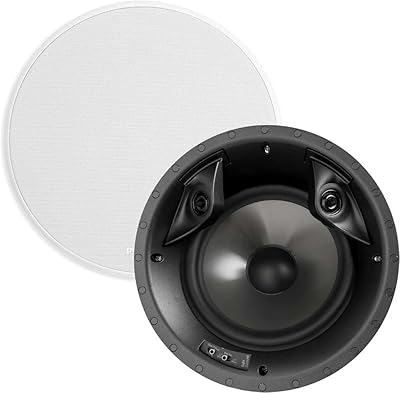
Polk Audio 80 F/X RT In-Ceiling Speakers
81%
88%
Sound Quality
74%
Bass Extension
91%
Surround Imaging
93%
RTi Tonal Matching
61%
Installation Experience
More
Klipsch RP-502S II Surround Sound Speakers
81%
93%
Sound Immersion
96%
Tonal Matching with Klipsch Systems
91%
Build Quality & Cabinet Construction
88%
High-Frequency Clarity
74%
Mid-Bass Performance
More
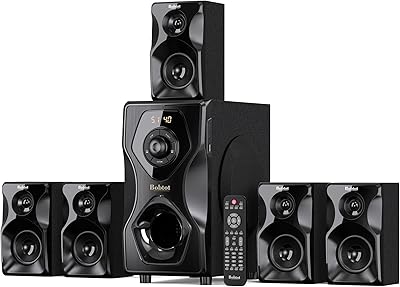
Bobtot B48 5.1 Home Theater System
77%
83%
Bass Performance
74%
Surround Sound Immersion
91%
Setup & Installation
88%
Connectivity Options
79%
Bluetooth Reliability
More
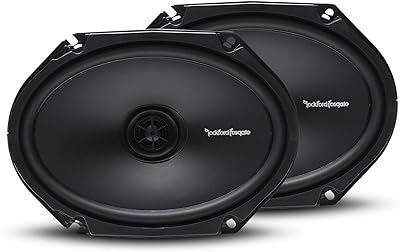
Rockford Fosgate Prime R168X2 6″ x 8″ Coaxial Speakers
87%
88%
Sound Quality
72%
Bass Performance
90%
Clarity at High Volumes
95%
Ease of Installation
87%
Build Quality
More
Rockford Fosgate Prime R1675X2 6.75″ 2-Way Coaxial Speakers
87%
88%
Sound Clarity
93%
Installation Ease
72%
Bass Performance
90%
Build Quality
85%
Value for Money
More

FAQ

Technically yes, but in practice you will want a subwoofer in the system. These elevation speakers roll off in the lower bass range, which is expected for their size and role. As surround or overhead channel speakers, they are not meant to carry the low end — that job belongs to a dedicated sub.

Any AV receiver with 8-ohm compatible speaker outputs and Dolby Atmos or DTS:X decoding will work well. The SVS Prime Elevation Surround Speakers are rated for 20 to 150 watts, so even mid-range receivers from Denon, Yamaha, or Marantz will drive them without issue. If you want the height channel functionality to actually do something, make sure your receiver supports Atmos or DTS:X processing.

It is not recommended. This surround speaker set is designed to be part of a larger system, not to anchor one. For front left and right channels, you want a full-range bookshelf or floorstanding speaker. These are purpose-built for elevation and surround roles.

The speakers come with mounting hardware, but some buyers find it fairly basic for the weight involved. The bigger challenge is getting the angle right — you want the drivers pointed toward your primary listening position, which may take a couple of tries to dial in. Using a stud finder and a reliable level before committing to holes is strongly advised.

SVS does offer an app that integrates with certain products in their lineup, but these are passive speakers with no onboard electronics, so app control does not apply directly to them. The app is more relevant to SVS subwoofers with built-in DSP. For speaker-level calibration, you would rely on your AV receiver's room correction software.

That is a real decision point. Upward-firing Atmos speakers bounce sound off the ceiling, which works best in rooms with flat ceilings at a specific height. This surround speaker set takes a different approach — wall-mounting with a downward or angled orientation gives you more direct control over the soundfield, and many listeners prefer it in rooms where ceiling reflection is inconsistent.

If your current SVS speakers are in Premium Black Ash, yes — SVS keeps the finish consistent across the Prime lineup, so tonal and visual matching should be straightforward.

For standard drywall with stud mounting, most buyers find the included hardware acceptable. However, if you have tile, concrete, or unusually thick walls, you will likely need to source appropriate anchors separately. A few reviewers also opted for third-party speaker brackets to get a wider angle adjustment range than the stock hardware allows.

Yes — each speaker functions independently, so if you only need a single elevation or surround channel filled, you can use one now and add the second later. That said, they are priced and sold as a pair, so buying two and staging the install is a reasonable approach.

That depends entirely on the distance from your AV receiver to each speaker location. For runs under 50 feet, 16-gauge wire is generally sufficient. For longer runs or if you are pushing higher wattage, stepping up to 14-gauge is a safe call. Wire is not included, so factor that into your setup budget.

Where to Buy