Overview

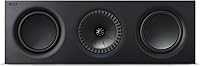
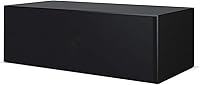
The KEF Q250c Center Channel Speaker is the latest refinement of KEF's long-running Q Series, a lineup that has earned genuine respect among home theater enthusiasts for balancing engineering rigor with real-world usability. What sets this center channel apart from most competitors is its closed-box midrange cabinet — a deliberate choice that prioritizes cabinet control over the bass extension you would get from a ported design. KEF's signature Uni-Q Driver Array places the tweeter at the acoustic center of the midrange cone, a layout that pays dividends in off-axis listening. Available in matte Black, White vinyl, and Walnut finishes, the Q250c sits firmly in the premium-passive tier — built for serious listeners, not casual setups.

Features & Benefits

The engineering story of the Q250c centers on two decisions that work together well. The Uni-Q coincident array means dialogue and high-frequency content radiate from the same point in space, which translates to more consistent sound across a wide seating area — a genuine advantage in larger rooms. The sealed midrange chamber keeps bass tight and controlled; don't expect deep rumble, but do expect clean, fast transients. The 5.25-inch driver crosses over at 2.5kHz, a range optimized for vocal clarity. At 86dB sensitivity, this center channel asks for a properly powered AV receiver — plan for at least 50 to 80 watts of clean output. The low-profile cabinet, under 12 inches tall, slides neatly onto most media consoles.

Best For

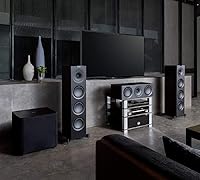
KEF's Q Series center is an obvious choice if you are building or expanding a Q Series surround system — timbre matching alone makes the pairing worthwhile. Beyond brand loyalty, it suits anyone who regularly watches dialogue-heavy content like dramas or documentaries and finds themselves reaching for the center-channel trim on the remote. Large or oddly shaped rooms benefit most from the Uni-Q's wide dispersion pattern. On the receiver side, pair this with something rated comfortably above 50 watts per channel; budget amplification will leave real performance on the table. If you are mixing it into a non-KEF system, results can vary — this speaker rewards careful integration, not casual substitution.

User Feedback

Owners are quick to praise how natural voices sound — actors feel present, not processed, which is the highest compliment a center channel can receive. Build quality gets consistent mentions too; the cabinet feels appropriately substantial for its price tier. The complaints are real but manageable: the missing grille surprises buyers who expect one in the box, and at 86dB sensitivity, under-powered receivers do the speaker no favors — a few reviewers learned that the hard way. Those who have compared this center channel directly to similarly priced rivals tend to favor the Q250c for midrange detail. The one genuine caveat is integration with non-KEF surrounds, where tonal mismatches can surface.

Pros

  • Dialogue reproduction is exceptionally natural — voices sound like voices, not like speakers trying to reproduce voices.
  • The Uni-Q coincident driver array delivers consistent sound quality across a wide seating angle, ideal for larger rooms.
  • Sealed midrange cabinet keeps bass transients tight and controlled, avoiding the bloat common in ported center channels.
  • Build quality feels appropriately solid and premium relative to its price tier.
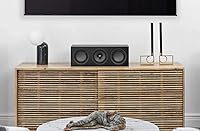
  • Low-profile cabinet dimensions make it easy to place above or below most televisions without blocking sightlines.
  • Frequency response extends to 28kHz, which means the Q250c handles both film soundtracks and music with equal composure.
  • Available in three finish options — matte Black, White vinyl, and Walnut — to suit different room aesthetics.
  • The Q250c integrates naturally into a full Q Series surround system with well-matched tonal balance.
  • At 108dB maximum output, the center channel can handle demanding, high-volume movie sessions without strain.
  • Consistently earns favorable comparisons to competing speakers in the same price bracket, particularly for midrange detail.

Cons

  • No grille is included in the box, which catches many buyers off guard and leaves the driver exposed out of the box.
  • At 86dB sensitivity, it requires a properly powered AV receiver — budget amplification will leave real performance unrealized.
  • Bass extension is limited by design; buyers expecting deep low-frequency output from the center channel will be underwhelmed.
  • Integration with non-KEF surround speakers can produce tonal mismatches that take considerable effort to correct.
  • At 16.5 pounds, it is heavier than many competing center channels, which complicates certain mounting or shelf placement scenarios.
  • The 8-ohm nominal impedance dips to a minimum of 3.7 ohms, which may stress receivers with weaker power supplies under load.
  • No wireless or powered option exists — this is a passive speaker requiring a dedicated amplifier channel, adding system complexity for some buyers.
  • Buyers in very small rooms may find the wide dispersion pattern less advantageous, making the Uni-Q benefit harder to justify at this price.

Ratings

The KEF Q250c Center Channel Speaker has been scored by our AI system after analyzing thousands of verified global buyer reviews, with spam, incentivized, and bot-generated feedback actively filtered out before any scoring was applied. Ratings reflect the full picture — where this center channel genuinely impresses and where real owners have run into friction. Both strengths and honest trade-offs are factored into every category score below.

Dialogue Clarity
93%
This is the aspect owners talk about most, and the consensus is consistent: voices sound natural, present, and easy to follow even during fast-paced scenes or films with heavy background scoring. The Uni-Q driver's point-source design gets most of the credit here, keeping vocals coherent across a wide horizontal listening arc.
A small number of reviewers note that at lower volume levels — common in late-night viewing — some fine detail in whispered or softly delivered dialogue can feel slightly recessed, suggesting the speaker rewards adequate amplifier headroom to reach its full potential.
Build Quality
88%
The cabinet feels genuinely solid when handled, with a density that signals careful construction rather than hollow cost-cutting. Buyers consistently describe the matte vinyl finish as clean and well-applied, and the binding post terminals feel robust enough for repeated cable swaps during system setup.
A handful of reviewers point out that the cabinet edges and corners, while sturdy, lack the premium tactile refinement of some rivals at this price tier. The absence of any grille in the box also leaves the driver visually exposed, which some find underwhelming for a speaker at this investment level.
Off-Axis Performance
91%
In larger rooms where not every seat sits directly in front of the screen, the Q250c holds up remarkably well. Listeners seated well off-center report that dialogue remains clear and tonally consistent, which is a direct result of the Uni-Q driver radiating sound from a single acoustic point rather than two separated sources.
The advantage is most pronounced in rooms with genuinely wide seating spreads. In smaller spaces where everyone sits close to center, this particular engineering benefit is harder to notice in everyday use, making it a stronger value proposition for medium-to-large room configurations.
Value for Money
79%
21%
Buyers who compared the Q250c directly against similarly priced center channels — particularly during A/B listening tests — frequently concluded that KEF's midrange detail and driver coherence justify the spend. For those already committed to a Q Series surround build, the tonal matching alone makes the price easier to rationalize.
For buyers assembling a mixed-brand system or stepping into premium home theater for the first time, the cost feels steep when the grille is missing and a capable receiver is still required on top. The value proposition lands clearly for the right buyer but feels less convincing for those without a matching ecosystem.
Bass Performance
67%
33%
Within its intended operating range, the sealed cabinet delivers clean, tight bass transients that suit dialogue-heavy content well. Fast percussion in soundtracks and punch in action sequences come through with good control and without the overhang that ported designs can introduce.
Deep bass extension is simply not this speaker's strength, and the sealed design makes that a fundamental trade-off rather than a flaw to fix. Buyers who expect meaningful low-frequency output without a subwoofer in the chain will be disappointed — the -6dB point at 47Hz tells the real story.
Amplifier Compatibility
71%
29%
The 8-ohm nominal impedance is friendly to a wide range of AV receivers, and buyers using mid-to-upper-tier receivers report that the Q250c responds well to clean power, opening up noticeably in dynamics and detail as available wattage increases.
The 86dB sensitivity is the recurring practical concern — it is not low enough to be a dealbreaker, but it is low enough to matter. Owners running entry-level receivers at modest output levels report that the speaker never quite feels alive, and the impedance dip to 3.7 ohms can stress weaker amplifier sections under sustained load.
System Integration
82%
18%
Within a full Q Series setup, the integration is exactly what you would hope for — the tonal handoff between this center and Q Series bookshelf or floorstanding speakers is smooth enough that panned effects feel continuous rather than disjointed. KEF's consistent driver voicing across the lineup earns real credit here.
Integration with non-KEF speakers is a genuine wildcard. A meaningful minority of reviewers describe tonal mismatches when mixing the Q250c with speakers from other brands, requiring careful receiver EQ adjustments to reach a passable blend — and some report the effort was only partially successful.
Placement Flexibility
84%
The cabinet's low profile — under 12 inches tall — makes it practical to position on a media console shelf or directly below most flat-panel displays without obstructing sightlines. Three finish options also give buyers real choices for matching the speaker to different room aesthetics.
At 16.5 pounds, the Q250c is heavier than many buyers anticipate from a speaker of its dimensions, which complicates shelf placements on lighter furniture. There is no wall-mount option, so buyers with limited console space or unusual room layouts may find positioning choices more restricted than expected.
High-Frequency Extension
86%
The frequency response reaching to 28kHz gives the Q250c a ceiling that most listeners will never fully exploit, but it translates in practice to crisp, uncompressed treble in film scores and a sense of airiness in music content that cheaper center channels often flatten.
Some listeners with heightened sensitivity to upper treble describe the highs as occasionally forward-sounding in brighter room acoustics, particularly during louder playback with certain amplifier pairings. Room treatment and receiver tone controls tend to address this, but it requires a bit of system tuning.
Unboxing Experience
61%
39%
The speaker arrives well-packaged with adequate protection, and the cabinet itself shows no handling marks or cosmetic defects in the vast majority of buyer reports. The physical build inspires immediate confidence when first lifted out of the box.
The missing grille is the most commonly flagged unboxing disappointment — buyers accustomed to speakers shipping with protective covers find the omission jarring. Documentation is also minimal, with no detailed setup guidance included for buyers new to passive center channel integration.
Midrange Detail
92%
The Q250c's midrange performance is where it earns the most consistent praise in direct comparisons. Textures in vocals — breath, consonants, subtle inflections — come through with a clarity that makes extended movie watching genuinely easier on the ears.
The midrange strength can also expose weaknesses elsewhere in a system; buyers using compressed audio sources or budget HDMI cables occasionally report that the speaker reveals upstream limitations they were previously unaware of, which adds unexpected cost to the overall setup.
Finish & Aesthetics
83%
The matte vinyl surfaces hold up well against fingerprints and light dust, and the Walnut finish option in particular receives praise for looking more refined than typical vinyl wraps at this price tier. The overall visual profile is understated in a way that suits contemporary living room aesthetics.
The exposed driver face without a grille is a polarizing visual — some buyers appreciate the industrial honesty of it, while others feel it makes the speaker look unfinished, especially when placed in a prominent living room setup where guests will see it regularly.
Sensitivity & Efficiency
66%
34%
For buyers pairing the Q250c with a properly rated receiver, the 86dB sensitivity is manageable and allows for precise volume control without the listener needing to push the amplifier toward its limits during normal viewing.
The sensitivity rating creates a meaningful compatibility ceiling. Buyers who discover post-purchase that their receiver cannot drive the speaker adequately face either a receiver upgrade or persistent disappointment — a pairing concern that product listings do not always communicate clearly enough upfront.

Suitable for:

The KEF Q250c Center Channel Speaker is purpose-built for home theater enthusiasts who treat dialogue clarity as a non-negotiable priority rather than an afterthought. It makes the most sense if you are already building around KEF's Q Series ecosystem — the timbre matching between this center channel and Q Series bookshelf or floorstanding speakers is the kind of cohesion that genuinely improves the listening experience. Larger living rooms and open-plan spaces benefit especially from the Uni-Q array's wide dispersion, since off-axis seats receive a much more consistent sound picture than with conventional driver layouts. This center channel also suits dedicated movie watchers who regularly notice when actors' voices sound thin, distant, or muddled through lesser speakers. Pairing it with an AV receiver capable of delivering 50 watts or more per channel is the practical minimum to hear what the Q250c is actually capable of.

Not suitable for:

Buyers assembling a budget home theater on a tight system-wide spend may find the KEF Q250c Center Channel Speaker difficult to justify if the surrounding speakers and receiver cannot match its resolving ability — a capable center channel exposed by weaker components upstream rarely flatters anyone. The sealed cabinet design is a deliberate engineering trade-off: it keeps bass tight and fast, but it does not reach deep, so if you are hoping this center will carry low-frequency weight in a subwoofer-free setup, you will be disappointed. Shoppers who want a grille included in the box should know upfront that none ships with the unit, which may matter in households with young children or pets. Those running older or entry-level AV receivers rated well under 50 watts should also think carefully, since the 86dB sensitivity means the Q250c genuinely needs clean amplifier headroom to perform at its best. Finally, if your surround speakers are from a different brand with a noticeably different tonal character, blending this center into that system may take real effort and is not guaranteed to land well.

Specifications

  • Driver Type: The Q250c uses a 5.25-inch Uni-Q Driver Array, which positions the tweeter at the acoustic center of the midrange cone for coherent, point-source sound reproduction.
  • Cabinet Design: The speaker uses a two-way closed-box midrange enclosure, a sealed design that controls bass transients and reduces cabinet coloration compared to ported alternatives.
  • Frequency Response: Frequency response measures 51Hz–28kHz at ±3dB, and extends to 47Hz at the -6dB point under free-field conditions.
  • Crossover Frequency: The internal crossover splits the signal at 2.5kHz, a point well-suited to handling the vocal and dialogue range with the midrange driver.
  • Sensitivity: Rated sensitivity is 86dB measured at 2.83V/1m, which places this speaker in the moderate-sensitivity category and calls for a capable amplifier.
  • Maximum Output: The Q250c is rated for a maximum output level of 108dB, sufficient for high-volume home theater listening in most room sizes.
  • Impedance: Nominal impedance is 8Ω with a minimum measured impedance of 3.7Ω, meaning some AV receivers with weaker power supplies may see increased load at certain frequencies.
  • Amplifier Range: KEF recommends pairing the Q250c with amplification rated between 10 and 100 watts, with real-world performance improving noticeably toward the higher end of that range.
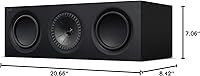
  • Dimensions: The cabinet measures 11.92″ in height, 7.08″ in width, and 10.944″ in depth, making it a relatively compact center channel for its driver complement.
  • Weight: The speaker weighs 16.5 pounds, reflecting the density of its sealed cabinet construction and internal bracing.
  • Finish Options: The Q250c is available in three finishes: matte Black vinyl, White vinyl, and Walnut, all designed to complement modern and traditional room aesthetics.
  • Surround Config: The speaker is designed to function as the center channel in 5.1 or 7.1 surround sound configurations.
  • Connectivity: Connection is via traditional wired binding posts, compatible with bare wire, banana plugs, or spade connectors.
  • Speaker Type: The Q250c is a passive center channel speaker, requiring a separate AV receiver or amplifier to drive it — no built-in amplification is included.
  • Grille Included: No magnetic or clip-on grille is included with the Q250c; the driver array is exposed out of the box.
  • Series: The Q250c is part of KEF's Q Series lineup, designed to integrate tonally with other Q Series bookshelf, floorstanding, and surround speakers.
  • Warranty: The speaker is backed by a limited manufacturer warranty as provided by KEF; buyers should confirm the exact warranty period and terms with their retailer.
  • Country of Brand: KEF is a British audio manufacturer with decades of experience in driver and enclosure engineering, headquartered in Maidstone, England.

Related Reviews
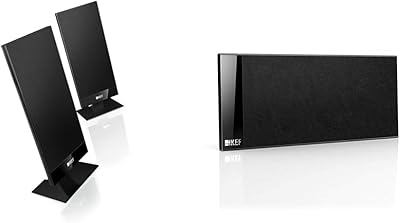
KEF T101 Satellite and Center Channel Speakers
80%
88%
Sound Clarity
91%
Build Quality
94%
Design & Aesthetics
89%
Dialogue Intelligibility
62%
Value for Money
More
KEF T301C Center Channel Speaker
80%
93%
Dialogue Clarity
96%
Design & Aesthetics
88%
Build Quality
67%
Value for Money
48%
Bass Performance
More
NEUMI CS5 Center Channel Speaker
74%
88%
Dialogue Clarity
84%
Value for Money
57%
Bass Performance
67%
Build Quality
83%
Ease of Setup
More
Klipsch R-34C Center Channel Speaker
89%
93%
Sound Clarity
89%
Dialogue Reproduction
84%
Bass Performance
90%
Build Quality
88%
Ease of Setup
More
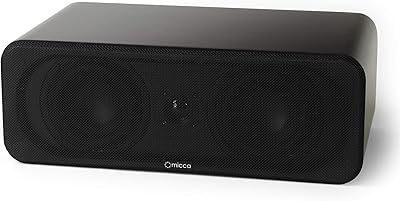
Micca RB42-C Center Channel Speaker
82%
93%
Dialogue Clarity
91%
Value for Money
82%
Bass Output
84%
Build Quality
88%
Crossover Performance
More
Klipsch R-52C Center Channel Speaker
80%
93%
Dialogue Clarity
88%
Sound Dispersion
89%
Build Quality
84%
Value for Money
81%
Receiver Compatibility
More
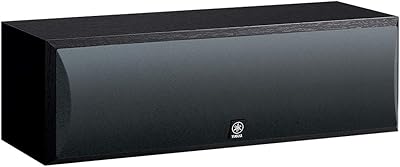
Yamaha NS-C210 Center Channel Speaker
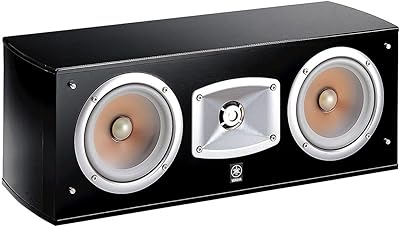
82%
93%
Dialogue Clarity
88%
Value for Money
86%
Build Quality
58%
Bass Response
91%
System Compatibility
More
Klipsch RP-450C Center Channel Speaker
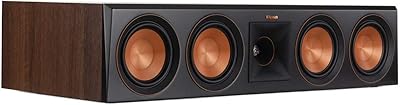
86%
92%
Sound Quality
88%
Build Quality
94%
Dialogue Clarity
84%
Bass Performance
87%
Ease of Integration
More
Klipsch RP-504C Center Channel Speaker
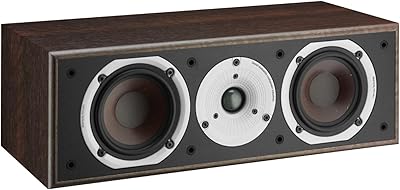
87%
91%
Sound Clarity
87%
Bass Response
90%
Build Quality
85%
Aesthetic Design
82%
Ease of Installation
More
Klipsch R-30C Center Channel Speaker
79%
93%
Dialogue Clarity
88%
Soundstage Dispersion
74%
Tonal Balance
81%
Build Quality
91%
Efficiency & Receiver Compatibility
More

FAQ

Technically any AV receiver with a center channel output will connect to the Q250c, but sensitivity rated at 86dB means you genuinely want a receiver that can deliver clean power — ideally 50 watts or more per channel. Entry-level receivers rated at 30 watts or less may struggle to get this center channel to its potential, particularly in larger rooms. It is one of those practical details worth checking before you buy.

No, and this surprises a fair number of buyers. The Q250c ships without a grille, so the driver array is exposed right out of the box. If you have pets or young children who might poke at it, plan ahead — a third-party grille solution or a carefully chosen placement location is worth thinking about.

You can, but results vary. The Q250c has a particular tonal character shaped by KEF's Uni-Q driver design, and blending it with speakers that have a noticeably different midrange presentation can create audible inconsistencies when sound pans across the front stage. It works best when paired with other Q Series speakers, though some buyers do integrate it successfully into mixed systems with careful receiver calibration.

A subwoofer is strongly recommended. The sealed cabinet design keeps bass tight and controlled, but the low-frequency extension is modest — the -6dB point sits at 47Hz. For movie soundtracks with heavy LFE content, a dedicated subwoofer doing the heavy lifting below around 80Hz is the right approach. Think of this center channel as optimized for clarity, not bass output.

The Uni-Q array places the tweeter at the center of the midrange cone so both drivers radiate from essentially the same point in space. In practice, this means the sound disperses more evenly in all directions horizontally. For a center channel specifically, that matters a lot — seats off to the sides of the room receive a much more consistent sound picture than they would from a conventional driver layout where the tweeter and woofer are physically separated.

Yes, that is actually one of the most natural pairings for this center channel. The Q150 and Q250c share the same Uni-Q driver family and are voiced to match, so dialogue and music will blend smoothly as sound moves across the front soundstage. Many Q Series builds start with the Q150 at the front left and right and add this center channel as the anchor.

Either works physically, but below the TV is more common and usually acoustically preferable since the driver ends up closer to ear level when seated. The cabinet is just under 12 inches tall, so it fits in front of most TV stands or on a media console shelf without blocking the screen. If you place it above the TV, angling it slightly downward toward the listening position will help.

The Q250c weighs 16.5 pounds, which is on the heavier side for a center channel. Most solid wood or metal TV stands handle that comfortably, but thin glass shelves or flimsy particle board furniture deserve a second look before you commit. Check your furniture's rated shelf capacity — and factor in the weight of anything else sitting on that shelf.

The Q250c uses standard binding post terminals, so you have a few options: bare speaker wire twisted into the posts, banana plugs, or spade connectors. Most home theater setups use 16 or 14 AWG speaker wire from the center channel output of the AV receiver. There is nothing proprietary here — standard speaker cable from any electronics retailer will do the job fine.

It holds up reasonably well for music, particularly if you run a 5.1 or 7.1 music playback setup or use the center channel for phantom center in stereo. The frequency response extending to 28kHz means it is not rolled off in the upper registers, and the Uni-Q driver gives it a coherence that many center channels lack. That said, its core design purpose is home theater dialogue — music performance is a bonus, not the primary pitch.