Overview

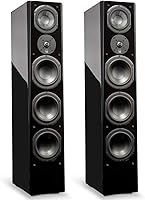
The SVS Prime Pinnacle Floorstanding Speakers sit at the top of SVS's Prime series, engineered for listeners who take their audio seriously. Worth noting upfront: this is a passive three-way design, so you'll need a capable amplifier or AV receiver to drive them — factor that into your total budget before buying. What you get in return is a speaker built to cover the full frequency range on its own, without leaning on a separate subwoofer. The piano gloss finish looks genuinely premium in person, and the physical build feels appropriately substantial. These aren't casual background speakers; they're a considered purchase for a dedicated listening space.
Features & Benefits

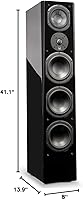
The engineering centerpiece here is how SVS stacked three 6.5-inch woofers to push bass all the way down to 29Hz — territory that usually requires a separate subwoofer. That low-end authority pairs with a 5.25-inch midrange driver that keeps vocals and instruments clean and present, never cluttered. Up top, the 1-inch aluminum dome tweeter stays composed at higher volumes, avoiding the edginess that trips up cheaper tweeters. With a 400W maximum power ceiling, SVS's flagship towers carry serious dynamic headroom for loud, complex movie soundtracks or demanding musical passages. At 41.1 inches tall, they command a room — and they're built to fill one.

Best For

These floorstanding speakers are aimed squarely at two types of buyers: stereo listeners who want deep, room-filling bass without adding a subwoofer to their chain, and home theater enthusiasts building a front stage with real output muscle. They reward proper amplifier matching — aim for around 100 to 200 watts per channel from a quality receiver or integrated amp. Placement matters too; give them at least two to three feet of clearance from the rear wall so the bass can develop naturally. Smaller or acoustically untreated rooms may find the output overwhelming rather than balanced.

User Feedback

The Prime Pinnacle pair holds a 4.7 out of 5 rating across 89 reviews, and the praise is unusually consistent for a speaker at this level. Owners repeatedly call out soundstage and imaging as standout qualities in stereo listening — the kind of three-dimensional presentation that genuinely enhances music. The low-end extension earns its own appreciation. On the downside, several buyers found that pairing these with a weak amplifier delivered flat, disappointing results. The piano gloss surface shows fingerprints easily, so careful handling during setup is worth the effort. A handful of reviewers also note a break-in period before the sound fully opens up.

Pros

  • Bass extension reaches down to 29Hz, covering low-frequency ground that most speakers in this class cannot without a subwoofer.
  • The three-way driver configuration keeps vocals, midrange detail, and treble each handled by a dedicated, purpose-built driver.
  • Soundstage and stereo imaging are standout qualities that owners consistently highlight in real-world listening.
  • A 400W power ceiling provides generous headroom for loud, dynamic movie soundtracks and complex musical passages.
  • The piano gloss finish looks genuinely high-end and holds up well as a statement piece in a dedicated listening room.
  • Works effectively as front left and right mains in a home theater setup, eliminating the need for a separate subwoofer in many room sizes.
  • At a 4.7 out of 5 rating from verified buyers, owner satisfaction is high with very little reported regret after purchase.
  • SVS's flagship towers are built with substantial physical quality — the binding posts, feet, and cabinet all feel appropriately premium at this price tier.

Cons

  • Requires a genuinely capable external amplifier to perform well — budget receivers will leave these sounding flat and uninspiring.
  • At 58 pounds per pair, setup and positioning adjustments are physically demanding and best done with a second person.
  • The piano gloss surface attracts fingerprints easily and requires regular wiping to maintain its appearance.
  • New owners may experience a noticeable break-in period before the drivers loosen up and the sound fully opens up.
  • Room placement is critical — too close to walls or in a small space, and the low-end becomes boomy rather than controlled.
  • The total cost of ownership rises significantly once you account for the amplifier or receiver needed to drive them properly.
  • With only 89 ratings, the long-term reliability picture is less established than more widely reviewed competitors at this price point.

Ratings

The scores below reflect our AI-driven analysis of verified global buyer reviews for the SVS Prime Pinnacle Floorstanding Speakers, with spam, incentivized, and bot-flagged submissions actively filtered out before scoring. Each category is graded on real ownership experiences — not marketing claims — so both the genuine strengths and the friction points that actual buyers encountered are represented transparently.

Bass Performance
93%
Owners routinely describe the low-end output as punishing in the best possible way — the kind of chest-feeling bass that typically requires a dedicated subwoofer. Movie watchers and music listeners alike report that the triple woofer array handles deep, sustained bass lines without losing composure or sounding bloated.
A small number of buyers in smaller or acoustically untreated rooms found the bass overwhelming rather than impactful, with low frequencies building up near walls and muddying the overall sound. Proper room placement is genuinely non-negotiable with these towers.
Midrange Clarity
89%
Vocal reproduction is frequently cited as a standout quality — listeners describe voices as present, natural, and clearly separated from the surrounding instrumentation. Jazz and acoustic music fans in particular appreciate how the dedicated 5.25-inch midrange driver keeps piano and guitar textures distinct and lifelike.
A handful of reviewers feel the midrange, while accurate, leans toward neutral rather than warm, which can sound slightly clinical on poorly recorded material. Buyers accustomed to speakers tuned for a more euphonic midrange character may need an adjustment period.
High-Frequency Detail
86%
The 1-inch aluminum dome tweeter keeps treble extended and detailed without tipping into the harshness that plagues cheaper metal dome designs. Listeners report that cymbal decay, string harmonics, and high-frequency layering in complex orchestral pieces come through with real precision.
A few users with brighter-sounding amplifiers noted that the tweeter can become slightly fatiguing at high volumes during extended listening sessions. Pairing with a warmer amplifier largely resolves this, but it is worth considering during system matching.
Soundstage & Imaging
91%
Wide, three-dimensional soundstage is one of the most frequently praised qualities across owner reviews. Stereo listeners describe a convincing sense of instrument placement across the room, with center images that lock in solidly rather than smearing across the front of the speaker.
Achieving the best soundstage does require careful toe-in adjustment and proper distance from side walls — out-of-the-box placement rarely delivers the full effect. Buyers who do not invest time in positioning may underrate what these speakers can actually produce.
Dynamic Range
88%
The 400W power ceiling translates into real-world headroom that owners notice during loud, sudden peaks in movies and live recordings. These floorstanding speakers handle rapid volume swings without compression or obvious strain, which makes them particularly engaging for cinematic playback.
Realizing the full dynamic capability depends entirely on the upstream amplifier — a modest receiver clips before the speakers do, artificially capping the dynamic range. This is a system-level limitation but one that directly affects the listening experience if not addressed.
Amplifier Dependency
58%
42%
For buyers who already own a capable amplifier or high-quality AV receiver, the passive design is a non-issue and actually offers flexibility in system building. Experienced audiophiles appreciate being able to choose their own amplification rather than being locked into built-in electronics.
This is the single most common pain point in buyer reviews — underpowering the Prime Pinnacle pair yields flat, lifeless sound that does not remotely reflect the speaker's capability. New buyers who underestimate the amplifier requirement frequently end up disappointed until they upgrade their source component.
Build Quality
92%
The physical construction earns consistent admiration from owners who handle these in person — the cabinets feel dense and well-damped, and the aluminum binding posts and feet add a level of tactile quality rarely found at this tier. The overall fit and finish reads as genuinely premium rather than cosmetically dressed up.
At 58 pounds per pair, repositioning the speakers once placed is a real physical effort, and solo setup is awkward. A small number of buyers also reported minor finish inconsistencies on the piano gloss surface upon unboxing, though these appear to be isolated cases rather than a systemic issue.
Finish & Aesthetics
84%
The Piano Gloss Black lacquer makes a strong visual impression in a dedicated listening room or home theater setup, and owners frequently comment that the speakers look more expensive than their price suggests. The included grilles offer a cleaner look when preferred.
The gloss finish is a fingerprint and dust magnet that requires frequent wiping to maintain its appearance, particularly in homes with children or pets. Owners in high-traffic living rooms find the upkeep noticeably more demanding than they anticipated before purchase.
Value for Money
78%
22%
Relative to what competing tower speakers deliver at a similar price point, the Prime Pinnacle pair offers a rare combination of deep bass extension, accurate tonality, and premium build that buyers consistently describe as punching above its cost. The 4.7 out of 5 satisfaction rating with minimal regret reflects that most owners feel the investment was justified.
The true cost of ownership is higher than the speaker price alone — a capable amplifier adds meaningfully to the total outlay, which can push the effective system cost well beyond what some buyers initially budget for. Those comparing sticker prices without accounting for amplification may find the value proposition harder to accept.
Setup Experience
67%
33%
Physical assembly is straightforward once the packaging is managed — attaching the feet and connecting speaker wire takes less than 30 minutes for most buyers. The included grilles fit cleanly and the binding posts accept a wide range of termination types.
Getting the most out of these speakers requires real effort in room positioning, amplifier selection, and break-in time — a process that can take days or weeks before the sound fully settles. Buyers expecting an unbox-and-enjoy experience will find the learning curve steeper than anticipated.
Break-in Period
63%
37%
Buyers who understand speaker break-in report that patience pays off — the sound becomes noticeably more relaxed, extended, and coherent after 50 to 100 hours of varied playback. Those who pushed through the initial period describe a meaningful improvement in low-end texture and overall openness.
The break-in requirement catches some buyers off guard, particularly those who audition the speakers immediately out of the box and find the sound tighter and less impressive than expected. Several reviews note initial disappointment that resolved entirely after proper run-in, suggesting this is a communication gap rather than a design flaw.
Home Theater Integration
87%
As front left and right mains in a surround configuration, SVS's flagship towers deliver the kind of output and dynamics that make movie playback genuinely immersive. Explosions, music scores, and dialogue are all handled without the need for a separate subwoofer in most room sizes.
Their size and passive nature mean integration requires planning — running speaker wire neatly to tall floor-standing towers in a furnished room takes effort, and their footprint demands a dedicated placement zone that not every living space can accommodate comfortably.
Music Versatility
88%
Owners across genres report that these speakers handle stylistic variety well — from the delicate transients of acoustic guitar to the sustained low notes of electronic music and orchestral bass drums. The three-way driver separation keeps genres from collapsing into a single homogenized sound.
The neutral, accuracy-focused tuning means these speakers are only as good as the recordings they play back — poorly mastered or heavily compressed audio will be exposed rather than flattered. Buyers who primarily listen to lower-quality streaming sources may not hear the full benefit of what the engineering delivers.
Packaging & Delivery
74%
26%
Multiple buyers note that the packaging is robust and that the speakers arrived in excellent condition, which matters significantly for a fragile piano gloss finish. The protective foam and boxing appear designed with the cabinet surface in mind.
The sheer size and weight of the shipping boxes makes delivery logistics challenging — some buyers report difficulty moving the boxes indoors alone, and freight delivery handling varies in quality depending on the carrier. A small number of unboxing complaints involve minor cosmetic transit damage.

Suitable for:

The SVS Prime Pinnacle Floorstanding Speakers are built for a specific kind of buyer: someone who is genuinely invested in high-quality audio and willing to assemble a thoughtful system around them. Stereo music listeners who want a full-range presentation without the added complexity and cost of a dedicated subwoofer will find these particularly rewarding. Home theater enthusiasts looking for authoritative, high-output front mains capable of anchoring a 3.0 or larger surround configuration will also find them well-suited to the task. These floorstanding speakers perform best in medium to large rooms where their scale and bass output can breathe properly rather than overwhelm a small space. Buyers who already own or plan to purchase a quality amplifier or AV receiver in the 100-200 watts-per-channel range will get the most out of what SVS engineered into this design.
Not suitable for:

The SVS Prime Pinnacle Floorstanding Speakers are simply the wrong tool for several common buyer profiles, and it is worth being direct about that. If you are working with a budget entry-level receiver or a low-powered integrated amp, these speakers will underperform and leave you wondering what the fuss is about — the amplifier investment is not optional. Apartment dwellers or anyone with a small listening room should also reconsider, as the output and bass extension can easily overwhelm a confined space and create more problems than they solve. Buyers looking for a plug-and-play or all-in-one audio solution should look elsewhere, since these are passive speakers that require external amplification and proper setup to function at all. Those who prioritize a warm, colored, or bass-heavy sound signature over neutral tonal accuracy may also find the Prime Pinnacle pair less immediately gratifying than alternatives tuned to flatter listeners out of the box.
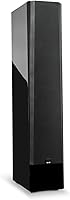
Specifications

  • Driver Config: Three-way design with a dedicated tweeter, midrange driver, and triple woofer array handling separate frequency bands.
  • Tweeter: 1-inch aluminum dome tweeter responsible for high-frequency reproduction with low distortion at elevated volumes.
  • Midrange Driver: 5.25-inch dedicated midrange driver optimized for vocal clarity and instrument separation in the critical listening range.
  • Woofer Array: Triple 6.5-inch woofer configuration delivers deep bass extension and high output without requiring a separate subwoofer.
  • Power Handling: Maximum power handling rated at 400W, providing substantial headroom for dynamic peaks in music and film playback.
  • Frequency Response: Rated frequency response of 29Hz–25kHz at +/-3dB, covering the full audible spectrum and extending into sub-bass territory.
  • Dimensions: Each speaker measures 13.9″ deep by 8″ wide by 41.1″ tall, including the grille, feet, and binding posts.
  • Weight: The pair weighs a combined 58 pounds, making careful two-person handling advisable during placement and setup.
  • Finish: Piano Gloss Black lacquer finish applied to the cabinet exterior for a premium visual appearance.
  • Connectivity: Passive speaker wire connectivity via aluminum binding posts; no built-in amplification or wireless capability.
  • Surround Config: Compatible with 3.0 and larger surround sound configurations when used as front left and right main speakers.
  • Mounting Type: Floor-standing design with aluminum feet for stability and proper decoupling from hard floor surfaces.
  • Items Included: Package contains two speakers — a matched stereo pair — along with protective grilles for each cabinet.
  • Amplifier Type: Passive design requires an external amplifier or AV receiver; no onboard amplification is included.
  • Speaker Type: Three-way floorstanding tower speaker intended for full-range stereo and home theater front-channel applications.
  • Recommended Use: Optimized for both stereo music listening and movie playback in medium to large room environments.
  • Warranty: Covered under SVS's standard warranty program as noted at time of manufacture and sale.
  • Audio Output Mode: Operates in stereo mode for two-channel listening and supports surround sound front-channel roles in multi-channel systems.

Related Reviews
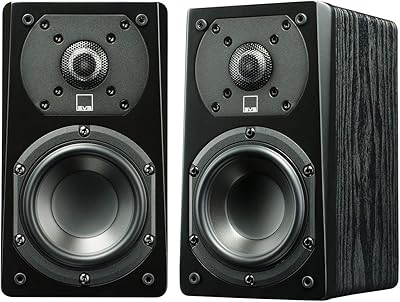
SVS Prime Elevation Surround Speakers
82%
91%
Sound Clarity
93%
Build Quality
88%
Surround Imaging
71%
Mounting Experience
79%
Value for Money
More
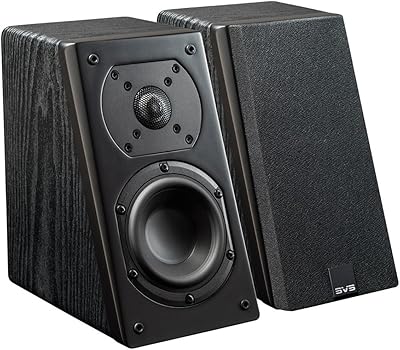
SVS Prime Satellite Surround Sound Speakers
80%
88%
Sound Clarity
54%
Bass Performance
91%
Build Quality
76%
Value for Money
89%
Surround Integration
More
SVS Prime Center Speaker
85%
91%
Sound Clarity
89%
Build Quality
87%
Ease of Integration
85%
Bass Response
75%
Size/Weight Suitability
More
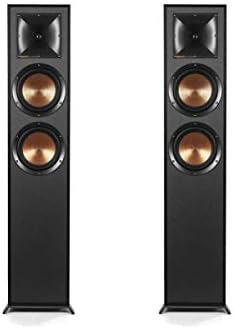
KEF Q550 Floorstanding Speaker
80%
91%
Sound Clarity
89%
Soundstage & Imaging
67%
Bass Performance
88%
Build Quality
74%
Value for Money
More
Focal Chora 826 Floorstanding Loudspeaker
79%
93%
Sound Quality
91%
Soundstage & Imaging
74%
Bass Performance
88%
Build Quality
67%
Amplifier Sensitivity
More
DALI Oberon 5 Floorstanding Speakers
80%
93%
Sound Naturalness
91%
Midrange Clarity
74%
Bass Extension & Control
89%
High-Frequency Smoothness
88%
Soundstage & Imaging
More
Klipsch R-625FA Dolby Atmos Floorstanding Speaker
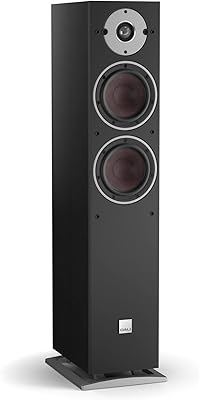
83%
93%
Sound Dynamics
74%
Dolby Atmos Height Effect
81%
Bass Performance
91%
Build Quality
86%
Ease of Setup
More
DALI Oberon 7 Floorstanding Speaker
79%
91%
Sound Quality
79%
Bass Performance
86%
Treble Clarity
88%
Soundstage & Imaging
93%
Build Quality
More
Yamaha NS-F210BL Floorstanding Speaker
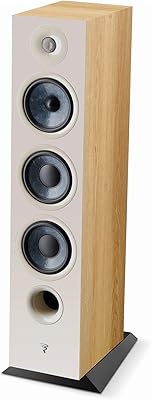
78%
83%
Sound Quality
67%
Bass Performance
81%
Value for Money
78%
Build Quality
86%
Dialogue Clarity
More
Klipsch Reference R-820F Floorstanding Speaker
86%
92%
Sound Quality
89%
Bass Performance
85%
Build Quality
90%
Ease of Integration
75%
Size & Space Requirements
More

FAQ

Not necessarily. The triple woofer array pushes bass response down to 29Hz, which is deep enough that many listeners find a dedicated subwoofer unnecessary for both music and movies. That said, if you are building a full home theater and want reference-level low-end impact, adding a subwoofer later is always an option.

Aim for an amplifier or AV receiver that delivers at least 100 watts per channel into 8 ohms from a quality brand. These are not especially hard to drive in terms of impedance, but they reward clean, stable power. Underpowering them with a budget receiver is one of the most common complaints from dissatisfied buyers, so do not cut corners on amplification.

Medium to large rooms work best — think a living room or dedicated listening space of at least 200 square feet. Smaller rooms can make the bass feel boomy and overwhelming rather than controlled. Give each speaker at least two to three feet of clearance from the rear wall to let the low end develop properly.

As long as your receiver has speaker binding post outputs and can deliver adequate wattage per channel, these will connect without issue. Check your receiver's rated power output and make sure it can handle a 4- or 8-ohm load cleanly. If your receiver is more than a few years old and entry-level, it may be worth upgrading it alongside these speakers.

Most owners notice the sound opening up meaningfully after 40 to 100 hours of varied playback at moderate to higher volumes. During break-in, the drivers loosen up and the overall sound becomes more relaxed and extended. Do not judge these speakers definitively based on the first few hours out of the box.

It looks stunning but it does require attention. The gloss surface shows fingerprints almost immediately and attracts dust easily. A soft microfiber cloth for regular wiping is all you need, but expect to do it often if the speakers are in a high-traffic area.

Technically yes, but it would be overkill for rear channels and a significant expense for a role where smaller speakers would perform just as well. The Prime Pinnacle pair is best deployed as front left and right mains where their output, dynamics, and imaging capabilities are fully utilized.

Physical setup is straightforward — attach the feet, connect speaker wire to the binding posts, and position them in your room. The challenge is more about weight and size than technical complexity; at 58 pounds for the pair, repositioning them solo is awkward. Getting placement dialed in for the best sound may take some experimentation with distance from walls and toe-in angle.

Honestly, they are a tough fit for smaller apartments. The output capability and bass extension that make these impressive in a larger room can overwhelm a small space and cause problems with neighbors. If your listening area is compact or acoustically untreated, a smaller bookshelf speaker system would likely serve you better.

These floorstanding speakers are genuinely versatile across genres. Classical, jazz, and acoustic music benefit from the precise imaging and midrange clarity, while rock, electronic, and hip-hop take advantage of the deep, authoritative low-end extension. They are built for tonal accuracy rather than flattering any single genre, which means well-recorded music of any type tends to shine through them.

Where to Buy