Overview

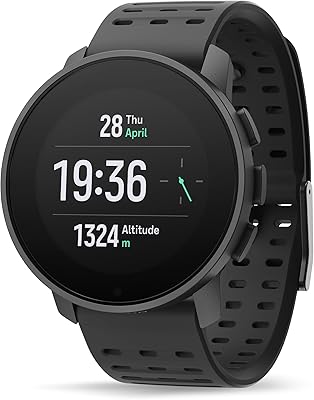
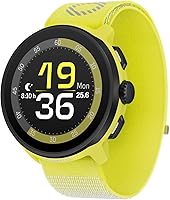
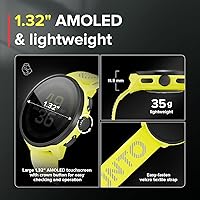
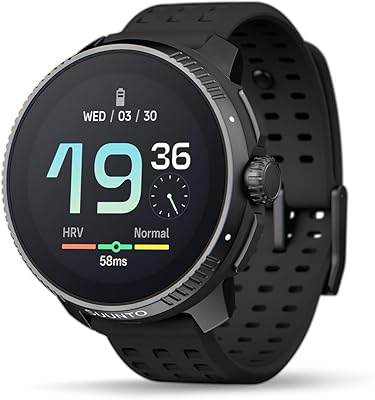
The Suunto Run GPS Running Watch enters a competitive mid-range field in May 2025, and Suunto — a brand with genuine roots in outdoor navigation — is making a clear play for everyday runners who want more than a basic step counter. At just 35g and 11.5mm thin, lightweight wearability is one of its strongest cards. The 1.32″ AMOLED display looks sharp and modern, which matters if you're wearing it beyond the track. That said, honest expectations apply: this GPS watch holds its own on the fundamentals but doesn't yet match the depth of training metrics you'd find on a Garmin Forerunner at a similar price.

Features & Benefits

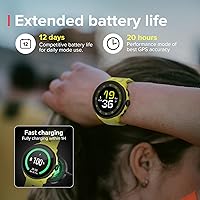
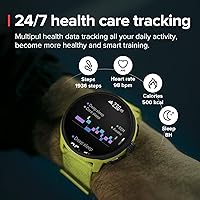
The headline feature here is dual-band GPS — L1/L5 support — which makes a tangible difference when you're weaving through city blocks or running under dense tree cover where single-band watches frequently drift. Pair that with a bright AMOLED screen that stays readable mid-run, and the hardware feels genuinely capable. Battery life hits 12 days in daily wear mode and roughly 20 hours with GPS fully active, putting it ahead of some rivals at this tier. The 4GB offline music storage means you can leave your phone at home entirely — a feature many runners actively seek. Health monitoring covers heart rate, sleep, and a training volume tracker to help manage recovery load.

Best For

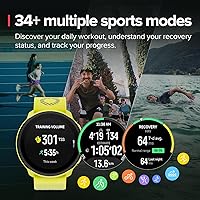
This Suunto running watch is a strong pick for everyday recreational runners who want accurate GPS tracking without the cognitive load of obsessive data dashboards. If you regularly run without your phone and want music on your wrist, the offline storage alone makes it worth serious consideration. It also suits the commuter-athlete type — someone who needs a watch that looks put-together at breakfast and handles a lunch run without changing gear. Beginners and intermediate runners will find the 34-plus sports modes genuinely useful rather than overwhelming. Trail runners and travelers will appreciate the breadcrumb and find-back navigation, which are practical in unfamiliar terrain.

User Feedback

The Suunto Run carries a 4.2-star average from around 97 ratings — a promising start, though the product only launched in May 2025, so the sample size is still thin. Early praise tends to focus on screen quality, comfortable wrist fit, and fast GPS lock. The criticisms worth watching involve app ecosystem depth — Suunto's mobile app historically trails Garmin Connect in training analytics — and whether the software update cadence will keep pace with user requests. Long-term battery health and sustained GPS accuracy over months remain open questions. Communities like DC Rainmaker's forum and Reddit's r/running tend to surface more candid, long-term user experiences worth checking.

Pros

  • At just 35g, it barely registers on your wrist during long runs or all-day wear.
  • Dual-band L1/L5 GPS delivers noticeably more reliable tracking in cities and under tree cover.
  • The 1.32″ AMOLED display is bright, sharp, and easy to read at a glance mid-run.
  • 12-day battery life in daily mode means less time tethered to a charger.
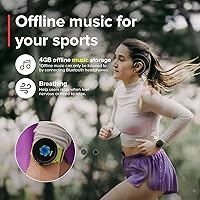
  • Built-in 4GB music storage lets you run completely phone-free with wireless headphones.
  • Fast charging from zero to full in roughly an hour is genuinely convenient.
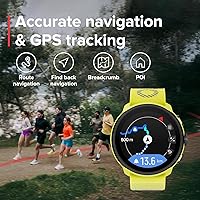
  • Breadcrumb navigation and find-back features add real safety value on unfamiliar routes.
  • At 11.5mm thin, the Suunto Run looks presentable in casual and workplace settings.
  • Training volume tracking helps beginners and intermediate athletes avoid overtraining.
  • Storm alerts and sunrise/sunset alarms are thoughtful touches for outdoor runners.

Cons

  • Suunto's mobile app lags behind Garmin Connect in training analytics depth and usability.
  • With only 97 ratings since May 2025, long-term reliability data simply does not exist yet.
  • No advanced performance metrics like VO2 max estimates or race predictor tools.
  • Software update history for this model is too short to judge Suunto's post-launch support commitment.
  • The velcro strap, while secure, may show wear faster than traditional buckle or pin-and-tuck designs.
  • 20-hour GPS battery life is competitive but falls short of longer-range options for ultramarathon use.
  • Third-party app and watchface ecosystem is limited compared to more established platforms.
  • Heart-rate accuracy during high-intensity intervals — a known weak point for wrist-based sensors — has not been independently tested at scale yet.

Ratings

The scores below for the Suunto Run GPS Running Watch were generated by our AI after analyzing verified buyer reviews from global markets, with spam, bot activity, and incentivized feedback actively filtered out. With a May 2025 release date and a still-growing review pool, we've weighted early patterns carefully and flagged where confidence is limited. Both the genuine strengths and the real friction points are reflected honestly — no category has been inflated to make the product look better than it is.

GPS Accuracy
88%
Dual-band L1/L5 GPS has drawn consistent praise from runners who previously dealt with route drift on single-band watches in city centres or under forest canopy. Lock times are fast, and track recordings in early reviews show tight, reliable lines even on technical terrain.
A small number of users report occasional signal hiccups during the initial firmware versions, though it is unclear whether this reflects a hardware limitation or a software issue still being resolved via updates.
Battery Life
81%
19%
Twelve days in daily mode is a genuinely comfortable buffer for most runners — you can go a full week of commuting and weekend runs without stressing about charging. The fast-charge feature, reaching full in about an hour, removes most of the inconvenience on the occasions when you do need to top up.
The 20-hour GPS mode ceiling is adequate for marathon training but falls short for ultramarathon use cases. Some users also note that always-on AMOLED brightness settings can shave meaningful time off the daily mode estimate depending on usage patterns.
Comfort & Wearability
91%
At 35g and 11.5mm thin, this Suunto running watch is one of the most wrist-friendly options in its class — reviewers frequently describe forgetting they are wearing it during long runs and full office days. The low profile means it slides under shirt cuffs without snagging.
The velcro strap, while offering a flexible fit, has drawn some complaints about durability over repeated washing and daily friction. A few users with narrower wrists also found fit adjustment less precise than a traditional pin-buckle band.
Display Quality
86%
The 1.32″ AMOLED panel produces vivid colours and sharp text that users genuinely appreciate when glancing at pace data mid-run or reviewing sleep stats in the morning. Sunlight readability at higher brightness settings has been a recurring positive in early feedback.
AMOLED always-on display modes draw more power than traditional LCD or MIP screens, so users who keep the display active constantly will notice a faster battery drain. A small number of reviewers also noted that the screen picks up fingerprints quickly during touchscreen navigation.
Offline Music
83%
Having 4GB of music storage onboard is a genuine differentiator for runners who want a completely phone-free experience. Early users report that Bluetooth pairing with headphones is straightforward and connection stays stable during movement.
4GB is workable but not generous — roughly 700 to 1,000 songs depending on file format, which means curating playlists rather than bulk-transferring a library. The music transfer process via the Suunto app has drawn a few complaints about speed and simplicity.
Heart Rate Tracking
74%
26%
Continuous 24/7 wrist heart-rate monitoring works well for resting heart rate trends, sleep zone detection, and steady-state aerobic runs where the sensor has consistent skin contact and minimal bounce.
Like most optical wrist sensors, accuracy during high-intensity intervals or sprint efforts is less reliable — a known limitation of the technology, not a Suunto-specific flaw, but worth knowing if interval training is central to your routine. Independent large-scale accuracy testing for this specific model does not yet exist.
Sleep Tracking
72%
28%
The sleep tracking captures total duration, sleep stages, and overnight heart rate data in a digestible summary that most casual users find sufficient for understanding recovery patterns. The lightweight build makes wearing it overnight comfortable enough that compliance is high.
Sleep stage detection — particularly distinguishing light from deep sleep — is an area where budget and mid-range wrist trackers generally underperform compared to dedicated sleep devices or research-grade tools. The Suunto app's sleep analytics presentation is functional but lacks the contextual coaching found in more mature platforms.
Navigation Features
79%
21%
Breadcrumb navigation and the find-back function are well-implemented and genuinely useful for trail runners or travelers exploring unfamiliar areas without cellular coverage. Point-of-interest marking works reliably based on early trail-use reports.
The navigation interface, while functional, is less polished than what experienced Suunto users might expect from the brand's outdoor watch lineage. Mapping depth — such as topographic overlays or routable maps — is not a feature here, limiting utility for serious mountain navigation.
App & Ecosystem
61%
39%
The Suunto app covers core post-run review needs — route maps, session summaries, sleep history — and syncs reliably with the watch. For casual users who just want to glance at their week's mileage and sleep trends, it gets the job done.
Compared to Garmin Connect or even the COROS platform, the Suunto app offers noticeably less depth in training load analysis, adaptive coaching, and third-party integrations. This is one of the more consistent criticisms across the brand's ecosystem and a real consideration for data-driven athletes.
Training Metrics Depth
63%
37%
Training volume tracking — logging cumulative exercise duration and intensity over time — is a useful addition that helps beginner and intermediate runners avoid overtraining without requiring them to interpret complex numbers. The 34-plus sports modes also add genuine breadth.
There is no VO2 max estimation, race time predictor, training readiness score, or recovery advisor — metrics that Garmin has long included in this price tier. For runners who rely on these numbers to structure their training cycles, the gap is meaningful and hard to overlook.
Build Quality
78%
22%
The physical construction feels solid and intentional for a 35g watch — materials choices reflect a mid-range positioning without feeling cheap. Water and sweat resistance hold up well in wet weather runs based on early feedback.
The velcro strap is the component most likely to show wear earliest, and longer-term housing durability over a year or more of daily use simply cannot be assessed yet given the May 2025 launch date. The watch lacks a stated ATM or ISO water-resistance rating, which creates some ambiguity for heavier water exposure.
Ease of Use
84%
The combination of touchscreen and crown button navigation is intuitive for new users — most people report being able to start a run, browse stats, and adjust settings without consulting the manual. Watch face customization is accessible and genuinely personal.
A handful of users note that the crown button can feel slightly stiff with gloves on in cold weather. The initial app setup and music transfer process has a learning curve that is slightly steeper than the hardware experience suggests.
Value for Money
76%
24%
For a buyer who prioritises lightweight comfort, a sharp display, dual-band GPS, and built-in music in a single package, the Suunto Run delivers a compelling combination that is genuinely difficult to replicate at this price point without making hardware compromises.
When measured purely by software depth and long-term ecosystem maturity against Garmin's Forerunner lineup at similar pricing, the value proposition weakens. Buyers paying for platform depth and analytical tools will find better returns elsewhere; this GPS watch rewards those prioritising hardware experience over data richness.

Suitable for:

The Suunto Run GPS Running Watch is a well-matched choice for recreational and intermediate runners who want accurate, reliable tracking in a watch that doesn't weigh them down physically or mentally. At just 35g, it sits comfortably on the wrist all day, making it practical for people who don't want to swap between a sports tracker and a daily watch. Runners who train without their phone will find real value in the 4GB offline music storage paired with Bluetooth headphones — that combination alone removes a common friction point. The dual-band GPS is genuinely useful for urban runners dealing with tall buildings or anyone hitting wooded trails where signal bounce is a real problem. Beginners building a training habit will appreciate the health monitoring and training volume tracking without feeling buried in data. Travelers and adventure runners who venture into unfamiliar territory will also find the breadcrumb navigation and find-back features reassuring safety tools.

Not suitable for:

Serious competitive runners or data-obsessed athletes training for performance goals will likely find the Suunto Run GPS Running Watch lacking the depth they need. Garmin's Forerunner lineup, for example, offers far more granular training metrics — VO2 max estimates, race predictors, recovery advisor, and a mature ecosystem that has been refined over years. This GPS watch also launched in May 2025, which means long-term reliability, software update consistency, and battery longevity over time are still open questions — early adopters assume that risk. The Suunto app historically has not matched Garmin Connect or COROS's platform in analytical depth, which matters if post-run data review is part of your routine. Anyone expecting triathlon-ready multisport transitions, detailed power metrics, or a robust third-party app marketplace should look elsewhere at this price point.

Specifications

  • Display: 1.32″ AMOLED touchscreen with crown button navigation for easy one-handed browsing during activity.
  • Weight: The watch body weighs 35g, making it one of the lighter options in the mid-range GPS running category.
  • Thickness: At 11.5mm thin, the profile sits low on the wrist and slides easily under a jacket or sleeve.
  • GPS System: Dual-band GPS using both L1 and L5 frequencies for improved positional accuracy in urban and dense-canopy environments.
  • Battery Life: Up to 12 days in daily smartwatch mode and approximately 20 hours in full GPS performance mode.
  • Charging: Fast-charge capable, reaching a full charge from empty in approximately one hour.
  • Music Storage: 4GB of onboard storage for offline music playback, paired wirelessly via Bluetooth to compatible headphones.
  • Connectivity: Bluetooth connectivity supports wireless headphone pairing and smartphone synchronization for notifications and data sync.
  • Sports Modes: More than 34 preset sports and activity modes are included, covering running, cycling, marathon training, and breathing exercises.
  • Health Tracking: Continuous 24/7 monitoring covers wrist-based heart rate, sleep quality, steps, calories, and training volume load.
  • Navigation: Onboard navigation includes route guidance, point-of-interest setting, breadcrumb trail, and a find-back function.
  • Alerts: Built-in alerts include storm warnings, sunrise and sunset times, high heart-rate notifications, stand-up reminders, and daily goal prompts.
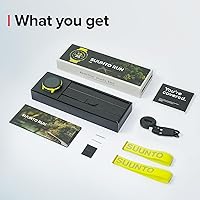
  • Strap Type: Ships with a velcro-fastening strap designed for a secure, adjustable fit across different wrist sizes.
  • Water Resistance: Rated resistant to sweat, rain, and water exposure, suitable for outdoor training in wet conditions.
  • Customization: Watch face widgets are fully user-configurable, allowing personal selection of data fields for at-a-glance information.
  • Model Number: Official model number is SS051111000, corresponding to the Lime color variant in the Suunto Run lineup.
  • Availability: First made available in May 2025, making this a recently launched product with limited long-term field data.

Related Reviews
Suunto Race GPS Sports Watch
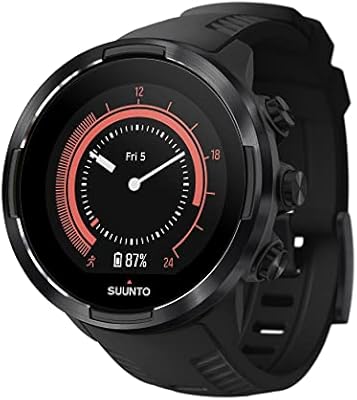
80%
93%
Display Quality
91%
GPS Accuracy
74%
Battery Life
89%
Navigation & Maps
67%
Touchscreen Usability
More
SUUNTO Vertical Solar GPS Adventure Watch
79%
93%
Battery Life & Solar Efficiency
91%
GPS Accuracy & Signal Acquisition
88%
Offline Maps & Navigation
89%
Build Quality & Durability
67%
Comfort & Wearability
More
Garmin Forerunner 745 GPS Running Watch
85%
91%
GPS Accuracy
88%
Battery Life
85%
Sports Tracking Versatility
84%
Music Storage & Streaming
89%
Build Quality
More
Garmin Forerunner 55 GPS Running Watch
79%
91%
GPS Accuracy
88%
Battery Life
78%
Heart Rate Monitoring
93%
Ease of Setup & Use
84%
Training Features
More
Suunto 9 Baro Multisport GPS Watch
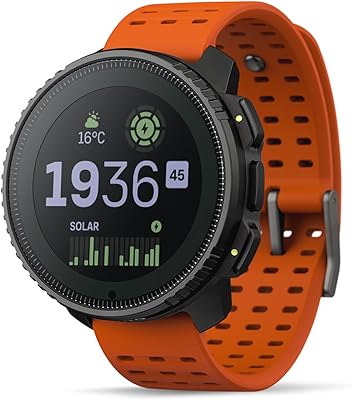
74%
93%
Battery Life
81%
GPS Accuracy
61%
Heart Rate Accuracy
89%
Build Quality
91%
Water Resistance
More
Suunto 9 Peak Pro GPS Sports Watch
86%
94%
GPS Accuracy
92%
Battery Life
89%
Build Quality
87%
Sport Mode Variety
85%
Health Tracking Features
More
Spodus G50002 Kids Watch with GPS Tracker 4G Smart Watch
84%
88%
GPS & Location Accuracy
81%
Battery Life
78%
Voice & Video Call Quality
90%
Ease of Use
85%
Build Quality
More
CANMORE TW353 Golf GPS Watch
78%
83%
GPS Accuracy
88%
Course Coverage
91%
Ease of Use
79%
Display Readability
76%
Battery Life
More
Garmin Fenix Enduro GPS Watch
85%
96%
Battery Life
92%
Build Quality & Durability
89%
Solar Charging Efficiency
88%
Activity Tracking Accuracy
75%
Ease of Use
More
CANMORE TW410G GPS Golf Watch
70%
74%
GPS Accuracy
83%
Course Database
88%
Value for Money
79%
Ease of Use
71%
Display Readability
More

FAQ

Yes, the Suunto Run GPS Running Watch operates fully standalone for tracking and music playback. You only need your phone nearby when syncing data to the app or receiving smartphone notifications.

The 4GB storage is for offline music files you transfer directly to the watch, so there is no streaming dependency. You pair it with Bluetooth headphones and run phone-free. Keep in mind 4GB holds a few hundred songs depending on file format and quality.

The dual-band L1/L5 GPS is genuinely competitive and should hold up well against mid-range Garmin models in most conditions. In open environments the difference is negligible. In dense urban areas or heavy tree cover, dual-band tends to reduce drift noticeably compared to single-band watches.

AMOLED displays generally perform well in sunlight at high brightness settings, and user feedback so far has been positive on screen readability. The trade-off is that higher brightness draws more battery, so very long GPS sessions with screen-on time will reduce the quoted 20-hour runtime.

Velcro straps offer a flexible, secure fit, but they are generally more prone to wear and lint accumulation than traditional pin buckle or push-button designs. It is a reasonable choice for performance use, but if you plan to wear this watch daily for a year or more, you may find yourself replacing the strap sooner than with a standard band.

The Suunto Run is listed as water and sweat resistant for outdoor sports use, but it is not marketed with a specific swim-proof depth rating like an ATM or ISO standard. It should handle rain and splashing without issue, but dedicated swim tracking is not a confirmed feature for this model.

The Suunto Run syncs with the Suunto app on iOS and Android. The app covers the basics well — route maps, session history, sleep data — but it has historically offered less analytical depth than Garmin Connect or COROS's platform. If post-run data analysis is a core part of your routine, it is worth exploring the app before committing.

Not as a confirmed feature on this model. The watch tracks training volume and intensity to help you manage load and recovery, but the kind of performance prediction metrics — VO2 max estimates, race predictor tools, training status scores — that Garmin builds into its Forerunner series are not part of this GPS watch's feature set.

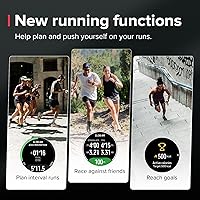
The watch supports multiple training modes and includes training volume tracking, but the level of structured workout programming — like creating interval sets or syncing coaching plans — depends on the Suunto app's current capabilities. It is worth checking the app's latest version, as Suunto has been expanding features with software updates.

It is a solid choice for someone stepping up from a basic fitness tracker. The data presentation is approachable, the hardware is comfortable for all-day wear, and the GPS accuracy means you get reliable pace and distance without frustration. Beginners won't feel overwhelmed, and there is enough room to grow into more features as training progresses.

Where to Buy