Overview

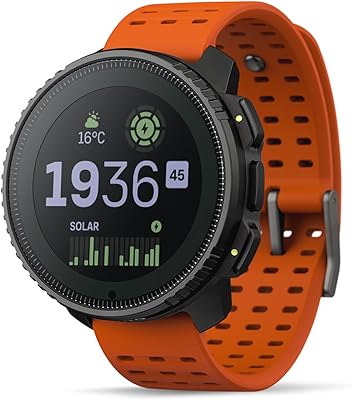
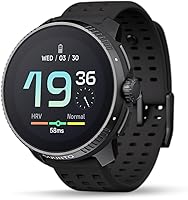
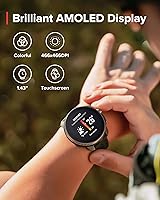
The Suunto Race GPS Sports Watch is built for athletes who treat training as a serious pursuit, not a weekend hobby. Suunto has been crafting precision instruments since 1936, and that depth of experience shows up in real ways here. What sets this watch apart from most rivals at this price is its 1.43″ AMOLED display — a sharp, vivid screen in a category where many competitors still rely on lower-contrast MIP panels. At around 83 grams, it sits comfortably on the wrist through long efforts without becoming a distraction. It is priced firmly in the upper-mid tier — not entry-level, but justified for dedicated endurance athletes who want serious capability.
Features & Benefits

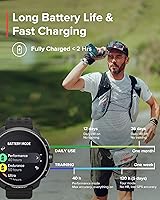
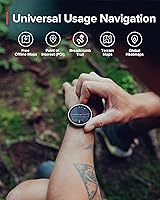
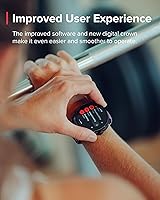
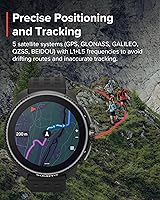
The dual-band GNSS is probably what serious athletes will appreciate most — it pulls from five satellite systems at once, holding reliable positioning in city canyons, dense forest, and mountain terrain where single-band watches commonly drift. Combine that with 16GB of free offline global maps showing contour lines, trail paths, and landmarks, and you have genuine navigation on your wrist. The digital crown button is a thoughtful detail; scrolling menus mid-run with wet or gloved hands is far easier than jabbing a touchscreen. Battery runs about 40 hours in full GPS mode, stretching to 120 hours in tour mode with reduced accuracy — a reasonable tradeoff for multi-day expeditions in the backcountry.

Best For

This training watch makes the most sense for trail runners and ultramarathoners who need dependable GPS over many hours, plus map detail that lets them navigate confidently without cell service. Cyclists covering long routes and outdoor adventurers heading into remote areas will find the offline maps genuinely practical, not just a spec-sheet feature. Data-focused athletes who track HRV trends, sleep quality, and recovery alongside training load will feel right at home in the platform. It is also a strong upgrade pick for anyone leaving behind a basic fitness tracker who wants a full-featured AMOLED watch without pushing into flagship price territory.

User Feedback

Across verified buyer reviews, the Race watch earns consistent praise for display brightness and GPS reliability — owners regularly note how well it holds signal in dense urban environments and wooded trails, and map rendering quality draws positive comments too. The friction points are real, though. A recurring complaint is that daily battery life falls short of some Garmin and Polar alternatives at comparable prices, and the lack of solar charging frustrates buyers planning multi-week expeditions. Several users report the touchscreen feels sluggish in rain or cold. The companion app also has a genuine learning curve out of the box. Long-term owners, however, speak well of consistent firmware updates and platform stability, which matters a lot for a watch you plan to use for years.

Pros

  • Vivid 1.43″ AMOLED display is noticeably sharper and more readable outdoors than MIP-screen rivals
  • Dual-band GNSS holds accurate positioning in city canyons and dense forest where lesser watches drift
  • Free offline global maps with contour lines are genuinely useful for remote trail and mountain navigation
  • The digital crown button makes menu navigation practical with wet hands or gloves mid-activity
  • At roughly 83 grams, this Suunto GPS watch sits comfortably even on long efforts without wrist fatigue
  • HRV recovery and sleep tracking give data-driven athletes a fuller picture of training load and readiness
  • Up to 40 hours in full GPS mode covers most ultramarathon and multi-day cycling events without recharging
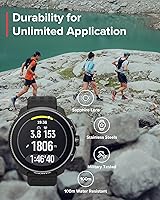
  • Sapphire crystal lens and 100m water resistance make it a durable choice for hard outdoor use
  • Platform stability and consistent firmware updates give long-term owners confidence in their investment
  • Connects with Strava, TrainingPeaks, and 300-plus partner services, fitting into most existing athlete workflows

Cons

  • Daily battery life of around 12 days trails behind some Garmin and Polar competitors at similar price points
  • No solar charging option limits appeal for athletes planning expeditions beyond four or five days
  • Touchscreen responsiveness can feel sluggish in rain or cold, creating friction during outdoor workouts
  • The companion app has a genuine learning curve that can frustrate new users during initial setup
  • Tour mode extends battery to 120 hours but reduces GPS accuracy, a tradeoff that matters on precision-heavy routes
  • The 49mm case size skews large and may feel bulky on smaller wrists despite the low overall weight
  • Switching from an established Garmin ecosystem means losing historical data continuity and familiar app integrations
  • No solar charging feels like a meaningful omission given the outdoor adventure positioning of the watch

Ratings

The scores below reflect an AI-driven analysis of verified global buyer reviews for the Suunto Race GPS Sports Watch, with spam, bot activity, and incentivized feedback actively filtered out before any scoring was applied. Each category is rated on a 0–100 scale that directly mirrors what real endurance athletes and outdoor enthusiasts reported — strengths and frustrations alike, without editorial softening. The result is an honest, data-grounded picture of where this training watch genuinely excels and where it falls short of expectations.

Display Quality
93%
The AMOLED panel draws consistent praise from runners and cyclists who have switched from MIP-screen watches — colors are vivid, contrast holds up well in direct sunlight, and the 466dpi sharpness makes map detail and data fields easy to read at a glance mid-effort. For trail runners checking elevation contours on the fly, the clarity difference versus older screen technology is immediately noticeable.
A small number of users note that maximum brightness can drain the battery faster than expected during long outdoor sessions, requiring a compromise between screen visibility and endurance. The screen also attracts fingerprints and smudges more visibly than matte alternatives, which some athletes find annoying during daily wear.
GPS Accuracy
91%
Dual-band GNSS with five satellite system support earns strong marks from athletes running in dense urban environments and technical mountain terrain where single-band watches regularly produce drifting tracks. Users report reliable lock times and consistent accuracy even under tree cover, which matters a lot for trail runners who need dependable distance and pace data.
A handful of reviewers note occasional satellite acquisition delays in deep canyon environments, though these reports are less frequent than with competing single-band devices. A very small subset of users experienced track drift during tunnel passages or in areas with extreme signal obstruction, which is largely a physics limitation rather than a device flaw.
Battery Life
74%
26%
Forty hours in full GPS mode covers the vast majority of endurance events comfortably, and the flexibility to shift into tour mode for multi-day adventures gives serious trekkers and ultrarunners meaningful options. Athletes using daily mode report 10 to 12 days of real-world battery life with continuous heart rate monitoring active, which holds up well in practice.
Daily battery life trails behind several Garmin and Polar competitors at a comparable price point, which frustrates buyers who want less frequent charging. The 120-hour tour mode figure is regularly cited as misleading by reviewers who discover it involves substantially reduced GPS sampling — fine for navigation, but not for precision training data.
Navigation & Maps
89%
Free offline global maps with contour lines, trail paths, and points of interest stored on 16GB of onboard memory is a standout practical feature that users consistently highlight as a genuine differentiator. Hikers and adventure cyclists especially appreciate being able to navigate remote routes without cell service or paying extra for map subscriptions that some rivals charge for.
Map rendering speed can lag slightly when zooming in on dense trail networks, and a few users note that urban map detail is less refined than dedicated navigation apps. Route planning directly on the watch is functional but not as intuitive as on competing devices with larger touchscreen interfaces.
Touchscreen Usability
67%
33%
The touchscreen is responsive and accurate in normal dry conditions, making menu navigation and activity browsing quick and intuitive during casual daily use. The 466dpi display makes tap targets clear, and most users find it a comfortable interface when training in mild weather.
Wet or cold conditions expose the touchscreen's most notable weakness — multiple reviewers describe it becoming sluggish or unresponsive during rainy trail runs and winter sessions, which is a real usability problem for outdoor athletes. The digital crown partially compensates, but relying on a workaround for a primary input method in adverse weather feels like an unresolved design tension.
Digital Crown Control
82%
18%
Athletes who frequently train with gloves or in wet conditions specifically call out the digital crown as a thoughtful and practical addition that sets this watch apart from pure touchscreen competitors. Scrolling through data screens and confirming selections during a muddy trail run or a cold-weather ride works reliably without needing to remove gloves.
Some users find the crown's tactile feedback slightly softer than they expected, and its resistance can feel inconsistent when navigating longer menus quickly. A few buyers with larger fingers report occasional accidental inputs when the crown is brushed during normal wrist movement.
Health & Recovery Tracking
81%
19%
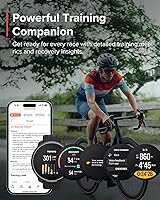
HRV-based recovery scoring and continuous sleep tracking resonate strongly with structured athletes who use recovery data to plan training loads — reviewers who follow periodized programs describe the overnight HRV readings as consistent and useful over time. The addition of SpO2 monitoring adds altitude awareness that trail runners and mountain athletes find practically relevant.
Some users feel the recovery scores occasionally conflict with subjective feel, particularly during high-stress periods where the watch recommends rest that does not align with their training plan. Heart rate accuracy during high-intensity intervals draws occasional criticism, with a small subset of users noting optical sensor drift during fast tempo efforts.
Build Quality & Durability
88%
The sapphire crystal lens and solid stainless steel case construction earn consistent praise from users who push their equipment hard — after months of trail running, alpine hiking, and daily wear, most owners report no meaningful scratching or structural wear. The 100m water resistance handles open-water swimming and heavy rain without concern.
The resin strap included with the standard version wears faster than the case itself, with several long-term users replacing it within six months of daily athletic use. A small number of buyers note that the charging port area can accumulate trail debris that requires periodic cleaning to maintain a reliable connection.
Weight & Comfort
86%
At roughly 83 grams, the Race watch sits in a comfortable middle ground — substantial enough to feel quality-built but light enough that most users stop noticing it during long runs and rides. Ultra-distance athletes specifically mention that it does not create pressure points or strap discomfort even after many hours of continuous wear.
The 49mm case is genuinely large, and buyers with narrower wrists may find the fit visually prominent or physically awkward depending on wrist anatomy. A few female athletes note the sizing skews toward larger builds and suggest trying the watch in person before purchasing if wrist fit is a concern.
App & Ecosystem
63%
37%
Once fully configured, the SuuntoPlus app syncs reliably with Strava, TrainingPeaks, and a broad range of connected services, making it a capable hub for athletes who already use multiple platforms to analyze training data. Long-term users report that the app has improved noticeably through updates over the past year.
Initial setup is the most consistently criticized aspect of ownership — pairing, configuring third-party integrations, and downloading maps requires patience and is not as intuitive as the Garmin Connect or Polar Flow onboarding experience. Athletes switching from competing ecosystems also lose historical data continuity, which is a real friction point that goes beyond the app itself.
Firmware & Updates
84%
Suunto's firmware update track record draws specific positive mentions from long-term owners who note meaningful feature additions and stability improvements delivered after launch. Knowing that the watch software continues to develop is a genuine factor in purchase confidence for buyers who plan to keep a watch for several years.
Some updates have introduced temporary bugs that required follow-up patches, which can be frustrating for athletes who rely on consistent behavior during peak training periods. Update delivery is not always rapid following community-reported issues, and the response window sometimes stretches longer than users expect.
Value for Money
72%
28%
The combination of a sharp AMOLED display, dual-band GNSS, free offline maps, and a robust health tracking platform at this price tier represents a credible package for serious endurance athletes who would otherwise be looking at flagship-priced alternatives. For runners upgrading from entry-level GPS watches, the feature jump is substantial.
Against direct competition from Garmin's Forerunner lineup and Polar's Grit X series, some buyers feel the daily battery life and app polish do not fully justify the price premium. Shoppers who primarily need a running watch without navigation or recovery tracking may find better-optimized options at a lower cost.
Sport Mode Depth
79%
21%
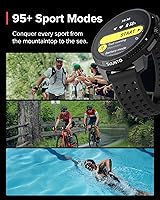
Over 95 sport modes covering everything from trail running and open-water swimming to indoor strength sessions and skiing make this watch adaptable across a broad range of training contexts without needing to retrofit a generic mode. Multisport athletes appreciate not having to compromise with a single activity profile.
Some sport-specific metrics, particularly for niche disciplines like rowing or paddleboarding, are less detailed than what dedicated sport-specific devices provide. A handful of users note that switching between sport modes mid-session is not as streamlined as they expected given the watch's overall feature depth.
Connectivity & Sync Speed
77%
23%
Bluetooth syncing with the SuuntoPlus app is reliable once the initial pairing is established, and most users report that post-workout data transfers happen quickly without manual intervention. The broad partner compatibility means most athletes find their preferred training platforms already supported.
Some users experience occasional sync delays or dropped connections when transitioning between devices, particularly on Android phones. There is no Wi-Fi connectivity on this model, meaning all syncing relies on Bluetooth proximity to a paired phone, which can occasionally cause missed auto-syncs if the phone is out of range post-workout.

Suitable for:

The Suunto Race GPS Sports Watch is purpose-built for dedicated endurance athletes who demand precision tools, not polished lifestyle gadgets. Trail runners logging big weekly mileage will appreciate the dual-band GNSS reliability and the clarity of the AMOLED display when checking pace or navigation mid-run in bright sunlight. Ultramarathon competitors and multi-day hikers benefit directly from the offline global maps — having contour lines and trail detail without needing cell service is a practical advantage in remote terrain, not just a nice-to-have. Cyclists covering long mixed-terrain routes, adventure travelers moving through areas with spotty connectivity, and athletes who actively monitor HRV trends and sleep quality as part of structured training blocks will find this watch fits naturally into how they already operate. If you are stepping up from a basic GPS watch and want a platform with real longevity, Suunto's track record on firmware support makes this training watch a sound long-term investment.
Not suitable for:

Buyers who primarily want a stylish everyday smartwatch with robust notification handling and app ecosystems will likely find the Suunto Race GPS Sports Watch underwhelming for those specific needs. Casual walkers or gym-goers who track steps and occasional weekend runs do not need — and probably will not fully use — the navigation depth, dual-band GNSS, or multi-day battery modes this watch is built around, making its price hard to justify. Athletes who frequently train in wet or cold conditions should know going in that the touchscreen can feel sluggish in those situations, which is a genuine usability friction point. If solar charging is a firm requirement for expedition-length adventures, this watch does not offer it, and that gap matters on trips beyond four or five days. Those deeply embedded in the Garmin or Polar ecosystems — relying on Connect IQ apps, specific training integrations, or years of historical data — will face real switching costs that go beyond just hardware preference.
Specifications

  • Display: The watch features a 1.43″ AMOLED touchscreen with a pixel density of 466dpi, delivering sharp color contrast that remains readable in direct sunlight.
  • Case Size: The case diameter is 49mm, sized to accommodate the large display while maintaining a relatively streamlined wrist profile.
  • Weight: The watch weighs approximately 2.93 oz (roughly 83g), keeping it light enough for long-duration endurance activities.
  • Lens Material: A sapphire crystal lens covers the display, offering strong scratch resistance compared to standard mineral glass alternatives.
  • Water Resistance: Rated to 100m water resistance, making it suitable for swimming, heavy rain, and water-based training activities.
  • Battery Life: Battery runs up to 12 days in daily use mode, approximately 40 hours in full GPS mode, and up to 120 hours in tour mode with reduced GPS accuracy.
  • GNSS: Dual-band GNSS pulls from five satellite systems simultaneously, improving positional accuracy in challenging environments like dense urban areas and mountain terrain.
  • Offline Maps: The watch stores 16GB of free global color maps including contour lines, points of interest, and path data accessible without a cellular connection.
  • Navigation: Navigation features include breadcrumb trail recording, waypoint marking, and bearing support for route-finding in remote areas.
  • Health Tracking: Continuous health monitoring covers wrist-based heart rate, HRV recovery scoring, SpO2 oxygen saturation, sleep tracking, steps, and calorie estimation.
  • Sport Modes: Over 95 sport modes are supported, spanning running, cycling, swimming, skiing, and a wide range of outdoor and gym-based activities.
  • Barometer: A built-in barometer provides real-time altitude and atmospheric pressure readings, useful for weather awareness and elevation tracking on mountain routes.
  • Connectivity: The watch connects to smartphones and third-party platforms via Bluetooth, supporting syncing with the SuuntoPlus app and over 300 partner services.
  • Compatibility: Third-party integrations include Strava, TrainingPeaks, and over 300 connected partner services for syncing workouts and performance data.
  • Input Methods: The watch accepts input through both the AMOLED touchscreen and a physical digital crown button, allowing control during activities when touch is impractical.
  • Included Items: The package includes the watch itself with a charging cable; no additional bands or accessories are included in the standard box.
  • Battery Type: The watch is powered by a built-in rechargeable lithium-ion battery that charges via the proprietary magnetic charging connector.
  • Model Number: The official model number for this variant is SS050929000, which can be used to verify compatibility with official Suunto accessories.

Related Reviews
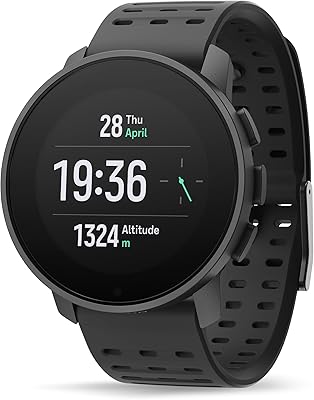
Suunto 9 Peak Pro GPS Sports Watch
86%
94%
GPS Accuracy
92%
Battery Life
89%
Build Quality
87%
Sport Mode Variety
85%
Health Tracking Features
More
Suunto Run GPS Running Watch
78%
88%
GPS Accuracy
81%
Battery Life
91%
Comfort & Wearability
86%
Display Quality
83%
Offline Music
More
COROS PACE Pro GPS Sport Watch
84%
93%
GPS Accuracy
88%
Battery Life
91%
Display Quality
84%
GPS Tracking Software
89%
Training Metrics
More
SUUNTO Vertical Solar GPS Adventure Watch
79%
93%
Battery Life & Solar Efficiency
91%
GPS Accuracy & Signal Acquisition
88%
Offline Maps & Navigation
89%
Build Quality & Durability
67%
Comfort & Wearability
More
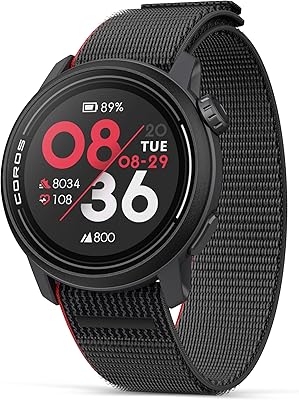
Suunto 9 Baro Multisport GPS Watch
74%
93%
Battery Life
81%
GPS Accuracy
61%
Heart Rate Accuracy
89%
Build Quality
91%
Water Resistance
More
COROS PACE 3 GPS Sport Watch
79%
91%
GPS Accuracy
94%
Battery Life
93%
Comfort & Wearability
83%
Build Quality
88%
Training Features
More
Spodus G50002 Kids Watch with GPS Tracker 4G Smart Watch
84%
88%
GPS & Location Accuracy
81%
Battery Life
78%
Voice & Video Call Quality
90%
Ease of Use
85%
Build Quality
More
Garmin Fenix Enduro GPS Watch
85%
96%
Battery Life
92%
Build Quality & Durability
89%
Solar Charging Efficiency
88%
Activity Tracking Accuracy
75%
Ease of Use
More
CANMORE TW353 Golf GPS Watch
78%
83%
GPS Accuracy
88%
Course Coverage
91%
Ease of Use
79%
Display Readability
76%
Battery Life
More
Garmin Enduro 2 GPS Running Watch
81%
93%
Battery Life
91%
GPS Accuracy
89%
Build Quality & Durability
82%
Comfort & Fit
88%
Navigation & Mapping
More

FAQ

The dual-band GNSS on this training watch pulls from five satellite systems at once, which puts it in the same accuracy tier as current Garmin dual-band models. In practice, most users report solid track reliability in cities and on trails. It is not meaningfully inferior to the Forerunner lineup at this price level, and in some terrain conditions it holds signal where single-band watches struggle.

Yes, that is one of the stronger practical features on this watch. The 16GB of global maps are stored directly on the device, so you can navigate trails, check contour lines, and follow routes with no phone or cell signal required. This is genuinely useful for remote trail running or backcountry cycling.

For most ultramarathons, yes — events under 40 hours in full GPS mode are well covered. If you are running something longer, the tour mode extends to around 120 hours, though it does reduce GPS sampling frequency and therefore track accuracy. For very long events, you may want to plan around a mid-race charge or adjust the GPS mode setting.

This is a known limitation worth knowing about upfront. Several users report that the touchscreen becomes less responsive when wet or very cold. The digital crown button is there specifically for those situations — it lets you scroll and select without relying on touch. It is a reasonable workaround, but if you race frequently in wet conditions, the button becomes your primary input method rather than a backup.

Yes, it syncs directly with Strava through the SuuntoPlus app after a workout. The connection is straightforward to set up and activity data transfers reliably. It also works with TrainingPeaks and over 300 other partner services, so it fits into most existing training ecosystems without much friction.

A full charge from empty takes roughly two hours using the magnetic charging cable. There is also a quick-charge feature that can get you a meaningful amount of battery in a short window, which is handy before a race if you forgot to charge the night before.

It is a large watch by most standards and will sit prominently on narrower wrists. The weight is low enough that it does not feel heavy during runs, but visually and physically it is sized for athletes who prefer a bigger face for readability. If you have a smaller wrist, it is worth trying one on before committing.

HRV stands for heart rate variability, which measures the slight timing differences between heartbeats as a proxy for recovery status. The watch tracks this overnight and gives you a recovery score to help gauge whether your body is ready for a hard session or needs an easier day. If you follow structured training, it is a useful data point. If you train casually, you probably will not check it often.

The SuuntoPlus app is functional and improving with updates, but several buyers note a learning curve when first getting everything configured — pairing the watch, setting up services like Strava, and navigating the map download process takes some patience initially. Once it is set up, day-to-day use is straightforward. Budget an hour for the first setup session and follow the in-app guide step by step.

Yes, and this is genuinely one of the things long-term owners mention positively. Suunto has maintained a consistent firmware update cadence, which has improved features and fixed bugs over time. Buying into this ecosystem means you are not stuck with launch-day software, and the watch tends to improve meaningfully over the course of ownership.

Where to Buy