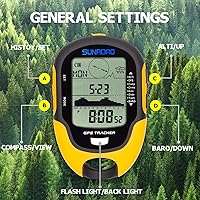
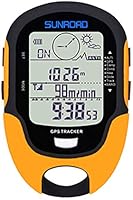
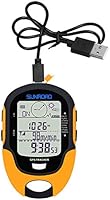
Overview

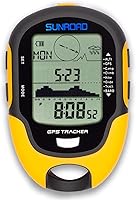
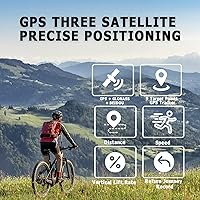
The SUNROAD FR510 GPS Altimeter Outdoor Watch is built for one specific type of buyer: someone who wants a serious suite of navigation and environmental sensors without spending a fortune. This is not a smartwatch. No notifications, no app syncs, no fitness dashboards — and that is perfectly fine. What it does offer is a triple satellite positioning system combining GPS, GLONASS, and BeiDou, which is genuinely uncommon at this price point. The case is ABS plastic with a matching plastic band, so manage your expectations about premium feel. That said, the USB rechargeable battery is a practical touch that coin-cell competitors often skip. Day hikers, backpackers, and campers chasing reliable data on a tight budget are the clear audience here.

Features & Benefits

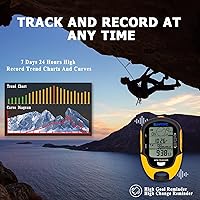
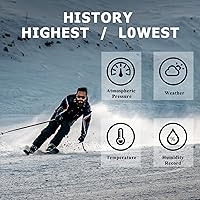
The barometric altimeter is where this multi-sensor trail watch earns its keep. It logs elevation changes with a claimed error of just 0.5m to 1m, stores a rolling 7-day history, and lets you configure alerts for specific altitude targets or incremental height changes — handy when tracking a slow summit approach. The barometer covers 300 to 1100 hPa and displays a 24-hour pressure curve; treat it as trend intelligence, not a live weather service. The 16-position compass uses a Swiss-made sensor with horizontal auto-correction, making direction checks on uneven ground noticeably more reliable than fixed-plane alternatives. A thermometer, hygrometer, pedometer, and stopwatch round out a genuinely packed feature list for the price.

Best For

This outdoor altimeter watch makes the most sense for day hikers, weekend backpackers, and car campers who want consolidated trail data on their wrist without committing to a high-end outdoor watch budget. It particularly shines in remote areas with poor cellular coverage, where the combined GPS, GLONASS, and BeiDou reception offers a real advantage over phone-based navigation. It is also a solid pick for anyone just getting into barometric forecasting or altimetry — the learning curve is manageable and the cost of entry is low. Where it falls short: technical alpine routes, competitive trail runners who need precise pace metrics, and anyone expecting Bluetooth, smartphone sync, or app connectivity. It is a data tool, full stop.

User Feedback

Buyers consistently praise the GPS lock speed and how quickly elevation readings update mid-hike — both hold up well across a broad range of user reports. Value-for-money sentiment is strong, especially among first-time outdoor instrument users. The criticisms, however, are consistent: the plastic band feels flimsy after extended wear, button tactile feedback is often described as soft and imprecise, and the instruction manual is reportedly thin and hard to follow for non-technical users. Screen readability in direct sunlight draws fair complaints given the short backlight window. The weather forecast function attracts mixed reviews, largely because buyers expect real-time accuracy rather than the barometric trend estimate it actually delivers. Overall, most buyers come away satisfied given what they paid.

Pros

  • Triple satellite support — GPS, GLONASS, and BeiDou — provides reliable positioning in remote areas far from cell coverage.
  • The barometric altimeter is responsive and stores a full week of elevation history, useful for tracking cumulative climb data.
  • USB recharging is a genuine convenience win over watches that require proprietary coin cells mid-trip.
  • At this price tier, the sensor breadth — altimeter, barometer, compass, thermometer, hygrometer, pedometer — is hard to match.
  • The 16-position Swiss compass sensor with horizontal auto-correction gives notably steadier direction readings on uneven ground.
  • GPS lock speed is frequently praised by users, with the watch acquiring a signal quickly even in unfamiliar locations.
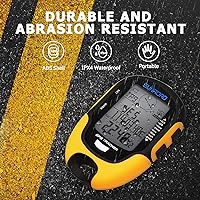
  • 30-meter water resistance means you do not need to baby this multi-sensor trail watch around rain or stream crossings.
  • Configurable altitude alerts add a layer of practical safety awareness for hikers tracking significant elevation changes.
  • The built-in LED flashlight, while modest, provides a backup light source that has genuine utility in low-light camp situations.
  • Overall value-for-money perception among buyers is strong, particularly for first-time users of dedicated outdoor instruments.

Cons

  • The plastic band feels cheap and shows wear relatively quickly, especially under the friction of daily outdoor use.
  • Button feedback is soft and imprecise, making one-handed or gloved navigation through menus frustrating in the field.
  • The instruction manual is widely reported as thin and unclear, leaving users to figure out multi-step functions through trial and error.
  • The five-second backlight window is too short for comfortable reference use; the display washes out noticeably in bright sunlight.
  • Weather forecast readings are barometric trend estimates, not live data — buyers expecting real forecast accuracy will be let down.
  • The GPS positioning accuracy claim of under 1m is manufacturer-stated; real-world results vary under heavy tree canopy or canyon terrain.
  • At 4.16 ounces, this outdoor altimeter watch runs heavier than comparable wrist-worn navigation tools, which some users notice on longer days.
  • Route tracking is capped at 9 stored groups, which limits utility for travelers who run many varied routes and want a longer history.
  • No wireless connectivity means there is no way to export route data, sync elevation logs, or update firmware without manual workarounds.

Ratings

The scores below reflect AI-driven analysis of verified global user reviews for the SUNROAD FR510 GPS Altimeter Outdoor Watch, with spam, bot-submitted, and incentivized feedback actively filtered out before scoring. Each category is weighted against real-world usage patterns reported by hikers, campers, and backpackers across multiple markets. Both the genuine strengths and the honest frustrations are accounted for — nothing is glossed over.

GPS Accuracy
78%
22%
Users consistently report fast satellite acquisition even at unfamiliar trailheads, with the triple-system support — GPS, GLONASS, and BeiDou combined — providing noticeably better lock reliability than single-system alternatives at this price point. In open terrain, distance and positioning readings track well against phone-based benchmarks.
Under dense forest canopy or within steep canyon corridors, accuracy drops off more than the manufacturer's sub-1m claim suggests. A handful of users noted occasional position drift during extended sessions in heavy shade, which is a real concern for anyone relying on this for off-trail route tracking.
Altimeter Performance
81%
19%
The barometric altimeter responds quickly to elevation changes and the 7-day historical trend logging is genuinely practical for multi-day trips where cumulative climb data matters. Configurable height-change alerts — triggering at user-defined intervals between 1 and 200 meters — add a layer of passive awareness that experienced hikers find useful.
Like all barometric altimeters, readings drift when air pressure fluctuates due to weather rather than actual elevation change, requiring periodic manual recalibration at known waypoints. Users who skipped calibration at the trailhead reported the most dissatisfaction with accuracy, which is partly a user-education issue but also reflects a steeper learning curve than expected.
Value for Money
86%
Among buyers who understood what they were purchasing — a multi-sensor navigation tool, not a premium outdoor watch — satisfaction with the price-to-feature ratio is high. Getting a working GPS, barometer, altimeter, compass, thermometer, and hygrometer in a single wrist-worn device at this cost tier is objectively difficult to replicate with competing options.
Buyers who underestimated the plastic construction or overestimated the weather forecast intelligence frequently felt the value proposition was weaker than advertised. The experience of paying a reasonable amount and still receiving a manual that barely explains core functions leaves a sour impression that undercuts the overall value story.
Build Quality
58%
42%
The ABS case itself holds up reasonably well against trail scrapes and light knocks, and most users report no cracking or warping after moderate outdoor use across several seasons. For buyers going in with calibrated expectations about plastic construction at this price, the physical durability of the case body does not disappoint.
The plastic band is the most criticized component by a significant margin — users report it feels thin, develops surface cracks with regular flexing, and the buckle pin shows wear after a few months of daily use. Button construction is also a common complaint, with the tactile feedback described as mushy and imprecise, especially when operating with gloves in cold conditions.
Compass Reliability
76%
24%
The 16-position Swiss sensor with automatic horizontal correction gives this outdoor altimeter watch a meaningful advantage over basic compass implementations that require you to hold the device perfectly flat. On switchback trails where you are constantly adjusting your wrist angle, the auto-correction keeps directional readings stable and readable.
Compass calibration needs to be performed after initial setup and periodically refreshed — users who skipped this step reported erratic heading behavior that eroded their confidence in the readings. Interference from metal gear or electronic equipment worn close to the watch also caused occasional deviation that required manual correction.
Display Readability
62%
38%
In shaded conditions and indoor environments the digital display is crisp and easy to parse at a glance, with font sizing generous enough to read multiple data fields without squinting. The LED flashlight supplement is a practical bonus for campsite use, giving the watch an extra dimension of low-light utility beyond its sensor functions.
Direct sunlight is a real problem — the display washes out significantly under strong midday sun, and the 5-second backlight window is far too brief to serve as a workaround during extended trail reference use. Multiple users specifically mentioned this as a dealbreaker for peak-season alpine hikes where bright sun exposure is constant throughout the day.
Barometer & Weather Forecast
67%
33%
The 24-hour pressure trend curve is practical for identifying incoming weather fronts, and experienced outdoor users who understand barometric forecasting principles find the data genuinely useful for trip planning decisions mid-hike. The 300 to 1100 hPa measurement range covers realistic outdoor conditions from high alpine to coastal environments.
The weather forecast function generates more frustration than almost any other feature because buyers routinely expect live meteorological data and receive a barometric pressure inference instead. The gap between marketing language and actual capability is wide enough that several users dismissed an otherwise functional feature as broken without understanding what it was actually designed to do.
Battery Life
71%
29%
In mixed daily use — time display, occasional GPS checks, regular sensor readings — most users report several days of runtime before needing a charge, which is workable for weekend trips. The USB charging method is a genuine convenience improvement over coin-cell alternatives, and the included cable means you are not scrambling for a proprietary charger.
Continuous GPS tracking mode pulls the battery down considerably faster than mixed use, and exact runtime figures vary enough across user reports to suggest the battery capacity sits close to the edge for demanding multi-day itineraries. There is no on-screen battery percentage indicator, which means battery depletion tends to catch users off guard.
Ease of Setup
53%
47%
Once users invest the time to map out the button layout and menu tree — ideally with supplemental online resources — the core functions become reasonably intuitive and navigation through daily-use modes feels fluid. GPS lock on first use is typically fast enough to give new users an immediate positive first impression before the menu complexity sets in.
The instruction manual is consistently described as inadequate: thin, poorly translated, and missing step-by-step guidance for functions like compass calibration, altitude alert configuration, and route group management. For buyers who are new to multi-function outdoor instruments, the initial setup experience is likely to be genuinely frustrating without external help.
Water Resistance
74%
26%
The 30-meter rating handles real trail conditions comfortably — heavy rain, river crossings, and damp camp environments are all within its tolerance without any reported seal failures in normal use. Users from rainy-climate regions specifically noted that the watch kept functioning reliably through extended wet weather without any ingress issues.
The 30-meter rating stops well short of swimming or snorkeling territory, which disappoints buyers who assumed water resistance implied broader aquatic suitability. A small number of users also noted that the buttons felt slightly stiff after prolonged wet exposure, raising questions about long-term seal integrity with repeated immersion cycles.
Pedometer Accuracy
59%
41%
For casual step tracking over flat or moderate terrain, the pedometer readings align reasonably well with phone-based counters, giving users a ballpark sense of daily activity without requiring a separate fitness tracker. Hikers who use it as a rough distance estimator on well-defined trails report acceptable consistency across similar routes.
Step accuracy degrades noticeably on uneven terrain where wrist movement patterns deviate from the sensor's baseline assumptions — a common condition on actual hiking routes. Users comparing it directly against dedicated fitness trackers found consistent undercounting on technical trail surfaces, limiting its practical reliability as a fitness metric.
Route Tracking
69%
31%
The ability to store up to 9 route groups with breadcrumb return-path recording is a meaningful safety feature for hikers venturing into unfamiliar terrain without printed maps. The return-to-start function based on recorded GPS breadcrumbs works reliably in open terrain and gives users a real confidence anchor in areas with few landmarks.
Nine stored route groups is a hard ceiling that frequent users hit faster than expected, with no way to export or archive completed routes to clear space for new ones. The lack of any map display means route data is purely coordinate-based, which limits its usability to users already comfortable interpreting directional data without visual context.
Comfort & Wearability
63%
37%
The oval form factor keeps the watch from extending too far off the wrist, and most users with medium to large wrists find the fit manageable for extended trail wear. The tang buckle closure is simple and reliable, avoiding the frustration of proprietary clasps that require special tools or replacement parts.
At 4.16 ounces, this multi-sensor trail watch runs heavier than many buyers anticipate from a plastic-cased device, and the weight becomes noticeable on longer days where wrist fatigue accumulates. The plastic band also lacks the breathability of silicone or nylon alternatives, leading to sweat accumulation during sustained aerobic activity in warm weather.

Suitable for:

The SUNROAD FR510 GPS Altimeter Outdoor Watch was designed with a very specific buyer in mind, and for that buyer it delivers real value. If you are a recreational hiker, weekend backpacker, or campsite-hopping outdoorsperson who wants elevation data, directional guidance, and basic weather trend awareness all on your wrist without a significant financial commitment, this watch checks a lot of boxes. It is especially well-suited for trips into remote terrain where cellular coverage is unreliable, since the combined GPS, GLONASS, and BeiDou satellite support gives it a positioning edge over smartphone-dependent navigation. Beginners who are curious about barometric forecasting or altimetry but not yet ready to invest in a premium outdoor instrument will find the learning curve here approachable and the cost of entry forgiving. The USB rechargeable battery also makes it a practical companion for multi-day trips where swapping out coin cells is inconvenient.

Not suitable for:

The SUNROAD FR510 GPS Altimeter Outdoor Watch is genuinely not the right tool for several categories of outdoor users, and being honest about that saves a lot of post-purchase frustration. Technical alpine climbers and mountaineers who rely on precision instruments under punishing physical conditions will find the ABS plastic construction and plastic band underwhelming in terms of durability and confidence. Competitive trail runners who need accurate pace metrics, VO2 tracking, or interval training data will hit the limits of this watch almost immediately — it simply was not designed with performance athletics in mind. Anyone expecting smartwatch functionality such as Bluetooth connectivity, smartphone notifications, or app-based route syncing will be disappointed, as this is a standalone sensor device with no wireless integration. Finally, buyers who spend long hours in direct sunlight should note that the display can be difficult to read without the backlight, and the five-second illumination window is short for extended reference use.

Specifications

  • Case Material: The case is constructed from ABS plastic, offering lightweight durability suitable for trail use at this price tier.
  • Band Material: The wristband is made from plastic, providing a lightweight fit though with less long-term abrasion resistance than rubber or silicone alternatives.
  • Case Shape: The watch face uses an oval form factor, keeping the overall profile compact and wrist-friendly during outdoor activity.
  • Dimensions: The unit measures 3.94 x 2.56 x 0.59 inches, sitting moderately on the wrist without excessive bulk.
  • Weight: The watch weighs 4.16 ounces, which is noticeable compared to lighter trail watches but within the expected range for a multi-sensor device.
  • Display Type: A digital display provides direct numeric readouts for all sensor data including altitude, pressure, and GPS coordinates.
  • Water Resistance: Rated to 30 meters of water resistance, making it suitable for rain exposure and splash contact but not for swimming or diving.
  • Satellite Systems: Positioning is handled by a triple-system receiver supporting GPS, GLONASS, and BeiDou for improved signal reliability in remote environments.
  • Altimeter Accuracy: The barometric altimeter carries a manufacturer-stated error range of 0.5m to 1m under stable conditions, with 7-day historical trend logging.
  • Barometer Range: The barometer covers 300 to 1100 hPa (8.8 to 32.6 inHg), displaying a 24-hour pressure trend curve to help anticipate changing weather conditions.
  • Compass: A 16-position electronic compass uses a Swiss-made sensor with automatic horizontal correction for accurate directional readings on uneven terrain.
  • Backlight: The backlight activates for 5 seconds per press, and a separate built-in LED flashlight provides supplemental illumination in low-light conditions.
  • Battery: A built-in rechargeable battery charges via a standard USB cable included in the box, eliminating the need for coin-cell replacements.
  • Route Tracking: The GPS module supports up to 9 stored route groups with return-path recording, allowing users to retrace recorded trails.
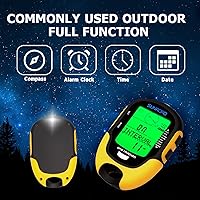
  • Additional Sensors: Beyond navigation, the watch includes a thermometer, hygrometer, pedometer, stopwatch, alarm clock, and a barometric-based weather forecast indicator.
  • Clasp Type: The band uses a traditional tang buckle closure, which is straightforward to adjust and replace if the band itself wears out over time.

Related Reviews
COROS APEX 2 Outdoor GPS Watch
83%
96%
Battery Life
92%
Build Quality
88%
GPS Accuracy
84%
Navigation & Maps
89%
Comfort & Wearability
More
Spodus G50002 Kids GPS Tracker Smart Watch
69%
78%
GPS Accuracy
54%
Battery Life
82%
SOS Reliability
61%
App Experience
76%
Value for Money
More
Aorkuler Tracker 2 GPS Dog Tracker
82%
91%
Off-Grid Reliability
67%
Tracking Range
94%
Ease of Setup
83%
Value for Money
88%
Battery Life
More
Garmin Fenix Enduro GPS Watch
85%
96%
Battery Life
92%
Build Quality & Durability
89%
Solar Charging Efficiency
88%
Activity Tracking Accuracy
75%
Ease of Use
More
SkyCaddie LX5 GPS Golf Watch
76%
93%
Course Map Accuracy
91%
Green Detail & IntelliGreen
74%
Touchscreen Responsiveness
88%
Display Quality
82%
Battery Life
More
CANMORE TW353 Golf GPS Watch
78%
83%
GPS Accuracy
88%
Course Coverage
91%
Ease of Use
79%
Display Readability
76%
Battery Life
More
CANMORE TW410G GPS Golf Watch
70%
74%
GPS Accuracy
83%
Course Database
88%
Value for Money
79%
Ease of Use
71%
Display Readability
More
Suunto Race GPS Sports Watch
80%
93%
Display Quality
91%
GPS Accuracy
74%
Battery Life
89%
Navigation & Maps
67%
Touchscreen Usability
More
Garmin Enduro 2 GPS Running Watch
81%
93%
Battery Life
91%
GPS Accuracy
89%
Build Quality & Durability
82%
Comfort & Fit
88%
Navigation & Mapping
More
Izzo Golf Swami GPS Watch
84%
88%
Ease of Use
91%
Battery Life
85%
Display Quality
89%
Course Recognition
82%
Water Resistance
More

FAQ

Yes, completely. The SUNROAD FR510 GPS Altimeter Outdoor Watch is a fully standalone device — it does not need Bluetooth, Wi-Fi, or a paired smartphone for any of its core functions. GPS, altimeter, compass, and barometer all operate independently, which is exactly the point for backcountry use.

The manufacturer claims sub-1m positioning error, and the triple satellite support (GPS, GLONASS, and BeiDou combined) does give it a real edge over single-system devices. That said, like any GPS instrument, dense canopy and steep canyon walls will degrade accuracy somewhat. For most trail hiking the performance is reliable; for technical navigation in extreme terrain, treat it as a strong aid rather than a surgical tool.

No, and this is worth understanding before you buy. The weather forecast function is based entirely on barometric pressure trends measured by the onboard sensor. It reads pressure changes over time and infers probable weather shifts from that pattern. It is genuinely useful for spotting incoming storms on a hike, but it is not connected to any meteorological service or satellite weather feed.

Battery life is not officially specified in detail, but user reports suggest several days of typical mixed use — meaning occasional GPS fixes, regular sensor checks, and normal timekeeping. Continuous GPS tracking will drain it faster. The USB charging cable is included, and the built-in rechargeable cell is a meaningful convenience over coin-cell swaps in the field.

The band uses a standard tang buckle attachment, so replacing it with a compatible aftermarket band of the same lug width is generally possible. The stock plastic band is the component most likely to show wear first, so knowing you can swap it out extends the practical life of the watch considerably.

Not really. The 30-meter water resistance rating covers rain, splashes, and brief accidental submersion — it is more than enough for hiking through wet conditions. However, it is not rated for swimming, snorkeling, or any sustained water immersion, so keep that in mind if your trips regularly involve water crossings.

This is a fair concern; the instruction manual draws consistent criticism for being sparse and hard to follow. Expect a bit of trial-and-error when exploring the multi-step menu functions for the first time. That said, once you have navigated the button layout a few times, daily operation becomes intuitive. Looking for user walkthrough videos online is a practical shortcut past the manual's limitations.

This outdoor altimeter watch has a digital display that performs reasonably well in moderate light, but direct midday sunlight can wash it out. The backlight helps in dim conditions but only stays on for 5 seconds per press, so you cannot leave it illuminated for extended viewing. If you frequently hike in intense sun without shade, this is a genuine trade-off to factor into your decision.

Barometric altimeters generally benefit from manual calibration at a known elevation point — especially after significant weather changes, which affect air pressure and therefore elevation readings. This multi-sensor trail watch allows you to set a reference altitude, which improves accuracy meaningfully over purely automatic readings. Getting into the habit of calibrating at a trailhead with a known elevation gives you much better results throughout the hike.

It is actually a reasonable entry point precisely because the cost of entry is low and the sensor range is wide. You get to experiment with altimetry, barometric pressure reading, and multi-system GPS without committing a large budget. The main patience tax is the instruction manual, but most beginners find that hands-on exploration covers what the documentation misses. If you later want to upgrade to a more rugged or feature-rich device, you will at least arrive there knowing what you actually use and value.