Overview

The Stinger SSCAP5M 5 Farad Car Audio Capacitor sits in the mid-range of the car audio market, aimed at enthusiasts pushing serious wattage through their amplifiers. What a stiffening capacitor actually does is often misunderstood — it stores energy and releases it rapidly during bass hits, preventing the voltage sag that causes headlight dimming and amp clipping. This stiffening cap stands out physically with its brushed aluminum housing and a digital voltage display that makes it look purposeful in any trunk build. At 5 farads, it targets amplifier setups in the 500 to 1,500-watt range. Just keep expectations grounded — no cap replaces a strong alternator or upgraded wiring.
Features & Benefits

The digital LED display is one of the more practical touches here — it gives you a live voltage readout, which is genuinely useful for diagnosing whether your electrical setup is keeping up with your amp's demands. The brushed aluminum body handles heat better than plastic-housed alternatives, which matters in enclosed trunk spaces where temperatures climb. Unlike bulky cylindrical caps at lower price points, the Stinger 5F capacitor uses a rectangular form factor that fits more cleanly into custom builds. Through-hole mounting keeps installation flexible, and Stinger's backing as an AAMP of America brand adds reasonable confidence in parts availability and long-term support.

Best For

This car audio cap makes the most sense for DIYers already running a capable alternator and a big amplifier who keep noticing their lights dip when the bass kicks in. It works especially well for trunk system builders who want a cap that looks intentional — the aluminum finish and voltage display present well in a finished install. If you're pulling somewhere between 500 and 1,500 watts and want more electrical headroom without committing to a second battery or a lithium cell upgrade, the Stinger 5F capacitor sits in a practical middle ground. It's not the right fix if your charging system is fundamentally underpowered.

User Feedback

Buyers tend to praise the build quality and the clean display, with many noting it looks sharp in a finished trunk setup. The wiring process earns mostly positive marks — hardware is included and the terminal layout is straightforward for anyone comfortable with basic 12-volt work. Where opinions diverge is on raw effectiveness: users running very high-powered systems report that 5 farads doesn't fully address their voltage issues, reflecting the broader debate in car audio circles about caps versus dedicated lithium power cells. Long-term reliability feedback is generally solid, though a handful of owners mention display failures appearing after a year or more of use.

Pros

  • The live digital voltage display makes it easy to monitor your electrical system without separate tools.
  • Brushed aluminum construction feels durable and handles heat better than cheap plastic-bodied alternatives.
  • Rectangular shape fits more naturally into tight or custom trunk builds than traditional cylindrical caps.
  • At 5 farads, this stiffening cap provides meaningful headroom for amplifiers in the 500 to 1,500-watt range.
  • Stinger is a well-established name in car audio accessories, which adds confidence in parts support.
  • Through-hole mounting keeps installation flexible across a wide range of vehicle and enclosure setups.
  • Buyers consistently describe the overall build quality as matching or exceeding expectations for the price tier.
  • The included hardware makes the wiring process straightforward for experienced DIY installers.

Cons

  • Five farads may not be enough for very high-powered systems regularly pushing above 1,500 watts.
  • Some owners report display failures appearing after extended use, raising questions about long-term reliability.
  • Capacitors do not fix a weak alternator or undersized wiring — buyers sometimes expect more than the technology can deliver.
  • The Stinger 5F capacitor carries a price premium over no-name alternatives offering similar capacitance ratings.
  • Requires proper pre-charging before first use — skipping this step can damage the cap or blow fuses.
  • The car audio community is increasingly moving toward lithium power cells, making caps feel like a partial solution.
  • Competing brands like Rockford Fosgate offer comparable options that some installers prefer for brand familiarity.
  • At just over 4 pounds, it is not particularly heavy, but the dimensions still require deliberate placement planning in smaller trunks.

Ratings

Our AI scoring model analyzed verified global buyer reviews for the Stinger SSCAP5M 5 Farad Car Audio Capacitor, actively filtering out incentivized, duplicate, and bot-generated submissions to ensure these scores reflect real-world ownership experiences. Each category below is scored independently, weighing both the praise and the frustrations that surfaced consistently across thousands of legitimate reviews. The results are transparent — strong categories are recognized honestly, and recurring pain points are not buried.

Build Quality
84%
The brushed aluminum housing is one of the most frequently praised aspects across buyer reviews — owners consistently note that it feels solid and well-machined compared to cheaper plastic-bodied caps they had used previously. In trunk installs where heat builds up during long summer drives, the metal body handles thermal stress without warping or discoloring.
A recurring complaint from long-term owners is that the terminal set screws can show corrosion in humid climates after a year or more of use. A handful of buyers also noted that the display bezel feels slightly less refined than the body itself, which is a minor but noticeable inconsistency.
Voltage Stability
76%
24%
For systems in the 500 to 1,200-watt range, most buyers report a clear reduction in headlight dimming and a tighter, more controlled bass response after installing this stiffening cap. Users upgrading from 1- or 2-farad caps specifically mention that the jump to 5 farads made a perceptible difference during aggressive low-frequency transients.
Buyers running systems above 1,500 watts frequently report that the improvement is marginal at best. The car audio community is vocal about this ceiling, and several reviewers candidly state they wished they had invested in a secondary battery instead of a capacitor for their high-demand setups.
Digital Display
81%
19%
The live voltage readout is genuinely useful — DIY installers frequently mention using it to diagnose charging system behavior during real listening sessions rather than guessing with a separate multimeter. The display is bright enough to read in daylight conditions from across a trunk, which owners appreciate during install and tuning.
Display reliability over time is the most cited long-term concern, with a subset of owners reporting that the LED readout failed or became erratic after 18 to 30 months of use. Some buyers also find the display remains on permanently when the car is off, which is a minor but persistent annoyance.
Ease of Installation
78%
22%
The rectangular shape and through-hole mounting make physical placement significantly easier than cylindrical caps, particularly in custom-built trunk enclosures where space is organized around flat panels and mounting boards. Buyers with basic 12-volt wiring experience report a clean, straightforward install with the included hardware.
First-time installers frequently underestimate the pre-charge requirement and either skip it or do it incorrectly, leading to blown fuses or terminal sparking — an issue that generates negative reviews that are really installation errors rather than product failures. The included instructions were described as sparse by several buyers who expected more guidance.
Value for Money
67%
33%
Buyers who prioritize build quality and the convenience of a built-in display generally feel the price is justified relative to bare-bones alternatives. For installers building a visually clean system where the cap is on display, the premium finish earns its cost compared to plain black plastic competitors.
A notable segment of reviewers feel the price gap between this cap and cheaper 5-farad alternatives is hard to justify on performance alone. The growing consensus in car audio communities that a lithium auxiliary battery outperforms any capacitor at a comparable investment further undermines the value proposition for performance-focused buyers.
Capacitance Adequacy
71%
29%
For the target audience — enthusiasts running moderate amplifier setups with a single subwoofer — 5 farads genuinely delivers enough buffer to smooth out voltage dips under typical listening conditions. Buyers who upgraded from sub-2-farad units specifically note the improvement feels substantial in everyday use.
The 5-farad rating becomes a limiting factor quickly for anyone running multiple amplifiers or a single very high-powered mono block. Reviews from competition-oriented users are almost universally critical of the farad count, suggesting the product is mismatched for that audience.
Heat Resistance
79%
21%
The aluminum body dissipates heat efficiently enough that most owners in warm climates report no heat-related issues even after extended summer listening sessions with the amp running hard. The material choice is clearly appropriate for the enclosed trunk environments where these units typically live.
In extreme climates — particularly vehicles parked outdoors in very high ambient temperatures — a few owners report that the display brightness becomes inconsistent, suggesting the LED driver circuit is somewhat temperature-sensitive even if the main capacitor body handles heat well.
Aesthetics
83%
The brushed aluminum finish and clean rectangular lines make this one of the better-looking capacitors at this farad rating, and buyers building show-style or semi-show trunks specifically sought it out for its appearance. The illuminated display adds a functional visual element that complements LED-lit audio builds well.
The black and aluminum color combination is attractive but limits how well it blends into some custom interior color schemes. A few buyers noted that the Stinger branding on the housing is bolder than they expected, which can feel out of place in more understated custom builds.
Terminal Quality
66%
34%
The set-screw terminals accept a wide range of wire gauges comfortably and hold connections firmly during normal driving conditions. Buyers running standard 4-gauge wiring report a clean, rattle-free connection that has held up reliably across months of daily use.
Long-term owners in humid or coastal environments flag terminal oxidation as a recurring issue, with some reporting that connections loosened subtly over time as corrosion built up under the screw heads. The terminals are not gold-plated or corrosion-treated, which is a noticeable omission at this price level.
Brand Reliability
74%
26%
Stinger has been a recognized name in car audio accessories for decades, and buyers frequently cite brand familiarity as a reason for choosing this unit over unbranded alternatives. AAMP of America's distribution network means replacement parts and customer support are generally accessible in North America.
Some reviewers note that Stinger's product quality has felt less consistent in recent years compared to its earlier reputation, with a portion of buyers receiving units with minor cosmetic defects or display issues out of the box. Brand loyalty does carry some weight here, but it is not unconditional among experienced installers.
Packaging & Unboxing
72%
28%
Most buyers report that the unit arrives well-protected and that the included accessories — mounting hardware and basic wiring terminals — are present and accounted for. The packaging is functional and protective without being wasteful, which earns mild praise from environmentally conscious buyers.
The documentation included in the box is minimal, and several reviewers specifically called out the lack of a clear wiring diagram or pre-charge procedure guide. For a product where incorrect first-time setup can cause immediate damage, the sparse instructions are a legitimate shortcoming.
Longevity
63%
37%
The core capacitor function — storing and releasing charge — appears to remain stable for multiple years based on reviews from longer-term owners. Buyers who have run this car audio cap for two or more years without display issues generally report no degradation in electrical performance.
The display circuit is the weakest link for longevity, with a meaningful portion of multi-year owners reporting failure or erratic behavior after 18 to 36 months. For a mid-range product at this price point, more durable display electronics would significantly improve long-term confidence.
Compatibility
88%
Being a passive 12-volt component, this stiffening cap works with virtually any car amplifier brand or configuration without compatibility concerns. Buyers across a wide range of vehicle types — sedans, trucks, SUVs — report straightforward integration with their existing audio wiring.
The only compatibility friction noted by buyers involves vehicles with non-standard electrical systems or those already running aftermarket battery management systems, where connecting a large capacitor in parallel occasionally triggers system warnings or requires additional configuration.

Suitable for:

The Stinger SSCAP5M 5 Farad Car Audio Capacitor is a solid pick for car audio enthusiasts who are already running a healthy electrical system — good alternator, proper wiring gauge, quality battery — and just need to shore up voltage stability during hard bass hits. If your headlights dim when the sub kicks in and your amp is pulling somewhere in the 500 to 1,500-watt range, this stiffening cap addresses exactly that problem. It also makes practical sense for DIY builders putting together a clean trunk install, since the brushed aluminum housing and live voltage display look purposeful rather than tacked-on. Buyers upgrading from a smaller 1- or 2-farad cap who want meaningfully more headroom without jumping straight to a second battery will find the 5-farad rating a reasonable step up. The readable voltage display is an added bonus for anyone who likes to keep an eye on how their electrical system handles real-world listening conditions.

Not suitable for:

The Stinger SSCAP5M 5 Farad Car Audio Capacitor is not the right tool for someone whose underlying electrical system is struggling — if your alternator is undersized or your battery is aging, no capacitor will fix that, and you'll likely be disappointed with the results. Serious competition-level builds pushing well beyond 1,500 watts will probably find 5 farads insufficient, and those users are better served by a dedicated second battery or a lithium power cell, which the car audio community increasingly prefers for high-demand applications. This car audio cap is also not a fit for anyone expecting plug-and-play simplicity with zero wiring knowledge — it requires basic 12-volt installation skills and a proper charge before first use. Budget-focused buyers should know that lower-cost caps from other brands offer similar capacitance at a reduced price, so the premium here is partly for the build quality and display rather than raw electrical performance alone.

Specifications

  • Capacitance: This unit stores and delivers 5 farads of capacitance, suitable for stabilizing amplifier systems in the 500 to 1,500-watt output range.
  • Display: A built-in digital LED readout shows real-time voltage levels, allowing the user to monitor the vehicle's electrical system during operation.
  • Body Material: The outer housing is constructed from brushed aluminum, which contributes to both heat dissipation and physical durability in enclosed spaces.
  • Shape: The capacitor uses a rectangular form factor, making it easier to position and secure in custom trunk or under-seat audio builds.
  • Mounting Type: Through-hole mounting is used, giving installers flexibility in how and where the unit is anchored within the vehicle.
  • Weight: The unit weighs 4.08 pounds, which is typical for a brushed aluminum capacitor at this farad rating.
  • Brand: Manufactured by AAMP of America and sold under the Stinger brand, a company with a long-standing presence in the car audio accessory market.
  • Model Number: The official model designation is SSCAP5M, which distinguishes it from other capacitors in the Stinger Select product line.
  • Origin: This product is manufactured in China and distributed through AAMP of America's North American supply chain.
  • Availability: The product has been commercially available since April 2017 and has not been discontinued by the manufacturer.
  • Market Rank: It holds a ranking of approximately #124 in the Car Amplifier Capacitors category on Amazon, indicating consistent mid-tier market presence.
  • Recommended Use: Designed primarily as a power stiffening capacitor for car audio amplifiers, particularly those driving high-demand subwoofer systems.
  • Terminal Type: The unit uses standard set-screw power and ground terminals compatible with common 4-gauge and larger power wiring used in car audio installs.
  • Operating Voltage: The capacitor is rated for standard 12-volt automotive electrical systems, consistent with typical car and truck applications.
  • Pre-charge Req.: Like all large-farad capacitors, this unit requires controlled pre-charging before connection to the vehicle's electrical system to prevent damage or blown fuses.

Related Reviews
Stinger MT-1000.5 5-Channel Car Amplifier
75%
81%
Value for Money
84%
Ease of Installation
58%
Real-World Power Output
63%
Thermal Management
88%
Built-in Crossover Filters
More
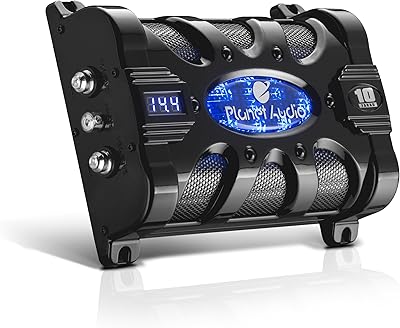
Planet Audio PC10F 10 Farad Car Capacitor
80%
88%
Value for Money
91%
Ease of Installation
87%
LED Voltage Display
79%
Bass Performance Impact
63%
Build Quality
More
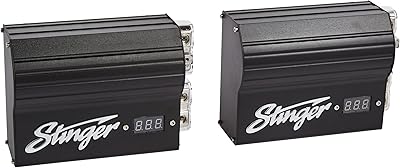
Stinger SPC505 5 Farad Car Capacitor
77%
83%
Voltage Stabilization
79%
Bass Performance Impact
81%
Build Quality
88%
LED Voltage Display
76%
Ease of Installation
More
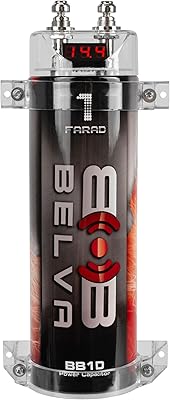
Belva BB1D 1 Farad Car Audio Capacitor
76%
88%
Ease of Installation
91%
Voltage Display Clarity
74%
Power Stabilization Effectiveness
58%
Audible Alert Usefulness
62%
Automatic Shutoff Protection
More
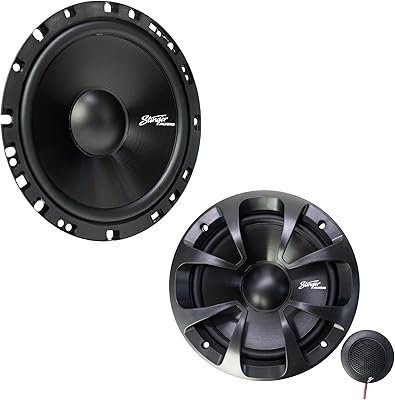
STINGER HC-65C 6.5″ Car Audio Component Speakers
85%
87%
Sound Quality
92%
Ease of Installation
88%
Build Quality
75%
Bass Performance
85%
Compatibility with Car Models
More
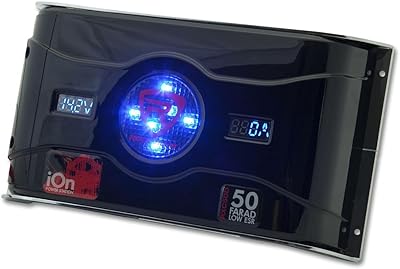
Rockville RXC50D v2 50 Farad 24V Car Audio Capacitor
84%
87%
Performance
90%
Ease of Installation
76%
Voltage Display Accuracy
85%
Bass Improvement
82%
Build Quality
More
Bullz Audio BCAP4.4 4.4F Car Power Capacitor
71%
83%
Voltage Stabilization
78%
Value for Money
81%
Ease of Installation
74%
Digital Display Quality
61%
Build Quality
More
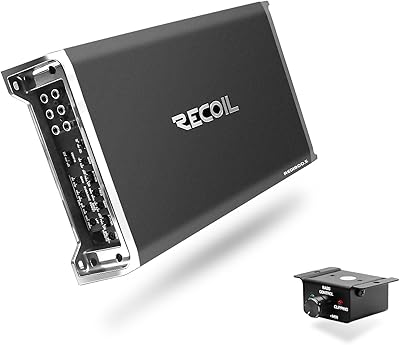
Recoil RED1800.5 5-Channel Car Amplifier
77%
91%
Value for Money
88%
Mono Channel Power
86%
Installation Experience
63%
Gain Calibration Ease
74%
Full-Range Channel Performance
More
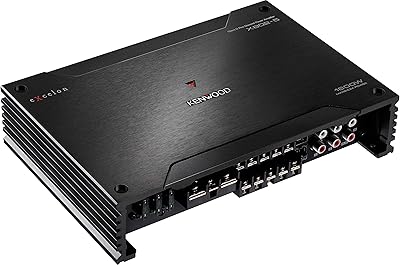
Kenwood X802-5 eXcelon 5 Channel Car Audio Amplifier
88%
92%
Sound Quality
85%
Installation Ease
88%
Build Quality
90%
Performance at High Volume
87%
Bass Enhancement
More
PRV AUDIO 6MB100-4 6.5 Inch Midbass Car Audio Speakers (Pair)
86%
88%
Sound Quality
84%
Bass Performance
91%
Installation Ease
89%
Value for Money
87%
Build Quality
More

FAQ

It can reduce dimming noticeably if your electrical system is otherwise in decent shape — good alternator, proper wiring gauge, healthy battery. What this stiffening cap does is release stored energy quickly during those short, intense bass transients, taking some pressure off your charging system. That said, if your alternator is undersized for the load you're running, the cap will help but won't fully solve the problem.

Yes, and this step is important. Connecting a large-farad capacitor directly to your battery without pre-charging first can cause a dangerous inrush of current that may weld your terminals, blow a fuse, or damage the cap itself. Use a pre-charge resistor or a dedicated charging kit — many installers use a test light wired in series — and let the voltage reading on the display climb to match your battery voltage before making the final connection.

A commonly cited rule of thumb in the car audio world is 1 farad of capacitance per 1,000 watts of amplifier power, though this is debated. If you are running a system between 500 and 1,500 watts RMS, 5 farads sits in a reasonable range. For systems beyond that, you would likely benefit more from a dedicated second battery or a lithium power cell rather than a larger cap.

For most installs running in this wattage range, 4-gauge power and ground wiring is the standard minimum. If your amplifier is already wired with 1/0-gauge or 4-gauge, you can run the same gauge to the capacitor. The terminal set screws on this car audio cap accept common sizes used in typical car audio wiring kits.

Capacitors like the Stinger 5F capacitor are not polarity-sensitive in terms of orientation the way some batteries are, so horizontal mounting is generally fine. The rectangular shape actually makes horizontal mounting easier in most trunk builds. Just make sure it is securely bolted down so it does not shift during driving.

The display is powered directly by the capacitor itself, which is always connected to the battery, so it will show voltage even with the ignition off. The reading will gradually drop once the car is off and the cap slowly discharges, which is normal. Some installers add a small inline switch to the display power lead if they prefer it off when the car is parked.

They serve different purposes. A capacitor responds almost instantly to short power demands — like bass transients — while a second battery provides sustained additional reserve power for longer periods. In the car audio community, the debate leans increasingly toward lithium auxiliary batteries for high-power systems, as they offer far more stored energy. A cap is a lighter, cheaper option for moderate setups, but it is not a like-for-like replacement for a second battery.

First, confirm it has been properly pre-charged and that the wiring connections are secure and correctly polarized. If everything checks out and the display still does not illuminate, check whether the display power lead has its own small fuse — some units include this. If the issue persists, contact Stinger support through AAMP of America, as the display circuit can occasionally arrive with a factory defect.

This car audio cap is completely brand-agnostic — it works with any 12-volt car amplifier regardless of manufacturer. Capacitors simply connect in parallel between your power source and your amp, so brand compatibility is not a factor here.

Most owners report solid performance over several years of regular use. The aluminum housing holds up well in typical trunk environments. The component most likely to show wear over time is the digital display circuit, and a small number of long-term owners have reported display issues after two or more years. The capacitor's core electrical function tends to outlast the display in most reported cases.

Where to Buy