Overview

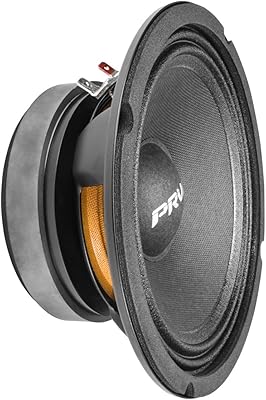
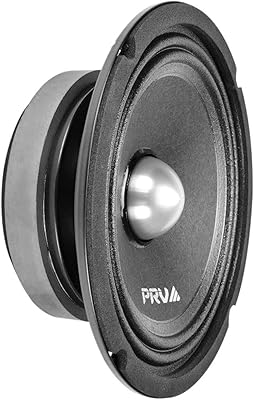
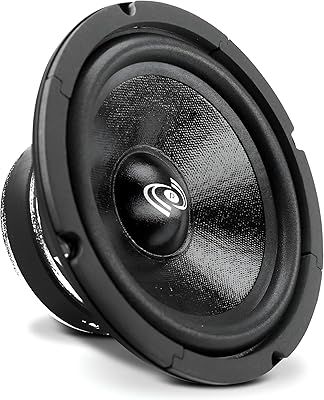
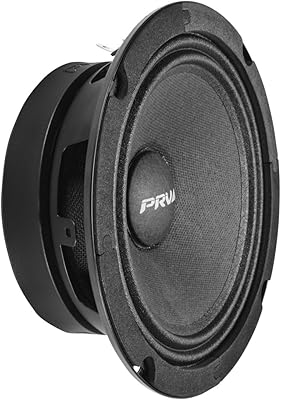
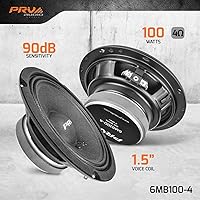
The PRV Audio 6MB100-4 6.5″ Midbass Car Speakers come from a brand with deep roots in professional audio, and that background shows in how these drivers are engineered. Unlike a typical coaxial replacement, these are dedicated midbass drivers — covering 90–10,000 Hz and built to work alongside a tweeter, not in place of one. The 4-ohm impedance is compatible with both factory head units and most aftermarket amplifiers. What really defines them is the 2.32-inch mounting depth, which makes a drop-in fit realistic for vehicles where door real estate is genuinely scarce. Know what you are buying, and they deliver exactly what they promise.
Features & Benefits

The shallow mounting depth is the feature that matters most here — it lets these midbass drivers slot into OEM locations that would reject most aftermarket options outright. Each speaker handles 100W RMS continuously, with 200W peak headroom, so they won't flinch when paired with a modest amplifier. At 90 dB sensitivity, they produce decent volume even off a factory head unit. The CCAW voice coil wound on a Kapton former reduces moving mass, which translates to quicker, more articulate midrange response. The stamped steel frame is practical rather than exotic, but it holds up reliably against the heat and vibration of everyday driving.

Best For

These midbass drivers are a natural fit for anyone dealing with tight OEM door pockets — Honda Civics, Toyota Tacomas, and GM trucks are common vehicles where standard aftermarket speakers simply won't sit flush. If you're building a two-way active setup with a separate tweeter, the 6MB100-4 speakers handle midrange and midbass duties cleanly without requiring custom fabrication. They also suit anyone running a small amplifier in the 50–100W RMS range. Value-focused buyers who want drivers carrying a pro-audio pedigree rather than a generic budget-brand label will find this PRV Audio upgrade genuinely hard to argue with at its price tier.

User Feedback

Buyers consistently highlight clean midrange clarity as the standout quality, with many noting the midbass punch holds up well at moderate listening volumes. Installation feedback skews positive — the shallow depth delivers on its promise in tight-cavity vehicles, and most owners describe the swap as straightforward. The honest criticism centers on the high-frequency ceiling: above roughly 5–6 kHz these drivers roll off, and anyone expecting full-range output will be let down. That is by design, not a defect. Build quality draws few complaints for the price tier. A recurring note across reviews is the strong recommendation to add a tweeter — buyers who do consistently report a far more complete and satisfying soundstage.

Pros

  • The 2.32-inch mounting depth fits tight OEM door locations in many popular vehicles without any panel modification.
  • Clean, articulate midrange output reflects the brand's pro-audio engineering background.
  • At 90 dB sensitivity, these midbass drivers produce solid volume even from a factory head unit.
  • The CCAW voice coil and Kapton former keep moving mass low, resulting in responsive and punchy transient delivery.
  • 100W RMS continuous power handling per speaker gives plenty of headroom for amplified setups.
  • Stamped steel frame holds up well to heat and vibration without rattling or warping over time.
  • Sold as a matched pair, making stereo installation straightforward with consistent sonic performance across both doors.
  • 4-ohm impedance is compatible with virtually all factory radios and common aftermarket amplifiers.
  • Build quality consistently draws positive feedback from buyers relative to the accessible price tier.
  • A great foundation for a two-way build — the 6MB100-4 speakers pair naturally with a tweeter for a complete soundstage.

Cons

  • No tweeter is included, so buyers must budget for and source additional components to achieve full-range sound.
  • The 90 Hz low-end rolloff means a subwoofer is necessary if you want any real bass presence.
  • High-frequency response fades well before the upper range of human hearing, limiting sonic detail above roughly 10,000 Hz.
  • Some buyers have reported needing adapter rings for specific vehicle makes, which adds minor cost and installation complexity.
  • The stamped steel frame, while functional, lacks the premium feel of cast-alloy alternatives found on higher-end drivers.
  • Not a suitable drop-in replacement for listeners who want a coaxial swap requiring zero system planning.
  • Without a crossover or high-pass filter, running these midbass drivers full-range can stress the voice coil unnecessarily.
  • Limited to wired installation only — no wireless or Bluetooth connectivity of any kind.
  • Buyers unfamiliar with two-way system planning may underestimate the total cost of building around these speakers.
  • The relatively narrow frequency window means sonic performance is heavily dependent on the quality of paired components.

Ratings

The scores below for the PRV Audio 6MB100-4 6.5″ Midbass Car Speakers were generated by AI after analyzing verified buyer reviews from multiple global markets, with spam, bot activity, and incentivized feedback actively filtered out. Each category reflects a genuine synthesis of what real owners praised and where they ran into frustration. Both the strengths and the honest trade-offs are represented without softening the results.
Mounting Depth & Fitment
93%
This is the category where these midbass drivers earn their strongest marks by a wide margin. Owners across a range of vehicles — Tacomas, Civics, Silverados, and more — consistently report that the 2.32-inch depth fits without any panel cutting or bracket fabrication, which is the core promise and it delivers.
A minority of buyers noted that certain vehicle models with non-standard mounting patterns still required adapter rings, adding a small but unexpected extra step. A handful of GM truck owners flagged minor alignment adjustments needed before the frame sat flush.
Midrange Sound Quality
88%
Clean, articulate midrange is the most common compliment in owner reviews. Vocals, acoustic guitars, and snare drums all reproduce with a level of clarity that buyers say clearly outpaces generic budget coaxials. The low moving mass from the CCAW voice coil and Kapton former is audible in the quicker transient response.
A portion of buyers with high expectations noted that midrange detail, while good, does not reach the refinement level of dedicated component drivers costing significantly more. At higher volumes, some reported a slight hardness in the upper midrange that a quality crossover can mitigate.
Bass Response
71%
29%
Within the 90 Hz and above operating range, these midbass drivers deliver punchy, satisfying impact on kick drums and bass lines during daily commutes. Owners who understand the driver type and pair it with a subwoofer report a cohesive, well-integrated low end across the full system.
Buyers who installed these expecting extended bass from door speakers alone were frequently disappointed. The 90 Hz rolloff is a hard physical reality, and without a subwoofer the system sounds thin and light below that threshold — a pain point that surfaces regularly in reviews from buyers who did not read the specs carefully.
Installation Ease
89%
The combination of shallow depth, standard 5.60-inch cutout compatibility, and conventional push terminals makes this one of the more installer-friendly drivers at this level. DIY buyers with basic tools consistently describe a clean, frustration-free swap in under an hour per door.
Some owners working on vehicles with plastic clips and tight door card clearances noted that the speaker itself was easy but the surrounding disassembly was vehicle-specific and could add time. A few buyers also wished for clearer polarity markings on the terminals.
High-Frequency Extension
52%
48%
Buyers who understood the midbass-only design and paired these drivers with a quality tweeter report a cohesive handoff in the crossover region, with no glaring gaps when properly configured. For those running a two-way active setup, the top-end limitation is a non-issue by design.
This is the most consistent complaint category for buyers who did not check the frequency response before purchasing. The 10,000 Hz ceiling means the speaker sounds noticeably dull and rolled-off without a tweeter, stripping out cymbal detail, vocal air, and upper harmonic content. It is a fundamental characteristic, not a defect, but it catches many buyers off guard.
Build Quality
81%
19%
The stamped steel frame feels solid in hand, with no flex or rattling noted during installation by the majority of buyers. Owners report that after months of driving — including highway vibration and temperature swings — the speakers hold their shape and maintain consistent output without loosening or buzzing.
The frame material and overall finish do not convey premium quality visually, which some buyers noted when comparing to higher-end cast-frame drivers. A small number of owners reported very minor cosmetic inconsistencies in the surround, though these had no reported impact on performance.
Value for Money
91%
At this price point, getting pro-audio-derived driver engineering in a package that actually fits difficult OEM locations represents genuine value. Buyers upgrading from dull factory speakers consistently report a noticeable improvement that they describe as disproportionate to the cost.
The value calculation shifts for buyers who factor in the additional cost of tweeters, a crossover, and potentially an amplifier — items the 6MB100-4 speakers practically require for full-range performance. The total system cost can climb well beyond the initial speaker price if buyers are starting from scratch.
Sensitivity & Headroom
84%
The 90 dB sensitivity rating means these midbass drivers produce listenable volume from a factory radio, which matters for buyers not yet running an amplifier. Owners who later added even a modest 4-channel amp reported a meaningful jump in clarity and dynamic range.
At very high volumes without an amplifier, a few buyers noted compression and a loss of punch — the drivers hit a ceiling when pushed by an underpowered factory source. The sensitivity is adequate but not exceptional, and the speakers reward a proper amp more than factory-power-only installations.
Compatibility Range
77%
23%
The standard 4-ohm impedance and conventional mounting dimensions mean these drivers are broadly compatible with a wide range of vehicles and head units out of the box. Most owners using common Japanese and American domestic vehicles report zero compatibility issues.
European vehicles with metric mounting patterns or non-standard door depths were occasionally cited as problematic. A few buyers also noted that dash or rear-deck locations with even tighter depth constraints still ruled these speakers out despite the shallow profile.
Power Handling
86%
Running at 50–75W RMS from a clean amplifier channel, these midbass drivers handle extended listening sessions without signs of thermal stress. Owners using them within the rated 100W RMS range report consistent output and no voice coil issues even after prolonged highway drives at moderate-to-high volume.
The 200W peak figure should be understood as a brief transient ceiling, not a sustained target. A small number of buyers who ran these wide open off an aggressively tuned amplifier reported early failure, which points to user error rather than a product defect but remains a real pattern.
System Integration
74%
26%
For buyers building a deliberate two-way or three-way system, the 6MB100-4 speakers slot in cleanly as a midbass foundation. Owners who planned their crossover points and paired them with competent tweeters describe a well-balanced soundstage that punches above the total system cost.
These speakers place a planning burden on the buyer that a simple coaxial does not. Buyers who underestimated the need for a tweeter and crossover often end up with a lopsided, mid-heavy system that requires a second purchase to correct, adding both cost and effort after the fact.
Packaging & Accessories
63%
37%
The speakers arrive well-protected in standard retail packaging, and both units in the pair are consistently reported to arrive undamaged. The matched pair format is appreciated by buyers who want symmetrical output from both doors without sorting through individual units.
No mounting hardware, adapter rings, wiring harnesses, or crossover components are included in the box. Buyers new to car audio frequently cite this as a gap, expecting at least basic hardware to be bundled given the installation-focused pitch of the product.
Longevity & Durability
79%
21%
Long-term owners — those with six months to over a year of regular use — generally report stable performance with no degradation in output or increase in distortion. The Kapton former and CCAW voice coil combination handles daily thermal cycling in a car door environment reasonably well.
There is limited long-term data available given the product's relatively short market history, which introduces some uncertainty. A small subset of buyers in hot climates reported surround softening earlier than expected, though this remains a minority report rather than a documented pattern.

Suitable for:

The PRV Audio 6MB100-4 6.5″ Midbass Car Speakers are a strong match for anyone whose main obstacle to a speaker upgrade is a shallow door cavity. If your vehicle — a Honda Civic, Toyota Tacoma, Chevy Silverado, or similar — has tight OEM speaker pockets that reject most aftermarket options, the 2.32-inch mounting depth solves that problem without any panel cutting or custom fabrication. They also suit enthusiasts building a two-way system who want a capable midbass driver to pair with a dedicated tweeter and, ideally, a subwoofer handling the low end below 90 Hz. Buyers powering these midbass drivers with a modest amplifier in the 50–100W RMS range will get the most out of them. If you want pro-audio driver engineering at a practical price without the complexity of custom builds, this PRV Audio upgrade is a smart, grounded choice.
Not suitable for:

Anyone expecting a full-range listening experience straight out of the box should look elsewhere before buying the PRV Audio 6MB100-4 6.5″ Midbass Car Speakers. These are dedicated midbass drivers — they roll off around 90 Hz on the low end and around 10,000 Hz on the high end, meaning you will absolutely need a tweeter to cover upper frequencies and a subwoofer if you care about bass extension. Buyers who want a simple plug-and-play coaxial replacement without sourcing additional components will find the system incomplete and likely disappointing. Listeners chasing deep, room-filling bass from door speakers alone will be let down by design — that is not what these drivers were built for. If you are not prepared to plan around a crossover and at least a basic tweeter, these speakers will underdeliver relative to expectations, regardless of how well they perform within their actual operating range.

Specifications

  • Speaker Type: These are dedicated midbass drivers, not full-range coaxials, designed to handle midrange and midbass frequencies as part of a multi-component system.
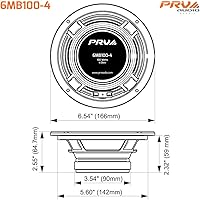
  • Nominal Diameter: Each speaker measures 6.5 inches (165 mm) in nominal diameter, fitting standard 6.5-inch OEM mounting locations.
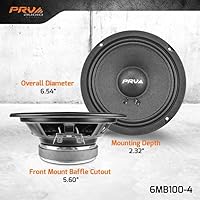
  • Mounting Depth: The shallow mounting depth of 2.32″ (59 mm) allows installation in tight door cavities without cutting or modifying interior panels.
  • Overall Depth: Total overall depth including the basket and magnet assembly is 2.55″ (64.7 mm).
  • Baffle Cutout: The front-mount baffle cutout required is 5.60″ (142 mm), consistent with standard 6.5-inch OEM speaker openings.
  • Impedance: Each speaker carries a nominal impedance of 4 ohms, making it compatible with most factory head units and aftermarket amplifiers.
  • Power Handling: Each driver handles 100W RMS continuously and up to 200W peak, providing ample headroom when paired with a modest external amplifier.
  • Sensitivity: Sensitivity is rated at 90 dB measured at 2V/1m, meaning these midbass drivers produce reasonable output even from a low-powered source.
  • Frequency Response: The rated frequency response spans 90 Hz to 10,000 Hz, covering midbass and midrange duties but requiring a tweeter for high-frequency extension.
  • Voice Coil: The 1.5-inch (38 mm) voice coil is wound with CCAW (copper-clad aluminum wire) on a Kapton former to reduce moving mass and improve transient response.
  • Frame Material: The speaker basket is constructed from stamped steel, offering reliable structural rigidity and resistance to road vibration at a practical cost.
  • Overall Diameter: The overall outer diameter of each speaker is 6.54″ (166 mm), accounting for the full frame including mounting flange.
  • Net Weight: Each individual speaker weighs 2.09 lbs (0.95 kg), making the pair straightforward to handle during a door panel installation.
  • Sold As: These speakers are sold as a matched stereo pair, with both drivers included in a single package.
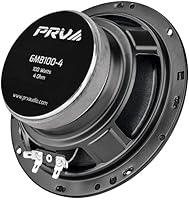
  • Connectivity: Connection is fully wired with no Bluetooth or wireless audio transmission — standard push-terminal wiring applies.
  • Waterproofing: These midbass drivers are not waterproof or water-resistant and are intended for enclosed OEM door locations only.
  • Warranty: PRV Audio includes a limited manufacturer warranty with this product; buyers should confirm current terms directly with the brand or retailer.
  • UPC: The product UPC is 810075520903, corresponding to the pair as sold under model number 6MB100-4.

Related Reviews

PRV AUDIO 6MB200-4 v2 6.5-inch Midbass Speaker
85%
87%
Bass Quality
91%
Vocal Clarity
85%
Durability
82%
Power Handling
88%
Sound Detail
More
PRV Audio 6MR250B-4 Slim 6.5-inch Midrange Speaker
84%
91%
Sound Clarity
94%
Fitment & Depth
88%
Value for Money
79%
Installation Experience
74%
Build Quality
More
Blaupunkt GTX650 6.5-Inch Coaxial Car Speakers
72%
78%
Sound Clarity
54%
Bass Performance
88%
Installation Ease
73%
Build Quality
76%
High-Frequency Performance
More
BOSS Audio NX654 6.5-Inch Car Coaxial Speakers
72%
88%
Value for Money
76%
Sound Quality at Moderate Volume
62%
Bass Response
67%
High-Frequency Clarity
91%
Ease of Installation
More
Blaupunkt GTS655M 6.5-inch Coaxial Car Speakers
72%
78%
Sound Clarity
53%
Bass Performance
84%
Fit & Compatibility
86%
Ease of Installation
67%
Build Quality
More
Scosche HD6504 6.5″ Car Coaxial Speakers
78%
83%
Sound Clarity
61%
Bass Performance
91%
Ease of Installation
74%
Build Quality
88%
Value for Money
More
JBL Stage 3627F 6.5-inch Car Speakers
78%
88%
Sound Clarity
61%
Bass Performance
91%
Installation Ease
84%
Value for Money
73%
Build Quality
More
Pyle PDMR6 6.5″ Car Midrange Speaker
74%
88%
Value for Money
71%
Sound Quality
67%
Build Quality
62%
Power Handling
83%
Ease of Installation
More
CT Sounds Meso-6.5-D4 6.5 Inch Dual 4 Ohm Car Subwoofer
83%
90%
Bass Performance
85%
Power Handling
88%
Build Quality
65%
Installation Ease
92%
Cooling System Effectiveness
More
JBL Club 64SQ 6.5-inch Car Coaxial Speakers
81%
88%
Sound Clarity
71%
Bass Performance
86%
Tweeter Quality
91%
Sensitivity & Efficiency
83%
Build Quality
More

FAQ

In many vehicles with standard 6.5-inch OEM locations — like a Toyota Camry, Honda Accord, or Chevy Silverado — they drop right in. That said, some makes and models use non-standard mounting patterns or depth tolerances, so it is worth checking your specific vehicle against the 5.60-inch cutout and 2.32-inch depth specs before ordering. A universal adapter ring can solve most fitment edge cases if needed.

You can run them off a factory head unit — the 90 dB sensitivity rating means they will produce decent volume without an amp. That said, they genuinely open up when paired with even a modest 4-channel amplifier in the 50–75W RMS range. If you are using a factory radio long-term, just make sure to avoid pushing the volume to the point of clipping, which is harder on speakers than pure wattage.

No, tweeters are not included. The PRV Audio 6MB100-4 6.5″ Midbass Car Speakers are purpose-built midbass drivers that roll off around 10,000 Hz, so adding a separate tweeter is genuinely necessary if you want a complete, full-range sound. Most buyers pair them with a small component tweeter and a passive crossover, which is a straightforward and affordable addition.
It is strongly recommended. Running these drivers full-range without a high-pass filter puts unnecessary strain on the voice coil and produces no real benefit above roughly 10,000 Hz anyway. A simple passive crossover or an amplifier with built-in crossover controls will protect the drivers and improve overall sound quality by rolling off frequencies outside their operating range.

The rated low end is 90 Hz, and that is a fairly honest number. These midbass drivers handle kick drum punch and lower midrange warmth well, but they are not going to give you deep sub-bass. For anything below 80–90 Hz you will want a dedicated subwoofer, even in a budget build.

Most owners with basic DIY experience find the install very manageable. The shallow depth is the biggest practical advantage — it eliminates the frustration of a speaker that technically fits the hole but bottoms out against the door frame. Standard wiring terminals, a consistent mounting pattern, and a relatively light weight per speaker all keep the process simple.

These drivers are rated at 4 ohms nominal, so they work best matched to a 4-ohm stable amplifier channel. Running them on an 8-ohm channel will reduce output noticeably. Running a 2-ohm stable amp into a 4-ohm load is electrically fine but means you are underutilizing the amp — not a problem, just not optimal.

Technically yes, you can use them alone, but you will notice a clear gap in bass below 90 Hz. For music with significant low-end content — hip hop, EDM, even most rock — the absence of a subwoofer will be obvious. If you are primarily listening to spoken word, podcasts, or acoustic music, they hold up reasonably well on their own as a temporary setup.

PRV Audio comes from a pro-audio manufacturing background, which means the driver components — particularly the voice coil and former materials — tend to reflect more deliberate engineering choices than typical budget car audio brands. The trade-off is that PRV Audio is less well-known among casual buyers, so finding local support or accessories can occasionally take more effort than with major consumer brands.

The stamped steel frame is robust enough for everyday driving conditions, and the CCAW voice coil keeps heat buildup manageable at normal listening levels. That said, like any car speaker, longevity is tied to how consistently they are used within their rated power range. Avoid sustained clipping from an underpowered or overdriven source and they should hold up well for years of regular use.

Where to Buy