Overview

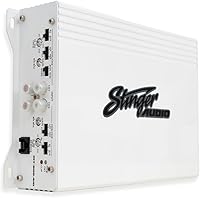
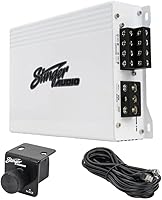
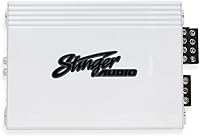
The Stinger Audio MT-600.4M Marine Amplifier enters a competitive mid-range segment where boat owners are demanding real performance without paying flagship prices. Stinger has been a respected name in vehicle and marine audio for years, and this 4-channel unit reflects that pedigree — built for the punishment marine environments regularly deliver. The Class D topology is what defines the character here: it runs efficiently, generates less heat than older AB-class designs, and draws less current from your vessel's battery. This is not a throwaway buy. It's a purposeful, performance-focused design that rewards a thoughtful installation.
Features & Benefits

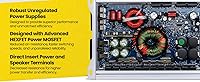
What makes this marine amp genuinely practical is how its engineering choices work together. The HEXFET MOSFET design delivers faster switching and lower on-resistance than standard MOSFET builds — in plain terms, it runs cleaner and holds up better under prolonged use. The built-in crossover filters — high-pass and low-pass — let you drive tweeters or mid-range speakers directly, no external crossover required. Direct-insert terminals reduce resistance at the connection points, which matters when you're moving real power. One honest note on wattage: like many amps at this price tier, that headline figure reflects optimal conditions — real-world output varies with impedance and voltage.

Best For

The MT-600.4M is a natural fit for space-conscious boat owners — pontoon riders, ski boat enthusiasts, or anyone working with limited mounting real estate under a console or seat. If you're running a component speaker setup with separate tweeters and woofers, the built-in crossover makes life considerably easier. It also suits buyers stepping up from a single-amp setup who want dedicated power channels without buying into a full, expensive multi-amp rig. That said, this 4-channel marine amplifier expects a decent head unit with preamp outputs for best results — if you're working with a basic factory stereo, plan for an LOC in your install.

User Feedback

Across the 63 ratings on Amazon, the most common praise centers on power-to-size ratio — owners are consistently surprised by how much output comes from such a compact chassis. Installation feedback is mostly positive, though a handful of buyers flagged that the included wiring diagram could use more clarity, especially for those new to multi-channel setups. On the performance side, a few users noted the unit runs warm under sustained high-volume use, which is worth monitoring in poorly ventilated installs. The water resistance appears to hold up in real conditions based on reported field use. Warranty support gets limited mentions — not many complaints, but not glowing praise either.

Pros

  • Compact dimensions make it fit in mounting spots where larger 4-channel amps simply cannot go.
  • Class D efficiency draws less current from your battery, a genuine advantage on long days out on the water.
  • Built-in high-pass and low-pass filters eliminate the need for a separate external crossover unit.
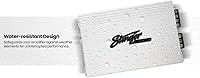
  • Water-resistant construction holds up reliably against spray, humidity, and typical open-water conditions.
  • HEXFET MOSFET technology contributes to stable, consistent operation across variable marine voltage conditions.
  • Direct-insert terminals reduce wiring resistance and make connections tidier during installation.
  • The MT-600.4M ranks among the top sellers in its marine amplifier category, reflecting solid buyer confidence.
  • Real-world output is clean and controlled at moderate listening volumes on pontoons and ski boats.
  • Stinger's established reputation in marine and vehicle audio accessories adds baseline brand credibility.

Cons

  • The included wiring diagram lacks the clarity needed for first-time multi-channel marine installs.
  • Real-world power output under standard 12V marine conditions falls noticeably short of the peak wattage claim.
  • Sustained high-volume listening causes this marine amp to run warm, requiring a well-ventilated mounting location.
  • A factory head unit without preamp outputs will require an additional line output converter to work properly.
  • The one-year warranty is short for a marine component exposed to harsh environmental conditions year-round.
  • Cosmetic finish shows wear from prolonged UV and salt-air exposure faster than the functional hardware does.
  • After-sales support and warranty service responses are inconsistently rated among the small pool of reviewers.
  • Long-term multi-season durability data is limited given the product only launched in early 2024.

Ratings

The Stinger Audio MT-600.4M Marine Amplifier has been evaluated using AI-driven analysis of verified global buyer reviews, with spam, incentivized feedback, and bot activity actively filtered out to ensure accuracy. The scores below reflect a transparent picture of real ownership experiences — covering both what this 4-channel marine amp genuinely excels at and where it falls short for certain buyers.
Sound Output & Power Delivery
83%
Buyers consistently note that this marine amp pushes more volume than its footprint suggests, with clean, controlled output at moderate listening levels on pontoons and ski boats. For a mid-range 4-channel unit, the headroom feels adequate for open-water use where ambient noise competes with the speakers.
A few experienced installers pointed out that real-world output at standard impedance and typical 12V marine voltage falls noticeably short of the headline wattage figure. Buyers expecting peak performance numbers in everyday conditions may find the honest delivery more modest than anticipated.
Build Quality & Durability
78%
22%
The chassis feels solid and purposeful — not flimsy — and most owners report no structural issues after a full season of use. The overall construction inspires confidence for a mid-range buy, and the fit of terminals and housing components draws positive comments from DIY installers.
A handful of buyers flagged that the housing finish shows minor cosmetic wear after prolonged UV and salt-air exposure. It holds up functionally, but those expecting premium-grade materials throughout may notice the cost-cutting in finer details.
Water Resistance
76%
24%
The water-resistant design holds up well in real marine conditions for the majority of users — spray, humidity, and the occasional splash do not appear to compromise operation. Owners running the amp under open consoles on bay boats and pontoons report consistent reliability across seasons.
The protection is resistance, not waterproofing — direct sustained water exposure, such as heavy rain with poor housing placement, has caused issues for a small number of buyers. Mounting location matters a great deal, and users who skipped a covered install spot took more risk than the design intends.
Thermal Management & Heat Dissipation
67%
33%
Under moderate volume and typical marine listening sessions, the MT-600.4M runs at an acceptable temperature and does not trigger thermal protection. Class D efficiency genuinely helps here versus older amplifier designs, reducing the raw heat load in confined under-seat installs.
Sustained high-volume listening — the kind that happens during long weekend cruises — causes the unit to run noticeably warm, and a few buyers reported thermal shutdown in poorly ventilated compartments. Airflow around the mounting location is not optional; it is a real installation requirement.
Installation Ease
79%
21%
Most buyers describe the physical installation as straightforward, praising the compact dimensions that make it easy to fit into tight console spaces or under bench seating. The direct-insert terminals are particularly well-received for reducing the fuss of wiring connections.
The included wiring diagram is a recurring sore point, especially among buyers tackling a multi-channel marine install for the first time. Several users resorted to third-party guides or online forums to complete the crossover configuration correctly, which adds time and friction.
Built-in Crossover Performance
81%
19%
Having both high-pass and low-pass filters on board is a genuine convenience that experienced installers appreciate — it simplifies speaker system design without adding external crossover hardware or extra wiring runs. Users running tweeters alongside mid-range drivers report clean frequency separation in practice.
The crossover adjustment range and precision are functional but not audiophile-grade. Buyers coming from higher-end amplifiers noted that the filter slopes feel broad, making fine tuning for demanding speaker setups a bit imprecise.
Value for Money
74%
26%
Positioned in the mid-range of the marine amplifier market, the MT-600.4M offers a strong feature set relative to its price — 4 channels, built-in crossovers, and decent water resistance in a compact body. For buyers not chasing boutique audio performance, the cost-to-capability ratio is reasonable.
A few buyers felt the pricing sits at the higher end of what the real-world power delivery justifies, particularly when compared to competitors offering similar specs. Those who researched deeply before buying expressed the strongest satisfaction; impulse buyers occasionally felt slightly underwhelmed.
Compact Form Factor
88%
This is a genuine strong suit — the physical dimensions make it one of the easier 4-channel marine amps to place in a boat. Buyers with tight storage under consoles or bench seats consistently call out the size as a deciding factor and report fitting it in spots where other amps simply would not go.
The compact body means the heatsink surface area is limited, which directly ties back to the thermal performance concerns mentioned elsewhere. There is an inherent trade-off between small size and heat management that buyers should factor into their install planning.
HEXFET MOSFET Reliability
82%
18%
Over a full boating season, buyers report stable, consistent operation with no unexplained failures or output degradation. The MOSFET technology appears to contribute meaningfully to the amp running reliably under the variable voltage conditions common in marine electrical systems.
Since this is a relatively recent product with limited long-term data beyond one to two seasons, multi-year durability remains an open question. Buyers looking for proven long-haul reliability may want to revisit user reviews after another year of real-world data accumulates.
Compatibility with Head Units
71%
29%
Buyers pairing this 4-channel marine amplifier with aftermarket head units that offer dedicated preamp outputs report clean, noise-free signal integration with minimal setup effort. It plays well with the major marine head unit brands in standard configurations.
Users connecting through lower-voltage or factory-style head units noted that an add-on line output converter was necessary to get clean signal levels, which adds cost and complexity that some buyers did not anticipate before purchase.
Wiring & Terminal Quality
77%
23%
The direct-insert terminal design receives consistent praise from installers for reducing connection resistance and making wiring tidy. Buyers appreciate that the terminals accept a reasonable range of wire gauges without forcing awkward adapters or reducers.
A few buyers noted that the terminal labeling could be clearer, particularly for the crossover input assignments. Minor layout complaints aside, there are no significant structural issues with the terminals themselves after installation and repeated seasonal use.
Brand Reputation & Warranty Support
66%
34%
Stinger carries genuine credibility in the car and marine audio accessories space, and for most buyers that brand recognition adds a baseline layer of confidence at purchase. The one-year warranty covers the fundamentals.
Warranty support and after-sales service receive very limited mention in reviews — and not always positive. The 63-rating pool does not provide strong enough signal to call support a strength, and buyers who needed assistance reported mixed response times and outcomes.
Noise Floor & Signal Clarity
72%
28%
At moderate gains and with a quality source signal, the MT-600.4M operates with an acceptably low noise floor for a marine application. Buyers using it for background music and mid-level listening sessions report clean audio without distracting hiss or interference.
Buyers who pushed the gain structure harder, or who connected via less-than-ideal signal sources, noted audible noise artifacts. Marine electrical environments are inherently noisy, and this amp does not include advanced noise filtration — proper grounding and wiring discipline are essential.

Suitable for:

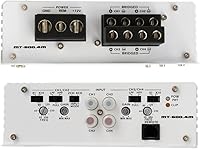
The Stinger Audio MT-600.4M Marine Amplifier is built for boat owners who need real multi-channel power without giving up precious space on a vessel. If you're running a component speaker system — separate tweeters and mid-range drivers — on a pontoon, ski boat, or bay boat, this amp's built-in crossover filters make the install significantly cleaner and less expensive than adding external crossover hardware. It's also a strong pick for anyone upgrading from a single-amp setup who wants dedicated power across four channels without jumping into a complex, costly multi-amp rig. Buyers who prioritize battery efficiency will appreciate the Class D design, which draws less current than traditional amplifier classes — a meaningful consideration when you're relying on a single marine battery for a full day on the water. If your mounting space is tight and your head unit has proper preamp outputs, this 4-channel marine amplifier slots in neatly and performs reliably across a standard boating season.
Not suitable for:

Buyers chasing audiophile-grade sound reproduction or who need verified, sustained high-wattage output at demanding impedance loads should look further up the price ladder — the MT-600.4M delivers solid mid-range performance, but its real-world power output under typical marine voltage conditions is more modest than the headline figure implies. If you plan to run the amp at high volume for extended periods in a sealed, poorly ventilated compartment, thermal management becomes a genuine concern, and this unit does not tolerate poor airflow particularly well. Anyone connecting through a basic factory head unit without preamp outputs will need a line output converter, which adds cost and complexity that may push the total install budget higher than expected. Buyers who prefer detailed, step-by-step manufacturer documentation for complex wiring configurations may find the included materials frustrating, especially when configuring the crossover filters for a mixed speaker setup. Finally, if long-term durability over multiple seasons is your primary concern, the relatively limited track record — this amp has only been available since early 2024 — means there simply is not enough multi-year real-world data yet to offer strong assurances.

Specifications

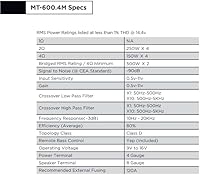
  • Model Number: The unit is officially designated MT-600.4M by Stinger.
  • Amplifier Class: This amplifier operates on a Class D (digital) topology, prioritizing high efficiency and reduced heat output compared to Class AB designs.
  • Channel Count: The amp delivers power across four independent channels, enabling full front and rear speaker coverage or a component speaker setup.
  • Power Output: Rated at 1000W RMS total across all four channels under optimal test conditions; real-world output at standard 12V marine voltage will vary by impedance load.
  • MOSFET Type: The internal power supply uses HEXFET MOSFET devices, which offer lower on-resistance and faster switching speeds than conventional MOSFET designs.
  • Crossover Filters: Onboard switchable high-pass and low-pass crossover filters allow direct frequency management for tweeters or mid-range drivers without external crossover hardware.
  • Water Resistance: The amplifier is built with a water-resistant construction intended to withstand marine moisture, humidity, and incidental water spray during normal boat operation.
  • Power Terminals: Direct-insert power terminals are used to minimize connection resistance and improve overall power transfer efficiency from the vessel's electrical system.
  • Speaker Terminals: Direct-insert speaker terminals provide low-resistance output connections, supporting clean signal delivery to all four channels.
  • Dimensions: The amplifier measures 14.33″ long by 7.83″ wide by 3.15″ tall in its retail packaging configuration.
  • Weight: The unit weighs 5.55 pounds, making it manageable for a single-person installation in confined boat compartments.
  • Warranty: Stinger covers this amplifier with a one-year limited manufacturer warranty from the date of purchase.
  • Market Rank: As of available data, the MT-600.4M holds the number 15 position in the Marine Amplifiers subcategory on Amazon.
  • Availability: This amplifier has been commercially available since March 2024, making long-term multi-season durability data still relatively limited.
  • Brand: Manufactured by Stinger, a company with an established presence in vehicle and marine audio accessories and wiring products.
  • Form Factor: The compact chassis is designed for space-efficient mounting under consoles, seats, or in storage compartments common on recreational boats.

Related Reviews
Stinger MT-1000.5 5-Channel Car Amplifier
75%
81%
Value for Money
84%
Ease of Installation
58%
Real-World Power Output
63%
Thermal Management
88%
Built-in Crossover Filters
More
BOSS Audio ASK904B.64 Marine Speaker Amplifier Kit
70%
83%
Ease of Installation
79%
Bluetooth Performance
67%
Sound Quality
86%
Value for Money
61%
Weather Resistance
More
Stinger MT-1500.1 Monoblock Car Amplifier
74%
83%
Bass Output Performance
57%
Rated vs Real-World Power
74%
Build Quality
62%
Heat Management
88%
Ease of Installation
More
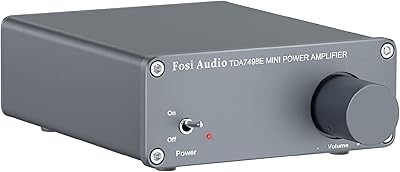
Fosi Audio TDA7498E
Fosi Audio TDA7498E
83%
88%
Sound Quality
93%
Value for Money
71%
Build Quality
74%
Power Output & Headroom
66%
Noise Floor & Background Hiss
More
Juke Audio Juke-6 6-Zone Multi-Room Amplifier
77%
83%
Ease of Setup
91%
AirPlay 2 Integration
86%
Spotify Connect Performance
78%
Audio Output Quality
93%
Multi-Zone Independence
More
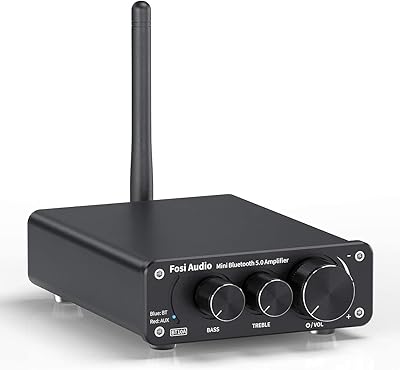
Fosi Audio BT10A
Fosi Audio BT10A
81%
93%
Value for Money
82%
Sound Quality
91%
Noise Floor
84%
Bluetooth Performance
67%
Power Output
More
Douk Audio OK013 Mini 2.1 Channel HiFi Stereo Amplifier
75%
83%
Value for Money
71%
Sound Output & Power
77%
Build Quality
88%
Ease of Installation
58%
Thermal Management
More
Fosi Audio BT30D
Fosi Audio BT30D
78%
83%
Sound Quality
88%
Subwoofer Performance
81%
Bluetooth Connectivity
91%
Value for Money
62%
Build Quality
More
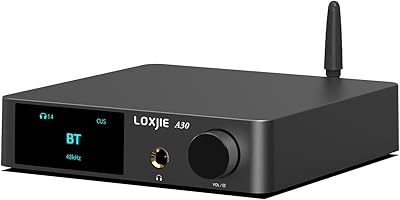
LOXJIE A30
LOXJIE A30
79%
86%
Sound Quality
82%
Build Quality
91%
Value for Money
89%
Input Versatility
63%
Bluetooth Performance
More
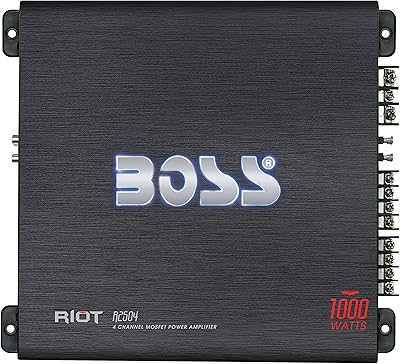
BOSS Audio R2504 4-Channel Car Amplifier
70%
82%
Value for Money
86%
Ease of Installation
51%
Power Output (Real-World)
58%
Thermal Management
62%
Build Quality
More

FAQ

Not exactly — that figure represents the total rated output under ideal test conditions, not what you'll reliably get running off a standard 12V marine battery. Real-world delivery across all four channels at typical marine voltage and impedance will be meaningfully lower. That said, it still provides plenty of volume for recreational boating use; just go in with realistic expectations rather than expecting peak numbers in everyday operation.

For normal marine exposure — spray, humidity, the occasional splash — yes, the water-resistant construction handles it fine based on real user reports. What it is not built for is direct sustained water exposure, like sitting in standing water or being mounted somewhere completely exposed to heavy rain with no overhead protection. Choose your mounting location carefully and you should be in good shape season after season.

You can, but you will likely need a line output converter (LOC) to step the factory signal down to proper preamp voltage levels. Without one, you risk noise issues and reduced control over gain staging. If you already have an aftermarket marine head unit with dedicated preamp outputs, the connection is straightforward and clean.

At moderate volume levels it runs warm but manageable. If you push it hard for several hours straight in a sealed or poorly ventilated compartment, it can get hot enough to trigger thermal protection. The fix is simple: make sure there is airflow around the unit when you mount it. Do not stuff it into a completely sealed box with no ventilation and expect it to run cool all day.

No — that is one of the genuine practical advantages of the Stinger Audio MT-600.4M Marine Amplifier. The built-in high-pass and low-pass filters let you direct appropriate frequencies to the right speakers without adding external crossover hardware or extra wiring complexity to your install.

For an amplifier rated in this power class, a 4-gauge power and ground wire is the typical recommendation to avoid voltage drop and heat buildup at the connections. If your run from the battery is particularly long — more than about 15 to 17 feet — consider stepping up to 2-gauge to compensate. Always fuse the power wire close to the battery.

Yes, it is a natural match for pontoons. The compact size fits easily in the typical storage compartments pontoons offer, and four channels give you the flexibility to power front and rear speaker pairs independently. Buyers running it on pontoons describe solid real-world performance for social listening and background music at the volumes most pontoon outings call for.

If you have wired a car amplifier before, the physical install here is very similar and should not give you much trouble. The one area where people run into friction is the crossover wiring configuration — the included diagram is not particularly detailed, so having a general marine amp wiring guide or a forum reference on hand before you start will save you time and frustration.

Many 4-channel amps in this class support bridging two channels together for higher mono output — for example, to drive a subwoofer from the rear pair while the front pair handles full-range speakers. Check the product documentation or Stinger directly to confirm the specific bridged output rating and minimum impedance for the MT-600.4M before wiring it that way.

Stinger provides a one-year limited manufacturer warranty. Coverage for defects is standard, but buyer experiences with the claims process are mixed in the review pool — response times and outcomes vary. Keep your proof of purchase, register the product if Stinger offers that option, and contact their support directly if an issue arises rather than going through a third-party retailer.

Where to Buy