
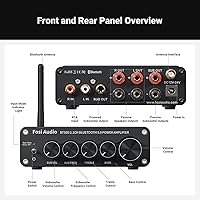
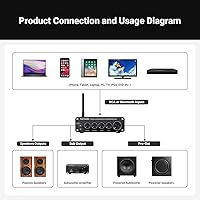
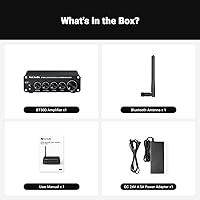
Overview

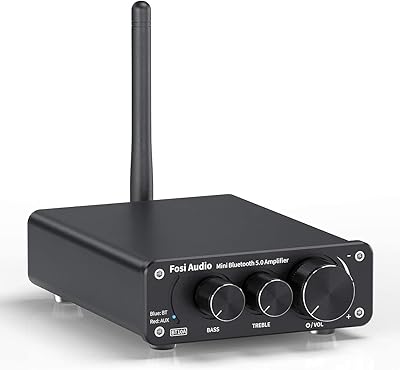
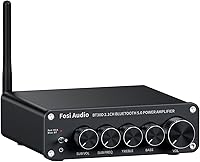
The Fosi Audio BT30D is a compact 2.1-channel Class D amplifier that has quietly held its ground in the budget-to-mid-range audio market since its 2018 debut. Powered by dual Texas Instruments TPA3116D2 chips — a chipset well-regarded for punching above its weight class — this mini amp manages to offer real stereo plus dedicated subwoofer amplification in a box barely larger than a paperback. Bluetooth 5.0 and an RCA input sit side by side without cluttering the interface, giving you wireless convenience and a wired fallback in one tidy package. For casual listeners stepping into proper speaker setups, it's a surprisingly capable starting point.

Features & Benefits

At the heart of this desktop amplifier are those TPA3116D2 chips, which drive each stereo speaker channel with enough headroom for most bookshelf and small floor-standing speakers, while routing a separate, higher-power signal to a subwoofer output. It's worth noting that rated wattage figures reflect peak conditions rather than sustained real-world listening levels, so treat the power spec as a ceiling, not a promise. The independent crossover control is where this mini amp genuinely earns its keep: being able to dial in the sub's blend frequency without an external processor is a feature you rarely find at this price tier. Bass and treble controls add further room for adjustment without requiring a standalone equalizer.

Best For

This desktop amplifier hits its sweet spot with buyers building their first real speaker system on a budget — think a pair of passive bookshelf speakers and a compact sub for a desk or bedroom shelf. It also works well as a secondary room amp, whether that means a bedroom TV setup or a garage workshop where you'd rather stream from your phone than run cables. PC users who already own a USB DAC or soundcard with line-level output will find the RCA input a natural fit. If you're already deep into high-fidelity audio and own sensitive, high-impedance speakers, this mini amp may feel limiting — but for everyone else getting started, it's a sensible, unfussy choice.

User Feedback

Across a substantial number of reviews, buyers consistently call out punchy sound as the headline win — especially relative to what you pay. The subwoofer channel and its blend controls draw particular praise from first-time 2.1 builders who expected to compromise more. On the flip side, the power brick is noticeably chunky for a device this small, and the volume knob has a hollow, plasticky feel that undermines an otherwise tidy unit. A minority of users with sensitive speakers report a faint background hiss at high volumes, which is worth factoring in before buying. A few longer-term owners also flag questions about long-term durability once past the first year, though this represents a small fraction of the overall feedback.

Pros

  • Dedicated subwoofer channel with adjustable crossover frequency — a rare feature at this price tier.
  • Bluetooth 5.0 delivers reliable, low-dropout wireless streaming from phones, tablets, and laptops.
  • Dual Texas Instruments TPA3116D2 chips provide clean, low-distortion audio for casual and moderate listening.
  • Onboard bass and treble controls reduce the need for a separate equalizer in most setups.
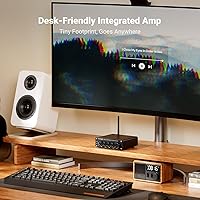
  • Compact enough to sit behind a monitor or on a media shelf without taking up meaningful space.
  • RCA input makes it easy to connect TVs, turntables with preamps, or a desktop DAC.
  • The BT30D ships with its power supply included — something not all competing units bother to provide.
  • Sound quality relative to the asking price consistently impresses first-time buyers and casual listeners.
  • Wide impedance tolerance means it works with a broad range of passive bookshelf speakers without fussy matching.
  • Setup takes only a few minutes — even for buyers who have never owned a standalone amplifier before.

Cons

  • The volume knob feels hollow and plasticky, which undercuts the otherwise tidy physical presentation.
  • The bundled power brick is disproportionately large for such a compact unit, creating desk clutter.
  • High-sensitivity speakers can reveal an audible hiss at rest, even at low to moderate volume settings.
  • No optical or USB audio input limits compatibility with devices that lack analog outputs.
  • Only two inputs means frequent source-switching between three or more devices is awkward without an external switcher.
  • Long-term reliability past the one-year mark is uncertain based on a recurring pattern in owner feedback.
  • The unit can run noticeably warm during extended high-volume sessions, requiring open placement for safe operation.
  • Warranty and after-sales support experience is less straightforward than purchasing from an established audio brand.
  • No speaker wire is included in the box, adding an extra purchase step for first-time buyers.
  • The user manual lacks detail on optimal subwoofer crossover settings, leaving new users to figure it out independently.

Ratings

The Fosi Audio BT30D has been scored below using AI analysis of verified global buyer reviews, with spam, incentivized feedback, and bot activity filtered out before scoring. The ratings reflect real-world usage patterns across desktop setups, bedroom systems, and first-time speaker builds — capturing both the genuine strengths and the honest frustrations buyers report. Every category score is calibrated to reflect where this mini amp leads its class and where it falls short.

Sound Quality
83%
Most buyers describe the audio output as notably clean and punchy for a Class D amp at this size and price tier. The low distortion figures translate to a listening experience that holds up well for casual listening sessions at moderate volumes, whether streaming from a phone or connected via RCA from a desktop PC.
At higher volumes, the sound can lose some composure, particularly in the midrange. Listeners with more critical ears or better-quality reference speakers tend to notice a flatness that a more expensive amplifier would avoid.
Subwoofer Performance
88%
The dedicated subwoofer channel with its independent volume and crossover frequency control is one of the most praised aspects of this desktop amplifier. Being able to blend the sub smoothly without any external hardware is a real-world convenience that first-time 2.1 builders genuinely appreciate.
The subwoofer channel output is rated under peak test conditions, so buyers expecting thunderous low-end from a large passive sub may be disappointed. It performs best when matched with a smaller, efficient subwoofer rather than a large, power-hungry cabinet.
Bluetooth Connectivity
81%
19%
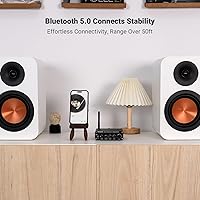
Bluetooth 5.0 delivers noticeably stable pairing with smartphones, tablets, and laptops across a living room or bedroom without frequent dropouts. Users appreciate not needing to re-pair the device each session, and the wireless range holds up comfortably across typical small-room distances.
A small number of users report occasional stuttering when there are multiple wireless devices competing in the same frequency band. There is also no aptX or LDAC support, which means audiophile-grade wireless audio quality is not on the table here.
Value for Money
91%
For buyers stepping into a proper 2.1 speaker system for the first time, this mini amp offers a feature set that would cost noticeably more from established Western audio brands. The combination of tone controls, subwoofer blending, and dual-input flexibility at this price tier is difficult to match.
As a longer-term investment, the value proposition weakens slightly. If the unit develops issues after a year of use — something a minority of reviewers mention — repair or warranty support from a smaller Chinese audio brand can be harder to navigate than dealing with a major retailer's ecosystem.
Build Quality
62%
38%
The chassis is compact and fits neatly on a desk or shelf without feeling fragile under normal handling. For a device that mostly sits stationary, the structural integrity is adequate for its intended purpose.
The volume knob is the most common criticism: it feels hollow and plasticky rather than reassuringly solid. The included power brick is also disproportionately large for such a small unit, which can create a cluttered look on a tidy desk setup.
Ease of Setup
89%
Getting the BT30D running takes only a few minutes — connect speakers to the terminals, plug in power, and pair via Bluetooth or plug in an RCA cable. The learning curve is almost nonexistent, which makes it genuinely approachable for buyers who have never owned a separate amplifier before.
The user manual is functional but thin on detail, which occasionally leaves buyers guessing about optimal crossover settings for their specific subwoofer. Those pairing it with a passive subwoofer for the first time may need to do additional research outside the box.
Input Flexibility
78%
22%
Having both Bluetooth and a stereo RCA input covers the majority of everyday source devices without needing adapters. It handles TV audio, turntable output via a preamp, and computer line-level output equally well in real use.
Two inputs is functional but limiting for users who want to switch regularly between three or more sources. There is no optical or USB audio input, so buyers with only digital outputs on their devices will need an external DAC.
Tone Controls
74%
26%
The onboard bass and treble knobs give just enough room to compensate for a bright or dull speaker pairing without needing a separate equalizer in the chain. In a typical desktop setup, small adjustments here can meaningfully improve the overall tonal balance.
The controls are basic single-band adjustments rather than a parametric or multi-band EQ, so fine-tuning is limited. Users with acoustically problematic rooms or particular speaker colorations will likely still want an external solution.
Noise Floor
67%
33%
Under normal listening conditions with average-sensitivity speakers, the background noise floor is low enough to be inaudible and does not detract from the listening experience. The measured signal-to-noise ratio figures are respectable for this amplifier class.
With high-sensitivity speakers — particularly anything above 90dB efficiency — a faint but noticeable hiss becomes audible at rest. It is not a dealbreaker for most setups, but for buyers planning to run horn-loaded or high-efficiency bookshelf speakers, it is worth investigating before committing.
Wireless Range
76%
24%
In open-plan living spaces and typical bedrooms, the BT30D maintains a reliable connection across the room without the micro-dropouts that plague older Bluetooth hardware. Streaming from a phone on the other side of a room works consistently.
Walls and interference from other 2.4GHz devices can reduce the effective range below the advertised maximum. In dense apartment buildings with heavy wireless traffic, some users report occasional instability beyond about 25 feet.
Size & Form Factor
86%
The small physical footprint is a genuine advantage for desk and shelf setups where every inch matters. It slides easily behind a monitor or onto a media shelf without dominating the space the way a traditional AV receiver would.
The compact size means less internal heat dissipation area, and the unit can become noticeably warm during extended listening sessions at higher volumes. It is not dangerously hot, but placement in an enclosed cabinet without airflow is inadvisable.
Speaker Compatibility
79%
21%
The wide impedance tolerance means it works with a broad range of passive bookshelf and small floor-standing speakers without needing to worry about matching specs too carefully. This makes it forgiving for buyers who are mixing and matching equipment they already own.
It is not designed for demanding, low-sensitivity speakers or large floor-standers that need sustained high current. Buyers with high-end passive speakers would likely be bottlenecked by this amp before the speakers reach their potential.
Long-Term Reliability
61%
39%
The majority of buyers who use the BT30D for casual daily listening report no hardware failures within the first year. For light-to-moderate usage in a home environment, it appears to hold up without issue for most owners.
A recurring theme among longer-term owners is uncertainty about durability beyond the one-year mark. Component quality and brand warranty support are less reassuring than what established audio brands offer, which is a real consideration for buyers who want a long-term solution.
Packaging & Included Accessories
71%
29%
Everything needed to get started arrives in the box, including the power supply, which some competing units omit. The packaging is tidy and protective enough that units typically arrive without damage.
The included power adapter is oversized relative to the amp itself and lacks cable management provisions. No speaker wire is included, which means first-time buyers need to source that separately before they can hear anything.

Suitable for:

The Fosi Audio BT30D is a strong fit for anyone building their first proper 2.1 speaker setup on a sensible budget — particularly those who want real stereo plus subwoofer output without buying multiple separate components. It works especially well on a computer desk, where the compact chassis disappears behind a monitor and the Bluetooth connection handles daily streaming from a phone or laptop without fuss. Bedroom listeners who want a step up from a Bluetooth speaker or a cheap soundbar, but are not ready to invest in a full AV receiver, will find this mini amp hits a practical middle ground. It also suits secondary rooms in a home — a spare bedroom, a home office, a workshop — where you want decent sound without committing serious money. PC users who already own a USB DAC or external soundcard will appreciate how naturally the RCA input fits into an existing setup. If your speaker collection includes a pair of passive bookshelves gathering dust and a compact subwoofer, this desktop amplifier is a low-friction way to bring that system to life.

Not suitable for:

Buyers who prioritize long-term durability and robust warranty support should approach this mini amp with realistic expectations — a segment of longer-term owners do raise questions about reliability past the one-year mark, and after-sales support from a smaller brand is not the same experience as dealing with a major electronics manufacturer. Listeners who own high-sensitivity or high-efficiency speakers will likely encounter a faint but noticeable background hiss at rest, which makes the BT30D a poor match for that particular speaker category. Anyone expecting the rated power figures to reflect what the amp sustains during normal listening will be disappointed — like most Class D amps in this tier, those numbers describe a peak condition rather than a continuous real-world output. Serious audiophiles who have already invested in quality passive speakers, or who want optical and USB audio inputs alongside Bluetooth, will run up against the limits of the feature set here. This desktop amplifier is also not a good choice for large rooms or for driving inefficient, power-hungry floor-standing speakers that need sustained high current to perform well.

Specifications

  • Amplifier Class: The BT30D uses Class D amplification, which prioritizes energy efficiency and compact component sizing without significant sacrifice to audio fidelity at this performance tier.
  • Amplifier Chips: Two Texas Instruments TPA3116D2 chips handle amplification duties, one dedicated to the stereo channels and one to the subwoofer output.
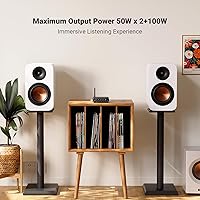
  • Stereo Output: Each of the two stereo channels is rated at 50W under peak test conditions, meaning real-world sustained output will be lower during normal listening.
  • Subwoofer Output: The dedicated subwoofer channel delivers up to 100W under peak conditions, compatible with both passive and powered subwoofer configurations.
  • Channels: The unit operates as a 2.1-channel amplifier, with two independent stereo speaker outputs and one subwoofer output managed separately.
  • Bluetooth Version: Bluetooth 5.0 is built in, providing improved connection stability and a usable wireless range of approximately 50 feet in open conditions.
  • Wired Input: A single stereo RCA input accepts line-level signals from sources such as TVs, preamp-equipped turntables, DACs, or soundcards.
  • Speaker Impedance: The amplifier supports speaker loads between 2 and 8 ohms, making it broadly compatible with most passive bookshelf and small floor-standing speakers.
  • THD Rating: Total harmonic distortion is rated at or below 0.04%, indicating a clean signal path with minimal audible coloration under standard operating conditions.
  • Signal-to-Noise Ratio: The signal-to-noise ratio is rated at 98dB or above, which translates to a low noise floor during normal listening with average-sensitivity speakers.
  • Tone Controls: Dedicated bass and treble rotary controls are provided on the front panel, allowing basic tonal adjustment without requiring an external equalizer.
  • Subwoofer Controls: Separate rotary controls for subwoofer volume and crossover frequency allow independent tuning of the low-frequency output to suit the paired subwoofer and room.
  • Power Supply: The unit ships with a 24V DC power adapter rated at 4.5A; the supply is external and the adapter head is notably larger than the amplifier itself.
  • Input Voltage: The power adapter accepts a wide AC input range from 110V to 240V, making the unit compatible with standard electrical systems worldwide.
  • Dimensions: The amplifier body measures 5.2 x 4.72 x 1.38 inches, making it small enough to sit on a desk shelf or behind a monitor without occupying significant space.
  • Weight: The unit weighs 2.42 pounds without the power adapter, which is light enough to reposition easily within a desktop or shelf setup.
  • Certifications: The BT30D carries FCC certification, confirming it meets U.S. regulatory requirements for electromagnetic emissions from electronic devices.
  • Outputs: Speaker outputs use standard binding post terminals compatible with bare wire, pin connectors, and banana plugs for flexible speaker cable termination.

Related Reviews
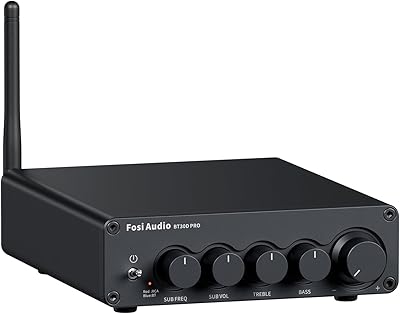
Fosi Audio BT30D Pro
79%
91%
Power Output
93%
Subwoofer Control
88%
Sound Quality
86%
Build Quality
82%
Bluetooth Performance
More
Fosi Audio TDA7498E
Fosi Audio TDA7498E
83%
88%
Sound Quality
93%
Value for Money
71%
Build Quality
74%
Power Output & Headroom
66%
Noise Floor & Background Hiss
More
Fosi Audio BT10A
Fosi Audio BT10A
81%
93%
Value for Money
82%
Sound Quality
91%
Noise Floor
84%
Bluetooth Performance
67%
Power Output
More
Fosi Audio P4
Fosi Audio P4
81%
88%
Build Quality
84%
Sound Quality
91%
Motorized Volume Control
79%
Remote Control
86%
Input Flexibility
More
Fosi Audio HT4S
Fosi Audio HT4S
80%
88%
Build Quality
84%
Value for Money
76%
Sound Quality
82%
Multi-Channel Versatility
63%
Bluetooth Performance
More
Fosi Audio M03
Fosi Audio M03
81%
91%
Audio Clarity & Distortion
74%
Power Output & Headroom
88%
Versatility & Operating Modes
93%
Value for Money
72%
Build Quality & Enclosure
More
Fosi Audio ZP3 Balanced Preamp
88%
94%
Sound Quality
88%
Ease of Use
90%
Build Quality
87%
Customization Options
75%
Memory Function
More
Fosi Audio SK01 Headphone Amplifier
83%
88%
Sound Quality
72%
Battery Life
91%
Build Quality
85%
Tone Control Flexibility
80%
Portability
More
Fosi Audio V3 Stereo Amplifier
81%
93%
Value for Money
91%
Audio Clarity & Noise Floor
67%
Real-World Power Output
74%
Build Quality & Finish
88%
Thermal Management
More
Fosi Audio M04 Subwoofer Amplifier
89%
94%
Bass Performance
91%
Sound Clarity
88%
Build Quality
90%
Ease of Setup
87%
Thermal Management
More

FAQ

It works with both. The subwoofer output on this mini amp can drive a passive subwoofer directly, and it also has a line-level output mode for powered subs that have their own built-in amplifier. Just make sure you are using the correct output mode for your specific sub.

For most speaker setups, the noise floor is low enough that you will not notice anything at normal listening distances. However, if you are using high-sensitivity speakers — roughly above 90dB efficiency — some users do report a faint hiss audible during quiet passages or at rest. It is worth factoring in if you are pairing this with particularly sensitive speakers.

There is a rotary control on the unit specifically for crossover frequency. You adjust it by ear until the transition between your bookshelf speakers and the subwoofer sounds smooth — typically somewhere between 80Hz and 120Hz is a reasonable starting point for most small passive subs. The manual gives basic guidance, but you may need to experiment a little based on your specific speakers.

No, it does not. The unit supports Bluetooth 5.0 for connection stability and range, but it does not advertise aptX, LDAC, or AAC codec support. For most casual streaming from a phone or laptop, this is not a problem, but if high-resolution wireless audio is important to you, you would need a separate Bluetooth receiver with better codec support feeding into the RCA input.

Yes, but only if your turntable has a built-in phono preamp, or if you have a separate phono preamp between the turntable and the amp. The RCA input on this desktop amplifier is a standard line-level input, not a phono input, so a raw phono cartridge signal will be too quiet and will sound thin without that preamp stage in the chain.

The unit runs warm during extended listening sessions, which is normal for a Class D amp in a compact chassis, but it is not designed to be enclosed in a tight cabinet without airflow. Left in an open position on a desk or shelf, most users run it for hours without problems. Just avoid placing it in an enclosed media cabinet with no ventilation.

Standard 16 or 18 AWG speaker wire works well for most desktop and small-room setups. For longer cable runs you might consider going slightly heavier, like 14 AWG, to minimize resistance, but for typical desk distances there is no practical difference.

There is a manual input selector on the unit, so you choose which source is active rather than having it switch automatically. This is actually a plus for most users since it means your Bluetooth device reconnecting unexpectedly will not interrupt playback from your RCA source.

Yes, the impedance range runs down to 2 ohms, so 4-ohm speakers are well within the supported range. Just be aware that lower-impedance loads draw more current from the output stage, which can cause the unit to run warmer during demanding sessions.

The rated figures reflect peak or maximum test conditions, not what the amp sustains during a typical listening session at reasonable volumes. In practice, the usable output for comfortable daily listening is a fraction of the peak rating, which is true of virtually all Class D amps at this tier. For a desktop or small-room setup with efficient bookshelf speakers, there is more than enough headroom — you are unlikely to run out of volume before the sound starts to distort.