Overview

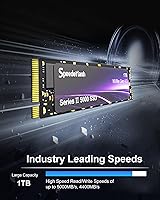
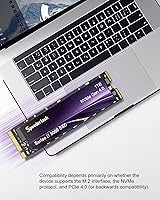
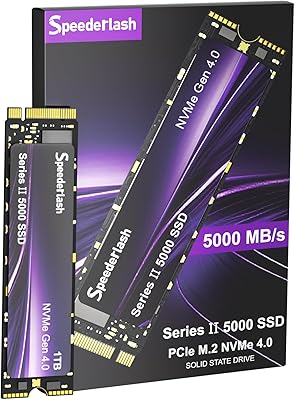
The Speederlash PCIE4 1TB NVMe SSD arrived on the market in late 2024 as a budget-friendly option for anyone who wants Gen 4 PCIe speeds without paying flagship prices. Speederlash isn't a household name — that's worth acknowledging upfront — but this NVMe drive comes with a copper heatsink included in the box, which is genuinely uncommon at this price tier. It runs on the M.2 2280 form factor with a PCIe 4.0 x4 interface and 3D NAND flash, with rated sequential reads of 5000 MB/s and writes of 4400 MB/s. A 5-year warranty and claimed round-the-clock US-based customer support help offset some of the unfamiliarity that comes with a newer brand.

Features & Benefits

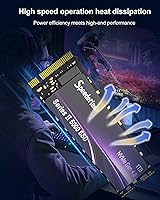
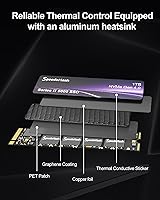
What makes this Gen 4 SSD worth a closer look is the combination of interface speed and thermal management. Upgrading from a SATA drive or even a Gen 3 NVMe to a PCIe 4.0 x4 interface means noticeably faster large file transfers and significantly snappier load times in demanding games. The bundled copper heatsink is a genuine plus — it keeps temperatures in check during sustained workloads, and its slim profile doesn't block neighboring M.2 slots or cause fitment problems inside PS5 bays. The underlying 3D NAND helps with both durability and power efficiency compared to older flash types. Capacity options stretch from 512GB to 2TB, so buyers aren't locked into a single configuration.

Best For

This NVMe drive sits in a sweet spot for a fairly specific type of buyer. PS5 owners who want to expand storage beyond the console's base capacity will find the heatsink inclusion particularly convenient — Sony requires one, and having it pre-packaged removes a separate purchase. PC builders on a tighter budget who still want Gen 4 performance for gaming or video editing workflows will also find it a reasonable fit. Laptop upgraders with clearance concerns should note the slim heatsink keeps the overall height manageable. That said, if you need verified enterprise-grade endurance, this drive isn't aimed at you — it's a value-tier option built for everyday enthusiasts and creators.

User Feedback

With 77 ratings and a 4.6-star average, the early reception for the Speederlash drive is encouraging — though 77 reviews is still a modest sample, so treat that figure with measured optimism. Buyers consistently highlight how easy the installation is and confirm it fits the PS5 expansion slot without issue. Benchmark results from real users track reasonably close to the advertised figures. On the skeptical side, some buyers understandably hesitate over an unfamiliar brand name, and one notable gap in the listing is the absence of a published TBW endurance rating — terabytes written — which more experienced buyers will notice. Not a dealbreaker, but information worth seeking before committing.

Pros

  • Copper heatsink is included in the box, saving PS5 and compact PC users an additional purchase.
  • Gen 4 PCIe x4 interface delivers read speeds up to 5000 MB/s — a real step up from Gen 3 drives.
  • Slim heatsink profile fits the PS5 expansion slot without modification or clearance issues.
  • Multiple buyers confirm the drive installs quickly and painlessly across different platforms.
  • Real-world benchmark results from users track reasonably close to the advertised speed figures.
  • 3D NAND flash improves both power efficiency and durability over older planar NAND technology.
  • The 5-year warranty is above average for a drive in this price range.
  • Capacity options run from 512GB to 2TB, giving buyers room to choose based on actual storage needs.
  • Claimed 24/7 US-based customer support is a meaningful safety net when buying from a newer brand.
  • Early adopters report a 4.6-star average, a strong start for a drive launched in late 2024.

Cons

  • No published TBW endurance rating makes it hard to assess long-term reliability with confidence.
  • Speederlash is a new and largely unknown brand, which creates legitimate trust questions for cautious buyers.
  • The review count of 77 is too small to draw reliable conclusions about real-world durability over time.
  • Buyers cannot easily find independent third-party testing or teardown data for this drive yet.
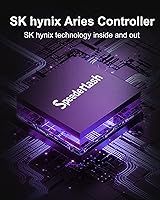
  • No official confirmation of the specific NAND controller used, which matters for write consistency under load.
  • Warranty support quality from a newer brand is unproven compared to established names in the category.
  • Synthetic benchmark alignment reported by users does not confirm sustained write performance over long sessions.
  • Limited brand history means resale value and community support resources are essentially nonexistent right now.

Ratings

Our AI rating engine analyzed verified global user reviews for the Speederlash PCIE4 1TB NVMe SSD, actively filtering out incentivized, duplicate, and bot-generated feedback to surface what real buyers actually experienced. The scores below reflect both the genuine strengths and the honest shortcomings of this Gen 4 drive — nothing inflated, nothing buried.

Sequential Read Speed
88%
Buyers running synthetic benchmarks consistently report results that land close to the advertised 5000 MB/s ceiling, which is a credible Gen 4 figure at this price point. For tasks like loading large game worlds on a PS5 or pulling raw footage off the drive into an editing timeline, the throughput improvement over older Gen 3 or SATA drives is genuinely felt.
Real-world sequential reads in mixed workloads tend to fall short of peak rated speeds, as they do on virtually all consumer NVMe drives. Users doing highly concurrent or fragmented read operations will see figures meaningfully lower than the headline number.
Sequential Write Speed
83%
Write speeds around the 4400 MB/s range hold up well for tasks like saving large video project files or moving game installs between drives, with users noting the drive handles initial burst writes without obvious hesitation. For a drive in this price tier, the rated write performance is genuinely competitive.
Without a published TBW rating or independent sustained-write testing, it is unclear how consistently these write speeds hold up once the SLC cache is saturated during prolonged large transfers. A few technically minded reviewers flagged this uncertainty, particularly for workloads involving continuous sequential writes over many gigabytes.
PS5 Compatibility
94%
This is one of the clearest strengths confirmed by real buyers — the drive fits the PS5 M.2 expansion bay cleanly, and the bundled heatsink clears the slot cover without modification. Multiple PS5 users report faster game load times compared to the console's base storage, with zero fitment complaints across the review sample.
The review pool skews toward successful installs by nature, so edge cases involving specific PS5 hardware revisions are underrepresented. Sony's firmware updates can occasionally affect third-party SSD behavior, and Speederlash has no documented history of responding to such compatibility changes the way established brands sometimes do.
Heatsink Quality
86%
For a bundled heatsink rather than a separately purchased accessory, buyers consistently describe the copper radiator as solid and well-finished, not the flimsy aluminum sticker that ships with cheaper drives. It keeps the drive operating at stable temperatures during sustained gaming sessions and video exports, which is exactly the use case it was designed for.
The heatsink attachment mechanism on some units reportedly requires careful alignment to avoid slight gaps, and a small number of buyers noted the thermal pad included could be thicker for better contact. It performs its job, but it is not on the level of premium aftermarket heatsink options.
Installation Experience
91%
Across the review base, installation is one of the most consistently praised aspects — buyers describe the process as quick and straightforward whether they were dropping it into a PS5, a desktop M.2 slot, or a laptop bay. First-time SSD installers in particular appreciated how little friction was involved.
The included installation guide is described as basic, and new builders wanting detailed instructions for specific motherboard or PS5 configurations will need to supplement it with online resources. A dedicated setup app or digital guide would have made the experience more complete.
Value for Money
89%
Getting a PCIe Gen 4 drive with a copper heatsink included and a 5-year warranty at this price range genuinely stands out in a crowded category. Buyers who compared it to heatsink-less alternatives at similar prices consistently felt they were getting more tangible hardware for their spend.
The value equation depends heavily on the drive holding up over time, and without TBW data or a long track record from the brand, that long-term return on investment is harder to guarantee than it would be from an established manufacturer. You are partly betting on a newer company to honor its warranty commitments.
Brand Trust
58%
42%
Speederlash has made some credible trust signals for a new entrant — a 5-year warranty and a stated 24/7 US-based support line are not trivial commitments, and early buyers who have contacted support report responsive service. The strong early rating average suggests the product itself is not underdelivering.
There is simply no long public record for Speederlash, and that gap cannot be papered over by warranty language alone. Buyers who have been burned by disappearing warranty support from short-lived brands before will find it difficult to fully trust a company with no review history older than a few months.
Thermal Management
84%
Under sustained gaming workloads and extended video editing sessions, buyers report temperatures staying within acceptable ranges without the drive throttling noticeably. The copper heatsink earns its keep in compact builds where airflow is limited, which is exactly where thermal management matters most.
Independent thermal testing data does not yet exist for this drive, so claims about sustained performance under prolonged high-temperature conditions are based purely on consumer anecdotes rather than controlled benchmarks. Users in hot ambient environments or poorly ventilated cases should monitor temperatures after installation.
Endurance & Reliability
61%
39%
The 3D NAND architecture is inherently more durable than older planar NAND designs, and early buyers report no early failure incidents across the review window. For typical consumer use patterns — gaming, general file storage, moderate content creation — the drive appears stable in its early months of deployment.
The complete absence of a published TBW endurance rating is a meaningful gap that makes it impossible to objectively evaluate long-term durability. Buyers using this for write-intensive workflows are operating with less information than they would have with any drive from a brand that publishes endurance specs.
Read/Write Consistency
74%
26%
Under typical mixed consumer workloads, users report steady performance without obvious hitches or stuttering, suggesting the drive's SLC caching strategy handles everyday patterns competently. Gaming and general desktop use are where this consistency is most apparent and most appreciated.
Sustained sequential write consistency beyond the drive's SLC cache threshold is unverified, and no buyer has published results from prolonged stress tests. This matters less for casual users but is a real unknown for creators who regularly handle files larger than a few dozen gigabytes.
Laptop Compatibility
79%
21%
The slim heatsink design keeps the total drive height manageable for most mainstream laptops with M.2 2280 slots, and buyers with mid-range gaming laptops have confirmed successful installs. The M.2 2280 form factor itself is universally common, which means slot compatibility is rarely an issue.
Ultra-slim laptops with aggressive M.2 clearance tolerances present a real risk of fitment failure with the heatsink attached, and Speederlash does not publish heatsink height dimensions to help buyers verify in advance. A small number of laptop users had to remove the heatsink entirely to complete installation.
Software & Ecosystem
44%
56%
The drive uses standard NVMe protocols, which means it works out of the box with free third-party tools like CrystalDiskInfo for health monitoring on Windows. No proprietary driver installation is needed, and setup on both Windows and PS5 is handled at the OS or console level.
There is no companion software, no drive health dashboard, and no manufacturer utility for firmware updates or performance tuning — categories where established competitors offer polished tools. Buyers who want a managed ecosystem around their storage hardware will find this drive completely bare in that regard.
Packaging & Unboxing
77%
23%
Buyers generally describe the unboxing experience as clean and organized, with the heatsink and drive arriving without damage and the components clearly separated. For a budget-tier drive, the presentation is more considered than many reviewers expected.
The included documentation is minimal — a brief guide rather than anything comprehensive — and there are no extras like a mounting screw, which some first-time builders have overlooked and then needed to source separately. A small quality-of-life gap, but worth noting.

Suitable for:

The Speederlash PCIE4 1TB NVMe SSD is a practical pick for PS5 owners who need to expand their console's internal storage without stretching their budget — Sony requires a heatsink for the expansion bay, and having one bundled in removes an extra purchasing step. PC builders assembling a mid-range gaming rig or a content creation workstation on a tight budget will also get real value here, since the Gen 4 PCIe interface delivers substantially faster load times and transfer speeds compared to older SATA or Gen 3 drives. Laptop upgraders replacing a sluggish stock drive will appreciate the slim heatsink profile, which keeps compatibility intact even in tighter chassis. Creators who regularly move large video files or project archives will notice the throughput difference in day-to-day work. First-time SSD buyers who want a covered investment will find the 5-year warranty and accessible customer support reassuring given the unfamiliar brand name.

Not suitable for:

Buyers who prioritize verified, independently tested endurance figures should approach the Speederlash PCIE4 1TB NVMe SSD with caution — there is no published TBW rating in the official listing, which makes it difficult to assess long-term durability with any confidence. Power users running write-intensive workloads, such as continuous 4K video capture, database operations, or frequent large-scale backups, typically need that endurance data before committing. This drive also is not positioned to compete with proven flagship options from established manufacturers, so buyers who want the assurance of a brand with a long public track record and extensive third-party testing should look elsewhere. With only 77 ratings at the time of writing, the sample size is too small to draw firm conclusions about long-term reliability. Finally, users who need drives validated for professional or enterprise environments will find this a poor match — it is built for consumer and enthusiast use, nothing more.

Specifications

  • Brand: Manufactured and sold under the Speederlash brand, launched in December 2024.
  • Capacity: This drive is available in a 1TB configuration, with the broader product line offering options from 512GB up to 2TB.
  • Form Factor: Follows the M.2 2280 standard, meaning it is 22mm wide and 80mm long — the most common M.2 size used in desktops, laptops, and the PS5.
  • Interface: Uses a PCIe Gen 4.0 x4 NVMe interface, which requires a motherboard or device with a PCIe 4.0-compatible M.2 slot for full-speed operation.
  • Sequential Read: Rated for sequential read speeds of up to 5000 MB/s under optimal conditions.
  • Sequential Write: Rated for sequential write speeds of up to 4400 MB/s under optimal conditions.
  • NAND Type: Built with 3D NAND flash memory, which stacks memory cells vertically to improve density, endurance, and power efficiency over older planar NAND designs.
  • Heatsink: Ships with a copper radiator heatsink pre-attached or included in the box, designed to manage heat during sustained high-load workloads.
  • Dimensions: The drive measures 3 x 0.8 x 0.2 inches (approximately 76.2 x 20.3 x 5.1mm) without the heatsink attached.
  • Weight: The total package weighs approximately 1.76 ounces, keeping the drive lightweight for portable and compact system builds.
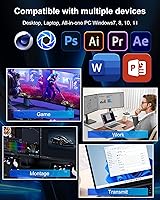
  • Compatibility: Confirmed compatible with the PlayStation 5 expansion slot, as well as Windows-based desktops, laptops, and mini PCs with a PCIe 4.0 M.2 slot.
  • Endurance (TBW): No official TBW (terabytes written) endurance rating has been published by Speederlash for this drive at the time of listing.
  • Warranty: Covered by a 5-year limited warranty, which is above average for drives in this price category.
  • Customer Support: Speederlash states 24/7 US-based customer support is available for product-related issues throughout the warranty period.
  • Market Rank: Holds a Best Sellers Rank of #323 in Internal Solid State Drives on Amazon as of early 2025, reflecting strong early sales momentum.
  • Launch Date: First made available for purchase in December 2024, making it a recent entry to the Gen 4 NVMe market.
  • Model Number: The official model identifier listed by Speederlash is PCIE4-1TB.

Related Reviews
Speederlash PCIE4 1TB NVMe SSD
75%
91%
Value for Money
83%
Read Speed Performance
76%
Write Speed Performance
84%
Heatsink Quality
88%
PS5 Compatibility
More
Speederlash PCIE3 512GB NVMe M.2 SSD
71%
83%
Value for Money
74%
Read & Write Performance
91%
Installation Ease
88%
Compatibility
78%
Thermal Management
More
RONGSHU 1TB NVMe SSD
87%
91%
Performance
94%
Read Speed
89%
Write Speed
88%
Installation Ease
75%
Thermal Management
More
TEAMGROUP MP44L 1TB NVMe SSD
89%
94%
Performance
96%
Speed (Read/Write)
85%
Heat Management
91%
Installation Ease
92%
Compatibility
More
HP EX920 1TB NVMe SSD
86%
91%
Performance
88%
Reliability
92%
Value for Money
84%
Build Quality
90%
Installation Ease
More
PHIXERO P5000 1TB NVMe SSD
86%
92%
Read/Write Speeds
88%
Performance Under Load
95%
Ease of Installation
85%
Thermal Management
90%
Compatibility with Devices
More
Crucial P3 1TB NVMe SSD
87%
88%
Sequential Read Performance
81%
Sequential Write Performance
79%
Random Read/Write IOPS
93%
Installation Ease
90%
Compatibility
More
fanxiang S880ER 1TB NVMe SSD
87%
92%
Performance for Gaming
90%
Data Transfer Speed
89%
Cooling Efficiency
87%
Ease of Installation
91%
PS5 Compatibility
More
Samsung 980 1TB NVMe M.2 SSD
83%
91%
Read Speed Performance
78%
Write Speed Performance
83%
Value for Money
89%
Build & Reliability
94%
Installation Ease
More
Crucial P5 1TB NVMe SSD
84%
91%
Read Performance
88%
Write Performance
86%
Random I/O Responsiveness
71%
Thermal Management
94%
Installation Ease
More

FAQ

Yes, multiple verified buyers have confirmed it fits the PS5 M.2 expansion bay without any fitment issues. The included heatsink is slim enough to clear the slot cover, which is important since Sony requires a heatsink for PS5 installation. Just make sure you follow Sony's official installation guide when seating the drive.

It will work, but it will run at Gen 3 speeds rather than Gen 4. NVMe drives are backward compatible with older PCIe slots, so you won't damage anything, but you'll be leaving a significant portion of the drive's performance potential unused. If you're buying specifically for Gen 4 speeds, confirm your motherboard or device supports PCIe 4.0 first.

Based on the product listing and buyer feedback, the copper heatsink is included in the box and may require brief attachment before installation depending on the configuration shipped. The process is straightforward and doesn't require any special tools — most buyers report it takes just a couple of minutes.

That's a fair concern and worth taking seriously. Speederlash is a newer brand with no long public track record, which is different from buying a drive from a company that's been around for a decade. On the positive side, they're offering a 5-year warranty and claim US-based support, which is a reasonable commitment for a new entrant. The early review scores are solid, but 77 ratings is still a limited sample. If brand reputation is a top priority for you, established names will give you more peace of mind.

Speederlash has not published a TBW (terabytes written) rating for the Speederlash PCIE4 1TB NVMe SSD. This is a genuine gap in the product information — TBW is a standard metric that tells you how many total writes a drive is rated to handle before potential wear-out. For everyday consumer use it rarely becomes a practical issue, but if you run write-heavy workloads like continuous video capture or frequent large backups, the absence of that number is something to factor into your decision.

The heatsink uses a low-profile copper design specifically intended to stay compatible with laptops and mini PCs that have limited clearance above the M.2 slot. Several buyers have installed it in laptop setups without issues. That said, a small number of ultra-slim laptops have extremely tight clearance tolerances, so it's worth checking your laptop's service manual or spec sheet before purchasing if space is a concern.

In day-to-day tasks like browsing and document work, you likely won't notice a dramatic difference. Where Gen 4 starts to matter is in game load times, large file transfers, and sustained read/write operations — things like moving a 50GB game install or exporting a video project. User benchmarks for this Gen 4 SSD generally track close to the advertised figures, which puts it meaningfully ahead of typical Gen 3 drives in sequential throughput.

Technically yes, if you have an NVMe-to-USB enclosure that supports M.2 2280 drives, you can use it externally. However, the drive is designed and optimized for internal installation, and external USB bandwidth will cap the speeds well below what the drive is capable of. It will function fine, but you'd be underutilizing it significantly compared to using it internally.

There is no mention of bundled software in the product listing. For health monitoring and performance tracking, you can use free third-party tools like CrystalDiskInfo on Windows, which reads standard NVMe SMART data and works with virtually any NVMe drive regardless of brand.

The listing confirms a copper heatsink and a basic installation guide are included. There are no reports of additional accessories like screws or mounting hardware being included, so make sure your motherboard or laptop came with an M.2 retention screw — most do, but it's easy to overlook if you're building for the first time.