Overview

The Speederlash PCIE4 1TB NVMe SSD entered a crowded market in late 2024, positioning itself as a budget-conscious option for gamers and creators who want Gen 4 speeds without paying premium brand prices. Speederlash isn't a household name — not yet, anyway — and that's worth acknowledging upfront. What it offers, though, is harder to dismiss: a PCIe Gen 4 drive with a copper heatsink included in the box, at a price that undercuts many bare drives from WD, Samsung, or Crucial. For buyers willing to bet on a newer brand, the value proposition is genuinely interesting.

Features & Benefits

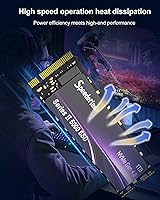
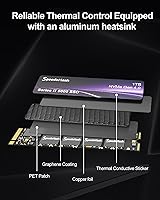
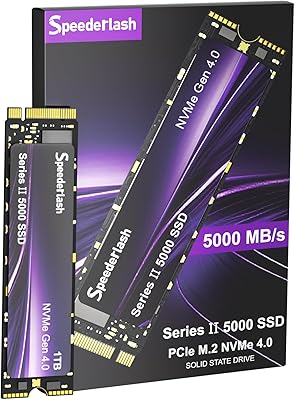
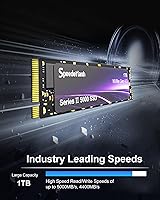
On paper, this Gen 4 SSD hits the specs that matter: sequential reads up to 5000MB/s and writes up to 4400MB/s over a PCIe 4x4 interface. Real-world performance rarely matches rated maximums, but even at 80–90% of those figures, this NVMe drive is substantially faster than any SATA alternative. The M.2 2280 form factor works across PS5, most modern laptops, and standard desktop motherboards. The bundled copper heatsink isn't a gimmick — it keeps temperatures stable during sustained transfers, which matters for video editing workloads. Rounding things out, 3D NAND technology and a five-year warranty add meaningful long-term confidence.

Best For

This NVMe drive makes most sense for a few specific types of buyers. PS5 owners who have filled their console's internal storage will appreciate the confirmed compatibility and slim heatsink profile that fits the expansion bay without fuss. Budget PC builders chasing Gen 4 performance without a premium price tag are another natural fit. It's also worth considering for anyone upgrading from an older SATA SSD — the jump in sequential throughput is dramatic. Light content creators doing video editing on a mid-range laptop will find the read speed headroom genuinely useful. It's less compelling for power users who demand proven enterprise-grade endurance data.

User Feedback

The Speederlash 1TB has accumulated a 4.6-star rating from 77 reviews — a solid start, though still a small sample for a drive launched just months ago. Early buyer sentiment is largely positive, with users noting that real-world speeds hold up well and that the heatsink feels substantial rather than cheap. PS5 compatibility gets consistent thumbs-up mentions. On the flip side, a handful of reviewers flag uncertainty around long-term reliability and the NAND source, which is a fair concern with any newer storage brand. There is no years-long track record to lean on here, so cautious buyers should weigh that honestly before committing.

Pros

  • PCIe Gen 4x4 speeds — up to 5000MB/s reads — at a price that undercuts most name-brand competitors significantly.
  • Copper heatsink is included in the box, saving you the trouble and extra cost of sourcing one separately.
  • M.2 2280 form factor works across PS5, modern laptops, and desktop motherboards without adapters.
  • PS5 compatibility is confirmed by multiple early buyers, with no reported clearance or fit issues.
  • 3D NAND technology helps keep idle power draw low, which matters for laptop battery life.
  • A five-year warranty offers meaningful coverage for a drive in this price category.
  • Real-world speeds reported by users hold up well relative to the rated specifications.
  • The slim heatsink profile doesn't add bulk, making installation straightforward even in tight builds.
  • Comes in multiple capacity options, so you can size up or down depending on your actual storage needs.

Cons

  • Speederlash is a brand-new name in storage with no long-term reliability data to back up its claims.
  • The review count of 77 is too small to draw confident conclusions about failure rates or consistency.
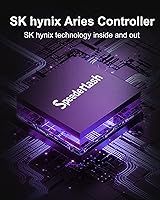
  • Actual NAND source and controller chip are not disclosed, making independent quality assessment difficult.
  • Rated speeds are maximums — sustained workload performance may drop under heavy, prolonged use.
  • No well-known third-party reviews or teardowns exist yet to independently verify the drive's internals.
  • Buyers in regions outside the US may find the claimed 24/7 customer support harder to access effectively.
  • A brand this new carries real uncertainty around warranty claim follow-through if the company's presence shrinks.

Ratings

Our AI rating system analyzed verified global buyer reviews for the Speederlash PCIE4 1TB NVMe SSD, actively filtering out incentivized, bot-generated, and low-quality submissions to surface what real users actually experienced. The scores below reflect both the genuine strengths and the honest shortcomings of this Gen 4 drive, so you get a clear, unvarnished picture before committing to a purchase. Early reception is largely positive, but a few recurring concerns are worth understanding upfront.

Value for Money
91%
For buyers coming from SATA drives or looking at bare Gen 4 options, this NVMe drive consistently surprises with how much you get at its price point. The bundled copper heatsink alone would cost a few extra dollars on competing listings, making the total package feel like a genuine deal rather than a budget compromise.
The value calculation gets murkier when you factor in brand uncertainty — established drives from WD or Crucial sometimes go on sale at comparable prices, and they carry years of reliability data that this Gen 4 SSD simply cannot match yet.
Read Speed Performance
83%
Users upgrading from SATA SSDs or older Gen 3 NVMe drives report a clearly noticeable difference in boot times and large file transfers. Game load times on PS5 in particular get frequent praise, with buyers noting snappy performance that holds up in everyday real-world use.
Like most drives in this category, actual sustained sequential speeds fall short of the 5000MB/s rated maximum under real workloads. Buyers stress-testing with continuous large file writes observed some throttling, which is not unusual for Gen 4 drives at this price tier but is worth knowing going in.
Write Speed Performance
76%
24%
For typical gaming and general PC use — installing games, saving files, handling creative project assets — the write performance is more than adequate. Users doing light video editing report smooth scrubbing and export times that feel meaningfully faster than what budget SATA drives deliver.
The gap between rated write speeds and real-world sustained figures is more noticeable on the write side than the read side. Users running prolonged write-heavy workloads like continuous video capture or large database operations may see speeds dip more than expected once the drive's cache fills.
Heatsink Quality
84%
Several buyers specifically called out the heatsink as feeling more substantial than the thin aluminum strips bundled with competing drives at similar prices. The copper construction transfers heat effectively during gaming sessions, and the slim profile means it actually fits where it claims to — including the PS5 expansion bay.
A small number of users found the thermal pad adhesion inconsistent, with the heatsink shifting slightly during installation before seating firmly. It also adds a bit of thickness that may cause clearance issues in particularly tight laptop chassis, so measuring your available space beforehand is worth the extra minute.
PS5 Compatibility
88%
This is one of the clearest positives in the review pool — PS5 owners report clean, hassle-free installation with no firmware errors or recognition issues. The heatsink fits the expansion bay cover without forcing or modification, which is something not all heatsink-equipped drives can claim.
A small subset of users noted that PS5 system software updates can occasionally prompt storage checks, and as a newer brand, Speederlash does not yet have a track record of proactive firmware updates to address any edge-case compatibility issues that might emerge down the line.
Installation Ease
87%
The M.2 2280 form factor is universally familiar, and buyers across desktop, laptop, and PS5 installs report a straightforward process. Attaching the heatsink is a simple peel-and-press operation, and the drive seats cleanly without any unusual force or fitment problems.
The included installation guide is described by some users as minimal — fine for experienced builders, but potentially confusing for first-timers upgrading a laptop or PS5 for the first time. A more detailed walkthrough in the box would reduce friction for less technical buyers.
Thermal Management
79%
21%
The copper heatsink does meaningful work during sustained loads, keeping temperatures within a range where the drive maintains consistent speeds for typical gaming and file transfer sessions. Users running PS5 game installs back-to-back noticed no thermal warnings or slowdowns.
During prolonged stress tests involving repeated large sequential writes, temperatures climbed enough to trigger modest throttling. In a well-ventilated desktop case this is less of an issue, but in cramped mini-PC builds or laptops without airflow, thermal management hits its limits faster than on premium drives with larger heatsink designs.
Brand Reliability
58%
42%
The early track record is clean — no widespread failure reports or dead-on-arrival complaints have surfaced in the review pool so far. The five-year warranty provides a formal safety net, and the claimed US-based support channel adds some reassurance for buyers in North America.
Speederlash has no meaningful history in the storage market, and without multi-year endurance data or independent teardowns confirming NAND quality, confidence in long-term reliability is necessarily limited. For a device storing important personal or professional data, this brand uncertainty is a legitimate concern that buyers should weigh carefully.
NAND & Controller Transparency
47%
53%
The drive uses 3D NAND technology, which is a sound architectural choice for consumer storage at this price tier and does contribute to lower idle power draw compared to older planar NAND designs. For buyers who simply want a functional drive without digging into component specs, this is sufficient.
Speederlash does not publicly disclose the NAND source or controller chip used in this drive, which is a red flag for technically minded buyers and storage enthusiasts. Without knowing whether the NAND is from a Tier 1 supplier or a lower-grade source, it is impossible to independently assess long-term endurance or predict behavior under sustained workloads.
Warranty & Support
72%
28%
A five-year warranty is genuinely competitive for a budget-tier drive — many similarly priced options offer only three years. The advertised 24/7 US-based support line adds a layer of accessibility that budget buyers do not always get from no-name storage brands.
Because Speederlash is so new, there is no community data on how warranty claims are actually handled in practice. Whether the support response is prompt and the replacement process smooth are unknowns that only more time and more reviews will be able to answer with confidence.
Laptop Compatibility
74%
26%
The Speederlash 1TB works well in laptops with standard M.2 2280 NVMe slots, and buyers upgrading mid-range notebooks from SATA drives report a clear improvement in application launch speeds and file handling. The low idle power draw also has a modest positive effect on battery life during light tasks.
The heatsink's added thickness creates real clearance problems in slim ultrabooks and some thin-and-light chassis where the M.2 slot has minimal vertical space. Buyers in this situation may need to install the drive without the heatsink or source a lower-profile thermal solution, which partially undercuts the bundled-value argument.
Review Volume & Trust
53%
47%
The 4.6-star average from existing buyers is an encouraging starting signal, and the absence of a pattern of early failures or serious complaints is at least a baseline positive. For buyers who follow up purchases with careful monitoring, the current feedback offers a tentative green light.
Seventy-seven reviews is a very thin foundation for a storage device, where failure rates and endurance issues often take months or years to surface. Drawing firm conclusions about quality consistency from this sample size is premature, and buyers should treat current ratings as early impressions rather than settled verdicts.
Desktop Performance
82%
18%
In desktop builds with a Gen 4-capable motherboard, this NVMe drive performs confidently for gaming, content creation workflows, and OS duties. Users report fast Windows boot times and smooth handling of large project files, with no unusual stutter or instability reported in daily use.
Power users running write-intensive applications continuously — think large VM environments or RAW photo culling with immediate editing — will notice the drive's cache limitations more acutely in a desktop context where workloads tend to be heavier and longer than on laptops or consoles.
Packaging & Unboxing
69%
31%
The drive arrives adequately protected, and having both the SSD and heatsink in one box avoids the scattered sourcing that budget builds often require. Buyers generally describe the unboxing as functional and clean without excessive plastic waste.
The packaging and included documentation are minimal — the installation guide in particular is sparse, and there is no quick-start card for PS5 installation, which is an obvious missed opportunity given that PS5 compatibility is one of the drive's main selling points.

Suitable for:

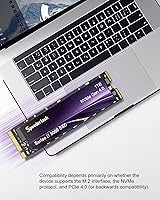
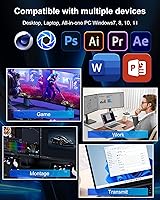
The Speederlash PCIE4 1TB NVMe SSD is a practical choice for a fairly specific kind of buyer: someone who wants genuine Gen 4 performance but isn't willing to pay the premium that established brands charge for it. PS5 owners running low on internal storage will find it particularly well-suited — the slim heatsink fits the console's expansion bay cleanly, and real-world compatibility reports from early adopters are consistently positive. Budget-conscious PC builders who have a Gen 4-capable motherboard but need to stretch their money further will also get solid value here. The same applies to laptop upgraders moving away from SATA drives, where even slightly-below-rated Gen 4 speeds represent a dramatic improvement. Light video editors or creators who need fast sequential reads for file transfers and media work — but don't need the absolute ceiling that flagship drives offer — will find this NVMe drive hits a reasonable sweet spot between cost and capability.

Not suitable for:

The Speederlash PCIE4 1TB NVMe SSD is harder to recommend for buyers who prioritize long-term reliability data above all else. Speederlash is a brand with no meaningful track record yet — there are no multi-year endurance studies, no independent teardowns confirming the NAND source, and only 77 reviews to draw from, which is a thin base for a storage device. Professionals who store irreplaceable work files or run write-intensive workloads like databases, heavy virtualization, or continuous 4K video capture should stick with proven drives from Samsung, WD Black, or Crucial where performance consistency and failure rate data are well-documented. Users with older PCIe Gen 3 systems also won't see the full benefit of a Gen 4 drive — the interface is backward compatible, but the speed advantage largely disappears. If brand confidence and verified endurance matter more to you than saving money upfront, this Gen 4 SSD is probably not the right call.

Specifications

  • Brand: Manufactured and sold under the Speederlash brand, a newer entrant to the consumer SSD market launched in late 2024.
  • Model: The specific model identifier for this drive is PCIE4-1TB, as listed by the manufacturer.
  • Capacity: This drive offers 1TB of usable storage, though formatted capacity available to the user will be slightly lower due to system overhead.
  • Interface: Connects via PCIe Gen 4x4 NVMe, the current mainstream high-speed standard supported by modern motherboards, laptops, and the PS5.
  • Form Factor: Uses the M.2 2280 form factor, meaning it is 22mm wide and 80mm long — the most common M.2 size across consumer devices.
  • Sequential Read: Rated sequential read speed reaches up to 5000MB/s under optimal, controlled test conditions.
  • Sequential Write: Rated sequential write speed reaches up to 4400MB/s, which is competitive within the mid-tier Gen 4 segment.
  • NAND Type: Built on 3D NAND flash technology, which stacks memory cells vertically to improve density, endurance, and power efficiency over planar NAND.
  • Heatsink: A copper heatsink is included in the box and pre-designed to fit the PS5 expansion slot as well as standard desktop and laptop M.2 slots.
  • PS5 Compatible: Sony PS5 compatibility is confirmed by the manufacturer and supported by multiple early buyer reports with no fit or clearance issues noted.
  • Laptop Compatible: Compatible with laptops that feature an M.2 2280 PCIe Gen 3 or Gen 4 slot; Gen 3 systems will cap speeds at their interface limit.
  • Desktop Compatible: Works in any desktop motherboard with an available M.2 2280 slot supporting NVMe, including both Gen 3 and Gen 4 configurations.
  • Dimensions: Physical dimensions measure 3 x 0.8 x 0.2 inches, consistent with the standard M.2 2280 stick without the heatsink attached.
  • Weight: The drive weighs 1.76 ounces, making it among the lightest storage upgrades you can install in any compatible system.
  • Warranty: Covered by a 5-year limited warranty with claimed 24/7 US-based customer support available for product-related issues.
  • Power Consumption: 3D NAND architecture contributes to lower idle power draw compared to older NAND designs, benefiting laptop battery longevity during light workloads.
  • Availability Date: The product was first made available on Amazon in December 2024, making it a very recent market entry with limited long-term user data.

Related Reviews

Speederlash PCIE4 1TB NVMe SSD
78%
88%
Sequential Read Speed
83%
Sequential Write Speed
94%
PS5 Compatibility
86%
Heatsink Quality
91%
Installation Experience
More
Speederlash PCIE3 512GB NVMe M.2 SSD
71%
83%
Value for Money
74%
Read & Write Performance
91%
Installation Ease
88%
Compatibility
78%
Thermal Management
More
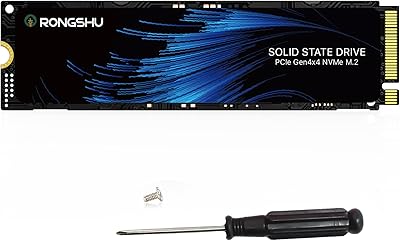
RONGSHU 1TB NVMe SSD
87%
91%
Performance
94%
Read Speed
89%
Write Speed
88%
Installation Ease
75%
Thermal Management
More
Crucial P5 1TB NVMe SSD
84%
91%
Read Performance
88%
Write Performance
86%
Random I/O Responsiveness
71%
Thermal Management
94%
Installation Ease
More
Crucial P3 1TB NVMe SSD
87%
88%
Sequential Read Performance
81%
Sequential Write Performance
79%
Random Read/Write IOPS
93%
Installation Ease
90%
Compatibility
More
fanxiang S880ER 1TB NVMe SSD
87%
92%
Performance for Gaming
90%
Data Transfer Speed
89%
Cooling Efficiency
87%
Ease of Installation
91%
PS5 Compatibility
More
HP EX920 1TB NVMe SSD
86%
91%
Performance
88%
Reliability
92%
Value for Money
84%
Build Quality
90%
Installation Ease
More
Samsung 980 1TB NVMe M.2 SSD
83%
91%
Read Speed Performance
78%
Write Speed Performance
83%
Value for Money
89%
Build & Reliability
94%
Installation Ease
More
PHIXERO P5000 1TB NVMe SSD
86%
92%
Read/Write Speeds
88%
Performance Under Load
95%
Ease of Installation
85%
Thermal Management
90%
Compatibility with Devices
More
TEAMGROUP MP44L 1TB NVMe SSD
89%
94%
Performance
96%
Speed (Read/Write)
85%
Heat Management
91%
Installation Ease
92%
Compatibility
More

FAQ

Yes, it should fit without issue. The included heatsink is slim enough to clear the PS5 expansion bay cover, and multiple buyers have confirmed this in their reviews. You do not need to purchase a separate heatsink, which is one of the practical advantages of this particular drive.

Yes, NVMe drives are backward compatible with Gen 3 slots. The drive will work fine, but your speeds will be limited to Gen 3 maximums — roughly 3500MB/s read — rather than the rated Gen 4 figures. For most everyday tasks that is still very fast, but you won't unlock the full potential of this Gen 4 SSD unless your system supports it.

The WD Black SN850X is a well-established, heavily benchmarked drive with a proven track record and slightly higher sustained performance. The Speederlash 1TB is newer, less tested, and from a brand without the same history — but it costs noticeably less. If you want maximum confidence, go with WD or Samsung. If you are comfortable with a newer brand and want to save money, this drive is a reasonable alternative.

No. NVMe SSDs are plug-and-play on Windows 10 and 11. Your system will detect it automatically. If you are using it as a secondary drive you will need to initialize and format it through Disk Management, but no special drivers or manufacturer software are required.

It works in laptops too, as long as your laptop has an M.2 2280 NVMe slot. Before buying, check your laptop's manual or manufacturer spec sheet to confirm the slot type and length — some ultrabooks only have room for shorter M.2 2242 drives. The heatsink may also be too thick for some slim laptop chassis, so double-check clearance before installing it with the heatsink on.

The manufacturer advertises a 5-year warranty and 24/7 US-based customer support. Since Speederlash is a newer brand, there is limited real-world data on how smoothly warranty claims are handled in practice. It is worth keeping your purchase receipt and documentation just in case, and checking the current support contact information at the time of purchase.

That depends on how many games you keep installed at once. Modern PS5 titles often run between 40GB and 100GB each, so 1TB gives you room for roughly 10 to 20 games alongside system data. If you play a wide rotation of large titles, the 2TB variant would give you more breathing room. For most players who manage their library and delete games they have finished, 1TB is practical.

You will need to attach the heatsink yourself, but it is straightforward — typically you peel the thermal pad backing and press it onto the drive before sliding it into the slot. No tools are required for this step, and the process takes under a minute.

All high-speed NVMe drives generate heat under sustained load, and that is exactly why the included copper heatsink matters. It draws heat away from the controller and NAND chips to help maintain stable speeds. For typical gaming or file transfer workloads, temperatures should stay within acceptable ranges with the heatsink installed. Pushing the drive with continuous large file writes for extended periods may still cause some thermal throttling, as is common across the Gen 4 category.

It is a fair concern and worth thinking through honestly. Speederlash has a limited track record, and there is no years-long community data on failure rates or endurance. The 4.6-star rating from early buyers is encouraging, but 77 reviews is still a small sample for a storage device. If you are storing irreplaceable files, back them up regardless of which drive brand you use. If you are adding PS5 game storage or want a budget PC upgrade and are comfortable with some uncertainty, the risk is relatively manageable given the warranty coverage.