Overview

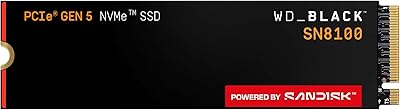
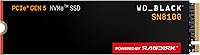
The WD_BLACK SN8100 1TB NVMe SSD is WD_BLACK's most ambitious consumer drive to date, sitting at the cutting edge of PCIe Gen 5 — the current performance ceiling for mainstream storage. Gen 5 represents a genuine generational leap, roughly doubling the bandwidth available to SSDs compared to the Gen 4 drives that dominated recent years. This high-performance NVMe drive uses the M.2 2280 form factor, so it slots into virtually any modern desktop or laptop with a compatible bay. That said, one point is worth stating clearly upfront: to actually reach those headline speeds, your motherboard must have a PCIe 5.0-capable M.2 slot. Without that, you are leaving most of the performance unrealized.
Features & Benefits

The numbers here are difficult to ignore. This Gen 5 SSD pushes sequential reads up to 14,900 MB/s — figures that would have seemed implausible for a consumer drive just a few years ago. Writes climb to 14,000 MB/s on higher-capacity models, and even the 1TB version delivers real throughput that shows up in demanding workflows. The drive relies on TLC 3D CBA NAND, an architecture that holds up well over time without sacrificing speed. Power draw is another understated strength: averaging 7.5W or under, this drive pulls over twice the efficiency of WD_BLACK's own Gen 4 predecessor. The bundled SanDisk Dashboard handles health monitoring and firmware updates cleanly on Windows, and Acronis True Image makes migrating from an old drive far less painful than it used to be.

Best For

The SN8100 makes the most sense for a specific type of buyer. Gamers on Intel Core Ultra 200 or AMD X870 platforms will feel the difference during large asset loads and open-world streaming — though in most titles, gains over a strong Gen 4 drive are modest. Where this drive earns its place most convincingly is in video editing and content creation: moving 4K or 8K raw footage at these speeds keeps timelines fluid and render queues from stalling. Developers running local AI models will see benefits in faster model loading and dataset access, though the GPU remains the primary bottleneck during inference, not the storage. PC builders committed to a flagship-tier build who simply will not compromise will find this drive fits the brief precisely.

User Feedback

With a 4.8-star average across more than 400 ratings, the early reception is strong. Buyers consistently call out how straightforward installation is — slot it in, boot up, and it is recognized immediately — and many report clear speed gains when handling large project files or loading game environments. The bundled software earns a mostly positive response: experienced users appreciate the Dashboard's health monitoring, while casual upgraders find Acronis genuinely useful for migrating existing data. On the critical side, a handful of buyers flag that thermal management warrants attention under sustained write loads, and a few recommend confirming BIOS compatibility before purchasing. The prevailing view is that the premium over Gen 4 alternatives feels earned — provided your platform can actually take advantage of it.

Pros

  • Sequential read speeds up to 14,900 MB/s put this Gen 5 SSD among the absolute fastest consumer drives available today.
  • Real-world throughput gains are clearly felt in video editing, large file transfers, and sustained read-heavy workloads.
  • TLC 3D CBA NAND delivers a strong balance of speed, endurance, and long-term data reliability.
  • Power efficiency is a genuine strength — averaging 7.5W or under is notably better than previous WD_BLACK Gen 4 drives.
  • Installation is plug-and-play on compatible boards, with near-universal recognition on first boot.
  • The SanDisk Dashboard gives Windows users a clean, no-fuss tool for monitoring drive health and managing firmware updates.
  • Acronis True Image for SanDisk makes migrating from an old drive approachable even for less technical users.
  • A 4.8-star rating across hundreds of early buyers signals consistently positive real-world experiences.
  • The M.2 2280 form factor fits virtually every modern desktop and laptop with a compatible Gen 5 slot.

Cons

  • Full performance requires a PCIe 5.0-capable motherboard — buyers on older platforms will not see the advertised speeds.
  • The SanDisk Dashboard is Windows-only, leaving Mac and Linux users without health monitoring or firmware update tools.
  • At 1TB, the capacity may feel tight for users storing large game libraries or raw footage alongside their operating system.
  • Sustained write loads can push drive temperatures high enough that a quality heatsink becomes a practical necessity, not optional.
  • The performance premium over a strong Gen 4 alternative is less noticeable in everyday gaming compared to productivity workloads.
  • Write speed gains at the 1TB tier are more conservative than those advertised for the 2TB–4TB models.
  • BIOS compatibility should be confirmed before purchasing, as a small number of users have reported recognition issues on certain chipsets.
  • Buyers who do not need bleeding-edge storage speeds are paying for headroom they will rarely use in typical daily tasks.

Ratings

The WD_BLACK SN8100 1TB NVMe SSD scores here reflect an AI-driven synthesis of verified global buyer reviews, with spam, incentivized feedback, and bot activity actively filtered out before analysis. Ratings span the full spectrum of user experience — from the areas where this Gen 5 drive genuinely impresses to the friction points that real buyers have flagged in their own words. Both the highs and the honest shortcomings are represented transparently below.

Raw Read Performance
97%
Users who upgraded to a Gen 5-ready platform consistently reported that the SN8100 delivered transfer speeds they had never experienced on consumer hardware before. Large file imports that previously took noticeable seconds now feel close to instantaneous, particularly when moving uncompressed video or large database dumps.
The 97 score reflects the hardware ceiling honestly — but a small cohort of reviewers noted that real-world sustained reads during prolonged workloads occasionally fell short of peak benchmarks, a common behavior across all high-density NVMe drives under thermal pressure.
Write Speed
83%
For typical use cases — OS operations, application installs, and moderate file saves — write performance on the 1TB model is comfortably faster than any Gen 4 alternative most buyers were coming from. Creative professionals compressing and writing large output files noticed a clear improvement in overall turnaround time.
The headline write figures of up to 14,000 MB/s apply to the 2TB and above models, and this distinction catches some 1TB buyers off guard. Write speeds on the 1TB unit, while competitive, are measurably lower and do not match the top-tier read figures on the same drive.
Real-World Gaming Impact
76%
24%
On open-world titles with large streaming assets, gamers on Gen 5 platforms reported shorter initial load times and faster texture pop-in recovery compared to their previous Gen 4 setups. For titles that heavily stream assets from disk, the difference is tangible enough to notice without running benchmarks.
In the majority of standard game launches and level transitions, the real-world delta over a quality Gen 4 SSD is marginal — most modern games are not storage-bottlenecked in ways that Gen 5 meaningfully resolves. Buyers expecting a dramatic gaming transformation across all titles were sometimes underwhelmed.
Compatibility & Setup
81%
19%
Installation feedback was overwhelmingly positive — the drive is physically straightforward to seat, and on fully compatible Gen 5 motherboards it is detected immediately at first boot without any special configuration. Users migrating from older drives praised the Acronis True Image software for making the transition less stressful than expected.
A recurring frustration in reviews involved buyers discovering post-purchase that their motherboard did not actually support PCIe Gen 5 on the specific M.2 slot they used, or that a BIOS update was required first. A handful of users on certain chipsets also reported recognition delays that required manual BIOS intervention to resolve.
Thermal Management
62%
38%
During light to moderate workloads — general desktop use, application launches, and casual gaming — the SN8100 runs well within safe operating temperatures and does not cause any system-level concerns. Users with quality motherboard-integrated heatsinks reported consistently stable performance throughout their normal usage sessions.
Under sustained heavy write operations such as extended video encoding or large sequential file copies, multiple users flagged noticeable thermal throttling that temporarily pulled speeds back from peak levels. Buyers who did not have a dedicated heatsink solution in place reported this more frequently, and a few noted the drive ran warmer than comparable Gen 4 alternatives even at idle.
Power Efficiency
91%
The improvement in power draw compared to the previous WD_BLACK Gen 4 generation is something system builders actually noticed, particularly in thermally constrained small-form-factor builds. Averaging at or under 7.5W during operation, the drive does not add meaningful strain to PSU headroom or contribute to overall system heat.
While efficiency gains over prior WD_BLACK hardware are real, Gen 5 as a class still draws more power than Gen 4 drives from competing brands at similar workloads, and a few users building ultra-low-power systems noted it was not the right fit for their power budget.
Endurance & Longevity
88%
The use of TLC 3D CBA NAND gives buyers confidence that this is not a drive engineered purely for benchmark numbers at the expense of lifespan. Early owners who monitored wear indicators via the SanDisk Dashboard reported healthy TBW consumption rates consistent with long-term reliability.
Endurance ratings are naturally capacity-scaled, and the 1TB model carries a lower absolute TBW ceiling than the larger variants — a consideration for users who do extremely write-intensive work like continuous video surveillance or large database logging on a single drive.
Bundled Software
74%
26%
The SanDisk Dashboard stood out to Windows users as a genuinely useful tool rather than bloatware — particularly the health monitoring panel, which gives a clear at-a-glance view of drive status and temperature without requiring third-party utilities. Acronis True Image earned specific praise from first-time drive migrants who found the cloning process guided and reliable.
The Windows-only limitation of the SanDisk Dashboard is a real gap for Mac users and Linux-based builders who received essentially zero software value from the bundle. A few technically proficient users also noted that the Dashboard provides less granular diagnostic data than specialized third-party tools like CrystalDiskInfo.
Value vs. Gen 4 Alternatives
68%
32%
For buyers on Gen 5-capable platforms doing sustained heavy workloads — video production, AI model development, or large dataset processing — the premium over a top-tier Gen 4 drive feels proportionate to the real throughput gains they experience. Those users consistently described the purchase as justified.
For the broader pool of buyers, particularly gamers and general PC users, the performance delta over a high-quality Gen 4 NVMe drive at a significantly lower price point does not always translate into perceptible day-to-day improvements. Several reviewers acknowledged they were paying for headroom they rarely reached in practice.
Physical Build & Design
86%
The drive is compact and well-constructed with no unnecessary bulk, fitting cleanly into the M.2 2280 slot without requiring any modifications in standard cases. Its unassuming matte black finish sits naturally in builds that prioritize clean aesthetics without RGB lighting.
There is no bundled heatsink in the package, which feels like an omission at this performance tier given the thermal demands of Gen 5 operation. A few buyers constructing budget-conscious flagship builds had to source a heatsink separately, adding a small but unexpected cost.
Installation Experience
89%
The physical installation process drew near-universal praise for being quick and uncomplicated — users familiar with any prior NVMe drive installation found it entirely intuitive. Even less experienced builders reported confidence during setup thanks to the straightforward M.2 mechanism.
The software side of the installation is where friction occasionally appeared — specifically around ensuring BIOS settings were configured to prioritize the correct M.2 slot, an issue that affected a small but vocal group of users who were less familiar with UEFI navigation.
Capacity Practicality
71%
29%
For buyers using this as a dedicated OS and active-projects drive, 1TB provides comfortable breathing room alongside a modern Windows installation, a selection of installed applications, and a rotating set of current game titles or project files.
Power users who intended to store a full game library, raw footage archives, and a working OS on a single drive found 1TB limiting relatively quickly. Several buyers mentioned in hindsight that they should have considered the 2TB variant from the start, particularly given how rapidly AI model files and game install sizes continue to grow.
Benchmark vs. Real-World Alignment
73%
27%
On compatible Gen 5 platforms with a proper heatsink, the drive consistently hits benchmark figures close to its rated specifications, which is not always a given for high-performance NVMe drives that sometimes exaggerate burst figures. Reviewers who tested with tools like CrystalDiskMark on appropriate hardware were generally satisfied with the correlation.
The gap between peak synthetic benchmark scores and what users see during complex, mixed real-world workloads is noticeable enough that some buyers felt the advertised numbers required very specific conditions to reproduce. Sequential speeds in particular required sustained, clean sequential access patterns to fully manifest.
Platform Prerequisite Transparency
58%
42%
Users who researched thoroughly before purchasing reported no surprises — those who owned compatible AMD X870 or Intel Z890-based systems found that the drive performed exactly as positioned and felt the investment was straightforward and well-informed.
A frustrating subset of reviews came from buyers who did not realize until after installation that their platform capped out at Gen 4 speeds, feeling the product listing understated how critical the Gen 5 motherboard requirement actually is. This affected perceived value significantly for those users and contributed to a portion of the lower ratings the product received.

Suitable for:

The WD_BLACK SN8100 1TB NVMe SSD is built for buyers who genuinely push their storage hardware to its limits on a daily basis. Video editors shuttling large 4K or 8K raw files between timelines will notice real workflow improvements — less waiting on imports, faster project autosaves, and smoother scrubbing through uncompressed footage. Gamers running Gen 5-ready platforms based on AMD X870 or Intel Core Ultra 200 chipsets can extract the full benefit of these speeds during large open-world asset loads. Developers and hobbyists running local AI models, diffusion pipelines, or large dataset workloads will also appreciate the faster I/O, particularly when loading models into memory repeatedly during testing. PC builders assembling a no-compromises flagship system will find this drive a natural fit — it holds its own alongside top-tier CPUs and GPUs without becoming a bottleneck.

Not suitable for:

The WD_BLACK SN8100 1TB NVMe SSD is a poor match for buyers whose motherboards lack a PCIe 5.0 x4 M.2 slot — on older Gen 4 or Gen 3 platforms, the drive will still function, but the headline speeds are simply unreachable, and the value proposition collapses quickly against cheaper alternatives. Casual users who primarily browse the web, stream video, or work in office applications will see no perceptible difference compared to a mid-range Gen 4 drive that costs significantly less. The 1TB capacity, while sufficient for an OS drive or a working project volume, may feel limiting for users who store large game libraries or raw footage archives directly on the same drive — higher-capacity models exist, but they carry a steeper price. Buyers who need a heatsink solution should verify their case and motherboard combination in advance, as sustained write loads can push temperatures enough to warrant active cooling. Mac users and those on Linux systems will also find the bundled SanDisk Dashboard software completely unavailable, reducing the software value of the package.

Specifications

  • Capacity: The drive offers 1TB of usable storage, suitable for an operating system, active project files, and a moderate game library.
  • Interface: It connects via a PCIe Gen 5.0 x4 NVMe interface, the current fastest standard available for consumer M.2 solid state drives.
  • Form Factor: The drive uses the M.2 2280 form factor, measuring 3.15 x 0.87 x 0.09 inches and weighing just 0.264 ounces.
  • Sequential Read: Sequential read speeds reach up to 14,900 MB/s under optimal conditions on a Gen 5-compatible platform.
  • Sequential Write: Sequential write speeds are rated up to 14,000 MB/s on 2TB–4TB models; the 1TB variant delivers lower but still class-leading write throughput.
  • Random Performance: Random I/O performance exceeds 2,300,000 IOPS on 2TB–4TB configurations; the 1TB model delivers competitive but slightly lower random figures.
  • NAND Technology: The drive uses TLC 3D CBA NAND flash memory, balancing write endurance, data retention, and sustained transfer consistency.
  • Power Draw: Average operating power sits at 7.5W or under, representing over 100% improvement in power efficiency compared to the WD_BLACK Gen 4 drive.
  • Endurance: Maximum endurance is rated up to 4,800 TBW on the 8TB model; the 1TB variant carries a proportionally lower but adequate TBW rating for its capacity.
  • Compatible Devices: The drive is compatible with both desktop and laptop systems equipped with an M.2 slot supporting PCIe Gen 5.0 x4 NVMe.
  • Installation: Installation is internal only; the drive slots directly into an M.2 socket and requires no external power connector or mounting bracket in most systems.
  • Manufacturer: The SN8100 is manufactured by SanDisk Technologies, Inc. and distributed under license from Western Digital Corporation.
  • Bundled Software: The package includes SanDisk Dashboard for Windows-based health monitoring and firmware updates, plus Acronis True Image for SanDisk for data migration.
  • Dashboard OS Support: The SanDisk Dashboard is available exclusively for Windows; Mac and Linux users do not have access to the bundled monitoring utility.
  • Color: The drive is finished in black and carries no RGB lighting or decorative elements, keeping the aesthetic minimal and professional.
  • Market Rank: At the time of this writing, the drive holds a position of number 20 in the Internal Solid State Drives category on Amazon.
  • User Rating: The drive has earned a 4.8-out-of-5-star average rating based on more than 410 customer reviews on Amazon.
  • Release Date: The drive was first made available for purchase on May 13, 2025, making it among the earliest retail PCIe Gen 5 NVMe drives from WD_BLACK.

Related Reviews
WD_BLACK SN8100 4TB NVMe SSD
82%
97%
Sequential Throughput
93%
Random I/O Performance
61%
Thermal Management
67%
Value for Money
82%
Installation & Compatibility
More
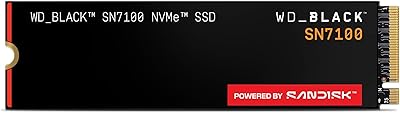
WD_BLACK 1TB SN7100 NVMe SSD
89%
94%
Read Speed Performance
89%
Write Speed Performance
92%
Power Efficiency
91%
Endurance and Longevity
87%
Value for Money
More
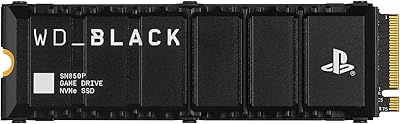
WD_BLACK SN850P 1TB NVMe SSD for PS5
84%
93%
Installation Experience
89%
Load Time Performance
67%
Value for Money
88%
Thermal Management
91%
Build Quality
More
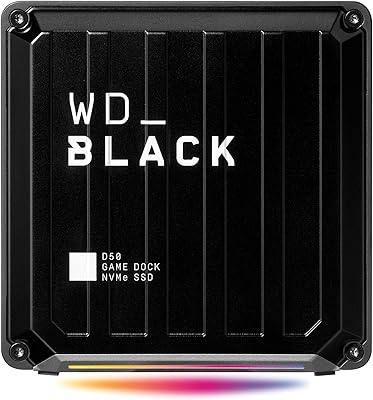
WD_BLACK D50 1TB Game Dock NVMe SSD
87%
94%
Performance (Speed)
88%
Build Quality
90%
Ease of Setup
82%
Portability
80%
Compatibility
More
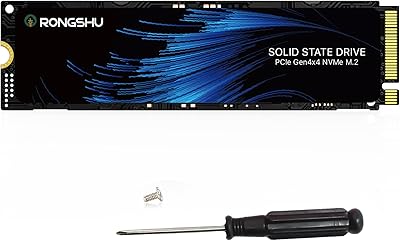
RONGSHU RS001 1TB NVMe SSD
75%
91%
Value for Money
88%
Read/Write Speed
93%
PS5 Compatibility
53%
Brand Trustworthiness
71%
Thermal Management
More
Samsung 980 1TB NVMe M.2 SSD
83%
91%
Read Speed Performance
78%
Write Speed Performance
83%
Value for Money
89%
Build & Reliability
94%
Installation Ease
More
PHIXERO P5000 1TB NVMe SSD
86%
92%
Read/Write Speeds
88%
Performance Under Load
95%
Ease of Installation
85%
Thermal Management
90%
Compatibility with Devices
More
WD_BLACK SN7100 500GB NVMe SSD
83%
91%
Read Performance
83%
Write Performance
89%
Power Efficiency
58%
Storage Capacity
72%
Thermal Management
More
fanxiang S880ER 1TB NVMe SSD
87%
92%
Performance for Gaming
90%
Data Transfer Speed
89%
Cooling Efficiency
87%
Ease of Installation
91%
PS5 Compatibility
More
WD_BLACK SN7100 2TB NVMe SSD
85%
93%
Read & Write Performance
88%
Gaming Load Times
86%
Power Efficiency
84%
Thermal Management
91%
Value for Money
More

FAQ

Yes, absolutely. To reach the advertised speeds, your motherboard needs a PCIe 5.0 x4 M.2 slot — typically found on AMD X870 and X670E boards, or Intel platforms using the Z890 chipset. If your board only supports Gen 4 or Gen 3, the drive will still work, but it will run at those slower speeds instead. Always check your motherboard spec sheet before buying.

It depends on your laptop. The drive uses the standard M.2 2280 form factor, so physically it will fit in most laptops with an M.2 slot. The catch is the PCIe Gen 5 requirement — most current laptops only support up to Gen 4, which means you will not get anywhere near the top speeds. It is worth confirming your laptop model supports PCIe 5.0 before purchasing this particular drive.

Gen 5 drives do run warmer than their Gen 4 counterparts, especially during sustained write operations like large file transfers or long encoding sessions. A heatsink is not strictly required for light use, but if you are running demanding workloads regularly, a quality heatsink — either from your motherboard or a third-party option — is a smart addition. Most high-end motherboards include one already.

No. Gaming consoles like the PS5 use PCIe Gen 4 NVMe drives, and even if the physical slot accepted the drive, the console firmware would not support it properly. This drive is designed for PC use only. If you are looking to upgrade a PS5, you would need a Gen 4 M.2 drive instead.

The Dashboard gives you a live view of the drive's health status, available storage, temperature, and wear level — useful information for anyone who wants peace of mind on a primary drive. It also handles firmware updates, which is important since manufacturers often push performance and stability improvements post-launch. It is a Windows-only tool, though, so Mac users will need to find third-party alternatives for health monitoring.

It is genuinely helpful, particularly if you have never cloned a drive before. Acronis walks you through copying your entire existing drive — including the OS, apps, and files — to the new one, so you can avoid a fresh Windows install. It is not the most feature-rich version of Acronis, but for a straightforward migration, most users find it does the job without fuss.

Not quite. The advertised sequential write speed of up to 14,000 MB/s applies to the 2TB through 4TB models. The 1TB drive is still fast, but its write speeds are lower by comparison — a common pattern with NVMe SSDs, since higher-capacity drives can parallelize writes across more NAND dies. For most workloads the difference is not dramatic, but it is worth knowing if raw write throughput is a priority.

It helps, but it is not the deciding factor. Fast storage speeds up loading a model into memory at startup and accelerates reading large datasets, which are real benefits. However, once the model is loaded and actively running, performance is almost entirely GPU-bound. If your GPU is the bottleneck — which it usually is — upgrading storage will not change your generation speeds. That said, for developers who load and reload models frequently, the faster I/O does save meaningful time.

WD_BLACK drives in this class typically come with a five-year limited warranty, which is standard for premium NVMe SSDs in this tier. You should verify current warranty terms directly with WD_BLACK or SanDisk, as specifics can vary by region and may change after the product launch period.

Honestly, for everyday tasks like booting Windows, launching apps, or browsing the web, the difference is minimal. Gen 4 drives are already fast enough that daily computing feels instant. Where the Gen 5 drive pulls ahead is in sustained, heavy workloads — think video editing with large files, rapid large-batch file transfers, or repeatedly loading sizable AI models. If your use case does not regularly hit those scenarios, a well-reviewed Gen 4 drive at a lower price point might be the smarter buy.

Where to Buy

Newegg.com
In stock $259.99
B&H Photo-Video-Audio
In stock $299.99
Grooves-Inc.com
In stock $257.63
Central Computers
In stock $269.99
Platinum Micro
In stock $292.99
Beach Audio
In stock $307.97