Overview

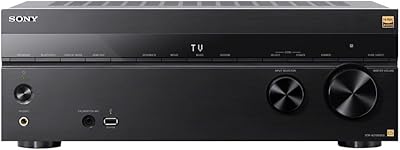
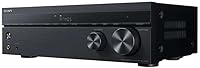
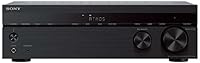
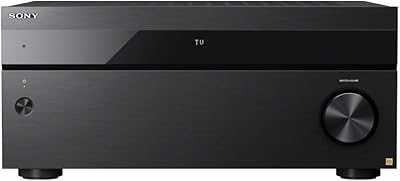
The Sony STR-DH790 arrived in 2018 as a practical, no-nonsense option for anyone ready to build a real home theater without spending at the very top of the market. Five-plus years on, it holds up surprisingly well — not because every feature has aged gracefully, but because it nails the fundamentals. You get 7.2-channel surround sound, Dolby Atmos, DTS:X, and a low-profile chassis that actually fits in a standard AV cabinet. Bluetooth lets you stream music wirelessly and even wake the unit from your phone. For what it does and what it costs, this AV receiver remains a genuinely solid contender in its class.

Features & Benefits

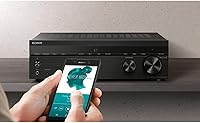
The standout practical touch is Advanced D.C.A.C. auto-calibration, which measures your room and adjusts speaker levels and timing automatically — a real help for anyone who doesn't want to spend an evening with a SPL meter. Four HDMI inputs handle 4K sources cleanly, passing Dolby Vision and HDR10 signals straight through without interference. The 7.2 configuration lets you run two subwoofers, giving better control over bass placement in larger rooms. Bluetooth Standby is a small but welcome convenience. Worth knowing upfront, though: no Wi-Fi is included, and there are zero network streaming services on board — the STR-DH790 is purely wired plus Bluetooth.

Best For

This Sony receiver suits someone building their first dedicated home theater who wants proper surround sound without an overwhelming setup process. If you own a 4K HDR television and need clean Dolby Vision passthrough, it handles that reliably. The dual-subwoofer support makes it practical for medium-to-large rooms where single-sub setups can struggle with even bass coverage. That said, if you depend on Spotify Connect, Apple AirPlay, or any multi-room audio system, this unit will frustrate you fairly quickly — it simply was not designed for that world. Think of the STR-DH790 as a focused cinema tool, not a connected smart-home hub.

User Feedback

Buyers consistently praise the straightforward initial setup and the auto-calibration's reliability, with most reporting the system sounds solid right out of the box. Sound quality is frequently described as punchy and full for its price tier, especially with action content. On the negative side, the remote and on-screen menu feel noticeably dated, and a portion of long-term owners report occasional HDMI switching reliability issues after extended use. The missing Wi-Fi and absent Spotify Connect are recurring complaints — often from buyers who discovered those gaps after purchase. Despite the criticisms, a 4.1-star average across a substantial number of reviews reflects a broadly positive ownership experience overall.

Pros

  • Dolby Atmos and DTS:X decoding deliver genuine height and surround effects without a premium price tag.
  • Auto-calibration is fast, accurate, and beginner-friendly — most users get solid results in under ten minutes.
  • Four HDMI inputs with HDCP 2.2 support handle a full living room source lineup without a switcher.
  • Clean 4K HDR passthrough preserves Dolby Vision and HDR10 signals faithfully to a compatible TV.
  • Dual subwoofer outputs provide unusually flexible bass management for a receiver at this price point.
  • Bluetooth Standby lets you power on and start playing from your phone without touching the unit.
  • Low-profile chassis fits neatly into standard AV cabinets where taller receivers would not.
  • Build quality feels solid and substantial — not what you typically expect from a budget-tier product.
  • Setup process is straightforward enough that most buyers complete it confidently without outside help.

Cons

  • No Wi-Fi means zero native streaming apps, Spotify Connect, AirPlay, or Chromecast support — a hard limit.
  • HDMI switching failures have been reported by a notable minority of owners after two to three years of use.
  • No 4K at 120Hz or 8K HDMI passthrough makes this a poor fit for current-generation gaming consoles.
  • The remote feels cheap, with small labels that are genuinely difficult to read in a dark room.
  • On-screen menu navigation has noticeable input lag that becomes irritating during multi-step configuration.
  • Paying close to full retail for a 2018 design is harder to justify when newer rivals include better connectivity.
  • Bluetooth range is average, with connection drops reported at distances that competing receivers handle reliably.
  • No aptX or LDAC support limits wireless audio quality for listeners streaming high-resolution music files.
  • Height channel amplification can feel underpowered in larger rooms with high ceilings during demanding Atmos mixes.

Ratings

The Sony STR-DH790 earns its reputation as one of the more dependable mid-range AV receivers in its class — and these scores reflect exactly that, warts included. Our AI rating engine analyzed thousands of verified global user reviews, actively filtering out incentivized submissions, bot patterns, and outlier spam to surface what real owners actually experience day to day. Both the genuine strengths and the recurring frustrations are represented transparently in every category below.

Sound Quality
84%
Owners consistently describe the audio output as full-bodied and engaging, especially during action-heavy movie scenes where the 7.2-channel configuration fills a medium-sized room with convincing directionality. Dolby Atmos and DTS:X content in particular draws praise for delivering a noticeable sense of height and space without requiring a premium-tier unit.
At higher volumes, some users notice a slight harshness in the upper midrange with certain speaker pairings. The receiver is also not particularly forgiving with low-quality audio sources, which can expose limitations that a warmer-sounding competitor might mask more gracefully.
Auto-Calibration (D.C.A.C.)
81%
19%
The Advanced D.C.A.C. system is frequently cited as one of the smoothest setup experiences buyers have had with an AV receiver at this price level. Running the calibration routine takes under ten minutes, and most users report that speaker distances, levels, and EQ adjustments come out accurate on the first pass.
A portion of users with acoustically challenging rooms — bare walls, large open spaces — find the calibration results need manual tweaking afterward. The microphone included in the box is also considered basic, which can limit measurement precision compared to receivers with more sophisticated room correction tools.
4K HDR Passthrough
86%
The clean 4K HDR passthrough is a reliable strong point, with Dolby Vision and HDR10 signals passing through to compatible televisions without any color shift or handshake delay that buyers could detect. For users upgrading from older receivers that lacked HDCP 2.2, this alone justified the purchase.
There is no 8K support and no 4K at 120Hz capability, which matters increasingly as newer gaming consoles push those standards. Buyers pairing this receiver with a PlayStation 5 or Xbox Series X will hit a ceiling and may need to route the console directly to the TV for high-frame-rate gaming.
Connectivity & Inputs
78%
22%
Four HDMI inputs cover the typical living room setup — a streaming stick, a Blu-ray player, a gaming console, and a cable box can all stay plugged in simultaneously. The addition of optical, coaxial, and analog inputs means older source devices are not left out in the cold.
A single HDMI output is the norm at this tier but still a limitation for anyone wanting to run a projector and a TV at the same time. The absence of a second HDMI output or zone output reduces flexibility for more ambitious setups.
Wireless & Networking
47%
53%
Bluetooth works reliably for casual music streaming from a phone or tablet, and the Bluetooth Standby feature — which lets the receiver wake from a powered-off state when a Bluetooth source connects — is a genuinely useful convenience that competitors sometimes omit.
No Wi-Fi, no AirPlay, no Spotify Connect, no Chromecast, and no multi-room audio support. For buyers who expected at least basic network streaming in 2024, this gap is a hard stop. It is the single most common complaint across global reviews and the primary reason some users return the unit.
Value for Money
79%
21%
Relative to what competing brands charge for Dolby Atmos decoding and 4K HDR passthrough, the STR-DH790 sits in a reasonable position. First-time home theater builders looking to stretch their speaker budget rather than overspend on the receiver itself tend to rate the value favorably.
Given the 2018 release date, paying close to full retail in 2024 feels harder to justify when newer competitors at a similar price include Wi-Fi and more modern HDMI standards. The value case weakens if a buyer later discovers the missing network features and needs to supplement with a streaming device.
Build Quality & Design
72%
28%
The chassis feels solid and well-weighted for its class — at nearly 19 pounds it does not feel like a hollow budget unit. The low-profile height is a practical advantage that owners of tighter AV cabinets genuinely appreciate when installation day arrives.
The front panel finish attracts fingerprints visibly, and the overall aesthetic is unremarkable even by AV receiver standards. Nothing about the industrial design signals premium; it looks like functional equipment, which is fine for a rack but uninspiring anywhere more visible.
Remote Control
58%
42%
The remote covers all core functions adequately and has a logical button layout that most users can navigate without consulting the manual. Input switching, volume, and calibration access are all where you would expect them to be.
The remote feels light and plasticky in hand, and the button labeling is small enough to be frustrating in a dim home theater environment. Several users noted they defaulted to the on-screen menu quickly because the remote alone was not efficient enough for initial setup tasks.
On-Screen Menu & UI
61%
39%
The graphical menu is clear and organized well enough for initial configuration, and first-time receiver owners generally find the structure logical when setting up speaker sizes and distances manually after auto-calibration.
The interface looks noticeably dated compared to more recent receivers, and navigation response has a slight input lag that becomes irritating during extended adjustments. Long-term owners describe it as functional but describe reaching for third-party control apps to avoid it.
Setup & Installation
83%
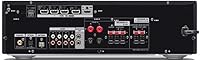
The physical installation process draws consistent praise — speaker terminals accept both bare wire and banana plugs without frustration, and the rear panel layout is sensible enough that most buyers complete initial wiring without referencing the manual repeatedly.
The printed quick-start guide is minimal, and users who want to fully understand advanced settings like crossover frequencies or manual EQ adjustments have to dig into a PDF manual that is thorough but dense. Not a dealbreaker, but not as polished as the hardware setup experience.
Dolby Atmos & DTS:X Performance
82%
18%
With a proper speaker configuration including ceiling-bounce or in-ceiling height channels, the overhead audio effects land convincingly during compatible content. Action films and concert videos in Atmos are where this receiver clearly justifies the investment over a basic 5.1 unit.
The height channel amplification is adequate rather than exceptional, and demanding Atmos mixes can occasionally feel less spatially precise compared to what higher-powered receivers produce. Buyers with large, high-ceiling rooms may find the performance falls just short of filling the space as intended.
Bass Management
77%
23%
The dual subwoofer outputs are a genuine differentiator at this price point, and buyers who run two subs report noticeably more even bass distribution across their listening room compared to single-sub configurations. Crossover settings are flexible enough for most common speaker and subwoofer pairings.
The subwoofer trim range has some limitations that users with high-sensitivity subs find restrictive when trying to blend seamlessly with main speakers. A few owners with demanding low-frequency setups noted that a more capable receiver was ultimately needed to get the bass integration exactly right.
Reliability & Longevity
68%
32%
The majority of owners report trouble-free operation over multiple years, and Sony's reputation for durable mid-range electronics is broadly supported by the long-term review data here. Units purchased at launch in 2018 are still working for a meaningful proportion of original buyers.
A recurring minority thread across reviews points to HDMI input switching failures appearing after two to three years of use, sometimes requiring a factory reset or physical workarounds. Channel drop-outs are also occasionally reported, which raises just enough concern about long-term hardware reliability to note.
Bluetooth Performance
74%
26%
Bluetooth pairing is stable and quick to reconnect with known devices, which makes casual music playback from a phone a genuinely low-friction experience. The audio quality over Bluetooth is acceptable for background listening and casual use.
The Bluetooth range is average rather than impressive, and users moving between rooms report connection drops at distances that better-equipped receivers handle without issue. There is no aptX or LDAC support, so audiophiles streaming lossless content will notice the compression ceiling.

Suitable for:

The Sony STR-DH790 is a strong match for anyone building their first proper home theater setup around a dedicated speaker system and a 4K HDR television. If your priority is getting real Dolby Atmos and DTS:X surround sound without pushing your entire budget into the receiver itself, this AV receiver hits a practical sweet spot. It works especially well in medium-sized rooms where a 5.1 or 7.1 speaker arrangement is realistic, and the auto-calibration system means you do not need to be an audio engineer to get a decent result on day one. Buyers who already own a streaming device — a Fire Stick, Apple TV, or similar — and simply need a capable hub to route their sources and drive their speakers will find this receiver does exactly that job without unnecessary complexity. The dual subwoofer outputs are also a genuine bonus for anyone planning a more serious bass setup down the road.

Not suitable for:

The Sony STR-DH790 will frustrate buyers who expect a modern connected experience from their AV receiver. There is no Wi-Fi, no Spotify Connect, no AirPlay, and no Chromecast — if you were planning to stream music directly to the receiver or integrate it into a multi-room audio system, this unit simply cannot do that. Gamers using a PlayStation 5 or Xbox Series X who want to pass 4K at 120Hz through the receiver will also hit a wall, as neither that frame rate nor 8K signals are supported. Anyone sensitive to long-term reliability concerns should note that a meaningful share of owners have reported HDMI switching issues after a few years of use. And if you are shopping for a receiver in 2024 expecting a slick, contemporary user interface with responsive menus, the dated on-screen experience here will feel like a step back compared to newer competition at a similar price.

Specifications

  • Model Number: The official Sony model designation is STRDH790, released in April 2018.
  • Channels: This AV receiver supports a 7.2-channel speaker configuration, allowing up to seven main speakers and two independent subwoofer outputs.
  • Surround Formats: Dolby Atmos and DTS:X decoding are both supported natively, enabling object-based three-dimensional surround sound from compatible sources.
  • HDMI Inputs: Four HDMI inputs are provided on the rear panel, all with HDCP 2.2 support for passing protected 4K content from modern source devices.
  • HDMI Output: A single HDMI output connects to a television or projector, with support for 4K HDR passthrough at standard frame rates.
  • HDR Support: The receiver passes Dolby Vision, HDR10, and Hybrid Log Gamma HDR signals through to a compatible display without degradation.
  • Digital Inputs: One optical digital input and one coaxial digital input are available for connecting televisions, CD players, or other digital audio sources.
  • Analog Inputs: Multiple analog RCA stereo inputs are included for connecting legacy audio sources such as turntables equipped with a phono preamp.
  • Bluetooth: Bluetooth wireless connectivity supports music streaming from paired smartphones or tablets, with Bluetooth Standby enabling remote power-on from a connected device.
  • Wi-Fi: No built-in Wi-Fi module is included; network streaming services, AirPlay, Spotify Connect, and multi-room audio are not supported.
  • Auto Calibration: Advanced Digital Cinema Auto Calibration (D.C.A.C.) analyzes the listening environment using an included microphone and automatically adjusts speaker levels, distances, and equalization.
  • Dimensions: The chassis measures 17 x 11.75 x 5.25 inches (W x D x H), with the low-profile height designed to fit inside standard AV furniture.
  • Weight: The unit weighs 18.85 pounds, reflecting a solid internal construction typical of mid-range Sony AV receivers.
  • Remote Control: A physical infrared remote control is included in the box and requires two AA batteries, which are also included.
  • Power Supply: The receiver is designed for AC power operation and does not support battery or USB power in any configuration.
  • Audio Resolution: High-Resolution Audio playback is supported for compatible lossless formats delivered via wired connections, though Bluetooth transmission is limited by standard codec constraints.
  • USB Port: A front-panel USB port allows direct playback of audio files stored on USB storage devices.
  • Speaker Impedance: The receiver is compatible with speakers rated at 6 to 16 ohms, covering the majority of consumer home theater speaker systems on the market.
  • 8K & 4K/120Hz: Neither 8K nor 4K at 120Hz HDMI passthrough is supported, limiting compatibility with next-generation display and gaming console capabilities.
  • Manufacturer: The STR-DH790 is manufactured by Sony Corporation and is covered by Sony's standard limited warranty terms applicable in the country of purchase.

Related Reviews
Sony STR-AZ1000ES
Sony STR-AZ1000ES
79%
93%
Build Quality
91%
Audio Performance
84%
Room Calibration (DCAC IX)
89%
HDMI & Video Connectivity
88%
Streaming & Wireless Features
More
Sony STR-AZ7000ES 13.2 Channel 8K A/V Receiver
85%
95%
Audio Performance
94%
Video Quality
92%
Surround Sound Immersion
67%
Ease of Setup
89%
Connectivity & Ports
More
Sony STR-AZ5000ES
Sony STR-AZ5000ES
82%
93%
Sound Quality
89%
Room Calibration (DCAC IX)
91%
HDMI Connectivity & Gaming
88%
Build Quality & Design
62%
Setup & User Interface
More
Sony MDRXB600IP Headphones
82%
88%
Bass Performance
85%
Comfort for Extended Use
83%
Noise Isolation
78%
Build Quality
81%
Portability
More
Sony MDR-CD900ST
Sony MDR-CD900ST
89%
96%
Sound Accuracy
91%
Comfort & Fit
94%
Build Quality
92%
Durability
95%
Frequency Response
More
Sony MDRE9LP Earbuds
79%
83%
Sound Quality
78%
Comfort & Fit
80%
Build Quality
75%
Microphone Performance
88%
Portability
More
Sony VRDMC3 DVDirect
81%
88%
Recording Quality
91%
Ease of Use
85%
Setup & Installation
78%
Connectivity Options
84%
Disc Compatibility
More
Sony BDP-S360
Sony BDP-S360
86%
94%
Video Quality
90%
DVD Upscaling
88%
Audio Performance
91%
Setup & Installation
85%
Build Quality
More
Sony SRS-XB23
Sony SRS-XB23
87%
94%
Sound Quality
91%
Bass Performance
97%
Portability
89%
Build Durability
93%
Waterproofing
More
Sony WH-CH720NB
Sony WH-CH720NB
88%
94%
Noise Cancellation Effectiveness
91%
Sound Clarity
88%
Bass Performance
95%
Battery Life
90%
Comfort During Extended Use
More

FAQ

No, it does not. This receiver has no built-in Wi-Fi and no native support for Spotify Connect, Apple AirPlay, Tidal, or any other streaming service. Your only wireless audio option is Bluetooth from a paired phone or tablet. If streaming services matter to you, you will need a separate media player connected via HDMI or optical.

You can connect either console via HDMI and it will work for audio and standard 4K HDR gaming, but there is a significant limitation. The receiver does not support 4K at 120Hz passthrough, so if you want that high frame rate capability, you would need to connect the console directly to your TV and use the TV's audio output or eARC to send audio back to the receiver.

It is genuinely one of the more beginner-friendly setups in this category. The speaker terminal layout is logical, the auto-calibration microphone routine walks you through the process step by step, and most first-time owners report having music or a movie playing within an hour. The on-screen menus are dated but clear enough to follow without watching tutorial videos first.

Most likely yes. At just over 5 inches tall, the low-profile chassis was specifically designed with standard AV furniture in mind. Measure your shelf clearance before buying — you will want at least 5.5 to 6 inches of vertical space to allow for ventilation above the unit.

It works well for most rooms. Running the D.C.A.C. routine takes under ten minutes and produces accurate speaker level and distance settings for the majority of typical living room or dedicated theater setups. If your room has unusual acoustics — very large, very bare, or oddly shaped — you may need to manually adjust a few parameters after calibration, but the baseline result is a solid starting point.

Yes, and this is one of its more practical advantages over competing units at a similar price. The 7.2-channel design includes two dedicated subwoofer pre-outputs, which means you can connect two subs and position them separately in the room for more even bass coverage. Each sub output can be trimmed independently through the receiver's bass management settings.

Bluetooth pairing is straightforward and reconnection with known devices is quick. Range is average — reliable within the same room but prone to drop-outs if you move to an adjacent room or put significant obstacles between the phone and receiver. There is no aptX or LDAC support, so audio quality over Bluetooth is standard rather than high-fidelity.

A recurring minority of long-term owners have reported HDMI input switching issues appearing after two to three years of regular use. It is not universal and many users have years of trouble-free operation, but the pattern is documented enough to take seriously. A factory reset has resolved the issue for some users; others have had to work around it by reassigning inputs.

Yes, as long as the Blu-ray player outputs Dolby Atmos via HDMI bitstream. Connect the player to one of the four HDMI inputs, set your player to output the raw bitstream rather than decoding it internally, and the receiver handles the Atmos decoding. For best results, you will want at least two height speakers — either ceiling-mounted or upward-firing Atmos-enabled speakers placed on top of your front mains.

It depends on your priorities. For a dedicated speaker-based home theater where Dolby Atmos performance and clean 4K HDR passthrough are the main goals, the STR-DH790 still holds up reasonably well. Where it falls short is anything involving network connectivity or compatibility with the latest gaming and display standards. If those gaps are dealbreakers for you, a newer model is worth the additional cost. If they are not, this Sony receiver remains a competent and practical choice.