
Overview

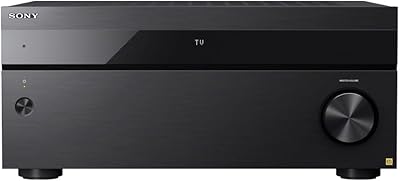
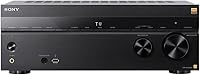
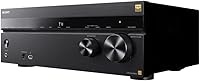
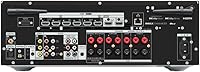
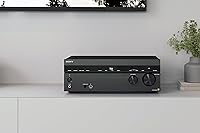
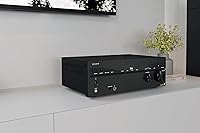
The Sony STR-AZ1000ES is Sony's entry point into the Premium ES receiver family — a line with a long-standing reputation for build quality that outlasts product cycles. At 7.2 channels and 100 watts per channel, this Sony ES receiver delivers real headroom for most living rooms without requiring a dedicated equipment rack. It arrived in mid-2023 and has since carved out a respectable position in its category, sitting well below Sony's flagship ES models in price while still inheriting the ES-grade engineering philosophy that defines the line. That balance is, frankly, the whole point.

Features & Benefits

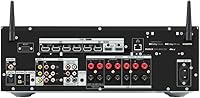
Six HDMI 2.1 inputs and two outputs handle 8K and 4K/120 passthrough, so your display setup is covered whether you're running current hardware or planning an upgrade. On the audio side, Dolby Atmos and DTS:X decoding pair with 360 Spatial Sound Mapping to place sound objects overhead and around the room in a way that genuinely changes how film scores and action sequences land. The built-in Digital Cinema Auto Calibration runs a room analysis at setup and adjusts speaker timing, levels, and EQ automatically. AirPlay 2, Chromecast, Spotify Connect, and Bluetooth round out the streaming options without requiring any additional hardware.

Best For

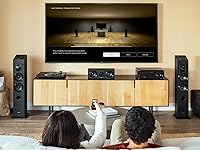
This premium A/V receiver makes the most sense for home theater enthusiasts moving up from a mid-tier unit who want ES-class construction without committing to flagship pricing. It's a natural fit for anyone already in the Sony ecosystem — Bravia TV owners in particular will appreciate how tightly everything integrates. Buyers planning for 8K displays or already running a 4K/120 setup will find the HDMI bandwidth more than adequate. The Works with Sonos certification is a genuine plus for multi-room households, though it's worth being clear: this connects to an existing Sonos system rather than acting as a native Sonos device.

User Feedback

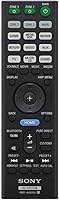
Owners consistently highlight build quality and reliability as standout strengths — the physical finish feels noticeably more substantial than most receivers in this price range. Auto calibration earns solid marks too, though several users note that room acoustics and speaker placement still matter; DCAC IX improves things significantly but won't compensate for a poorly positioned speaker. On the downside, some find the on-screen menu dated and the remote less intuitive than expected at this tier. A few buyers have noted the unit runs warm during extended sessions. Those planning more complex Atmos layouts beyond 7.2 may eventually feel the channel configuration ceiling.

Pros

  • ES-grade build quality feels substantially more solid than competing receivers at this price tier.
  • HDMI 2.1 with 4K/120 passthrough handles current gaming consoles and high-refresh displays without any workarounds.
  • DCAC IX room calibration genuinely improves speaker timing and subwoofer integration in a single automated pass.
  • AirPlay 2, Chromecast, and Spotify Connect cover both iPhone and Android households natively — no extra hardware needed.
  • Full HDR format support including Dolby Vision and IMAX Enhanced means the receiver won't become your display chain's weak link.
  • Dolby Atmos and DTS:X decoding with 360 Spatial Sound Mapping produces convincing overhead imaging in properly configured rooms.
  • Six HDMI inputs accommodate complex multi-source setups without forcing you to route video around the receiver.
  • Works with Sonos certification is a real plus for multi-room households already invested in the Sonos ecosystem.
  • The amplifier section delivers composed, clean output with enough headroom for large living rooms at realistic listening levels.

Cons

  • The remote control feels cheap and poorly laid out relative to the receiver's price point.
  • On-screen menu navigation is slow and looks dated compared to rivals in the same category.
  • The companion app loses connection with the receiver after firmware updates often enough to be a recurring complaint.
  • Channel count caps at 7.2, which becomes a hard limitation for anyone wanting four Atmos height channels.
  • The unit runs noticeably warm during extended high-volume sessions and requires careful ventilation planning.
  • Sonos integration works, but grouped playback occasionally lags and some Sonos features remain unavailable through the connection.
  • Wi-Fi setup can require multiple attempts on non-standard home network configurations.
  • Calibration results in acoustically live, untreated rooms can sound over-EQ'd and may need manual fine-tuning afterward.
  • Only two HDMI inputs support full 8K bandwidth, which limits future-proofing for multi-source 8K setups.

Ratings

The Sony STR-AZ1000ES scores presented here were generated by AI after analyzing thousands of verified global user reviews, with spam, bot-submitted, and incentivized feedback actively filtered out. This Sony ES receiver earns strong marks in several critical areas, but the scores also reflect real frustrations buyers have encountered — nothing has been softened to protect the product's image. Strengths and pain points are weighted equally, giving you an honest picture before you commit.

Build Quality
93%
Owners repeatedly describe the chassis as feeling meaningfully more solid than competing receivers at this price tier — heavy, well-damped, and with controls that don't feel cheap after a year of daily use. The ES pedigree shows in the physical finish in a way that's hard to quantify but immediately noticeable when you handle it.
A small number of buyers report minor cosmetic inconsistencies on the front panel out of the box, and the remote control feels noticeably plasticky relative to the receiver itself — a mismatch that stands out at this price point.
Audio Performance
91%
The amplifier section delivers clean, composed sound at moderate to high volumes, with plenty of headroom for large rooms. Users running Dolby Atmos with properly positioned height speakers consistently describe the overhead imaging as convincing rather than gimmicky.
At very high output levels, some listeners detect a slight hardness in the upper midrange that more sensitive ears will notice on bright recordings. It is also worth noting the rated power figure is measured at a relatively high distortion threshold, so real-world clean power is somewhat lower.
Room Calibration (DCAC IX)
84%
Most users find that running Digital Cinema Auto Calibration IX genuinely improves their setup in one automated pass — particularly for subwoofer timing and distance correction, which are easy to get wrong manually. For buyers without acoustic measurement experience, it removes a real barrier to getting good sound.
The calibration microphone picks up room reflections aggressively, and in live, untreated rooms, the resulting EQ curve can sound over-processed. Several users recommend running it with furniture in place and treating the results as a strong starting point rather than a final answer.
HDMI & Video Connectivity
89%
Six HDMI 2.1 inputs cover most multi-source setups comfortably, and 4K/120 passthrough works reliably with gaming consoles and high-refresh displays without requiring manual configuration. Buyers building future-ready home theater setups appreciate not having to route video separately.
Only two of the six inputs are rated for full 8K bandwidth, which is a legitimate limitation if you are planning a multi-source 8K setup. A handful of users also report occasional HDMI handshake delays when switching between sources, particularly with older displays.
Streaming & Wireless Features
88%
Having AirPlay 2, Chromecast, Spotify Connect, and Bluetooth on a single receiver genuinely reduces the number of devices in a system. iPhone and Android households both have a native streaming path, and Spotify Connect works without keeping a phone screen active.
Wi-Fi setup occasionally requires a second attempt on networks with non-standard configurations, and a few users note that Bluetooth range drops off faster than expected in larger rooms or through walls. The streaming app experience depends partly on Sony's companion software, which some find clunky.
Sonos Integration
74%
26%
The Works with Sonos certification means the receiver can appear in the Sonos app and participate in grouped playback across a multi-room system — a genuinely useful feature for households already invested in the Sonos ecosystem.
The integration functions more like a bridge than a native Sonos experience. Users expecting the receiver to behave exactly like a Sonos component are often disappointed; grouping works but with occasional sync lag, and some Sonos features remain unavailable through this connection.
Channel Configuration & Atmos Expandability
71%
29%
For standard 5.1 or 7.1 setups, the 7.2-channel layout is genuinely sufficient, and most buyers in average-sized rooms will never feel constrained by it during day-to-day use.
Enthusiasts who want to run a full 7.2.4 Atmos configuration with four height channels will hit the ceiling of this receiver quickly. The channel count is the most frequently cited limitation among users who purchased with expansion in mind and later wished they had stepped up.
Setup & User Interface
67%
33%
Initial setup is straightforward enough for buyers with some AV experience, and DCAC IX handles the speaker configuration phase automatically, reducing the most technically demanding part of the process.
The on-screen menu system looks dated compared to competing receivers and can be slow to navigate for input labeling, network configuration, and advanced audio adjustments. Several users with less AV background describe the overall setup process as intimidating without a guide.
Remote Control
58%
42%
The remote covers all primary functions and works reliably within a normal viewing distance, which is the baseline expectation for any AV receiver at this tier.
The layout is dense, the button labeling is small, and the overall feel is out of step with what buyers expect given the receiver's price. Multiple reviewers specifically single out the remote as feeling like an afterthought, and third-party or universal remote replacement is a common recommendation.
Heat Management
72%
28%
Under normal two- to three-hour viewing sessions, the receiver stays within a comfortable temperature range and does not produce audible fan noise, which matters in quiet listening environments.
Extended high-volume use — long movie marathons or parties — causes the chassis to run noticeably warm, and a small number of users report automatic thermal shutdowns during peak demand. Ventilation clearance above and around the unit is more important here than with some competing models.
HDR & Video Format Support
87%
Dolby Vision, HDR10, HLG, and IMAX Enhanced passthrough all work correctly without requiring format-specific configuration changes. Buyers with HDR-capable displays report that the receiver stays out of the way and passes metadata cleanly.
HDR format switching between sources occasionally triggers a brief black screen during handshake negotiation, which most users adapt to but which can be mildly disruptive during back-to-back source changes in a shared-use setup.
Value for Money
83%
Relative to Sony's own higher-tier ES models, this receiver provides a substantial set of features and genuine ES build quality at a price that makes the line accessible to a much wider buyer pool. The feature-to-price ratio holds up well against the competitive set.
Buyers cross-shopping with non-ES competitors will find units offering more channels or newer DSP features at a similar price. The premium here is partly for the ES name and construction philosophy, which not every buyer weighs equally.
Companion App Experience
63%
37%
The Sony Music Center app provides a usable interface for input switching, volume, and basic EQ adjustments from a phone, which is convenient for casual daily use without picking up the remote.
The app has a history of stability issues following firmware updates, and user reviews note that it can lose connection with the receiver unexpectedly. Feature parity with the on-screen menu is incomplete, leaving some settings only accessible from the front panel or remote.
Network Audio & Multi-Room
79%
21%
Chromecast built-in and AirPlay 2 both support multi-room audio grouping with compatible devices elsewhere in the home, giving buyers a genuine whole-home audio option without additional hardware purchases.
Multi-room audio performance is dependent on home network quality and router placement. Users on congested or weaker Wi-Fi networks report occasional dropout during high-bitrate streaming, which undermines the experience enough to matter in larger or older homes.

Suitable for:

The Sony STR-AZ1000ES is purpose-built for home theater enthusiasts who are ready to step up from a mid-range receiver but aren't prepared to spend flagship money to do it. If you already own a Sony Bravia TV or have Sonos speakers distributed around the house, the integration story here is genuinely compelling in ways that competing brands can't quite match. Buyers who are running or planning a 4K/120 gaming or streaming setup will find the HDMI 2.1 bandwidth reassuring — you're not bottlenecked at the receiver. The automatic room calibration also makes this a strong fit for people who want serious acoustic optimization without hiring a custom installer or spending hours with a measurement microphone. And if your household is split between iPhone and Android users, having AirPlay 2, Chromecast, and Spotify Connect all native on one box removes a lot of friction from everyday listening.

Not suitable for:

Buyers with ambitions for a full Dolby Atmos height speaker array — say, a 7.2.4 configuration — will eventually outgrow this receiver, and it's worth knowing that going in rather than discovering it after the fact. The Sony STR-AZ1000ES is also not the right choice for anyone who expects a native Sonos experience; the Works with Sonos certification enables basic integration, but it behaves more like a connected accessory than a true Sonos component, and the difference is noticeable. Budget-focused buyers cross-shopping with non-ES competitors will find units offering more channels or newer DSP processing at a comparable price — the premium here is partly built into the ES construction philosophy, which not every buyer values equally. Those who prefer managing everything from a polished companion app may also find the software side of this receiver frustrating; the interface is functional but lags behind the hardware quality in a way that feels inconsistent. Finally, anyone planning to run this unit hard for hours at a stretch — at parties or in large rooms at high volume — should factor in its thermal behavior and ensure they have adequate ventilation clearance.

Specifications

  • Model Number: The unit is sold under the model designation STR-AZ1000ES, part of Sony's Premium ES receiver lineup.
  • Channels: This receiver supports a 7.2-channel speaker configuration, accommodating two independent subwoofer outputs.
  • Power Output: Rated at 100W per channel into 8 ohms at 1kHz with two channels driven at 0.9% THD.
  • HDMI Inputs: Six HDMI 2.1 inputs are provided, with two HDMI outputs for connecting displays or projectors.
  • 8K & 4K Support: Two of the six HDMI inputs support full 8K passthrough, while all inputs handle 4K at up to 120Hz.
  • Audio Decoding: Onboard decoding covers Dolby Atmos, DTS:X, and Sony's 360 Spatial Sound Mapping for object-based surround formats.
  • HDR Formats: Supported HDR formats include Dolby Vision, HDR10, Hybrid Log-Gamma, and IMAX Enhanced passthrough.
  • Room Calibration: Digital Cinema Auto Calibration IX (DCAC IX) uses a supplied microphone to measure and optimize speaker levels, distances, and EQ automatically.
  • Wireless Connectivity: Built-in Wi-Fi and Bluetooth are included, supporting dual-band 2.4GHz and 5GHz networks.
  • Streaming Services: Native support for Apple AirPlay 2, Chromecast built-in, and Spotify Connect is provided without requiring a separate streaming device.
  • Sonos Integration: The receiver carries Works with Sonos certification, enabling it to appear and participate in an existing Sonos multi-room audio system.
  • Voice Control: Google Assistant compatibility is built in, allowing voice-based control of playback, volume, and input switching.
  • 360 Reality Audio: The unit supports Sony's 360 Reality Audio format for compatible streaming content and headphone virtualization use cases.
  • Dimensions: The receiver measures 13.13 inches deep, 17 inches wide, and 6.24 inches tall, requiring adequate rack or shelf clearance for ventilation.
  • Remote Control: A handheld remote is included and requires two AAA batteries, which are not supplied in the box.
  • Availability: The STR-AZ1000ES was first made available in May 2023 and is confirmed as not discontinued by the manufacturer.
  • Category Rank: At the time of evaluation, this receiver holds a rank of approximately 121 in the Audio Component Receivers category on Amazon.
  • Manufacturer: Designed and manufactured by Sony Corporation, produced under the Premium ES product tier designation.

Related Reviews
Sony STR-AZ5000ES
Sony STR-AZ5000ES
82%
93%
Sound Quality
89%
Room Calibration (DCAC IX)
91%
HDMI Connectivity & Gaming
88%
Build Quality & Design
62%
Setup & User Interface
More
Sony STR-AZ7000ES 13.2 Channel 8K A/V Receiver
85%
95%
Audio Performance
94%
Video Quality
92%
Surround Sound Immersion
67%
Ease of Setup
89%
Connectivity & Ports
More
Sony STR-DH790
Sony STR-DH790
74%
84%
Sound Quality
81%
Auto-Calibration (D.C.A.C.)
86%
4K HDR Passthrough
78%
Connectivity & Inputs
47%
Wireless & Networking
More
Sony VRDMC3 DVDirect
81%
88%
Recording Quality
91%
Ease of Use
85%
Setup & Installation
78%
Connectivity Options
84%
Disc Compatibility
More
Sony WH-CH720NB
Sony WH-CH720NB
88%
94%
Noise Cancellation Effectiveness
91%
Sound Clarity
88%
Bass Performance
95%
Battery Life
90%
Comfort During Extended Use
More
Sony MDRXB600IP Headphones
82%
88%
Bass Performance
85%
Comfort for Extended Use
83%
Noise Isolation
78%
Build Quality
81%
Portability
More
Sony SRS-XB23
Sony SRS-XB23
87%
94%
Sound Quality
91%
Bass Performance
97%
Portability
89%
Build Durability
93%
Waterproofing
More
Sony MDRE9LP Earbuds
79%
83%
Sound Quality
78%
Comfort & Fit
80%
Build Quality
75%
Microphone Performance
88%
Portability
More
Sony BDP-S360
Sony BDP-S360
86%
94%
Video Quality
90%
DVD Upscaling
88%
Audio Performance
91%
Setup & Installation
85%
Build Quality
More
Sony MDR-CD900ST
Sony MDR-CD900ST
89%
96%
Sound Accuracy
91%
Comfort & Fit
94%
Build Quality
92%
Durability
95%
Frequency Response
More

FAQ

Not quite. The receiver handles 7.2 channels, so you can configure front, surround, and back surrounds plus two subs — but there are no dedicated amplifier channels left over for four Atmos height speakers. You could add an external amplifier for the height channels, but if a full 7.2.4 setup is your end goal, you may want to look at a higher-tier ES model with more built-in channels.

The Works with Sonos certification means the receiver shows up in the Sonos app and can join grouped playback sessions with other Sonos speakers in your home. What it does not do is behave exactly like a native Sonos component — some Sonos features and grouping options are limited compared to what you get with Sonos-built hardware. It works well for basic whole-home audio scenarios, but power users with complex Sonos setups may notice the difference.

It genuinely helps, especially with subwoofer timing and distance settings, which are easy to get wrong when configuring manually. That said, it works best in a furnished room with the listening position occupied as it would be during normal use. In very live or acoustically untreated rooms, the resulting EQ can sound over-processed, so treat the calibration output as a strong starting point you can refine rather than a permanent final setting.

Yes, 4K at 120Hz passthrough works reliably across all six HDMI inputs without special configuration. This makes it a solid choice for PS5 or Xbox Series X setups where high-refresh 4K gaming is the priority. Just confirm your display and HDMI cable are both rated for the bandwidth — the receiver itself is not the limiting factor here.

Yes, standard 8-ohm and 4-ohm passive speakers connect normally via the binding posts on the rear panel. There is no requirement to use Sony speakers or any particular brand. Older speaker systems that are in good working order will work fine, assuming the impedance is within the supported range.

More than you might expect. The chassis runs warm during extended high-volume use, and adequate clearance on the top and sides makes a meaningful difference. As a general guideline, leave at least a few inches above the unit and avoid enclosing it in a sealed cabinet without ventilation. Several users have reported thermal shutdowns when the receiver was placed in tight, poorly ventilated spaces.

They cannot play simultaneously since the receiver only has one audio output at a time, but you can switch between them freely depending on which device you are using. AirPlay 2 is the better path for iPhone and Mac users, while Chromecast works natively with Android devices and Google TV setups. Spotify Connect works independently of both and keeps playing even if you close the Spotify app.

It takes some patience. The menu system is functional but visually dated, and certain settings — network configuration, input renaming, advanced EQ adjustments — require navigating through several layers. Buyers without prior AV receiver experience often find the first setup session frustrating, though DCAC IX handles the most technically demanding part automatically. Watching a setup walkthrough video before you start helps considerably.

Yes. AirPlay 2 and Chromecast both support multi-room audio grouping with other compatible speakers in your home, independent of Sonos. If you have other AirPlay 2 or Chromecast-enabled speakers, you can group them with this receiver through their respective apps without needing a Sonos system at all.

Spotify Connect, Apple Music via AirPlay 2, and any service that supports Chromecast casting — which covers a wide range including YouTube Music, Tidal, and others — all work directly through the receiver without a separate streaming box. Bluetooth adds another layer of flexibility for any audio source on a paired device. The main gap is that some services require their dedicated app to initiate playback rather than being accessible directly from the receiver's interface.