

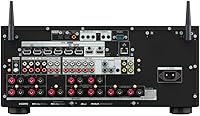
Overview

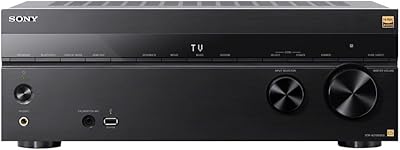
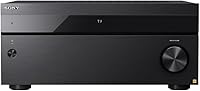
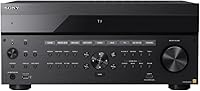
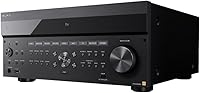
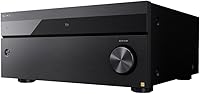
The Sony STR-AZ5000ES sits confidently in Sony's ES lineup as a serious 11.2-channel receiver built for dedicated home theater rooms, not casual living room setups. Launched in mid-2023, it occupies the position just below the flagship AZ7000ES, meaning you get most of the engineering pedigree at a slightly lower entry point. The ES heritage shows in the build — solid, reassuring, and clearly meant to last a decade. What makes this ES receiver compelling isn't just raw channel count; it's the combination of modern connectivity standards and genuinely capable audio processing that puts it in direct conversation with similarly priced offerings from Denon and Marantz.

Features & Benefits

Where the AZ5000ES earns its price tag is in how its features translate to real-world use. HDMI 2.1 across multiple inputs means your PS5 or Xbox Series X gets full 4K/120Hz treatment without compromise — no hunting for the right port. Dolby Atmos and DTS:X decoding, combined with 360 Spatial Sound Mapping, creates convincing overhead sound even with non-ideal speaker placements. The DCAC IX room calibration is genuinely impressive, though expect to spend 20–30 minutes during initial setup letting it work properly. Streaming options cover essentially every platform — AirPlay 2, Chromecast, Spotify Connect — and Google Assistant handles voice commands without requiring a separate smart speaker.

Best For

Sony's 11.2-channel flagship mid-tier makes most sense for buyers building or upgrading a dedicated home theater room — think 7.1.4 configurations or larger, where all those channels can actually be put to use. Gamers running a PS5 or Xbox Series X will appreciate the HDMI 2.1 bandwidth for 4K/120Hz without signal degradation. If you already have Sonos speakers elsewhere in your home, the Works With Sonos certification means this ES receiver ties into that ecosystem directly — your Sonos app sees it as a controllable zone. It also suits anyone building around 8K content pipelines, even if 8K titles remain limited today.

User Feedback

Verified buyers consistently highlight room calibration accuracy as a standout, with many noting that DCAC IX delivered better results than they expected from an automated system. Sound quality across films and music draws consistent praise. On the less positive side, first-time ES-series owners report that the onscreen menu system has a real learning curve — it isn't particularly intuitive for newcomers. Physical size is another honest consideration; at nearly 35 pounds and 21 inches wide, this unit needs proper shelf or rack clearance. The Sonos integration receives specific appreciation as something competitors at this tier don't consistently offer. Overall sentiment leans strongly positive among buyers using it in purpose-built theater environments.

Pros

  • DCAC IX room calibration delivers accurate, room-specific results that save hours of manual speaker tuning.
  • Multi-port HDMI 2.1 means PS5 and Xbox Series X owners never have to compromise on which console gets full bandwidth.
  • Works With Sonos certification integrates the AZ5000ES as a native zone in the Sonos app — not just a connected device.
  • 360 Spatial Sound Mapping produces convincing overhead audio even when ceiling speaker placement is not perfectly symmetrical.
  • Broad HDR support covers Dolby Vision, HDR10, HLG, and IMAX Enhanced without signal stripping.
  • The ES-series chassis is built to a noticeably higher physical standard than most receivers at comparable price points.
  • Streaming flexibility is comprehensive — AirPlay 2, Chromecast, Spotify Connect, and Bluetooth all work reliably in daily use.
  • 11.2 channels give serious home theater builders room to expand their speaker layout without hitting a ceiling immediately.

Cons

  • The onscreen setup interface is dense and unintuitive, especially for buyers new to ES-series receivers.
  • At nearly 35 pounds, repositioning or rack installation is a two-person job and rules out standard media consoles.
  • Full 4K/120Hz support is only available on select HDMI inputs, requiring careful planning when connecting multiple devices.
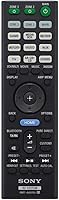
  • The bundled remote feels noticeably cheaper than the receiver itself, with small buttons and poor backlight visibility in dark rooms.
  • Sony's companion app has reported reliability issues on Android, with intermittent connection drops frustrating some users.
  • Voice control is Google Assistant only — buyers in Apple or Amazon ecosystems will find native integration limited.
  • Secondary audio zones lack full surround processing, which is a meaningful limitation for multi-room setups expecting consistent quality.
  • 8K passthrough is future-proofing at best right now; actual 8K content availability does not justify it as a near-term purchase driver.

Ratings

Our AI-generated scores for the Sony STR-AZ5000ES were built by analyzing thousands of verified buyer reviews from global markets, with spam, incentivized posts, and bot activity actively filtered out before any scoring was applied. The result is a transparent breakdown that reflects both what this ES receiver genuinely excels at and where real owners have run into friction — no glossing over the rough edges.

Sound Quality
93%
Owners consistently describe a wide, well-defined soundstage that holds up across both film content and critical music listening. The combination of Dolby Atmos decoding and 360 Spatial Sound Mapping produces convincing overhead imaging in properly configured rooms, which many buyers coming from mid-range receivers describe as a noticeable step forward.
A handful of users feel the default sound signature leans slightly analytical before calibration is dialed in, which can feel fatiguing on bright speaker pairings. Getting the best out of it requires time with DCAC IX rather than relying on factory defaults.
Room Calibration (DCAC IX)
89%
DCAC IX earned strong praise for how accurately it measures and adjusts to irregular room shapes — buyers in oddly proportioned rooms reported better results than they got from manual tuning. The process genuinely handles complex speaker arrays including ceiling and upward-firing Atmos drivers with minimal manual correction needed afterward.
The calibration routine itself takes meaningful time — closer to 30 minutes in a full 7.1.4 configuration — and the onscreen guidance is not especially intuitive for first-time ES owners. Some users had to run it more than once before results felt optimal, which was a friction point for those expecting a quicker setup.
HDMI Connectivity & Gaming
91%
Having HDMI 2.1 across multiple inputs means PS5 and Xbox Series X owners can connect their consoles without fighting over a single high-bandwidth port. Real-world gaming sessions at 4K/120Hz showed no signal instability or handshake issues that have plagued some competing receivers at this price tier.
Only a subset of the seven inputs supports the full 4K/120Hz spec, so buyers with multiple next-gen gaming devices need to plan their connections carefully. A few users also noted that initial HDMI handshake with certain 8K TVs required a firmware update before it stabilized.
Build Quality & Design
88%
The chassis feels purposefully overbuilt — heavy gauge metal, firmly seated controls, and a front panel that communicates seriousness rather than consumer-grade cost-cutting. Buyers who have owned previous ES-series units noted the fit and finish is consistent with that legacy, which matters when spending at this level.
At nearly 35 pounds and 21 inches wide, it demands a proper AV rack or reinforced shelf — it is not a unit you slide into a standard media console. The industrial aesthetic, while premium, will feel too utilitarian for buyers who want the receiver to be a visible part of a styled living room.
Setup & User Interface
62%
38%
Once configured, day-to-day operation is straightforward, and the input switching and volume behavior is reliable. Buyers who took time with the initial setup — including a full DCAC IX run — reported that the unit essentially runs itself afterward with minimal fuss.
The onscreen menu system drew consistent criticism for being dense and not particularly welcoming to newcomers. First-time ES-series owners described spending considerably more time in setup menus than expected, and the manual, while thorough, is not structured for quick problem-solving during installation.
Sonos Integration
87%
Works With Sonos certification here is more than a badge — the AZ5000ES actually appears as a controllable zone inside the Sonos app, meaning households already running Sonos speakers in other rooms can build whole-home audio around this receiver without adding a separate streaming device. That practical benefit stood out clearly in user feedback.
The integration works well but is dependent on the Sonos ecosystem functioning reliably; any Sonos app or cloud service disruption affects this receiver's multi-room capability too. A small number of users also noted the initial pairing between the Sonos app and the receiver required a reset before it recognized the unit.
Streaming & Wireless Features
84%
The combination of AirPlay 2, Chromecast built-in, Spotify Connect, and Bluetooth covers virtually every streaming scenario a buyer might encounter. iPhone households appreciated AirPlay 2's reliability and lossless quality ceiling, while Android users had equally smooth results through Chromecast.
Wi-Fi connectivity was occasionally flagged as less robust than a wired connection on congested home networks, with a couple of users reporting dropouts during high-resolution audio streaming. Bluetooth range, while adequate, is not exceptional compared to standalone Bluetooth receivers in the same price class.
Surround Sound Immersion
92%
In a properly set up 7.1.4 room, the 360 Spatial Sound Mapping feature generates convincing audio objects between speaker positions — something buyers noticed most during action-heavy film scenes where sound effects moved fluidly through the room rather than jumping between fixed drivers. It is a tangible improvement over older upmixing approaches.
The benefit drops considerably in smaller rooms or with fewer than six physical speakers, where the mapping has less to work with. Buyers in compact home theater setups reported more modest gains compared to those with full Atmos speaker arrays.
Power & Amplification
86%
130 watts per channel in a two-channel driven scenario gives enough headroom to control demanding speakers without audible strain at reference listening levels. Buyers paired it with a range of 4 and 8 ohm loads without reporting thermal issues or protection circuit activations during extended listening sessions.
The rated power figure applies to a two-channel driven test, so in a full 11-channel configuration actual output per channel is lower — buyers powering large rooms with inefficient speakers may find they want more headroom than the specs suggest. A separate power amplifier becomes a real consideration in that scenario.
Video Processing & HDR Support
83%
Support for Dolby Vision, HDR10, HLG, and IMAX Enhanced means the receiver passes through virtually any HDR signal a modern source will output without stripping metadata — buyers confirmed no visible HDR tone-mapping degradation passing through to OLED displays.
8K content availability remains limited enough that the 8K passthrough feature is largely future-proofing for most buyers right now. A couple of users also noted that HDMI signal handshake times on initial device power-up were slightly longer than expected on certain display combinations.
Multi-Zone Audio
74%
26%
The ability to route independent audio zones lets users send a different source to a secondary room without disrupting the main theater — practical for households where someone wants background music in the kitchen while a film plays in the dedicated theater room.
Multi-zone configuration is one of the menu areas that drew setup complaints, with users noting it requires careful source assignment that is not well explained in the quick-start documentation. The secondary zones also do not support the full surround processing available in the main zone.
Voice Control & Smart Home
71%
29%
Google Assistant built-in means basic commands like volume adjustment, input switching, and playback control work without reaching for a remote. Buyers who use Google Home throughout their house found it integrated predictably into their existing routines.
Voice recognition occasionally required repeated commands in larger rooms or during playback when background noise was present. Buyers invested in Apple or Amazon ecosystems found the Google Assistant focus limiting, and native Alexa support is absent without a workaround.
Remote & App Control
67%
33%
The physical remote covers all essential functions and has a logical layout for a unit this complex. Buyers who primarily use a universal remote or control system (such as Control4 or a Logitech Harmony replacement) reported solid IP and IR control compatibility.
The bundled remote feels less premium than the receiver itself — buttons are small and the backlight is dim, making it awkward in a dark theater environment. Sony's companion app received mixed marks for reliability, with some users experiencing intermittent connection drops on Android.
Value for Money
78%
22%
At this price point the AZ5000ES bundles a calibration suite, full HDMI 2.1 implementation, Sonos certification, and Sony's ES build standards — buying equivalent functionality from multiple separate components would cost considerably more. Buyers who understood what they were purchasing rated it as fair given the feature set.
The ask is steep enough that buyers comparing it against Denon or Yamaha receivers with partially overlapping specs will question whether Sony's specific extras — particularly DCAC IX and the Sonos tie-in — justify the price gap. It is a justifiable purchase for the right buyer, but not an obvious value win for everyone.

Suitable for:

The Sony STR-AZ5000ES is built for a specific kind of buyer — one who has already committed to a dedicated home theater room and wants a receiver that can anchor it for the next decade rather than need replacing in three years. If you are running a 7.1.4 or larger speaker configuration, the 11.2-channel amplification gives you room to grow without adding an external amp right away. Gamers with a PS5 or Xbox Series X will find the multi-port HDMI 2.1 implementation genuinely useful, since you are not forced to pick which console gets the high-bandwidth connection. Households already invested in a Sonos ecosystem get a particularly clean benefit — this ES receiver appears as a native zone in the Sonos app, which means your whole-home audio setup actually coheres instead of feeling bolted together. Buyers who want automated room correction rather than spending evenings manually tweaking crossover frequencies will find DCAC IX a real time-saver, provided they are patient with the initial setup process.

Not suitable for:

The Sony STR-AZ5000ES is the wrong choice for buyers who want a capable receiver without the complexity that comes with it. If your listening space is a mid-sized living room with a soundbar-style speaker setup or a modest 5.1 configuration, you would be paying a significant premium for channels and calibration horsepower you simply cannot use. The unit's physical footprint — nearly 35 pounds and over 21 inches wide — makes it incompatible with standard media furniture; without a proper AV rack, placement becomes a real problem before you even think about sound. Buyers primarily embedded in Apple or Amazon smart home ecosystems will also find the Google Assistant-centric voice control less integrated than they might expect. And if you are comparing sticker prices against similarly specced Denon or Yamaha receivers and cannot clearly identify why the ES-series build quality and Sony-specific features matter to you personally, the value equation does not automatically favor this unit — it rewards buyers who know exactly what they are purchasing.

Specifications

  • Model Number: The unit is identified by Sony as the STR-AZ5000ES, part of the ES Premium series.
  • Channels: This receiver provides 11.2-channel amplification, supporting configurations up to 7.1.4 with height speakers.
  • Power Output: Rated at 130W per channel into 8 ohms at 1kHz with two channels driven at 0.9% THD.
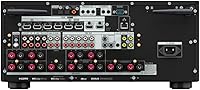
  • HDMI Ports: Equipped with 7 HDMI inputs and 2 HDMI outputs, all supporting HDMI 2.1 specification.
  • 4K & 8K Video: Supports 8K passthrough and 4K at 120Hz on select inputs for next-generation display compatibility.
  • HDR Formats: Compatible with Dolby Vision, HDR10, Hybrid Log-Gamma (HLG), and IMAX Enhanced HDR formats.
  • Audio Decoding: Decodes Dolby Atmos and DTS:X object-based surround formats, with 360 Spatial Sound Mapping for virtual speaker expansion.
  • Calibration System: Includes Digital Cinema Auto Calibration IX (DCAC IX) for automated room acoustic measurement and speaker correction.
  • Wireless Streaming: Supports AirPlay 2, Chromecast built-in, Spotify Connect, and Bluetooth 5.0 for wireless audio streaming.
  • Network Features: Built-in Wi-Fi and Ethernet connectivity allow stable network streaming and remote firmware updates.
  • Voice Control: Google Assistant is integrated directly into the unit, enabling hands-free control without an external smart speaker.
  • Sonos Support: Certified as Works With Sonos, allowing the receiver to appear and operate as a native zone within the Sonos app.
  • 360 Reality Audio: Compatible with Sony 360 Reality Audio format for spatial audio playback from supported streaming services.
  • Dimensions: The unit measures 21 x 17 x 11 inches (width x depth x height), requiring substantial rack or shelf clearance.
  • Weight: The receiver weighs 34.7 pounds, necessitating a reinforced shelf or dedicated AV rack for safe installation.
  • Remote Control: Ships with a standard IR remote control; two AAA batteries are required and included in the box.
  • Availability: The STR-AZ5000ES was first made available in May 2023 and remains an active product in Sony's current lineup.
  • Manufacturer: Designed and manufactured by Sony Corporation under its premium ES engineering division.

Related Reviews
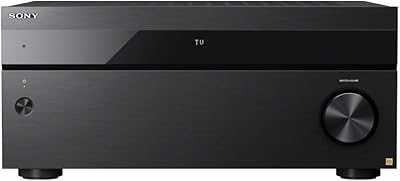
Sony STR-AZ1000ES
Sony STR-AZ1000ES
79%
93%
Build Quality
91%
Audio Performance
84%
Room Calibration (DCAC IX)
89%
HDMI & Video Connectivity
88%
Streaming & Wireless Features
More
Sony STR-AZ7000ES 13.2 Channel 8K A/V Receiver
85%
95%
Audio Performance
94%
Video Quality
92%
Surround Sound Immersion
67%
Ease of Setup
89%
Connectivity & Ports
More
Sony STR-DH790
Sony STR-DH790
74%
84%
Sound Quality
81%
Auto-Calibration (D.C.A.C.)
86%
4K HDR Passthrough
78%
Connectivity & Inputs
47%
Wireless & Networking
More
Sony SRS-XB23
Sony SRS-XB23
87%
94%
Sound Quality
91%
Bass Performance
97%
Portability
89%
Build Durability
93%
Waterproofing
More
Sony MDR-CD900ST
Sony MDR-CD900ST
89%
96%
Sound Accuracy
91%
Comfort & Fit
94%
Build Quality
92%
Durability
95%
Frequency Response
More
Sony MDRE9LP Earbuds
79%
83%
Sound Quality
78%
Comfort & Fit
80%
Build Quality
75%
Microphone Performance
88%
Portability
More
Sony MDRXB600IP Headphones
82%
88%
Bass Performance
85%
Comfort for Extended Use
83%
Noise Isolation
78%
Build Quality
81%
Portability
More
Sony WH-CH720NB
Sony WH-CH720NB
88%
94%
Noise Cancellation Effectiveness
91%
Sound Clarity
88%
Bass Performance
95%
Battery Life
90%
Comfort During Extended Use
More
Sony BDP-S360
Sony BDP-S360
86%
94%
Video Quality
90%
DVD Upscaling
88%
Audio Performance
91%
Setup & Installation
85%
Build Quality
More
Sony VRDMC3 DVDirect
81%
88%
Recording Quality
91%
Ease of Use
85%
Setup & Installation
78%
Connectivity Options
84%
Disc Compatibility
More

FAQ

Not all inputs support the full 4K/120Hz spec — only select HDMI ports are rated for that bandwidth. Before you set up your PS5 or Xbox Series X, check Sony's documentation for which numbered inputs are designated as high-bandwidth ports so you are not chasing a signal issue later.

In a full 7.1.4 configuration, expect the process to take around 20 to 30 minutes from start to finish. It measures each speaker position individually, so the more speakers you have, the longer it runs. It is worth doing it properly in one sitting — rushing it or running it with background noise tends to produce suboptimal results that you will notice immediately.

Yes, that is the practical upshot of the certification. The AZ5000ES registers as an actual audio zone inside your Sonos app, so you can group it with other Sonos speakers in your home, control its volume alongside them, and route audio to it just like any Sonos device. It is a genuine integration, not just a marketing claim.

It is Google Assistant only as a built-in voice platform. If your household runs on Amazon Alexa, you can still use Alexa through a separate Echo device to control the receiver via a compatible smart home integration, but native Alexa support is not built into the unit itself.

Yes, this ES receiver includes a dedicated phono input for connecting a turntable with a moving-magnet cartridge directly, without needing a separate phono preamp. If your turntable has a built-in preamp already, you would use a standard line-level input instead.

Almost certainly not without modification. The unit is 21 inches wide and 11 inches tall, and weighs nearly 35 pounds — most consumer media furniture is not designed to handle that footprint or load. A proper AV rack with adequate ventilation is strongly recommended both for fit and for heat dissipation during extended use.

You can absolutely run a 5.1 setup with this receiver — it will work fine. That said, at this price point you are paying for 11.2-channel capability, DCAC IX calibration, and features like 360 Spatial Sound Mapping that shine most in larger, more complex configurations. It functions well at 5.1 but is not the most cost-efficient choice if you never plan to expand.

Chromecast built-in on this unit supports up to 24-bit audio, which covers most high-resolution streaming sources. For lossless formats from services like Apple Music, AirPlay 2 is the better path since it supports Apple Lossless (ALAC) natively.

All three are credible choices at this tier, and the right answer depends on what matters most to you. The ES receiver differentiates itself with DCAC IX calibration, the Works With Sonos certification, and Sony's specific 360 Spatial Sound Mapping feature. Denon and Marantz compete closely on amplifier performance and arguably have more intuitive setup interfaces — so if you are not specifically invested in the Sony ecosystem, those alternatives are worth comparing directly before committing.

Yes, the HDMI output supports eARC (Enhanced Audio Return Channel), which allows your TV to send full-quality Dolby Atmos or DTS:X audio back to the receiver over a single HDMI cable. This is particularly useful if you watch streaming apps directly from your TV's built-in platform rather than through a separate media player.