Overview

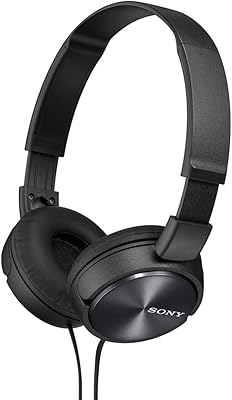
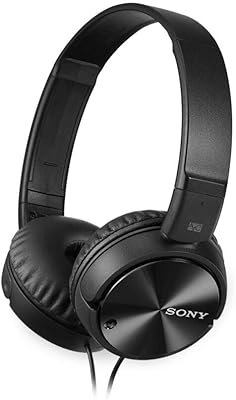
The Sony MDR-XB800 Over-Ear Headphones sit squarely in Sony's Extra Bass lineup — a range built for listeners who want their low end felt as much as heard. These aren't reference headphones designed to reproduce audio with clinical accuracy; they're tuned to punch hard on bass-heavy tracks and make the daily commute a bit more entertaining. The foldable, compact design and tangle-resistant flat cable make these Sony bass headphones genuinely practical for on-the-go use. Think of them as a consumer-friendly option from a trusted brand — not an audiophile tool, but a solid pick for casual, bass-forward listening.

Features & Benefits

The 50mm dynamic drivers are the centerpiece here, reaching down into the low-frequency range where bass lines and kick drums live. Sony's direct vibe structure helps route those vibrations more directly through the ear cups, which means the bass feels physical and present rather than just audible. The foam ear cushions are genuinely comfortable — you can wear this XB800 pair for a couple of hours without the usual pressure fatigue. The flat cable stays untangled in a jacket pocket, and since it uses a standard 3.5mm connection, it works with virtually any device you already own without fuss.

Best For

If your playlist skews toward hip-hop, trap, EDM, or anything built around a heavy low end, these Sony bass headphones are worth a serious look. They're also a natural fit for commuters and gym users who need a foldable wired option that won't drain a battery or disconnect mid-workout. The wired-only setup is a non-issue for most buyers in this category — the cable is long enough, it doesn't tangle, and you never have to charge it. Those chasing flat, reference-accurate audio will want to look elsewhere, but if big, fun bass is the goal, the MDR-XB800 delivers it without asking much in return.

User Feedback

Across a broad range of buyers, the most consistent praise for the XB800 pair centers on bass impact and comfort — people who purchase these knowing what they are tend to be happy with both. Build quality earns positive marks too, with the folding hinges holding up well over time for most owners. On the flip side, those expecting balanced, detailed sound often feel the low end overshadows the mids and highs. Sound isolation is passive and modest, so loud environments will bleed through noticeably. A handful of users with smaller heads mention clamping pressure, but the majority find the overall fit acceptable for long listening sessions.

Pros

  • Deep, punchy bass response that genuinely suits hip-hop, EDM, and electronic music listening.
  • Large 50mm drivers produce a full, room-filling low-end without requiring an external amplifier.
  • Foam ear cushions are soft and well-padded, making multi-hour listening sessions comfortable for most users.
  • The dual folding design is genuinely compact and travel-friendly for commuters and frequent movers.
  • Flat, tangle-resistant cable stays organized in a pocket or bag without knotting up.
  • Wired 3.5mm connection works instantly with phones, laptops, and portable players — no pairing, no charging.
  • Build quality holds up well over time, with hinges and cable joints that survive regular daily use.
  • Sony MDR-XB800 Over-Ear Headphones offer solid brand reliability at a mid-range price point.
  • Lightweight enough that they don't feel heavy during extended listening sessions.
  • Wide device compatibility means no adapters or workarounds needed for most users.

Cons

  • Bass emphasis overshadows midrange and treble detail, making these a poor fit for genre-diverse listening.
  • Passive isolation is underwhelming — significant ambient noise bleeds through in loud environments.
  • No wireless option means the cable becomes a practical nuisance in certain active or multi-device setups.
  • Users with smaller heads may experience noticeable clamping pressure during long wear periods.
  • The pronounced bass tuning can cause listening fatigue on tracks that already mix heavy low-end frequencies.
  • Microphone and in-line remote controls are absent, limiting hands-free convenience for phone users.
  • Not ideal for podcasts or vocals where clarity and midrange presence matter more than bass punch.
  • The flat cable, while tangle-resistant, is on the shorter side at 1.2 meters for desk use or couch listening.

Ratings

The scores below for the Sony MDR-XB800 Over-Ear Headphones were generated by our AI system after analyzing thousands of verified global buyer reviews, with spam, bot-submitted, and incentivized feedback actively filtered out before scoring. Each category reflects the honest spread of real user experiences — including the frustrations — so you get a transparent picture of where these Sony bass headphones genuinely deliver and where they fall short.

Bass Performance
88%
For buyers who specifically want a physical, room-shaking low end, these headphones consistently over-deliver. Hip-hop, trap, and EDM listeners in particular report that kick drums and bass lines hit with satisfying weight — the kind of impact that makes a commute feel like a personal concert.
The bass tuning is not balanced or adjustable, which means it overwhelms the listening experience on tracks where the low end is already prominent. Fans of jazz, classical, or acoustic music frequently report that the sound feels muddy and congested at higher volumes.
Comfort & Fit
79%
21%
The foam ear cushions earn consistent praise for their softness, with many users reporting they wore these Sony bass headphones for two or three hours without noticeable pressure or heat buildup. The over-ear circumaural design keeps the cups off the ear itself, which reduces fatigue compared to on-ear alternatives.
Users on the smaller end of the head-size spectrum report that the clamping force feels excessive, particularly after the first hour. A meaningful number of reviews from women and younger adult buyers mention needing to take breaks that they would not require with other headphones in the same category.
Sound Clarity
61%
39%
Within its intended bass-forward tuning, the MDR-XB800 handles low frequencies with reasonable control — bass lines stay distinct rather than bleeding into a formless rumble at moderate volumes. For casual listening to well-produced bass-heavy tracks, most buyers feel the overall sound is enjoyable.
Midrange and treble detail are clearly sacrificed for bass emphasis, and vocalists or instruments sitting in those frequencies can sound recessed and slightly muffled. Buyers who switch to these from a more neutrally tuned headphone consistently report a noticeable loss of audio detail across the board.
Build Quality
82%
18%
Long-term owners — some reporting a year or more of daily use — generally describe the hinges, ear cups, and overall frame as holding together well without cracking or loosening. The folding mechanism in particular tends to remain firm and functional even after repeated daily use.
A smaller but notable segment of reviews flags cable durability as a concern, with some owners seeing fraying near the plug or ear cup entry point after extended use. The plastic headband can also feel lightweight in a way that reads as fragile to buyers used to metal-reinforced designs.
Portability
84%
The dual folding design genuinely earns its keep here — these collapse to a compact footprint that fits in a medium-sized bag without dominating the space. Commuters and travelers consistently rate the fold-flat mechanism as one of the most practical features of this XB800 pair.
There is no included carrying pouch or hard case, which means the headphones can get scuffed or compressed in a crowded bag without protection. A few buyers who travel frequently note that a case would have made the portability story much more complete.
Cable Quality
76%
24%
The flat, serrated cable design genuinely resists tangling in everyday use, which is a real practical advantage over rounded cables that knot up in pockets. Most buyers report pulling these out of a bag ready to use rather than spending time unknotting the cord.
At 1.2 meters, the cable is optimized for mobile and commuter use but feels restrictive for desk or couch setups where a longer reach is expected. Some users also report that the cable transmits handling noise — rustling against clothing creates audible interference during movement.
Noise Isolation
58%
42%
The over-ear design provides a reasonable passive seal that takes the edge off moderate ambient noise, making these workable in quiet offices or low-traffic public transport. For casual environments, most users find the isolation adequate enough not to require volume compensation.
In genuinely noisy environments — busy subway platforms, open-plan offices, or busy streets — the isolation falls meaningfully short, and outside sound bleeds through noticeably. Buyers who purchased the MDR-XB800 specifically hoping to block out a loud environment frequently express disappointment in reviews.
Value for Money
77%
23%
Buyers who approach this XB800 pair knowing what it is — a bass-first Sony headphone at a mid-range price — largely feel they got fair value for the spend. The Sony brand name, build consistency, and specific bass performance feel appropriately priced for the category.
Those who expected a more versatile or balanced headphone at this price point tend to feel let down, particularly given the competition from other brands offering wider frequency balance at similar or lower prices. Value satisfaction is heavily contingent on whether the bass tuning matches your taste.
Device Compatibility
91%
The standard 3.5mm connection works with virtually every device a typical buyer owns — phones, laptops, tablets, portable DAPs — without any pairing process, app, or adapter required in most cases. This plug-and-play simplicity is consistently cited as a low-friction advantage.
Users who have fully transitioned to devices without a 3.5mm port will need an adapter, which adds a small cost and an extra point of potential failure. There is also no in-line remote or microphone, so call handling and playback control require reaching for the source device directly.
Ease of Use
93%
There is no setup, pairing, charging, or app configuration of any kind — you plug in and listen, which is exactly what many buyers want from a wired headphone. First-time headphone buyers and less tech-savvy users consistently appreciate the zero-learning-curve experience.
The absence of any playback or volume controls on the cable means every adjustment requires interacting with the source device, which can be mildly inconvenient when the phone is in a bag or jacket pocket. There is no quick mute or pause button available on the headphones themselves.
Durability Over Time
73%
27%
The majority of long-term owners report that the core structure — ear cups, headband, and folding hinges — remains functional and firm well beyond the first year of regular use. The replaceable ear cushions included in the box also help extend the life of the product noticeably.
Cable wear near connection points is the most commonly reported long-term failure, with some users experiencing audio drop-out on one channel after extended daily use. The ear cushion coating can also degrade and peel over time, which affects both feel and appearance.
Aesthetics & Design
71%
29%
The clean matte black finish and relatively understated look mean these Sony bass headphones do not draw unwanted attention in public, which many buyers specifically prefer over more aggressively styled audio gear. The compact folded silhouette also looks intentional rather than purely functional.
The all-plastic construction gives the headphones a look that reads as budget to some buyers, even when the price suggests otherwise. There is limited color variety, and the overall design has aged noticeably since the model was first released.
Low-End Extension
86%
The frequency response reaches down into sub-bass territory in a way that smaller-driver headphones simply cannot replicate, and bass-genre listeners notice this difference immediately when switching from a typical consumer headphone. Electronic music producers listening casually report the sub frequencies feel genuinely present rather than implied.
The extension is tuned for impact rather than precision, so bass-heavy recordings can occasionally feel one-dimensional rather than layered. Listeners who want to hear individual bass instrument textures clearly — upright bass, fingered bass guitar — may find the low end too blended to resolve that level of detail.

Suitable for:

The Sony MDR-XB800 Over-Ear Headphones are an excellent fit for listeners whose music library leans heavily on bass-driven genres — hip-hop, EDM, electronic, and R&B all come alive with the emphasis these headphones bring to the low end. Commuters who want a foldable, reliable pair they can toss in a bag without worrying about tangled cables will find the practical design genuinely useful day-to-day. Gym users and casual exercisers benefit from the wired connection that eliminates battery anxiety mid-workout, and the foam ear cushions hold up well during longer sessions without creating painful pressure points. This XB800 pair also suits buyers who want a reputable brand name without stretching their budget into premium territory — Sony's build consistency is a real comfort here. If your priority is an enjoyable, energetic listen rather than a technically accurate one, these Sony bass headphones hit the brief well.

Not suitable for:

The Sony MDR-XB800 Over-Ear Headphones will frustrate anyone who needs balanced, neutral sound reproduction — the bass tuning is deliberate and prominent, which means mids and highs can feel recessed on complex, layered recordings. Audiophiles, mixing engineers, or anyone evaluating audio critically should look elsewhere; this XB800 pair is built for enjoyment, not accuracy. The passive sound isolation is modest at best, so buyers working in genuinely noisy environments — open offices, loud public transit, construction zones — will find outside noise bleeds through more than they'd like. Those who have moved to wireless-only setups may find the wired cable a daily inconvenience, especially when moving between devices frequently. Users on the smaller end of the head-size spectrum have also noted some clamping pressure over extended wear, which is worth factoring in before committing.

Specifications

  • Driver Size: Each ear cup houses a 50mm dynamic driver, which is larger than average and contributes directly to the headphone's strong low-frequency output.
  • Frequency Response: These headphones reproduce audio across a range of 28Hz to 28kHz, with the low end tuned to emphasize bass presence over flat accuracy.
  • Sensitivity: At 106dB sensitivity, the MDR-XB800 gets loud easily from low-power sources like smartphones and portable media players without needing an amplifier.
  • Impedance: The 24 Ohm impedance rating makes this XB800 pair compatible with standard consumer devices without requiring dedicated headphone amplification.
  • Cable Length: The included cable measures 1.2 meters, which suits mobile and commuter use but may feel short for desktop or couch listening setups.
  • Cable Type: The Y-type flat serrated cable is designed to resist tangling, making it practical for daily carry in pockets or bags.
  • Connector: Audio connection is made via a standard 3.5mm stereo jack, compatible with most phones, laptops, tablets, and portable audio players.
  • Connectivity: These are wired-only headphones with no Bluetooth or wireless functionality of any kind.
  • Ear Cup Style: The over-ear circumaural design fully surrounds the ear rather than resting on it, which contributes to comfort during extended listening.
  • Ear Pad Material: The ear cushions use pressure-relieving foam covered in a soft material intended to reduce fatigue during long wear sessions.
  • Folding Design: A dual folding mechanism allows the headphones to fold at two points, reducing their footprint for storage in a bag or case.
  • Noise Control: Sound isolation is passive only, achieved through the physical seal of the ear cups rather than any active noise-cancelling technology.
  • Wireless Support: Bluetooth is not supported; these Sony bass headphones are designed exclusively for wired use with no wireless pairing capability.
  • Weight: The headphone unit itself is notably lightweight, which helps reduce neck and head fatigue during extended listening sessions.
  • Special Feature: Sony's direct vibe structure is engineered to channel acoustic vibrations more efficiently through the ear cup housing to heighten perceived bass impact.
  • Compatible Devices: The MDR-XB800 works with any device that has a 3.5mm audio output, including smartphones, laptops, tablets, and most portable music players.
  • In-Box Contents: The package includes the headphones, an attached audio cable, replacement ear cushions, and a user manual.
  • Form Factor: The on-ear form factor is classified as over-ear, with large ear cups designed to fully enclose the ear for better comfort and passive isolation.

Related Reviews
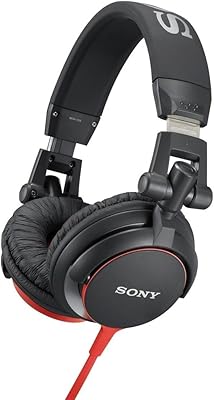
Sony MDR-W08L In-Ear Headphones
71%
91%
Wearing Comfort
78%
Sound Quality
34%
Noise Isolation
63%
Build Quality
72%
Cable Design
More
Sony MDR-V55 DJ Over-Ear Headphones
70%
72%
Sound Quality
58%
Comfort & Fit
54%
Build Quality
83%
Design & Aesthetics
78%
Cable & Connectivity
More
Sony MDR-AS210/P Sport In-ear Headphones
79%
88%
Comfort and Fit
74%
Sound Quality
91%
Water Resistance
65%
Durability
80%
Ease of Use
More
Sony MDREX15AP In-Ear Headphones
82%
85%
Sound Quality
90%
Comfort and Fit
70%
Build Quality
88%
Ease of Use (Controls)
65%
Bass Performance
More
Sony MDR-EX155AP
Sony MDR-EX155AP
76%
74%
Sound Quality
81%
Microphone & Call Performance
68%
Fit & Comfort
61%
Build Quality & Durability
88%
Value for Money
More
Sony MDR-ZX110 On-Ear Headphones
68%
83%
Value for Money
61%
Sound Quality
58%
Comfort
54%
Build Quality
82%
Portability
More
Sony MDR-RF811RK Wireless Headphones
83%
88%
Sound Quality
92%
Wireless Range
75%
Comfort
85%
Battery Life
82%
Build Quality
More
Sony MDR-ZX310
Sony MDR-ZX310
68%
67%
Sound Quality
78%
Comfort & Fit
58%
Build Quality
72%
Cable & Connectivity
83%
Portability
More
Sony WI-C200 Wireless In-Ear Headphones
79%
85%
Sound Quality
91%
Battery Life
88%
Comfort & Fit
78%
Build Quality
87%
Ease of Use
More
Sony WI-C310 Wireless In-Ear Headphones
83%
90%
Value for Money
83%
Sound Quality
89%
Battery Life
87%
Comfort & Fit
92%
Portability & Design
More

FAQ

Yes, as long as your phone has a 3.5mm headphone jack they connect instantly with no setup required. If your phone uses USB-C or Lightning only, you will need a compatible audio adapter, which is sold separately.

It really depends on your taste. The bass is noticeably boosted and is meant to be felt, not just heard. For hip-hop, EDM, or electronic music it works great, but if you listen to a lot of acoustic, classical, or vocal-heavy tracks, the low-end emphasis can feel overdone. It is tuned for a specific kind of listener, not general all-purpose use.

These headphones have a degree of water resistance suited for light sweat during workouts, but they are not rated for heavy moisture exposure or rain. Wiping down the ear cushions after a session is a good habit to extend their lifespan.

Most long-term owners report that the hinges and cable joints hold up reasonably well with regular daily use. The flat cable in particular tends to resist the kind of wear that coiled cables develop over time. They are not indestructible, but for the price tier they represent solid durability.

No, there is no in-line microphone or remote on the cable, so you cannot take hands-free calls directly through these headphones. If call functionality is important to you, you will need to look at a different model.

The isolation is passive, meaning it relies on the physical seal of the ear cups to block outside sound. It cuts moderate ambient noise reasonably well, but in loud environments like busy subway cars or open offices, you will still hear a fair amount of background sound bleed through.

Yes, Sony includes a spare set of ear cushions in the box, and replacement cushions are available separately. This is a nice touch that extends the usable life of the headphones considerably.

Absolutely — any device with a 3.5mm audio output will work. The 1.2 meter cable is on the shorter side for desk use, so if your PC tower or audio interface is more than a meter away, you may want a short extension cable.

There is no physical EQ control on the headphones themselves, but if your music app or device has an equalizer, pulling down the bass frequencies a bit can help bring the sound closer to neutral. The headphones respond well to EQ adjustments.

The MDR-XB800 stands out primarily for its bass output and comfort, which are above average for this price tier. Where it gives up ground is in soundstage width and midrange clarity compared to more neutrally tuned competitors. If bass is your priority, it competes well; if you want a more balanced listen, other options in a similar range might serve you better.

Where to Buy