Overview

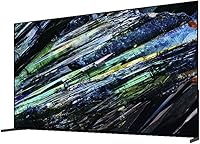
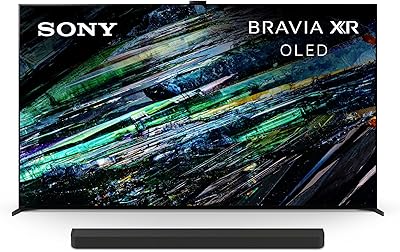
The Sony XR65A95L 65-inch QD-OLED 4K TV sits at the top of Sony's TV lineup, earning that position by combining two technologies that rarely coexist this well: quantum dot color and true OLED black levels. The result is a picture that doesn't just look vivid — it looks honest. Sony's Cognitive Processor XR analyzes content across hundreds of zones simultaneously, producing contrast and color that feel closer to how your eyes naturally process a scene than what standard processors manage. This is equally a serious home theater display and a capable gaming monitor, though at this price point, it genuinely rewards buyers who will take full advantage of both.
Features & Benefits

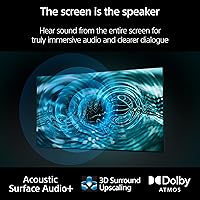
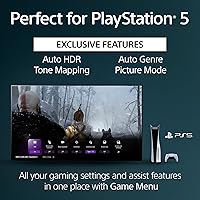
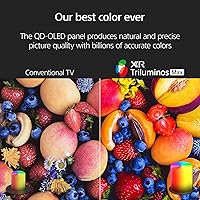
The A95L's QD-OLED panel is where the real story starts. Standard OLED produces excellent color, but quantum dots push color volume noticeably higher — especially in saturated reds and greens — without sacrificing the inky blacks OLED is known for. The Cognitive Processor XR handles real-time analysis so skin tones stay natural and shadow detail doesn't crush in demanding HDR content. For gaming, HDMI 2.1 lets a PS5 run at 4K and 120 frames per second with variable refresh keeping things tear-free. Sony's exclusive Auto HDR Tone Mapping communicates directly with the PS5 to tailor the picture game by game — something no third-party TV can replicate. The Acoustic Surface Audio+ system adds surprising immersion by vibrating the panel itself, so sound appears to originate from the on-screen action.

Best For

This flagship Sony TV is built for a specific kind of buyer, and it's worth being honest about who that is. Watch a lot of films in a dim or controlled-light room, and the A95L will likely be the best display you've ever experienced — dark scenes take on a depth that flat-panel LCD sets simply can't match. PS5 owners get more out of this TV than any other on the market, given hardware-level integration that goes beyond what HDMI alone can deliver. It also suits streaming-first households who want Google TV's unified interface without adding a separate device. That said, buyers with sun-drenched living rooms should think carefully — peak brightness trails the brightest Mini LED rivals in high-ambient-light conditions.

User Feedback

Owners are largely enthusiastic, and the praise centers on dark room picture quality — specifically the way blacks disappear completely and colors stay rich without blooming into surrounding areas. PS5 gaming performance earns consistent compliments, particularly from users who notice automatic picture adjustments switching in without any manual setup. The criticisms worth noting: this Sony QD-OLED can feel underwhelming in bright, window-heavy rooms where a high-end Mini LED set holds its own more convincingly. A handful of buyers mention the Google TV interface occasionally slowing down after extended use. The remote draws mixed reactions — clean and minimal, which some appreciate and others find frustrating. BRAVIA CORE credits are a welcome bonus, though buyers shouldn't treat them as an ongoing long-term perk.

Pros

  • True OLED blacks paired with quantum dot color produce a picture quality that very few TVs at any price can match.
  • Dark-room film watching on the A95L is a qualitative leap over mid-range LCD and even standard OLED sets.
  • PS5 owners get automatic, game-by-game picture optimization that no third-party TV can replicate.
  • HDMI 2.1 support enables 4K at 120fps with variable refresh rate, keeping fast-paced gaming smooth and tear-free.
  • Acoustic Surface Audio+ creates genuine immersion by making dialogue and effects appear to come from on-screen.
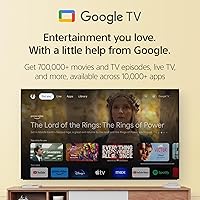
  • Google TV consolidates streaming apps, recommendations, and voice search into a single, well-organized interface.
  • Dolby Vision and HDR10 support means the A95L handles virtually all premium streaming HDR formats without compromise.
  • Out-of-box color accuracy in Cinema mode is close enough to reference standards for most buyers without professional calibration.
  • BRAVIA CORE adds real value at purchase with new-release credits and an extended classic streaming subscription.

Cons

  • Peak brightness in high-ambient-light rooms trails top Mini LED competitors by a meaningful margin.
  • Google TV interface can develop sluggishness after extended uptime, requiring occasional restarts to restore snappy performance.
  • Only two of the four HDMI ports support full HDMI 2.1 bandwidth, limiting multi-device next-gen gaming setups.
  • The minimalist remote frustrates users who prefer direct number input or faster physical access to input switching.
  • Deep PS5-specific features are entirely unavailable to Xbox Series X and PC gamers, narrowing the gaming value proposition.
  • Static-image burn-in risk, while manageable under normal use, remains a real long-term concern for news-heavy or PC-use households.
  • The central stand design demands a wide, stable surface and feels less secure on glass or smooth furniture tops.
  • BRAVIA CORE credits are a one-time bonus, not a recurring benefit — long-term streaming value depends on the buyer's own subscriptions.

Ratings

The Sony XR65A95L 65-inch QD-OLED 4K TV earns some of the strongest praise we've seen in the premium TV category, though the scores below reflect the full picture — not just the highlights. Our AI has processed verified buyer reviews from global markets, actively filtering out incentivized submissions and bot activity, to surface what real owners consistently experience over weeks and months of use. Strengths are significant, but a few recurring pain points are reflected honestly here too.
Picture Quality
97%
Owners describe watching dark cinematic content on the A95L as a genuinely different experience — shadows hold detail without lifting to grey, and colors saturate deeply without bleeding into each other. The combination of quantum dot color volume and true OLED black levels produces a result that repeatedly catches people off guard, even those who owned premium LCD sets before.
A small number of users note that certain upscaled content from older streaming libraries can reveal minor processing artifacts around fine edges. It is a narrow criticism on an otherwise exceptional panel, but buyers expecting perfection from all source material may occasionally notice it.
Gaming Performance
94%
PS5 owners in particular report that the A95L handles fast-paced shooters and sprawling RPGs with zero perceptible input lag, and the automatic picture mode switching between games and streaming happens without any manual intervention. VRR keeps motion smooth in variable frame rate titles, and the dedicated Game Menu puts every relevant setting in one place.
PC gamers using adaptive sync at resolutions above 4K or targeting very high refresh rates may find the feature set less comprehensive than dedicated gaming monitors. The TV excels within the PS5 ecosystem specifically, but its gaming credentials narrow slightly outside that context.
Brightness & HDR Impact
74%
26%
In a properly dimmed or light-controlled room, HDR content on this flagship Sony TV looks stunning — specular highlights on metal surfaces, fire, and sunlit scenes all punch convincingly. Dolby Vision content in particular benefits from the processor's tone mapping, which keeps highlight detail visible rather than clipping it.
This is the A95L's most honest limitation: in a bright living room with afternoon sunlight coming through unshaded windows, the panel can look flatter than top-tier Mini LED competitors. Buyers who watch TV primarily during the day in uncurtained rooms will notice the difference, and it is worth factoring into the purchase decision.
Color Accuracy
96%
Reviewers who calibrate their displays professionally note the A95L arrives with color tracking that is already very close to reference standards out of the box. Skin tones across all content types are a consistent highlight — flesh tones stay warm and accurate without the orange push some competing panels introduce.
The very widest color gamut can occasionally make some older broadcast content appear slightly oversaturated if the TV is left in a vivid or boosted picture mode. Switching to the calibrated or Cinema preset resolves this, but less technically inclined buyers may not discover that setting immediately.
Motion Handling
89%
Fast action sequences in sports and action films track cleanly, with the Cognitive Processor XR doing meaningful work to reduce judder without introducing the soap-opera smoothing effect that frustrates filmmakers and enthusiasts. Most owners find the default motion settings acceptable without further adjustment.
A handful of buyers report that certain 24fps cinematic content can feel slightly stutter-prone at default settings compared to some competing sets with more aggressive motion interpolation options. It is a matter of taste as much as performance, but those upgrading from heavily motion-processed LCD TVs may notice the difference initially.
Smart TV Platform
78%
22%
Google TV organizes streaming apps, live channels, and recommendations into a genuinely useful interface, and voice search through Google Assistant works reliably for finding content across multiple services simultaneously. AirPlay support adds flexibility for Apple device users who want to push content directly from their phone or laptop.
Several owners report that the Google TV interface develops noticeable lag after extended uptime — scrolling through app libraries or loading settings menus slows down until the TV is restarted. It is not a constant issue, but it appears frequently enough in long-term ownership reviews to be a credible concern.
Audio Performance
81%
19%
The Acoustic Surface Audio+ system genuinely surprises buyers who expect thin flat-panel sound. Because the panel itself acts as the speaker, dialogue appears to come from the mouths of on-screen characters rather than from a grille below or behind the TV, which adds a subtle but noticeable layer of immersion for movies.
At high volumes or during bass-heavy action sequences, the system runs out of authority. Dedicated soundbar or surround-sound users will not be replacing their audio setup with this TV, and buyers who prioritize room-filling sound without additional hardware may find the built-in system falls short at peak demands.
Build Quality & Design
88%
The A95L has the clean, slab-like aesthetic Sony's premium lineup is known for — minimal bezels, a solid feel when adjusting the stand, and no visible structural flex. The stand itself positions the panel at a height that works well on most entertainment units without requiring a wall mount.
The included stand is a single central-foot design, which looks elegant but requires a wider support surface than dual-leg alternatives. A few buyers have mentioned that the stand feels less stable on glass or smooth-topped furniture, and wall-mounting is the safer long-term option for households with children or pets.
Remote Control
66%
34%
The minimalist remote is well-made, responds quickly, and dedicated Netflix and other streaming shortcut buttons save time when jumping between services. The backlit buttons are a practical touch in dark viewing environments.
The stripped-down button layout frustrates buyers who prefer direct number input or quick access to input switching without navigating menus. Feedback is notably split — users coming from other Sony remotes tend to adapt, while those upgrading from other brands find the layout requires a longer adjustment period.
Input & Connectivity
91%
Four HDMI ports, two of which are full HDMI 2.1 capable, cover most multi-device setups without requiring a switcher. USB ports, Ethernet, Wi-Fi, and Bluetooth together make for a complete connection suite that handles everything from wired network stability to wireless headphones.
Only two of the four HDMI ports support the full HDMI 2.1 bandwidth needed for 4K at 120Hz, which means buyers with multiple next-gen gaming consoles or a PC alongside a console will need to swap cables or invest in an external switcher. It is a minor inconvenience for multi-device power users.
PS5 Integration
96%
The hardware-level handshake between the A95L and a PS5 sets this pairing apart from anything else in the market. Auto HDR Tone Mapping adjusts the picture dynamically based on what each specific game needs, and Auto Genre Picture Mode switches between optimized cinema and game presets without any input from the user.
This depth of integration is PS5-exclusive, which means Xbox Series X and PC users miss out on the automatic optimization features. Those platforms still benefit from HDMI 2.1 performance, but the full suite of Sony-specific gaming intelligence is locked to PlayStation hardware.
Value for Money
72%
28%
For buyers who will use every capability this Sony QD-OLED offers — dark-room home theater viewing, PS5 gaming, and high-quality streaming — the price reflects genuine engineering that is difficult to replicate at a lower tier. The BRAVIA CORE inclusion adds tangible value at purchase.
At this price, buyers in bright rooms or those who primarily watch daytime broadcast TV are likely paying for capabilities they will never fully use. The value case depends almost entirely on how well the buyer's viewing environment and habits align with what this display does best.
Burn-in Risk
69%
31%
Under typical mixed-use conditions — rotating between streaming, gaming, and broadcast TV — the A95L handles long-term panel health well, and Sony includes automatic pixel refresh cycles and brightness management tools to reduce cumulative stress on static image areas.
Burn-in remains a real, if unlikely, long-term risk for OLED panels under heavy static-image workloads, such as extended news watching with persistent on-screen graphics or prolonged gaming with static HUD overlays. Buyers who use TVs as secondary PC monitors or watch a lot of news channels should factor this in carefully.
Setup & Initial Configuration
83%
Google TV's setup process is guided and relatively fast, and for PS5 owners the HDMI handshake means most picture settings configure themselves automatically. Out-of-box picture accuracy in Cinema or Calibrated Dark mode is good enough for many buyers without any professional calibration.
The sheer number of picture settings available can overwhelm buyers who are not familiar with display calibration terminology. Motion settings in particular have labels that do not clearly explain their real-world impact, and some owners report spending significant time dialing in their preferred configuration before feeling satisfied.

Suitable for:

The Sony XR65A95L 65-inch QD-OLED 4K TV was built for a specific kind of buyer, and when the fit is right, it is genuinely hard to beat. Home theater enthusiasts who watch films in a dedicated or light-controlled room will get the most out of this display — dark scenes in particular reveal a depth that standard LED panels simply cannot replicate. PS5 owners are another natural fit, because the hardware-level integration between this TV and Sony's console goes well beyond what a generic HDMI connection delivers, automatically optimizing the picture for each individual game without any manual adjustment. Serious streamers who want a clean, capable smart platform without plugging in a separate box will also find Google TV meets most of their daily needs. If you are upgrading from a mid-range LCD and watch a lot of cinematic content, the visual step up will be immediately obvious and deeply satisfying.

Not suitable for:

The Sony XR65A95L 65-inch QD-OLED 4K TV is a poor fit for buyers whose living rooms get heavy natural light throughout the day. In bright environments with unshaded windows, its peak brightness trails the best Mini LED sets by a noticeable margin, and that gap will undercut the very picture quality you are paying for. Households that leave the TV running for long stretches on news channels or use it as a secondary PC monitor with static on-screen elements should also think carefully — OLED burn-in is a slow and unlikely risk under normal mixed use, but it becomes more credible under those specific conditions. Budget-conscious buyers or those who primarily watch broadcast TV in a casual, multi-tasking setting will find the price hard to justify given that the A95L's strongest advantages require the right content and the right environment to emerge. Xbox or PC gamers who were hoping for the same depth of platform-level optimization that PS5 users get will also be disappointed — that feature set is Sony-exclusive.
Specifications

  • Screen Size: The panel measures 65 inches diagonally, making it well-suited for living rooms and dedicated home theater spaces viewed from roughly 8 to 13 feet away.
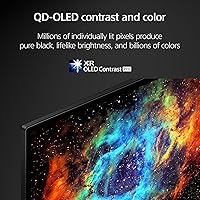
  • Panel Type: Uses a QD-OLED display, which layers quantum dot technology over a self-emissive OLED structure to deliver both wide color volume and absolute black levels simultaneously.
  • Resolution: Native 4K Ultra HD resolution at 3840 x 2160 pixels, with upscaling handled by the Cognitive Processor XR for lower-resolution source content.
  • Refresh Rate: Native 120Hz panel refresh rate, supporting smooth motion in both high-frame-rate gaming and fast-action broadcast content.
  • Processor: Powered by Sony's Cognitive Processor XR, which cross-analyzes picture elements across hundreds of zones in real time to optimize contrast, color, and clarity.
  • HDR Support: Compatible with Dolby Vision, HDR10, and HLG formats, covering all major HDR standards used by streaming platforms, Blu-ray, and broadcast sources.
  • HDMI Ports: Equipped with four HDMI ports, of which two support the full HDMI 2.1 specification for 4K at 120fps, VRR, and ALLM with next-gen gaming hardware.
  • Gaming Features: Supports Variable Refresh Rate (VRR), Auto Low Latency Mode (ALLM), 4K/120 input, Auto HDR Tone Mapping, and Auto Genre Picture Mode for PS5.
  • Smart Platform: Runs Google TV, providing unified access to streaming apps, personalized content recommendations, Google Assistant voice search, and Apple AirPlay support.
  • Audio System: Acoustic Surface Audio+ uses actuators to vibrate the screen panel itself as a speaker surface, aligning sound spatially with on-screen action.
  • Connectivity: Includes Wi-Fi (dual-band), Bluetooth, Ethernet (LAN), USB ports, and four HDMI ports for a complete wired and wireless connection suite.
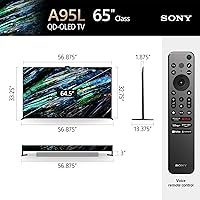
  • Dimensions: With stand attached, the TV measures 57.13″ wide, 34″ tall, and 13″ deep; without stand, depth reduces significantly for wall-mount installations.
  • Weight: The unit weighs 54.9 pounds with the stand attached, which is within the handling range for two-person installation without specialized equipment.
  • Power Draw: Rated at 175 watts under typical operating conditions, which is broadly consistent with other large-screen premium OLED displays in this class.
  • Included Items: The box contains the TV, a central stand, power cable, remote control, and two AAA batteries — no soundbar or streaming dongle is bundled.
  • BRAVIA CORE: Buyers receive 10 one-time credits redeemable for new-release movie rentals and a 24-month subscription to an extensive library of classic films through the BRAVIA CORE app.
  • Speaker Output: The Acoustic Surface Audio+ system is rated for sufficient output for typical room sizes, though it is designed for immersion rather than high-volume performance.
  • Stand Design: Ships with a single central-foot stand that requires a flat support surface of at least the TV's full width; a wall-mount bracket is sold separately.

Related Reviews
Sony XBR-65A9G 65-inch OLED 4K Smart TV
87%
96%
Picture Quality
94%
Gaming Performance
88%
Smart TV Features
89%
Ease of Setup
90%
Design and Build Quality
More
Sony Bravia 8 65-inch OLED 4K TV
82%
93%
Picture Quality
96%
Contrast & Black Levels
88%
Color Accuracy
71%
Peak Brightness
91%
Gaming Performance
More
Sony BRAVIA XR A95L 77-inch 4K QD-OLED TV
88%
96%
Picture Quality
89%
Sound Quality
92%
HDR Performance
93%
Gaming Features (PS5 Optimization)
85%
Ease of Setup
More
Sony X950G 65-Inch 4K Smart TV
85%
93%
Picture Quality
82%
Sound Quality
75%
Ease of Setup
88%
Smart TV Features
90%
Gaming Performance (HDR)
More
Sony X90L 65-inch 4K Smart TV
80%
88%
Picture Quality
91%
Gaming Performance
84%
HDR Performance
79%
Smart TV Experience
76%
Build Quality & Design
More
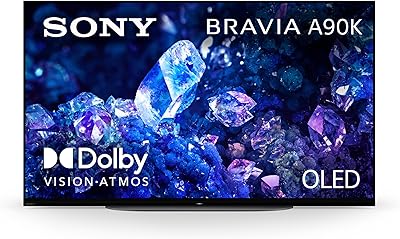
Sony A90K 42-inch OLED TV
81%
96%
Picture Quality
94%
Gaming Performance
97%
Contrast & Black Levels
91%
Color Accuracy
93%
Input Lag & Responsiveness
More
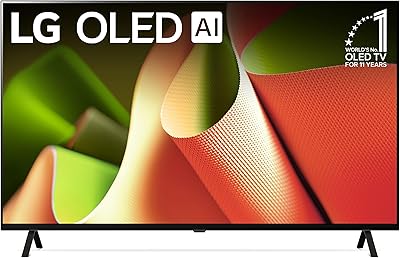
LG OLED B4 65-inch Smart TV
81%
93%
Picture Quality
96%
Contrast & Black Levels
91%
Gaming Performance
82%
Smart TV Platform (WebOS 24)
58%
Audio Performance
More
Samsung 65-Inch S85D OLED 4K TV
83%
94%
Picture Quality
91%
Color Accuracy
96%
Contrast & Black Levels
88%
Gaming Performance
86%
Motion Handling
More
Sony X750F 65-Inch 4K UHD Smart LED TV
83%
88%
Picture Quality
92%
Value for Money
60%
Sound Quality
85%
Setup and Installation
89%
Smart Features and Software
More
Sony A80L 83-inch OLED 4K TV
81%
94%
Picture Quality
97%
Contrast & Black Levels
91%
Color Accuracy
88%
Motion Handling
89%
Gaming Performance
More

FAQ

Honestly, that is the most important question to ask before buying the A95L. QD-OLED produces breathtaking results in dim or controlled-light rooms, but in a space with large unshaded windows and afternoon sun, its peak brightness will not hold up as well as the best Mini LED sets. If bright-room daytime viewing is your primary use case, you would likely be happier with a high-brightness LED alternative at a lower price.

It is genuinely meaningful, not just a marketing talking point. When you connect a PS5 to this Sony QD-OLED via HDMI, the TV and console communicate directly so that picture settings adjust automatically for each game — switching between cinema-optimized and game-optimized modes without you touching a single menu. Other HDMI 2.1 TVs give you the bandwidth for 4K at 120fps, but the automatic per-game intelligence is exclusive to Sony's ecosystem.

Under normal mixed-use conditions — rotating between streaming, gaming, and regular TV — burn-in is unlikely to become a problem within several years of typical use. Where it becomes a real consideration is if you watch a lot of news channels with persistent on-screen graphics, or if you use the TV as a PC monitor with static taskbars and desktop elements for long sessions. Sony includes automatic pixel refresh tools and brightness management to help, but if those are your primary use patterns, it is worth factoring in.

Xbox Series X will absolutely benefit from the HDMI 2.1 connection — you get 4K at 120fps, VRR, and ALLM just as you would on any HDMI 2.1 display. What you miss out on is the deep Sony-exclusive integration like Auto HDR Tone Mapping and Auto Genre Picture Mode, which are only available through the PS5 handshake. For Xbox users, it is still an excellent display, just not the uniquely optimized pairing that PS5 owners experience.

For most people it works well — apps load reasonably fast, the content recommendations are useful once the platform learns your habits, and voice search across streaming services saves time. The honest caveat is that some owners report the interface slows down noticeably after several weeks of continuous use without a restart. It is not a deal-breaker, but it is a real quirk worth knowing about.

Technically yes, but it comes with an important caution. OLED panels of any type carry a long-term burn-in risk when used with static desktop interfaces — taskbars, browser toolbars, and persistent windows can slowly leave impressions on the panel over time. For occasional use it is fine, but as a primary daily-use PC display, most experts would advise against it or recommend using it with pixel-shift and screen-saver tools active at all times.

The Acoustic Surface Audio+ system is genuinely better than most flat-panel TV speakers because the screen itself acts as the sound source, which improves dialogue clarity and spatial accuracy. For casual watching and streaming it holds its own. However, if you care about room-filling bass during action films or want a true surround experience, a soundbar or dedicated audio setup will make a meaningful difference — the built-in system runs out of authority at high volumes.

BRAVIA CORE is Sony's own streaming service that focuses on high-bitrate, high-quality 4K movies — the idea being that the source quality matches what the panel is capable of displaying. The 10 credits included at purchase let you rent recent releases at no extra cost, and the 24-month subscription gives you access to a library of classic titles. It is a genuinely useful bonus at purchase, but treat it as a welcome gift rather than an ongoing streaming replacement — the credits do not renew.

Wall-mounting the A95L follows the same process as most large-screen TVs — it uses a standard VESA mount pattern, and a two-person installation is strongly recommended given the 54.9-pound weight. The TV does not ship with a wall bracket, so you will need to purchase one separately. Most buyers find the result cleaner than the single-foot stand, and wall-mounting also eliminates any stability concerns on glass or smooth furniture surfaces.

The core difference comes down to color. LG's WOLED panels (used in most of their lineup) produce excellent blacks and contrast, but the A95L's QD-OLED structure pushes color saturation and volume noticeably higher — particularly in reds and greens — which makes HDR content look richer and more three-dimensional. LG's top OLED sets are brighter in absolute peak terms on small highlight windows, and they carry their own strengths in motion processing and gaming response. Both are outstanding, and the better choice often comes down to whether you prioritize color richness or peak brightness in your specific room setup.