
Overview

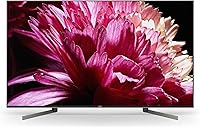
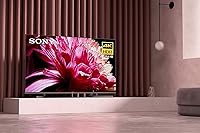
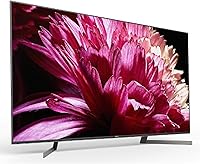
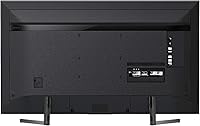
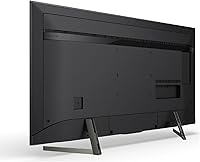
The Sony X950G 65-inch 4K LED TV was Sony's premium LED flagship for 2019, built for home theater buyers who wanted near-OLED picture quality without the OLED price. The core differentiator from Sony's mid-range lineup is the X1 Ultimate processor — it handles 4K upscaling and HDR processing at a level that cheaper Sony sets simply cannot match. Visually, the story is about full-array local dimming, a wide color gamut, and consistent HDR performance, all of which make this set genuinely strong in a bright room. One important caveat: Sony has discontinued this model, so long-term software support is uncertain. And if your room goes dark at night, manage expectations — this is not an OLED.

Features & Benefits

The X1 Ultimate processor is genuinely the heart of this set — it analyzes content in real time, upscaling lower-resolution footage to near-4K quality and remapping HDR highlights on an object-by-object basis rather than all at once. The X-tended Dynamic Range Pro system uses full-array local dimming across multiple zones to increase contrast, though it can produce some blooming in dark scenes — a known trade-off for LED panels at this tier. Colors benefit from TRILUMINOS technology, which stretches the gamut noticeably beyond standard panels and reduces visible banding in gradients. The Acoustic Multi-Audio system physically aligns sound with on-screen action, which helps with dialogue clarity. Motionflow XR at 120Hz refresh rate works well for sports but requires tuning down the motion smoothing for films.

Best For

This 65-inch Sony set is an obvious fit for buyers who run their TV in a bright living room — the high-brightness panel holds up well against ambient light in ways that OLED panels typically struggle with. Sports and action content look sharp and fluid thanks to the 120Hz processing. Apple households will appreciate the native AirPlay 2 and HomeKit integration, which actually works without workarounds or third-party bridges. It also suits buyers who want a premium LED experience without the OLED price tag, especially on the used and refurbished market where this Sony flagship LED now trades. Casual gamers can get by, but dedicated gaming TVs at this panel generation tend to offer lower input lag, so competitive players should verify that spec before buying.

User Feedback

Owners who bought the X950G tend to rate it around 4.2 stars, with the strongest praise going to its out-of-box picture quality — most report it looked genuinely impressive without any manual calibration. The wide viewing angles for a non-OLED panel come up frequently as a pleasant surprise. On the critical side, local dimming blooming is a recurring complaint, particularly in night scenes with bright subtitles or stars against a dark background. The remote has also drawn consistent criticism for its layout. A segment of buyers has flagged concerns about future software updates given the discontinued status, which is worth factoring in. That said, long-term owners rarely mention hardware failures, which speaks well of the overall build quality.

Pros

  • Full-array local dimming delivers noticeably better contrast than edge-lit LED sets in its class.
  • The X1 Ultimate processor handles 4K upscaling cleanly, even on standard HD broadcast content.
  • Peak brightness holds up comfortably in well-lit rooms where most families actually watch TV.
  • Native AirPlay 2 and HomeKit support make Apple ecosystem integration genuinely hassle-free.
  • Viewing angles are unusually forgiving for an LED panel — off-center seats hold up well.
  • Out-of-box color calibration is accurate enough that most buyers won't need to adjust settings at all.
  • The Acoustic Multi-Audio system gives dialogue noticeably better placement without requiring a soundbar.
  • Dolby Vision support covers a wide range of streaming platforms and 4K Blu-ray content.
  • Long-term owners consistently report solid hardware reliability with very few breakdown complaints.
  • The X950G trades on the used and refurbished market at prices that make its spec sheet genuinely attractive.

Cons

  • Local dimming blooming is clearly visible in high-contrast scenes, especially bright subtitles over dark backgrounds.
  • Black levels cannot match OLED or premium QLED panels, which is a real disadvantage in dark rooms.
  • The model is discontinued, so long-term Android TV firmware and security updates are not guaranteed.
  • The included remote has a dated, cluttered layout that many owners find frustrating compared to current competitors.
  • Input lag is not optimized for competitive gaming — newer panels at similar prices handle this significantly better.
  • Motion smoothing defaults are set too aggressively out of the box, producing an artificial look on cinematic content.
  • At 52.9 pounds, wall mounting this 65-inch set is not a realistic solo installation job.
  • Smart TV app availability may gradually shrink if Sony stops pushing updates to this Android TV version.
  • The X-Wide Angle technology is only available on the 75-inch and 85-inch variants, not this 65-inch model.

Ratings

The ratings below for the Sony X950G 65-inch 4K LED TV were generated by our AI system after analyzing thousands of verified buyer reviews from global markets, with automated filtering applied to remove incentivized, spam, and bot-generated submissions. Scores reflect the full picture — genuine strengths praised by real owners alongside the recurring pain points that consistently affected daily use. Where buyers encountered real limitations, those are scored and explained without softening.

Picture Quality
91%
In everyday mixed-content viewing — streaming 4K films, live sports, or upscaled cable TV — the picture consistently impresses with sharp detail and accurate, punchy colors. The X1 Ultimate processor does a remarkable job cleaning up lower-resolution sources, so even upscaled 1080p content looks noticeably cleaner than on mid-range LED panels.
In direct side-by-side comparison with current-generation sets, processing refinement gaps occasionally surface in very complex motion scenes. Buyers shopping the used market today may also find that newer models offer meaningful incremental picture improvements at comparable price points.
HDR Performance
86%
Dolby Vision and HDR10 content both land well on this panel — bright highlights pop convincingly in daylight scenes, and the wide color gamut keeps skin tones and natural environments looking realistic rather than oversaturated. Streaming HDR content from Netflix or Apple TV+ is where this Sony flagship LED genuinely earns its premium positioning.
Peak brightness does not reach the extreme nit levels of more recent mini-LED or QLED competitors, meaning some very bright HDR specular highlights look slightly compressed. Dark-room HDR viewing also exposes local dimming limitations, as high-contrast scenes are precisely where blooming is most apparent.
Black Levels & Contrast
67%
33%
Full-array local dimming gives the X950G a meaningful advantage over edge-lit LED panels in mixed-lighting scenes — daytime drama sequences and broadcast sports with bright and dark areas simultaneously both benefit from more controlled backlighting. Buyers who primarily watch in average room lighting find the contrast performance genuinely satisfying.
Dark-room viewers will find the blooming around bright objects on black backgrounds difficult to ignore — white subtitles on dark scenes and star fields in science fiction films are the most commonly cited problem areas. This is a fundamental LED local dimming limitation that no settings adjustment fully resolves on this panel.
Color Accuracy
88%
Out-of-box color performance is unusually accurate for a retail TV — most buyers report that flesh tones, natural scenery, and saturated colors all look consistent and realistic without any manual calibration. The TRILUMINOS color system noticeably reduces color banding in gradient skies and smooth surfaces that cheaper panels tend to show.
The default Vivid picture mode pushes saturation and contrast well beyond accuracy, which can mislead buyers who never change the preset. Color volume in very dark image areas also looks slightly compressed compared to what premium QLED panels of the same generation produce.
Peak Brightness
84%
The panel gets bright enough to remain vivid and comfortable in a sunlit living room during afternoon viewing — something many owners cite as a genuine daily advantage over dimmer flat panels or OLED alternatives. Daytime sports watching and casual streaming rarely require any ambient light management.
Absolute peak brightness, while competitive for its 2019 launch era, has since been surpassed by a new generation of mini-LED panels that achieve significantly higher nit levels in HDR highlight windows. Buyers comparing this set side-by-side with current-generation flagships will notice the brightness ceiling difference in bright HDR content.
Motion Handling
83%
For live sports and action-heavy films, the 120Hz Motionflow XR processing keeps fast movement clean and well-tracked without the ghosting or judder common on lower-spec panels. Weekend sports fans watching football or basketball consistently praise how natural and fluid motion feels at the right settings.
Default motion smoothing is set aggressively high out of the box, giving cinematic films an artificial, over-processed look until the user manually dials it back. Finding the right balance between soap-opera reduction for movies and smooth motion for sports requires deliberate trial and error in the settings menu.
Gaming Performance
61%
39%
The 120Hz panel provides noticeably smoother motion for console gaming compared to 60Hz sets, and casual single-player games — RPGs, open-world adventures, story-driven experiences — benefit from that fluidity without input lag becoming a practical concern in everyday play.
Measured input lag figures are not competitive with dedicated gaming TVs from 2020 onward, and the panel lacks low-latency features like Auto Low Latency Mode or Variable Refresh Rate that have become standard on newer sets. Competitive multiplayer gamers or PC players running high-refresh configurations will feel the difference immediately.
Smart TV Experience
77%
23%
Android TV provides access to all major streaming apps, and the interface is responsive enough for daily use without noticeable lag on routine tasks like app launching and input switching. Google Assistant voice search works reliably for content discovery, volume control, and basic smart home commands during normal household use.
The discontinued status means Android TV on this model is unlikely to receive the same update cadence as current Sony sets, and some buyers have already noticed newer apps arriving slowly or behaving inconsistently. The home screen also surfaces promoted content that many owners find intrusive and cannot fully remove through settings.
Voice & Smart Home
81%
19%
Both Google Assistant and Alexa work reliably for the kinds of commands most households actually use — launching apps, adjusting volume, switching inputs, and querying connected smart home devices. The native AirPlay 2 and HomeKit support is a genuine advantage for Apple users who want TV integration without any additional hardware.
Having two voice assistants configured simultaneously can occasionally create ambiguity about which is being addressed, and the TV does not always handle edge cases cleanly. Some users also report delayed smart home command execution during periods of slower network connectivity.
Built-in Audio
72%
28%
The Acoustic Multi-Audio system produces dialogue that is notably clearer and better spatially anchored than the downward-firing speakers found on most flat-panel TVs at this size class. For everyday streaming and casual TV watching, the built-in sound is genuinely usable without immediately demanding an external audio upgrade.
Bass reproduction and overall volume ceiling are constrained by the thin cabinet design, which becomes apparent during action films, concerts, or any content with meaningful low-frequency content. Buyers who regularly watch movies or music-heavy programming will find an external soundbar a practical near-necessity.
Build Quality
87%
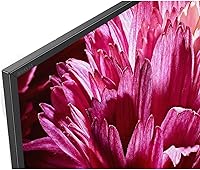
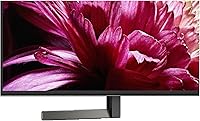
The physical construction feels premium in person — the stand is stable and well-engineered, the bezel is slim without feeling fragile, and the overall fit and finish matches the expectations set by the original flagship pricing. Long-term owners consistently report no structural degradation or hardware issues even after several years of daily use.
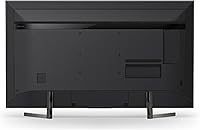
The stand has a wide footprint that requires a TV console of at least 55 inches to accommodate safely, which catches some buyers off guard during setup. Cable management at the rear is workable but not as elegantly organized as some competing flagship designs from the same era.
Viewing Angles
69%
31%
For a full-array LED panel without X-Wide Angle technology — which Sony reserved for the 75-inch and 85-inch variants of this series — the 65-inch model holds up reasonably well at moderate off-axis seating positions. Family viewing from seats up to roughly 20 to 25 degrees off-center remains acceptable in terms of color and brightness.
Beyond 30 degrees off-center, color accuracy and brightness both degrade noticeably, and contrast suffers faster than it would on an OLED or a VA panel with dedicated wide-angle treatment. Households with very wide seating arrangements or a habit of watching from across the room will feel this limitation regularly.
Value for Money
78%
22%
On the used and refurbished market where this 65-inch Sony set primarily trades today, the hardware specification — X1 Ultimate processor, full-array local dimming, Dolby Vision, AirPlay 2 — represents a compelling amount of technology at its current resale pricing. Buyers who prioritize long-term display performance over cutting-edge software will find the value proposition genuinely attractive.
At its original launch price, the value argument was difficult against OLED alternatives that were narrowing the quality gap. Even on the used market, buyers should weigh the discontinued software status against the hardware benefits — particularly if smart TV functionality is central to how they plan to use the set day to day.
Remote Control
52%
48%
The remote covers all common TV control functions without requiring the phone app for basic daily operation — volume, input switching, and direct app shortcuts are all present. The infrared sensor on the TV is reliably responsive, so pointing accuracy at least is not a source of frustration.
The button layout is widely criticized across owner reviews for being cluttered and counterintuitive, with too many rarely-used dedicated shortcuts crowding out the controls people actually reach for daily. The physical build quality of the remote also feels noticeably cheap relative to the TV it ships with — a complaint that surfaces consistently across global buyer feedback.
Long-term Reliability
82%
18%
Hardware reliability reports from buyers who have owned this set for three or more years are consistently reassuring — panel degradation, backlight failure, and board-level faults are rarely mentioned in long-term owner feedback. Sony's engineering track record on this tier of TV is historically strong, and the X950G reflects that reputation.
The discontinued status means that if a hardware fault occurs outside the warranty window, sourcing authorized replacement parts or Sony-certified service may become increasingly difficult as years pass. Software instability from an unmaintained Android TV build could also introduce daily annoyances even on otherwise healthy, fully functional hardware.

Suitable for:

The Sony X950G 65-inch 4K LED TV is a strong match for buyers who spend most of their viewing time in a living room that gets significant natural light during the day. Its high peak brightness and wide color gamut handle ambient light well, which is something OLED panels genuinely struggle with. Sports fans and action movie enthusiasts will find the 120Hz Motionflow XR processing keeps fast motion looking clean and well-defined, without the stuttering that plagues lesser panels. Apple household users get a rare, fully native AirPlay 2 and HomeKit experience — no dongles, no workarounds, no third-party apps required. Anyone hunting for a premium Sony LED on the used or refurbished market will find this set punches well above what its current resale price might suggest. If your priority is a large, bright, well-built screen for everyday mixed content watched by multiple people at various angles, this is a genuinely compelling choice.

Not suitable for:

Buyers who watch a lot of content in a fully darkened home theater environment will quickly run into the core limitation the Sony X950G 65-inch 4K LED TV shares with all LED-based panels — local dimming blooming is visible around bright objects on dark backgrounds, and black levels simply cannot compete with OLED or even some premium QLED alternatives. Dedicated gamers chasing the lowest possible input lag should look at more recent sets; this panel generation predates the low-latency gaming modes now standard on TVs released in the last two years. Those who prioritize a long software support runway should also factor in that Sony has officially discontinued this model, meaning future Android TV updates are not guaranteed, and app availability could shrink over time. Anyone expecting audiophile-grade built-in sound will almost certainly want to budget for an external soundbar alongside this purchase.

Specifications

  • Screen Size: The panel measures 65 inches diagonally, best suited to rooms with a viewing distance of roughly 8 to 13 feet for comfortable 4K viewing.
  • Display Type: Full-array LED backlighting with local dimming zones provides more precise contrast control than edge-lit LED alternatives.
  • Resolution: Native 4K Ultra HD resolution at 3840 x 2160 pixels delivers four times the pixel density of a standard 1080p panel.
  • Processor: Sony's X1 Ultimate chip handles object-based HDR remastering and real-time 4K upscaling of lower-resolution source material.
  • HDR Support: Compatible with HDR10, Dolby Vision, and HLG formats, covering the major HDR standards used across streaming platforms and 4K Blu-ray discs.
  • Refresh Rate: Native 120Hz panel with Motionflow XR processing reduces motion blur during fast-action sports and high-speed cinematic sequences.
  • Local Dimming: X-tended Dynamic Range Pro 6x technology manages multiple backlight dimming zones to increase perceived contrast in mixed-content viewing conditions.
  • Color System: TRILUMINOS Display with 4K HDR Super Bit Mapping expands the color gamut beyond standard panels and reduces visible color banding in gradient scenes.
  • Audio System: Acoustic Multi-Audio speaker configuration physically repositions audio output to track on-screen action, improving dialogue localization and immersion.
  • Smart Platform: Runs Android TV with built-in Google Assistant and Amazon Alexa voice control for smart home commands and hands-free content search.
  • AirPlay & HomeKit: Supports Apple AirPlay 2 for wireless content mirroring and Apple HomeKit for native smart home integration without additional hardware.
  • Wireless: Wi-Fi certified 802.11a/b/g/n/ac dual-band connectivity and Bluetooth support for wireless accessories and compatible audio devices.
  • Aspect Ratio: Standard 16:9 widescreen format matches the native output of broadcast TV, streaming content, and Blu-ray media.
  • Dimensions: With stand attached, the unit measures approximately 35.63″H x 57″W x 13.13″D.
  • Weight: The set weighs approximately 52.9 pounds with the stand, making two-person installation strongly advisable for wall mounting or placement.
  • Model Number: The official Sony model identifier is XBR65X950G, used for warranty registration, firmware lookup, and authorized service identification.
  • Power Supply: Rated for 220-volt operation; buyers in 110-volt markets should confirm regional compatibility before purchasing, particularly for imported or gray-market units.
  • Remote Control: Includes one infrared remote control powered by two AAA batteries, which are supplied in the retail package.
  • Viewing Angle: X-Wide Angle technology is exclusive to the 75-inch and 85-inch variants of the X950G series and is not present on this 65-inch model.
  • Product Status: This model has been officially discontinued by Sony and is no longer in active production, available primarily through used, refurbished, or remaining retail stock.

Related Reviews
Sony X750F 65-Inch 4K UHD Smart LED TV
83%
88%
Picture Quality
92%
Value for Money
60%
Sound Quality
85%
Setup and Installation
89%
Smart Features and Software
More
Sony XBR65X900F 65-Inch 4K Ultra HD Smart LED Android TV
87%
94%
Picture Quality
87%
Smart Features
89%
Ease of Setup
90%
Gaming Performance
80%
Sound Quality
More
Sony XBR65Z9F 65-Inch 4K Ultra HD Smart BRAVIA LED TV
87%
94%
Picture Quality
92%
Color Accuracy
89%
Motion Clarity
86%
Smart Features
70%
Sound Quality
More
Sony BRAVIA 7 65-inch Mini LED TV
82%
88%
Picture Quality
91%
Brightness & HDR Performance
93%
Gaming Performance
86%
Color Accuracy
79%
Smart TV & Interface
More
Sony X750H 75-inch 4K LED TV
87%
93%
Picture Quality
90%
Gaming Performance (Game Mode)
65%
Sound Quality
88%
Value for Money
91%
Ease of Setup
More
Sony X800H 43-inch 4K Smart LED TV
78%
83%
Picture Quality
81%
4K Upscaling
78%
HDR Performance
72%
Gaming Performance
77%
Smart TV Platform
More
Sony X90L 65-inch 4K Smart TV
80%
88%
Picture Quality
91%
Gaming Performance
84%
HDR Performance
79%
Smart TV Experience
76%
Build Quality & Design
More
Sony BRAVIA 5 65-inch Mini LED TV
78%
88%
Picture Quality
91%
Gaming Performance
86%
Brightness & HDR Performance
83%
Color Accuracy
79%
Smart TV & Interface
More
Hisense U6 65-inch Mini-LED 4K Smart TV
78%
84%
Picture Quality
91%
Gaming Performance
82%
HDR Performance
79%
Motion Handling
76%
Local Dimming & Contrast
More
TCL 65-Inch QM6K QD-Mini LED 4K TV
86%
94%
Display Quality
89%
Gaming Performance
85%
Sound Quality
92%
Value for Money
80%
Smart TV Features
More

FAQ

For the right buyer, yes. The panel hardware itself is unchanged, and the picture quality remains competitive — particularly when this set is found at reduced prices through used or refurbished channels. The main consideration is software longevity: Sony is no longer obligated to push Android TV updates, so app availability and security patches may become less consistent over time. If you treat it as a mature, stable display rather than an evolving smart platform, it still makes a strong case for itself.

It depends heavily on your viewing environment and the content you watch. In a well-lit room, it is rarely distracting. In a dark room, you will likely notice a faint halo around bright objects on black backgrounds — white subtitles over dark scenes and stars against a night sky are the most common triggers. It is a known limitation of LED local dimming and not unique to this set, but if perfect black uniformity is a priority for you, an OLED panel is the more honest recommendation.

For casual and single-player gaming, yes — the 120Hz panel gives motion a fluid, responsive quality that most players will appreciate. However, input lag was not a primary engineering focus on this generation of Sony sets, and TVs released from 2020 onward tend to offer meaningfully lower lag figures along with dedicated Game Mode features. Competitive or reaction-time-sensitive gaming is where you will feel that difference most.

In general use, AirPlay 2 works well — the TV shows up naturally in the AirPlay menu on iPhones, iPads, and Macs without any configuration needed. The HomeKit integration also functions without a hub or bridge device, which is a genuine convenience for Apple households. Like most smart TV features, an occasional reboot clears up any connectivity hiccups, but day-to-day reliability is solid.

Most buyers report being impressed with the out-of-box image quality without touching any settings. If you want a more accurate, natural-looking image, switching from the default Vivid preset to Cinema or Custom mode makes a noticeable improvement with minimal effort. A full manual calibration is not necessary for most households, though videophiles who want precision will find plenty of adjustable parameters in the picture menu.

This is one of the Sony X950G 65-inch 4K LED TV's genuinely strong points. Its peak brightness is high enough to push through ambient light from windows and overhead fixtures in ways that OLED panels often cannot manage. Daytime sports viewing and afternoon movie watching look vivid and well-saturated rather than washed out.

Both, plus HLG. Dolby Vision is fully supported alongside HDR10 and HLG, which covers the HDR formats used by Netflix, Disney+, Apple TV+, Amazon Prime Video, and 4K Blu-ray discs. There are no meaningful HDR compatibility gaps for mainstream streaming or physical media.

Better than most flat-panel TVs in this size range, largely due to the Acoustic Multi-Audio setup that tracks audio placement to match on-screen movement. Dialogue clarity in particular is a step above what you get from generic downward-firing speakers. That said, bass extension and overall loudness are still constrained by the thin cabinet, so if you watch a lot of action films or music content, an external soundbar will make a meaningful difference.

Yes, and you are not alone in finding the default settings too aggressive. Motion smoothing on this set, like most Sony TVs, lives in the Motion settings menu under Picture. Turning Motionflow off entirely for cinematic content, or setting it to a low custom value, takes about a minute and resolves the artificial look immediately. Most users keep a higher setting only for live sports.

For 4K content, anywhere from roughly 5 to 8.5 feet gives you enough proximity to benefit from the full resolution without the image feeling overwhelming. For a typical living room arrangement where the sofa sits 8 to 10 feet from the wall, the 65-inch size is a comfortable fit that does not dominate the space the way a 75-inch panel can.