Overview

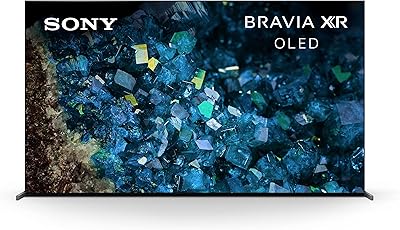
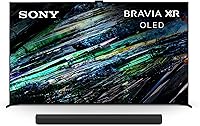
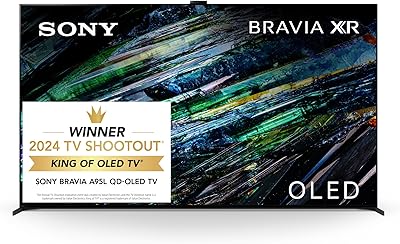
The Sony BRAVIA XR A95L 77-inch OLED TV sits at the top of Sony’s lineup for good reason — it pairs a QD-OLED panel with the Cognitive Processor XR, a combination aimed squarely at buyers who prioritize what’s on screen over what’s on the price tag. At 77 inches, you get a picture large enough to feel genuinely cinematic without overwhelming a typical living room. The bundle includes the BRAVIA Theater Bar 8 soundbar, which rounds out the package with meaningful audio support. Google TV handles the smart platform duties and it’s a proper, well-integrated experience. Be clear-eyed going in: this is a premium-tier investment, and it asks you to treat it like one.

Features & Benefits

What separates this Sony QD-OLED from conventional OLED sets is the quantum dot filter layered on top of the panel. Standard OLED already produces perfect blacks; adding quantum dots pushes color volume into territory most displays can’t reach — you notice it immediately in HDR content, where highlights feel textured rather than blown out, and skin tones hold their warmth under bright scene lighting. The Cognitive Processor XR handles upscaling and motion well enough that older content doesn’t look artificially processed. For PS5 owners, HDMI 2.1 with VRR and ALLM, combined with Sony’s console-specific enhancements, make a real practical difference in fast-paced play. Google TV keeps everything organized, and AirPlay 2 means Apple users can push content across without hunting through settings.

Best For

The A95L 77-inch is genuinely built for a specific kind of buyer. Home theater enthusiasts who want reference-grade picture quality without a projector setup will find this panel hard to argue against. PS5 owners get tangible benefits — actual low-latency, high-refresh performance with features Sony designed specifically around that console, not generic gaming marketing. Heavy streamers investing real time in Dolby Vision content on Netflix or Apple TV+ will notice the difference over lower-tier sets. If you dislike mixing brands across your A/V stack, the bundled soundbar handles everyday listening well enough to avoid the extra hassle. The slim OLED form factor is also a genuine draw for buyers who find most large-screen options too physically imposing.

User Feedback

Owners of this flagship Sony TV consistently highlight color accuracy and factory calibration quality as standout strengths — many report the picture required minimal adjustment straight out of the box. The burn-in discussion comes up regularly, and honestly it should: OLED panels can develop image retention with static elements displayed for long stretches, so buyers running news tickers or game HUDs for extended daily sessions should factor that in. Bright-room viewers sometimes note that peak brightness trails behind top Mini-LED rivals. Google TV earns broadly positive marks, though slow app launches draw occasional mild criticism. PS5 gamers are consistently enthusiastic about VRR and ALLM responsiveness. The Theater Bar 8 lands as a competent inclusion — solid for casual listening, though serious audio buyers tend to upgrade it over time.

Pros

  • QD-OLED panel delivers pure blacks and exceptional color volume simultaneously — a combination most displays at any price can’t match.
  • Factory picture calibration is excellent; most buyers report needing little to no adjustment straight out of the box.
  • PS5 gaming performance is a genuine differentiator — VRR, ALLM, and 4K/120Hz all perform as advertised in real play sessions.
  • The Cognitive Processor XR handles upscaling cleanly enough that older content looks natural without feeling artificially sharpened.
  • Google TV is a mature, well-organized smart platform with broad app support, voice search, and reliable performance.
  • AirPlay 2 support makes content sharing from Apple devices genuinely frictionless, with no setup required.
  • The bundled BRAVIA Theater Bar 8 adds Dolby Atmos and room-calibrated sound without requiring a separate purchase or research.
  • Dolby Vision, HDR10, and HLG support covers every major HDR format a streamer or physical media buyer would realistically need.
  • The slim OLED form factor looks considerably more refined than bulkier QLED or Mini-LED alternatives at equivalent screen sizes.

Cons

  • OLED burn-in is a genuine long-term risk for viewers who regularly watch static-heavy content like live sports or rolling news.
  • Peak brightness trails behind premium Mini-LED rivals, making this a weaker choice for sun-facing or consistently bright rooms.
  • The asking price is steep; casual viewers who primarily watch standard broadcast or light streaming content are unlikely to justify the cost.
  • Some users report occasional sluggishness when loading certain apps within the Google TV interface, which can disrupt the experience.
  • The Theater Bar 8, while capable, will not satisfy buyers who already own or are actively planning a proper dedicated surround sound system.
  • At this screen size, placement requires genuine room planning — not every living space can accommodate the footprint without compromising viewing distance.
  • Buyers cross-shopping the Samsung S95C or LG G3 will find comparably strong QD-OLED performance sometimes available at a lower street price.
  • OLED panels generally carry a shorter expected lifespan than LED-backlit screens under heavy, continuous daily use over many years.

Ratings

Our scores for the Sony BRAVIA XR A95L 77-inch OLED TV were generated by an AI system trained to analyze thousands of verified global buyer reviews, actively filtering out incentivized, bot-generated, and duplicate submissions to surface what real long-term owners actually experience. The ratings reflect a transparent, balanced synthesis of both this panel’s considerable strengths and the recurring pain points that matter most at this price tier. Scores above 90 indicate outstanding real-world performance, while anything below 70 signals a genuine trade-off that prospective buyers should weigh carefully.

Picture Quality
96%
Owners consistently describe the out-of-box picture as genuinely reference-quality, with the QD-OLED panel producing images that look remarkably clean and detailed during HDR films and documentary content. Colors are rich without feeling oversaturated, and the Cognitive Processor XR keeps the image natural and coherent across a wide range of source material.
In very bright or aggressively lit rooms, the picture’s impact diminishes noticeably compared to high-brightness Mini-LED alternatives. Some users also find that the default motion settings introduce a slight soap-opera effect on cinematic content that requires a manual trip into the settings menu to resolve.
Color Accuracy
93%
The combination of QD-OLED and XR Triluminos Max produces a color gamut that sits comfortably among the best in its class. Skin tones during live-action content draw particular praise for their natural warmth and consistency, holding up accurately across varied lighting scenes from dim interiors to bright outdoor sequences.
A small number of buyers with professional color-critical workflows note that the panel’s native white balance still benefits from formal calibration to hit strict DCI-P3 and BT.2020 targets precisely. Casual viewers are unlikely to notice the difference, but dedicated videophiles investing at this tier sometimes factor calibration costs into their overall budget.
Black Levels & Contrast
97%
Self-emissive OLED pixels switch off entirely in dark scenes, producing absolute blacks that no LCD-based technology can replicate at any price. During nighttime film sequences or dark-corridor gameplay, shadow detail is exceptional — objects remain clearly visible in near-black areas without the backlight haze or clouding that plagues edge-lit LCD panels.
OLED’s perfect blacks come with a brightness ceiling trade-off, and in scenes pairing extremely bright specular highlights with deep shadows, the panel cannot push peak luminance as aggressively as top-tier Mini-LED rivals. For buyers whose libraries lean heavily on very bright HDR masters, the luminance advantage of premium LCD alternatives starts to compete meaningfully.
HDR Performance
94%
Dolby Vision content looks genuinely compelling on this QD-OLED panel, with the wide color volume ensuring that HDR highlights feel textured and multi-dimensional rather than simply bright. Streaming Dolby Vision titles on Netflix or Apple TV+ is consistently cited as the moment buyers feel the investment is most clearly justified.
Peak brightness in HDR mode, while strong for an OLED panel, doesn’t match the sustained nit output of the best Mini-LED competitors. This gap can feel limiting in very bright scenes engineered to exploit high-brightness HDR mastering at 2000 nits or above, particularly during outdoor daylight sequences with aggressive tone mapping.
Gaming Performance
91%
PS5 owners consistently rate this as one of the most impactful upgrades to their gaming setup, with HDMI 2.1, VRR, and ALLM working together to deliver a noticeably responsive, tear-free experience at 4K/120Hz. Sony’s console-specific enhancements, including Auto HDR Tone Mapping, activate automatically when the PS5 is connected without any manual configuration.
PC gamers note that several PS5-specific features are inaccessible from other platforms, and the relatively lower peak brightness compared to dedicated gaming monitors can feel limiting during HDR-heavy gameplay in bright environments. Full HDMI 2.1 functionality with all gaming features active is also restricted to specific input ports rather than all available connections.
Motion Handling
86%
The Cognitive Processor XR manages motion well across diverse content types, and fast-paced sports and action sequences hold up cleanly at default settings without visible judder or blurring. Most buyers report that standard presets handle the majority of real-world viewing scenarios competently without requiring any hands-on adjustment.
The Motionflow settings require experimentation to dial in correctly — the default configurations can leave some users with too much motion smoothing on cinematic content. This produces a characteristic over-processed look that film enthusiasts dislike, and finding the right balance takes time in a settings menu that isn’t always intuitively laid out.
Smart Platform
82%
18%
Google TV is widely regarded as one of the most complete smart TV platforms currently available, with a well-organized home screen, reliable voice search, and broad app coverage that means buyers rarely need to connect an external streaming device. AirPlay 2 support rounds out the ecosystem compatibility effectively, covering both Apple and Google households simultaneously.
A recurring complaint is that certain apps, particularly smaller or less-popular streaming services, can take noticeably longer to open than expected on a panel at this price point. Occasional interface sluggishness during app switching draws consistent mild criticism from users who have experience with faster dedicated streaming hardware like an Apple TV or Chromecast.
Sound Quality
73%
27%
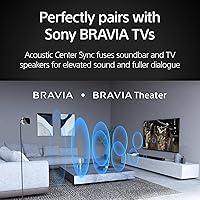
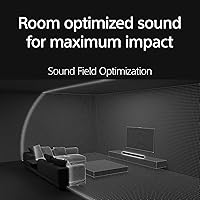
The bundled BRAVIA Theater Bar 8 delivers a genuine upgrade over the TV’s built-in speakers, with Dolby Atmos support and 360 Spatial Sound Mapping creating a noticeably wider sound stage for everyday streaming and film content. The automatic room calibration via Sound Field Optimization works effectively and requires no technical knowledge to activate.
Buyers who own or have experience with dedicated surround sound setups consistently note that the Theater Bar 8 lacks the low-end weight and spatial separation of a full multi-speaker configuration. Bass response during action films and music playback is the most frequently cited limitation, and serious audio buyers tend to treat it as a temporary solution rather than a permanent one.
Brightness
69%
31%
In a well-controlled or dimly lit room, the A95L produces more than enough luminance for comfortable, vivid HDR viewing. Peak brightness within small highlight windows is genuinely impressive for an OLED-class panel, particularly during high-contrast scene moments in Dolby Vision content where specular lights and reflections need to pop.
The brightness ceiling is one of the most frequently surfaced real-world limitations by owners whose rooms receive significant ambient light or direct sun exposure. Against competing high-brightness Mini-LED panels in direct comparisons, the gap in sustained full-screen luminance is clearly visible and can make the picture look comparatively flat in daylight viewing conditions.
Upscaling
87%
The Cognitive Processor XR handles upscaling from 1080p and lower-resolution sources with enough intelligence that older cable broadcasts and standard-definition streaming look considerably cleaner than on most competing sets. Buyers who regularly consume content well below native 4K report that the improvement over a standard upscaler is genuinely visible and not just theoretical.
Buyers who watch a high volume of compressed streaming content occasionally notice that the processor’s noise reduction can subtly soften fine texture in certain scenes. The effect is most noticeable in dark or low-contrast areas, where aggressive noise reduction trades fine surface detail for a cleaner but slightly artificial smoothed look.
Build & Design
88%
The slim OLED profile consistently earns praise from design-conscious buyers who want a large-screen panel that doesn’t visually dominate the room. The build feels premium throughout, the included pedestal stand is stable and proportionally clean, and the overall footprint integrates naturally into a modern living room without looking like a piece of industrial equipment.
A few buyers note that the pedestal stand positions the panel relatively low compared to some competitors, which can create an awkward viewing angle in rooms where the TV sits on a low media console. Wall-mounting hardware is not included in the box and must be sourced and installed separately, adding cost and effort to what is otherwise a clean setup experience.
Value for Money
64%
36%
For buyers fully committed to extracting the maximum from a PS5, watching a high volume of Dolby Vision content, or building a reference home theater, the QD-OLED performance and bundled Theater Bar 8 represent a consolidated package that would cost considerably more if assembled from separate components sourced independently.
For casual viewers or buyers who primarily consume standard broadcast or light streaming content, the premium over a competent mid-range 4K TV is genuinely difficult to justify on practical grounds. Several cross-shoppers also find that the Samsung S95C or LG G3 can be sourced at noticeably lower street prices during promotional periods, which makes the price gap harder to defend.
Connectivity
92%
Multiple HDMI 2.1 ports, built-in Wi-Fi, Bluetooth, AirPlay 2, and native Chromecast cover essentially every connection scenario a home theater buyer is likely to encounter. The TV integrates cleanly into both Apple and Google ecosystems simultaneously, which is uncommon at any price tier and genuinely practical for mixed-device households.
Some buyers note that the full HDMI 2.1 specification with all gaming features enabled is limited to specific input ports rather than all four, requiring careful attention during initial cable routing. USB port placement and count also draw occasional complaints from users who connect multiple external storage drives for local media playback.
Burn-In Resistance
57%
43%
Sony has implemented pixel shift, automatic screen saver activation, and a periodic panel refresh cycle to actively mitigate image retention risk. The majority of owners who use the TV for typical mixed content — streaming, gaming, and films — report no visible retention issues after extended ownership periods spanning one to two years.
The burn-in risk with QD-OLED panels is real and well-documented, and buyers who watch live news, sports, or content with persistent static on-screen graphics for several hours daily face a genuine long-term risk. Sony’s mitigation features can meaningfully reduce exposure to this outcome but cannot fully eliminate it, and buyers in this usage pattern should factor it into their long-term expectations honestly.
Out-of-Box Setup
89%
Google TV’s guided setup process is accessible and clear, and the factory picture modes arrive tuned closely enough to reference standards that most buyers are watching content they’re genuinely impressed by within the first hour of unboxing. Pairing the Theater Bar 8 soundbar is handled automatically during setup and requires no separate manual audio configuration.
The initial Google account sign-in and app installation sequence, while standard for the platform, can feel drawn out for buyers who simply want to switch the TV on and start watching immediately. Users who prefer to disable automatic features like motion smoothing also need to navigate a few layers into the settings menu to find and adjust the relevant controls.

Suitable for:

The Sony BRAVIA XR A95L 77-inch OLED TV is the right call for buyers who have decided that picture quality is the non-negotiable center of their home entertainment setup. If you regularly watch HDR or Dolby Vision content — films, nature documentaries, high-end streaming originals — the QD-OLED panel and XR Triluminos Max color gamut will deliver a noticeably more accurate and immersive image than most competing sets at this size. PS5 owners in particular will find genuine, measurable value here: the HDMI 2.1 ports, VRR, ALLM, and Sony’s console-specific gaming modes translate into real performance gains during fast, visually demanding play. Buyers who want a consolidated audio-visual setup without the complexity of sourcing a separate soundbar will appreciate the bundled BRAVIA Theater Bar 8, which covers everyday listening without requiring additional research or expense. Finally, design-conscious buyers who find most large-screen TVs aesthetically intrusive will appreciate the slim OLED profile, which sits far closer to considered home design than typical big-screen hardware.

Not suitable for:

The Sony BRAVIA XR A95L 77-inch OLED TV is not the right fit for every buyer, and a few specific situations make that very clear. If your living room receives significant direct sunlight or stays brightly lit for most of the day, the OLED brightness ceiling will work against you — competing Mini-LED sets from Samsung or LG can sustain higher peak brightness in well-lit environments, and that difference is genuinely visible. Burn-in is a real long-term consideration: anyone who watches live sports channels with persistent on-screen graphics, runs a news ticker for hours daily, or leaves a static game HUD on screen for extended sessions should honestly weigh that risk before committing. Budget-focused buyers will also find this difficult to justify — the price gap between this tier and a competent mid-range 4K TV is substantial, and casual viewers who primarily watch standard broadcast or light streaming content simply won’t extract proportionate value. If you were already planning to invest in a dedicated surround sound system, the bundled Theater Bar 8 may feel redundant rather than genuinely useful.

Specifications

  • Screen Size: The panel measures 77 inches diagonally, suited to rooms with a seating distance of roughly 9 to 13 feet for an optimal 4K viewing experience.
  • Panel Technology: Uses QD-OLED (Quantum Dot OLED) technology, layering quantum dots over self-emissive OLED pixels to combine absolute blacks with a wider color volume than standard OLED panels.
  • Resolution: Outputs native 4K Ultra HD at 3840 x 2160 pixels across the full active panel area.
  • HDR Support: Compatible with Dolby Vision, HDR10, and HLG, covering all major HDR formats used by streaming platforms, 4K Blu-ray, and broadcast television.
  • Processor: Powered by Sony’s Cognitive Processor XR, which analyzes and optimizes picture and sound in real time based on how human vision and hearing perceive content.
  • Color Gamut: Incorporates XR Triluminos Max, Sony’s wide color gamut implementation that expands the range of reproducible shades and hues for more accurate, lifelike color reproduction.
  • Smart Platform: Runs Google TV, which unifies streaming apps into a single interface, surfaces personalized recommendations, and supports Google Assistant voice commands natively.
  • Voice Control: Supports Google Assistant via the included remote and Google TV interface for hands-free content search, playback control, and smart home device integration.
  • AirPlay Support: Built-in Apple AirPlay 2 enables wireless content casting and screen mirroring from iPhone, iPad, and Mac devices without any additional hardware or app installation.
  • Wireless: Includes built-in Wi-Fi and Bluetooth for wireless network connectivity and pairing with compatible peripherals and audio accessories.
  • HDMI Ports: Features HDMI 2.1 ports capable of carrying 4K signals at up to 120Hz, providing full bandwidth headroom for high-frame-rate gaming and video content.
  • Refresh Rate: Native panel refresh rate of 120Hz supports smooth motion reproduction for fast-action content, high-frame-rate gaming, and cinematic playback.
  • Gaming Features: Supports Auto Low Latency Mode (ALLM), Variable Refresh Rate (VRR), and PlayStation 5-specific picture and performance enhancements for optimized console gaming.
  • Sound System: Bundled with the BRAVIA Theater Bar 8 soundbar, which uses 360 Spatial Sound Mapping to generate a wide surround sound field from a single front-facing unit.
  • Audio Formats: The Theater Bar 8 supports Dolby Atmos, DTS:X, and IMAX Enhanced, covering the premium audio formats used by major streaming services and physical disc media.
  • Sound Mapping: 360 Spatial Sound Mapping technology analyzes the room layout and repositions virtual audio objects to create a more convincing three-dimensional sound environment.
  • Room Calibration: Sound Field Optimization automatically measures the acoustic characteristics of the listening space and adjusts the soundbar’s output profile to match the environment.
  • Form Factor: Flat panel design ships with an included pedestal stand and is compatible with standard VESA wall-mount brackets for those preferring a wall-mounted installation.

Related Reviews
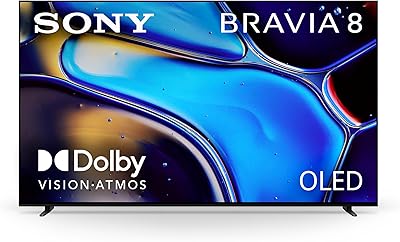
Sony BRAVIA 8 77-inch OLED TV
81%
93%
Picture Quality
96%
Contrast & Black Levels
61%
Peak Brightness
91%
Gaming Performance
67%
Built-in Audio
More
Sony XR65A95L 65-inch QD-OLED 4K TV
84%
97%
Picture Quality
94%
Gaming Performance
74%
Brightness & HDR Impact
96%
Color Accuracy
89%
Motion Handling
More
Sony A80L 83-inch OLED 4K TV
81%
94%
Picture Quality
97%
Contrast & Black Levels
91%
Color Accuracy
88%
Motion Handling
89%
Gaming Performance
More
Sony Bravia 8 65-inch OLED 4K TV
82%
93%
Picture Quality
96%
Contrast & Black Levels
88%
Color Accuracy
71%
Peak Brightness
91%
Gaming Performance
More
Sony BRAVIA 8 55-inch 4K OLED TV
82%
93%
Picture Quality
91%
Gaming Performance
96%
Contrast & Black Levels
89%
Color Accuracy
74%
Smart TV Platform
More
Sony A90K 42-inch OLED TV
81%
96%
Picture Quality
94%
Gaming Performance
97%
Contrast & Black Levels
91%
Color Accuracy
93%
Input Lag & Responsiveness
More
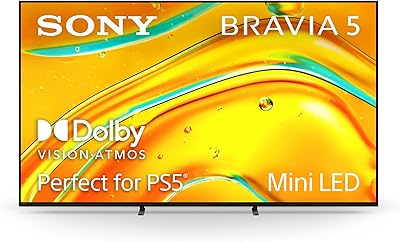
Sony BRAVIA 5 65-inch Mini LED TV
78%
88%
Picture Quality
91%
Gaming Performance
86%
Brightness & HDR Performance
83%
Color Accuracy
79%
Smart TV & Interface
More
LG C3 77-Inch OLED Smart TV
82%
96%
Picture Quality
93%
Gaming Performance
98%
Black Levels & Contrast
67%
Smart TV Interface
78%
HDR Performance
More
Sony BRAVIA 2 II 50-inch 4K LED Smart TV
74%
81%
Picture Quality
62%
Refresh Rate & Motion
74%
PS5 Gaming Integration
86%
Smart TV Platform
63%
Brightness
More
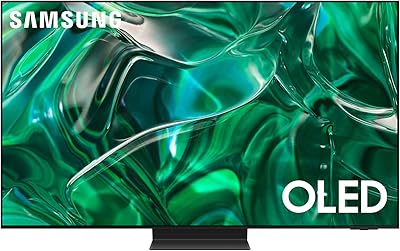
Samsung S95C 77-inch OLED 4K Smart TV
81%
94%
Picture Quality
97%
Contrast & Black Levels
92%
Color Accuracy
91%
Gaming Performance
58%
Brightness in Bright Rooms
More

FAQ

It’s a legitimate concern worth understanding rather than dismissing. QD-OLED panels can develop permanent image retention if static elements — news tickers, channel logos, sports scoreboards — are displayed at high brightness for extended periods over many months. For typical mixed use like streaming, movies, and casual gaming, most owners never encounter any problems. If you watch several hours of live news or sports daily, it’s worth using the built-in pixel refresh features Sony provides and being mindful of brightness settings.

All three are serious flagship contenders and the comparison is worth doing. The A95L and Samsung S95C both use QD-OLED panels and share that technology’s strengths in color volume and deep blacks, while the LG G3’s micro-lens array WOLED panel pushes peak brightness higher — a real advantage in bright rooms. Sony’s Cognitive Processor XR is widely regarded as producing more natural motion and upscaling than Samsung’s processing. If PS5 integration, Sony’s ecosystem, or Google TV are priorities for you, the A95L makes a compelling case on those grounds specifically.

Yes, and this is one of the strongest genuine use cases for this panel. The HDMI 2.1 ports support 4K at 120Hz with VRR and ALLM, which together reduce screen tearing and minimize input lag in demanding games. Beyond the standard gaming features, Sony has built PS5-exclusive enhancements like Auto HDR Tone Mapping and Auto Genre Picture Mode directly into the TV, which automatically optimize the image when a PlayStation 5 is connected. Gamers consistently cite the low-latency performance as one of the standout practical benefits.

Yes, AirPlay 2 is built in, so any iPhone, iPad, or Mac can mirror or cast directly without additional hardware or app setup. You push content wirelessly the same way you would to an Apple TV. Google TV also has Chromecast built in, so Android users and Chrome browser users have their own native casting path available as well.

The Theater Bar 8 is a genuinely capable soundbar — it supports Dolby Atmos and DTS:X, and its 360 Spatial Sound Mapping creates a convincingly wide sound stage for a single-bar unit. For most buyers, it will be a meaningful step up from the TV’s built-in speakers and more than sufficient for everyday streaming and film watching. That said, if you already own a quality surround sound system or are planning to build one, the bundled bar likely won’t replace it — serious audio enthusiasts tend to move on from it over time.

This is where OLED technology has a genuine limitation compared to high-brightness Mini-LED alternatives. The A95L can produce impressive HDR highlights, but in a room flooded with direct sunlight or with overhead lighting hitting the screen, the image can wash out more visibly than a premium LCD-based set would. If your viewing space is consistently and aggressively lit, a high-brightness Mini-LED option may be the more practical choice. In rooms with moderate or controlled ambient light, the panel performs beautifully.

Most buyers are genuinely impressed with the factory picture, particularly in Sony’s Cinema and Netflix Calibrated modes, which are tuned close to industry reference standards. Professional calibration can extract additional accuracy, but it isn’t necessary for the vast majority of users. If you’re a dedicated videophile who wants measurements to match D65 and BT.2020 targets precisely, calibration is worth considering — but for everyone else, this is one of the better out-of-box experiences available in the premium TV segment.

The general guideline for a 4K panel at 77 inches is a seating distance of around 6.5 to 10 feet, though sitting slightly closer is viable given that 4K resolution holds fine detail well at shorter distances. Most standard living rooms of 12 feet or longer accommodate this screen size comfortably. If your space is more compact, the 65-inch variant of the same A95L panel series would be a more proportionate fit.

Google TV is one of the more approachable smart TV platforms available today. The home screen surfaces content from streaming apps you already subscribe to, and the unified search works well when you simply speak or type a title without knowing which app it lives on. Remote setup is quick, and linking a Google account unlocks the full personalized experience. Some users report that specific apps can take a few extra seconds to launch, but the overall day-to-day navigation is considered smooth and intuitive by most owners.

The Sony BRAVIA XR A95L 77-inch OLED TV supports Dolby Vision Gaming specifically — a mode tuned for low-latency gameplay rather than passive viewing. This means compatible game titles can output at full Dolby Vision quality through the HDMI 2.1 ports without trading HDR fidelity for response time. It is one of the features that makes this panel particularly compelling for buyers who want the same premium image standard during gaming that they expect when watching a film.