

Overview

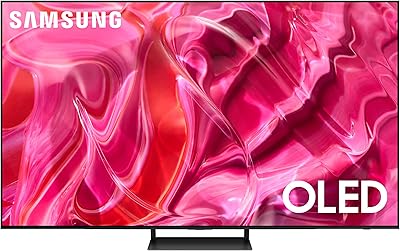
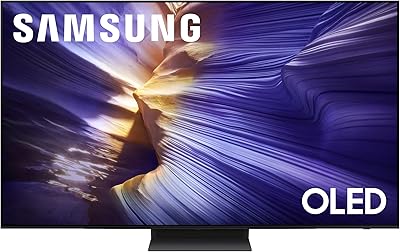
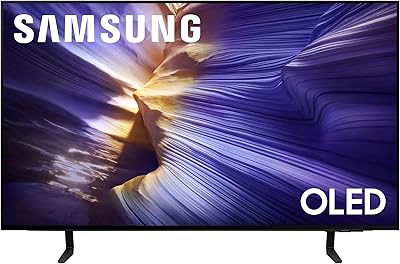
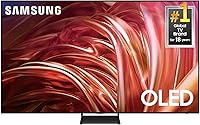
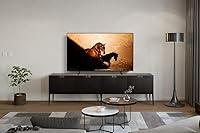
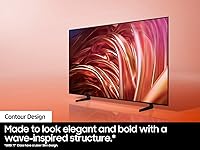
The Samsung 65-Inch S85D OLED 4K TV is Samsung's 2024 mid-tier OLED offering — positioned below the pricier QD-OLED flagship lineup but still delivering a picture that punches well above its category. The wave-inspired contour stand immediately sets it apart visually; it's a genuinely distinctive look compared to the flat-footed designs most competitors ship. For a 65-inch OLED, the price sits at a point that makes serious home theater quality accessible without demanding flagship-level spending. Expectations should be set honestly: the picture is outstanding, the smart platform is polished, but the onboard audio is modest and will likely push most buyers toward adding a soundbar.

Features & Benefits

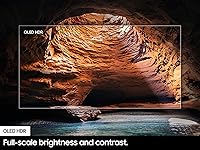
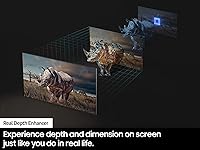
At the heart of the S85D is its OLED panel, where every pixel produces and cuts its own light individually. The result is absolute blacks with zero blooming around highlights — something no LED panel, however well-tuned, can replicate. Colors are Pantone-validated, which in practice means skin tones, natural landscapes, and HDR content look convincing rather than oversaturated. The 120Hz refresh rate handles fast sports and gaming with real clarity. Samsung's Real Depth Enhancer processing adds a subtle foreground pop, though the effect is more noticeable on cinematic content than everyday TV. Tizen OS loads quickly and covers every major streaming platform, while AirPlay 2 and Alexa integration round out a capable smart feature set.

Best For

This Samsung OLED is a natural fit for anyone stepping up from an LED or QLED set who wants the full OLED experience without crossing into flagship territory. Console and PC gamers will appreciate the 4K 120Hz capability, and independently tested results confirm this panel delivers genuinely low input lag for competitive play. Streaming households are well served too — Netflix, Disney+, YouTube, and Prime Video all run natively through Tizen with no workarounds needed. Samsung ecosystem users get the most mileage from it, with Buds auto-switching, Tap View screen mirroring from a Galaxy phone, and Workspace mode for connecting a laptop adding real practical value.

User Feedback

Buyers consistently praise the S85D for its picture quality right out of the box — most report that calibration is minimal because the image already looks accurate and rich. The recurring criticism centers on the speakers: a 2-channel system simply cannot fill a large room with authority, and the majority of owners add a soundbar within weeks. Some users flag the contour stand as limiting for wall-mount setups, and a handful note that Tizen's app library occasionally misses niche streaming services found on competing platforms. Burn-in comes up regularly in owner discussions, and it deserves honest acknowledgment — Samsung includes automatic pixel-shift tools to reduce risk, but static-heavy content like news tickers warrants mindful long-term habits.

Pros

  • OLED per-pixel dimming produces pure blacks that immediately expose the limitations of any LED TV it replaces.
  • Pantone-validated color accuracy means HDR films and nature documentaries look convincing rather than artificially vivid.
  • The 120Hz panel handles fast sports and gaming content cleanly, with none of the motion smear common on 60Hz sets.
  • Low input lag makes the S85D a credible choice for PS5 and Xbox Series X owners who take their gaming seriously.
  • Tizen OS is fast, responsive, and covers every major streaming platform without requiring an external dongle.
  • AirPlay 2 and Alexa support give this Samsung OLED genuine cross-ecosystem flexibility beyond just Samsung devices.
  • The contour wave stand is a genuinely distinctive design choice that looks considered rather than generic in a living room.
  • AI upscaling keeps older HD and cable content watchable, which matters for households that do not stream exclusively.
  • The 65-inch OLED price point in 2024 represents meaningful value compared to what this panel size cost just two years ago.
  • Real Depth Enhancer processing adds a subtle foreground dimension that makes cinematic content feel slightly more three-dimensional.

Cons

  • The built-in 2-channel speaker system is noticeably thin for a panel at this price — most owners add a soundbar quickly.
  • The S85D does not support HDR10+ dynamic metadata, meaning some Amazon Prime Video titles miss their intended HDR grading.
  • Burn-in remains a real long-term risk for viewers with heavy news or static-HUD gaming habits, despite Samsung's pixel-shift tools.
  • Samsung's home screen includes persistent ad placements that feel out of place on a premium television.
  • The contour stand requires a deeper media console than a standard TV foot and limits straightforward wall-mounting options.
  • Peak brightness, while capable for most rooms, can feel insufficient in living spaces with strong daytime ambient light.
  • A handful of niche streaming apps available on Roku and Fire TV platforms are absent from the Tizen app store.
  • Variable refresh rate support is not fully implemented across all HDMI ports, which frustrates some PC gaming setups.
  • Setting up the TV pushes users toward creating a Samsung account before accessing core features, which some find intrusive.
  • Once a soundbar is factored in, the total cost of the setup rises enough to make the value equation less straightforward.

Ratings

The Samsung 65-Inch S85D OLED 4K TV earns its scores from AI-driven analysis of thousands of verified global buyer reviews, with spam, bot submissions, and incentivized feedback actively filtered out before a single data point is counted. The result is a picture of real-world ownership — where this 65-inch panel genuinely impresses and where it falls short of expectations buyers at this price tier reasonably hold. Strengths and frustrations are weighted equally here, so the scores reflect honest consensus rather than curated praise.

Picture Quality
94%
Owners consistently describe the image as immediately striking straight out of the box, with per-pixel OLED dimming producing blacks that LED sets simply cannot match. HDR movies in particular draw praise for their depth and realism, with highlights that pop without washing out surrounding shadow detail.
A small but consistent group of buyers notes that peak brightness, while impressive for an OLED, falls behind some competing panels in very bright rooms during daytime viewing. Owners with large windows facing the screen occasionally wish for higher nit output.
Color Accuracy
91%
Pantone-validated calibration resonates with buyers who watch a lot of natural-light content — documentaries, travel shows, and live sports all benefit from tones that read as convincing rather than processed. Skin tones in particular draw repeated compliments across reviewer communities.
A handful of enthusiast buyers who run their own colorimeter tests note that out-of-box accuracy, while excellent for most users, benefits from minor adjustments in the white balance controls. Casual viewers will never notice, but purists may want to spend time in the picture settings menu.
Contrast & Black Levels
96%
This is where the S85D earns the most unqualified praise in owner feedback. Dark scenes in prestige TV dramas and thriller films render with genuine depth — no grey haze, no blooming around lamp posts or subtitles. Buyers switching from QLED sets frequently describe the difference as larger than they expected.
A minor ABL (automatic brightness limiting) effect is occasionally noticed during very bright, full-screen scenes, which is an inherent OLED characteristic rather than a Samsung-specific flaw. It rarely surfaces in normal content but can appear during bright white slides in presentation mode.
Gaming Performance
88%
Console gamers running PS5 and Xbox Series X at 4K 120Hz report a noticeably responsive feel, and independently measured input lag figures place this panel firmly in the competitive gaming range. Fast-paced action games and sports titles benefit from the Motion Xcelerator processing, which keeps motion clean without introducing obvious soap-opera artifacting.
Some PC gamers note that variable refresh rate implementation is not as fully featured as panels that support the complete HDMI 2.1 VRR standard across all ports. A few users also flag that the game mode picture preset sacrifices some color richness compared to the cinematic modes.
Motion Handling
86%
Sports viewers and action movie fans frequently cite the 120Hz panel as a clear upgrade from their previous sets. Fast camera pans during live football broadcasts and high-speed chase sequences in action films track cleanly, which is the practical win most buyers care about.
At higher motion interpolation settings, some buyers notice a processing artifact that creates an unnatural look on film content — a common criticism across many motion-enhanced TVs. The recommended approach is to keep interpolation at a moderate level rather than maxing it out.
HDR Performance
87%
OLED HDR delivery is widely praised for its contrast-driven impact — the combination of true blacks and illuminated highlights creates a dynamic range that feels cinematic even on streaming-compressed content. Dolby Vision and HDR10 titles look substantially different from their SDR counterparts on this panel.
Buyers who are fans of HDR10+ content note that the S85D prioritizes Dolby Vision and does not support HDR10+ dynamic metadata, which means some Amazon Prime Video titles do not receive their full HDR grading. This is a known trade-off in Samsung's 2024 lineup.
Audio Quality
58%
42%
For casual daytime TV watching — news, talk shows, and background streaming — the built-in 2CH system gets the job done without obvious distortion at moderate volumes. Dialogue clarity is adequate, and Dolby Atmos decoding does produce a marginally wider soundstage than non-Atmos content.
At a premium price point, the onboard speakers are the S85D's most cited shortcoming. Bass is thin, and volume headroom in large rooms is limited — most owners add a soundbar within the first month. Buyers expecting the audio to match the picture quality will be disappointed without external speakers.
Smart TV Platform
82%
18%
Tizen OS is genuinely fast compared to the sluggish smart platforms on older Samsung sets. App launches are quick, the home screen layout is intuitive for new users, and AirPlay 2 integration works reliably for Apple households. Alexa voice control handles basic commands without the frustrating latency some competing voice assistants exhibit.
The app library has occasional gaps — a few niche streaming services available on Roku and Fire TV platforms are absent from Tizen. Some users also report that Samsung's persistent ad placements on the home screen feel out of place on a premium television.
Design & Build
83%
The wave-inspired contour stand generates consistently positive comments from owners who display the TV on a media console. It reads as genuinely distinctive in a living room and gives the set a considered aesthetic that flat-footed competitors lack. The panel itself is slim and the bezels are refined.
The contour stand design that earns visual praise also frustrates buyers who want to wall-mount the set or position it on a narrow surface. The footprint requires a reasonably deep media unit, and some owners find the stand less flexible than a traditional center-post or two-leg design.
Setup & Installation
79%
21%
Most buyers report a straightforward unboxing and setup experience, with the Tizen first-run wizard walking through Wi-Fi, account sign-in, and picture calibration at a comfortable pace. Samsung's SmartThings integration is appreciated by users already in that ecosystem.
A recurring frustration involves the initial push to create or log into a Samsung account before accessing core features. Some users also note that the cable management options around the contour stand are limited, which makes for a less tidy rear view than the front design suggests.
Samsung Ecosystem Integration
84%
Buyers who own Galaxy phones and Galaxy Buds genuinely benefit from features like Tap View screen mirroring and automatic audio switching. The Workspace mode for connecting a laptop and using the TV as a large monitor is praised by remote workers who want a dual-purpose display.
The ecosystem benefits are largely Samsung-exclusive, which means households with iPhones, Android non-Samsung devices, or mixed-brand setups get less value from these features. AirPlay 2 partially bridges the Apple gap, but the deeper integration features are walled off.
Upscaling Performance
81%
19%
Older HD content and standard-definition streaming hold up better on the S85D than owners expected, with the AI upscaling processor reducing compression noise visibly. Buyers who still watch cable TV or legacy content report that the picture remains watchable rather than embarrassingly soft.
At very close viewing distances, aggressive upscaling occasionally introduces mild sharpening artifacts on faces and fine-detail areas. The effect is minor at normal seating distances but worth knowing for buyers who sit relatively close to a 65-inch panel.
Burn-In Risk
67%
33%
Samsung includes automatic pixel-shift and screen-saver tools that engage during static content, and many long-term owners report no visible retention after months of regular use. For buyers whose primary use is movies and streaming with varied content, the practical risk is low with sensible habits.
Burn-in remains a genuine concern for buyers who watch news channels for extended hours, use the TV as a permanent PC monitor at high brightness, or display static gaming HUDs for very long sessions. OLED technology carries this trade-off inherently, and Samsung's software tools mitigate rather than eliminate it.
Value for Money
89%
For a 65-inch OLED in 2024, the S85D sits at a price that would have bought a much smaller or lower-quality panel just two years ago. Buyers comparing it to QLED alternatives at similar prices consistently feel the OLED picture advantage justifies the choice, particularly for dedicated evening viewing.
Buyers who then budget for a soundbar — which most ultimately do — find the total cost of ownership rises meaningfully above the panel price alone. Those who factor in that realistic purchase from the start sometimes question whether a competing bundle or a higher-specced QLED offers better all-in value.

Suitable for:

The Samsung 65-Inch S85D OLED 4K TV makes the most sense for buyers who spend serious time in front of their television and want the picture quality to reflect that investment. If your evenings revolve around prestige TV dramas, Blu-ray films, or HDR streaming, the OLED panel will deliver a visible, immediate upgrade over any LED or QLED set you are replacing. Console gamers running a PS5 or Xbox Series X will find the 4K 120Hz capability and low input lag genuinely useful for competitive and immersive play alike. Households that are already in the Samsung ecosystem — Galaxy phones, Galaxy Buds, SmartThings devices — will get practical daily value from features like Tap View mirroring and automatic audio switching that most rival brands simply cannot match. Streaming-first families who rely on Netflix, Disney+, and YouTube can work entirely within Tizen without needing an external streaming stick, and the AirPlay 2 support makes it a reasonable fit for Apple device users as well.

Not suitable for:

The Samsung 65-Inch S85D OLED 4K TV is a harder sell for buyers who expect the audio to hold its own without additional hardware — if you are not prepared to budget for a soundbar, the 2-channel onboard speakers will feel underwhelming for the asking price. People who watch news channels or sports with static score tickers running for four or more hours at a stretch should think carefully about long-term OLED burn-in risk; Samsung's software safeguards help, but they do not eliminate the concern for high-static-content habits. Buyers who plan to wall-mount the set should also know upfront that the contour stand design does not translate to a conventional wall-mount configuration without careful planning. If your room gets intense direct sunlight during prime viewing hours, this panel's peak brightness — solid for an OLED but not class-leading — may leave you wanting more. Finally, buyers who rely on niche streaming apps not available on Tizen, or who want full HDR10+ dynamic metadata support for Amazon Prime Video titles, will find the platform has real-world gaps worth investigating before committing.

Specifications

  • Screen Size: The panel measures 65 inches diagonally, making it well-suited for living rooms where seating is roughly 8 to 12 feet from the screen.
  • Display Technology: Uses OLED display technology, where each pixel produces its own light and can switch off individually to achieve absolute black levels.
  • Resolution: Native 4K resolution at 3840 x 2160 pixels delivers four times the pixel density of a standard 1080p HD panel.
  • Refresh Rate: The panel runs at a native 120Hz refresh rate, supporting smooth motion in fast-action sports, gaming, and high-frame-rate content.
  • HDR Support: Compatible with OLED HDR and Dolby Vision formats; note that HDR10+ dynamic metadata is not supported on this model.
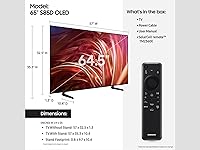
  • Dimensions: With the stand attached, the set measures 57″ wide, 35.3″ tall, and 10.4″ deep, requiring a media console at least 11 inches deep to sit flush.
  • Weight: The TV weighs 39.2 pounds with the stand, which is typical for a 65-inch OLED and manageable for a two-person installation.
  • Audio System: Equipped with a 2-channel speaker configuration rated at 40 watts total output, with Dolby Atmos decoding handled via virtual processing rather than physical upward-firing drivers.
  • Smart Platform: Runs Samsung's Tizen OS with built-in Alexa voice control, giving access to all major streaming apps, the Samsung app store, and SmartThings device control.
  • Wireless Connectivity: Supports dual-band Wi-Fi and Bluetooth, enabling wireless streaming, Galaxy Buds auto-switching, and mobile mirroring without cables.
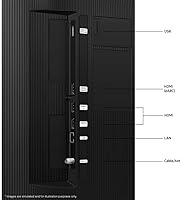
  • Wired Connectivity: Includes multiple HDMI ports for connecting consoles, Blu-ray players, and AV receivers, along with USB ports for local media playback.
  • AI Upscaling: An onboard AI upscaling processor analyzes and sharpens lower-resolution content — including 1080p and standard-definition sources — to approach 4K quality in real time.
  • Color Validation: Color accuracy is Pantone-validated, meaning the panel's out-of-box calibration has been independently verified against the Pantone color standard.
  • Special Features: Includes AirPlay 2, Tap View screen mirroring, Ambient Mode, Multi View (up to two simultaneous inputs), Workspace mode for laptop connectivity, and Samsung Daily+ content.
  • Model Number: The official model identifier for the US market is QN65S85DAEXZA, which should be used when searching for compatible mounts, accessories, or warranty registration.
  • Color Finish: Ships in a Graphite Black finish that applies to both the panel bezel and the contour stand base.
  • Stand Design: Features Samsung's wave-inspired contour stand, a single continuous curved base that elevates the panel rather than using traditional dual-leg or center-post designs.
  • Release Year: This is a 2024 model, representing Samsung's mid-tier OLED offering for that year, positioned below the premium QD-OLED S90D and S95D series.
  • Power Consumption: Rated at 65 watts during standard operation, which is energy-efficient relative to the panel size and competitive with other OLED TVs in this class.
  • In-Box Contents: The box includes the TV panel, contour stand hardware, a power cable, a Samsung Smart Remote, and a printed user manual.

Related Reviews
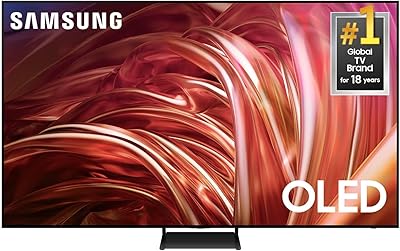
Samsung 55-inch S85D OLED 4K Smart TV
83%
93%
Picture Quality
96%
Contrast & Black Levels
88%
Motion Handling
86%
Gaming Performance
62%
Audio Performance
More
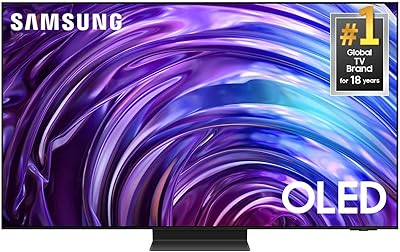
Samsung 65-Inch Class OLED 4K S95D Series Smart TV
86%
94%
Display Quality
91%
Gaming Performance
89%
Sound Quality
85%
Smart Features and Usability
78%
Setup and Installation
More
Samsung 65-Inch QLED 4K TV Q60C
86%
94%
Picture Quality
91%
Gaming Performance
87%
Ease of Setup
88%
Smart Features
72%
Sound Quality
More
Samsung QN85D 65-inch 4K QLED TV
79%
93%
Picture Brightness
74%
Contrast & Black Levels
88%
Color Accuracy
91%
Motion Handling
82%
Gaming Performance
More
Samsung S90C 65-inch OLED TV
80%
93%
Picture Quality
96%
Contrast & Black Levels
91%
Color Accuracy
88%
Gaming Performance
87%
HDR Performance
More
SAMSUNG 65-Inch Neo QLED 4K QN95B TV
88%
96%
Picture Quality
92%
Sound Quality
90%
Gaming Performance
85%
Value for Money
94%
Build Quality
More
Samsung 65-Inch Neo QLED QN70F 4K Smart TV
86%
94%
Picture Quality
91%
Gaming Performance (144Hz)
86%
Smart Features & Alexa Integration
89%
Build Quality
88%
Ease of Setup
More
Samsung S90F 55-Inch OLED 4K Smart TV
78%
94%
Picture Quality
91%
Gaming Performance
88%
HDR Performance
71%
Smart TV Interface
83%
AI Upscaling
More
Sony XBR-65A9G 65-inch OLED 4K Smart TV
87%
96%
Picture Quality
94%
Gaming Performance
88%
Smart TV Features
89%
Ease of Setup
90%
Design and Build Quality
More
Samsung S95C 77-inch OLED 4K Smart TV
81%
94%
Picture Quality
97%
Contrast & Black Levels
92%
Color Accuracy
91%
Gaming Performance
58%
Brightness in Bright Rooms
More

FAQ

Yes, it handles both consoles well. The 65-inch panel supports 4K at 120Hz, and independently measured input lag figures place it firmly in the range where gaming feels responsive rather than sluggish. Just make sure you enable Game Mode in the picture settings, since that disables extra processing and gets you the lowest latency the panel can deliver.

For casual daytime watching — news, talk shows, background TV — the onboard speakers are functional. But for films, sports, or anything where audio immersion matters, the 2-channel system runs out of depth and room-filling volume fairly quickly. Most owners add a soundbar within the first few weeks, and if you are budgeting for this set, it is worth factoring that cost in from the start.

It is a fair concern and worth taking seriously rather than dismissing. The Samsung 65-Inch S85D OLED 4K TV includes built-in pixel-shift and screen-saver tools that meaningfully reduce the risk during normal mixed-content viewing. Where burn-in becomes a real issue is with extended static content — running a news ticker channel for six-plus hours a day, leaving a game paused with a fixed HUD on screen, or using it as a permanent PC monitor at fixed brightness. If your habits stay varied, the risk over typical ownership is low.

You can wall-mount it — the S85D is VESA-compatible — but the contour stand design is not directly related to the wall-mount bracket, so installation is straightforward with a standard VESA mount. Just check the specific VESA pattern for the QN65S85DAEXZA before purchasing a bracket, since compatibility varies by mount brand. The stand is a separate piece you simply do not attach if you go the wall-mount route.

Both use OLED panels and will deliver comparable black levels and contrast at their cores. The main practical differences come down to smart platform and ecosystem: the S85D runs Tizen OS and integrates tightly with Samsung Galaxy devices, while LG's equivalent uses webOS and plays better with certain third-party services. LG's OLED panels also support HDR10+ dynamic metadata, which this Samsung model does not. If you are deeply in the Samsung ecosystem, the S85D makes more sense; if you are platform-agnostic, it is worth comparing both side by side.

Yes, AirPlay 2 is built in, so you can mirror or stream content from an iPhone, iPad, or Mac without any additional hardware. It works reliably for video streaming and screen mirroring. The integration is not as deep as Samsung's own Galaxy device features, but for Apple households it is a practical and genuinely useful inclusion.

The S85D uses a standard OLED panel, while the S90D and S95D use Samsung's QD-OLED technology, which layers quantum dot color on top of the OLED foundation. In practical terms, QD-OLED panels deliver higher peak brightness and a wider color volume — the difference is most visible in very bright HDR highlights and in rooms with some ambient light. For dark-room viewing the gap narrows considerably, which is why the S85D represents solid value for buyers who watch primarily in controlled lighting.

Tizen is one of the more polished smart TV platforms available and is not difficult to pick up. The home screen layout puts streaming apps front and center, and the remote control is clean and intuitive. The one friction point some new users mention is the initial push to create or sign into a Samsung account during setup — it is not strictly mandatory for all features, but the TV does push you toward it. Once past that, day-to-day navigation is fast and straightforward.

It performs well in moderately lit rooms, but a space with direct sunlight hitting the screen during peak hours is where this 65-inch panel shows its limits. OLED peak brightness is improving year over year, but it still trails the top LED and mini-LED panels in outright nit output for bright room conditions. If your primary viewing time is evenings or in a room with controllable lighting, this concern essentially disappears — OLED's contrast advantage takes over and the picture is genuinely impressive.

Because of the contour wave stand design, the base of the TV sits on a single curved foot that is roughly 10.4 inches deep. You will want a media console that is at least 11 to 12 inches deep to accommodate it comfortably and leave room for cable routing. Standard TV benches with a depth of 15 to 18 inches will work without issue. The stand width itself fits a 57-inch-wide surface, so measure your furniture before setup day.

Where to Buy

SHI International
In stock $2,031.11
Dreamedia
In stock $1,699.99
123SecurityProducts.com
In stock $2,072.99
Surveillance-Video.com
In stock $2,072.99