


Overview

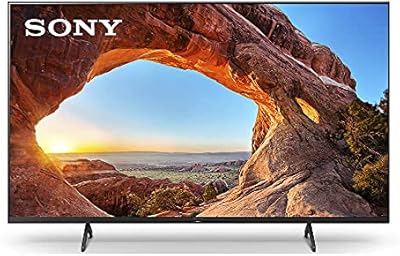
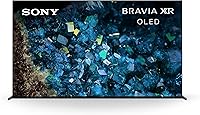
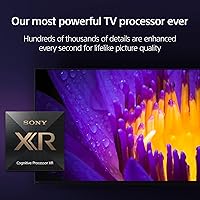
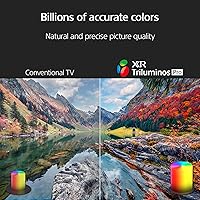
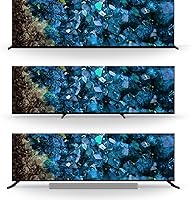
The Sony A80L 83-inch OLED 4K TV occupies a rare niche — an 83-inch OLED panel in a market where most large-screen OLED options top out at 77 inches. That extra size alone dramatically changes what a living room can feel like. Sony's Cognitive Processor XR is the engine behind the picture quality here; rather than applying a single upscaling pass, it analyzes image content across multiple dimensions simultaneously to produce more natural-looking motion and truer colors. This is a 2023 BRAVIA XR series model, sitting at the top of Sony's consumer TV range. Serious investment is required, and it rewards viewers most in dedicated viewing spaces rather than bright, open-plan rooms.

Features & Benefits

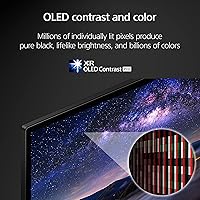
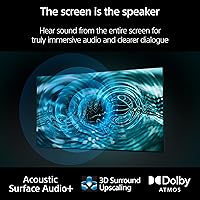
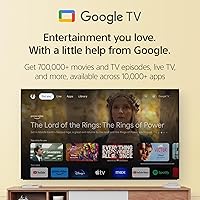
The OLED panel delivers what LCD-based TVs fundamentally cannot: true blacks, because each pixel switches off independently rather than relying on a backlight. Sony's XR OLED Contrast Pro pushes this further with refined brightness distribution across the screen. Motion handling at native 120Hz is genuinely smooth without the artificial soap-opera look that cheaper motion processing produces. For gamers, the full HDMI 2.1 suite — covering VRR, ALLM, and 4K at 120 frames per second — means this large-screen BRAVIA pulls double duty as a serious gaming display. Google TV is well-organized, Apple AirPlay is built in, and the Acoustic Surface Audio+ system uses the panel itself as a speaker, creating surprisingly cohesive sound placement.

Best For

This 83-inch Sony OLED is best suited to viewers who can control their lighting. OLED's core advantage — that absolute black level — becomes less distinguishable when sunlight or overhead lighting washes out the screen, and bright-room performance is an area where MiniLED and QLED competitors hold a genuine edge. In a proper home theater setup, though, the picture is difficult to argue with. Dolby Vision content looks particularly strong. PS5 and Xbox Series X owners will appreciate the HDMI 2.1 features, but this TV serves dedicated movie watchers equally well. Anyone upgrading from a 65-inch or 75-inch screen will find the jump to 83 inches more impactful than they anticipate.

User Feedback

The A80L holds a 4.3-star average, and the praise is consistent: buyers frequently highlight the out-of-box picture accuracy, the depth of blacks, and how natural fast-motion content appears without manual tweaking. Build quality and the premium feel of the physical design come up often too. On the other side, burn-in is a recurring concern — it is a real risk worth understanding before committing, particularly if you leave static content on screen for extended periods. A handful of reviewers note that Google TV can occasionally feel sluggish. The size also demands planning: at 55 pounds and over six feet wide, professional installation is strongly advisable rather than a solo wall-mount attempt.

Pros

  • Black levels are class-leading — dark scenes reveal shadow detail that backlit TVs simply cannot produce.
  • Dolby Vision performance is reference-grade out of the box with minimal manual calibration required.
  • The full HDMI 2.1 feature set supports 4K at 120fps, VRR, and ALLM for current-generation consoles.
  • 83-inch OLED panels are rare; the A80L faces very limited direct competition at this screen size.
  • Color accuracy is consistently praised by owners across a wide range of content types and streaming services.
  • Acoustic Surface Audio+ creates an unusually cohesive link between on-screen action and sound placement.
  • Google TV interface is well-organized, and AirPlay 2 support covers Apple ecosystem users without extra hardware.
  • Build quality and physical design feel premium and appropriately matched to the price bracket.
  • BRAVIA CORE app inclusion adds genuine near-term value with high-bitrate 4K streaming credits.
  • Motion handling at native 120Hz is smooth without defaulting to an over-processed, artificial look.

Cons

  • Bright-room performance lags noticeably behind high-end MiniLED and QLED competitors in the same price range.
  • Burn-in risk is real for heavy gaming use with static on-screen elements — not a hypothetical concern.
  • Google TV interface can become sluggish over time, which feels inconsistent with the hardware's premium tier.
  • The remote lacks backlighting, which is a frustrating oversight for a TV designed for dark-room use.
  • Solo setup is impractical; professional wall mounting adds meaningful cost on top of an already large purchase.
  • USB port count is limited, creating cable management friction for buyers with multiple connected devices.
  • HDR10 content — without Dolby Vision dynamic metadata — does not showcase the panel at its full potential.
  • The stand requires substantial surface width, creating furniture compatibility issues for some buyers.
  • Competitors from Samsung and LG have narrowed the value gap at this screen size since the 2023 launch.
  • Bass output from the built-in speaker system is limited; a soundbar or surround setup is almost essential.

Ratings

The Sony A80L 83-inch OLED 4K TV has been evaluated by our AI system after processing thousands of verified global buyer reviews, with spam, bot submissions, and incentivized feedback actively filtered out to ensure accuracy. Scores reflect the real distribution of owner experiences — not a curated highlight reel — so both the genuine strengths and the friction points are represented transparently. Whether you are deciding between this large-screen BRAVIA and a competing QLED, or simply weighing whether the premium is justified, these ratings are designed to give you an honest, grounded picture.

Picture Quality
94%
Owners consistently describe the image as the best they have had in their home, particularly during dark cinema scenes where the black levels produce a depth that backlit panels simply cannot replicate. Dolby Vision titles on streaming services look reference-grade out of the box with minimal calibration needed.
In brightly lit rooms — sunlit living spaces in the afternoon, for example — the OLED brightness ceiling becomes a real limitation compared to high-end MiniLED competitors. A handful of buyers who relocated the TV from a dim bedroom to an open-plan kitchen-living area reported noticeable disappointment.
Contrast & Black Levels
97%
This is where the A80L genuinely separates itself from the competition. Per-pixel light control means dark scenes in films or games show shadow detail and crushing blacks simultaneously, without the blooming halo effect that plagues edge-lit or even full-array LCD sets. Night-sky scenes and space sequences in 4K HDR content are a particular standout.
The advantage is most pronounced in controlled lighting; in high-ambient-light environments the benefit narrows significantly. A small number of reviewers noted occasional near-black uniformity inconsistencies in very large flat dark backgrounds, though this was not a widespread complaint.
Color Accuracy
91%
Out-of-box color calibration receives consistent praise — buyers report that skin tones look natural rather than oversaturated, and that switching between streaming apps does not produce jarring shifts in color temperature. The wide color gamut coverage makes nature documentaries and HDR film content look particularly convincing.
Some enthusiast-level buyers with professional calibration tools found minor deviations from their preferred DCI-P3 targets in the default Cinema Pro mode. Getting the last few percentage points of accuracy requires manual adjustment, which casual users are unlikely to bother with.
Motion Handling
88%
Fast-action content — sports broadcasts, action films, gaming — holds up well at native 120Hz without the unnatural, over-processed look that aggressive motion smoothing tends to produce. Buyers upgrading from older 60Hz panels report that live sports in particular feel significantly more watchable.
Some users found the motion processing presets confusing to navigate and defaulted to settings that re-introduced judder. The distinction between useful motion clarity and the dreaded soap-opera effect requires some deliberate setup time that not every buyer invests.
Gaming Performance
89%
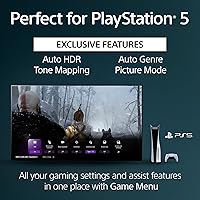
PS5 and Xbox Series X owners get practical access to 4K at 120 frames per second, variable refresh rate, and auto low-latency mode — all functional and confirmed working by multiple verified gaming-focused buyers. The dedicated Game Menu consolidates settings in one place rather than burying them across multiple sub-menus.
The OLED panel carries a real burn-in risk for gamers who spend long hours with static HUD elements on screen — a concern several buyers explicitly raised. Sony includes pixel-shift and logo limiter tools, but heavy daily gaming sessions over years remain a legitimate long-term worry at this price point.
Burn-in Risk
61%
39%
Sony provides multiple built-in mitigation tools including pixel shift, a logo limiter, and an automatic panel refresh cycle. For buyers using the TV primarily for films and varied streaming content, the practical risk over a typical ownership period appears to be low based on reported experiences.
The risk is real and cannot be dismissed at this investment level. Buyers who use the TV as a primary gaming display with persistent static UI elements, or as a secondary monitor for static desktop content, face a measurably higher long-term risk. Several owners explicitly flagged this as something they wished they had researched more before purchasing.
Smart TV Experience
76%
24%
Google TV provides a clean, logically organized interface that surfaces streaming content from multiple apps in a unified home screen. Google Assistant voice search works reliably for finding content across platforms, and Apple AirPlay 2 support means iPhone and iPad users can mirror content without additional hardware.
Occasional sluggishness in the Google TV interface is a recurring criticism — app loading and home screen transitions can feel inconsistent compared to the hardware's overall premium positioning. A subset of buyers noted that the system became noticeably slower over the first year of use.
Built-in Audio
79%
21%
The Acoustic Surface Audio+ system — where the panel itself acts as the sound source by vibrating — creates a genuinely unusual effect where dialogue and sound effects appear to originate from the part of the screen the action is happening on. For a built-in TV speaker system, it is well above average and functional for casual viewing.
Bass depth is limited, as physics demands from a panel-based speaker system. Buyers expecting cinematic low-end impact will find the built-in audio underwhelming during action films or music content, and most at this price tier end up pairing the TV with a soundbar or full surround setup.
Build Quality & Design
87%
The physical construction consistently draws praise — slim bezels, a clean rear panel, and a premium feel that matches the price bracket. Buyers who compared it in-store against budget brands noted the build quality difference immediately, and several mentioned it looks architectural in a well-designed living room.
The stand design requires a specific surface width, which caused problems for some buyers with narrower furniture. A few owners reported slight wobble in the included stand at 83 inches, recommending wall mounting for security — which adds installation cost and complexity.
Ease of Setup
72%
28%
Initial Google TV setup is guided and straightforward for most users, and the remote control pairs automatically. Buyers with existing Google accounts found their streaming apps populated quickly without re-entering credentials across every service individually.
The sheer physical scale of the 83-inch panel makes solo setup impractical and, for wall mounting, potentially unsafe. Multiple reviewers strongly recommended two-person assembly at minimum, and professional installation for wall mounts. First-time OLED owners also found the HDR and picture mode options initially overwhelming.
Remote Control
69%
31%
The remote is compact and well-built for everyday channel-switching and volume control. Dedicated buttons for major streaming platforms reduce the number of steps to reach frequently used apps, and the voice search button is genuinely useful for navigating the content library.
Ergonomics divided buyers — the slim profile that looks good on a coffee table can feel slippery in the hand during longer browsing sessions. Button layout feedback from multiple reviewers points to the back-lighting absence as a frustration in dark home theater rooms, which is an ironic oversight given the TV's primary use case.
HDR Performance
86%
Dolby Vision content is where many buyers feel the investment pays off most tangibly. Highlights retain detail rather than clipping to white, and the transition between shadows and bright practical lights in film content is handled with precision. IMAX Enhanced titles also received specific positive mentions.
HDR10 content — which lacks the dynamic metadata of Dolby Vision — produces slightly less impressive results, which matters for buyers with large 4K Blu-ray collections that lean on HDR10. Peak brightness, while sufficient in a dark room, does not compete with the top QLED sets for specular highlight pop.
Value for Money
67%
33%
For buyers who use the A80L as intended — a dedicated home theater centerpiece in a light-controlled room — the picture performance largely justifies the investment. The BRAVIA CORE movie credits add tangible near-term value, and the full HDMI 2.1 suite means the TV is properly equipped for current-generation gaming without workarounds.
At this price point, the competition from both Samsung and LG at comparable screen sizes has grown meaningfully since launch, making the value equation less clear-cut than it was in mid-2023. Buyers in brightly lit rooms, or those indifferent to gaming features, may find more practical value in a high-end MiniLED alternative.
Connectivity & Ports
83%
The HDMI 2.1 port configuration covers current-generation needs thoroughly, and the inclusion of both Ethernet and Wi-Fi gives buyers flexibility for stable home theater network setups. Bluetooth connectivity for headphones and audio devices works reliably per owner reports.
The USB port count is modest, which can become a practical annoyance for buyers who use multiple USB-connected devices simultaneously. Port placement on the rear panel was also flagged by wall-mount users as awkward to access once installed — a common frustration across large-screen TVs generally.

Suitable for:

The Sony A80L 83-inch OLED 4K TV is built for buyers who treat their TV as the centerpiece of a dedicated viewing environment rather than a background appliance. If you have a room where you can manage ambient light — a basement home theater, a media room with blackout curtains, or a living room where you control the lighting intentionally — this is where the A80L makes its strongest case. Cinephiles who watch a lot of Dolby Vision content, 4K HDR films, or high-quality streaming will notice the picture accuracy in ways that genuinely justify the investment. PS5 and Xbox Series X owners who want to extract everything their console can output — including 4K at 120 frames per second with variable refresh — will find this large-screen BRAVIA is one of the few TVs at this size that handles that without compromise. It also suits buyers making a significant size jump from a 65-inch or 75-inch panel who want the transition to feel transformative rather than incremental.

Not suitable for:

The Sony A80L 83-inch OLED 4K TV is a poor fit for buyers whose primary viewing space gets heavy natural light during the day. OLED panels have a lower peak brightness ceiling than the best QLED and MiniLED alternatives, and in a sun-drenched living room, that gap is visible and frustrating — especially at this price. Anyone planning to use the TV as a dedicated gaming monitor for long daily sessions with persistent on-screen HUDs or static UI elements should think carefully about burn-in risk; it is manageable with Sony's built-in tools, but it is a real, long-term concern that other display technologies do not carry. Buyers on a tighter budget looking for the best picture-per-dollar at 83 inches will find that competing large-screen options have closed the gap meaningfully since this model launched in 2023. Finally, anyone expecting to set it up solo or mount it on a wall without professional help should reconsider — at over six feet wide and 55 pounds, this is a two-person job at minimum, and wall installation genuinely warrants hiring someone.

Specifications

  • Screen Size: The panel measures 83 inches diagonally, making it one of the largest OLED screen sizes available in the consumer TV market.
  • Display Type: Uses an OLED panel where each pixel produces its own light and can switch off completely, enabling true infinite contrast without a backlight.
  • Resolution: Native 4K Ultra HD resolution at 3840 x 2160 pixels, delivering approximately 8.3 million individually lit pixels across the panel.
  • Refresh Rate: Native 120Hz panel refresh rate supports smooth motion in both high-frame-rate gaming and fast-action broadcast content.
  • HDR Formats: Compatible with Dolby Vision, HDR10, and HLG, covering the full range of HDR formats found on streaming platforms and physical media.
  • Processor: Powered by Sony's Cognitive Processor XR, which cross-analyzes picture elements across zones simultaneously to optimize motion, color, and contrast in real time.
  • HDMI Ports: Equipped with HDMI 2.1 inputs supporting eARC, ALLM, VRR, and 4K at 120fps for full compatibility with current-generation gaming consoles.
  • Audio System: Acoustic Surface Audio+ uses actuators attached to the panel itself to vibrate the screen as a speaker, so sound emanates directly from the image source.
  • Smart Platform: Runs Google TV with built-in Google Assistant voice search and full support for Apple AirPlay 2 and HomeKit.
  • Wireless: Built-in Wi-Fi and Bluetooth allow wireless network connectivity and pairing with compatible audio devices and peripherals.
  • Wired Connectivity: Includes Ethernet port and USB ports for wired network connection and local media playback from USB storage devices.
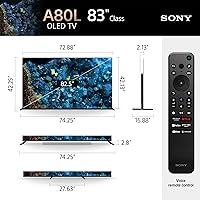
  • Dimensions: With the stand attached, the TV measures 74.13″ wide, 42.25″ tall, and 16.88″ deep including the stand footprint.
  • Weight: The set weighs 55 pounds (approximately 25 kg) with the stand, requiring at least two people for safe installation and positioning.
  • Aspect Ratio: Standard 16:9 widescreen aspect ratio, matching the native format of 4K UHD content, broadcast television, and streaming services.
  • Model Number: Official Sony model number is XR83A80L, identifying this as the 83-inch variant of the 2023 A80L series within the BRAVIA XR lineup.
  • Included Accessories: Box includes the remote control, two AAA batteries, power cable, and the A80L-specific stand hardware.
  • Power Supply: Operates at 100 volts and should be connected to an appropriate surge-protected outlet given the panel's value and sensitivity.
  • Release Year: This model was first made available in June 2023 as part of Sony's 2023 BRAVIA XR television range.

Related Reviews
Sony A90K 42-inch OLED TV
81%
96%
Picture Quality
94%
Gaming Performance
97%
Contrast & Black Levels
91%
Color Accuracy
93%
Input Lag & Responsiveness
More
Sony XBR-65A9G 65-inch OLED 4K Smart TV
87%
96%
Picture Quality
94%
Gaming Performance
88%
Smart TV Features
89%
Ease of Setup
90%
Design and Build Quality
More
Samsung 83-Inch Class OLED S90F 4K Smart TV
85%
95%
Display Quality
92%
Gaming Performance (144Hz Refresh Rate)
91%
AI Picture Enhancement
88%
Sound Quality
77%
Ease of Setup
More
LG G3 83-Inch OLED 4K Smart TV
82%
97%
Picture Quality
91%
Gaming Performance
78%
Brightness & HDR Range
93%
Design & Aesthetics
84%
Smart TV & Interface
More
Sony BRAVIA 8 55-inch 4K OLED TV
82%
93%
Picture Quality
91%
Gaming Performance
96%
Contrast & Black Levels
89%
Color Accuracy
74%
Smart TV Platform
More
Sony BRAVIA XR A95L 77-inch 4K QD-OLED TV
88%
96%
Picture Quality
89%
Sound Quality
92%
HDR Performance
93%
Gaming Features (PS5 Optimization)
85%
Ease of Setup
More
Sony Bravia 8 65-inch OLED 4K TV
82%
93%
Picture Quality
96%
Contrast & Black Levels
88%
Color Accuracy
71%
Peak Brightness
91%
Gaming Performance
More
Sony XR65A95L 65-inch QD-OLED 4K TV
84%
97%
Picture Quality
94%
Gaming Performance
74%
Brightness & HDR Impact
96%
Color Accuracy
89%
Motion Handling
More
Sony BRAVIA 8 77-inch OLED TV

81%
93%
Picture Quality
96%
Contrast & Black Levels
61%
Peak Brightness
91%
Gaming Performance
67%
Built-in Audio
More
SANSUI 55-inch OLED 4K Smart TV
69%
88%
Picture Quality
83%
Value for Money
81%
Smart TV Platform
79%
Motion & Refresh Rate
67%
Audio Performance
More

FAQ

It depends on how you use it. For mixed-use viewing — films, streaming, sports, occasional gaming — the practical risk over a normal ownership period is low. Where burn-in becomes a genuine concern is if you leave static content on screen for hours regularly, like a news ticker, a game HUD, or a desktop interface. The Sony A80L 83-inch OLED 4K TV includes pixel-shift technology, a logo limiter, and an automatic panel maintenance cycle to reduce the risk, but those tools are not a complete guarantee. If your primary use is dedicated gaming sessions every day, it is worth factoring this in before committing.

Honestly, this is the A80L's most significant real-world limitation. OLED panels have a lower peak brightness ceiling than the best MiniLED and QLED sets, and in a room with large windows and afternoon sunlight, that gap becomes visible. The picture does not look bad, but the contrast advantage that makes OLED so compelling in darker environments narrows considerably. If your viewing room gets heavy natural light and you cannot manage it with curtains or blinds, a high-brightness QLED alternative is worth serious consideration.

Yes, and it does so properly. The HDMI 2.1 ports support 4K at 120 frames per second, variable refresh rate, and auto low-latency mode, which are the three features that matter most for current-generation console gaming. The dedicated Game Menu also consolidates all relevant picture and input settings into one place rather than requiring you to dig through multiple sub-menus. Just make sure you are using an HDMI 2.1 cable, not an older HDMI 2.0 cable, to get the full benefit.

A general guideline for 4K content is to sit at a distance of roughly 1 to 1.5 times the screen's diagonal measurement, which puts the comfortable viewing range for this panel at roughly 7 to 10.5 feet. The TV itself is over six feet wide with the stand, so your furniture arrangement and wall space need to accommodate that comfortably. Most interior designers recommend a TV width no more than two-thirds of the furniture it sits above as a proportion guide.

Yes, Apple AirPlay 2 is built in, so you can mirror your iPhone or iPad screen, or cast supported apps like Photos or Apple TV+ directly to the large-screen BRAVIA without any additional hardware. It also supports Apple HomeKit, which means you can include it in your Home app automations if you are embedded in the Apple ecosystem.

Technically you can, but practically it is risky to attempt solo. At 55 pounds and over six feet wide, the panel is physically awkward for one person to hold in position while securing the mount. Beyond the weight, you need to ensure your wall can bear the load, especially on drywall over standard stud spacing. Professional installation is genuinely worth the cost here — both for safety and to avoid an expensive mistake with a premium panel.

The Acoustic Surface Audio+ system is better than what you find on most TVs, and for casual viewing it is functional and surprisingly well-placed spatially. That said, if you care about bass performance during films, music content, or action-heavy gaming, it will feel thin. At this investment level, most buyers end up pairing the A80L with at least a soundbar — and the eARC-capable HDMI port makes that connection clean and straightforward.

Initial setup is guided and reasonably quick, especially if you already have a Google account — your streaming app credentials auto-populate for supported services. Day-to-day use is generally smooth, though some owners report that the interface slows down noticeably after the first year of use. The home screen aggregates content from multiple apps rather than siloing each service separately, which most buyers find helpful once they are familiar with the layout.

The A95L uses a QD-OLED panel — a hybrid that adds a quantum dot layer to an OLED backplane — which delivers meaningfully higher peak brightness and more saturated color saturation than the A80L's standard WOLED panel. The trade-off is that the A95L is not available in 83 inches, topping out at 77 inches in that generation. If screen size is the priority, the A80L is currently the larger option; if peak brightness and color volume matter most and 77 inches is sufficient, the A95L is worth comparing directly.

Yes — the BRAVIA CORE app comes loaded with five credits redeemable for recent-release 4K movie rentals, plus a 12-month subscription giving access to a library of classic titles in high-bitrate 4K streaming. It is a tangible inclusion rather than a token gesture, though the credit value does diminish once you have used the five new-release redemptions. After the 12-month period, continued access to the full BRAVIA CORE catalog requires a paid subscription.

Where to Buy

Walmart
In stock $3,998.00
Best Buy
In stock $3,999.99
Newegg.com
In stock $3,758.49
B&H Photo-Video-Audio
In stock $3,998.00
AudiogoN
In stock $2,999.00
Tech For Less
In stock $3,758.49
PC Richard & Son
In stock $3,998.00
Abt Electronics & Appliances
In stock $3,998.00
Datavision
In stock $3,998.00