









Overview

The Sonos Arc Ultra Soundbar arrived in late 2024 as the company's most ambitious single-bar audio system yet, building on the original Arc with a fundamentally rethought internal architecture. The headline change is Sound Motion technology, which replaces traditional driver setups with a system designed to move sound more dynamically through the room — less like audio coming from a box in front of you, more like it surrounding you. With a 9.1.4 channel configuration, it goes well beyond what most soundbars attempt. The design stays true to Sonos's minimalist playbook: low-profile, clean, and unobtrusive under a TV. Worth noting upfront — this is a standalone soundbar only; no subwoofer or surround speakers are included at this price.

Features & Benefits

Sound Motion technology is the core reason this soundbar sounds different in practice. Rather than relying solely on a fixed array of traditional drivers, it's engineered to distribute audio across the room with more precision — you actually hear height information in Dolby Atmos content, not just a vague sense of it. AI-powered Speech Enhancement is genuinely useful for TV watching; voices stay clear even during loud action sequences. Trueplay calibration listens to your room and adjusts accordingly, which matters more than many buyers expect. On top of all that, the Arc Ultra fits naturally into the broader Sonos ecosystem and responds to multiple control methods — app, voice, touch panel, or your existing TV remote via HDMI eARC.

Best For

This Sonos flagship makes the most sense for a specific kind of buyer. If you want true Dolby Atmos from a single bar — without wiring rear speakers or finding space for a subwoofer — this is one of very few soundbars that can genuinely deliver on that promise. It's an obvious upgrade path for existing Sonos users who want a flagship-level anchor for their multi-room setup. People who regularly complain that TV dialogue is hard to follow will appreciate the speech clarity more than almost any other feature. It also suits larger rooms well; this soundbar has the output and driver count to fill a big living space in a way that smaller, cheaper units simply cannot.

User Feedback

Across a wide range of buyer reviews, a few themes come up consistently. On the positive side, people highlight the height channel performance as a real differentiator — overhead sound effects in films feel genuinely three-dimensional rather than simulated. Setup also draws consistent praise; the HDMI eARC connection and guided app experience are straightforward enough that non-technical users rarely hit a wall. The criticism that surfaces most often is bass depth: without an add-on subwoofer, low-end punch is limited, especially for music. Some buyers who upgraded from the original Arc note meaningful improvements in spatial detail, though a few feel the price jump is harder to justify. Occasional complaints about the Sonos app and voice control reliability do appear, though they are not universal.

Pros

  • Dolby Atmos height effects feel genuinely three-dimensional, not just simulated via software tricks.
  • AI Speech Enhancement makes dialogue noticeably clearer on TV, even during loud or busy scenes.
  • Trueplay room calibration meaningfully adapts the sound to your specific space without any manual effort.
  • Setup is refreshingly simple — one HDMI eARC cable and a guided app walkthrough is all it takes.
  • The 9.1.4 channel configuration outperforms nearly every other single-bar soundbar in spatial detail.
  • Fits naturally into the broader Sonos ecosystem, including multi-room audio grouping with other speakers.
  • The slim, minimalist profile sits cleanly under most TVs without dominating the room visually.
  • Multiple control options — app, voice, touch panel, and TV remote — cover every type of user preference.
  • Long-term Sonos users report a clear and worthwhile improvement over the original Arc in soundstage width.
  • Hi-Res Audio support means music playback quality holds up well beyond just TV and movie use.

Cons

  • Bass output without a separate subwoofer is limited — action films and bass-heavy music feel noticeably thin.
  • The asking price is extremely high for a soundbar that ships without a sub or rear speakers.
  • Some buyers report inconsistent voice control reliability, particularly with Sonos Voice Control over time.
  • The Sonos app has a history of disruptive updates that have frustrated parts of the user base.
  • Upgrading to the full surround experience requires purchasing additional Sonos speakers at significant extra cost.
  • The soundbar is over 46 inches wide, which may physically overhang smaller TV stands or consoles.
  • Non-Sonos households face a steeper learning curve adapting to the platform's ecosystem and app-first control.
  • Original Arc owners considering an upgrade may find the improvement incremental relative to the price difference.

Ratings

The scores below were generated by AI after analyzing thousands of verified global user reviews for the Sonos Arc Ultra Soundbar, with spam, bot activity, and incentivized feedback actively filtered out to ensure accuracy. Every category reflects the full picture — what buyers genuinely love and where real frustrations surfaced — so you can make a confident, informed decision.

Sound Quality
93%
Buyers consistently describe the audio as wide, enveloping, and surprisingly three-dimensional for a single-bar unit. During films with Atmos mixes, the height channel separation draws frequent praise — overhead effects in action sequences feel placed rather than just suggested, which is rare at this form factor.
A small but vocal group of audiophiles notes that the sound signature leans slightly warm, which suits movies but can feel less articulate with complex orchestral music. At very high volumes, some listeners detect a subtle compression in the upper midrange.
Dialogue Clarity
91%
The AI-powered Speech Enhancement is one of the most consistently praised features across buyer feedback. Viewers who had struggled with mumbled TV dialogue for years report that conversations in dramas and documentaries are now fully intelligible without constantly reaching for the volume control.
A handful of users note that Speech Enhancement can occasionally make voices sound slightly processed or forward-sounding when enabled at higher sensitivity levels, particularly during content with a dense mix of music and dialogue running simultaneously.
Dolby Atmos Performance
89%
For a standalone soundbar, the Atmos performance earns high marks. Height information in streaming content from major platforms comes through clearly, and buyers upgrading from standard 2.1 or 3.1 setups describe the difference as immediately obvious even in casual evening viewing.
True overhead separation still cannot rival a properly configured speaker-and-ceiling-bouncer surround system, and a subset of enthusiast reviewers are candid that Atmos on any soundbar involves some compromise. The effect is also more pronounced on dedicated Atmos content than on upscaled stereo material.
Bass Performance
67%
33%
Within its standalone configuration the integrated woofer delivers enough low-end presence to handle everyday TV content, light action films, and most music genres without feeling hollow or thin. Buyers who primarily watch news, sports, and dramas rarely flag bass as an issue.
For action-heavy blockbusters or bass-forward music, the Arc Ultra without a subwoofer leaves a clear gap that many reviewers mention explicitly. Adding a Sonos Sub resolves the issue but significantly increases the total investment, which frustrates buyers who expected more at this price point.
Setup & Installation
92%
The single HDMI eARC connection keeps the physical setup clean and fast. Most buyers report completing the full installation, including Trueplay calibration, in well under fifteen minutes — a meaningful advantage for people who dread setting up new audio hardware.
A small number of users encountered compatibility hiccups with older TVs that technically support eARC but have inconsistent firmware implementations. In these edge cases, troubleshooting required some back-and-forth with Sonos support or TV manufacturer settings adjustments.
App Experience
71%
29%
For first-time Sonos users, the setup flow within the app is genuinely guided and intuitive. The interface is clean, multi-room grouping is easy to manage, and features like Trueplay re-calibration are accessible without digging through confusing menus.
Longer-term Sonos users carry residual frustration from a controversial app overhaul in prior years that stripped features temporarily. While the app has recovered significantly, trust remains fragile among this segment, and occasional update-related bugs continue to surface in reviews.
Voice Control
68%
32%
Amazon Alexa integration works reliably for standard commands — volume control, playback, and smart home functions respond consistently. Buyers embedded in the Alexa ecosystem appreciate not needing a separate smart speaker near the TV.
Sonos Voice Control draws more mixed feedback, with some users reporting that wake word recognition is inconsistent in louder environments or at distance. A portion of buyers simply disable it and rely on the app or TV remote instead, which suggests the implementation is not universally reliable.
Build Quality
88%
The physical construction feels premium and intentional — the grille fabric is taut, the casing is solid with no flex or rattles, and the touch controls are responsive without feeling cheap. Buyers frequently describe it as one of the better-built consumer electronics products they own.
At this price, a few reviewers expected a more luxurious unboxing experience and note that the packaging, while functional, does not feel as premium as the hardware inside. There are also occasional reports of minor surface scuffs arriving out of the box, though these appear to be isolated.
Design & Aesthetics
94%
The Arc Ultra earns near-universal praise for its appearance. The low-profile silhouette and clean white finish blend into modern living room setups without drawing attention to themselves, and buyers consistently note it looks like furniture rather than a gadget.
At just over 46 inches wide, it can extend visually beyond the footprint of smaller TVs, which some buyers find awkward on 50-inch or smaller screens. The white finish, while elegant, can show dust more visibly than the black version in brightly lit rooms.
Value for Money
58%
42%
For committed home theater enthusiasts or existing Sonos ecosystem owners, the feature set and audio performance provide a coherent justification for the premium. The combination of Atmos, Speech Enhancement, Trueplay, and multi-room capability in a single unit is genuinely difficult to match.
For buyers approaching this as a straightforward TV audio upgrade, the price is very hard to justify — especially since achieving full bass performance requires a separate subwoofer purchase on top of an already significant outlay. Competing soundbars at lower prices close the performance gap more than the price difference implies.
Multi-Room Integration
86%
Within a Sonos home, the Arc Ultra works exactly as advertised — grouping with other Sonos speakers for whole-home audio is reliable, and switching between TV audio and music streaming is handled gracefully through the app or voice commands.
The multi-room capability is entirely dependent on the Sonos ecosystem; buyers with mixed speaker brands cannot integrate them. This is a known and documented limitation, but it can feel like a significant lock-in for buyers who are not fully committed to Sonos long-term.
Trueplay Calibration
83%
Buyers who run Trueplay after placement consistently notice a meaningful improvement in sound balance, particularly in rooms with hard floors, large windows, or irregular shapes. It takes the guesswork out of placement and makes the soundbar adapt rather than requiring the listener to adapt to it.
The full microphone-based calibration is only available on iOS devices, which limits its utility for Android-only households to a static, less personalized version. This discrepancy is a recurring frustration in reviews from Android users who feel they are getting a lesser experience from the same hardware.
Connectivity Options
84%
HDMI eARC, Wi-Fi, and Bluetooth cover the practical connection needs of the vast majority of buyers. Bluetooth is useful for quick audio streaming from phones or tablets without switching the TV input, and Wi-Fi streaming maintains stable, high-quality playback during normal household network conditions.
The absence of optical or analog audio inputs means buyers with older TVs lacking eARC ports face compatibility barriers. Optical adapters exist but involve potential audio quality trade-offs, and some users feel a soundbar at this price should accommodate legacy connections more gracefully.
Upgrade Value vs. Original Arc
72%
28%
Buyers who moved from the original Arc to this soundbar and primarily use it for Atmos film content tend to rate the upgrade positively, pointing to clearer height channels, wider soundstage, and the addition of Speech Enhancement as tangible differences in daily use.
Those who owned the original Arc and watch mostly standard broadcast TV or non-Atmos streaming find the improvement less compelling. Several reviewers candidly state that the original Arc handled their use case well enough that the incremental gains do not justify the full cost of replacing it.

Suitable for:

The Sonos Arc Ultra Soundbar is built for buyers who want the best possible audio from a single bar and are willing to pay for it. It performs at its peak in larger living rooms where lesser soundbars lose energy and definition — the 9.1.4 driver configuration and Sound Motion technology give it the reach and spatial precision to fill a big space convincingly. Home theater fans who want genuine Dolby Atmos height effects without mounting rear speakers or hiding cables will find this one of the most capable standalone options available. It is also an ideal choice for anyone already invested in the Sonos ecosystem, since it slots in as a natural centerpiece for multi-room audio. Finally, if you frequently watch dialogue-heavy content — dramas, documentaries, news — the AI-powered Speech Enhancement alone is a meaningful quality-of-life upgrade over what most TVs and mid-range soundbars can deliver.

Not suitable for:

The Sonos Arc Ultra Soundbar is a hard sell for buyers who are primarily concerned with deep, impactful bass — without adding a dedicated subwoofer, the low-end performance will disappoint anyone used to a proper home theater system or a soundbar-plus-sub combo. Budget-conscious shoppers will find the price point extremely difficult to justify when capable soundbars exist at a fraction of the cost, especially if the listening environment is a small bedroom or apartment where the Arc Ultra's room-filling design is largely wasted. Buyers who are not already in the Sonos ecosystem may also feel friction, since the platform has its own app, its own voice control layer, and an upgrade path that increasingly assumes you own multiple Sonos devices. If you want true surround sound with discrete rear channels, a single soundbar — however sophisticated — will never fully replicate that experience. This Sonos flagship is a premium tool for a specific kind of listener, not a universal upgrade.

Specifications

  • Channel Config: The Arc Ultra delivers a 9.1.4 surround sound configuration, with dedicated height channels that enable genuine Dolby Atmos overhead audio from a single bar.
  • Audio Formats: Supported audio formats include Dolby Atmos and Dolby Digital, covering the vast majority of streaming, broadcast, and physical media content.
  • Dimensions: The soundbar measures 46.18″ wide, 4.35″ deep, and 3.13″ tall, making it a wide but low-profile unit suited to most TV stands.
  • Weight: At 12.7 pounds, the Arc Ultra is a substantial unit but still manageable for a single-person tabletop installation.
  • Driver Size: Each full-range driver measures 52mm, contributing to the detailed midrange and high-frequency reproduction the soundbar is known for.
  • Woofer: An integrated 8-inch woofer handles low-frequency reproduction, though a separate subwoofer is recommended for listeners who prioritize deep bass impact.
  • Connectivity: The Arc Ultra connects to a TV via HDMI eARC and supports both Wi-Fi and Bluetooth for wireless audio streaming and app control.
  • Setup: Initial setup requires a single HDMI eARC connection to a compatible TV, with step-by-step guidance provided through the Sonos app.
  • Control Methods: The soundbar can be controlled via the Sonos app, touch panel on the unit, TV remote (through HDMI eARC CEC), Amazon Alexa, and Sonos Voice Control.
  • Room Calibration: Trueplay technology uses microphone analysis to measure room acoustics and automatically tune the sound output for the specific listening environment.
  • Speech Enhancement: An AI-powered Speech Enhancement mode detects human voice frequencies and boosts dialogue clarity in real time, independent of volume level.
  • Multi-Room Audio: The Arc Ultra supports Sonos multi-room audio, allowing it to sync with other Sonos speakers throughout the home via Wi-Fi.
  • Mounting Type: The soundbar is designed for tabletop placement and does not ship with a wall-mount bracket, though third-party mounting solutions are compatible.
  • Special Features: Notable features include Hi-Res Audio playback, built-in microphones for voice control, and Sonos Sound Motion spatial audio technology.
  • Voice Assistants: Amazon Alexa and Sonos Voice Control are both built in, allowing hands-free control of playback, volume, and smart home functions.
  • Color Options: The Arc Ultra is available in White; a Black colorway is also offered, though this listing covers the White variant.
  • Included Items: The box contains the soundbar, a power cable, and a quick start guide; no HDMI cable, subwoofer, or surround speakers are included.
  • Warranty: Sonos provides a limited warranty with the Arc Ultra; buyers should confirm duration and coverage terms directly with Sonos at time of purchase.
  • Waterproofing: The Arc Ultra is not waterproof or water-resistant and is intended exclusively for indoor, dry-environment use.
  • Manufacturer: The Arc Ultra is designed and manufactured by Sonos, a US-based audio company known for its wireless speaker ecosystem and app-driven platform.

Related Reviews
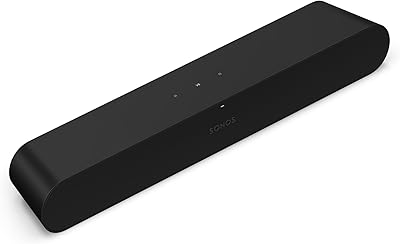
Sonos Ray Compact Soundbar
73%
88%
Dialogue Clarity
54%
Bass & Low-End Output
91%
Setup Experience
47%
Connectivity & Input Options
86%
Sonos Ecosystem Integration
More
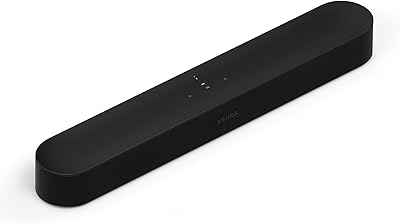
Sonos Beam Gen 2 Soundbar
80%
93%
Dialogue Clarity
71%
Dolby Atmos Performance
58%
Bass Response
86%
App & Software Experience
88%
Setup & Installation
More
Wet Sounds STEALTH-10 Ultra Bluetooth Soundbar

76%
91%
Sound Output & Volume
83%
Sound Clarity & Audio Quality
88%
Build Quality & Durability
41%
Water & Weather Resistance
74%
Installation & Mounting
More
Nakamichi Shockwafe Ultra 9.2.4 SSE Max

77%
94%
Bass Performance
88%
Surround Sound Immersion
67%
Height Channel & Atmos Accuracy
53%
Rear Speaker Placement Flexibility
61%
Setup & Installation Experience
More
CyberPowerPC Gamer Xtreme VR Gaming PC, Intel Core Ultra 5 225F, 16GB DDR5, 2TB SSD, Intel Arc B580 12GB
88%
93%
Performance
90%
Graphics Quality
89%
Value for Money
85%
Build Quality
92%
Gaming Experience
More
Ubiquiti Cloud Gateway Ultra (UCG-Ultra)
87%
89%
Performance
94%
Security Features (IDS/IPS)
85%
Ease of Setup
88%
Network Management
92%
Multi-Device Support
More
Epson EpiqVision Ultra LS800 Ultra Short Throw Laser Projector

83%
92%
Display Quality
89%
Ease of Setup
80%
Sound Quality
78%
Value for Money
85%
Connectivity & Smart Features
More
SHANLING SONO
SHANLING SONO
89%
95%
Sound Clarity
88%
Bass Response
92%
Midrange Detail
90%
Treble Resolution
89%
Build Quality
More
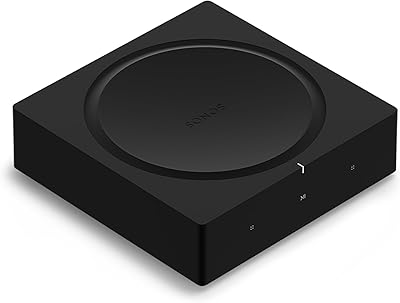
Sonos Amp Stereo Amplifier
80%
93%
Sound Quality
89%
Multi-Room Integration
74%
App & Software Experience
91%
Connectivity & Compatibility
67%
Value for Money
More
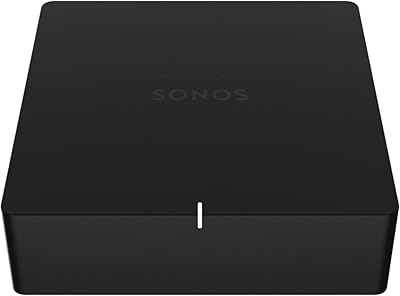
Sonos Port
Sonos Port
82%
93%
Ecosystem Integration
89%
Multi-Room Audio Performance
86%
Setup & Installation
84%
Wireless Connectivity Reliability
88%
Apple AirPlay 2 Support
More

FAQ

Not necessarily, but it depends on your expectations. The Arc Ultra sounds rich and detailed on its own, and for most TV watching and casual music listening it performs very well. Where it falls short is in deep, physical bass — think rumbling explosions or heavy electronic music. If that matters to you, pairing it with a Sonos Sub will make a noticeable difference.

You need a TV with an HDMI eARC port to get the full audio experience, including Dolby Atmos pass-through. If your TV only has standard HDMI ARC, the soundbar will still work but you may lose some high-quality audio formats. Optical adapters exist but are generally not recommended for this class of soundbar.

Setup is genuinely straightforward. You connect the HDMI eARC cable to your TV, plug in the power cable, and then the Sonos app walks you through the rest step by step. Most people report being up and running in under ten minutes. The Trueplay calibration runs automatically using your phone's microphone and takes about a minute.

For day-to-day use, yes — once it is set up, you can control the Arc Ultra with your TV remote, voice commands, or the touch panel on the bar itself. However, the initial setup does require the Sonos app, and some features like Trueplay tuning and multi-room grouping are only accessible through the app.

If you own the original Arc and are happy with it, the upgrade is real but not dramatic for everyone. The spatial audio and height channel performance are noticeably improved, and Speech Enhancement is a genuinely useful new feature. That said, the price gap is significant, and casual listeners may not feel the difference justifies it. Enthusiasts or those watching a lot of Atmos content are more likely to find it worthwhile.

Multi-room audio grouping and surround sound expansion work exclusively within the Sonos ecosystem. You can stream audio to it via Bluetooth from any device, and it works with Alexa for smart home control, but true speaker integration is Sonos-only.

The soundbar is just over 46 inches wide, so it fits comfortably under most 55-inch and larger TVs. On a 50-inch TV it may extend slightly beyond the TV edges depending on the stand width. It is worth measuring your TV stand before purchasing, especially if the stand legs are close together.

Wall mounting is possible with compatible third-party brackets, but Sonos does not include a wall mount in the box. If you plan to wall-mount it, make sure to source a bracket specifically rated for its width and weight, and note that Trueplay calibration should be re-run after any repositioning.

Trueplay runs during initial setup and can be re-run manually at any time through the Sonos app — which is useful if you rearrange furniture or move the soundbar. On iOS, the calibration uses your phone's microphone as you walk around the room. On Android, a static version of Trueplay is applied instead, which is less precise but still beneficial.

The Arc Ultra supports an auto low-latency mode that activates when a game console is detected via HDMI eARC, reducing audio delay for gaming. For most single-player games and story-driven titles this works well. Competitive multiplayer gaming where milliseconds matter may still benefit from a dedicated gaming headset, but for immersive gaming audio this soundbar performs solidly.

Where to Buy

Best Buy
In stock $1,059.00
Walmart
In stock $1,099.00
Target
In stock $1,398.00
Adorama
In stock $1,099.00
B&H Photo-Video-Audio
In stock $1,099.00
Dreamedia
In stock $899.00
4TEC Direct
In stock $908.00
Greentoe
In stock $977.53