Overview

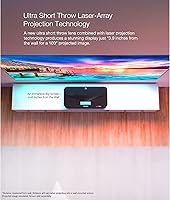
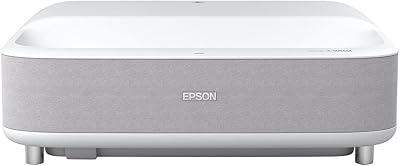
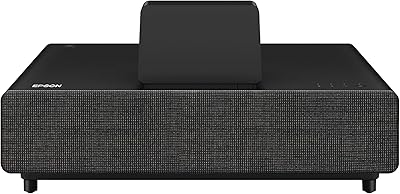
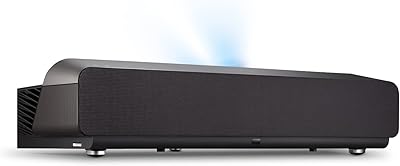
The Epson LS800 Ultra Short Throw Laser Projector is built for one specific job: replacing your television with something considerably more impressive. Sitting just a few inches from the wall, it throws an image up to 150″ — a scale no flat panel can touch without a serious budget. The 3-chip 3LCD laser engine is what separates it from cheaper single-chip competitors; there is no color wheel, which means no rainbow artifacts during fast motion. Android TV is baked in, so you are not hunting for a streaming stick. That said, this is a premium-tier investment, suited to dedicated home cinema rooms or large living spaces rather than compact apartments.
Features & Benefits

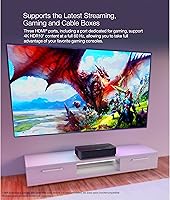
At 4,000 lumens, the LS800 holds up reasonably well in mixed-light rooms — bright enough to watch daytime sports without pulling every curtain, though a fully darkened space is where HDR content truly shines. The 10-bit HDR processing handles color gradients faithfully, which matters on high-contrast scenes like dark thrillers or vivid animation. Worth being clear-eyed about: the 4K PRO-UHD image is produced through pixel-shifting, not a native 4K panel — real-world sharpness is excellent but not identical to a true 4K display. Three HDMI ports cover consoles, cable boxes, and streaming devices simultaneously, with one port dedicated to gaming at 1080p/120Hz for noticeably smoother motion.

Best For

This ultra short throw projector makes the most sense for homeowners who want a 100″+ screen but cannot or will not run ceiling cables for a traditional long-throw setup. Sports fans will appreciate the large image and the low-latency gaming port for console use. Heavy streamers benefit from the built-in Android TV platform — no dongles, no extra remotes. It is also a strong choice for anyone upgrading from a flat panel who wants a genuinely cinematic experience without major room renovation. One important caveat: buyers should factor in a quality ambient light rejecting screen to get the most out of daytime viewing.

User Feedback

Most owners praise setup simplicity — the adjustable feet and lens correction mean you do not need to be a calibration expert to get a great image on day one. The sheer scale of the picture consistently impresses people coming from flat panels. On the critical side, fan noise at peak brightness is a real complaint worth noting; it is not disruptive during loud action sequences but can be audible in quiet dialogue scenes. The Yamaha speaker system gets mixed responses — casual viewers find it adequate, but dedicated listeners usually add external audio. A smaller group has flagged Android TV responsiveness as sluggish, and a few long-term owners have raised questions about Epson support turnaround times.

Pros

  • Ultra short throw design means no ceiling mount, no long cable runs — just place it near the wall and go.
  • 4,000 lumens of laser brightness holds up well during daytime viewing in rooms with moderate ambient light.
  • The 3-chip 3LCD engine eliminates the rainbow effect that plagues many single-chip DLP competitors.
  • A dedicated HDMI gaming port supports 1080p at 120Hz, giving console gamers a genuine low-latency advantage.
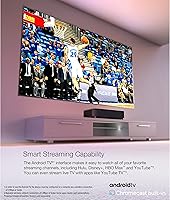
  • Built-in Android TV covers all major streaming platforms without needing a separate stick or box.
  • 10-bit HDR processing reproduces color gradients and highlight detail more faithfully than many entry-level projectors.
  • Laser light source means no expensive bulb replacements and a much longer usable lifespan.
  • Multi-point image correction and adjustable feet make leveling and aligning the picture far less frustrating than traditional projectors.
  • Three HDMI ports let you keep a console, cable box, and streaming device connected simultaneously.
  • Image sizes up to 150″ are simply not achievable with any flat panel at any price.

Cons

  • Fan noise at peak brightness is noticeable during quiet dialogue scenes and late-night viewing.
  • 4K PRO-UHD uses pixel-shifting rather than a native 4K panel — a real distinction buyers at this price tier deserve to understand.
  • The unit is large and heavy, requiring a stable, appropriately positioned surface rather than a simple shelf.
  • Built-in speakers are adequate for casual use but will leave dedicated listeners wanting a proper audio setup.
  • Android TV can feel sluggish on the stock remote, with occasional lag that a subset of users find genuinely frustrating.
  • Epson's customer support response times have drawn criticism from some long-term owners dealing with warranty issues.
  • An ambient light rejecting screen is essentially a must-have for daytime performance — and those are sold separately at additional cost.
  • Black levels cannot match what a high-end OLED television delivers in a fully darkened room.
  • The physical footprint and placement requirements make it impractical for small apartments or rooms without a clear wall zone.
  • No Dolby Vision support means some HDR content from certain streaming platforms will not display in its highest-quality format.

Ratings

The scores below reflect an AI-driven analysis of verified buyer reviews for the Epson LS800 Ultra Short Throw Laser Projector, sourced globally and filtered to remove incentivized, spam, and bot-generated submissions. Both the genuine enthusiasm and the recurring frustrations from real owners are factored in transparently, giving you an honest picture of where this projector excels and where it falls short.

Picture Quality
88%
Owners consistently describe the image as rich and cinematic, particularly when watching HDR films in a controlled-light environment. The 3-chip 3LCD engine produces natural, accurate colors without the color-banding artifacts that frustrate users of single-chip DLP rivals. At large image sizes, fine detail holds up well for streaming and Blu-ray content.
A meaningful portion of buyers note that the 4K PRO-UHD label oversells the experience slightly — pixel-shifting is not the same as a native 4K panel, and side-by-side comparisons with true 4K displays reveal softness in fine textures. Black levels are also limited compared to what an OLED television delivers in a dark room.
Brightness & Ambient Light
83%
At 4,000 lumens, the LS800 is one of the brighter ultra short throw options available, and daytime sports viewing with partially drawn curtains is genuinely comfortable for most users. Owners in rooms with moderate window light report far less image washout than they experienced with previous lamp-based projectors.
Buyers in sun-drenched rooms with large south-facing windows find that peak sunlight still overwhelms the image, and several note they needed to invest in an ambient light rejecting screen — sold separately — to get satisfying daytime performance. The projector alone is not a full answer to bright-room challenges.
Ultra Short Throw Design
91%
The placement flexibility is the single most praised aspect among owners who switched from ceiling-mounted setups; simply positioning it on a media console a few inches from the wall is all most people need. Setup times that once took professional installers hours now take a single afternoon, which buyers consistently describe as a revelation.
The unit's large footprint — over 27 inches wide and nearly 28 pounds — means it demands a sturdy, appropriately sized piece of furniture. A handful of buyers in smaller rooms found the sizing constraints more limiting than they anticipated, and even minor vibrations or bumps to the cabinet can shift alignment enough to require re-adjustment.
Gaming Performance
84%
Console gamers with PlayStation 5 and Xbox Series X setups report responsive, smooth gameplay at 1080p and 120Hz through the dedicated gaming HDMI port. Playing fast-paced titles like racing games or shooters on a 120″ image is described by many as a genuinely transformative experience compared to even a large flat panel.
The 120Hz mode is capped at 1080p resolution, which means 4K gaming runs at 60Hz — a trade-off that dedicated gaming enthusiasts at this price tier may find limiting. VRR and Dolby Vision support are also absent, which matters increasingly as console gaming ecosystems expand to leverage those technologies.
Built-in Audio
67%
33%
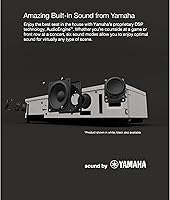
For everyday TV watching, news, and casual streaming, the Yamaha-tuned 2.1-channel system provides noticeably fuller sound than the flat, tinny audio built into most projectors. The sports and movie presets add a reasonable sense of depth that makes background viewing comfortable without reaching for an external speaker.
Film enthusiasts and music listeners consistently report that the built-in audio feels insufficient for serious use — dynamics are compressed, and bass lacks physical impact at higher volumes. The majority of buyers who use this as a primary home theater source end up adding a soundbar or external speakers within the first few months.
Smart Platform (Android TV)
74%
26%
Having Netflix, Prime Video, Disney+, YouTube TV, and Google Assistant built in means the projector works as a complete streaming device out of the box, which buyers who previously juggled multiple remotes and sticks genuinely appreciate. Voice search through the included remote is functional and covers the most common use cases well.
A recurring complaint is interface sluggishness — navigating menus and launching apps can feel slow compared to a dedicated streaming device like an Apple TV or Fire Stick 4K Max. A subset of owners report that the remote's responsiveness degrades over time, requiring firmware updates or workarounds that casual users find frustrating.
Ease of Setup
86%
Most owners describe the initial setup as straightforward, particularly compared to ceiling-mounted long-throw projectors that require precise distance calculations and professional mounting. The adjustable feet and multi-point digital keystone correction give users enough flexibility to dial in a clean, aligned image without special tools.
Getting the image truly square and sharp does require some patience, especially on surfaces that are not perfectly level. Buyers who expected a true plug-and-play experience occasionally report spending more time in the calibration menus than anticipated to eliminate edge distortion and corner softness.
Fan Noise
58%
42%
At lower brightness settings, the fan runs quietly enough that most users watching action-heavy content or sports barely notice it. Some buyers specifically mention reducing brightness slightly as a practical workaround that brings noise to an acceptable level without a dramatic drop in image quality.
At full 4,000-lumen output the fan noise is a genuine distraction during quiet scenes — dialogue-heavy dramas, slow-burn thrillers, and late-night viewing in a quiet home are where owners complain most. This is among the most frequently cited disappointments in long-form user reviews and is difficult to mitigate without sacrificing brightness.
HDR Processing
82%
18%
Full 10-bit HDR color acceptance means the LS800 does not clip or crush highlight data the way many entry-level projectors do, and owners watching HDR10 films notice clearly defined specular highlights and richer shadow gradations compared to SDR content. Nature documentaries and animated films in particular draw strong praise for their color fidelity.
Dolby Vision is not supported, which is increasingly a gap as more streaming platforms prioritize it as their premium HDR tier. Buyers who stream heavily from Apple TV+ or Disney+ may find that some content defaults to a lesser HDR format than what their source material is capable of delivering.
Build & Aesthetics
79%
21%
The low-profile, matte black industrial design sits cleanly on a media console without drawing attention to itself, and buyers generally describe it as looking intentional rather than utilitarian. The weight and solid construction give an impression of durability that owners of cheaper plastic projectors notice immediately.
At nearly 28 pounds it is not something most people will move around frequently, and the ventilation grilles on the casing attract dust visibly over time. A few owners have noted minor build inconsistencies in the feet adjustment mechanism, which can loosen slightly after extended use.
Long-term Reliability
72%
28%
The laser light source removes the single biggest long-term maintenance burden of traditional projectors — expensive bulb replacements — and most owners report consistent, stable performance well into the first year of ownership. Buyers coming from lamp-based models specifically highlight the peace of mind this provides.
A portion of long-term owners have shared concerns about Epson customer support response times when issues do arise, describing the warranty service experience as slower than expected for a product at this price level. Isolated cases of brightness degradation or connectivity glitches appearing after 12 to 18 months of use have also been documented.
Connectivity
87%
Three HDMI ports, USB, Bluetooth, and Wi-Fi cover virtually every connection scenario a home theater user would need simultaneously — console, cable box, and streaming device can all stay plugged in at once without cable swapping. Bluetooth pairing for smartphones as a standalone speaker is a practical bonus that several buyers use regularly.
There is no optical audio output, which can complicate connection to some older soundbar setups that lack HDMI ARC compatibility. A small number of buyers have also reported occasional Bluetooth audio sync issues when pairing external speakers wirelessly.
Value for Money
71%
29%
Buyers who fully utilize the large image size, built-in smart platform, and laser longevity tend to view the investment as justified when they factor in the cumulative cost of a large flat panel, a streaming device, and a soundbar combined. The absence of ongoing lamp replacement costs is a recurring talking point among satisfied long-term owners.
At this price point, the pixel-shifting rather than native 4K resolution and the lack of Dolby Vision support are harder to overlook than they would be on a budget model. Buyers who later discover they also need a quality ambient light rejecting screen — sold separately — report feeling that the total investment exceeded what they had budgeted.

Suitable for:

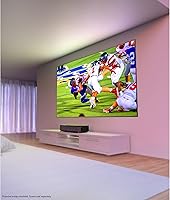
The Epson LS800 Ultra Short Throw Laser Projector is purpose-built for homeowners who want a genuinely large screen — think 100″ to 150″ — without tearing open walls to run ceiling mounts or projector cables. If your living room or dedicated media room has a flat surface near the wall for the unit to sit on, setup is surprisingly straightforward. Sports fans get a real payoff here: watching a match on a 120″ image from a couch is a fundamentally different experience than any flat panel can offer. Console gamers benefit from the dedicated low-latency HDMI port, which handles 1080p at 120Hz cleanly. Heavy streamers will also find the built-in Android TV platform genuinely convenient, covering Netflix, Prime Video, Disney+, YouTube TV, and more without a separate device. Finally, buyers who have been burned by lamp replacement costs on older projectors will appreciate the laser light source, which is rated to last significantly longer with no bulb swaps.
Not suitable for:

If you are comparing this to a premium QLED or OLED television in a bright, window-filled room, you should go in with realistic expectations — the LS800 performs well in mixed light, but a high-end flat panel will still win on absolute contrast and black levels in a sun-drenched space. Apartment dwellers or anyone with limited floor space near their wall may also struggle, since the unit itself is fairly large and heavy at nearly 28 pounds, and it needs a stable, level surface at the right height. Buyers chasing true native 4K should know that the 4K PRO-UHD image is produced through pixel-shifting, not a native 4K imaging panel — it looks sharp, but it is a meaningful technical distinction at this price point. Anyone who prioritizes whisper-quiet operation will want to audition the fan noise at higher brightness settings before committing. And if you need a soundbar-quality audio experience from day one, budget for external speakers; the built-in Yamaha system is a solid bonus but not a full substitute for dedicated audio hardware.

Specifications

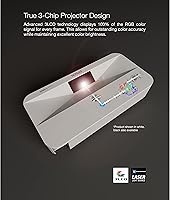
  • Display Technology: Uses a 3-chip 3LCD laser engine, which processes red, green, and blue light on separate panels simultaneously for accurate color without a spinning color wheel.
  • Resolution: Outputs a 3840x2160 (4K PRO-UHD) image via pixel-shifting technology rather than a native 4K imaging panel.
  • Brightness: Rated at 4,000 lumens, providing enough output for comfortable viewing in rooms with moderate ambient light.
  • HDR Support: Accepts and processes full 10-bit HDR color, faithfully reproducing highlight and shadow detail from HDR10 source material.
  • Throw Type: Ultra short throw design projects from just a few inches away from the wall, eliminating the need for ceiling mounts or long-distance placement.
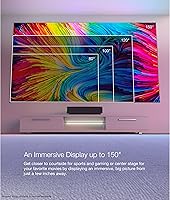
  • Max Image Size: Capable of producing an image up to 150″ diagonally depending on placement distance and surface used.
  • HDMI Ports: Equipped with three HDMI inputs, including one port dedicated to gaming that supports 1080p at 120Hz for reduced input lag.
  • Audio System: Features a built-in 2.1-channel virtual surround sound system designed exclusively for this unit by Yamaha, with presets for TV, Sports, Movies, and Music.
  • Smart Platform: Runs Android TV with Google Assistant voice search built in, giving access to major streaming apps including Prime Video, Hulu, Disney+, and YouTube TV.
  • Wireless: Supports both Wi-Fi and Bluetooth connectivity, allowing wireless streaming and the ability to use the unit as a standalone Bluetooth speaker.
  • Light Source: Laser-based light source offers a significantly longer operational lifespan compared to traditional lamp-based projectors, with no bulb replacement required.
  • Connectivity: Full connectivity suite includes three HDMI ports, USB, Wi-Fi, and Bluetooth for flexible source and peripheral connections.
  • Dimensions: Physical footprint measures 13.4 x 27.4 x 6.2 inches, requiring a stable, level surface at appropriate height near the projection wall.
  • Weight: Unit weighs 27.6 pounds, making it a fixed installation rather than a portable device.
  • Image Adjustment: Includes multi-point digital image correction and individually adjustable feet to align and level the projected image without professional calibration tools.
  • Color Format: Compatible with virtually all standard color formats, depths, and color spaces, with simultaneous support for 4K HDR content at 60Hz on compatible inputs.

Related Reviews

Epson EpiqVision Ultra Short Throw LS300 3LCD Smart Laser Projector
84%
93%
Brightness
89%
Picture Quality
85%
Setup & Installation
82%
Sound Quality
90%
Connectivity & Smart Features
More
Formovie Theater Ultra Short Throw 4K Laser Projector
86%
94%
Picture Quality
88%
Ease of Setup
85%
Audio Performance
77%
Brightness
90%
Connectivity
More
NOMVDIC P2000 Ultra Short Throw Projector
75%
91%
Image Quality
73%
Brightness Performance
89%
Color Accuracy
93%
Ultra Short Throw Placement
77%
Built-in Audio
More
Hisense L9Q Ultra Short Throw Laser Projector
80%
93%
Image Brightness
91%
Color Accuracy
67%
Black Level & Contrast
74%
Setup & Installation
82%
Smart Platform (Google TV)
More
Hisense PX3-PRO Ultra Short Throw Projector
79%
93%
Picture Quality
94%
Color Accuracy
49%
Ambient Light Handling
88%
Gaming Performance
71%
Value for Money
More
Optoma ML1080ST Ultra-Portable Short Throw Full HD Laser Projector
84%
91%
Display Quality
94%
Portability
88%
Ease of Setup
85%
Connectivity Options
92%
Gaming Performance
More
Samsung The Premiere LSP7T 120″ Laser Projector
75%
83%
Picture Quality
61%
Brightness Performance
93%
Ultra-Short Throw Design
81%
Smart TV Platform
67%
Built-In Audio
More
Optoma GT1090HDR Short Throw Laser Projector
82%
89%
Brightness & Ambient Light Performance
82%
Image Quality
93%
Short-Throw Convenience
91%
Laser Longevity & Maintenance
73%
Value for Money
More
ViewSonic X1000-4K Ultra-Short Throw Projector
87%
92%
Image Quality
70%
Brightness in Well-Lit Rooms
85%
Sound Quality
95%
Space-Saving Design
88%
Ease of Setup
More
Epson EpiqVision Ultra LS500 4K Laser Projector
87%
94%
Image Quality
92%
Brightness Performance
88%
Ease of Setup
87%
Value for Money
70%
Sound Quality
More

FAQ

Very close — typically between 4 and 15 inches from the wall depending on your desired image size. At its minimum distance, you can still get a very large picture, which is the whole point of the ultra short throw design. Most people place it on a low TV console or media cabinet pushed up against the wall.

The 4,000-lumen output handles moderate ambient light reasonably well — daytime sports viewing is manageable with the curtains partially drawn. That said, a brightly lit room with direct sunlight hitting the screen will wash out the image noticeably. If your space gets intense sunlight, Epson sells an optional ambient light rejecting screen that absorbs a significant portion of room light and improves contrast considerably.

This is worth being clear about: the image is produced through a pixel-shifting process, not a native 4K imaging chip. In plain terms, the projector rapidly shifts pixels to simulate full 4K resolution. For most viewing distances and content types it looks genuinely sharp and detailed, but it is technically different from a display with a true native 4K panel. At this price point, that distinction matters, and you should factor it into your expectations.

You can project onto a smooth, matte white painted wall and get decent results. However, to get the best sharpness, contrast, and especially ambient light rejection, a purpose-made screen makes a real difference. Epson offers its own SilverFlex Ambient Light Rejecting screens in 100″ and 120″ sizes, sold separately. A quality screen is especially important if your room has windows.

Fan noise is one of the more consistent criticisms from actual owners. At full brightness it is audible enough to notice during quiet dialogue scenes or soft film scores. It is less obvious during action sequences or sports content. If you are highly sensitive to background noise, or plan to watch a lot of quiet dramatic films, this is worth considering seriously before purchasing.

The Epson LS800 Ultra Short Throw Laser Projector comes with a fully functional Android TV interface that covers all the major streaming platforms — Netflix, Prime Video, Disney+, YouTube TV, and more. For most users it is genuinely sufficient without adding an external device. A subset of owners does report occasional sluggishness with the stock remote, so if that bothers you, a Bluetooth-paired phone or a third-party remote can help.
For casual viewing — news, daytime TV, general streaming — the Yamaha 2.1-channel system is comfortable and clearly better than the tinny speakers on a typical budget projector. If you are a serious film or music listener, you will likely want to connect an external soundbar or surround system via HDMI ARC or Bluetooth. Think of the built-in audio as a strong starting point, not a permanent solution for critical listening.

The dedicated HDMI gaming port supports 1080p at 120Hz, which covers fast-paced games very well on PlayStation 5 and Xbox Series X. Input lag at that setting is low enough for responsive gameplay. Keep in mind the maximum gaming resolution on that port tops out at 1080p for the 120Hz mode — 4K gaming input is handled at 60Hz on the standard HDMI ports.

Laser light sources in projectors like this are typically rated for 20,000 hours or more of operation, which translates to many years of regular use before any meaningful brightness degradation. Unlike lamp-based projectors, there is no bulb to swap out, which removes a recurring maintenance cost that older projector owners know well. This is one of the genuine long-term value advantages of choosing a laser-based model.

The unit needs a flat, stable, level surface — a media console or low AV cabinet is the typical setup. It weighs nearly 28 pounds and measures about 27 inches wide, so the furniture needs to be appropriately sturdy and sized. Because the throw distance is extremely short, even small shifts in the unit's position can affect image alignment, so once you find the right spot it is best to leave it there. The adjustable feet and multi-point correction help fine-tune alignment without moving the whole unit.

Where to Buy