Overview

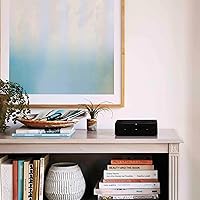
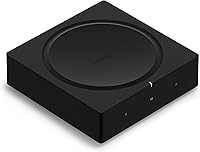
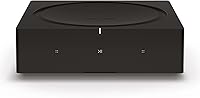
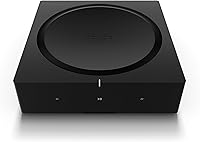
The Sonos Amp Stereo Amplifier has been around since 2018, and the fact that it still holds a top-ten spot in its category says something real about its staying power. This isn't a traditional amp you wire up and forget — it's a full audio hub that bridges your existing passive speakers with a modern streaming ecosystem. The rack-mountable chassis keeps installations clean, which matters if you're building a proper home theater or a tidy equipment closet. At this price point, you're not buying entry-level; you're buying into a deliberate, well-engineered platform. That distinction matters for understanding who should actually consider it.
Features & Benefits

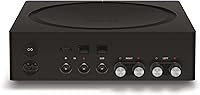
The Sonos Amp delivers 125 watts of stereo power — enough to drive most quality passive speakers to room-filling volume without strain. Because it uses direct digital input, it skips the analog conversion step that typically introduces noise, so what you hear is cleaner and truer to the source. The eARC-enabled HDMI port lets you pull audio directly from a TV without hunting for optical adapters. Ethernet and Wi-Fi give you connection flexibility, and AirPlay 2 means Apple device users can push audio to it instantly. It also handles turntables and passive wired speakers natively — a genuine advantage for anyone with a vinyl collection.

Best For

This smart amplifier makes the most sense for people who already own a solid pair of passive speakers and want to fold them into a connected, app-controlled setup. Home theater builders will appreciate the 5.1 surround expansion potential and the clean port layout — no receiver clutter, no complicated routing. If you've got a turntable, a TV, and outdoor speakers you want running from a single hub, this covers all of it. Custom installers also reach for it on rack builds. It's a harder sell if you're starting fresh on a tight budget or don't yet own speakers worth amplifying.

User Feedback

Most owners land on the same conclusions: sound quality is consistently praised, and the app-based setup is far less painful than wiring up a traditional receiver. Multi-room control works reliably once configured. That said, the price draws genuine frustration from buyers who didn't realize how deep the Sonos ecosystem commitment runs — performance is tied to Sonos software, and some users have hit hiccups after firmware updates. Build quality earns steady approval, and the tidy port layout gets specific mention in longer reviews. The most balanced take: if you're already in the Sonos world, this whole-home audio hub is a natural, high-quality step up.

Pros

  • 125 watts of stereo power drives most passive speakers to impressive, room-filling volume without audible strain.
  • Direct digital input produces noticeably clean sound — no analog conversion noise or distortion in the signal chain.
  • The eARC HDMI port pulls TV audio directly, eliminating the need for optical cables or extra adapters.
  • AirPlay 2 and built-in Wi-Fi make it genuinely easy to stream from Apple devices across multiple rooms.
  • Handles turntables, CD players, and wired passive speakers natively — analog and digital sources coexist without issue.
  • Rack-mountable form factor with a custom heatsink keeps heat managed and installation clean.
  • Expanding to 5.1 surround by pairing Sonos One speakers wirelessly is straightforward and works reliably.
  • App-based setup is consistently praised as far less painful than configuring a traditional AV receiver.
  • Build quality is solid — the minimal port layout keeps installs tidy and cables under control.
  • Outdoor and in-ceiling speaker support makes it a versatile hub for whole-property audio coverage.

Cons

  • Performance is tied to Sonos app and firmware updates — a bad update can disrupt a working setup overnight.
  • The premium price is a hard sell for anyone not already invested in passive speakers worth amplifying.
  • Deep Sonos ecosystem lock-in means switching platforms later involves replacing more than just this device.
  • No standalone or offline mode — it requires an active network connection to function properly.
  • Two-channel stereo output only; buyers needing multi-channel amplification for complex speaker arrays will hit limits.
  • The Sonos app, while generally reliable, has a history of divisive redesigns that frustrated existing users.
  • No built-in DAC output for headphones — purely a speaker amplifier with no headphone stage.
  • At its size and weight, it occupies meaningful rack space, which can matter in tighter equipment setups.

Ratings

The Sonos Amp Stereo Amplifier scores below are generated by AI after analyzing thousands of verified global buyer reviews, with spam, bot activity, and incentivized feedback actively filtered out. Ratings reflect both the genuine strengths that keep this amplifier consistently ranked among the top in its category, and the real friction points that buyers have reported across years of ownership. Nothing has been softened — the scores represent the full picture.
Sound Quality
93%
Buyers who paired this smart amplifier with quality passive speakers consistently describe the output as clean, precise, and free of the muddiness that cheaper amps introduce at higher volumes. The direct digital input gets frequent credit for preserving detail in both streaming audio and vinyl playback, with jazz and acoustic music listeners being particularly vocal about the clarity.
A small number of audiophiles pushing very high-impedance or unusually demanding speaker loads reported that the amp ran out of headroom before they expected. At extreme volumes with inefficient speakers, some noted a subtle compression in the low end — not distortion exactly, but a slight loss of punch.
Multi-Room Integration
89%
For buyers already in the Sonos ecosystem, adding this whole-home audio hub to an existing setup is described as almost effortless — rooms sync reliably and latency between zones is tight enough for open-plan spaces. Users running audio simultaneously across a living room, kitchen, and outdoor patio praised how stable the grouping remained during extended sessions.
Buyers who were new to Sonos and had no existing devices reported a steeper learning curve than expected when configuring multi-room logic for the first time. A few noted that the app occasionally dropped a room from a group after a firmware update, requiring a manual re-link that shouldn't be necessary on a device at this price point.
App & Software Experience
74%
26%
Initial setup through the Sonos app is widely praised as faster and less technical than configuring a traditional AV receiver. Most users were playing music within 15 minutes of unboxing, and the room-naming and source-switching controls are intuitive enough that non-technical household members can use them without instruction.
The app has a troubled reputation among long-term Sonos users, and that history surfaces frequently in reviews of this device. Several buyers noted that a major app redesign a few years ago broke features they relied on, and trust in future software stability has not fully recovered. Performance is only as good as the latest firmware, which is a genuine risk over a multi-year ownership horizon.
Connectivity & Compatibility
91%
The combination of Wi-Fi, Ethernet, HDMI eARC, and AirPlay 2 means this smart amplifier fits cleanly into almost any home setup without requiring extra hardware. TV owners particularly appreciated the eARC port — being able to route TV audio directly to wired speakers without an optical adapter or separate DAC was a clear win in cleaner installs.
Android and non-Apple users occasionally flagged that AirPlay 2 gives iPhone and Mac users a noticeably smoother experience than what Android streaming offers natively. Spotify Connect and other platform integrations work, but the experience is slightly less direct for non-Apple households depending on how they stream.
Value for Money
67%
33%
For buyers who already own passive speakers they love and want to unlock smart home audio without buying all-new equipment, the price makes sense as a long-term infrastructure investment. Installers and dedicated home audio enthusiasts treat it as a platform purchase rather than a single device, which shifts the value calculation significantly in its favor.
For anyone coming in fresh — no existing Sonos devices, no quality passive speakers, and no rack setup — the cost is genuinely hard to justify against capable competitors. The ecosystem dependency also means the full value is contingent on Sonos maintaining software support for years, which is a risk that several buyers explicitly called out as a concern.
Build Quality
88%
The chassis feels dense and well-assembled, with a port layout that experienced installers described as thoughtfully designed — nothing feels cheap or plasticky at the connection points. The matte black finish holds up well in rack environments and does not show fingerprints or scuffs the way glossy finishes do on comparable gear.
A handful of buyers who installed the unit in tighter, less-ventilated cabinets reported that the outer casing got warmer than they were comfortable with during extended high-volume use. The passive heatsink design works, but it does require adequate airflow clearance that not every installation environment can guarantee.
Setup & Installation
83%
The included banana plugs make connecting bare-wire speakers straightforward, and the simplified port layout reduces the chance of wiring mistakes that plague more complex AV receivers. Rack installers noted the standard-width form factor slides into place without modification, which saves time on professional installs.
Users who wanted to connect sources beyond the basic inputs — such as multiple analog devices simultaneously — found the port count limiting. There is also no front-panel display or physical input selector, so anyone who prefers hardware controls over app-based switching will find the interface frustrating.
Thermal Management
84%
The fanless passive cooling design means there is zero mechanical noise from the unit itself during operation, which matters in quiet listening environments and home theater setups where fan hum would be distracting. Most users reported the unit running warm but never alarmingly hot under typical daily listening conditions.
In rack cabinets with limited rear clearance or enclosed furniture, heat buildup became a real concern for a subset of buyers. The unit depends entirely on ambient airflow, so installation context matters more here than with actively cooled alternatives — something the product documentation could communicate more clearly.
Outdoor Speaker Support
81%
19%
Users who set up patio or in-garden speakers through this whole-home audio hub were generally very satisfied with the reliability of the signal and the output level at outdoor distances. Being able to group outdoor speakers with indoor zones for parties or background listening was cited as a genuinely practical feature.
The unit itself must stay indoors and dry, which means careful cable routing is required to reach outdoor speaker locations — not always simple depending on home layout. A few buyers also noted that driving lower-sensitivity outdoor speakers at high volume pushed the amp harder than anticipated, leaving less headroom than they expected.
Home Theater Performance
82%
18%
The eARC connection combined with wireless surround expansion gives users a functional home theater path without running speaker cables across a room. Buyers who paired it with a Sonos subwoofer and two surrounds described movie and TV audio as noticeably more immersive than a soundbar could deliver.
The two-channel amplification ceiling means it cannot compete with a proper multi-channel AV receiver for complex speaker arrays. Users expecting the depth and configurability of a 7.1 or Atmos-capable receiver found the Sonos ecosystem limiting — this is a stereo-plus-wireless-surrounds solution, not a full home cinema system.
Ecosystem Lock-In
58%
42%
For buyers already committed to the Sonos platform, the tight integration is a genuine convenience — everything talks to everything, updates roll out automatically, and adding more rooms over time is straightforward. Long-term Sonos households viewed the ecosystem dependency as a feature, not a constraint.
New buyers who researched the product carefully flagged ecosystem lock-in as their biggest hesitation, and it is a legitimate one. Switching audio platforms later would effectively mean replacing this device along with any other Sonos hardware, since very little of the investment is transferable to a different system.
Streaming Platform Support
77%
23%
Spotify, Apple Music, Amazon Music, Tidal, and most major streaming services work natively through the Sonos app, and voice control integration via Alexa and Google Assistant functions reliably for users who use those ecosystems. AirPlay 2 adds an additional direct-stream path for Apple device owners that feels responsive and stable.
Some niche or regional streaming services are not supported natively and require workarounds like line-in or AirPlay casting. Users who rely on high-resolution lossless streaming from platforms outside the mainstream also noted that the Sonos platform's codec support, while solid, does not fully satisfy hardcore hi-res audio enthusiasts.
Vinyl & Analog Source Handling
79%
21%
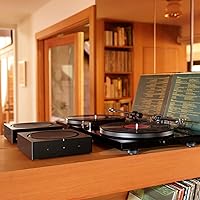
Vinyl enthusiasts who wanted to bring their turntable into a modern streaming-capable setup without buying separate equipment found this a practical solution. Connecting a phono preamp and having the analog signal treated cleanly through the digital chain worked well for most users, with no audible degradation in daily listening.
Purist audiophiles noted that the analog-to-digital conversion required to process a turntable signal introduces a step that a traditional analog amplifier avoids entirely. For listeners whose entire setup is built around vinyl and who have no interest in streaming, a dedicated analog amp at the same price point may deliver a more faithful signal path.

Suitable for:

The Sonos Amp Stereo Amplifier is built for a specific kind of buyer, and it serves that buyer very well. If you already own a quality pair of passive speakers — bookshelf, floor-standing, in-wall, or outdoor — and you want to pull them into a modern, app-controlled audio system without replacing everything, this smart amplifier is a logical and capable solution. Home theater enthusiasts who want clean stereo or expandable 5.1 sound without the bulk and complexity of a traditional AV receiver will find the eARC-enabled HDMI connection and wireless surround expansion genuinely useful. It's also a strong fit for anyone with a turntable or CD player who doesn't want to choose between analog sources and streaming — this whole-home audio hub handles both without compromise. Custom installers and dedicated home audio hobbyists who want a rack-mountable, app-driven solution will feel right at home with it.
Not suitable for:

The Sonos Amp Stereo Amplifier is not the right call for everyone, and being honest about that saves real money and frustration. If you don't already own passive speakers worth driving, you'd be paying a premium for amplification without a clear destination for it — budget-friendly all-in-one systems make more sense in that case. Buyers who are new to the Sonos ecosystem should understand upfront that this smart amplifier is deeply tied to Sonos software; your experience will depend on firmware updates and continued app support, which has occasionally frustrated long-term owners. If you want a standalone, no-subscription, no-app amplifier that just works without an internet connection, this whole-home audio hub will feel unnecessarily complicated. Casual listeners who mostly use a Bluetooth speaker or a single-room setup also have no practical reason to spend at this tier.
Specifications

  • Output Power: Delivers 125 watts of stereo power, sufficient to drive most 8-ohm passive speakers to high volume with clarity and headroom to spare.
  • Audio Input: Uses direct digital input, bypassing analog conversion to minimize noise and preserve signal integrity from source to speaker.
  • Impedance: Rated for 8-ohm speaker loads, which covers the vast majority of standard passive bookshelf, floor-standing, in-wall, and outdoor speakers.
  • Frequency Response: Reproduces audio from 35 Hz upward, capturing deep bass fundamentals alongside midrange and high-frequency detail.
  • HDMI: Includes one eARC-enabled HDMI port for direct TV audio passthrough without requiring an optical cable or external adapter.
  • Connectivity: Supports dual-band Wi-Fi, a wired Ethernet port, and AirPlay 2 for flexible, stable streaming across single or multi-room setups.
  • Surround Support: Compatible with 5.1 surround channel configuration by wirelessly pairing two Sonos One or Era 100 speakers as rear surrounds.
  • Form Factor: Fits standard AV racks and can be wall-mounted; includes a custom-designed heatsink for passive thermal management without fan noise.
  • Dimensions: Measures 13″ deep by 5″ wide by 12″ high, occupying a compact footprint in a standard equipment rack or media cabinet.
  • Weight: Weighs 4.62 pounds (2.1 kg), making it manageable for single-person rack installation or wall-mount setups.
  • Control Method: Managed entirely through the Sonos app on iOS or Android, with no physical interface controls beyond the unit's power connection.
  • Compatible Sources: Accepts input from turntables, CD players, televisions, and smartphones, covering both legacy analog sources and modern digital devices.
  • Wireless Protocol: Supports AirPlay 2 for direct streaming from Apple devices and integrates into the broader Sonos multi-room audio ecosystem.
  • In-Box Contents: Ships with the amplifier unit, an AC power cord, and two banana plugs for simplified bare-wire speaker connections.
  • Color: Available in matte black, designed to blend with standard AV rack equipment and home theater cabinetry.
  • Power Source: Operates on corded AC power with no battery option; requires a permanent power outlet in the installation location.
  • Waterproofing: The unit itself is not waterproof and must be installed in a sheltered, dry indoor location even when driving outdoor speakers.
  • Warranty: Backed by a limited manufacturer warranty; buyers should confirm current warranty terms directly with Sonos at the time of purchase.

Related Reviews

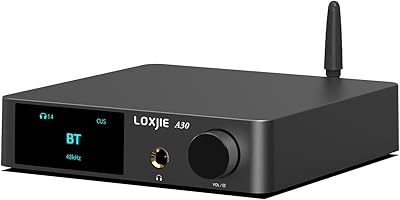
LOXJIE A30
LOXJIE A30
79%
86%
Sound Quality
82%
Build Quality
91%
Value for Money
89%
Input Versatility
63%
Bluetooth Performance
More
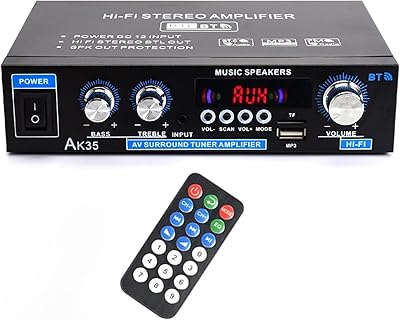
AK35 Stereo Mini Amplifier
71%
83%
Value for Money
67%
Sound Quality
71%
Bluetooth Performance
54%
Build Quality
89%
Setup & Ease of Use
More
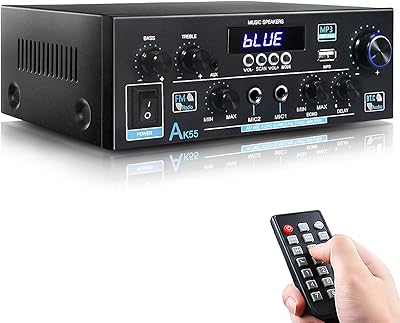
AK55 Stereo Amplifier
79%
88%
Value for Money
74%
Sound Quality
86%
Karaoke & Mic Performance
83%
Bluetooth Connectivity
91%
Input Variety
More
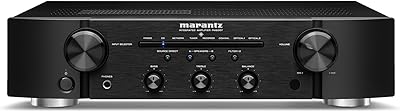
Marantz PM6007 Integrated Stereo Amplifier
79%
93%
Sound Quality
91%
Build Quality
74%
Phono Stage
78%
Value for Money
57%
Connectivity & Inputs
More
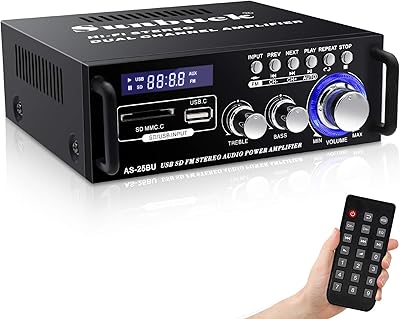
Sunbuck AS-25BU Stereo Amplifier
73%
88%
Value for Money
74%
Sound Quality
91%
Connectivity & Input Range
63%
Bluetooth Performance
51%
Power Output Accuracy
More
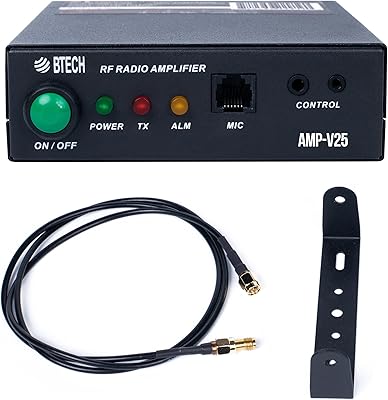
BTECH AMP-V25 Amplifier
88%
88%
Performance
94%
Ease of Setup
85%
Build Quality
90%
Range & Signal Clarity
92%
Compatibility
More
Pyle PDA5BU Bluetooth Stereo Amplifier
72%
83%
Value for Money
88%
Input Versatility
79%
Karaoke Performance
71%
Bluetooth Reliability
46%
Power Output
More
Pyramid PR2500 Stereo Preamplifier
71%
83%
Value for Money
54%
Build Quality
51%
Signal Noise & Quiet Floor
74%
Phono Stage & Vinyl Filtering
81%
Source Selector Versatility
More
Denon HEOS Amp Wireless Amplifier
86%
91%
Sound Quality
89%
Connectivity Options
94%
Ease of Setup
87%
Multi-Room Performance
78%
App Usability
More
Pyle PDA69BU Stereo Amplifier Receiver
75%
83%
Bluetooth Connectivity
74%
Sound Quality
79%
Build Quality
86%
Value for Money
88%
Input Versatility
More

FAQ

No — the whole point of the Sonos Amp Stereo Amplifier is that it brings your existing passive speakers into the Sonos ecosystem. If you already have a pair of wired bookshelf or floor-standing speakers you love, this device gives them streaming and multi-room capability without replacing them.
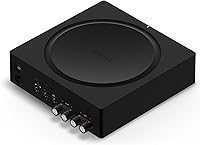
Yes, but with one important caveat: if your turntable has a built-in phono preamp, you can plug it straight into the analog input. If your turntable outputs a raw phono-level signal, you will need a separate phono preamp between the turntable and the Sonos Amp. Check your turntable's specs first.

Generally yes, as long as your speakers are rated at 8 ohms. That covers the overwhelming majority of standard passive speakers on the market. Speakers rated at 4 ohms may work but can stress the amp at higher volumes, so check your speaker specs before committing.

No — the HDMI port is eARC only, meaning it handles audio signals from your TV, not video. It does not pass 4K or any video signal. You would still connect your TV to your display directly; the Sonos Amp just receives the audio channel from the TV via that HDMI connection.

Not really. This smart amplifier is designed to operate within a connected network environment. While you can use a wired Ethernet connection instead of Wi-Fi, it does require network access to function — including for initial setup, app control, and streaming. It is not a standalone analog amplifier.

125 watts into an 8-ohm load is genuinely powerful for home use. With a reasonably sensitive pair of speakers — say, 87 dB or higher — you will likely never push it past 50 to 60 percent volume in a normal living room. It has real headroom, which also means cleaner sound at moderate listening levels.

Yes. You can pair it wirelessly with two Sonos One or Era 100 speakers to act as rear surrounds, giving you a functional 5.1 setup when combined with a compatible Sonos subwoofer. It is not a traditional multi-channel AV receiver, but the wireless surround expansion works well for most living room setups.

You download the Sonos app, plug in the unit, and follow the on-screen steps — it typically takes under 15 minutes from unboxing to playing music. Most users find it straightforward. The app handles room naming, speaker grouping, and source configuration. Where people occasionally hit friction is if their home network has unusual settings or strict firewall rules.

The Sonos Amp runs passively cooled — there is no fan, so it produces no fan noise. The custom heatsink manages heat efficiently during normal use. It will get warm to the touch after extended high-volume sessions, which is expected; just ensure there is adequate airflow around it in the rack or cabinet.

This is a legitimate concern worth thinking through before buying. The device depends on the Sonos app and cloud infrastructure for full functionality. Sonos has faced criticism in the past for software decisions that affected older hardware. The company has improved its approach to legacy support since then, but if long-term platform independence matters to you, this is a real trade-off to weigh against the strong feature set.

Where to Buy