Overview

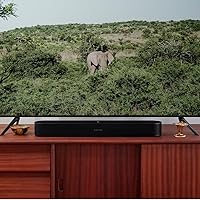
The Sonos Beam Gen 2 Soundbar is a compact, premium option built for apartments and mid-sized living rooms where space is limited but audio quality still matters. Compared to its predecessor, it brings meaningfully improved internals and Dolby Atmos support — a real step up, not just a cosmetic refresh. Setup takes about ten minutes with only two cables, which fits neatly into Sonos's plug-in-and-expand philosophy. The polycarbonate enclosure measures just 25.6 inches wide and sits discreetly under most TVs. That said, it ships as a soundbar only — no subwoofer, no rear speakers — so buyers expecting a ready-made surround system should adjust their expectations before opening the box.
Features & Benefits

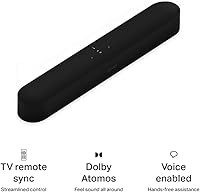
The biggest headline here is Dolby Atmos, which creates a convincing sense of height and width during action scenes or concert films — without a single speaker mounted on your ceiling. It is simulated, not physical, so temper expectations accordingly, but in a room with good boundaries it holds up well. Trueplay room calibration runs automatically and adjusts the EQ to your specific space, making a noticeable difference in smaller rooms. When the TV is off, the Beam Gen 2 functions as a full music hub — AirPlay 2, Spotify Connect, and dozens of streaming services are natively available. The far-field microphones handle voice commands reliably without requiring a phone in hand.

Best For

This compact soundbar makes the most sense for people watching TV in rooms up to roughly 350 square feet — it fills that space comfortably without overpowering it. If you already own other Sonos speakers, the value proposition gets stronger, since the Beam Gen 2 slots naturally into a multiroom audio setup as a living-room anchor. Apple AirPlay 2 users will especially appreciate how frictionless the wireless handoff feels. Clean installs matter too — the single shelf footprint and two-cable requirement make it easy to tuck into an entertainment unit. Just know upfront: if you need thunderous bass from day one, budget for a subwoofer alongside it.

User Feedback

Owners consistently praise the dialogue clarity — voices cut through background noise in a way that built-in TV speakers simply cannot match. The Dolby Atmos effect draws positive reactions, though most honest reviewers describe it as a subtle widening rather than an enveloping cinema experience. Bass response is the most common complaint; without a subwoofer, lower frequencies feel adequate rather than satisfying. The Sonos app earns high marks for day-to-day reliability, though a handful of users mention a frustrating initial Wi-Fi pairing process. Long-term owners note that firmware updates have steadily improved performance since launch. The price debate remains real — fans cite lasting build quality and ecosystem depth, while critics point to competing bars that undercut it considerably.

Pros

  • Dialogue clarity is noticeably better than any built-in TV speaker, making voices crisp and easy to follow.
  • Trueplay automatic room calibration genuinely adapts the sound rather than just applying a generic EQ curve.
  • Two-cable setup means most people are up and running in under fifteen minutes with no technical know-how required.
  • AirPlay 2 support makes wireless music streaming from Apple devices completely effortless.
  • The compact 25.6-inch footprint fits under most TVs without dominating the shelf or requiring a dedicated stand.
  • Sonos app is reliable and polished for daily use, including multi-room control across the whole home.
  • Firmware updates have continued to improve performance meaningfully since the unit launched in 2021.
  • The ecosystem is genuinely expandable — adding a Sub or rear speakers later transforms the experience without replacing anything.
  • Built-in far-field microphones handle voice commands accurately from across the room.
  • Dolby Atmos processing adds a noticeable sense of width and space to compatible content, even if the effect is subtle.

Cons

  • Bass output is underwhelming on its own — low frequencies lack punch without a separately purchased subwoofer.
  • The Dolby Atmos effect is simulated, not physical, so height cues are mild rather than dramatic.
  • Reaching the full potential of the system means spending considerably more on the Sub and rear satellites over time.
  • A small but consistent number of buyers report frustrating Wi-Fi pairing issues during the initial setup process.
  • No built-in Bluetooth streaming, which limits playback options for non-AirPlay, non-Wi-Fi scenarios.
  • Competitors at lower price points offer comparable raw audio output, making the premium harder to justify without ecosystem buy-in.
  • At only 50.4 Hz frequency response floor, sub-bass content in music and film scores loses noticeable body.
  • The polycarbonate build, while clean-looking, feels less premium in hand than the price tag might suggest.
  • Works best in smaller rooms — buyers with open-plan spaces may find the soundstage struggles to fill the area.
  • Voice assistant setup can require extra steps depending on the platform, and some users find the microphone always-on aspect intrusive.

Ratings

The scores below reflect our AI-driven analysis of thousands of verified global buyer reviews for the Sonos Beam Gen 2 Soundbar, with spam, bot-submitted, and incentivized feedback actively filtered out before scoring. Each category captures both what owners genuinely love and where real frustrations surfaced, giving you an honest picture of what living with this compact soundbar actually looks like day to day.

Dialogue Clarity
93%
This is the single most praised aspect across virtually every review segment. Owners consistently describe watching dialogue-heavy shows after years of squinting at TV speakers as a revelation — voices are full, forward, and separated from background sound in a way that makes subtitles feel optional for the first time.
A small number of users in very reflective rooms noted that without Trueplay running correctly, the vocal presence can occasionally tip into brightness on certain frequency ranges. It is rare, but worth mentioning for anyone with heavily tiled or glass-heavy living spaces.
Dolby Atmos Performance
71%
29%
When watching a well-mastered Atmos title — think a spaceship sequence or a thunderstorm scene — the processing creates a noticeably wider and taller soundstage than flat stereo. For a single bar with no overhead drivers, it performs beyond what the hardware would suggest on paper.
Buyers who have experienced physical Atmos setups with ceiling speakers tend to find the effect underwhelming in direct comparison. The height simulation is subtle rather than dramatic, and in open-plan spaces or rooms with high ceilings the processing loses most of its impact.
Bass Response
58%
42%
For casual TV viewing and midrange music like vocal pop or acoustic tracks, the low end is acceptably present and does not sound hollow. Buyers who primarily watch news, talk shows, or drama series rarely flag bass as a concern at all.
Action films, EDM, hip-hop, and home theater content expose a clear gap at the low end — the bar simply cannot move enough air to deliver satisfying bass on its own. The 50.4 Hz floor becomes obvious quickly, and many buyers conclude a Sonos Sub is practically mandatory rather than optional.
App & Software Experience
86%
The Sonos app is regularly praised for its stability and logical layout, particularly for managing multi-room audio across several Sonos devices. Daily tasks like switching inputs, adjusting EQ, and managing alarms or streaming services feel polished compared to competitor apps.
A recurring frustration surfaces during initial Wi-Fi setup, where a subset of users report connection failures, dropped pairing attempts, or the bar not being discovered on certain router configurations. Once it is connected it tends to stay connected, but the onboarding experience is inconsistent.
Setup & Installation
88%
The two-cable approach — HDMI and power — means most buyers are done before they have finished reading the quick-start guide. The Sonos app guides Trueplay calibration with clear visual instructions, and the whole process from unboxing to watching TV rarely takes more than fifteen minutes.
Users with older TVs lacking HDMI eARC lose Dolby Atmos support when falling back to the optical adapter, which can feel like a meaningful downgrade for buyers who chose this bar specifically for Atmos. Optical audio limitations are not prominently communicated at purchase.
Build Quality
79%
21%
The fabric grille and polycarbonate shell feel clean and intentional rather than cheap — it looks at home in a well-designed living room without drawing attention to itself. Several long-term owners note that after years of use there is no warping, discolouration, or grille sagging.
At this price tier, some buyers expect a more premium tactile feel in hand, and the plastic chassis does not deliver that. Compared to metal-housed competitors, the Beam Gen 2 can feel lighter and less substantial when you actually pick it up and examine it closely.
Ecosystem Integration
91%
For anyone already using Sonos speakers in other rooms, the Beam Gen 2 slots in with almost no friction — it appears in the app, joins the multiroom group, and syncs audio across the home within minutes. The ability to play the same music in the kitchen, bedroom, and living room simultaneously is genuinely well-executed.
The ecosystem strength is also a lock-in: the bar works best when surrounded by other Sonos products, and buyers without existing Sonos hardware pay a premium for potential future expansion rather than immediate functionality. Third-party smart home integrations, while present, can require extra setup steps.
AirPlay 2 Performance
89%
iPhone and Mac users routinely describe the AirPlay 2 experience as the most reliable wireless audio they have had in a living room product. Handoff between devices is fast, latency is low enough for casual video, and the connection rarely drops mid-session.
AirPlay 2 is an Apple-exclusive protocol, which means Android and Windows users do not get the same seamless experience. Wi-Fi streaming through the Sonos app works for those users, but it lacks the instant-tap-and-play convenience that makes AirPlay 2 feel genuinely premium.
Voice Control
74%
26%
The far-field microphone array picks up commands reliably from across a medium-sized room, even with the TV playing at moderate volume. Owners who use Alexa routines for home automation find the always-on mic integration convenient once it is set up.
Some buyers find the concept of a persistent listening microphone in their living room uncomfortable enough to keep it hardware-muted permanently, which effectively removes the feature entirely. Others note that Google Assistant responses occasionally feel sluggish compared to a dedicated smart speaker.
Value for Money
63%
37%
For buyers who are committed to the Sonos ecosystem and value long-term software support, polished app experience, and reliable multiroom audio, the investment holds up well over several years of ownership. Firmware updates have added real value since launch, which is not common in this category.
Objectively speaking, competing soundbars at notably lower price points deliver comparable raw audio output for buyers who just want louder, clearer TV sound. The premium here is largely tied to software and ecosystem, and buyers who do not need those things will feel they overpaid.
Music Streaming Quality
84%
Using the Beam Gen 2 as a standalone music speaker when the TV is off is a genuine pleasure for casual listening — Spotify Connect and Apple Music integration feel native, and the Trueplay tuning makes the bar perform noticeably better on music than most soundbars in its size class.
Audiophiles chasing high-resolution music playback will notice that the 2.0 driver configuration and the bar form factor impose real limits on stereo imaging and soundstage width. It is an excellent casual music speaker but not a substitute for a proper stereo pair.
Long-Term Reliability
87%
Multi-year owners consistently report that the hardware holds up without hardware failures, and that firmware updates have measurably improved performance and added features over time. The track record here is genuinely strong compared to the broader consumer electronics market.
Sonos has faced some criticism in the past regarding legacy device support, which makes a small segment of buyers cautious about very long-term investment in the platform. For the Beam Gen 2 specifically there are no current concerns, but the corporate history creates lingering hesitation in some buyers.
Room Size Suitability
76%
24%
In rooms up to roughly 300 to 350 square feet, the bar fills the space cleanly at comfortable listening volumes with no noticeable strain or distortion. For apartment living or a dedicated media room, the output is well-matched to the form factor.
Buyers with open-plan spaces, large living rooms, or high ceilings find the bar working noticeably harder at higher volumes, with the soundstage feeling thin and underpowered. It is not the right tool for large rooms, and scaling up means spending more on additional Sonos hardware.
Remote & CEC Control
81%
19%
On most modern Samsung, LG, and Sony TVs, HDMI CEC works cleanly out of the box — volume, mute, and power sync happen automatically without touching the Sonos app or reprogramming remotes. For users who hate juggling multiple remotes, this works as advertised the majority of the time.
CEC behavior varies enough across TV brands and models that a small but vocal group of users experience inconsistent volume control, accidental input switching, or sync delays. Troubleshooting CEC issues typically requires diving into TV settings menus that are not always intuitive to navigate.

Suitable for:

The Sonos Beam Gen 2 Soundbar is a strong match for anyone living in an apartment or using a mid-sized living room who wants a meaningful audio upgrade without running wires across the ceiling or dedicating a corner to tower speakers. If you watch a lot of dialogue-heavy content — dramas, documentaries, news — the clarity improvement over built-in TV speakers is immediately obvious and hard to go back from. Apple household users will find the AirPlay 2 integration particularly natural, letting them hand off music from a phone to the living room without touching an app. It also rewards long-term thinkers: buyers who start with just the bar and plan to add a subwoofer or rear satellites later get genuine value from the scalable Sonos ecosystem rather than having to replace everything at once. Existing Sonos owners, especially, will appreciate how cleanly this compact soundbar slots into a multiroom setup already in place.
Not suitable for:

The Sonos Beam Gen 2 Soundbar is not the right call for buyers who want deep, room-filling bass straight out of the box — on its own, the low end is competent but not satisfying for action films or bass-heavy music, and that gap becomes obvious quickly. Anyone shopping for a true surround sound experience should know upfront that Dolby Atmos here is a processing trick, not a physical effect; there are no upward-firing drivers, and the height simulation is subtle rather than immersive in the way a properly configured 5.1 or Atmos setup would be. Large open-plan spaces or rooms above roughly 400 square feet will push this compact soundbar to its limits, leaving the sound feeling thin and underpowered. Budget-conscious buyers who are comparing it against competing bars at a lower price point will find that the premium is largely tied to the Sonos app experience and ecosystem integration — if neither matters to you, the value case weakens considerably. Android-first households without any Sonos gear will also miss out on some of the connectivity conveniences that make this bar feel premium to Apple users.

Specifications

  • Dimensions: The unit measures 25.6″ wide, 3.9″ deep, and 2.7″ tall, making it a slim fit under most modern televisions.
  • Weight: It weighs 6.35 lbs (2880g), light enough for easy shelf placement or wall mounting without heavy-duty hardware.
  • Max Output Power: The Beam Gen 2 delivers up to 200W of total output power through its internal driver array.
  • Frequency Response: Audio reproduction starts at 50.4 Hz on the low end, meaning deep sub-bass frequencies are not reproduced without an added subwoofer.
  • Driver Type: The unit uses dynamic drivers with 2-inch tweeters, arranged to project sound forward and toward the listening area.
  • Audio Formats: Supported audio formats include Dolby Atmos, Dolby Digital, and standard PCM stereo from any connected source.
  • Surround Config: The base configuration is 2.0 stereo with virtual surround processing; true multichannel requires separately purchased Sonos satellites.
  • Connectivity: Wired and wireless connections include HDMI eARC, Ethernet, Wi-Fi (dual-band), AirPlay 2, and NFC.
  • Room Tuning: Trueplay automatic calibration analyzes the room acoustics and adjusts the equalization profile without any manual configuration required.
  • Microphones: A built-in far-field microphone array supports hands-free voice control via Amazon Alexa or Google Assistant.
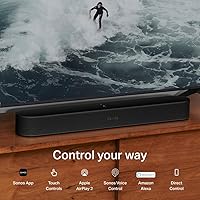
  • Control Methods: The bar can be controlled through the Sonos app, TV remote via HDMI CEC pass-through, supported voice assistants, or AirPlay 2.
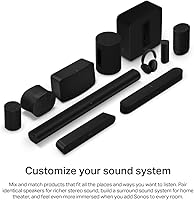
  • Expandability: The system is compatible with the Sonos Sub (all generations) and Era 100 or Era 300 speakers used as wireless rear satellites.
  • Material: The outer enclosure is constructed from polycarbonate (PC), finished in a fabric grille available in black or white.
  • Power Source: The Beam Gen 2 is powered by a corded electric connection; there is no battery or portable operation mode.
  • Wireless Technology: Wireless streaming is supported via dual-band Wi-Fi, Apple AirPlay 2, and NFC for quick device pairing.
  • In Box Contents: The package includes the soundbar unit, an HDMI cable, an optical audio adapter, and a power cable.
  • Warranty: Sonos provides a limited warranty covering manufacturing defects; buyers should verify current regional terms directly with Sonos.
  • Series: This unit belongs to the second generation of the Sonos Beam lineup, released in September 2021.

Related Reviews

Sonos Beam (Gen 1)
Sonos Beam (Gen 1)
85%
91%
Audio Quality
89%
Ease of Setup
82%
Voice Control Functionality
87%
Connectivity & Integration
74%
Bass Performance
More
dockteck DH0002 M.2 NVMe/SATA SSD Enclosure
84%
88%
Transfer Speed (NVMe)
76%
SATA Drive Performance
83%
Build Quality
93%
Ease of Setup
79%
Thermal Management
More
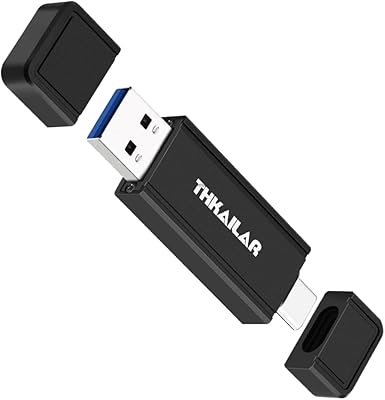
THKAILAR T7 256GB Dual-Port USB Flash Drive
78%
91%
Dual-Port Design
72%
Transfer Speed
88%
Build Quality
83%
iPhone Compatibility
67%
Android OTG Performance
More
SSK 512GB USB 3.2 Gen 2 Flash Drive
84%
91%
Performance & Speed
88%
Build Quality & Durability
95%
Ease of Use (Plug-and-Play)
87%
Compatibility (USB-A & USB-C)
80%
Portability & Size
More
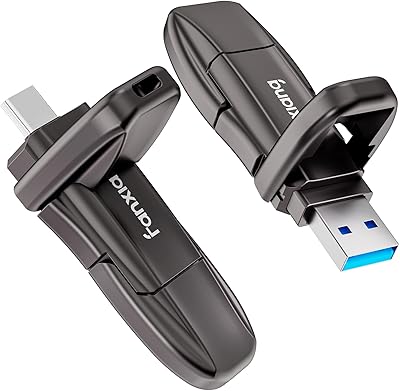
fanxiang FF952 512GB USB Flash Drive
80%
83%
Transfer Speed
88%
Build Quality
91%
Dual Connector Design
74%
iPhone Compatibility
79%
Heat Management
More
Timetec 1TB Pro Portable USB 3.2 Gen 2 SSD
88%
93%
Performance
90%
Portability/Size/Weight
92%
Compatibility/Connectivity
95%
Speed (Read/Write)
85%
Value for Money
More
Netac Zslim 250GB Portable SSD USB 3.2 Gen 2
87%
90%
Performance
88%
Portability
85%
Build Quality
91%
Ease of Use
92%
Compatibility
More
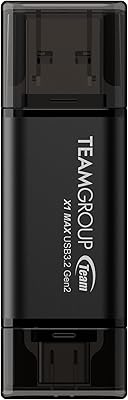
TEAMGROUP X1 MAX 512GB USB 3.2 Gen 2 Flash Drive
88%
94%
Data Transfer Speed
90%
Portability/Size/Weight
91%
Compatibility/Connectivity
85%
Build Quality/Durability
88%
Value for Money
More
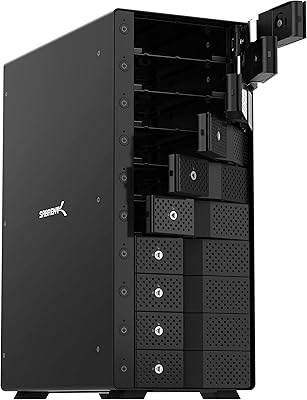
SABRENT DS-SC5B 5-Bay Hard Drive Docking Station
76%
88%
Build Quality
83%
Cooling Performance
61%
Noise Level
84%
Hot-Swap Usability
74%
Transfer Speed
More
THKAILAR 1TB USB 3.2 Gen 2 External SSD Flash Drive
85%
89%
Data Transfer Speed
91%
Build Quality & Durability
93%
Portability & Size
88%
Compatibility & Connectivity
92%
Ease of Use (Plug-and-Play)
More

FAQ

It does process genuine Dolby Atmos signals from compatible sources like a 4K Blu-ray player or a streaming app sending an Atmos track. That said, the height effect is created through psychoacoustic processing — there are no upward-firing drivers inside the bar. The result is a noticeably wider, more spacious sound than standard stereo, but it is not the same as a ceiling speaker setup. Think of it as a convincing impression of Atmos rather than the full thing.

You can absolutely use the Beam Gen 2 on its own and get a solid, enjoyable experience — especially for dialogue and mid-range audio. Where it starts to feel thin is in action-heavy film scenes or bass-forward music, where the low end just does not have enough weight. For casual TV watching it is more than adequate, but if you care about bass impact, budgeting for a Sonos Sub down the road is worth considering.

Setup is genuinely straightforward. You connect the HDMI cable to your TV's eARC port, plug in the power cable, download the Sonos app, and follow the step-by-step instructions on screen. Most people are done in under fifteen minutes. The app walks you through Trueplay calibration too, which just involves slowly walking around the room with your phone while it plays test tones.

Yes — the box includes an optical audio adapter for exactly this situation. You simply connect via the optical input instead of HDMI. The trade-off is that optical does not carry Dolby Atmos signals, so you would lose the Atmos processing and be limited to standard Dolby Digital or stereo. For most TV content that is still a big improvement over built-in speakers, but it is worth knowing before you buy.

Yes, it works with Android devices through the Sonos app and Wi-Fi streaming. You will not get AirPlay 2, which is an Apple-only protocol, but Spotify Connect, TuneIn, and other services stream natively through the app without needing a phone at all once you set them up. Android users do miss out on some of the instant-handoff convenience that iPhone users enjoy, but the core functionality is the same.

In most cases, yes. The Beam Gen 2 supports HDMI CEC, which means your TV remote can handle volume and mute without any additional programming. How well this works depends on your TV brand — Samsung, LG, and Sony TVs generally pair cleanly, though some older models have quirks. It is not something you need to configure manually; the app detects it automatically during setup.

The honest answer is that similarly sized bars from brands like Vizio or TCL will get you reasonably close in raw volume and mid-range clarity for significantly less money. Where the Beam Gen 2 earns its premium is in the Sonos ecosystem — multiroom audio, long-term software support, reliable app experience, and clean integration with streaming services. If you just want louder TV audio and nothing else, a cheaper bar will likely satisfy you. If you are building a home audio system you expect to use for years, the investment tends to make more sense.

Yes, Sonos sells a dedicated wall mount bracket for the Beam (sold separately) that lets you position it directly below a wall-mounted TV. The bar itself is light enough that installation is manageable for one person with basic tools. Just make sure you plan your cable routing before mounting, since the HDMI and power connections are on the back.

Generally, yes. Long-term owners consistently report that updates have added features and improved audio processing since launch, which is relatively unusual in consumer electronics. Sonos has a track record of supporting its hardware with meaningful updates over several years. The one caveat worth knowing is that Sonos had some controversy in 2020 around legacy device support, so it is fair to keep that history in mind when thinking about very long-term ownership.

The microphone is active by default for voice assistant functionality, but there is a physical microphone mute button on top of the bar that cuts the mic with a hardware switch — not just a software toggle. A small LED indicator lights up to confirm the mic is off. If you prefer not to use voice control at all, you can simply leave it muted permanently with no impact on the audio performance.

Where to Buy

Walmart
In stock $499.00
Adorama
In stock $499.00
B&H Photo-Video-Audio
In stock $499.00
Creative Audio
In stock $449.00
Bear Security Shop
In stock $498.99
Walts TV
In stock $499.00
AVLgear.com
In stock $499.00
Zola Home
In stock $499.00