
Overview

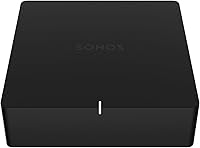
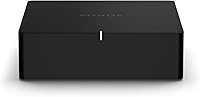
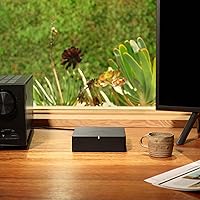
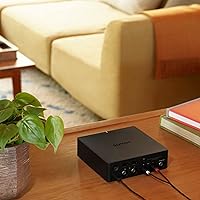
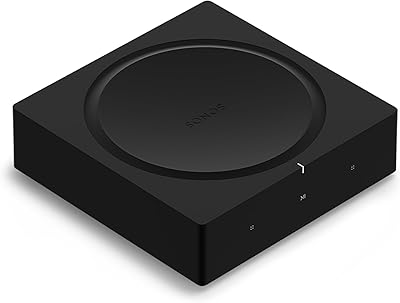
The Sonos Port is not a speaker, and that distinction matters more than you might think. It is a streaming bridge — a compact component designed to pull your existing stereo or receiver into the Sonos multi-room ecosystem without replacing what you already own. If you have invested in quality amplification over the years, this hi-fi bridge lets you keep it while adding modern streaming capabilities on top. It sits flat in a rack or on a shelf with a minimal footprint, roughly the size of a thick hardback book. This is a product built for a specific kind of buyer, and it knows it.

Features & Benefits

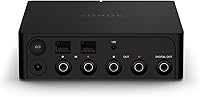
Connectivity options here are solid. You get both Wi-Fi and Ethernet, so you can hardwire it for rock-solid stability or go wireless if your rack setup makes cables inconvenient. Apple AirPlay 2 is built in, meaning you can push audio directly from an iPhone or iPad and let Siri handle track requests without opening an app. The stereo RCA line-in is arguably the most underrated feature — connect a turntable or CD player and the analog signal gets distributed to every Sonos speaker in your home. Output options cover RCA and coaxial digital, making this streaming component compatible with virtually any amplifier made in the last few decades.

Best For

Let's be direct: this streaming component is a niche product, and that is not a criticism. It is purpose-built for audiophiles with existing gear who refuse to compromise their sound quality by switching to a standalone smart speaker. Vinyl enthusiasts in particular get real value from the line-in — play a record downstairs and have it come out of speakers in the kitchen or bedroom simultaneously. It also makes strong sense for anyone already in the Sonos ecosystem who wants to add a dedicated stereo zone without rebuilding a system they have carefully assembled. If that description fits you, it is hard to argue against it.

User Feedback

Across roughly 538 ratings, this hi-fi bridge holds a 4.1 out of 5 stars average — respectable for a premium component with a narrow audience. The most consistent praise points to reliable app integration and the clean, understated build quality that looks at home in a serious audio rack. Setup gets high marks too, particularly from buyers already using other Sonos hardware. On the critical side, the price draws repeated pushback; some feel the cost is steep for a device that includes no amplification whatsoever. There is also a pattern of returns from buyers who expected a speaker or amplifier combo. Those who go in with clear expectations tend to walk away satisfied.

Pros

  • Connects any stereo receiver or amplifier to the full Sonos multi-room ecosystem instantly.
  • Apple AirPlay 2 support lets iPhone users stream and use Siri without opening an app.
  • The line-in input lets you broadcast vinyl or CD audio to other Sonos speakers throughout your home.
  • Both Wi-Fi and Ethernet options give you real flexibility depending on your setup.
  • Works with Spotify, Apple Music, internet radio, podcasts, and audiobooks natively.
  • Compact, low-profile design disappears neatly into an existing AV rack.
  • Build quality feels solid and premium — not a lightweight plastic afterthought.
  • Setup is fast for existing Sonos users, often under ten minutes from unboxing.
  • RCA and coaxial digital outputs ensure compatibility with virtually any amplifier made in recent decades.

Cons

  • No built-in amplifier — requires external powered speakers or a receiver to produce any sound.
  • Premium pricing is difficult to justify if you only need basic single-room streaming.
  • No Google Cast support, leaving Android users without the wireless shortcut that iOS users enjoy.
  • No HDMI ARC output, which limits integration with home theater receivers that prefer digital connections.
  • No physical controls on the unit — every action requires the Sonos app or a connected device.
  • Sonos app has a history of disruptive updates that have temporarily broken features users relied on.
  • Wi-Fi performance can be inconsistent in dense network environments without an Ethernet fallback.
  • New Sonos users face a steeper learning curve than the marketing materials suggest.

Ratings

The Sonos Port earned its 4.1-star average across 538 verified ratings, but raw star counts rarely tell the full story. Our AI has analyzed confirmed buyer feedback from global sources, filtering out incentivized and bot-generated reviews, to produce the category scores below — reflecting both where this hi-fi bridge genuinely excels and where real buyers have run into frustration.

Ecosystem Integration
93%
For anyone already using Sonos hardware, plugging this streaming component into an existing receiver and having it appear in the app within minutes is one of the smoothest onboarding experiences in the category. Buyers repeatedly describe it as the missing link that finally unified their whole home audio setup without requiring new speakers or wiring.
If you are new to Sonos entirely, the dependency on the app and ecosystem can feel restrictive. A small number of users report occasional dropouts after firmware updates, which — while rare — can be disruptive in a system where everything runs through one platform.
Multi-Room Audio Performance
89%
Synchronizing audio across multiple rooms is where this hi-fi bridge earns its keep. Users consistently note that playback stays tightly in sync across zones, whether they are streaming Spotify from a phone or routing vinyl through the line-in to speakers elsewhere in the house.
A handful of users report minor latency in larger homes with weaker Wi-Fi nodes, particularly when adding many zones simultaneously. Ethernet mitigates this, but the constraint exists and is worth knowing if your network setup is anything less than robust.
Setup & Installation
86%
The physical installation is clean and intuitive — connect the RCA outputs to your amplifier, plug into power, and the Sonos app walks you through the rest. Buyers with existing Sonos systems in particular find it nearly effortless, often completing setup in under ten minutes.
First-time Sonos users occasionally hit friction navigating the initial app configuration, especially when assigning rooms or pairing with an existing group. The process is not difficult, but it assumes a level of comfort with the Sonos interface that newcomers may not yet have.
Wireless Connectivity Reliability
84%
The dual-band Wi-Fi holds up well in day-to-day use, and buyers who opt for the Ethernet connection report essentially zero connectivity issues over extended periods. The ability to choose between the two depending on your setup is a practical advantage that users genuinely appreciate.
In apartments or homes with dense Wi-Fi environments, a few users note occasional reconnection hiccups on the wireless side. This streaming component does not support Wi-Fi 6, which is not a dealbreaker today but may become relevant as home networks grow more demanding.
Apple AirPlay 2 Support
88%
AirPlay 2 integration works exactly as advertised. iPhone users can push audio directly without opening the Sonos app, and Siri voice control functions reliably for playback commands. For households deep in the Apple ecosystem, this alone removes a layer of friction that older streaming components could not address.
Android users get no equivalent shortcut — AirPlay 2 is Apple-only, and Google Cast is absent entirely. This is a meaningful gap for mixed-device households where not everyone is on iOS, and it surfaces repeatedly in otherwise positive reviews.
Line-In Functionality
81%
19%
The stereo RCA line-in is a standout for vinyl enthusiasts. Connecting a turntable and then broadcasting that signal to other Sonos speakers in the home is exactly the kind of feature that justifies this component for analog audio fans. Multiple users specifically cite this as the deciding reason they chose this over alternatives.
The line-in does introduce a slight analog-to-digital conversion step, which some audiophiles feel adds a barely perceptible processing layer. It is unlikely to bother most listeners, but if absolute analog purity is your benchmark, this is a tradeoff worth knowing about.
Build Quality & Design
87%
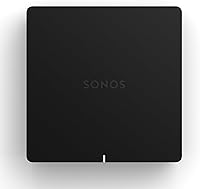
The unit feels dense and well-constructed — not a hollow plastic box. Its square, low-profile form factor slides into an AV rack without drawing attention to itself, which is exactly what most buyers want from a component that lives behind other gear. The matte black finish resists fingerprints well.
There are no physical controls on the unit itself — no volume knob, no input button. Everything goes through the app. For a device positioned in a premium price tier, some buyers feel that even minimal tactile controls would have been a reasonable inclusion.
Value for Money
61%
39%
For the right buyer — someone with a quality amplifier they want to preserve and a growing Sonos system — the value proposition holds up. The combination of AirPlay 2, multi-room capability, and line-in support is difficult to replicate with cheaper alternatives that match the same build and integration standards.
At its price point, this hi-fi bridge is an objectively expensive passive component that produces no sound on its own. Buyers expecting a complete streaming solution feel the sting most acutely. The cost-per-feature ratio is harder to defend if you only need one or two of its capabilities.
App Control Experience
82%
18%
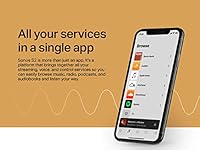
The Sonos app gives you clean, centralized control over every zone in your home from a single interface. Streaming service integration is broad — Spotify, Apple Music, internet radio, podcasts — and switching between sources mid-session is quick without any meaningful lag.
Sonos has faced ongoing criticism for app redesigns that introduced regressions in usability. Some users reference past updates that temporarily removed features they relied on. Stability has improved, but the history gives some buyers pause about long-term software dependability.
Compatibility with Existing Gear
91%
The RCA and coaxial digital outputs mean this streaming component will connect to practically any stereo receiver or integrated amplifier made in the past 30 or 40 years. Buyers with vintage and modern gear alike report clean, compatible connections without needing adapters or additional hardware.
There is no HDMI ARC output, which limits its use with home theater receivers in contexts where HDMI is the preferred signal path. For a strictly two-channel stereo setup this is irrelevant, but buyers trying to integrate it into a surround sound rack may find the analog-only outputs limiting.
Streaming Service Coverage
85%
Spotify, Apple Music, Tidal, internet radio, podcasts, and audiobooks all work natively through the Sonos app without any additional hardware or subscriptions. For most listeners, the breadth of supported services covers every realistic use case they will encounter.
A few niche services are either absent or require workaround streaming through AirPlay rather than native integration. This is a minor inconvenience for the majority of users, but buyers tied to less mainstream platforms may find the native library frustrating.
Physical Footprint & Placement Flexibility
88%
At just over an inch tall and roughly five and a half inches square, this component practically disappears in a rack setup. Users in smaller apartments particularly appreciate that it adds streaming capability without claiming meaningful shelf space or disrupting an existing gear arrangement.
The power cable and rear connections add some depth that is not reflected in the listed dimensions alone. A few buyers note that the cable routing in tight rack configurations is less graceful than the unit itself, requiring more clearance than the compact body suggests.
Clarity of Product Positioning
53%
47%
For buyers who research before purchasing, the product does what it says clearly and consistently. Those who understand they need a streaming source — not an amplifier or speaker — report exactly the performance they expected and rarely express surprise at what the device does or does not do.
A recurring theme in negative reviews is buyers receiving the unit and discovering it produces no sound on its own. The listing and packaging could more prominently flag the requirement for external amplification. This is a persistent enough pattern to indicate the category confusion is a product communication issue, not just buyer error.

Suitable for:

The Sonos Port is purpose-built for a specific kind of audio enthusiast, and if you fit the profile, it is genuinely hard to beat. If you have already invested in a quality stereo amplifier or receiver and have no intention of replacing it, this streaming component is the most elegant way to add modern multi-room streaming on top of what you already own. Vinyl collectors get particular value here — the line-in lets you broadcast a turntable signal to Sonos speakers anywhere in your home, something few competing products handle as cleanly. Homeowners building out a whole-home audio system around a mix of powered Sonos speakers and legacy hi-fi equipment will find this hi-fi bridge is exactly the glue that ties the two worlds together. Existing Sonos users expanding into a dedicated stereo zone will also feel right at home, since the setup process is minimal and the app experience is already familiar.

Not suitable for:

If you are expecting this streaming component to produce sound on its own, stop and reconsider — it has no amplifier and no speaker output, and buyers who skip that detail tend to return it frustrated. Anyone who does not already own powered speakers or a stereo receiver will need to budget for that separately, which pushes the total cost of a complete system considerably higher. Budget-conscious buyers who only want to stream music to one room will find cheaper, simpler solutions that do the job without the premium price tag. Android-only households should also note that there is no Google Cast support — AirPlay 2 is exclusive to Apple devices, so the wireless shortcut features are off the table for non-iOS users. Finally, if you are looking for a device to anchor a home theater surround setup, the absence of HDMI connectivity makes this hi-fi bridge the wrong tool for that job.

Specifications

  • Dimensions: The unit measures 1.61 x 5.43 x 5.43 inches, giving it a compact square footprint that fits neatly on a shelf or inside a standard AV rack.
  • Weight: At 1.04 pounds, it is light enough to position anywhere without adding meaningful load to a rack or shelf.
  • Color: Available in matte black, designed to blend into most existing hi-fi and home theater setups without drawing visual attention.
  • Audio Outputs: Provides stereo RCA line-out and coaxial digital output, covering both analog and digital connection paths to amplifiers and receivers.
  • Audio Input: Includes a stereo RCA line-in for connecting analog sources such as turntables, CD players, or other line-level devices.
  • Wireless Protocol: Supports Apple AirPlay 2 for direct streaming from iOS devices, alongside the proprietary Sonos wireless audio protocol.
  • Network Connectivity: Connects via dual-band Wi-Fi or a wired Ethernet connection for setups where a stable, interference-free network link is preferred.
  • App Control: Fully controlled through the Sonos app on iOS and Android, with additional support for Apple AirPlay 2 and Siri voice commands.
  • Streaming Services: Natively supports major platforms including Spotify, Apple Music, internet radio, podcasts, and audiobooks through the Sonos app.
  • Multi-Room Audio: Integrates fully into the Sonos multi-room ecosystem, allowing synchronized or independent audio playback across any number of Sonos zones.
  • Amplifier: Does not include a built-in amplifier — an external stereo amplifier or powered receiver is required to produce sound.
  • Power Source: Powered via a standard AC adapter included in the box; the unit is not battery-powered and requires a mains connection at all times.
  • Form Factor: Classified as a compact media player component, intended to function as a source device within an existing audio system rather than a standalone unit.
  • Supported Devices: Works with iPhone, iPad, and any device running the Sonos app, with AirPlay 2 features exclusive to Apple iOS and macOS devices.
  • HDMI Support: Does not include HDMI or HDMI ARC connectivity; all audio connections are made via analog RCA or coaxial digital outputs.
  • Google Cast: Google Cast is not supported; Android users must control playback through the Sonos app rather than casting directly from another application.
  • Model Number: Official model number is PORT1US1BLK, corresponding to the black finish variant sold in the United States market.
  • Amazon Rating: Holds a 4.1 out of 5 stars rating based on 538 verified ratings on Amazon, placing it at rank 43 in Wireless Audio Receivers and Adapters.

Related Reviews
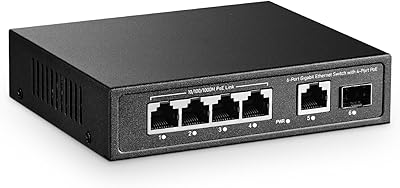
YuLinca 6-Port Gigabit PoE Switch with 4 PoE+ Ports
87%
95%
Ease of Installation
88%
PoE Functionality
91%
Build Quality
87%
Performance and Speed
94%
Fanless Operation (Noise)
More
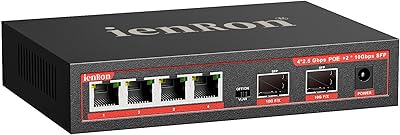
ienRon 6-Port 2.5Gb PoE Switch with 2-Port 10Gb SFP+
85%
86%
Performance
91%
Ease of Setup
88%
PoE Power Delivery
84%
Build Quality
93%
Fanless Operation
More
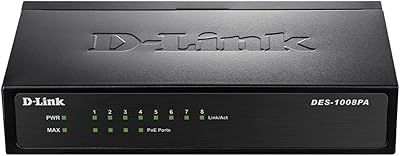
D-Link DES-1008PA 8-Port PoE Fast Ethernet Switch
82%
94%
Ease of Setup
88%
PoE Port Reliability
91%
Build Quality & Durability
58%
Network Speed & Throughput
97%
Noise Level
More
Sonos Amp
Sonos Amp
88%
94%
Sound Quality
88%
Ease of Setup
91%
Integration with Sonos System
90%
Build Quality
85%
Size and Design
More
SHANLING SONO
SHANLING SONO
89%
95%
Sound Clarity
88%
Bass Response
92%
Midrange Detail
90%
Treble Resolution
89%
Build Quality
More
Sonos Move 2
Sonos Move 2
81%
93%
Sound Quality
88%
Bass Performance
91%
Battery Life
61%
Portability
89%
Build Quality & Durability
More
Sonos Outdoor by Sonance
85%
93%
Sound Quality
89%
Build Quality/Durability
72%
Ease of Installation
94%
Water Resistance
91%
Integration with Sonos Amp
More
Sonos Roam 2 Portable Bluetooth Speaker

77%
83%
Sound Quality
91%
Build Quality & Durability
67%
Battery Life
88%
Connectivity & Ecosystem Integration
93%
Portability & Form Factor
More
Sonos Era 100
Sonos Era 100
76%
91%
Sound Quality
87%
Trueplay Room Calibration
58%
App Experience & Setup
93%
Multi-Room Integration
84%
Connectivity & Compatibility
More
Sonos Era 300
Sonos Era 300
77%
93%
Spatial Audio Performance
89%
Sound Quality (Overall)
61%
Value for Money
86%
Build Quality & Materials
91%
Ecosystem Integration
More

FAQ

No, and this is the most important thing to understand before buying. The Sonos Port is purely a streaming source component — it takes audio signals in and sends them out to your existing amplifier or receiver. You need to already own powered speakers or an integrated amplifier to hear any sound from it.

Yes, but with one important caveat. The line-in accepts stereo RCA input at line level, which means you need a turntable with a built-in phono preamp, or a separate phono preamp between the turntable and the unit. Most modern entry-level and mid-range turntables include a built-in preamp, so check your model before assuming you need extra hardware.

Almost certainly yes. The RCA stereo output is a universal connection standard that has been in use for decades, so it will connect cleanly to virtually any receiver or integrated amplifier regardless of age. You are essentially treating this hi-fi bridge as a source component, the same way you would connect a CD player.

You can start fresh, but keep in mind this device works best as part of a broader Sonos ecosystem. On its own connected to a single receiver, it functions as a capable streaming source. Its real value comes when you want to sync audio across multiple rooms alongside other Sonos speakers, so if you are only solving for one room, simpler and cheaper options exist.

You download the Sonos app, plug the unit into your amplifier via RCA, connect to power, and follow the in-app setup steps. For existing Sonos users, the whole process typically takes under ten minutes. First-time users may need a little extra time to navigate room assignment and source configuration, but there are no complicated network settings required.

Yes. AirPlay 2 is built in, so you can treat this streaming component like any other AirPlay 2 speaker from your iPhone or iPad. You can initiate playback directly from Spotify, Apple Music, or any AirPlay-compatible app, and ask Siri to control playback without switching to the Sonos app at all.

Yes, and this is genuinely one of the more useful features. Once an analog source like a turntable is connected via line-in, the Sonos app lets you group that audio and send it to other Sonos speakers throughout your home. You can play a record in the living room and have it come through the kitchen or bedroom speakers at the same time.

Wi-Fi works well for the majority of users in typical home environments. Ethernet becomes worth considering if your router is far from your audio rack, if you have a densely crowded Wi-Fi environment with many competing devices, or if you have experienced dropouts with other wireless audio gear in the past. For most people, Wi-Fi performs reliably day to day.

The Port replaced the Connect with a more modern internal architecture, improved processing, and support for AirPlay 2, which the Connect never had. The physical output connections are largely the same, so existing Connect users upgrading will find the transition straightforward. The Port also has a cleaner industrial design and supports higher-resolution audio processing internally.

The Sonos app is the primary control method and is required for initial setup without exception. After setup, AirPlay 2 gives iOS users an alternative for day-to-day playback control. There is no web interface or physical remote, and Google Cast is not available, so Android users are dependent on the app for all interaction.

Where to Buy

Walmart
In stock $449.00
Best Buy
In stock $478.00
Target
In stock $499.00
eBay
In stock $350.00
B&H Photo-Video-Audio
In stock $499.00
Custom Audio Shop
In stock $449.00
Hawthorne Appliance
In stock $449.00
Video & Audio Center
In stock $449.00
BrandsMart USA
In stock $449.00
Bear Security Shop
In stock $498.99