Overview

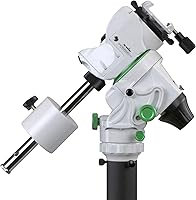
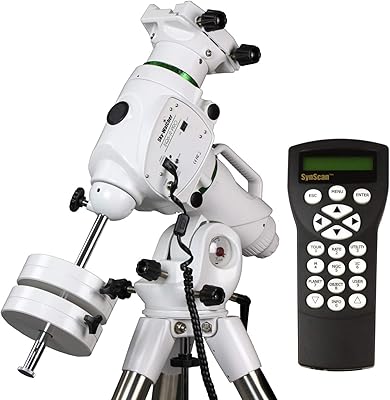
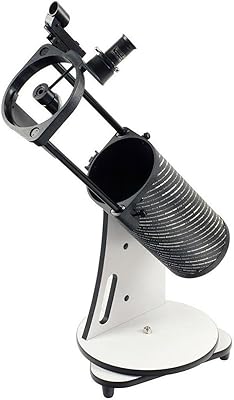
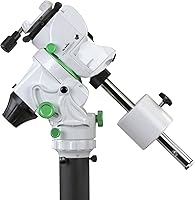
The Sky-Watcher Star Adventurer GTi GoTo Mount sits in an interesting spot in the market — capable enough to satisfy a dedicated hobbyist, yet portable enough to actually take somewhere dark. Sky-Watcher has earned a solid reputation in the amateur astronomy community, and this GoTo tracking mount reflects that pedigree. Unlike a basic star tracker that just spins to compensate for Earth's rotation, a full GoTo equatorial mount can automatically locate and follow thousands of celestial objects. The kit ships with a counterweight and counterweight bar, which is a meaningful inclusion. One thing to be clear on upfront: no camera or telescope tube is included.

Features & Benefits

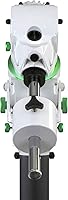
The standout capability here is full GoTo automation — complete polar alignment once, and the mount can slew to thousands of objects automatically through the SynScan app over built-in Wi-Fi. Polar alignment, which intimidates many newcomers, is handled by a built-in illuminated polar scope already integrated into the unit — no separate accessory required. The dovetail saddle accommodates both DSLR and mirrorless camera rigs, covering most wide-field imaging setups. Power options are flexible: batteries work for a night in the field, or an external DC source handles longer sessions. Tracking holds up well for two-to-three-minute exposures with a properly balanced rig.

Best For

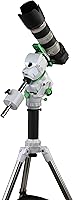
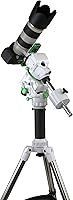
This portable equatorial mount hits its stride for photographers who've outgrown a basic star tracker and want the convenience of automated object finding. If you're hauling gear to a remote dark-sky site — think national park or mountain ridge — the sub-7-kilogram weight is genuinely practical. It suits wide-field DSLR and mirrorless imaging particularly well: Milky Way panoramas, large emission nebulae, and open star clusters all fall within its sweet spot. That said, if you're hoping to mount a heavy refractor or a large Schmidt-Cassegrain, look elsewhere — payload limits matter, and exceeding them degrades tracking accuracy and star roundness quickly.

User Feedback

Across roughly 70 reviews, the Star Adventurer GTi holds a 4.2 out of 5 rating, which feels about right given the largely positive but occasionally frustrated tone. Most owners praise how polar alignment is approachable compared to mounts in this class, and tracking performance for two-to-three-minute exposures earns consistent marks. Where feedback gets complicated is the SynScan Wi-Fi connection — a meaningful share of users report dropped connections or app pairing headaches, and that reads as a genuine product limitation rather than user error. A few reviewers also mention minor gear mesh roughness out of the box. Overall, the praise outweighs the criticism, but Wi-Fi reliability is worth factoring into your decision.

Pros

  • Full GoTo automation lets the mount locate and track thousands of celestial objects without manual star-hopping.
  • The built-in illuminated polar scope makes accurate polar alignment accessible even for relative beginners.
  • Kit includes the counterweight and bar, so you are not immediately hunting for add-on accessories after purchase.
  • Compatible with both DSLR and mirrorless cameras via the dovetail saddle, covering most common imaging rigs.
  • Battery and external DC power options give real flexibility for remote, off-grid dark-sky sessions.
  • Tracks in sidereal, solar, and lunar modes, covering a wider range of targets than most basic trackers.
  • At under 7 kilograms, this portable equatorial mount is light enough to travel with without checked-luggage anxiety.
  • Sky-Watcher has a long track record in the mount market, and parts and community support are relatively easy to find.
  • Reliable tracking performance for two-to-three-minute exposures reported consistently by satisfied users.
  • The SynScan app interface removes the need for a separate hand controller, keeping the kit compact and modern.

Cons

  • SynScan Wi-Fi connectivity drops and pairing failures are a recurring complaint, not an isolated edge case.
  • No tripod is included, which is an additional cost that first-time buyers often overlook when budgeting.
  • Payload limits make the Star Adventurer GTi a poor match for anything heavier than a modest telephoto lens setup.
  • Some users report gear mesh roughness straight out of the box, which may require adjustment before first use.
  • Dependence on a smartphone app means a dead phone battery or app crash can sideline your entire session.
  • Long-exposure imaging beyond three to four minutes per frame may push the mechanical precision to its limits.
  • The SynScan app interface, while convenient, lacks the tactile reliability and simplicity of a dedicated hand controller.
  • No camera or telescope is bundled, so the real total cost of a working imaging setup is significantly higher than the mount price alone.
  • Beginners underestimating the polar alignment learning curve may face a frustrating first few nights regardless of the built-in scope.
  • Backlash in the gears, noted by some experienced users, can complicate autoguiding for those trying to push exposure lengths further.

Ratings

Our AI rating system analyzed verified owner reviews of the Sky-Watcher Star Adventurer GTi GoTo Mount from buyers worldwide, actively filtering out incentivized, bot-generated, and duplicate feedback to surface what real astrophotographers actually experience. Scores reflect both the genuine strengths that keep this mount at the top of its category and the friction points that have frustrated a meaningful share of owners. The result is an honest, balanced picture — not a sales pitch.
Tracking Accuracy
83%
For wide-field imaging sessions, the equatorial tracking holds up impressively well. Owners regularly report clean, round stars in two-to-three-minute exposures using lenses in the 135mm to 200mm range, which covers the sweet spot for Milky Way and nebula photography.
Push exposures much beyond three minutes without autoguiding and trailing becomes a real risk, particularly if polar alignment is even slightly off. Users shooting at longer focal lengths notice the limitations more acutely than wide-angle shooters do.
Polar Alignment Ease
86%
The built-in illuminated polar scope is one of the most appreciated practical touches on this portable equatorial mount. First-timers who dreaded polar alignment report getting a workable result in under an hour on their initial outing, which is a genuine confidence booster in the field.
The polar scope illuminator can wash out faintly in very bright ambient conditions, and the reticle markings require a learning curve to interpret correctly without guidance. Some users wished Sky-Watcher included a clearer printed quick-start guide specifically for this step.
Portability
91%
At just under 15.2 pounds for the full kit, this GoTo tracking mount travels well — owners describe packing it alongside camera gear into a mid-size rolling case or backpack for trips to remote dark-sky sites without significant hassle. The form factor genuinely supports the travel astrophotography use case.
The counterweight, while necessary for balance, adds awkward bulk when packing. A few users noted the overall kit is on the heavier end for strict backpackers covering long trails on foot, especially when combined with a tripod and camera bag.
GoTo Automation
81%
19%
Once aligned, the automated slewing to targets is a practical time-saver that owners coming from manual trackers genuinely appreciate. Being able to command the mount to find a specific nebula or galaxy cluster via the app — and have it land in the frame — changes how efficiently a session runs.
GoTo accuracy depends heavily on a careful two-or-three-star alignment process that beginners sometimes rush through, leading to targets landing outside the frame. The mount itself is capable, but the learning investment to use it well is real and worth acknowledging.
Wi-Fi Connectivity
61%
39%
When the Wi-Fi link between the mount and the SynScan app holds, the wireless control experience feels modern and genuinely convenient — no hand controller to carry, no cables to trip over in the dark. Users who have stable connections praise the clean app interface for object selection.
A significant number of owners report intermittent drops, pairing failures after phone screen sleep, or difficulty reconnecting mid-session without a full restart. This is a genuine product-level inconsistency, not just isolated user error, and it can derail an otherwise productive night of imaging.
Build Quality
74%
26%
The overall construction feels solid for a mount in this portability class — the housing has a confident heft to it, and the dovetail saddle clamps securely without flex under a typical camera-and-lens payload. Most owners express satisfaction with the physical durability after extended field use.
Some users notice gear mesh roughness straight out of the box, requiring minor manual adjustment before the motion feels smooth. A handful of reviewers flagged minor backlash in the gearing that becomes relevant when attempting autoguided imaging, suggesting the mechanical tolerances are acceptable but not exceptional.
SynScan App Usability
69%
31%
The SynScan Pro app has a reasonably deep object catalog and covers the core control functions most imaging sessions require. Users who invest time learning the alignment workflow find it becomes second nature fairly quickly, and the absence of a separate hand controller keeps the kit lighter.
The app interface feels dated compared to modern astronomy apps, and the user experience during alignment steps is not always intuitive for first-time users. Several reviewers noted that operating the app by red-light in the dark adds friction that a physical controller with tactile buttons would avoid.
Value for Money
77%
23%
For what the Star Adventurer GTi delivers — full GoTo automation, built-in polar scope, and a travel-ready form factor — the price sits at a level that buyers in this category generally find justifiable. The inclusion of the counterweight and bar in the kit reduces the immediate accessory spend meaningfully.
Buyers must still budget for a tripod, camera plate, and potentially an external power source, which adds up. Those who experience persistent Wi-Fi issues may feel the value proposition weakens if core functionality requires workarounds to use reliably.
Setup Speed
78%
22%
Experienced users report being imaging-ready within 20 to 30 minutes at a familiar dark site — a reasonable benchmark for a GoTo equatorial mount at this level. The integrated polar scope eliminates one gear-dependency step that typically adds time on competing setups.
First-time setup at a new location can stretch well beyond an hour while the owner learns the alignment sequence and troubleshoots app connectivity. Cold, dark conditions amplify every friction point, and a poorly lit quick-start guide does not help matters.
Payload Capacity
67%
33%
For its intended use — wide-field camera and lens combinations — the payload handling is well-matched. A mirrorless camera with a 200mm telephoto sits comfortably within working limits and produces stable, reliable tracking without stressing the mechanics.
The usable payload ceiling leaves little headroom for heavier telephoto lenses or any substantial telescope tube. Users who bought the mount hoping to graduate to a small refractor or compact SCT scope often find the tracking degrades noticeably before they reach that goal.
Power Flexibility
79%
21%
Supporting both battery and external DC input gives this portable equatorial mount genuine versatility across different field scenarios — from a single-night dark-sky run on batteries to a multi-hour dew-heavy session powered by a portable power station.
Cold weather significantly reduces battery capacity, and owners in winter climates report shorter-than-expected runtimes on standard AA cells. The mount does not include a power bank or DC cable, so off-grid power planning is the owner's responsibility from day one.
Compatibility Range
72%
28%
The dovetail saddle design covers both DSLR and mirrorless camera systems without adapters, and the SynScan platform works across iOS and Android. This breadth of hardware compatibility means most buyers can use what they already own without additional purchases.
Telescope tube compatibility is narrower than the camera-focused marketing implies — dovetail plate type and payload weight both constrain options significantly. Southern Hemisphere configuration is supported but requires app-level setup that is not clearly documented for new users.
Documentation & Support
58%
42%
Sky-Watcher has an active global user community and a reasonable library of YouTube tutorials that partially compensate for the gaps in official documentation. Veteran users on forums like Cloudy Nights are generally willing to help troubleshoot specific issues.
The included printed documentation is thin and does not adequately cover the alignment process or Wi-Fi troubleshooting steps — two areas where new owners most need guidance. Buyers who are not comfortable seeking help in online communities may struggle significantly in the first few sessions.

Suitable for:

The Sky-Watcher Star Adventurer GTi GoTo Mount is a strong match for hobbyist astrophotographers who have already dabbled with a basic star tracker and are ready for a meaningful step up in capability without committing to a full observatory-grade setup. If your workflow involves packing a bag, driving to a dark-sky site, and shooting wide-field targets like large nebulae or the Milky Way core with a DSLR or mirrorless camera, this portable equatorial mount was essentially designed for that exact scenario. The built-in illuminated polar scope removes a significant barrier for newer imagers who find polar alignment intimidating, making first-night setup far less stressful. Travelers and backpackers will appreciate that the entire kit — head, counterweight, and bar — comes in under 7 kilograms, which is genuinely manageable for remote locations. Anyone frustrated by manually hunting objects in the sky and wanting the mount to do that work automatically will find the GoTo system a practical, time-saving upgrade.

Not suitable for:

The Sky-Watcher Star Adventurer GTi GoTo Mount is not the right tool if your imaging rig leans heavy — large Schmidt-Cassegrain telescopes, long apochromatic refractors, or any setup pushing close to or beyond the mount's payload limit will degrade tracking accuracy and produce trailed stars. Buyers expecting a complete astronomy kit will be disappointed, since no camera, telescope tube, or tripod is included; you are purchasing the mount head, counterweight, and bar only. If you rely heavily on wireless connectivity in the field and have little patience for technology hiccups, the SynScan Wi-Fi app pairing issues that a subset of real users report could genuinely disrupt your sessions. Those chasing very long individual exposures — say, five minutes or more per frame — with a telephoto lens or small scope may find the tracking precision limiting compared to heavier, more rigid equatorial mounts. Purely visual astronomers with no interest in photography would also find little justification for the price point here.
Specifications

  • Brand: Manufactured by Sky-Watcher, a well-established name in amateur astronomy equipment worldwide.
  • Model Number: The official model designation is S20590.
  • Mount Type: Full GoTo equatorial (EQ) mount with automated slewing and object-tracking capability.
  • Tracking Modes: Supports sidereal, solar, and lunar tracking rates to accommodate a range of celestial targets.
  • Connectivity: Built-in Wi-Fi module pairs with the SynScan app on iOS or Android for wireless mount control and object selection.
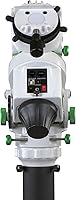
  • Polar Alignment: Integrated illuminated polar scope is built directly into the mount head, eliminating the need for a separate alignment accessory.
  • Camera Interface: Dovetail saddle accepts standard camera plates for DSLR and mirrorless camera rigs used in wide-field astrophotography.
  • Power Source: Operates on battery power for field use or accepts an external DC power input for longer, stationary sessions.
  • Item Weight: The complete kit weighs approximately 15.18 pounds (6.9 kg), making it portable enough for travel and dark-sky trips.
  • Dimensions: Packaged dimensions measure 12″ D x 7″ W x 16″ H for storage and transport reference.
  • Kit Contents: The kit includes the GoTo mount head, one counterweight, and the counterweight bar; no camera, tripod, or telescope tube is included.
  • Focus Type: Manual focus; the mount itself has no motorized focuser, as it is a camera-and-lens or telescope mount platform only.
  • Compatible Devices: Designed to support DSLR and mirrorless cameras; compatibility with telescope optical tubes depends on payload and dovetail plate type.
  • Control Software: Controlled via the SynScan Pro app, available free on both iOS and Android platforms.
  • Market Rank: Holds the number one Best Sellers Rank in the Telescope Guiders and Wedges category on Amazon at time of listing.
  • Availability: First made available for purchase in August 2022, making it a relatively recent addition to Sky-Watcher's portable mount lineup.

Related Reviews

Sky-Watcher EQ6-R German Equatorial Mount
76%
88%
Tracking Accuracy
84%
Build Quality
91%
Motor & Drive System
79%
GoTo Accuracy
62%
SynScan Hand Controller
More
Sky-Watcher HEQ5 Computerized Equatorial Telescope Mount
85%
94%
Tracking Precision
91%
Build Quality
87%
Ease of Setup
65%
Portability
89%
Payload Capacity
More
Sky-Watcher Flextube 250 Dobsonian
86%
94%
Image Quality
88%
Ease of Assembly
81%
Portability
86%
Stability
92%
Optical Aperture Performance
More
Sky-Watcher EvoStar 100 APO Refractor Telescope
83%
91%
Optical Clarity
87%
Chromatic Aberration Control
84%
Focuser Quality
78%
Astrophotography Performance
88%
Build Quality
More
Sky-Watcher Heritage 130mm Tabletop Dobsonian Telescope
82%
88%
Optical Performance
91%
Value for Money
89%
Ease of Use
86%
Portability & Storage
79%
Build Quality
More
Sky-Watcher Skymax 102mm Maksutov-Cassegrain Telescope
76%
93%
Optical Sharpness
88%
Build Quality
91%
Portability
82%
Value for Money
94%
Planetary Performance
More
Sky-Watcher Skymax 127mm Maksutov-Cassegrain Telescope
76%
93%
Optical Clarity
91%
Planetary Performance
84%
Build & Tube Quality
52%
Thermal Equilibration
82%
Portability
More
Sky-Watcher Skymax 180mm Maksutov-Cassegrain Telescope
84%
94%
Optical Performance
88%
Ease of Use
76%
Portability
91%
Build Quality
85%
Setup and Installation
More
Sky-Watcher Skymax 150 Maksutov-Cassegrain Telescope
77%
93%
Optical Performance
88%
Build Quality
91%
Out-of-Box Collimation
79%
Value for Money
54%
Thermal Stabilization
More
Sky-Watcher S11550 190mm Maksutov-Newtonian Telescope
83%
94%
Optical Quality
86%
Ease of Use
91%
Build Quality
90%
Focusing Precision
60%
Portability
More

FAQ

Yes, you will need to purchase a tripod separately. The kit includes only the mount head, counterweight, and counterweight bar. Most buyers pair it with a sturdy photo tripod or a dedicated astronomy tripod that has an EQ wedge-compatible head.

It works well with both. The dovetail saddle accepts standard Arca-Swiss or Vixen-style plates, so as long as your mirrorless camera body and lens combination sits within the mount's payload limit, you are good to go. Many mirrorless rigs are actually lighter than their DSLR equivalents, which makes them a natural fit here.

Polar alignment sounds intimidating, but the built-in illuminated polar scope makes the process more approachable than on many competing mounts at this price point. The basic idea is pointing the mount's rotation axis at Polaris (the North Star) as accurately as possible before you start shooting. Plan for a learning curve on your first night — most beginners get it reasonably dialed in within 30 to 45 minutes, and it gets much faster with practice.

Honestly, it is a mixed picture. Many users connect without issues, but a meaningful number of real owners report occasional Wi-Fi pairing drops, especially when phones switch networks or go to sleep. Keeping your phone's Wi-Fi setting locked to the mount's network and disabling auto-sleep during sessions helps. It is worth knowing upfront rather than being surprised in the field.

Sky-Watcher rates the Sky-Watcher Star Adventurer GTi GoTo Mount at around 11 pounds (5 kg) of imaging payload for reliable tracking. For best results, stay comfortably under that limit — a standard DSLR with a 135mm to 200mm lens is right in the sweet spot. Heavier telephoto lenses or small telescope tubes are possible but may push the tracking quality noticeably.
You technically can, but it is really optimized for camera-based imaging rather than visual use. There is no eyepiece holder built in, and you would need additional adapters to mount a telescope tube for visual work. If photography is not your goal, a dedicated visual mount would likely serve you better for the price.

Battery life varies depending on the type of batteries used and how often the mount slews, but many users report getting through a three-to-four hour session on a fresh set of AA batteries. For longer sessions or cold weather shooting — cold kills battery capacity fast — an external DC power bank or a dedicated astronomy power tank is a smarter choice.

With a solid polar alignment and a balanced rig, most users report clean stars in exposures of two to three minutes using lenses up to around 200mm focal length. Pushing beyond that raises the risk of trailing, particularly if polar alignment is even slightly off. For longer individual frames, an autoguider setup would be the next step up.

It is a meaningful step up in terms of automation — the GoTo system is the biggest practical difference, letting the mount find and track objects automatically rather than requiring you to manually point and lock. If you find yourself spending too much session time hunting targets by hand, that upgrade in convenience is real. Mechanical tracking quality between the two mounts is relatively comparable for typical wide-field setups.

Yes, this portable equatorial mount supports Southern Hemisphere use. The SynScan app allows you to configure for southern latitudes, and polar alignment would be done toward the South Celestial Pole using Sigma Octantis rather than Polaris. The GoTo database works globally, so the experience is functionally the same regardless of which hemisphere you image from.

Where to Buy