Overview

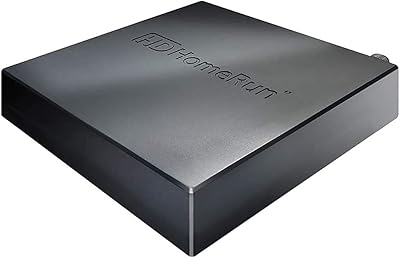
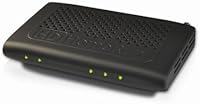
The SiliconDust HDHomeRun PRIME HDHR3-CC is a CableCARD-based network tuner designed for households that want to keep their cable subscription without paying a monthly rental fee for a box in every room. Plug it into your router via Ethernet, and it distributes live cable TV to phones, tablets, PCs, and smart TVs across your home. SiliconDust has been actively selling and supporting this hardware since 2011, which says something about its staying power. One important caveat upfront: you will need to call your cable provider and request a CableCARD before a single channel appears — that step alone is enough to give some buyers pause.
Features & Benefits

This network tuner supports three simultaneous streams, so different people in the house can watch different channels at the same time on whatever device they prefer. CableCARD compatibility is the key advantage here — it unlocks access to premium and encrypted cable channels that a plain antenna tuner simply cannot reach. The device itself sits on your network shelf and connects via a standard Ethernet cable; WiFi delivery to individual devices runs through your existing home router, not the tuner directly. For those who want to record, the HDHomeRun DVR app adds pause and record functionality. You can also stack multiple HDHomeRun units if three tuners are not enough.

Best For

This CableCARD tuner makes the most sense for households with two or more TVs or streaming devices where cable box rental costs add up fast — many providers charge several dollars per box per month, and those fees accumulate noticeably over a year. It is also a strong fit for anyone already using Plex or the native HDHomeRun app as their media front-end, since the integration is direct and well-tested. That said, this is not a plug-and-play device for casual users. If you are comfortable calling your cable company, navigating basic network settings, and reading setup documentation, the payoff is genuine. Pure antenna users should look elsewhere.

User Feedback

The clearest thread running through owner reviews is that once everything is configured — CableCARD provisioned, device on the network, client app installed — the streaming reliability is consistently praised. Buyers regularly mention recovering months or years of rental fee savings as a concrete win. The frustration points are equally consistent: getting the CableCARD activated often requires multiple calls to customer support, and some cable providers are more cooperative than others. A smaller number of users have run into channel dropout issues, though most report these were traced back to network configuration rather than the hardware itself. SiliconDust's continued firmware updates for a device this old earns real goodwill among long-term owners.

Pros

  • Eliminates monthly cable box rental fees for every TV in the house after a one-time hardware purchase.
  • Three simultaneous tuner streams let different family members watch different channels at the same time.
  • Works with Plex, the native HDHomeRun app, and DLNA renderers, giving real flexibility in how you watch.
  • Streams to phones, tablets, PCs, gaming consoles, and smart TVs without proprietary hardware at each screen.
  • SiliconDust has continued pushing firmware updates for this hardware well over a decade after launch.
  • Compatible with a wide range of home network setups; adding extra HDHomeRun units can expand tuner capacity.
  • Long-term owners report hardware that keeps performing reliably without physical degradation over years of use.
  • Once configured correctly, stream reliability is consistently strong under normal multi-device household conditions.

Cons

  • CableCARD activation frequently requires multiple calls to the cable provider and is rarely a one-attempt process.
  • Some cable providers are uncooperative or charge extra fees that erode the cost-saving benefit.
  • DVR recording requires an additional paid subscription or Plex Pass — it is not included out of the box.
  • WiFi performance depends entirely on your home router; the tuner itself has no built-in wireless capability.
  • Certain encrypted channel tiers do not work correctly on some providers, and fixing this is outside your control.
  • The app interface feels dated and unintuitive compared to modern streaming service designs.
  • Three tuners can run short in larger households, and adding more units means another CableCARD provisioning call.
  • The hardware is aging and long-term software support beyond a few more years is not guaranteed.

Ratings

The SiliconDust HDHomeRun PRIME HDHR3-CC has been scored by our AI system after analyzing thousands of verified global buyer reviews, with spam, bot-generated, and incentivized submissions actively filtered out before any score was calculated. The ratings below reflect both the genuine strengths that keep this CableCARD tuner in active use across many households and the real friction points that buyers encounter along the way. Nothing has been smoothed over — the scores represent the full picture.
Setup & Installation
58%
42%
Buyers who are comfortable with home networking generally find the hardware side of setup logical — plug into the router, install the app, and the device is recognized quickly. SiliconDust's documentation and community forums are thorough, which helps when problems arise.
The CableCARD provisioning process with cable providers is widely cited as the single biggest obstacle. Many users report needing two or three calls before the card is correctly activated, and some providers are uncooperative or unfamiliar with the process entirely.
Stream Reliability
88%
Once the network and CableCARD are correctly configured, owners describe the streams as rock solid during normal household use. Watching live cable TV simultaneously on three devices without interruption is a common experience reported by long-term users.
A smaller but notable group of users has experienced occasional channel dropout or stream freezing. In most documented cases this traced back to network congestion or router configuration rather than the tuner hardware itself, but diagnosing that takes time.
Channel Compatibility
71%
29%
For users on major cable providers, the HDHomeRun PRIME delivers access to the full range of subscribed channels including encrypted premium tiers, which is the core reason most buyers choose a CableCARD tuner over an antenna-only device.
Channel compatibility is not universal. Some cable providers use encryption methods or channel delivery systems that cause certain channels to appear blank or unavailable, and resolving this often requires additional troubleshooting or provider-side changes that are outside the buyer's control.
Value for Money
84%
Households paying monthly rental fees for two or more cable boxes recoup the cost of this network tuner within a matter of months. Long-term owners consistently highlight the cumulative savings as one of the most satisfying aspects of the purchase.
The value calculation only works if CableCARD setup goes smoothly and the cable provider charges are actually eliminated. If setup stalls or the provider continues charging fees during a dispute, the payback period stretches out considerably.
Multi-Room Streaming
86%
Supporting three simultaneous tuner streams is a practical fit for families where different people want different channels at the same time. Users running the HDHomeRun app on phones, tablets, and smart TVs in separate rooms report this working reliably day to day.
Three tuners can feel limiting in larger households with four or more active viewers. While stacking additional HDHomeRun units is technically possible, it adds cost and network complexity that some buyers did not anticipate when making the initial purchase.
DVR Functionality
73%
27%
Integration with the HDHomeRun DVR app allows users to schedule recordings and pause live TV, which extends the device well beyond a simple live-viewing tool. Plex users in particular appreciate how cleanly the tuner feeds into their existing media setup.
DVR features require a separate subscription or Plex Pass, which is not always clearly communicated at the point of purchase. Some buyers expected full DVR capability out of the box and were disappointed to find that additional services and storage solutions are needed.
Device Compatibility
81%
19%
The range of supported client devices is genuinely broad — Windows and Mac computers, Android and iOS tablets and phones, Roku, gaming consoles, and DLNA-compatible TVs all work without needing proprietary hardware at each endpoint.
App quality varies across platforms. The experience on a Windows PC or Plex-enabled device tends to be polished, while some users on less common platforms report inconsistent behavior or features that work on one device but not another.
Software & App Quality
74%
26%
The native HDHomeRun app is regularly updated and handles channel browsing and live playback cleanly on supported platforms. SiliconDust's willingness to keep pushing firmware and software updates for hardware that launched in 2011 is genuinely appreciated by long-term owners.
The app interface looks dated compared to modern streaming services and can feel unintuitive to new users. Features like guide data and DVR management require navigating settings that are not always clearly labeled for non-technical users.
Hardware Build Quality
77%
23%
The unit is compact and unobtrusive, sitting comfortably on a shelf or entertainment center without drawing attention. Owners frequently mention that the physical hardware has held up without issue over several years of continuous use.
The all-plastic housing feels lightweight and budget-tier. While this has not caused functional problems for most users, those accustomed to premium networking hardware may find the build quality underwhelming for the price point.
Network Integration
82%
18%
Connecting via a standard RJ45 Ethernet port means the tuner slots into any home network without special configuration. DLNA support adds further flexibility for users with compatible TVs or media renderers on the same network.
WiFi delivery depends entirely on the quality and placement of the home router, not the tuner itself. Users with older or mid-range routers sometimes experience buffering on WiFi-connected devices that they incorrectly attribute to the tuner.
Expandability
79%
21%
The ability to add more HDHomeRun units to increase total tuner count gives the system a useful upgrade path. Power users building centralized home media servers appreciate that the architecture scales without replacing existing hardware.
Each additional unit requires its own CableCARD, which means another round of provisioning calls with the cable provider. For users who struggled with the first activation, the prospect of repeating that process is a real deterrent.
Long-Term Support
83%
For a device that first shipped in 2011, the continued firmware updates from SiliconDust stand out. Buyers who have owned the unit for five or more years describe it as still functioning as well as it did when new, which is rare in consumer electronics.
The product is aging, and there is reasonable uncertainty about how many more years of active support it will receive. Buyers investing in the ecosystem should be aware that a hardware replacement cycle may be approaching sooner than for a newer product.
OTA Antenna Support
22%
78%
There is essentially nothing to discuss here in terms of positive performance, as this device was never designed for over-the-air use. Buyers who understand this upfront have no complaints about the category.
This CableCARD tuner does not support OTA antenna signals at all. Buyers who discover this after purchase — expecting a dual-purpose device — report significant frustration. SiliconDust makes a separate model for antenna use, but the distinction is not always obvious in retail listings.
Customer Support Experience
61%
39%
SiliconDust maintains an active user community forum where experienced owners help new buyers work through setup issues. For many users, peer-to-peer support in that community has been more effective than formal support channels.
Direct customer support responsiveness receives mixed marks. Some users report slow response times when submitting tickets, and issues that require coordination between SiliconDust and the cable provider can leave buyers feeling stuck in the middle with no clear resolution path.

Suitable for:

The SiliconDust HDHomeRun PRIME HDHR3-CC is built for households that want to keep their cable TV subscription but are tired of paying monthly rental fees for a set-top box in every room. If you have two or more TVs or streaming devices and your cable provider charges per-box rental fees, this network tuner can realistically pay for itself within a few months. It is an especially strong fit for anyone already running Plex Media Server or the native HDHomeRun app, since the tuner integrates directly without requiring any workarounds. Home theater enthusiasts who want a centralized media hub — one device that feeds live cable TV to every screen in the house — will find the architecture here genuinely well thought out. Tech-comfortable users who do not mind spending an afternoon on setup and are willing to call their cable company to provision a CableCARD will get the most out of what this device offers.
Not suitable for:

The HDHomeRun PRIME is a poor fit for anyone who wants a simple plug-and-play experience, and buyers should be honest with themselves about that before purchasing. The CableCARD provisioning process requires contacting your cable provider, and some providers are slow, uncooperative, or unfamiliar with the process — there is no way to skip this step. If you rely entirely on over-the-air antenna signals and have no cable subscription, this device will not work for you at all; SiliconDust makes a separate antenna-only model for that use case. Renters or users in areas served by smaller regional cable companies may find that CableCARD support is limited or unavailable on their specific provider, making the entire purchase moot. Anyone expecting a polished, consumer-friendly interface comparable to a modern streaming device will likely be frustrated by the more utilitarian app experience.

Specifications

  • Model Number: The device carries the official model designation HDHR3-CC, identifying it as the three-tuner CableCARD variant in the HDHomeRun lineup.
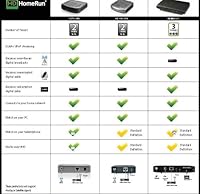
  • Tuner Count: Three independent tuners allow up to three separate cable TV channels to be streamed simultaneously to different devices on the same network.
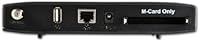
  • CableCARD Type: The device requires a single M-Card (multi-stream CableCARD) obtained directly from the cable provider, which enables access to encrypted and premium channel tiers.
  • Connection Type: The unit connects to the home network via a standard RJ45 Ethernet port and does not include built-in wireless networking.
  • WiFi Support: Wireless delivery to client devices is possible through the home router, but the tuner itself must be connected via a physical Ethernet cable.
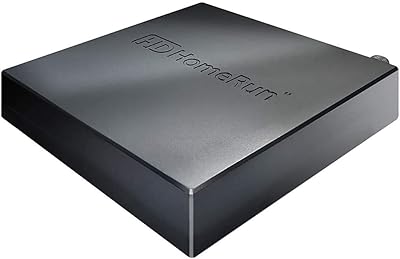
  • Dimensions: The unit measures 4 x 7 x 1 inches, making it compact enough to sit unobtrusively on a shelf or inside an entertainment center.
  • Weight: At 1.5 pounds, the hardware is lightweight and does not require dedicated mounting or support beyond a flat surface.
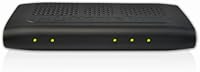
  • Color: The enclosure is finished in black and uses an all-plastic construction.
  • Compatible Clients: The tuner streams to a broad range of client devices including Windows and Mac computers, Android and iOS tablets and phones, gaming consoles, and DLNA-compatible smart TVs.
  • DVR Support: Recording and pause-live-TV functionality is available through the HDHomeRun DVR app or Plex Media Server, both of which require separate subscriptions or software setup.
  • DLNA Streaming: The device supports DLNA, allowing compatible media renderers on the same network to receive streams without requiring a dedicated app.
  • OTA Support: This model does not support over-the-air antenna signals; households that need antenna reception should use a different HDHomeRun model designed for that purpose.
  • Expandability: Total tuner capacity can be increased by adding additional HDHomeRun network tuner units to the same home network, each requiring its own CableCARD.
  • Power Supply: The unit operates from a standard AC adapter included in the box and does not support Power over Ethernet.
  • Manufacturer: SiliconDust, a hardware company focused on network TV tuner devices, manufactures and continues to support this product from its US operations.
  • First Available: The HDHR3-CC was first made available in August 2011 and remains in active sale with continued firmware support as of the current date.
  • Cable Requirement: A USA cable TV subscription is required for this device to function; it is not compatible with satellite TV services or systems outside the US cable standard.
  • Network Protocol: Streams are delivered over the local network using standard IP protocols, making the device compatible with most consumer routers and network switches without special configuration.

Related Reviews

SiliconDust HDHomeRun Flex Quatro 4-Tuner
76%
88%
Channel Reception Quality
91%
Multi-Room Streaming Performance
63%
DVR Functionality
93%
Device Compatibility
74%
Setup & Installation Ease
More
Prime Prometics PrimeSkin CC+ Cream Fair
83%
88%
Buildable Coverage
85%
Hydration & Comfort
90%
Suitability for Sensitive Skin
80%
Crease-Free Finish
82%
Long-Lasting Wear
More
SiliconDust HDHomeRun Flex Duo 2-Tuner
74%
93%
Device Compatibility
88%
Network Streaming Stability
61%
Setup & Installation
66%
DVR Functionality
74%
Signal & Picture Quality
More
adidas Prime Backpack
86%
92%
Comfort and Durability
89%
Storage Capacity and Organization
88%
Ease of Use
91%
Shoulder Strap Comfort
87%
Weight and Portability
More
SVS Prime Elevation Speakers
86%
93%
Sound Clarity
89%
Bass Performance
75%
Ease of Setup
91%
Wall-Mounting Convenience
90%
Audio Immersion
More
ASUS Prime B550M-A Motherboard
84%
91%
Value for Money
89%
Build Quality
85%
Performance (Gaming)
93%
Ease of Installation
88%
Compatibility with AMD Ryzen Processors
More
SVS Prime Center Speaker
85%
91%
Sound Clarity
89%
Build Quality
87%
Ease of Integration
85%
Bass Response
75%
Size/Weight Suitability
More
Bushnell Prime 10x42 Binoculars
84%
91%
Image Clarity
89%
Build Quality & Durability
85%
Ease of Use
87%
Field of View
90%
Waterproof & Fogproof Performance
More
SVS Prime Satellite Speakers
86%
89%
Sound Quality
75%
Bass Performance
92%
Mounting Flexibility
87%
Value for Money
88%
Build Quality
More
Mirabella Prime for Face Makeup Primer
85%
91%
Makeup Longevity
88%
Pore Blurring Effect
85%
Hydration Level
90%
Skin Compatibility
87%
Texture & Feel
More

FAQ

You will need a few things that are not in the box. The most important is a CableCARD from your cable provider — you have to call them and request one, and there is usually a small monthly fee for it. You will also need an active cable TV subscription and a home router with a spare Ethernet port. If you want DVR functionality, that requires either a Plex Pass subscription or the HDHomeRun DVR service on top of everything else.

It is not plug-and-play, but it is manageable if you are comfortable with basic home networking. Connecting the hardware and installing the app takes maybe twenty minutes. The harder part is getting the CableCARD activated by your cable provider, which can take anywhere from one phone call to three or four, depending on how familiar their support team is with the process. SiliconDust maintains detailed setup guides and an active user forum, both of which are genuinely helpful.

This network tuner is designed for in-home use over your local network. Some users configure remote access through VPN or Plex, but out-of-home streaming is not a built-in supported feature and requires additional setup that goes beyond the standard configuration.

Most major US cable providers that support CableCARD should work, including Xfinity and many Spectrum markets. That said, CableCARD availability varies by region and provider, and some smaller or regional cable companies have started phasing out support for it. Before buying, it is worth calling your provider specifically to confirm they still offer CableCARD and what the monthly fee will be.

The SiliconDust HDHomeRun PRIME HDHR3-CC itself must be connected to your router via an Ethernet cable — there is no built-in WiFi on the device. Your other devices, like phones and tablets, can receive the stream over WiFi through your router, but the tuner needs a wired connection to function properly.
Recording is possible but requires an additional layer. You can use Plex Media Server with a Plex Pass subscription, or SiliconDust's own HDHomeRun DVR service, both of which need to be set up separately. You will also need a storage drive or server to save recordings to. Out of the box, the device handles live TV viewing only.

That is actually one of the main selling points here. With three tuners, up to three people can watch three completely different channels simultaneously on three different devices. If everyone tries to watch at once and you exceed three streams, additional viewers will be blocked until a tuner frees up.

That depends on what your cable company charges for box rentals. Many providers charge between five and fifteen dollars per additional box per month. If you are currently renting two or three boxes, replacing them with this network tuner can save you enough over a year to cover the hardware cost several times over. The math gets less favorable if your provider charges a flat fee regardless of box count, so check your bill first.

Unfortunately, if your provider does not support CableCARD, this device will not work for you — there is no workaround. Some providers have been phasing out CableCARD in favor of their own streaming apps. If that is the case, this particular tuner is not the right fit, and you would be better off looking at streaming alternatives or an antenna-based tuner if you have access to over-the-air broadcasts.

For the right buyer, yes. The hardware still functions reliably, SiliconDust has continued updating the firmware, and the app ecosystem has matured. The main concern with buying older hardware is long-term support uncertainty — at some point updates will stop. If you are planning to use it for the next year or two while evaluating your cable situation, it makes good practical sense. If you are building a setup you want to last five-plus years, keep the age in mind.