Overview

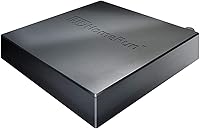
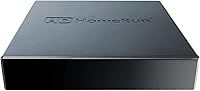
The SiliconDust HDHomeRun Flex Quatro 4-Tuner is a network-connected over-the-air tuner that lets your entire household watch live local TV without a cable subscription. Plug it into your router, point an antenna at it, and you can push broadcast channels to virtually any screen in the house. It supports four simultaneous streams, meaning four different people can watch four different channels at once — all over your existing home network. For anyone serious about cutting the cord but unwilling to give up local news, sports, or network TV, this four-tuner device sits at a solid mid-range price point that balances capability with real everyday value.
Features & Benefits

The four ATSC 1.0 tuners are the backbone here — each one handles an independent channel simultaneously, which is genuinely useful in a busy household. Connection runs over wired Ethernet, not Wi-Fi, and that matters: you get a consistent, stable feed rather than the dropouts that plague wireless setups. The Flex Quatro supports whole-home DVR when you attach a USB hard drive, though there is a catch worth knowing upfront — recording requires a paid TV guide subscription. Basic live streaming costs nothing extra. The HDHomeRun app works across Android, FireTV, Apple TV, Roku, Xbox, iPhone, iPad, Windows, and Mac, making it one of the more broadly compatible options in this category.

Best For

This network tuner is a natural fit for cord-cutters who still want free local broadcast TV on every screen in their home. It works especially well in households where multiple people are watching concurrently — think a family where one person wants the game, another wants the news, and two kids are watching separate shows. If you are already running Plex, Emby, or Channels DVR as a media server, the Flex Quatro slots into those ecosystems without friction. It is also a smart pick for anyone avoiding per-device tuner costs. Worth noting: this is an ATSC 1.0 device and does not support Nextgen TV (ATSC 3.0) broadcasts, which is a real consideration for future-proofing.

User Feedback

Reception quality and stable multi-device streaming come up repeatedly in positive reviews, with many buyers noting the device simply works once set up correctly. Platform compatibility is another frequently mentioned strength — people appreciate using it on whatever screen is already in the room. On the flip side, the DVR guide subscription catches buyers off guard; several reviewers say they did not realize recording carried an ongoing cost. There are occasional reports of app connectivity hiccups on specific platforms, though these read more like edge cases than widespread issues. Long-term owners generally report that reliability has improved over time as firmware updates have been released.

Pros

  • Four simultaneous tuners let every household member watch a different channel without conflict.
  • Wired Ethernet delivery keeps streams stable and consistent, even during peak home network usage.
  • Works across virtually every major platform — Roku, Fire TV, Apple TV, Xbox, iPhone, Windows, Mac, and more.
  • No monthly fee for basic live local TV once the hardware is in place.
  • Integrates cleanly with Plex, Emby, and Channels DVR for a polished whole-home media experience.
  • A single device replaces the need for individual tuner hardware on each TV or screen.
  • Firmware updates from SiliconDust have steadily improved reliability since the device launched.
  • DLNA compatibility adds flexibility for users with compatible media players and smart TVs.
  • Compact and unobtrusive — easy to tuck into an AV cabinet or equipment rack without taking up space.
  • Ranked among the top-selling external TV tuners, reflecting a broad and established user base.

Cons

  • DVR recording requires a separately purchased USB hard drive not included in the box.
  • An ongoing paid TV guide subscription is needed to schedule and manage recordings — this surprises many buyers.
  • No Wi-Fi support means a physical Ethernet cable run is mandatory, which is impractical in some homes.
  • ATSC 3.0 Nextgen TV is not supported, making this a limited choice for long-term future-proofing.
  • The native HDHomeRun app interface feels dated and less polished compared to mainstream streaming apps.
  • Occasional app connectivity issues on specific platforms have been reported by a recurring group of users.
  • Single antenna input means poor reception in your area affects all four tuners equally with no workaround.
  • Smaller households needing only one or two streams will likely overpay for unused tuner capacity.
  • Third-party DVR platforms like Channels DVR require additional subscriptions on top of the guide fee.
  • Initial setup can frustrate less network-savvy buyers who are unfamiliar with LAN-based device configuration.

Ratings

The SiliconDust HDHomeRun Flex Quatro 4-Tuner earns a well-rounded but nuanced set of scores based on AI analysis of verified global buyer reviews, with spam, bot-driven, and incentivized submissions actively filtered out. Across hundreds of real household experiences, this four-tuner device shows genuine strengths in reliability and multi-device coverage — but also real friction points that matter depending on how you plan to use it. Both sides of that story are reflected honestly in the categories below.
Channel Reception Quality
88%
Most buyers in suburban and urban areas report pulling in a strong lineup of local broadcast channels without fuss. Users consistently mention that once the antenna is positioned correctly, the signal stays locked and rarely drops during normal viewing — even across multiple streams running at once.
Reception is naturally antenna-dependent, and buyers in rural or fringe signal areas report frustration with weak channel counts. A few users note that multipath interference in certain homes can cause intermittent pixelation that the device itself cannot compensate for.
Multi-Room Streaming Performance
91%
Four simultaneous streams over a wired Ethernet connection is the headline strength here, and real-world use backs it up. Families report confidently running four different channels on four different devices — phones, tablets, smart TVs — without buffering or quality degradation.
Performance depends heavily on the home network infrastructure. Users with older or congested routers occasionally experience lag when multiple high-bandwidth streams compete for the same connection, which is a network issue but still affects the overall experience.
DVR Functionality
63%
37%
The ability to attach a USB hard drive and record over-the-air content is a meaningful feature for households that want time-shifted viewing. Users who invest in the paid TV guide subscription say the recording workflow is reliable and the schedule management is straightforward.
The requirement for both a USB hard drive and a paid guide subscription catches many buyers off guard — it is not prominently communicated before purchase. Several reviewers felt the total cost of ownership for DVR capability was higher than they anticipated, dampening an otherwise appealing feature.
Device Compatibility
93%
Broad platform support is one of the Flex Quatro's most praised real-world advantages. Buyers appreciate being able to use it on whatever screen is already in the room — Roku sticks, Fire TV cubes, iPhones, Windows laptops — without needing separate hardware for each device.
A minority of users on less common platform configurations report inconsistent app behavior, particularly on older Android TV devices or specific Roku firmware versions. These are edge cases, but they can be frustrating for users who are less comfortable troubleshooting app-level issues.
Setup & Installation Ease
74%
26%
Most technically comfortable buyers describe the initial setup as straightforward: plug into the router, run the HDHomeRun app, scan for channels. The process is well-documented, and the device is detected automatically on most home networks without manual configuration.
Users with less networking experience sometimes struggle to understand why the device needs a wired connection and how it integrates with third-party apps like Plex or Channels DVR. Customer support resources are adequate but not exceptional for non-technical first-timers.
App Ecosystem Quality
71%
29%
The native HDHomeRun app handles live TV browsing and basic DVR management reasonably well. Integration with Plex, Emby, and Channels DVR is a genuine strength for enthusiasts who want a polished, full-featured media center experience beyond the native app.
The native app feels functional rather than refined — several users describe the interface as dated and less intuitive than competing streaming services they are used to. Occasional connectivity hiccups between the app and the device on specific platforms have been reported by a recurring subset of buyers.
Build Quality & Hardware Design
79%
21%
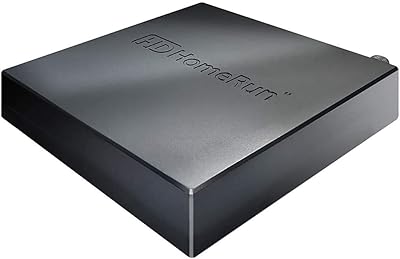
The unit feels solid and appropriately constructed for a always-on network device that sits quietly in a home equipment rack or AV cabinet. At just over 13 ounces, it is compact enough to tuck away without taking up meaningful shelf space.
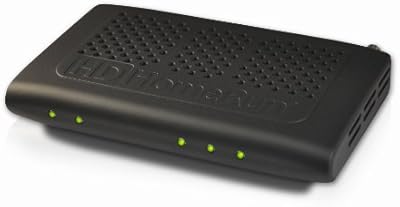
The design is entirely utilitarian — there is no aesthetic appeal and the LED indicators are minimal. A few users mention the unit runs warmer than expected during extended operation, though no widespread reports of heat-related failures exist.
Value for Money
77%
23%
For households with four active viewers who want free local TV on every device, the per-tuner cost works out favorably compared to buying individual hardware for each room. Eliminating cable fees entirely makes the investment pay back relatively quickly in the right household.
Buyers who only need one or two tuners will find the Flex Quatro over-specified and overpriced for their situation. The two-tuner sibling model is meaningfully less expensive, making the Quatro a weaker value proposition for smaller households.
Network Stability
86%
Wired Ethernet delivery is a deliberate design choice that pays off in practice. Long-term owners consistently report that streams stay stable over weeks and months of continuous use, and that the device recovers cleanly from router reboots without manual intervention.
The hard dependency on a wired connection is a real constraint in homes where the router is not centrally located near the antenna input. Running an Ethernet cable through walls is a dealbreaker for some buyers who had expected Wi-Fi as an option.
ATSC 3.0 / Nextgen TV Readiness
31%
69%
For buyers who have no interest in ATSC 3.0 and simply want dependable ATSC 1.0 reception of today's local broadcast channels, the lack of Nextgen TV support is a non-issue in their current setup.
This is a meaningful limitation for anyone thinking about longevity. ATSC 3.0 broadcasts are expanding, and this device cannot receive them at all — buyers who want to future-proof their antenna setup will need a different model or an additional tuner down the road.
Third-Party DVR Integration
84%
Integration with Channels DVR, Plex DVR, and Emby is well-established and genuinely smooth for users already in those ecosystems. The device is recognized automatically by all three platforms, and the four-tuner configuration allows robust simultaneous recording schedules.
Users who are not already invested in a third-party DVR platform face a steeper learning curve and potential subscription costs on top of the hardware cost. The native DVR experience without a third-party platform feels noticeably limited by comparison.
Firmware & Long-Term Support
81%
19%
SiliconDust has a track record of releasing firmware updates that improve stability and occasionally add features. Long-term owners specifically note that early-production reliability concerns were addressed through updates, which builds confidence in ongoing support.
Update cadence can feel slow to buyers who experience a specific app or compatibility issue and are waiting for a fix. A small group of users report that certain firmware versions temporarily introduced new bugs before being resolved in subsequent releases.
Antenna Input Flexibility
72%
28%
The single coaxial antenna input feeds all four tuners simultaneously, which is an efficient and clean hardware solution. Users with a well-positioned outdoor or attic antenna find this setup maximizes their channel coverage across all four streams without any signal splitter needed externally.
Having only one antenna input means signal quality from the source directly determines performance for all four tuners equally. Buyers in challenging reception environments cannot compensate by using multiple antennas or directional setups, which limits flexibility in fringe areas.

Suitable for:

The SiliconDust HDHomeRun Flex Quatro 4-Tuner is built for households that have ditched cable but still want reliable access to free local broadcast channels across multiple rooms and devices. It works especially well for families with four or more active viewers who regularly watch different channels at the same time — the four-tuner architecture means nobody has to negotiate over who gets the stream. Tech-comfortable users who are already running a home media server with Plex, Emby, or Channels DVR will find that this network tuner slots into those setups cleanly and adds genuine recording capability. Home theater enthusiasts who want a centralized OTA solution — rather than a separate tuner dongle for every TV — will appreciate the single-device, whole-home approach. If your priority is eliminating per-device hardware costs while keeping local news, live sports, and network TV accessible on phones, tablets, and smart TVs alike, this four-tuner device is a strong fit.
Not suitable for:

Buyers expecting a plug-in-and-record solution out of the box should know upfront that the SiliconDust HDHomeRun Flex Quatro 4-Tuner is not that — DVR functionality requires both a separately purchased USB hard drive and an ongoing paid TV guide subscription, and neither is included. If you only have one or two people watching TV at home, the four-tuner capacity is overkill and the two-tuner sibling model would save you meaningful money without sacrificing anything you actually need. This device also requires a wired Ethernet connection, so buyers in homes where running a cable to the router is impractical will face a real constraint that Wi-Fi cannot solve here. Anyone hoping to future-proof their setup for ATSC 3.0 Nextgen TV broadcasts should look elsewhere — this is strictly an ATSC 1.0 device, and that limitation will become more relevant as Nextgen TV availability expands in more markets. Finally, users who are not comfortable with basic home networking concepts — IP addresses, router ports, app configuration — may find the setup process more frustrating than expected without dedicated technical support.

Specifications

  • Tuner Count: Equipped with 4 independent ATSC 1.0 tuners, allowing four separate over-the-air channels to be streamed simultaneously across the home network.
  • Tuner Standard: Supports ATSC 1.0 broadcast standard only; ATSC 3.0 (Nextgen TV) is not supported by this model.
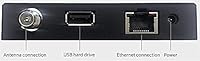
  • Network Connection: Connects to the home network via a wired Ethernet RJ45 port; no built-in Wi-Fi is available.
  • DVR Support: Whole-home DVR recording is supported via an attached USB hard drive, which must be purchased separately.
  • TV Guide: A paid TV guide subscription from SiliconDust is required to enable DVR scheduling and recording management.
  • Live TV Cost: Basic live TV streaming over the home network carries no ongoing subscription fee beyond the hardware purchase.
  • Compatible Platforms: Works with Android, FireTV, Apple TV, Roku, Sony smart TVs, Xbox, iPhone, iPad, Windows 10 and 11, and Mac.
  • DLNA Support: DLNA-compatible, enabling playback on a range of media players and smart TVs that support the DLNA standard.
  • Antenna Input: Features a single coaxial antenna input that feeds all four tuners simultaneously from one connected antenna source.
  • Item Weight: The unit weighs 13.4 ounces, making it compact and suitable for placement in an AV rack or media cabinet.
  • Package Dimensions: Packaged dimensions measure 6.97 x 4.96 x 2.24 inches, indicating a small, shelf-friendly physical footprint.
  • Brand: Manufactured by SiliconDust, a company specializing in network-based TV tuner hardware and the HDHomeRun product ecosystem.
  • Model Family: Part of the HDHomeRun Flex series, which includes two-tuner and 4K ATSC 3.0 variants alongside this four-tuner ATSC 1.0 model.
  • Firmware Updates: SiliconDust provides ongoing firmware updates for this device, with long-term owners reporting improved stability over successive releases.
  • Release Date: First made available in September 2021, placing it in the current generation of HDHomeRun Flex hardware.
  • BSR Ranking: Holds a ranking of number 14 in the External TV Tuners category on Amazon, reflecting a well-established market presence.
  • Third-Party DVR: Compatible with popular third-party media server platforms including Plex DVR, Emby, and Channels DVR for advanced recording workflows.
  • Power Source: Powered via an included AC power adapter; the device does not draw power through USB or Ethernet (no PoE support).

Related Reviews
SiliconDust HDHomeRun Flex Duo 2-Tuner
74%
93%
Device Compatibility
88%
Network Streaming Stability
61%
Setup & Installation
66%
DVR Functionality
74%
Signal & Picture Quality
More
SiliconDust HDHomeRun PRIME HDHR3-CC
73%
58%
Setup & Installation
88%
Stream Reliability
71%
Channel Compatibility
84%
Value for Money
86%
Multi-Room Streaming
More
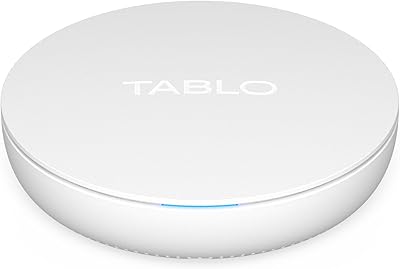
Tablo 4th Gen 4-Tuner OTA DVR
85%
94%
Value for Money
92%
Recording Versatility
88%
Whole-Home Accessibility
86%
Interface and Navigation
83%
Ease of Setup
More
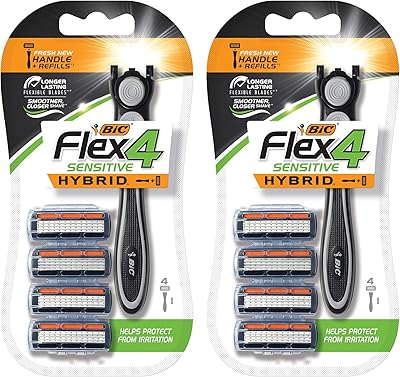
BIC Flex 4 Sensitive Hybrid Titanium Men's Disposable Razors, 8 Cartridges & 2 Handles
87%
88%
Shave Comfort
92%
Skin Sensitivity
85%
Blade Durability
91%
Ease of Use
89%
Convenience of Set (Cartridges & Handles)
More
Loma Dry Shampoo 4.4 oz
87%
90%
Effectiveness in Oil Absorption
88%
Scent Quality
83%
Volume and Texture Enhancement
94%
Suitability for Sensitive Skin
89%
Packaging and Ease of Use
More
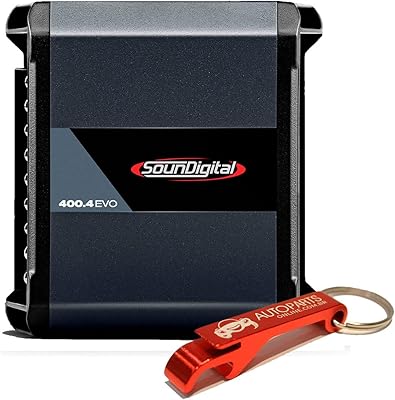
SounDigital 400.4 EVO 4.0 Amplifier
86%
89%
Performance
85%
Build Quality
92%
Sound Clarity
88%
Power Output
83%
Durability
More
Number 4 Sugar Texturizing Spray 4.9oz
86%
88%
Effectiveness in Creating Beach Waves
92%
Gentleness on Hair
85%
Texture and Feel
80%
Volume and Body
90%
Suitability for Fine Hair
More
Crunch PX 1000.4 4-Channel 1000W Amplifier
85%
88%
Sound Quality
85%
Ease of Installation
81%
Build Quality
91%
Power Output
93%
Size & Portability
More
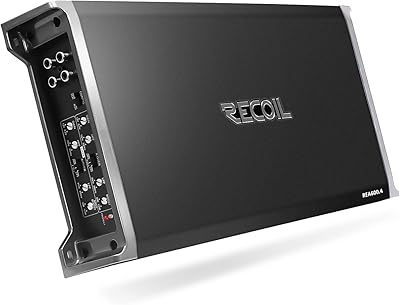
Recoil REA600.4 4-Channel Car Audio Amplifier
84%
89%
Audio Performance
91%
Ease of Installation
85%
Sound Quality at High Volumes
62%
Heat Management
90%
Power Output
More
Planet Audio AC2400.4 4-Channel Car Amplifier
84%
95%
Power Output
89%
Sound Clarity
87%
Bass Performance
82%
Ease of Installation
65%
Thermals/Heat Management
More

FAQ

Not at all. The Flex Quatro picks up free over-the-air broadcast channels through a standard TV antenna — think local news, network TV, and sports. There is no cable or satellite subscription involved. You just need an antenna with a coaxial output and a home router with an available Ethernet port.

Yes, that is genuinely how it works. Each of the four tuners operates independently, so four separate devices on your home network can be tuned to four completely different channels simultaneously. The limiting factor is antenna signal quality, not the device itself.

DVR is not free out of the box. You will need two things that do not come with the device: a USB hard drive to store the recordings, and a paid TV guide subscription from SiliconDust to schedule and manage them. Many buyers are surprised by this, so it is worth factoring into your total budget before purchasing.

It has to be wired. The SiliconDust HDHomeRun Flex Quatro 4-Tuner connects to your home network exclusively via an Ethernet cable plugged into your router or a network switch. There is no Wi-Fi radio built in, so if your router is in a different room from your antenna input, you will need to plan for that cable run.

Yes, and this is where it really shines for enthusiasts. The device is automatically recognized by Plex DVR, Channels DVR, and Emby, making it a natural fit for anyone already running a home media server. Keep in mind that those platforms may carry their own subscription costs on top of the hardware.

No, this model is strictly ATSC 1.0. If your local broadcast market has started rolling out ATSC 3.0 channels — which offer better picture quality and additional features — this four-tuner device will not receive them. If that matters to you, SiliconDust does make an ATSC 3.0 capable model in the HDHomeRun Flex 4K.

Up to four devices can stream simultaneously, one per tuner. Beyond that limit, additional devices trying to tune to a new channel will be told no tuner is available. Devices watching the same channel do not each consume a separate tuner, so shared viewing does not count against the limit.

It is straightforward if you are comfortable with basic home networking — plug it into your router, install the HDHomeRun app on your streaming device, and run a channel scan. Where people run into trouble is usually understanding how the device fits into a broader app ecosystem, particularly if they want DVR. If you are new to this type of hardware, budget a little time for reading the setup guide.

Any standard TV antenna with a coaxial output will work — indoor, outdoor, or attic-mounted. The quality and placement of your antenna is actually the biggest factor in how many channels you receive. SiliconDust recommends checking a site like AntennaWeb or TV Fool to understand what signals are available at your address before buying an antenna.

The main advantage is cost efficiency and simplicity at scale. Instead of buying a USB tuner dongle or internal tuner card for each individual TV or computer, this network tuner serves all four streams from a single device connected to your router. For households with multiple viewers and screens, that consolidation adds up to meaningful savings in hardware and setup complexity.