Overview

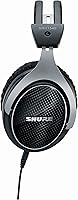
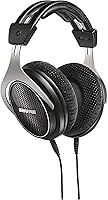
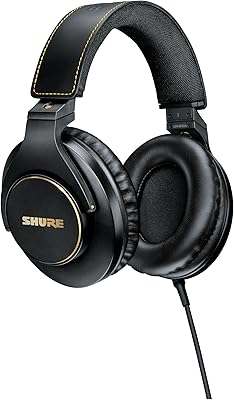
The Shure SRH1540 Closed-Back Over-Ear Headphones have been a fixture in professional studio environments for over a decade, and that staying power is not accidental. Shure built the SRH1540 around a closed-back, circumaural design — meaning the ear cups fully enclose your ears, creating a natural seal that blocks outside noise without relying on electronics. The sound signature leans warm, with extended highs and a surprisingly open soundstage for a closed-back design. At this price tier, buyers rightly expect more than competent audio — they expect build quality, comfort over long sessions, and a package that justifies the investment. These Shure studio headphones deliver most of that, though they are best suited to engineers, musicians, and dedicated audiophiles rather than casual listeners seeking a lifestyle upgrade.
Features & Benefits

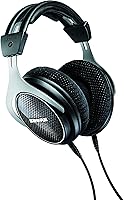
The 40mm neodymium drivers are the heart of what makes this closed-back headphone sound as good as it does. Shure uses an APTIV Film diaphragm, which reduces total harmonic distortion — in practical terms, that means less muddiness and coloration, particularly at higher volumes where cheaper drivers tend to break up. The steel driver frame with a vented center pole piece keeps resonance in check, so the sound stays consistent whether you are at a quiet desk or pushing the volume during a critical mix. At 46 ohms, these Shure studio headphones will run off a phone or laptop, but a dedicated DAC or amp genuinely improves the experience. Weighing just 322 grams with aluminum and carbon fiber construction, they feel built to last without becoming tiring to wear.

Best For

These Shure studio headphones are an obvious fit for home recording engineers and studio musicians who need solid passive isolation while tracking — no batteries, no latency, just physical separation from room noise. Audiophiles with a preference for warm, natural sound rather than clinical accuracy will likely find the SRH1540 genuinely satisfying over extended sessions. The included hard case makes these a reasonable choice for traveling musicians or frequent commuters who want professional sound on the road. One standout reason to choose this closed-back headphone over competitors is repairability: the detachable cables and replaceable ear pads mean this is not a disposable purchase. If you are the kind of buyer who keeps gear for years, that long-term value logic applies strongly here.

User Feedback

Owners of the SRH1540 consistently cite comfort during long sessions as a standout trait, with the circumaural ear pads earning particular praise from engineers who wear headphones for hours at a stretch. The unusually wide soundstage for a closed-back design also comes up repeatedly — it gives mixing work more spatial clarity than you would typically expect from an isolating pair. That said, honest feedback surfaces some real trade-offs. The ear pads do degrade with heavy use, and while replacements are available, it is an added cost worth factoring in. A portion of buyers who prefer a flatter, more neutral response find the bass emphasis slightly distracting. And at this premium price point, a handful of reviewers question whether the gap over well-regarded mid-range competitors is truly justified for their particular use case.

Pros

  • Passive sound isolation works without batteries or electronics, making it reliable and latency-free for studio tracking.
  • The soundstage is unusually wide for a closed-back design, giving mixing and critical listening genuine spatial depth.
  • At 322 grams, the SRH1540 sits comfortably through multi-hour sessions without causing noticeable fatigue.
  • Aircraft-grade aluminum and carbon fiber construction feels genuinely durable, not just premium on paper.
  • Two detachable cables reduce wear-and-tear risk on the headphone itself, extending the usable lifespan.
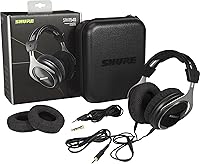
  • The included hard case, spare ear pads, and 1/4-inch adapter form a complete, ready-to-use package out of the box.
  • The warm, extended sound signature flatters a wide range of music genres without sounding artificially colored.
  • Replaceable ear pads and cables mean the headphone can be serviced and maintained rather than discarded.
  • Compatible with standard 3.5mm sources while also scaling up well when paired with a dedicated amplifier.

Cons

  • No wireless option means you are always tethered to your source, which limits flexibility outside the studio.
  • The ear pads degrade with regular use, and replacement is an added ongoing cost buyers should plan for.
  • Listeners who prefer a strictly neutral, flat response may find the bass tuning slightly too warm for analytical work.
  • These Shure studio headphones genuinely benefit from an external DAC or amp, which raises the real total cost.
  • No active noise cancellation makes these a poor choice for blocking out loud, unpredictable environments.
  • The price gap over capable mid-range alternatives is hard to justify for buyers who listen casually or infrequently.
  • Not water resistant in any capacity, so use in outdoor or humid environments carries real risk.
  • The over-ear circumaural fit, while comfortable, can trap heat during warm weather or intense sessions.
  • The hard case adds bulk when traveling, making these less grab-and-go than more compact portable options.

Ratings

The scores below reflect an AI-driven analysis of verified global user reviews for the Shure SRH1540 Closed-Back Over-Ear Headphones, with spam, bot-generated feedback, and incentivized reviews actively filtered out to surface what real buyers consistently experience. Ratings span both the strengths that make this headphone a long-term favorite among engineers and audiophiles and the legitimate frustrations that inform the more measured scores. Nothing here is rounded up to make the product look better than it is.

Sound Quality
91%
The warm, extended sound signature consistently earns praise from audiophiles and studio musicians alike, particularly for its ability to render vocal detail and instrument separation with clarity that holds up across long listening sessions. The APTIV Film diaphragm visibly reduces the kind of fuzzy, distorted coloration that plagues cheaper dynamic drivers at higher volumes.
Listeners who need a strictly flat, analytical reference sound — particularly for precise low-frequency work in electronic music production — find the slight bass emphasis pulls the headphone away from clinical neutrality. A small but consistent segment of reviewers feel the low end is tuned for enjoyment rather than pure accuracy.
Soundstage & Imaging
88%
For a closed-back headphone, the spatial width here genuinely surprises people. Engineers who switch from competing closed-back designs consistently note that instrument placement and stereo imaging feel more open and three-dimensional, which makes monitoring and critical listening feel less claustrophobic and more accurate.
Open-back headphones at a similar price tier still deliver a more naturally airy soundstage, and experienced audiophiles who have used both will feel that distinction clearly. The SRH1540 closes the gap significantly, but it does not eliminate it.
Comfort & Fit
86%
At 322 grams, the SRH1540 sits in the lightweight range for a professional studio headphone, and the circumaural ear pads distribute clamping pressure evenly enough that most users report wearing them for three or four hours without significant discomfort or hotspots. Engineers who track or mix through long sessions consistently rank comfort as one of the standout traits.
In warmer environments or during physically active use, the closed-back ear cups trap heat noticeably, causing discomfort that builds over time. A few users with larger head sizes also note that the clamping force feels tight during the first few weeks before the headband breaks in.
Build Quality
89%
The aircraft-grade aluminum yoke and carbon fiber cups feel meaningfully robust rather than superficially premium — buyers who have owned these for several years describe the structural integrity as holding up without the joint creaking or hinge cracking common in plastic-framed competitors. The steel driver frame adds a sense of internal solidity that translates directly to long-term reliability.
The ear pad material, while initially plush, is the one structural weak point that comes up repeatedly in long-term reviews. With heavy daily use, degradation begins to show within a year or two, and while replacements are available, it is an ongoing maintenance cost that buyers should factor in from the start.
Passive Noise Isolation
74%
26%
The closed-back circumaural seal provides enough isolation to work effectively in a home studio or quiet office, blocking out low-level ambient sounds like HVAC hum, keyboard noise, and light conversation. Musicians tracking vocals or instruments find it reliable for preventing bleed into microphones during recording.
In genuinely loud or unpredictable environments — open offices, cafes, or public transit — the passive isolation falls short of what active noise cancellation delivers. Buyers who need serious noise blocking as a primary feature should recalibrate their expectations before purchasing these Shure studio headphones.
Value for Money
67%
33%
The complete accessory package — two cables, spare ear pads, adapter, and a hard case — adds tangible value beyond the headphone itself, and the repairability means the total cost of ownership stretches across years rather than the replacement cycle of disposable alternatives. For professional users who extract daily utility from their gear, the per-use cost calculation becomes more favorable over time.
At this price tier, the gap over capable mid-range competitors is a recurring debate in user reviews. Casual listeners or hobbyists who do not need professional-grade build quality or studio-oriented sound tuning often conclude that the premium is difficult to justify against alternatives available at a noticeably lower cost.
Ear Pad Durability
61%
39%
The included ear pads start out plush and well-fitted, with the circumaural shape creating a consistent seal that contributes to both comfort and isolation from day one. Shure also includes a spare set in the box, which is a genuine acknowledgment of the expected wear cycle and gives buyers immediate backup without an additional purchase.
The pads degrade faster than the rest of the headphone warrants, particularly for users who wear them daily in warm conditions. Multiple long-term reviewers flag this as a recurring expense, and the mismatch between how well the frame holds up versus how quickly the pads deteriorate is a noticeable inconsistency in overall durability.
Cable & Connectivity
82%
18%
The detachable cable system is a practical design choice that extends the lifespan of the headphone considerably — a damaged cable is a minor fix rather than a reason to replace the entire unit. Having two cables in the box means one always stays at the studio desk while the other travels.
The wired-only configuration is a real limitation for buyers who want flexibility between their desk setup and mobile use. There is no Bluetooth option, and in a market where high-quality wireless headphones are increasingly common, this is a deliberate trade-off rather than an oversight — but it is still a trade-off.
Amp & Source Compatibility
76%
24%
At 46 ohms, the SRH1540 can be driven adequately from a laptop or smartphone, making it accessible without an immediate investment in additional hardware. For buyers who already own a headphone amplifier or audio interface, pairing one with these Shure studio headphones yields a clearly audible improvement in dynamics and resolution.
Buyers who run these solely from low-powered mobile sources will hear a functional but noticeably compressed version of what the headphone is capable of. The sound improvement when paired with a proper amp is significant enough that some reviewers feel the full value of the headphone is locked behind an additional purchase.
Low-End Accuracy
72%
28%
The bass extension is full and well-controlled, with warmth that makes the SRH1540 genuinely enjoyable for music listening across a wide range of genres. For monitoring purposes, the low end provides enough body to assess how a mix will translate to consumer speaker systems.
Engineers who need a flat low-frequency reference for sub-bass balancing or mastering work may find the slight warmth in the bass tuning introduces a small but meaningful bias into their decisions. Listeners coming from flat studio monitors often need an adjustment period to account for this characteristic.
High-Frequency Extension
87%
The extended high-frequency response handles cymbal shimmer, breath in vocals, and the fine transients in acoustic instruments with genuine clarity and without the harshness that plagues some headphones in this range. Audiophiles who listen to classical, jazz, or acoustic recordings in particular tend to highlight this as a defining strength.
At elevated volumes, a small number of reviewers detect a subtle edge in the upper treble that can become fatiguing over very long sessions — though this is far from a universal complaint and appears to depend largely on personal treble sensitivity and source material.
Portability
63%
37%
The included zippered hard case makes transporting the SRH1540 practical and secure, and it genuinely protects the headphone in a bag alongside other gear during travel. Musicians who carry equipment between a home studio and a rehearsal space or venue will find the case earns its keep.
The hard case itself adds meaningful bulk, and the headphone does not fold flat or collapse into a compact form factor. For daily commuters or travelers who want minimal bag footprint, the overall package is noticeably larger and less convenient than headphones designed with portability as a primary goal.
Repairability & Longevity
93%
The detachable cables, user-replaceable ear pads, and availability of Shure spare parts make this one of the more repairable headphones at this level — a real advantage for buyers who view premium audio gear as a long-term investment rather than a product with a built-in expiration date. Several multi-year owners report their units still performing at a high level after consistent use.
Sourcing replacement parts requires going through Shure directly or authorized retailers, which can involve wait times or shipping costs that add friction to what should be a simple maintenance process. Availability of specific spare parts can also vary by region.
Aesthetics & Finish
79%
21%
The matte black finish with carbon fiber detailing strikes a professional, understated look that fits naturally in a studio environment without drawing unnecessary attention. The build materials give the headphone a purposeful, tool-like appearance that most buyers in the professional audio space find appropriately serious.
The design is conservative and unchanged over the product's long lifespan, which some buyers find dated compared to newer competitors with more refined industrial design. Fingerprints and light scratches on the matte surfaces become visible with use, and the overall aesthetic lacks the visual drama of some rivals at this price point.

Suitable for:

The Shure SRH1540 Closed-Back Over-Ear Headphones are built for people who use headphones as a serious tool rather than a casual accessory. Home recording engineers and studio musicians will get the most out of the passive isolation and wide soundstage, which together make tracking and critical listening genuinely productive work. Audiophiles who gravitate toward a warm, natural sound signature — and who plan to sit down for two or three hours at a stretch — will find the lightweight build and well-padded ear cups hold up across long sessions without becoming a distraction. If you already own or plan to invest in a dedicated DAC or headphone amplifier, these headphones scale up noticeably and reward that pairing. The repairability angle is also worth taking seriously: the detachable cables and replaceable ear pads mean buyers who think in terms of years rather than product cycles will get real longevity out of this purchase.

Not suitable for:

Buyers looking for wireless freedom or active noise cancellation should look elsewhere — the Shure SRH1540 Closed-Back Over-Ear Headphones are entirely wired, and their isolation is purely passive, which will not satisfy someone commuting through a loud subway or working in a high-noise open office. Listeners who prefer a flat, ruler-neutral frequency response for analytical mixing may find the slight bass warmth pulls the sound away from clinical accuracy. Running these straight from a smartphone is workable, but at 46 ohms they do not reach their potential without an external amp or DAC, which adds to the overall cost of ownership. If your priority is portability and you want something light enough to fold into a bag without much thought, the included hard case and the headphone's studio-oriented construction make these less convenient than compact on-ear alternatives. Finally, buyers on a tighter budget who are weighing these against strong mid-range competitors will need to decide honestly whether the incremental improvement in build quality and sound refinement justifies the significant price gap.

Specifications

  • Driver Size: Each ear cup houses a 40mm neodymium dynamic driver, a size well-suited to delivering both fine detail and full low-end extension.
  • Diaphragm: The diaphragm is constructed from APTIV Film, a material chosen specifically to reduce total harmonic distortion and improve movement linearity across the frequency range.
  • Design Type: Closed-back, circumaural over-ear design physically encloses the ear to provide passive sound isolation without any active electronic noise cancellation.
  • Impedance: Rated at 46 ohms, the SRH1540 can be driven by smartphones and laptops but responds noticeably well to a dedicated headphone amplifier or DAC.
  • Weight: The headphone body weighs 322 grams, placing it on the lighter end of the professional studio headphone category for reduced fatigue during extended wear.
  • Yoke Material: The adjustable yoke is machined from aircraft-grade aluminum alloy, providing structural rigidity and resistance to flex-related cracking over years of daily use.
  • Cap Material: The outer ear cup caps are constructed from carbon fiber, contributing to the low overall weight while maintaining a robust outer shell.
  • Driver Frame: A steel driver frame with a vented center pole piece reduces internal acoustic resonance, helping to keep the frequency response consistent at both low and high listening volumes.
  • Connectivity: The headphone connects via a standard 3.5mm jack with a threaded collar, and a 1/4-inch adapter is included for use with professional audio interfaces and amplifiers.
  • Cables Included: Two detachable cables are included in the box, allowing one to be kept as a spare or replacement without requiring a separate purchase.
  • Ear Pad Shape: The ear pads are circumaural, meaning they are designed to fully surround the outer ear rather than rest on top of it, which improves both comfort and passive isolation.
  • Noise Control: Sound isolation is achieved passively through the closed-back enclosure and ear pad seal, with no reliance on microphones, batteries, or active circuitry.
  • Water Resistance: The SRH1540 carries no water resistance rating and should not be used in rain, high-humidity environments, or during exercise where perspiration is a concern.
  • Included Accessories: The package includes a 1/4-inch adapter, two detachable cables, an extra set of ear pads, and a zippered hard-shell carrying case.
  • Carrying Case: The included zippered hard case weighs approximately 150 grams and is designed to protect the headphones during travel or storage.
  • Compatible Devices: The SRH1540 is compatible with music production interfaces, laptops, desktop computers, gaming consoles, tablets, smartphones, and most consumer audio sources with a standard 3.5mm output.
  • Cable Feature: Both included cables use a locking detachable connector at the ear cup end, reducing the risk of accidental disconnection during use.
  • Frequency Response: Shure rates the frequency response at 5Hz to 25kHz, covering well below and above the standard range of human hearing for broad content compatibility.

Related Reviews
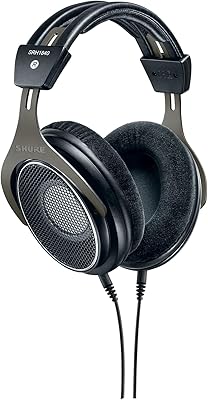
Shure SRH1840 Open-Back Over-Ear Headphones
67%
93%
Soundstage & Imaging
88%
Frequency Accuracy
61%
Amplification Dependency
84%
Build Quality
81%
Long-Session Comfort
More
AKG K92 Closed-back Over-Ear Headphones
74%
84%
Sound Accuracy
91%
Value for Money
77%
Comfort & Fit
68%
Build Quality
72%
Passive Isolation
More
Sennheiser HD 569
Sennheiser HD 569
77%
83%
Sound Quality
88%
Comfort & Fit
67%
Build Quality
81%
Sound Isolation
61%
Microphone Quality
More
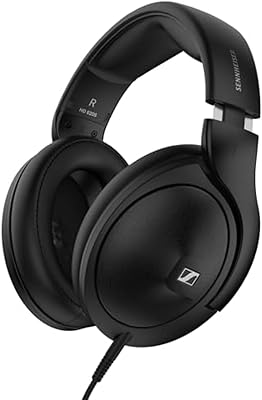
Focal Stellia Closed-Back Over-Ear Headphones
82%
93%
Sound Quality
91%
Build Quality
74%
Comfort
82%
Passive Isolation
94%
Driver Technology
More
Shure SRH840A
Shure SRH840A
86%
94%
Sound Accuracy & Neutrality
88%
Passive Noise Isolation
89%
Ease of Drive (Impedance)
83%
Long-Session Comfort
92%
Value for Money
More
Sennheiser HD 620S
Sennheiser HD 620S
80%
93%
Sound Quality
91%
Soundstage & Imaging
89%
Build Quality
88%
Comfort & Wearability
61%
Amplifier Requirements
More
Neumann NDH 20
Neumann NDH 20
79%
94%
Sound Accuracy
88%
Build Quality
61%
Comfort & Wearability
83%
Noise Isolation
58%
Amp Compatibility
More
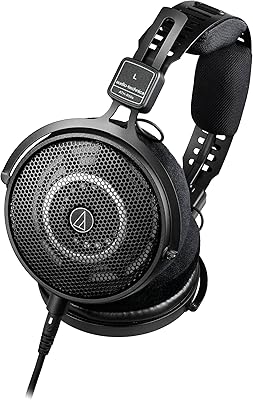
Tascam TH-MX2 Closed-Back Studio Mixing Headphones
77%
83%
Sound Accuracy
78%
Sound Isolation
81%
Comfort & Fit
61%
Build Quality
88%
Value for Money
More
Polsen HPC-A30-MK2 Studio Monitor Headphones
72%
88%
Value for Money
74%
Sound Quality
67%
Build Quality
63%
Comfort
71%
Noise Isolation
More
Audio-Technica ATH-R50X
76%
91%
Sound Quality
88%
Soundstage & Imaging
86%
Comfort & Wearability
67%
Build Quality
83%
Cable & Connectivity
More

FAQ

They will work from a phone — the 46-ohm impedance is not so demanding that you will struggle to get volume. That said, pairing the SRH1540 with a dedicated DAC or headphone amp does make a noticeable difference in clarity and dynamics, so if you already own or plan to buy an amp, you will get more out of these headphones than you would running them directly from a mobile device.

Yes, the ear pads are user-replaceable and Shure sells them as a spare part. How long they last depends heavily on how often you use the headphones and how much you perspire, but heavy daily users often find the pads start to show wear after a year or two of regular use. The good news is that swapping them out is straightforward and brings the headphone back to feeling essentially new.

The closed-back circumaural design provides a reasonable amount of isolation from ambient noise — enough to stay focused in a moderately busy room or a home studio. It is not in the same league as active noise cancellation for blocking out loud, chaotic environments like a busy subway car or a crowded open-plan office, so if that level of noise blocking is your priority, you will likely want to look at ANC headphones instead.

For mixing, yes, with one caveat: the sound signature leans slightly warm in the low end, which means what you hear is not perfectly flat or neutral. Many engineers appreciate this for getting a feel for how a mix will translate to consumer speakers, but if you need an analytical, ruler-flat reference sound, you may prefer a headphone tuned for strict neutrality. For general mixing work and monitoring during tracking sessions, the SRH1540 performs very well.

Comfort is consistently one of the things buyers praise most about the SRH1540. At 322 grams, they sit comfortably on the head without creating significant pressure, and the circumaural ear pads are generously sized. Most users report being able to wear them for extended periods without the aching or fatigue that cheaper, heavier headphones can cause. Heat buildup around the ears can be a factor in warm environments, which is worth keeping in mind.

Yes, and this is one of the practical advantages of these Shure studio headphones. The cables detach from the ear cup using a locking connector, and Shure sells replacement cables separately. The package also includes two cables right out of the box, so you have a spare on hand from day one.

Open-back headphones generally offer a wider, more naturally airy soundstage, and that is a fair trade-off to acknowledge. What makes the SRH1540 stand out in its category is that it delivers a noticeably wider soundstage than most closed-back designs, which tend to sound more enclosed and narrow. You are not going to mistake it for a good open-back pair, but it is significantly more spacious than most of its closed-back competitors, which is part of why recording engineers find it useful.

The materials are genuinely functional choices rather than purely cosmetic ones. The aluminum alloy yoke handles daily flex and adjustment without the creaking or cracking you often see in plastic-hinged designs, and the carbon fiber cups resist denting and impact reasonably well. That said, like any high-end audio equipment, the SRH1540 is not indestructible — dropping it on a hard floor or subjecting it to rough handling will cause damage. Treat it like a precision instrument and it holds up very well over time.

The low end is warm and slightly emphasized compared to a flat reference sound, but it is not what most people would describe as bass-heavy or boomy. For casual listening and general studio monitoring, the tuning works well for most content. If you are doing very precise low-frequency work — like sub-bass balancing in electronic music production — you may want to cross-reference with flat studio monitors, but for the majority of recording and mixing tasks, the bass character is not a significant problem.

The box comes with two detachable cables, a 1/4-inch adapter, a spare set of ear pads, and a zippered hard-shell case. The case is genuinely useful rather than just decorative — it is rigid enough to protect the headphones in a bag during travel, and the zippered closure keeps everything secure. If you plan to carry these between a home studio and another location regularly, the case makes that practical.

Where to Buy