Overview

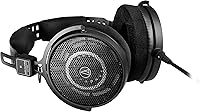
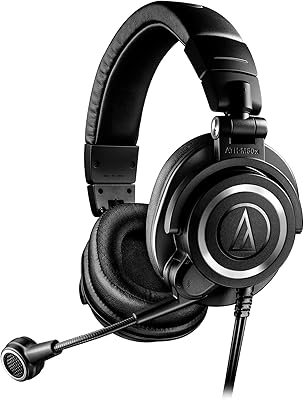
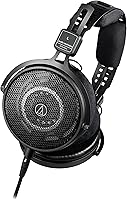
The Audio-Technica ATH-R50X arrived in early 2025 as a mid-range open-back reference headphone aimed at home studio listeners and discerning audiophiles. In a crowded field that includes well-regarded rivals like the Sennheiser HD 560S and Beyerdynamic DT 900 Pro X, these open-back headphones hold their own with a transparent, honest sound signature rather than a colored, consumer-friendly one. The open-back design is fundamental here — it means audio breathes naturally, free from the boxiness that plagues closed headphones. That said, this is a wired-only passive headphone built for quiet rooms. Take it on the subway or into a noisy office and you will regret it quickly.
Features & Benefits

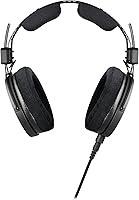
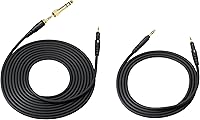
The acoustic engineering here is rooted in a fully open rear chamber that lets air move freely behind the driver, which kills internal resonance and sharpens transient response noticeably. The dynamic driver reaches low into the bass without muddying the midrange — a balance that matters when referencing a mix or critically evaluating recordings. At 50 Ohms, this studio headphone plays nicely with both dedicated headphone amps and standard laptop or interface outputs. Two detachable cables are included: a long 3.0 m studio cable and a shorter 1.2 m option, both secured via a twist-lock connector at the earcup that resists accidental disconnection mid-session. At just 207 g, the redesigned headband keeps pressure comfortable through extended listening blocks.

Best For

These open-back headphones are genuinely suited to a specific type of listener, and being upfront about that matters. If you work in a home studio environment — mixing, tracking overdubs, or editing voiceover — the flat-leaning frequency response will surface problems in a recording that a hyped consumer headphone would quietly mask. Podcasters and voiceover artists monitoring in treated rooms will find that same clarity useful. Desktop audiophiles who already own a DAC and amp will get a lot from this studio headphone's transparent wired output. But if you share walls, work in an open office, or need to block external noise, look elsewhere. This design was simply never built for those situations.

User Feedback

With a 4.6-star average across more than 230 ratings, buyer satisfaction is strong — but the reasons behind it reveal who this headphone is really for. Experienced listeners consistently praise the wide soundstage and the natural sense of space it creates, something closed-back designs cannot replicate. Long-session comfort and the dual-cable flexibility also earn repeated mentions. On the other side, some buyers feel the plastic construction does not match the asking price, and a handful find these open-back headphones unforgiving of compressed or low-quality source files. Sound leakage comes up regularly in reviews too — not a design flaw, but an unavoidable reality worth acknowledging. Casual listeners occasionally find the tuning too analytical compared to more consumer-oriented alternatives.

Pros

  • Reference-accurate sound tuning makes mixing and monitoring decisions noticeably more reliable.
  • Wide open soundstage creates a realistic sense of space that closed-back headphones cannot match.
  • Lightweight 207 g frame stays comfortable through multi-hour studio or listening sessions.
  • Two detachable cables included — a long studio cable and a shorter everyday-length option.
  • Twist-lock earcup connector prevents accidental cable disconnects during focused work.
  • 50 Ohm impedance works well with standard audio interfaces and laptop outputs without a dedicated amp.
  • 6.3 mm adapter ships in the box, so it connects to professional gear immediately.
  • Dynamic driver handles fast transients cleanly, which matters for percussion-heavy or acoustic material.
  • The understated all-black design fits professional studio environments without looking out of place.

Cons

  • Plastic construction feels inconsistent with the professional pricing and studio positioning.
  • Frame produces audible creaking sounds during handling that undermines build confidence.
  • Carrying pouch offers minimal protection — not suitable for transporting the headphone safely.
  • Analytical tuning can become tiring on bright or heavily compressed recordings over long sessions.
  • No in-line remote or microphone on either included cable limits versatility for everyday device use.
  • Low-quality or compressed audio sources are exposed rather than masked, penalizing casual streaming use.
  • Earpads are functional but noticeably less plush than competing headphones at a comparable price.
  • No balanced cable option included, leaving users with balanced amplifier setups needing additional purchases.

Ratings

The Audio-Technica ATH-R50X has been evaluated by our AI system after analyzing verified global buyer reviews, with spam, bot-generated, and incentivized submissions actively filtered out. The resulting scores reflect a balanced picture — where these open-back headphones genuinely impress and where real-world frustrations surfaced consistently across different types of listeners.

Sound Quality
91%
Buyers with critical listening experience repeatedly highlight the honest, reference-tuned presentation — extended bass that does not bleed into the mids, and a clarity in the upper midrange that makes mixing decisions feel trustworthy. For audiophiles doing late-night listening sessions at a desk, the overall tonal accuracy is a standout at this price tier.
Casual listeners accustomed to consumer-tuned headphones sometimes find the sound signature too analytical and lacking warmth. A small portion of users feel the treble can become fatiguing on bright recordings or poorly mastered tracks during longer sessions.
Soundstage & Imaging
88%
The open-back architecture creates a sense of space that closed headphones simply cannot replicate — buyers describe instruments sounding like they occupy distinct positions rather than sitting inside the head. For mixing, this spatial honesty is one of the most frequently praised traits across verified reviews.
A handful of experienced listeners note that the imaging, while wide, lacks the precise three-dimensional layering found on pricier competitors. Those stepping up from entry-level open-backs may appreciate it less as a leap forward than first-time open-back converts.
Comfort & Wearability
86%
At 207 g, these open-back headphones are light enough that extended studio sessions — three to four hours of continuous wear — rarely generate complaints about pressure or heat buildup. The redesigned headband distributes weight more evenly than some predecessors, which users doing long recording or editing blocks notice immediately.
A few buyers with larger heads report that the clamping force feels slightly firm out of the box and takes time to loosen naturally. The earpads, while adequate, draw occasional comments about not being as plush as competing models at a similar price point.
Build Quality
67%
33%
The twist-lock cable connector is a genuinely thoughtful addition — it resists accidental yanks during studio work and feels more robust than the straight push-in connectors found on many rivals. The hinges and adjustment mechanisms feel sufficiently solid for regular daily studio use.
The predominantly plastic frame is the most consistent criticism across reviews, with buyers noting it feels at odds with the professional positioning. Several users mention that handling the headphone produces creaking sounds, which undermines confidence in long-term durability even if structural failures are not widely reported.
Cable & Connectivity
83%
Shipping with two detachable cables — a full 3.0 m studio length and a more manageable 1.2 m option — is a practical decision that buyers genuinely appreciate. The included 6.3 mm adapter means this studio headphone works straight out of the box with standard audio interfaces without hunting for a separate adapter.
Both cables terminate in 3.5 mm plugs, which works fine for most setups but leaves users with balanced amplifier outputs needing third-party cables. The cables themselves, while functional, are described by some as feeling utilitarian rather than premium for the asking price.
Value for Money
79%
21%
For home studio producers and audiophiles who want honest reference sound without spending on flagship-tier headphones, the ATH-R50X hits a practical sweet spot. Users frequently point out that the sound performance alone justifies the cost, especially when compared to closed-back alternatives at the same price that compromise on accuracy.
The plastic construction makes some buyers question whether the pricing is fully justified relative to competitors that offer more premium materials. Those who primarily want a casual listening headphone rather than a reference tool may feel the value equation tilts toward more consumer-friendly alternatives.
Source Sensitivity
62%
38%
The 50 Ohm impedance makes these open-back headphones usable directly from a laptop headphone jack or audio interface output without requiring a dedicated amplifier, which is convenient for users who do not own outboard gear.
At 93.3 dB sensitivity, this studio headphone benefits noticeably from cleaner, more powerful sources — buyers who connect it to underpowered devices or use low-bitrate streaming report that the headphone exposes those weaknesses rather than flattering them. It is less forgiving of the source chain than many consumer alternatives.
Noise Isolation
18%
82%
There is nothing to misunderstand here — the fully open design means sound flows freely in both directions, which is exactly the point for accurate monitoring in a controlled environment. Users who understand and accept this limitation report no surprise or disappointment.
Sound leakage is significant in both directions: outside noise enters freely and your audio is clearly audible to anyone nearby. This makes the ATH-R50X entirely impractical for open offices, shared living spaces, public transport, or anywhere that requires even basic acoustic privacy.
Ease of Use
89%
Plug-in-and-go simplicity is one of the understated strengths here — no drivers, no apps, no pairing processes. The clearly labeled left and right cups, straightforward cable attachment, and universal 3.5 mm connection mean the setup experience is genuinely hassle-free for any wired listening context.
Users who prefer wireless convenience will find the wired-only nature a hard limitation, particularly when moving around a home studio or switching between devices frequently. The cables, while detachable, are not the most tangle-resistant in day-to-day handling.
Driver Performance & Transients
87%
The dynamic driver handles fast transients with a responsiveness that buyers who mix percussion-heavy or electronic music specifically call out. Attack and decay on drums and plucked strings feel natural and unhurried compared to some budget dynamic drivers that smear fast transients.
Against planar magnetic alternatives at similar or higher prices, a small number of technically experienced users note that micro-detail retrieval and absolute transient precision are not quite at that level. For most practical studio and audiophile use cases this gap is minor, but it exists.
Long-Session Fatigue
82%
18%
The combination of low weight, open-back ventilation reducing heat buildup, and a balanced sound tuning contributes to a listening experience that holds up well across multi-hour sessions. Studio users and reviewers doing extended editing work consistently rate fatigue resistance positively.
The analytical frequency response that makes this studio headphone useful for mixing can accumulate into listener fatigue on bright or dynamically compressed material after two to three hours. This is partly a feature, not a flaw, but casual listeners should be aware.
Accessories & Packaging
74%
26%
Two cables and a 6.3 mm adapter arriving in the box alongside a carrying pouch is a more complete out-of-box package than many open-back competitors offer at this tier. The carrying pouch, while soft rather than a hard case, at least provides basic protection during transport.
The carrying pouch is flimsy for a headphone marketed at studio professionals who might travel with their gear. Several buyers expressed that a hard case or at least a sturdier semi-rigid pouch would better match the professional positioning of the product.
Compatibility
85%
The broad device compatibility list — laptops, audio interfaces, mixers, gaming consoles, even televisions — reflects the 50 Ohm impedance sitting in a practical sweet spot for general use. Most buyers report being able to use these open-back headphones with their existing setups immediately.
The lack of any in-line remote or microphone on either cable limits versatility for users who also want to take calls or control playback from a mobile device. This is clearly a deliberate professional-audio choice, but it narrows real-world flexibility for some buyers.
Aesthetic & Design Language
71%
29%
The understated all-black aesthetic reads as professionally appropriate and avoids the gaming-headset visual language that can make studio tools feel out of place. Buyers who work in professional settings or record video content appreciate that these headphones do not draw unnecessary attention.
The plastic construction contributes to a visual impression that feels a notch below some competing headphones at this price point, particularly when viewed alongside metal-framed alternatives. It is a functional design rather than an aspirational one, and opinion on that trade-off is split in user feedback.

Suitable for:

The Audio-Technica ATH-R50X was built for listeners who need a headphone to tell them the truth about what they are hearing. Home studio producers and mixing engineers working in treated rooms will get the most out of it — the flat-leaning, reference-grade tuning surfaces problems in a mix rather than flattering them, which is exactly what professional monitoring demands. Podcasters and voiceover artists who need to catch sibilance, room noise, or compression artifacts during recording sessions will find the honest midrange particularly useful. Desktop audiophiles who already own a DAC or headphone amp and want a transparent wired option for critical or casual listening will also be well served. If you spend long hours at a workstation and prioritize fatigue-free, natural sound over punchy consumer tuning, these open-back headphones fit that workflow well.
Not suitable for:

Anyone who needs to use headphones outside a quiet, private space should think carefully before committing to the Audio-Technica ATH-R50X. The open-back design is not a subtle caveat — sound leaks out freely, and ambient noise enters just as freely, making it genuinely unsuitable for open offices, shared apartments, public transport, or anywhere that requires even basic acoustic privacy. Listeners who prefer a warm, bass-forward consumer sound signature will likely find the analytical tuning unsatisfying for casual music enjoyment. If wireless freedom matters to you at all, this studio headphone offers none — it is wired-only and always will be. Budget-conscious buyers who also need a travel case or premium build materials may feel underserved given the plastic construction and the soft carrying pouch included in the box.

Specifications

  • Headphone Type: Fully open-back, over-ear design with no passive noise isolation.
  • Driver Type: Dynamic driver with tuning optimized for extended low-frequency response and accurate midrange reproduction.
  • Impedance: 50 Ohm nominal impedance, compatible with standard headphone outputs and dedicated amplifiers.
  • Sensitivity: 93.3 dB sensitivity, which works with standard outputs but benefits from cleaner, more powerful sources.
  • Weight: 207 g (7.4 oz) without cable, making it one of the lighter options in the open-back reference category.
  • Cable 1: 3.0 m (9.8 ft) detachable cable with a gold-plated 3.5 mm stereo plug at the listener end.
  • Cable 2: 1.2 m (3.9 ft) detachable cable with a gold-plated 3.5 mm stereo plug, suited for shorter desktop setups.
  • Earcup Connector: 2.5 mm twist-lock connector at the left earcup secures the cable and resists accidental disconnection.
  • Headphone Jack: 3.5 mm (1/8″) gold-plated stereo mini-plug on both included cables.
  • Adapter Included: 6.3 mm (1/4″) screw-on adapter included for use with professional audio interfaces and amplifiers.
  • Connectivity: Wired only — no Bluetooth, no wireless mode, and no active electronic components.
  • Earcup Shape: Over-ear (circumaural) design intended to fully surround the ear rather than resting on it.
  • Frame Material: Primarily plastic construction with a redesigned headband for improved long-session weight distribution.
  • Accessories: Ships with two detachable cables, one 6.3 mm adapter, and a soft carrying pouch.
  • Noise Control: No active or passive noise isolation — the open-back architecture allows full ambient sound transmission in both directions.
  • Dimensions: Product dimensions are approximately 4 × 6.69 × 7.87 inches (10.2 × 17 × 20 cm).
  • Availability: First made available for purchase in January 2025.
  • Audio Interface: 3.5 mm audio jack input — compatible with laptops, audio interfaces, DACs, mixers, and most consumer devices.

Related Reviews
Audio-Technica ATH-M30x
78%
83%
Sound Accuracy
88%
Mid-Range Clarity
61%
Bass Response
72%
Comfort & Fit
74%
Build Quality
More
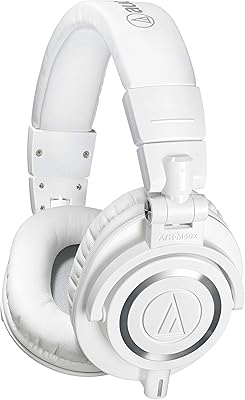
Audio-Technica ATH-M50xWH
87%
94%
Sound Quality
89%
Build Quality
82%
Comfort for Extended Use
91%
Noise Isolation
88%
Durability of Detachable Cable
More
Audio-Technica ATH-M60x
87%
93%
Audio Clarity
94%
Build Durability
88%
Portability
67%
Initial Comfort
79%
Passive Noise Isolation
More
Audio-Technica ATH-M20x
82%
88%
Audio Accuracy
84%
Passive Sound Isolation
94%
Value for Money
81%
Long-Session Comfort
87%
Studio Build Durability
More
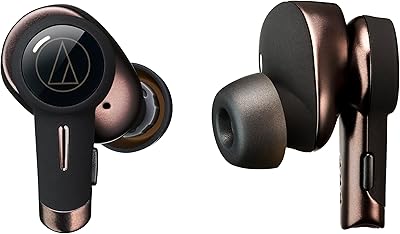
Audio-Technica ATH-TWX9
75%
93%
Sound Quality
78%
Noise Cancellation
89%
Hear-Through Mode
71%
Fit & Comfort
86%
Battery Life
More
Audio-Technica ATH-M50xSTS
77%
91%
Microphone Clarity
89%
Headphone Sound Quality
84%
Build Quality
67%
Comfort & Wearability
58%
Setup & Ease of Use
More
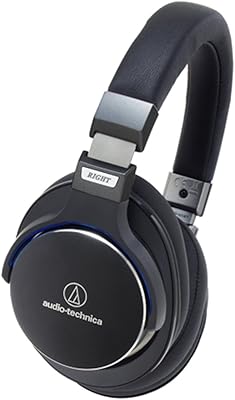
Audio-Technica ATH-MSR7 Over-Ear Headphones
86%
94%
Sound Quality
88%
Comfort
91%
Build Quality
87%
Value for Money
89%
Bass Response
More
Audio-Technica ATH-AVC200
74%
88%
Value for Money
84%
Comfort & Fit
76%
Sound Quality
61%
Build Quality
73%
Passive Noise Isolation
More
Audio-Technica ATH-MSR7bGM Over-Ear Headphones
87%
91%
Sound Quality
88%
Comfort for Extended Use
85%
Build Quality & Durability
89%
Noise Isolation
87%
Value for Money
More
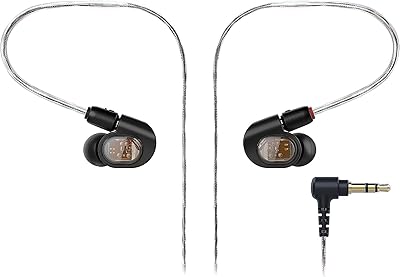
Audio-Technica ATH-E70 In-Ear Monitors
89%
94%
Sound Quality
89%
Comfort & Fit
91%
Durability
93%
Noise Isolation
88%
Cable Quality
More

FAQ

Not strictly, but it helps. The 50 Ohm impedance means these open-back headphones will work from a laptop headphone jack or audio interface output at reasonable volumes. That said, a clean DAC or headphone amp will noticeably improve dynamics and detail retrieval — if you have one already, use it.

It is significant, and you should go in with clear expectations. Anyone sitting nearby in a quiet room will hear your audio clearly. These headphones are genuinely not suitable for shared offices, libraries, or anywhere that requires acoustic privacy. They are designed for solo listening in a controlled environment.

Audio-Technica does offer replacement earpads for their headphone lineup, and the ATH-R50X uses a standard attachment system. It is worth confirming compatibility with Audio-Technica directly before ordering, but pad replacement is generally straightforward on their over-ear models.

It depends on your setup. The 3.0 m cable is practical for sitting at a studio desk where your interface or amp is on the floor or rack-mounted at a distance. The 1.2 m cable works better for desktop use where your source device is close. Both cables use the same twist-lock connector at the earcup.

It can work for gaming, particularly if you value spatial accuracy for positional audio cues. The wide soundstage and honest imaging make it easier to place directional sounds in games. However, there is no built-in microphone, no wireless option, and no bass boost — so it will not feel like a traditional gaming headset.

Yes, the 3.5 mm plug is universally compatible, but you will need a USB-C or Lightning to 3.5 mm adapter if your phone has dropped the headphone jack. Keep in mind that phone outputs are often underpowered, which can limit volume headroom and dynamic performance compared to a dedicated source.

Quite well for most people. At 207 g, the weight is low enough that neck fatigue is rarely an issue, and the open-back design keeps heat and pressure from building up around the ears the way closed-back headphones tend to. Users with larger heads occasionally note that the clamping force feels firm initially, though it tends to loosen with use.

The included cables are functional rather than exceptional — the standard rubber jackets are not particularly tangle-resistant if stuffed into a bag. The twist-lock connection at the earcup is the strong point; it holds firmly during use. The 3.5 mm end at the other side is a standard plug with no locking mechanism, so treat it accordingly.

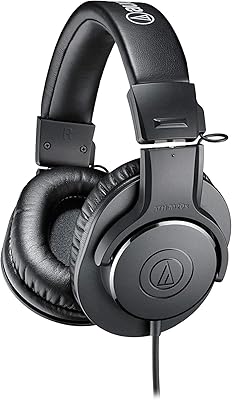
They serve different purposes. The ATH-M50x is a closed-back headphone with a more consumer-friendly bass emphasis, popular for tracking and general listening. These open-back headphones prioritize reference accuracy and soundstage width over isolation and bass punch — the two are complementary rather than direct replacements, depending on your workflow.

For light protection in a padded bag, the soft pouch is adequate. But it offers essentially no hard-shell protection against compression or impact, which is a real limitation for anyone who wants to transport them regularly. If travel durability matters, a third-party hard case sized for full-size headphones is worth picking up separately.