
Overview

The Shure SE425 carries real professional pedigree — this is not a rebranded consumer earbud dressed up with marketing language, but a dual balanced armature IEM developed from Shure's decades of stage monitoring work. It targets listeners who want accurate, neutral reproduction rather than the exaggerated bass curves found in most consumer headphones. The design sits in a mid-tier professional bracket, aimed squarely at musicians, traveling audiophiles, and anyone serious enough to care about what they actually hear. What separates it from similarly priced rivals almost immediately is the detachable MMCX cable system — a feature that transforms a pair of earphones into a long-term investment rather than a disposable accessory.

Features & Benefits

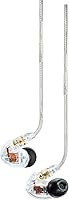
The dual balanced armature drivers inside this dual-driver IEM do something consumer-grade earphones rarely manage: they separate the midrange with genuine clarity, making vocals and acoustic instruments feel placed rather than smeared. Passive sound isolation reaches up to 37 dB by physically sealing the ear canal — no battery required, no latency, no Bluetooth pairing ritual. The gold-plated MMCX connector rotates a full 360 degrees, and the over-ear wireform cable keeps everything locked in place during movement. Three sleeve sizes in both foam and flex materials mean fit is adjustable, and a hard-shell carrying case is included — practical for anyone moving these between venues or flights.

Best For

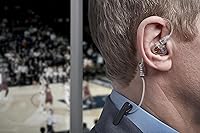
These Shure in-ear monitors are built for people who work with audio professionally or take listening seriously enough to care about reference accuracy. Musicians and engineers monitoring on stage or in a rehearsal space will appreciate the reliable passive isolation and the stable over-ear fit that holds through movement. Audiophiles who find consumer tunings too bass-heavy will find the neutral frequency response a better match for evaluating recordings. Frequent travelers benefit from the isolation without needing to charge anything. That said, this dual-driver IEM rewards users who already understand how to seat a balanced armature earphone properly — newcomers to in-ear monitors should expect a short adjustment period.

User Feedback

Owners consistently praise the midrange accuracy — specifically how voices and stringed instruments sit clearly in a mix without competing frequencies muddying things. The passive isolation also earns strong appreciation from those who deliberately chose it over active noise-cancelling options. On the other side, buyers accustomed to V-shaped sound signatures often find the low-end less impactful than expected. The foam tip insertion technique is a real friction point for first-time users; several reviewers note it took multiple attempts to achieve a proper seal. Cable longevity comes up periodically, but the replaceable MMCX design genuinely addresses that concern. A subset of buyers also raises the price-to-performance question given newer competitors entering the market.

Pros

  • Dual balanced armature drivers reproduce vocals and midrange instruments with genuine accuracy and definition.
  • Passive isolation blocks up to 37 dB of ambient noise without any battery or electronics required.
  • Detachable MMCX cable means a worn-out cable does not end the life of the earphones.
  • Over-ear wireform fit holds securely through movement — reliable for stage use and active commutes.
  • Drives easily from a smartphone or laptop without needing a dedicated headphone amplifier.
  • Hard-shell carrying case protects the earphones in a bag without adding significant bulk.
  • The SE425 has been in production for years, meaning replacement cables and accessories remain widely available.
  • Included quarter-inch adapter extends compatibility to professional audio interfaces and mixing desks.
  • Two-year warranty provides meaningful coverage for a premium-priced wired IEM.
  • Foam and flex sleeve options in three sizes allow fit customization without buying third-party accessories immediately.

Cons

  • Foam tip insertion requires a specific technique that first-time IEM users often find unintuitive and time-consuming.
  • No wireless option exists, requiring a dongle on devices without a 3.5mm headphone jack.
  • The stock cable has shown wear at stress points for some users who handle it daily over extended periods.
  • Bass response will disappoint listeners who enjoy the sub-bass emphasis common in consumer-tuned earphones.
  • The MMCX connector locking mechanism can loosen over many cable swap cycles, leading to intermittent dropouts.
  • Newer competitors at similar price points offer more modern driver configurations and tuning options.
  • The wireform ear guide can lose its shape or develop coating cracks with years of heavy daily reshaping.
  • No in-line microphone or remote on the standard cable, which limits hands-free call functionality on mobile devices.
  • Achieving the full 37 dB isolation spec requires a proper fit that not every user manages consistently.

Ratings

The Shure SE425 has been stress-tested by a wide range of buyers — from touring musicians to daily commuters — and the scores below reflect what that collective experience actually looks like. These ratings are generated by AI after analyzing verified global user reviews, with spam, bot activity, and incentivized feedback actively filtered out. Both the genuine strengths and the recurring frustrations are reflected here without softening either side.

Sound Accuracy
91%
Users with critical listening backgrounds — producers, mixing engineers, live performers — consistently report that vocals and midrange instruments reproduce with a precision that most consumer IEMs simply cannot match. The dual balanced armature configuration places acoustic guitars, piano lines, and spoken word in a clearly defined space within the mix.
The same tuning that earns praise from professionals draws criticism from casual listeners expecting a more exciting, bass-forward response. Users coming from consumer-grade earbuds often describe the sound as flat or underwhelming until they recalibrate their expectations toward reference accuracy.
Passive Noise Isolation
88%
The physical seal created by the sleeves — particularly the foam tips when inserted correctly — blocks a substantial amount of ambient noise without any electronics involved. Frequent flyers and subway commuters specifically highlight how well these handle engine drone and crowd noise during long trips.
The isolation is entirely dependent on achieving a proper fit, which not every user manages on the first attempt. Those who cannot seat the foam tips correctly end up with noticeably reduced isolation, making the 37 dB spec feel aspirational rather than guaranteed for all buyers.
Build Quality
84%
The metal and plastic construction feels purposeful rather than decorative — these do not feel like a product designed to impress in a retail box. Long-term owners frequently mention still using the same pair after several years, which is a meaningful indicator in a category where many rivals degrade within months.
The cable, while detachable and replaceable, has generated recurring feedback about the stock option showing wear at stress points over time. The housing itself holds up well, but a few users have noted that the wireform ear guides can lose their shape with heavy daily use.
Cable System & Repairability
86%
The gold-plated MMCX connector with 360-degree rotation is genuinely useful in practice — it eliminates the micro-stress that fixed cables accumulate at the junction point. The ability to swap in a replacement cable when the stock one wears out means the earphones themselves can last far longer than a single cable lifecycle.
MMCX connectors, while industry-standard, do have a finite number of connection cycles before the locking mechanism begins to loosen. A handful of long-term users have reported that after frequent cable swaps the connection becomes less secure, which can cause intermittent audio dropouts on one side.
Comfort & Fit
72%
28%
Once the over-ear wireform cable is shaped correctly and the right sleeve size is identified, these Shure in-ear monitors stay in place remarkably well during movement. Musicians who wear them for extended sets and commuters on bumpy transit routes both note the fit holds without requiring constant readjustment.
Getting to that comfortable fit is a real process for first-time IEM users. Foam tips require a specific compression and insertion technique to create an adequate seal, and multiple reviewers report needing several sessions before the fit felt natural — a friction point that the packaging does not adequately address.
Tip & Sleeve Options
78%
22%
The included fit kit covers small, medium, and large in both foam and flex sleeve materials, which gives a reasonable range of options out of the box. Users with smaller ear canals particularly appreciate having smaller foam options that other brands often omit from their standard kits.
Some users find they fall between sizes, and the stock sleeve selection does not include double or triple-flange tips that can better serve users with specific canal geometries. Third-party tip compatibility with balanced armature nozzles can be inconsistent, limiting upgrade options for some buyers.
Soundstage & Imaging
83%
For a sealed in-ear design, the SE425 reproduces spatial separation between instruments with more definition than most closed IEMs at this tier. Audio engineers using these as reference monitors note they can reliably identify panning positions and reverb tails in a mix without relying on studio speakers.
The soundstage is precise rather than expansive — listeners accustomed to open-back headphones will find the perceived width noticeably narrower. This is a physical constraint of the sealed design rather than a flaw, but it is worth understanding before purchase if a wide, open presentation is a priority.
Portability & Accessories
81%
19%
The hard-shell carrying case is compact enough to slip into a jacket pocket and sturdy enough to protect the earphones in a backpack without a dedicated compartment. The included quarter-inch adapter makes these practical for plugging into audio interfaces, mixing desks, and amplifier headphone outputs without a separate dongle.
The case, while protective, does not include a cable management solution, so the detachable cable tends to coil loosely inside and requires untangling before use. Users who carry these in a larger bag alongside other gear occasionally report the case latch coming open, leaving the earphones unprotected.
Microphonics
76%
24%
The over-ear routing design substantially reduces cable noise — the contact between cable and clothing that causes audible rustling in straight-down cable designs is largely eliminated. This makes the dual-driver IEM notably more practical for active use, outdoor walks, and stage monitoring than many straight-cable competitors.
Some users who cannot properly shape the wireform guide to their ear anatomy end up routing the cable in a suboptimal way that reintroduces some contact noise. It is not severe, but users who do not take time to properly form the ear guide miss out on one of the design's more practical advantages.
Value for Money
67%
33%
For buyers who plan to keep and service these for multiple years, the long-term cost-per-use calculation becomes more favorable over time. The replaceable cable and durable housing mean the upfront investment is spread across a lifespan that many competing IEMs at lower prices simply cannot match.
Several reviewers raise a legitimate point about newer entrants in this price range offering competitive or superior driver configurations with modern tuning. The SE425 design dates back over a decade, and buyers doing careful comparison shopping will find the value proposition has narrowed compared to when the model first launched.
Bass Response
61%
39%
Bass frequencies are present and accurate — kick drum transients register cleanly and bass guitar lines track with definition rather than bloom. Users who listen to acoustic music, jazz, classical recordings, or vocal-focused genres report the low end feels appropriately proportioned rather than absent.
For users who listen to electronic music, hip-hop, or any genre where sub-bass emphasis is part of the intended experience, this dual-driver IEM will feel thin. The balanced armature driver architecture prioritizes accuracy over impact, and that trade-off is a genuine dealbreaker for a portion of the potential buyer pool.
Treble Extension
79%
21%
High-frequency detail — cymbal decay, string harmonics, breath in wind instruments — comes through cleanly without the harsh peak around 8–10 kHz that plagues many budget balanced armature designs. Extended listening sessions at moderate volumes tend not to produce the fatigue that overly aggressive treble tuning causes.
The upper treble roll-off above 15 kHz is noticeable to listeners with acute high-frequency hearing sensitivity, and some users describe the top end as slightly polite or reserved in comparison to single dynamic driver IEMs known for their treble sparkle. It is not a significant flaw, but it is audible on certain recordings.
Durability Over Time
82%
18%
The core housing construction has held up well for long-term owners who take basic care of the earphones. Multiple reviewers mention owning them for four or five years without housing failure, which in a category full of early-failure reports is a genuinely meaningful data point.
The wireform cable guide, while functional, can develop fatigue cracks in the plastic coating with very frequent use over years of reshaping. This is largely cosmetic and does not affect performance, but some users find the worn appearance inconsistent with the premium positioning of the product.
Compatibility & Versatility
77%
23%
The 22 Ohm impedance and 109 dB sensitivity rating make these Shure in-ear monitors easy to drive directly from a smartphone, laptop, or portable audio player without a dedicated amplifier. The included quarter-inch adapter extends compatibility to professional audio equipment without requiring any additional purchases.
The wired-only 3.5mm connection is increasingly inconvenient on devices that have removed the headphone jack, requiring a dongle that many users find adds cable clutter. The SE425 has no wireless variant, so buyers who want the option to switch between wired and wireless operation need to look elsewhere.

Suitable for:

The Shure SE425 is built for buyers who approach audio with some seriousness — people who have a reason to care about what they actually hear rather than what sounds impressive in a store demo. Musicians using in-ear monitoring during rehearsals or live performances will find the neutral tuning and secure over-ear fit genuinely practical in a way that consumer earbuds simply are not. Audio engineers and podcast producers who need a portable reference point for critical listening — checking vocal levels, identifying frequency buildups, evaluating a mix away from studio monitors — will get real utility from the dual balanced armature configuration. Audiophiles who have grown tired of bass-heavy consumer tunings and want something closer to a flat, accurate response will feel at home here. Frequent travelers who want meaningful noise reduction without carrying a device that needs charging will also find the passive isolation useful on long flights or loud commutes. The detachable MMCX cable and durable housing make this a particularly strong choice for anyone who has had cheaper earphones fail within a year and wants something that can be maintained and repaired rather than replaced.

Not suitable for:

Buyers who want an engaging, bass-forward listening experience for electronic music, hip-hop, or any genre where low-frequency impact is central to the enjoyment should look elsewhere — these Shure in-ear monitors are tuned for accuracy, not excitement, and that is a deliberate design choice that will not appeal to everyone. Listeners upgrading directly from consumer earbuds and unfamiliar with how balanced armature IEMs need to be fitted may find the learning curve genuinely frustrating; proper foam tip insertion technique is not intuitive, and without a correct seal the isolation and sound quality both suffer noticeably. Anyone who needs wireless functionality will find the wired-only design a hard constraint, particularly on devices that have dropped the 3.5mm headphone jack. Buyers on a tighter budget who are comparing newer competitors in the same price range should do that comparison carefully — the SE425 design is mature, and some newer options offer competitive driver technology with more modern tuning at similar or lower price points. Finally, casual listeners who do not have a specific reason to need reference-grade accuracy are likely overpaying for a feature set that will not meaningfully improve their day-to-day listening experience.

Specifications

  • Driver Type: Each earphone houses two balanced armature drivers — a configuration designed to reproduce the full frequency range with greater accuracy than a single-driver design.
  • Frequency Response: The SE425 covers a frequency range of 20 Hz to 19 kHz, providing full-spectrum reproduction from sub-bass fundamentals through upper-treble detail.
  • Sensitivity: Rated at 109 dB SPL per milliwatt, these in-ear monitors produce adequate listening volume from low-output sources such as smartphones and portable audio players.
  • Impedance: At 22 Ohms, the SE425 presents a manageable load for consumer devices and does not require a dedicated headphone amplifier under typical listening conditions.
  • Noise Attenuation: The passive sound isolating sleeve design physically attenuates ambient noise by up to 37 dB, depending on sleeve type and insertion quality.
  • Cable Connector: The detachable cable terminates at each earphone via a gold-plated MMCX connector that locks in place and allows 360-degree rotation for cable management flexibility.
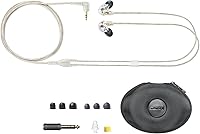
  • Output Connector: A standard 3.5 mm stereo jack is used at the source end, with a threaded quarter-inch adapter included in the box for compatibility with professional audio equipment.
  • Fit Style: The over-ear wireform design routes the cable up and over the ear before entering the canal, keeping the earphones stable during movement without relying on ear tip pressure alone.
  • Sleeve Options: The included fit kit contains small, medium, and large sleeves in two materials — soft flex and memory foam — to accommodate different ear canal geometries and fit preferences.
  • Weight: The earphones weigh approximately 0.53 pounds including the cable, making them light enough for extended wear during performances or long travel sessions.
  • Materials: The earphone housings are constructed from a combination of metal and plastic, balancing durability and low weight in a compact in-ear form factor.
  • Carrying Case: A compact hard-shell case is included, providing structured protection for the earphones and cable during transport in bags or pockets.
  • Warranty: Shure includes a two-year limited warranty covering manufacturing defects from the date of purchase.
  • Compatible Devices: These in-ear monitors are compatible with smartphones, laptops, desktop computers, portable music players, and professional audio interfaces via the standard 3.5 mm connection.
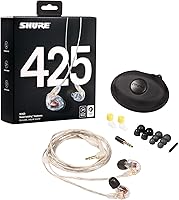
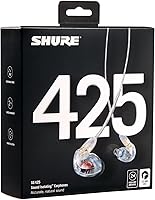
  • Included Accessories: The box contains the earphones, a detachable 3.5 mm cable, a quarter-inch adapter, the full sleeve fit kit in three sizes and two materials, and the hard-shell carrying case.
  • Noise Reduction Type: Isolation is achieved entirely through passive physical sealing — there are no active noise cancellation electronics, microphones, or batteries involved in the noise reduction.
  • Wireless Support: The SE425 is a wired-only design and does not include Bluetooth functionality or any wireless connectivity option in its standard configuration.
  • Model Number: The clear variant carries the official model designation SE425-CL, while the product is also listed under the model code SE425-CL-EFS depending on regional packaging.
  • Product Dimensions: The retail packaging measures 7 x 6.2 x 2.2 inches, with the earphones themselves being compact enough to fit comfortably in most adult ear canals in the standard over-ear configuration.
  • First Available: The SE425 design entered the market in June 2010 and has remained in continuous production since, with replacement cables and accessories remaining commercially available.

Related Reviews
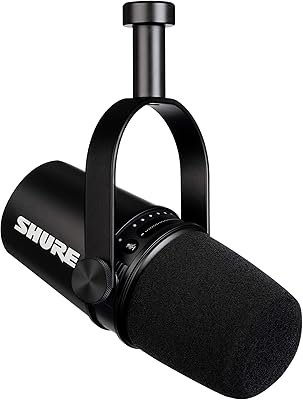
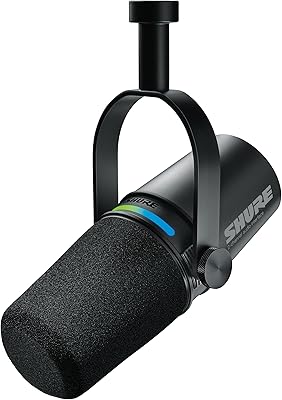
Shure MV7-K
Shure MV7-K
89%
95%
Sound Clarity
92%
Background Noise Rejection
94%
Build Quality
88%
Ease of Setup
90%
USB/XLR Versatility
More
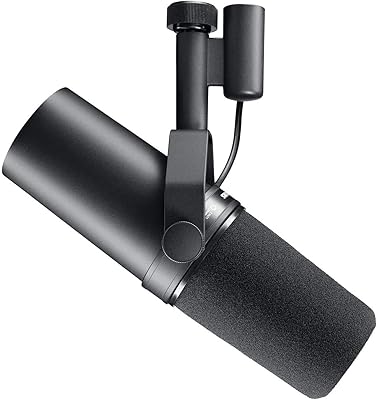
Shure SM7B
Shure SM7B
83%
98%
Vocal Sound Quality
96%
Background Noise Rejection
94%
Build Quality & Durability
41%
Ease of Setup
88%
Plosive & Sibilance Control
More
Shure VP89L Microphone
86%
92%
Sound Quality
89%
Modularity
90%
Build Quality
85%
Ease of Use
91%
Directional Accuracy
More
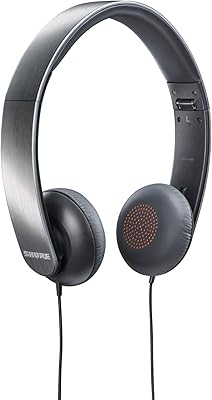
Shure SRH145 Headphones
83%
79%
Sound Quality
93%
Portability
85%
Comfort
87%
Build Quality
70%
Noise Isolation
More
Shure PGA48-XLR
Shure PGA48-XLR
83%
93%
Build Quality
86%
Vocal Clarity
91%
Value for Money
82%
Feedback Rejection
74%
Handling Noise
More
Shure MV7i
Shure MV7i
78%
91%
Audio Clarity
94%
Ease of Setup
88%
Auto Level Mode
89%
Built-in Audio Interface
76%
Noise Reduction & DSP
More
Shure Beta 57A
Shure Beta 57A
90%
97%
Build Quality
93%
Feedback Rejection
91%
Midrange Clarity
89%
Off-Axis Bleed Control
88%
Handling Noise Suppression
More
Shure PGA58
Shure PGA58
86%
93%
Build Quality
86%
Vocal Clarity
89%
Feedback Rejection
96%
Value for Money
84%
Switch Design
More
Shure MVL Lavalier Microphone
80%
83%
Audio Clarity
88%
Build Quality
91%
Plug-and-Play Simplicity
79%
RF & Interference Rejection
71%
Omnidirectional Performance
More
Shure WL185 Lavalier Microphone
87%
92%
Sound Quality
90%
Background Noise Rejection
88%
Durability and Build Quality
85%
Portability and Size
83%
Ease of Use/Setup
More

FAQ

No dedicated amplifier is needed. At 22 Ohms impedance and 109 dB sensitivity, these Shure in-ear monitors will play at comfortable volume levels directly from a smartphone, laptop, or portable music player. If your source device has a particularly weak headphone output you might notice slightly reduced maximum volume, but in most practical situations an amp is unnecessary.

Passive isolation works by physically sealing the ear canal with the sleeve tips, which blocks sound waves from entering mechanically — no electronics, no battery drain, no latency. Active noise cancellation uses microphones and processing to generate an opposing signal that cancels incoming sound electronically. The SE425 uses passive isolation only, which many users in professional audio contexts actually prefer because it introduces no signal processing into the audio path.

Foam tip insertion takes practice if you have not used this style before. The technique is to roll the foam tip down to the smallest diameter you can, then pull your outer ear back and up slightly to straighten the canal, insert the compressed tip fully, and hold it in place for several seconds while the foam expands to fill the canal. If you release too early or do not insert deeply enough, the seal is incomplete and both isolation and sound quality will suffer noticeably.

Yes — the MMCX detachable connector is an industry-standard format, so a wide range of third-party cables will physically fit. This includes cables with in-line microphones, balanced 2.5 mm or 4.4 mm terminations for balanced portable players, and Bluetooth adapter cables if you occasionally want wireless functionality. Just confirm the third-party cable specifies MMCX compatibility before purchasing.

The standard cable included in the box does not have an in-line microphone or remote. You can make calls, but the other person will hear your device microphone rather than one on the cable. If you need a microphone, Shure and several third-party manufacturers sell MMCX-compatible cables with in-line remotes and microphones that are fully compatible with this dual-driver IEM.

Probably not, if bass impact is important to your listening experience. The tuning here leans toward accuracy and midrange clarity rather than the elevated sub-bass and lower-mid punch that makes electronic and hip-hop genres feel energetic. These earphones are genuinely excellent at what they do, but what they do is reference-oriented listening — not the kind of visceral low-end response you get from consumer-tuned earphones in this price range.

The over-ear wireform cable routing is specifically designed for active use — it keeps the earphones anchored even during significant head movement. Musicians wearing these on stage during full performances consistently report that the fit holds without needing adjustment. For gym use, the fit is similarly stable, though sweat exposure over time will wear down the cable coating faster than dry-condition use.

Yes. The included quarter-inch threaded adapter screws onto the 3.5 mm plug and gives you a standard connector for headphone outputs on mixing consoles, audio interfaces, and guitar amplifiers. The 22 Ohm impedance is low enough that most professional headphone outputs will drive these without any issues at normal monitoring levels.

Long-term owners regularly report using the same pair for four to six years without housing failure, which is notably good for an in-ear product used daily. The cable is the most likely component to show wear, but since it is replaceable the earphones themselves can outlast multiple cable lifecycles. The design is mature, so buyers comparing it to newer options should do so carefully — but the build longevity argument remains a genuine strength.

Medium is the right starting point for most adults — it fits the largest proportion of users and is the size most closely matched to standard ear canal dimensions. If you find medium too loose and the seal feels inconsistent, try small. If medium feels uncomfortable or you cannot insert it fully, try large. Foam and flex tips seal differently even in the same size, so it is worth testing both materials at your chosen size before settling on a preference.