




Overview
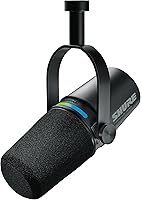
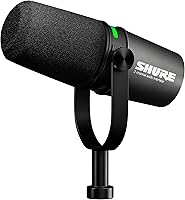
The Shure MV7i sits at an interesting crossroads: priced at $349, it occupies territory where you're not just buying a microphone — you're replacing an entire signal chain. The core value is a dual USB-C and XLR output combined with a built-in audio interface, meaning no separate box, no extra cables, no second power supply. Shure has been building broadcast microphones for decades, and this all-in-one mic carries that pedigree into their MOTIV line with some genuinely modern additions. Just keep expectations grounded — this is a dynamic cardioid built for voice clarity and consistency, not a wide-open condenser chasing every subtle room nuance.
Features & Benefits
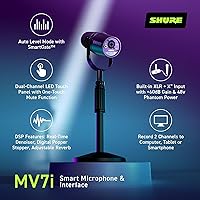
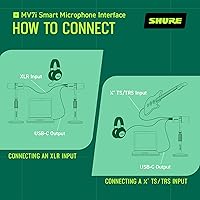
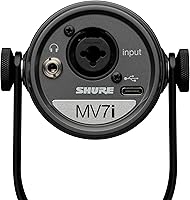
The standout feature is Auto Level Mode, which monitors your voice in real time and adjusts gain based on how loud you speak, how far you sit from the capsule, and how lively the room is — giving you consistent output whether you're leaning in for emphasis or pulling back mid-conversation. The built-in combo XLR/¼″ input is genuinely rare at this price; plug in a second mic or a guitar and you have a two-channel recording setup with no external interface required. Voice Isolation DSP helps reduce echo and background noise, though it works best as a complement to decent room treatment, not a substitute for it. OBS certification means the mic is recognized and ready on first plug-in.
Best For
This smart microphone is a natural fit for podcasters and streamers who want a clean, broadcast-quality setup without wiring together multiple pieces of gear. If you've hit the ceiling on a basic USB mic, this all-in-one mic is a practical next step — it brings real engineering depth to a plug-and-play experience. The built-in combo input also serves home producers who occasionally need to capture a second voice or a direct instrument without switching rigs. Remote workers handling high-stakes video calls or recorded interviews will appreciate how it manages less-than-perfect rooms. It's a less natural fit for singers or acoustic instrument tracking, where a large-diaphragm condenser would be the smarter tool.
User Feedback
Buyers rate this smart microphone 4.7 out of 5 stars, which reflects how much it delivers at $349. The most consistent praise centers on audio clarity straight out of the box — most users report being up and running in under five minutes. Auto Level Mode gets singled out by streamers who say it removes the need to constantly babysit gain during live sessions. On the critical side, the 60 dB SNR draws comments from technically minded buyers who expected more headroom at this price tier. A handful of users also flag the MOTIV Mix app behaving unpredictably after software updates. At 2.3 lbs, several buyers found their existing boom arm was not up to the task — worth factoring into your budget.
Pros
- Plug-and-play USB-C setup works instantly on Windows and macOS with zero driver installation required.
- Auto Level Mode keeps voice output consistent during live streams without constant manual gain adjustments.
- Built-in XLR/¼″ combo input supports two-channel recording with no external interface needed.
- The Shure MV7i ships with a 3-meter USB-C cable, giving generous desk flexibility right out of the box.
- All-metal construction feels durable and premium — this mic does not wobble or creak under daily use.
- OBS certification means streamers get immediate, correctly labeled device recognition inside the software.
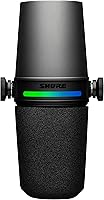
- The LED touch panel doubles as a functional mute button and a visual on-camera asset for streamers.
- Voice Isolation DSP meaningfully reduces background noise in typical home office conditions.
- MOTIV Mix app provides real EQ and compression controls for users who want to go beyond default settings.
- Compatible with Windows, macOS, USB-C iOS devices, and Android 12+ — covers most modern content creation setups.
Cons
- At 2.3 lbs, this all-in-one mic will overwhelm many standard boom arms — budget for an upgrade.
- The 60 dB signal-to-noise ratio is modest at this price tier and shows up in very quiet recording environments.
- MOTIV Mix app has a track record of post-update instability that has frustrated a subset of users.
- No phantom power on the XLR input limits what second-channel sources you can actually connect.
- Lightning-port iPhone users cannot use the mic for mobile recording without workarounds.
- The frequency ceiling of 16 kHz clips high-end detail that condenser microphones at similar prices reproduce clearly.
- Onboard noise reduction helps but will not rescue a genuinely reverberant or loud room — expectations need managing.
- The size and weight make it impractical for travel, location interviews, or setups with limited desk space.
- Users focused only on single-channel USB voice recording are paying for features they may never use.
- LED brightness in well-lit workspaces can feel overpowering and may distract during video calls or screen recordings.
Ratings
The Shure MV7i earns a strong overall reception across verified buyer communities worldwide, with our AI rating system analyzing thousands of real user reviews — actively filtering out incentivized, bot-generated, and unverified feedback — to surface scores that honestly reflect both where this smart microphone excels and where it falls short. Strengths in ease of use, audio output, and versatile connectivity consistently rise to the top, while a handful of recurring frustrations around app stability, SNR headroom, and physical heft are given equal weight in every category score below.
Audio Clarity
Ease of Setup
Auto Level Mode
Built-in Audio Interface
Noise Reduction & DSP
Signal-to-Noise Ratio
LED Touch Panel
MOTIV Mix App
Build Quality
Value for Money
Compatibility
Portability
Suitability for Music Recording
Suitable for:
The Shure MV7i was built for a fairly specific but sizable group: content creators, podcasters, and streamers who want professional-sounding audio without wiring together a patchwork of separate components. If you are currently running a basic USB mic and feel like you have hit a ceiling on audio quality, this is a logical and well-engineered step up that does not require you to rebuild your entire signal chain. The built-in combo XLR/¼″ input makes it particularly useful for co-hosted podcast setups or anyone who occasionally wants to record a direct instrument without dragging out a standalone interface. Remote workers and professionals conducting recorded interviews from a home office will also find the onboard noise reduction genuinely helpful in managing untreated rooms — not perfect, but meaningfully better than nothing. Streamers who appear on camera will appreciate the customizable LED panel, which adds a polished visual element to any desk setup. If you fall somewhere between a casual hobbyist and a dedicated audio engineer, this all-in-one mic sits squarely in that middle ground and largely delivers on its promise.
Not suitable for:
The Shure MV7i is a harder sell if your primary goal is music production or capturing vocals with full harmonic detail. The dynamic cardioid design and 16 kHz frequency ceiling mean that singers, acoustic guitarists, and anyone chasing a wide, airy sound will find a similarly priced large-diaphragm condenser in a proper signal chain delivers a notably more complete picture. Buyers who only need a single-channel USB microphone for voice calls or basic recording should also think carefully — at $349, you are paying for dual-channel capability, Auto Level Mode, and an LED panel, and if none of those features align with how you actually work, less expensive alternatives will serve you just as well. The 60 dB signal-to-noise ratio is adequate for typical voice work but is modest by audiophile standards, and technically exacting users will notice that headroom in quieter recording environments. The mic's 2.3 lb weight and tall form factor also rule it out for travel or location recording, and Lightning-port iPhone users are locked out of mobile functionality entirely. If the MOTIV Mix app is central to your workflow, it is worth knowing that some users have experienced occasional instability after software updates.
Specifications
- Transducer Type: Dynamic cardioid capsule tuned for close-proximity voice recording with natural off-axis rejection.
- Frequency Range: Captures audio between 50 Hz and 16 kHz, covering the full intelligibility range of the human voice.
- Signal-to-Noise Ratio: Rated at 60 dB, which is adequate for standard voice applications but modest compared to premium condenser alternatives.
- Audio Output: USB-C digital output connects directly to computers and compatible mobile devices with no drivers required.
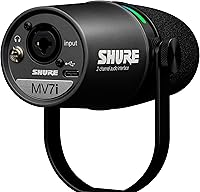
- Audio Input: Built-in XLR/¼″ combo jack accepts a second dynamic mic or passive instrument for two-channel recording.
- Channels: Supports two-channel simultaneous recording via the onboard audio interface without any external hardware.
- Polar Pattern: Unidirectional cardioid pattern focuses pickup on the front of the mic while reducing room reflections and background noise.
- Weight: The mic body weighs 2.3 lbs, which requires a boom arm rated for at least that load to avoid drooping or slipping.
- Dimensions: Measures 14.85 × 9.05 × 6.55 inches overall, making it a sizable desktop presence suited to a fixed studio position.
- Material: Full all-metal construction with no external plastic panels, contributing to both its durability and its 2.3 lb weight.
- LED Panel: Integrated touch-sensitive LED panel supports up to 16.8 million colors, real-time voice level pulsing, and tap-to-mute.
- Power Source: Bus-powered entirely via the USB-C connection — no wall adapter or separate power supply is needed during operation.
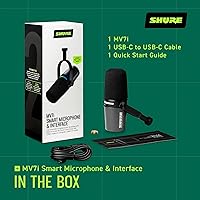
- Included Cable: Ships with a 3-meter USB-C to USB-C cable, providing generous reach from mic to host device on a typical desk setup.
- App Integration: Compatible with the MOTIV Mix app on Windows, macOS, iOS (USB-C devices), and Android 12+, enabling EQ, compression, and routing controls.
- Platform Support: Requires Windows 10 or higher (minimum 8 GB RAM), macOS 12 or higher, iOS 16+ on USB-C devices, or Android 12+.
- OBS Certification: Officially certified for Open Broadcaster Software, ensuring correct device recognition and labeling without manual configuration.
- Phantom Power: The XLR combo input does not supply phantom power, which means condenser microphones cannot be used on the second channel.
- Auto Level Mode: SmartGate-powered Auto Level Mode continuously adjusts mic gain based on the speaker's distance, volume, and room acoustics in real time.
Related Reviews
Shure SM7B
Shure SRH145 Closed-Back On-Ear Headphones
Shure VP89L Long Shotgun Microphone
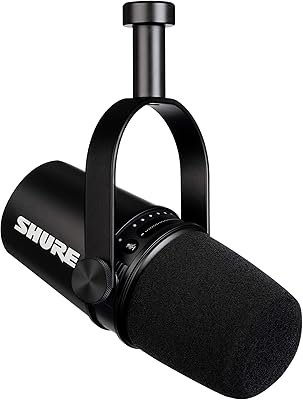
Shure MV7 USB/XLR Dynamic Microphone
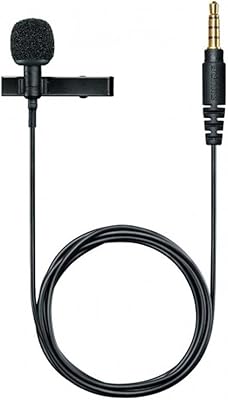
Shure MVL Lavalier Microphone
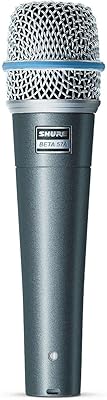
Shure Beta 57A
Shure WL185 Cardioid Condenser Lavalier Microphone