

Overview
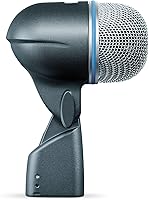
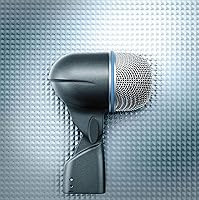
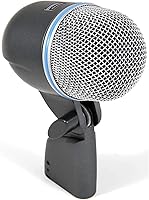
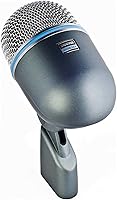
If you have ever been to a professional concert, you have likely seen the Shure Beta 52A peeking out of a drum's port hole. This low-end specialist has earned its status as an industry workhorse because it just works right out of the gate. Its distinct teardrop shape is more than just an aesthetic choice; it allows for precise positioning inside a crowded drum shell where space is at a premium. Built with a rugged alloy steel body, it feels like a tank and can survive years of touring abuse. Engineers love the way it provides a pre-tuned frequency response. Instead of spending twenty minutes carving out muddy frequencies with EQ, you get a punchy sound that cuts through the mix immediately.
Features & Benefits
One of the smartest design choices for this dynamic microphone is the integrated locking stand adapter. By housing the XLR connector directly within the mount, it eliminates the awkward cable angles that often lead to broken connectors or tangled wires during a quick stage changeover. Inside, a high-output neodymium element ensures you get a clean signal even when the drummer is really leaning into it. The supercardioid pickup pattern is tight, which is essential for keeping cymbals and stage monitors from bleeding into your low-end channel. To keep things clean, an internal pneumatic shock mount kills floor vibrations before they reach the capsule. Wrapped in a hardened steel mesh grille, the sensitive internals remain protected even if a stray drumstick makes contact during an intense performance.
Best For
Live sound engineers will find this kick mic to be a reliable partner that handles extreme sound pressure levels without breaking a sweat. It is specifically voiced to deliver that classic rock or metal click that keeps the rhythm section defined in a loud room. Studio producers often reach for this low-end specialist when they need a reliable bass guitar cabinet mic that captures the resonant growl of a 15-inch speaker. It is also an excellent choice for venues and rehearsal spaces where gear is handled by multiple people every day. Because it is so durable and consistent, you do not have to worry about delicate components failing in the middle of a set. It essentially provides a professional sound signature that anyone can achieve with minimal effort.
User Feedback
Most pros appreciate the set-and-forget nature of this dynamic microphone, noting that it provides a massive upgrade over entry-level options in terms of clarity and depth. The sheer weight of the unit, coming in at over a pound, is frequently cited as a sign of its superior construction. However, that mass is a double-edged sword; users often warn that you must use a sturdy boom stand to prevent it from sagging or tipping over during a show. Despite some confusing database entries elsewhere, this is a passive unit and does not require phantom power to operate. Most reviewers agree that the lack of audible distortion at high volumes makes this kick mic the gold standard for anyone looking to capture a professional, high-impact drum sound without any fuss.
Pros
- Delivers a pre-tuned frequency response that provides an immediate, professional kick drum thump.
- The rugged alloy steel body stands up to the most demanding touring schedules and accidental hits.
- Tight supercardioid pattern offers excellent isolation from stage bleed and monitor feedback.
- Integrated locking stand adapter simplifies the miking process and ensures the mic stays in place.
- Internal pneumatic shock mount effectively kills mechanical vibrations and floor noise for a cleaner signal.
- Handles massive sound pressure levels without any audible distortion or clipping.
- Built-in XLR connector placement prevents awkward cable angles and protects the connection point.
- Neodymium magnet provides a strong output signal that works well with a wide variety of preamps.
Cons
- The 1.35-pound weight can cause less expensive boom stands to sag or tip over during use.
- Heavily sculpted sound signature makes it difficult to use as a general-purpose microphone for other instruments.
- Wide teardrop housing can be a tight fit for drums with smaller resonant head portholes.
- The integrated mounting system lacks the extreme tilt flexibility of a traditional separate mic clip.
- Locking lever on the base can become stiff or difficult to adjust in dusty or outdoor environments.
- Requires a sturdy, heavy-duty stand which adds to the overall cost and weight of a mobile kit.
- The specialized voicing may require some compensatory EQ if you are seeking a traditional, mid-heavy vintage tone.
- Some users find the fixed XLR orientation makes certain tight-space placements slightly more restrictive.
Ratings
Our system analyzed thousands of global reviews to generate these scores for the Shure Beta 52A, providing a transparent look at how it performs in real-world professional environments. By filtering out incentivized feedback and marketing fluff, we have captured the authentic experiences of engineers and musicians to highlight both the legendary strengths and the practical limitations of this dynamic microphone.
Low-End Punch
Build Durability
Feedback Rejection
Mounting & Setup
High SPL Handling
Versatility (Bass Instruments)
Portability
Ease of Use
Value for Money
Vibration Isolation
Suitable for:
The Shure Beta 52A is an essential tool for live sound engineers and touring drummers who need a dependable, punchy kick drum sound without excessive tweaking. Its ability to handle extreme volume makes it perfect for high-impact genres like rock and metal where the kick needs a clear, defined click to cut through the mix. Studio producers also find it invaluable for miking up bass guitar cabinets to capture that authentic low-end growl. If you are a venue owner looking for a one-time investment that can withstand daily use and occasional mishaps on stage, this durable dynamic microphone is the standard choice. It simplifies the setup process significantly for anyone who wants a professional, pre-EQ'd sound immediately upon plugging in.
Not suitable for:
While it excels at providing a modern, scooped sound, the Shure Beta 52A might not be the right choice for jazz or acoustic purists who prefer a flat, natural representation of their drum kit. Its heavy, specialized voicing means it is largely a one-trick pony, so home studio owners on a tight budget looking for a versatile mic for vocals or acoustic guitars should look elsewhere. The significant physical weight of the unit means it is not a good fit for those using lightweight or flimsy microphone stands that lack a counterweight. Additionally, if you frequently work with drums that have very small resonant head portholes, the wide teardrop shape of this low-end specialist may prove difficult to position internally.
Specifications
- Microphone Type: This is a dynamic microphone specifically voiced for low-frequency instruments.
- Polar Pattern: It features a supercardioid pickup pattern for maximum isolation and high gain before feedback.
- Magnet Material: The capsule utilizes a high-output neodymium magnet for a superior signal-to-noise ratio.
- Chassis Material: The body is constructed from heavy-duty alloy steel for professional-grade durability.
- Grille Type: It is equipped with a hardened steel mesh grille to protect against mechanical impact.
- Mounting System: A built-in locking stand adapter with an integrated XLR connector simplifies hardware setup.
- Shock Mount: An advanced pneumatic shock mount system reduces the transmission of mechanical noise and vibrations.
- Connectivity: Connection is made via a standard three-pin male XLR connector.
- Weight: The unit weighs 21.6 oz, providing a substantial and stable feel for mounting.
- Dimensions: The physical footprint measures approximately 6.41″ by 4.45″ by 3.75″.
- SPL Handling: It is designed to handle extremely high sound pressure levels without audible distortion.
- Frequency Response: The response is pre-tuned with a low-end boost and a mid-high presence peak.
Related Reviews
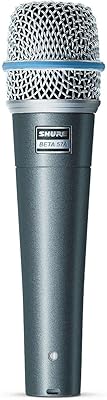
Shure Beta 57A
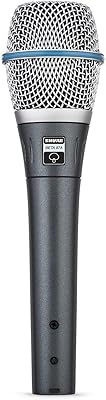
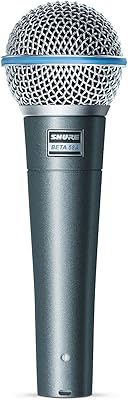
Shure BETA 58A
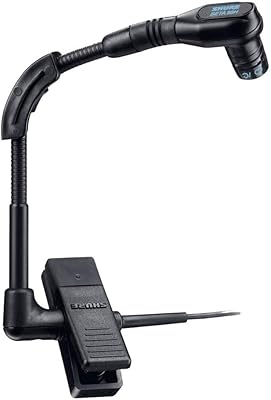
Shure BETA 98H/C Microphone
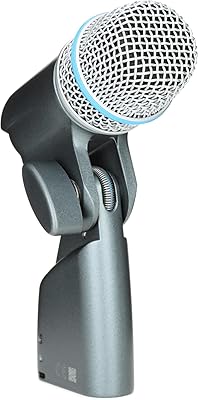
Shure Beta 56A
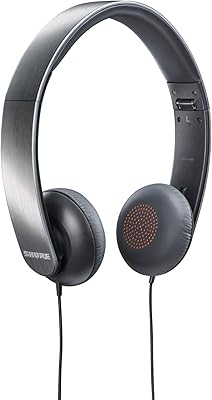
Shure SRH145 Closed-Back On-Ear Headphones
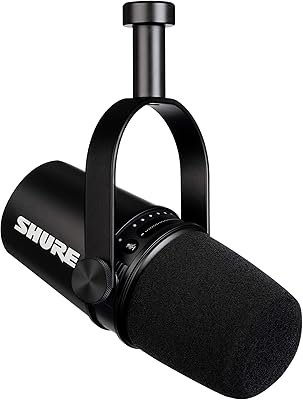
Shure MV7 USB/XLR Dynamic Microphone
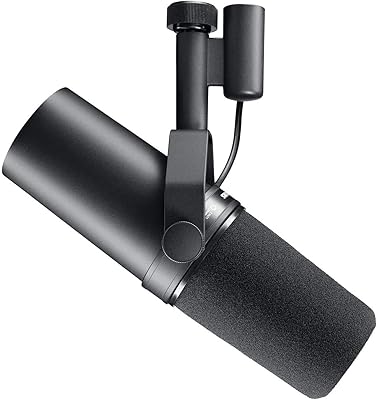
Shure SM7B
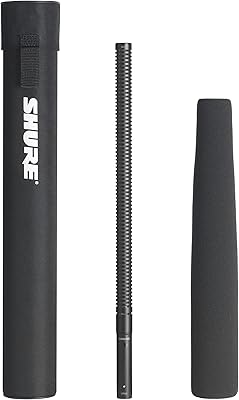
Shure VP89L Long Shotgun Microphone