

Overview
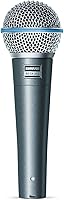
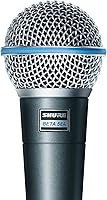
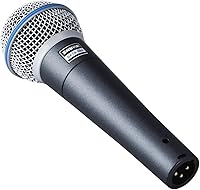
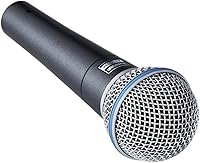
While the SM58 is the industry workhorse, the Shure BETA 58A serves as its more refined, high-output sibling designed for modern stages. Picking up this professional vocal microphone for the first time, you immediately notice a reassuring weight that comes from its rugged alloy steel housing. It feels substantial in the hand, signaling a build quality intended for decades of service rather than just a few tours. The hardened steel mesh grille is specifically engineered to resist dents and physical abuse, which is a massive relief for anyone who has seen a mic drop mid-performance. Beyond the physical toughness, the design shift to a tighter pickup pattern means it is built to perform in the chaotic soundscapes of a live concert. It offers a clear, professional look that fits naturally into any professional rig.
Features & Benefits
Performance-wise, the integration of a neodymium magnet ensures that this supercardioid dynamic mic delivers a significantly hotter output than its predecessors, requiring less gain from your mixer. This results in a cleaner signal that captures more nuance in a singer’s voice. The supercardioid pattern is the star here, providing exceptional isolation by rejecting sounds from the sides, which effectively kills feedback in loud monitors. Vocals get a noticeable boost in the mid-range, providing a crisp presence that helps a singer stay audible without needing excessive EQ. To handle the realities of handheld use, the internal pneumatic shock mount does an incredible job of dampening mechanical vibrations. Even when things get energetic on stage, the controlled bass rolloff keeps the low end from becoming muddy when the singer is right up against the grille.
Best For
This Shure stage mic is primarily built for professional vocalists who find themselves battling loud stage volumes and dense instrumental mixes. If you are a touring musician, the indestructible nature of the build means you can toss it into a gig bag without fearing for its survival. It is particularly effective on tight, cramped stages where traditional cardioid mics would pick up too much bleed from the drums or guitar amps. While it shines in live settings, it is also a sleeper hit for studio recordings where you want the detail of a condenser but the ruggedness and warmth of a dynamic element. For singers who rely on high gain levels but want to avoid the squeal of feedback, this tool provides the necessary surgical precision. It remains a staple for anyone needing a reliable, road-ready solution that never compromises on clarity.
User Feedback
Those who use this professional vocal microphone daily often praise its ability to carve out a specific space in the mix, describing the sound as significantly more bright and transparent compared to standard gear. The feedback is overwhelmingly positive regarding the indestructible build quality, with many long-term owners reporting years of use without a single failure. However, new users should be aware of a slight learning curve; because of the narrow supercardioid pattern, you need to stay centered on the capsule to maintain a consistent volume. Straying too far to the side causes a quicker drop-off in sound than most people are used to. Despite this, the trade-off is widely considered worth it for the sheer clarity and feedback rejection it provides. It remains a top-tier choice for performers who prioritize a consistent, professional-grade vocal delivery night after night.
Pros
- The supercardioid pattern offers incredible isolation from loud instruments and stage monitors.
- A hardened steel mesh grille ensures the capsule remains protected even after heavy drops.
- The neodymium magnet provides a hotter output, requiring less gain from your mixer.
- Vocals get a natural boost in presence, helping them cut through dense instrumental mixes.
- Its pneumatic shock mount system does an excellent job of killing handheld vibrations.
- Controlled bass rolloff prevents muddiness when singing directly against the grille.
- The build quality is legendary, often lasting for decades under professional use conditions.
- This supercardioid dynamic mic is highly resistant to feedback on loud stages.
Cons
- The narrow pickup window requires strict mic discipline to avoid sudden volume loss.
- Some singers find the bright mid-range profile a bit too harsh on sibilant voices.
- The Shure BETA 58A lacks an integrated on/off switch, which can be inconvenient for some.
- Its substantial weight might become fatiguing during very long handheld sets.
- The included vinyl storage pouch offers minimal protection against heavy crushing forces.
- It is significantly more expensive than entry-level dynamic microphones for hobbyists.
- The silver finish tends to show scuffs and cosmetic wear fairly quickly.
- It can sound somewhat thin for those specifically looking for deep, proximity-driven bass.
Ratings
Our system analyzed thousands of verified global reviews to calculate these scores for the Shure BETA 58A, specifically filtering out promotional noise and bot activity. This breakdown reflects real-world performance on stage and in the studio, ensuring both professional strengths and common user frustrations are transparently presented.
Build Quality
Feedback Rejection
Vocal Presence
Handling Noise
Sensitivity & Output
Proximity Effect Control
Versatility
Portability & Accessories
Ease of Use
Professional Value
Suitable for:
The Shure BETA 58A is an ideal choice for professional vocalists who find themselves performing in loud, crowded live environments where stage bleed is a constant battle. Because of its tight pickup pattern, it is a lifesaver for singers on small stages who need to stay audible without triggering feedback from nearby monitors or drum kits. Touring musicians will particularly appreciate the alloy steel construction and hardened mesh grille, which are built to survive the relentless physical abuse of the road. It also serves as a reliable studio tool for recording high-energy vocals that require more top-end clarity and detail than a standard dynamic mic can offer.
Not suitable for:
Casual hobbyists or public speakers who move around a lot while talking may find the Shure BETA 58A frustrating due to its very narrow pickup window. If you aren't disciplined about keeping the mic centered directly in front of your mouth, you will experience sudden and noticeable drops in volume. Podcasters or streamers working in quiet, treated rooms might prefer a larger diaphragm condenser that offers a more natural, broadcast-style warmth without the aggressive mid-range boost found here. Additionally, singers who naturally have very sharp or sibilant voices might find that this model emphasizes those harsh "s" sounds a bit too much for their liking.
Specifications
- Transducer Type: This is a dynamic microphone element featuring a high-output neodymium magnet.
- Polar Pattern: The supercardioid pattern provides maximum isolation from off-axis sound and superior feedback rejection.
- Frequency Response: The audio range spans from 50Hz to 16,000Hz with a presence boost tailored for vocals.
- Output Impedance: The rated impedance is 150 ohms (290 ohms actual) for professional connectivity with varied equipment.
- Sensitivity: The open circuit voltage is -51.5 dBV/Pa (2.6 mV) at 1kHz.
- Build Material: The body is constructed from silver-blue enameled die-cast metal with a hardened steel mesh grille.
- Connector Type: It uses a standard three-pin professional audio (XLR) male connector.
- Weight: The microphone weighs approximately 9.92 oz (278 grams) for a balanced handheld feel.
- Shock Mount: An advanced pneumatic shock mount system is integrated internally to reduce mechanical handling noise.
- Dimensions: The unit measures 6.5″ in length with a maximum head diameter of 2″.
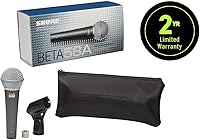
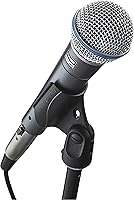
- Included Mount: The package includes an A25D adjustable stand adapter that rotates 180 degrees.
- Signal-to-Noise: The microphone maintains a 72 dB signal-to-noise ratio for clear professional recordings.
Related Reviews
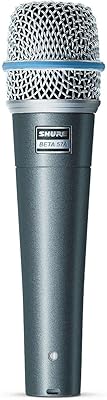
Shure Beta 57A
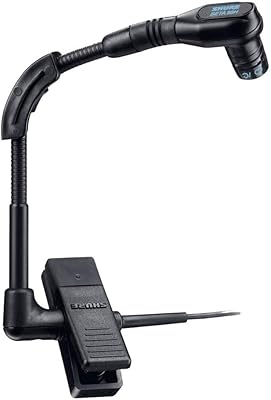
Shure BETA 98H/C Microphone
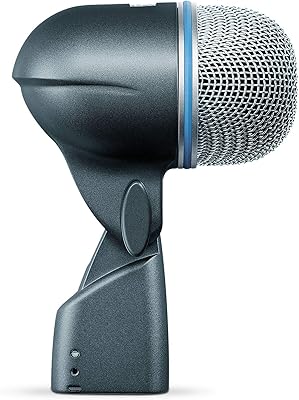
Shure Beta 52A
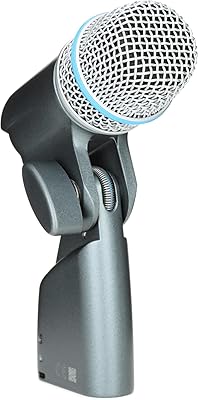
Shure Beta 56A
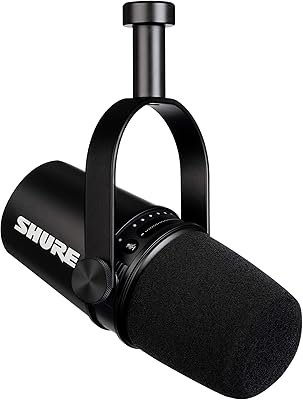
Shure MV7 USB/XLR Dynamic Microphone
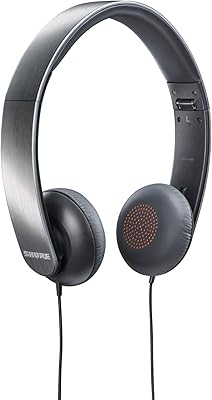
Shure SRH145 Closed-Back On-Ear Headphones
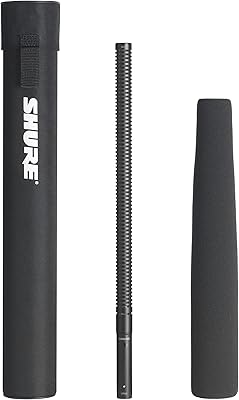
Shure VP89L Long Shotgun Microphone
Shure SM7B