Overview

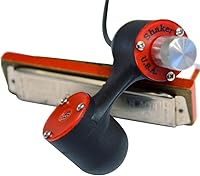
The Shaker Madcat Harmonica Microphone is built from the ground up for one purpose: getting a harmonica player's sound into an amp or PA without compromise. Unlike general-purpose vocal mics awkwardly adapted for harp, this harmonica mic fits naturally into a cupped-hand grip — the same technique players have used since the amplified blues tradition took hold in Chicago. The dynamic element design is a deliberate choice, not a cost-cutting measure; dynamic mics handle close-proximity, high-SPL sources like a driven harmonica far better than condensers. It ships ready to play, with cord, adaptor, and on-body volume control already included.

Features & Benefits

The high impedance output is the key technical detail here — it means this dedicated harp microphone can drive a guitar amp directly, the same way an electric guitar does, without needing a separate preamp or DI box in between. The included 49-inch cord terminates in a standard 1/4-inch guitar plug, and the bundled female-to-female adaptor opens up wireless sender connections or allows daisy-chaining a longer cable. A smooth-rotation volume knob sits right on the body for quick level adjustments between songs. The Velcro strap keeps it anchored in your palm during aggressive playing. At 3.5 ounces, fatigue over a long set is genuinely not a concern.

Best For

This harmonica mic makes the most sense for blues, folk, and roots players who regularly plug into a guitar amp on stage — that's the scenario it was engineered around. Gigging musicians will appreciate not having to carry a bag of adaptors; everything needed to connect to an amp, PA, or wireless unit is already in the box. Players stepping away from heavier bullet-style mics will notice the ergonomic difference quickly. Effects pedal users are also well-served, since the 1/4-inch output chains naturally into a pedalboard. Beginners picking up their first dedicated harmonica mic will find the learning curve minimal — plug in, strap it on, play.

User Feedback

Players who have used the Madcat mic consistently mention how well it sits in the hand — the shape genuinely accommodates a cupped grip without feeling forced. Tone character tends to come up too: many describe the output as mid-forward and punchy, which suits driven amp tones well. On the critical side, a handful of users have flagged durability concerns around the cord connection after extended use, and a few report that feedback rejection, while solid in smaller rooms, can become trickier at higher stage volumes. Output level has also drawn occasional complaints in situations where impedance mismatch with certain preamps caused a weaker-than-expected signal.

Pros

  • Plugs directly into a guitar amp with no preamp or DI box required.
  • On-body volume control lets you adjust levels mid-song without touching the amp.
  • At 3.5 ounces, it is light enough to hold comfortably through a full set.
  • Ships ready to play — cord, adaptor, and Velcro strap are all included.
  • Ergonomic shape fits naturally into a cupped-hand harmonica grip.
  • Compatible with wireless sender units, effects pedals, PA systems, and preamps out of the box.
  • Feedback rejection is noticeably better than using a standard vocal mic for harp.
  • The Velcro strap keeps the mic anchored during energetic or physically expressive playing.
  • Mid-forward output character suits driven amp tones that blues and roots players typically chase.

Cons

  • Cord durability at the connection point has been flagged by some users after extended use.
  • Feedback can still become problematic at high stage volumes or in live rooms with hard surfaces.
  • Impedance mismatch with certain preamps can result in a weaker-than-expected output signal.
  • The volume knob has drawn occasional complaints about reliability over time with heavy use.
  • Not suited for studio recording where a transparent, accurate signal is required.
  • No built-in clip or stand mount — use is largely limited to hand-held performance.
  • The 49-inch cord, while functional, may feel restrictive for players who move around a large stage.
  • Thermo resin construction feels durable enough for moderate use but may concern players with a rough-and-tumble gigging lifestyle.

Ratings

The scores below for the Shaker Madcat Harmonica Microphone were generated by AI after analyzing verified buyer reviews from multiple global markets, with spam, bot-submitted, and incentivized feedback actively filtered out. This harmonica mic earned strong marks in several areas that matter most to performing musicians, while a handful of real-world pain points pulled certain scores noticeably lower. Both the highlights and the shortcomings are reflected honestly here, so you get a clear picture before committing.

Ergonomics & Grip
88%
Players consistently report that the compact shape fits naturally into a cupped-hand grip without forcing an awkward hold. The Velcro strap adds a layer of security during energetic performances, which players who move around the stage particularly appreciate. For a mic you hold for an entire set, the 3.5-ounce weight makes a genuine difference.
A few players with larger hands noted the mic body felt slightly narrow for a fully relaxed grip during long sets. The Velcro strap, while useful, occasionally catches on clothing mid-performance, which can be momentarily distracting.
Amp Compatibility
91%
The high impedance output connects directly to a guitar amp's instrument input exactly the way an electric guitar does, requiring no additional hardware. Players using Fender Blues Junior, Peavey, and similar amps report a strong, consistent signal right out of the box. This plug-and-play behavior is one of the most praised practical advantages of this dedicated harp microphone.
Compatibility becomes less reliable when players attempt to feed the signal into low-impedance mixer or PA inputs without a DI box or impedance transformer. A handful of users running the mic into mixing consoles directly reported a noticeably weaker signal that required significant channel gain to compensate.
Feedback Rejection
74%
26%
In smaller venues and rehearsal rooms at moderate volume, players found this harmonica mic performed meaningfully better than repurposed vocal mics, which tend to howl at close proximity. At typical blues jam volumes, most users reported workable control without excessive fussing over mic position.
At louder stage volumes or in live rooms with hard, reflective surfaces, feedback control becomes more demanding and players need to manage amp placement carefully. Several reviewers noted the rejection ceiling is lower than what higher-end or custom bullet mics offer, which matters at serious gigging volumes.
Build Quality
67%
33%
The thermo resin body feels solid enough for regular gigging and resists minor drops without obvious damage. The volume knob has a satisfying resistance to its rotation, and the overall finish holds up reasonably well to the handling it endures night after night.
The most recurring durability concern centers on the junction between the mic body and the attached cord, which some players report loosening or developing signal drop after extended use. The volume knob has also drawn complaints from heavier users about inconsistent feel over time, suggesting the internal pot may not be built for years of intensive use.
Signal Output Level
71%
29%
When matched to an appropriate high-impedance input, the output level is strong enough to drive an amp without pushing the gain into unwanted noise territory. Players who understand impedance matching and set their rig accordingly tend to be satisfied with how the signal behaves through a pedalboard chain.
Users who plug into preamps or mixer channels expecting a consistent mic-level signal often find the output underwhelming without an impedance-matching solution in the chain. Impedance mismatch is the single most common technical complaint across negative reviews for this mic.
Included Accessories
83%
Shipping with a 49-inch cord, a female-to-female adaptor, and a Velcro strap already in the box removes a frustrating layer of setup for players who just want to play. The adaptor in particular unlocks wireless sender compatibility immediately, which many buyers did not expect at this tier.
The 49-inch cord, while adequate for most small-to-medium stage scenarios, frustrates players on larger stages who need more slack to move freely. Because the cord is not detachable, there is no easy way to swap it for a longer one without adding an extension via the adaptor.
Volume Control Usability
79%
21%
Having a volume knob physically on the mic body is a meaningful convenience — players can back off the level between songs or boost mid-solo without walking back to the amp. The smooth rotation gives enough resistance that accidental level shifts during playing are not a common complaint.
Precise adjustment while actively playing and cupping the mic takes practice, and a few users noted the knob position is not always easy to locate by feel alone in a dark venue. For players who want fine, repeatable level control, the knob lacks the detent or indexed feel that would make this effortless.
Wireless Compatibility
77%
23%
The included female-to-female adaptor makes connecting to a standard wireless belt-pack sender genuinely straightforward, and several reviewers confirmed successful hookups with common wireless systems without any additional hardware. This flexibility adds real value for players who move around the stage.
Not all wireless systems use a standard 1/4-inch sender input, and players using systems with proprietary connectors or XLR-based transmitters will need additional adaptor solutions not included in the box. A small number of users reported minor signal degradation through their specific wireless rigs, though this is likely system-dependent rather than a flaw in the mic itself.
Tone Character
76%
24%
Players drawn to blues and roots styles generally respond well to the mid-forward output this mic produces through a driven guitar amp, describing a punchy, direct tone that cuts through a band mix without sounding thin or overly clean. It handles the kind of gritty, overdriven amp tones that define amplified harp playing.
Players who prefer a more neutral or transparent sound — particularly those playing folk or acoustic-leaning styles into a clean PA — may find the tonal character too colored for their taste. The output is shaped by its intended use case, so players expecting studio-style accuracy from a live performance mic will likely be underwhelmed.
Portability
93%
At 3 x 1.1 x 1.5 inches and 3.5 ounces, this harmonica mic fits in a jacket pocket, a gig bag side pouch, or a harmonica case without any special effort. Players who travel frequently to jams and open mics consistently cite this as one of the least burdensome mics they have owned.
The attached cord adds some bulk that a detachable-cable design would avoid, and winding and storing the 49-inch cord neatly each time adds a minor but genuine packing step. For ultraminimal packers, the cord management is the only real portability friction.
Value for Money
82%
18%
For players who need a dedicated harmonica mic that works directly with a guitar amp and ships with all essential connectivity hardware included, the practical value is strong relative to what comparable dedicated harp mics cost. Beginners especially benefit from getting a complete, ready-to-use solution in one purchase.
Players who encounter durability issues with the cord connection or volume knob may find the long-term value calculation less favorable, particularly if repair or replacement becomes necessary within the first year or two of regular gigging. There are pricier dedicated harp mics on the market with more robust construction for serious working musicians.
Ease of Setup
89%
There is essentially no learning curve for getting this dedicated harp microphone up and running — plug the cord into an amp, wrap the Velcro strap around your hand, and you are playing. Players with no prior experience with dedicated harmonica mics consistently describe the initial setup as taking under two minutes.
Players who want to connect to a PA or a wireless system for the first time may need to understand the impedance mismatch issue before achieving a clean result, and the included documentation is minimal. Without some prior knowledge or research, a player could spend time troubleshooting a weak signal that a simple DI box would immediately solve.
Feedback from Peers
78%
22%
Among harmonica-specific communities and players who know the niche, this mic has built a positive reputation as a practical, no-nonsense option for players who want to plug in and play rather than engineer their rig. The name recognition within the harmonica player community gives buyers reasonable confidence they are not buying an unknown quantity.
Outside of dedicated harmonica circles, the mic is not well known, which means finding in-depth third-party reviews, comparison videos, or community troubleshooting threads takes more effort than for mainstream microphone brands. Players who rely on a broad community base for setup support may find resources thinner than expected.

Suitable for:

The Shaker Madcat Harmonica Microphone was designed with a very specific player in mind, and if you fit that profile, it delivers exactly what it promises. Blues, folk, and roots harmonica players who regularly perform through a guitar amp will find this mic fits both their hand and their signal chain without any fuss. The high impedance output means you can plug straight into the front of a guitar amp — no DI box, no preamp — just like plugging in an electric guitar. Gigging musicians who are tired of showing up to a jam with a bag of adaptors will appreciate that the cord, female-to-female adaptor, and on-body volume knob come standard. Players transitioning from heavier bullet mics who want something lighter and more ergonomically shaped for cupped-hand technique will feel right at home, and anyone running a pedalboard or a wireless rig will find the 1/4-inch output plugs right in without modification.

Not suitable for:

The Shaker Madcat Harmonica Microphone is a purpose-specific tool, and buyers who stray outside that purpose are likely to be disappointed. Studio recording musicians who need a flat, transparent signal path will find the high impedance, dynamic character of this mic unsuitable for clean acoustic capture. Players who perform primarily on large stages at high volume should be aware that feedback rejection, while better than a general-purpose mic, is not bulletproof — room acoustics and stage monitor levels still matter considerably. If your amp or preamp is designed for low-impedance microphone inputs, you may encounter a weaker-than-expected signal and need additional gear to compensate. This dedicated harp microphone is also not a great match for vocalists or multi-instrument players looking for a versatile, multi-use microphone — it is built for one job, and that specialization comes at the cost of flexibility.

Specifications

  • Microphone Type: Dynamic element microphone, designed for close-proximity use with harmonicas across all playing styles.
  • Impedance: High impedance output, allowing direct connection to guitar amplifier inputs without a preamp or DI box.
  • Cord Length: Includes a 49-inch attached cord, giving players reasonable freedom of movement on a typical stage.
  • Connector: Terminates in a standard 1/4-inch guitar-type plug compatible with amp inputs and most effects pedals.
  • Included Adaptor: Ships with a female-to-female 1/4-inch adaptor that enables wireless sender hookup or cord extension.
  • Volume Control: Smooth-rotation on-body volume knob allows real-time level adjustments without touching the amplifier.
  • Weight: Weighs 3.5 ounces, keeping hand fatigue to a minimum during extended live performances.
  • Dimensions: Measures 3 x 1.1 x 1.5 inches, providing a compact and hand-friendly form factor for cupped-grip technique.
  • Body Material: Constructed from thermo resin, a lightweight polymer that balances durability with low overall weight.
  • Color: Features a black body with contrasting red grille and volume control plates for easy visual identification on stage.
  • Attachment: Includes a Velcro strap to secure the microphone firmly to the player's hand during performance.
  • Wireless Support: Compatible with wireless sender units when used with the included female-to-female 1/4-inch adaptor.
  • Compatible Devices: Works with guitar amplifiers, PA systems, effects pedals, preamps, and wireless sender units.
  • Musical Application: Designed specifically for harmonica performance across all styles, including blues, folk, and roots music.
  • Model Number: Identified by model number SMC, as designated by the manufacturer Shaker.

Related Reviews
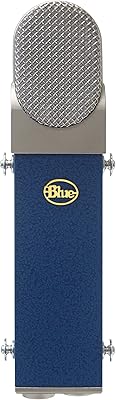
Blue Blueberry Cardioid Condenser Microphone
79%
93%
Tonal Character
91%
Vocal Performance
89%
Build Quality
94%
Capsule Quality
71%
Preamp Compatibility
More
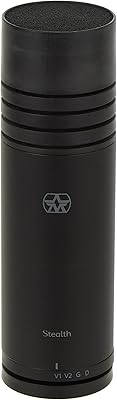
Aston Microphones Stealth Condenser Microphone
79%
88%
Sound Quality
84%
Voice Mode Versatility
86%
Built-in Preamp
91%
Build Quality
83%
Value for Money
More
Neat Microphones Skyline USB Desktop Condenser Microphone
89%
94%
Audio Quality
91%
Ease of Use
89%
Build Quality
90%
Mute Button Functionality
92%
Value for Money
More
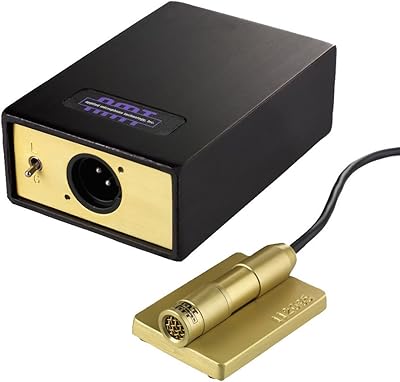
AMT M40 Piano Condenser Microphone
76%
88%
Sound Quality
91%
Ease of Setup
84%
Build Quality
67%
Value for Money
86%
Live Performance Reliability
More
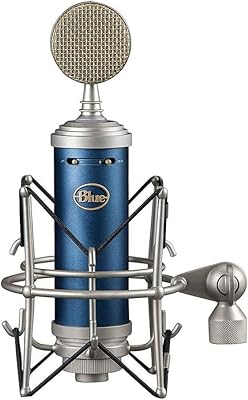
Blue Bluebird SL Condenser Microphone
75%
91%
Vocal Sound Quality
88%
Build Quality
79%
Value for Money
54%
Ease of Setup
74%
Noise Rejection
More
Aston Microphones Origin
85%
94%
Build Quality
89%
Vocal Clarity
92%
Instrument Response
71%
Internal Pop Filtering
91%
Price-to-Performance Ratio
More
Cascade Microphones FAT HEAD Ribbon Microphone
81%
88%
Sound Character
82%
Build Quality
91%
Value for Money
63%
Preamp Compatibility
84%
Polar Pattern Accuracy
More
Aston Microphones Spirit Large-Diaphragm Condenser Microphone

85%
93%
Sound Quality
96%
Build Quality
89%
Polar Pattern Versatility
88%
Built-in Pop Filter
84%
Value for Money
More
Rode S1 Handheld Condenser Microphone
80%
91%
Vocal Clarity
78%
Feedback Rejection
89%
Build Quality
87%
Noise Floor
61%
Handling Noise
More
Shure VP89L Long Shotgun Microphone
81%
94%
Directional Accuracy
88%
RF Interference Rejection
91%
Modular Capsule System
89%
Build Quality
62%
Value for Money
More

FAQ

Yes, that is exactly what it is built for. The high impedance output matches the input on a standard guitar amp the same way an electric guitar does, so you just plug the 1/4-inch cord straight in and you are ready to go.

It does. The included female-to-female 1/4-inch adaptor lets you connect the mic's cord to a wireless belt-pack sender unit, so you can cut the cable entirely if your wireless system uses a standard guitar-type input.

The Shaker Madcat Harmonica Microphone handles feedback noticeably better than a standard vocal mic used for harp, but it is not immune. In smaller venues at moderate stage volumes it performs well. In louder rooms with reflective surfaces, you may still need to manage your amp positioning and monitor levels carefully.

Most players find it accessible during performance since it sits right on the body of the mic. The smooth-rotation design means you can nudge the level up or down without a jarring jump. That said, precise adjustments take a little getting used to if you are playing actively.

It wraps around your hand to keep the mic anchored in your palm, which is especially useful during physically expressive playing where the mic might otherwise shift in your grip. It is a simple but practical addition for gigging musicians.

Yes. The 1/4-inch output connects directly to any standard effects pedal input, so you can run it through overdrive, reverb, or any other pedal in your chain exactly as you would an instrument. No special adaptor is needed for that use case.

The ergonomic shape is designed for the same cupped-hand technique bullet mic players use, but it is considerably lighter and more compact. Most players who make the switch report that the grip feels natural fairly quickly, though the tonal character will differ from a vintage bullet.

The cord is attached to the mic body rather than being detachable via a separate connector, which is worth knowing upfront. If the cord is damaged, repair or replacement is not as straightforward as on a mic with a removable cable. Treating the connection point carefully during use and storage helps extend its life.

Yes, though keep in mind that most PA systems use low-impedance XLR inputs at the mixer. You would need a high-to-low impedance matching transformer or a compatible DI box between the mic and the PA input to get a strong, clean signal at the board.

If you already know you want to perform amplified and you play harmonica specifically, then yes — this dedicated harp microphone gives you everything needed to get started with a live setup in one package. It is not a multi-purpose mic, but for its intended use it removes a lot of the guesswork around adaptors and compatibility.