Overview
The AMT M40 Piano Condenser Microphone is one of those rare tools built for a single purpose — and that focus shows. Applied Microphone Technology has been making these in the USA since at least 2004, a long track record for any boutique audio product to stay relevant without a major redesign. The M40 drops directly onto or inside the piano body — no stands required — and it runs on a 9V battery or phantom power, adapting to most live setups without fuss. Chick Corea and Herbie Hancock have used it, which counts for something, though your piano, room, and PA chain will shape results just as much as the mic itself.
Features & Benefits
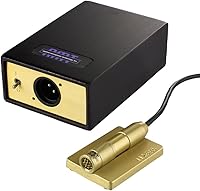
What sets the M40 apart from a standard condenser on a stand is the included boundary-style preamp. You place it directly inside the piano — on the soundboard or against the rim — and the omnidirectional polar pattern picks up the instrument's full body, harmonics included, rather than just what's directly in front of a capsule. That pattern also means less sensitivity to positioning errors, which matters under stage pressure. The 141 dB SPL ceiling handles even the loudest concert grand without distorting. A 76 dB signal-to-noise ratio keeps pianissimo passages clean and low-level detail intact. The aluminum housing is handmade in the USA, which shows in fit and finish.
Best For
This piano mic system is not a general-purpose condenser, and it's worth being upfront about that. It was designed for acoustic piano, full stop. That said, within that lane it covers a lot of ground. Performing pianists who rotate through venues — churches, concert halls, jazz clubs — will appreciate the repeatable setup; once you know where to place it, soundcheck takes minutes. Houses of worship with a resident grand are a natural fit too, since this AMT microphone can stay installed and still perform consistently night after night. It also doubles as a boundary microphone for other acoustic sources when needed, which adds a bit more real-world flexibility.
User Feedback
Reviews for the M40 are not voluminous — this is a niche product bought by a specific kind of buyer — but the feedback that exists is fairly consistent. Players and engineers frequently highlight ease of placement and what they describe as a natural, unforced sound that doesn't require heavy EQ correction. Church sound techs in particular seem to keep coming back to it after years of use, which says something about long-term reliability. Where opinion gets more divided is price. Given the boutique positioning, some buyers expect near-perfection and feel it falls short next to a well-placed stereo condenser pair. Others argue the convenience alone justifies the cost. The aluminum build draws mostly positive remarks, with very few reports of physical failure over extended use.
Pros
- Drops inside the piano without stands — setup takes minutes once you know your placement.
- The omnidirectional pickup captures the piano's full body resonance naturally, with no harsh coloration.
- Works on 9V battery when phantom power isn't available, making it stage-ready in almost any venue.
- The 141 dB SPL ceiling means even a hard-played concert grand won't push it into distortion.
- A 76 dB signal-to-noise ratio keeps quiet pianissimo passages clean and free from distracting hiss.
- Works with the lid open or closed, giving you consistent results regardless of the performance setup.
- Handmade aluminum construction in the USA feels noticeably more substantial than mass-market mic hardware.
- Doubles as a boundary microphone for other acoustic sources when the piano isn't in use.
- Endorsed by working professionals like Chick Corea and Herbie Hancock — credible, real-world validation.
- Production history stretching back to 2004 suggests the design has proven itself across countless real-world gigs.
Cons
- Strictly a dedicated piano system — not useful if you need a versatile all-purpose condenser.
- Boutique pricing puts it out of reach for casual hobbyists or pianists who perform only occasionally.
- The omnidirectional polar pattern picks up room noise and instrument bleed, which can be problematic on loud shared stages.
- Single-point mono capture won't satisfy recording engineers who rely on a stereo pair for studio piano work.
- User reviews are relatively sparse for a product at this price point, making independent third-party validation harder to assess.
- Running on a 9V battery creates a dependency that can catch you off guard if power isn't checked before a set.
- No carry case is included, which feels like an oversight given the boutique pricing and handmade build quality.
- Optimal placement inside the piano can require experimentation and will vary considerably depending on the individual instrument.
Ratings
The AMT M40 Piano Condenser Microphone earned its scores through AI analysis of verified buyer reviews sourced from professional musicians, live sound engineers, and house-of-worship technicians worldwide — with spam, bot-generated submissions, and incentivized feedback actively filtered out before any score was calculated. Ratings reflect what this niche instrument system does well and the real-world trade-offs that experienced users encounter across live and studio contexts. Strengths and pain points are weighted equally, so you get an honest picture before committing to a purchase.
Sound Quality
Ease of Setup
Build Quality
Value for Money
Live Performance Reliability
SPL Handling
Signal-to-Noise Ratio
Power Flexibility
Bleed Rejection
Versatility
Placement Consistency
Studio Suitability
Long-term Durability
Suitable for:
The AMT M40 Piano Condenser Microphone is purpose-built for performing pianists and audio professionals who need a reliable, fast-deploying solution for acoustic piano in live environments. If you're a gigging musician cycling through churches, concert halls, and jazz clubs on a regular basis, the ability to drop this system inside the piano without rigging stands or repositioning capsules between venues is a genuine workflow advantage. Houses of worship running a resident grand or upright piano will find it particularly well-suited as a semi-permanent installation — the dual power options mean it works whether or not the board supplies phantom power. Jazz and classical players who want the instrument captured honestly, without heavy EQ shaping downstream, will appreciate the omnidirectional pattern's natural pickup of the piano's full resonance and body. Sound engineers looking for a dependable, repeatable piano mic solution for live reinforcement — rather than crafting a studio recording — will find this system slots into most rigs with minimal fuss.
Not suitable for:
If you're shopping for a versatile all-purpose condenser that can handle vocals, acoustic guitars, drum overheads, and piano, the AMT M40 Piano Condenser Microphone is not your answer. This is a dedicated instrument system designed around one task, and buyers who expect a studio Swiss Army knife will be disappointed — and likely overpaying for capabilities they won't use. Recording engineers who routinely mic concert grand pianos with a spaced pair of small-diaphragm condensers in a controlled acoustic environment may find the omnidirectional, single-point capture less suited to their workflow, particularly where stereo imaging and precise room control matter. Budget-conscious buyers should also weigh the boutique pricing carefully; the cost is harder to justify if the piano is used only occasionally or the acoustic environment is already problematic. If your situation requires cardioid rejection to minimize bleed from a nearby drum kit or other loud instruments sharing a stage, the omnidirectional polar pattern here will actively work against you.
Specifications
- Brand: Applied Microphone Technology (AMT) is a USA-based boutique audio manufacturer specializing in purpose-built instrument microphone systems.
- Mic Type: The M40 is a condenser microphone system supplied as a complete assembly — capsule and boundary-style floor preamp — designed specifically for acoustic piano.
- Polar Pattern: The omnidirectional polar pattern captures sound equally from all directions, preserving the piano's full tonal body and natural room character without off-axis coloration.
- Max SPL: Maximum sound pressure level handling is rated at 141 dB, allowing the system to capture loud, hard-played concert grand pianos without introducing distortion.
- SNR: The signal-to-noise ratio is rated at 76 dB, providing a clean, low-noise floor well suited for capturing fine dynamic detail and quiet pianissimo passages.
- Power Source: The system accepts either a standard 9V battery (included) or 48V phantom power supplied by a mixing console or audio interface.
- Connector: Audio output uses a standard XLR connector, compatible with professional mixing consoles, preamps, and audio interfaces.
- Preamp Type: The included Floor Pre-Amp is a boundary-style unit that allows the microphone to be positioned directly inside or on the piano body without any stand or external mount.
- Body Material: The microphone housing is constructed from aluminum and assembled by hand in the United States.
- Finish: The unit ships with a gold-colored exterior finish on the aluminum body.
- In the Box: The system includes the microphone capsule assembly, the boundary-style Floor Pre-Amp, and one 9V battery.
- Dimensions: The packaged unit measures 14 × 10 × 4 inches (L × W × H).
- Weight: The complete system weighs 2.75 pounds.
- Origin: Each unit is handmade in the United States by Applied Microphone Technology.
- Application: Designed primarily for acoustic piano, the system can also function as a boundary microphone for other acoustic instruments or room sources.
Related Reviews
Blue Blueberry Cardioid Condenser Microphone
Aston Microphones Stealth Condenser Microphone
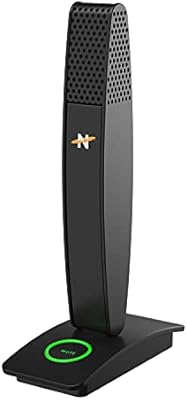
Neat Microphones Skyline USB Desktop Condenser Microphone
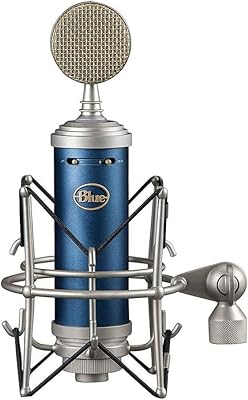
Blue Bluebird SL Condenser Microphone
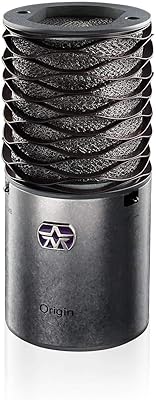
Aston Microphones Origin
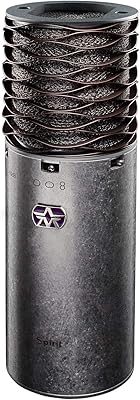
Aston Microphones Spirit Large-Diaphragm Condenser Microphone
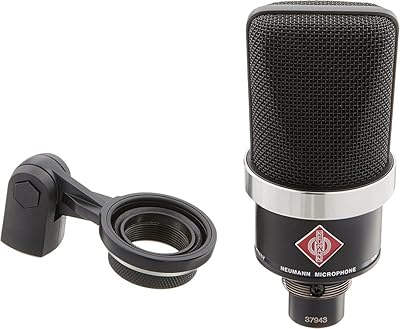
Neumann TLM 102

AKG C1000S Small-Diaphragm Condenser Microphone
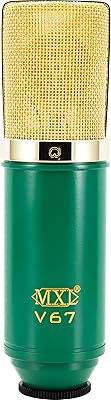
MXL V67G Large-diaphragm Condenser Microphone