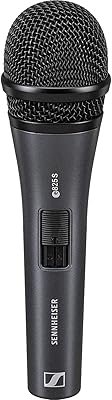
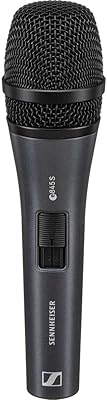
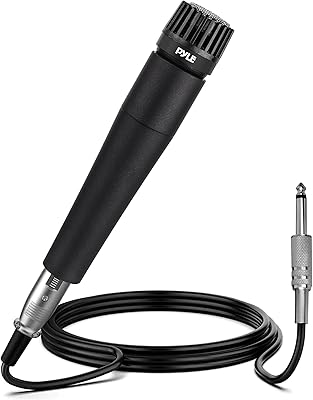
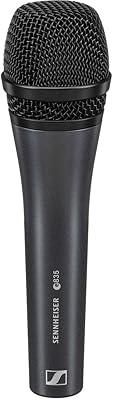
Overview

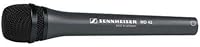
The Sennheiser MD 42 Handheld Dynamic Microphone has been a staple on broadcast sets since 2003, and that kind of staying power means something in an industry that cycles through gear constantly. What makes this field interview mic stand out is its omnidirectional polar pattern — a deliberate design choice that prioritizes natural speech capture over precise mic technique. Built entirely from metal, it was clearly engineered for the punishment of daily field production, not for sitting on a studio desk. This is a specialist tool with a specific purpose: capturing clean interview audio when you are on the move.
Features & Benefits

The omnidirectional pickup pattern is the centerpiece here — it pulls in clean speech whether the mic is angled directly at a subject or held loosely at waist level, which is genuinely useful during fast-moving interviews. The shock-mounted capsule does a solid job of isolating vibrations from hand movement, so grip shifts rarely make it into the final audio. A protective metal basket around the capsule provides a useful layer of wind defense outdoors, though a proper windscreen is still advisable on a breezy day. XLR connectivity means the MD 42 drops straight into any professional camera, mixer, or field recorder with no adapters required, and being passive, it never needs phantom power.

Best For

This Sennheiser handheld was built with a very specific type of professional in mind. ENG and EFP crews will find it most valuable — particularly when conducting street interviews or press-conference coverage where controlling the sonic environment is not an option. Documentary filmmakers working without a dedicated sound operator benefit from the omni pattern's forgiving nature; you are focused on the story, not on whether your mic angle is perfect. Corporate video teams doing run-and-gun interviews in office corridors or event spaces will also get solid results. For anyone building a professional kit, this is a dependable, long-lasting secondary mic that holds up when it counts.

User Feedback

Verified buyers give this field interview mic a 4.6 out of 5, and the recurring theme in positive reviews is how much easier the omni pattern makes fieldwork — fewer retakes, less stress over mic placement during an unpredictable interview. Handling noise rejection gets specific praise from users who compared it directly against cheaper alternatives. The honest caveat that comes up repeatedly is that the omni pickup does not discriminate: in genuinely loud environments — a crowded convention floor or a busy street — background noise will bleed in noticeably. A few buyers also flag that no windscreen or pouch is included in the box, which feels like an oversight given the professional positioning of the mic.

Pros

  • The omnidirectional pickup pattern captures natural, intelligible speech without demanding precise mic technique from the operator.
  • Shock-mounted capsule design keeps handling noise out of recordings even during fast-moving, unpredictable fieldwork.
  • All-metal construction feels genuinely durable and has held up for long-term users across years of regular professional use.
  • Passive XLR design means the MD 42 works instantly with virtually any professional camera, mixer, or portable recorder.
  • No phantom power requirement simplifies setup and reduces compatibility concerns across different recording rigs.
  • The forgiving omni pattern significantly reduces the number of unusable takes caused by mic placement errors during interviews.
  • At 11.2 ounces, this Sennheiser handheld is light enough to hold extended without arm fatigue during long interview sessions.
  • The integrated metal basket provides a meaningful first layer of wind protection for outdoor shoots without adding bulk.
  • A 4.6 out of 5 rating from verified professional buyers signals consistent real-world satisfaction over many years on the market.
  • Proven design longevity since 2003 means replacement parts, community knowledge, and workflow compatibility are easy to find.

Cons

  • No windscreen, carry pouch, or mic clip is included in the box, adding immediate extra cost for a complete working setup.
  • The omnidirectional polar pattern offers zero background noise rejection, making it a poor choice for loud or chaotic shooting environments.
  • Buyers accustomed to cardioid mics will need to adjust their monitoring habits, since ambient noise bleeds in from all directions.
  • There is no built-in wireless option, so cable management remains a practical consideration during run-and-gun shoots.
  • The specialist ENG and EFP focus means this field interview mic has very limited crossover value for studio recording or live music applications.
  • Frequency response tops out at 18,000 Hz, which is adequate for speech but underwhelming for anyone recording instruments or wideband audio.
  • The relatively modest accessories situation feels inconsistent with the professional price positioning of the mic.
  • Users upgrading from a windscreen-included competitor may find the bare-bones packaging a frustrating step backward.

Ratings

The Sennheiser MD 42 Handheld Dynamic Microphone scores below were generated by an AI model after analyzing verified buyer reviews from professional users worldwide, with spam, bot activity, and incentivized feedback actively filtered out. The ratings reflect a realistic picture of this field interview mic's strengths and its genuine limitations — nothing is glossed over. Buyers will find both what earns its strong overall satisfaction and where real-world use exposes trade-offs worth knowing before purchase.
Build Quality
93%
Field crews who have used the MD 42 for years report that the all-metal housing shows almost no signs of wear despite regular drops, bag throws, and exposure to varying weather. In daily ENG work where gear takes real punishment, the robust construction gives professionals genuine confidence that the mic will survive a busy season without developing rattles or failures.
The metal body does add noticeable weight compared to plastic-housed competitors, which some users feel over the course of a long interview day. A small number of buyers also wish the finish were more scratch-resistant, as scuffs appear on the surface after extended field use, though these are cosmetic and never structural.
Speech Intelligibility
91%
Across dozens of real-world interview scenarios, buyers consistently praise how naturally the omni pattern captures voice — subjects sound clear and present whether the mic is pointing directly at them or held loosely between two speakers. Documentary crews in particular highlight how little post-production correction is needed when the MD 42 is properly positioned within comfortable reach.
Because the mic captures all directions equally, intelligibility can suffer in environments with significant competing voices or reverb, such as event halls or busy newsrooms. In these settings, the clarity that works so well in a one-on-one interview gets muddied by reflected sound and ambient chatter that a directional mic would naturally suppress.
Handling Noise Rejection
88%
The shock-mounted capsule is one of the most frequently praised practical features among professional buyers, particularly journalists who regularly hand the mic between themselves and a subject mid-interview. Grip shifts, cable tugs, and minor knocks that would create audible thumps on a standard dynamic mic are largely absorbed before reaching the capsule.
Very aggressive handling — firm grip transitions or striking the body against a hard surface — can still produce audible artifacts, so it is not entirely foolproof in chaotic shooting conditions. A few users noted that extended cable stress at the XLR junction can occasionally introduce minor noise if the connection is not fully seated.
Omni Pattern Performance
89%
For the specific use case of a two-person interview, the omni pattern removes one of the most common errors in field audio — mic technique — by making precise angling largely irrelevant. ENG crews working fast-turnaround news stories consistently report fewer unusable takes because neither the interviewer nor the subject needs to stay locked in position.
The omnidirectional pattern is a deliberate design choice, not a flaw, but it does mean the mic has a narrower application range than a cardioid. Buyers who later try to use this field interview mic for solo narration, panel discussions with many speakers, or any scenario requiring acoustic isolation will find the pattern actively works against them.
Background Noise Rejection
41%
59%
For interviews conducted in quiet or acoustically managed spaces — a private office, a controlled set, or a quiet conference room — background noise rejection is rarely a meaningful concern, and the omni pattern performs without issue. Some experienced users mitigate ambient noise problems through careful mic-to-mouth distance and post-production noise reduction.
On a busy city street, at a trade show, or near any sustained ambient sound source, the omni pattern offers essentially no rejection, and background noise will sit prominently in the recording. This is the single most commonly cited disappointment among buyers who underestimated how omnidirectional truly means all directions.
Compatibility
94%
The standard XLR connector and passive design mean the MD 42 works with virtually every professional audio device on the market — from broadcast cameras to portable recorders to full mixing desks — without adapters, drivers, or configuration. Professionals who run varied kit across different shoots report zero compatibility headaches across years of use.
There is no wireless option built in, which is a relevant limitation for certain broadcast setups where cable management is a genuine constraint. Users who need to integrate the mic into a wireless transmitter system will need a compatible bodypack adapter, adding cost and complexity to an otherwise simple signal chain.
Ease of Use
87%
Pick it up, plug it in, and record — there are no switches, gain adjustments, or polar pattern toggles to manage, which is exactly what a working journalist or documentary crew needs under deadline pressure. The forgiving omni pattern further reduces the cognitive load on the operator during a live interview.
The simplicity that makes it easy to use also means there is no flexibility to adapt to changing acoustic conditions on the fly — no high-pass filter, no pad, no pattern switching. Users who regularly move between very different recording environments may find the lack of onboard controls limiting.
Value for Money
72%
28%
For a professional broadcast mic from a trusted manufacturer with a track record dating to 2003, the price reflects genuine engineering and build quality rather than brand markup alone. Long-term users who have avoided replacement costs over many years of field use often describe it as one of the more cost-efficient tools in their kit.
The complete absence of accessories — no windscreen, no pouch, no stand adapter — means the out-of-box cost is not the true total cost of ownership, and budget-conscious buyers may feel frustrated discovering this after purchase. Compared with competitors that bundle at least a foam windscreen at similar price points, the value equation feels slightly one-sided.
Portability
83%
At 11.2 ounces and roughly the length of a standard handheld mic, this Sennheiser handheld fits naturally in a camera bag side pocket or a gear case without demanding dedicated storage. ENG crews who travel light appreciate that it adds minimal weight to a kit already carrying cameras, batteries, and cables.
The absence of a carry pouch means the metal body can scratch other gear in a shared bag, and buyers need to source their own protective solution. A handful of users also note that the 9.8-inch length can make it slightly unwieldy in very tight shooting spaces.
Wind Noise Resistance
67%
33%
The integrated metal basket around the capsule does a reasonable job of reducing breath pops and light air movement during calm outdoor recording, which is genuinely useful for quick street interviews where pulling out a full windscreen kit is impractical. Users in mild-wind environments report cleaner results than with comparable mics lacking this protection.
In anything beyond a light breeze, the built-in basket is clearly insufficient, and wind noise becomes a significant problem that ruins otherwise usable takes. Given that this Sennheiser handheld is explicitly marketed for outdoor field use, the absence of an included foam windscreen feels like an incomplete solution.
Accessories & Packaging
38%
62%
The mic itself arrives in clean, professional packaging that protects it adequately in transit. Some experienced buyers who already own windscreens and pouches from other mics find the bare-bones approach acceptable since they are not paying for accessories they would not use.
For a mic at this price level and with this professional positioning, the lack of any bundled accessories — no windscreen, no pouch, no mic clip — is a recurring and justified complaint. Buyers coming from competitors that include at least basic accessories will immediately notice the contrast.
Long-term Reliability
92%
The combination of all-metal housing, shock-mounted capsule, and passive electronics means there are very few failure points in the MD 42's design. Multi-year owners across broadcast and documentary fields consistently report that the mic performs identically to when it was new, even after heavy daily use.
Capsule degradation over many years of intensive use is the most commonly reported issue among very long-term owners, and while it is rare, it does eventually happen. Sennheiser's professional service network can address this, but buyers should confirm replacement parts availability for older units before committing to a repair path.
Professional Versatility
61%
39%
Within its intended discipline — broadcast interviews and ENG field work — the MD 42 handles a genuinely wide range of scenarios, from press scrums to sit-down documentary interviews, without needing to swap gear. Its passive XLR design also makes it deployable across virtually any professional recording infrastructure.
Step outside the interview context and the MD 42's versatility drops sharply. It is not well-suited for music recording, studio voiceover work, panel discussions in reverberant rooms, or live event audio — applications that would require either a different polar pattern or a more extended frequency response.

Suitable for:

The Sennheiser MD 42 Handheld Dynamic Microphone was purpose-built for professionals who conduct interviews in uncontrolled environments, and that focus makes it a strong fit for a specific type of buyer. Broadcast journalists and ENG crews will get the most out of it, particularly in situations where you are holding the mic out toward a subject who keeps shifting position — the omnidirectional pickup means you are not constantly chasing the sweet spot. Documentary filmmakers working lean, without a dedicated sound recordist on set, will also appreciate how little technique the mic demands under pressure. Corporate video teams doing fast-paced event coverage or office walk-and-talk interviews will find it equally reliable. It also makes a smart secondary or backup mic for any professional kit: all-metal construction and a proven track record since 2003 mean it is the kind of gear you can throw in a bag and trust to work when you need it.

Not suitable for:

The Sennheiser MD 42 Handheld Dynamic Microphone is not the right tool for every audio situation, and buyers should be clear-eyed about where it falls short. Its omnidirectional pattern, which is genuinely useful in controlled interview settings, becomes a liability in loud environments — a busy trade show floor, a street protest, or a crowded stadium will bleed heavily into your recording with no way to reject it. Studio podcasters or voiceover artists who need tight, focused sound isolation should look at a cardioid or supercardioid dynamic instead. Musicians and live-performance sound engineers will find the omni pattern and ENG-focused frequency response unsuitable for stage or studio work. This is also not the mic for buyers who want a complete out-of-the-box package: no windscreen, no carrying pouch, and no clip are included, so budget for accessories separately. If phantom power is your only available power source, there is nothing to worry about, but buyers expecting built-in wireless capability will need to look elsewhere entirely.

Specifications

  • Microphone Type: Dynamic moving-coil microphone designed for professional speech capture in field production environments.
  • Polar Pattern: Omnidirectional, capturing sound equally from all directions with no significant off-axis rejection.
  • Frequency Response: Rated up to 18,000 Hz, covering the full intelligibility range of human speech with adequate headroom.
  • Connector: Standard 3-pin XLR output, compatible with professional cameras, mixers, and portable field recorders.
  • Power Requirement: Fully passive design requiring no phantom power, battery, or external power source of any kind.
  • Capsule Mounting: Shock-mounted internal capsule suspension reduces mechanical vibration and handling noise transmission to the signal.
  • Wind Protection: Integrated protective metal basket surrounds the capsule to attenuate light wind noise during outdoor use.
  • Housing Material: All-metal construction throughout, providing resistance to physical impact and long-term durability in field conditions.
  • Channels: Single-channel mono output delivering a clean, direct signal with no mixing or splitting required.
  • Form Factor: Handheld design measuring 9.8 x 2.4 x 1.9 inches, sized for comfortable single-hand grip during interviews.
  • Weight: 11.2 ounces (approximately 317 grams), light enough for extended handheld use without significant fatigue.
  • Recommended Use: Optimized for ENG, EFP, on-location video recording, and spoken-word speech capture in professional broadcast contexts.
  • Compatible Devices: Works with professional cameras, audio mixers, and portable audio recorders via standard XLR connection.
  • Manufacturer: Designed and manufactured by Sennheiser, a German professional audio brand with decades of broadcast industry presence.
  • Model Number: Official Sennheiser model designation is MD 42, with item model number 005173 used for parts and service identification.
  • Market Availability: First made available in June 2003, with continuous manufacturer support and no announced discontinuation as of current listings.
  • Included Contents: Package contains the MD 42 microphone body only; no windscreen, carrying pouch, or stand adapter is included.

Related Reviews
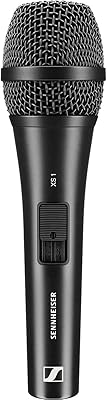
Sennheiser XS 1
Sennheiser XS 1
86%
93%
Build Quality
91%
Value for Money
87%
Feedback Rejection
84%
Speech Intelligibility
89%
Switch Performance
More
Sennheiser E825-S
Sennheiser E825-S
87%
94%
Build Quality & Durability
91%
Feedback Rejection
88%
Switch Functionality
86%
Handling Noise Isolation
84%
Vocal Clarity
More
Sennheiser MD 421-II
85%
93%
Build Quality & Durability
96%
Sound Clarity & Accuracy
98%
High SPL Handling
42%
Mounting Design & Usability
89%
Low-Frequency Control
More
Pyle PDMIC78 Dynamic Handheld Microphone
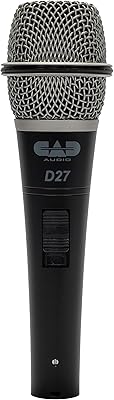
70%
83%
Build Quality
71%
Sound Clarity
78%
Noise Rejection
84%
Value for Money
62%
Interface Compatibility
More
Sennheiser e 845-S
Sennheiser e 845-S
89%
92%
Vocal Clarity
96%
Build Durability
93%
Feedback Rejection
89%
Switch Reliability
84%
Handling Noise Suppression
More
Sennheiser MD 46
Sennheiser MD 46
89%
93%
Vocal Clarity
96%
Build Durability
89%
Handling Noise Rejection
91%
Background Noise Isolation
87%
Wind and Plosive Resistance
More
Sennheiser e902 Dynamic Kick Drum Microphone
83%
91%
Sound Quality
93%
Build Quality
89%
Low-End Capture
88%
Beater Attack Definition
84%
Bleed Rejection
More
Sennheiser e 835
Sennheiser e 835
88%
94%
Build Quality
89%
Vocal Clarity
91%
Feedback Rejection
86%
Handling Noise Suppression
93%
Value for Money
More
CAD Audio D90 Handheld Dynamic Microphone
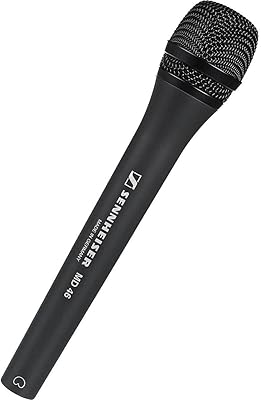
81%
91%
Build Quality
84%
Vocal Clarity
88%
Output Signal Strength
89%
Value for Money
63%
Handling Noise
More
Shure SM48 Handheld Dynamic Microphone
83%
91%
Build Quality
88%
Value for Money
74%
Sound Quality
89%
Feedback Rejection
83%
Handling Noise
More

FAQ

No, the MD 42 is a completely passive dynamic microphone and does not require phantom power at any point. You can plug it straight into any XLR-equipped device and it will work immediately. If your recorder or mixer has phantom power switched on by default, that is fine — it will not damage the mic.

Yes, as long as your camera has an XLR input or you use an XLR-to-3.5mm adapter or a dedicated audio interface in between. Many videographers run this Sennheiser handheld through a small field mixer or recorder like a Zoom F series before feeding audio into the camera, which also gives you better level control.

This is the most important thing to understand before buying. The omni pattern does not reject noise from the sides or rear the way a cardioid would, so in genuinely loud settings — heavy traffic, a crowded event floor, or a windy plaza — background noise will be part of your recording. For controlled interviews or moderate outdoor conditions, it performs well, but in chaotic environments you will need to get the mic closer to the subject or reconsider the mic choice entirely.

The integrated metal basket helps with very light wind and breath pops, but it is not a substitute for a proper foam or fur windscreen in real outdoor conditions. Most professionals using this field interview mic outdoors add a foam slip-on windscreen as a minimum, and a furry windshield for anything windier than a calm day.

Better than most microphones in this category, and noticeably better than unshielded dynamic mics at similar price points. You will still hear heavy grip shifts if you are really manhandling the mic, but normal hand repositioning and cable movement during an interview rarely causes problems. Users who have compared it directly against cheaper alternatives consistently single this out as one of the MD 42's real practical advantages.

A standard balanced XLR cable, male to female, is all you need. The length depends on your setup, but most field crews use a 10- to 20-foot XLR run to give the interviewer room to move. The mic itself has a 3-pin female XLR socket built into the base of the handle.

Technically it will work, but it is not what this mic was designed for. The omnidirectional pattern will pick up room noise, keyboard sounds, HVAC hum, and any other ambient sound in your recording space. A cardioid dynamic like the Shure SM7B or Electro-Voice RE20 will give you much tighter, cleaner results for stationary desk recording. Save this mic for fieldwork where its omni pattern is actually an advantage.

No, and this is a legitimate gripe that comes up regularly from buyers. The box contains the microphone and nothing else. Budget separately for a foam windscreen at a minimum, and a padded pouch or hard case if you want to protect it in transit. These are inexpensive additions but they should realistically be factored into the total cost.

Very durable. The all-metal housing is not decorative — it genuinely takes the abuse of daily field production without cracking, warping, or developing rattles. Long-term users who have owned this Sennheiser handheld for multiple years consistently report that it still performs the same as when new. The design has also been in continuous production since 2003, which is its own kind of durability endorsement.

You can, but the results will likely disappoint compared to a purpose-built instrument microphone. The frequency response and omnidirectional pattern are tuned for speech intelligibility, not for capturing the nuanced transients and extended high-frequency content of musical instruments. For voice recording and interviews it is excellent; for music, you would be better served by a mic designed specifically for that application.

Where to Buy