Overview

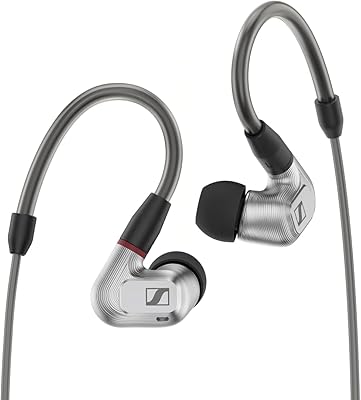
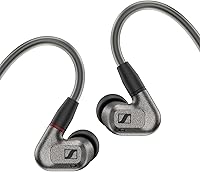
The Sennheiser IE 600 In-Ear Headphones sit in an interesting position — above the IE 300 but below the flagship IE 900, carving out a niche for listeners who want reference-grade performance without paying the absolute ceiling price. These in-ear monitors are built squarely for dedicated audiophiles who care about tonal accuracy over flattering coloration. Pick them up and the first thing you notice is how surprisingly light they feel — the amorphous zirconium shell looks dense and industrial, yet barely registers in your hand. The accessory package is genuinely generous: two cables, multiple tip styles, and a carry case all included. Getting the fit right takes patience, though — ear canal geometry matters enormously here, both for comfort and for how the sound actually reaches you.
Features & Benefits

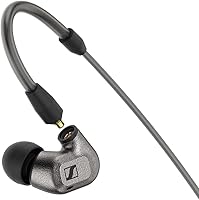
At the center of the IE 600 is a 7mm TrueResponse driver designed specifically for in-ear acoustics — not adapted from a larger headphone platform. The result is a sound that sits remarkably flat and honest: instruments occupy their own space, nothing is pushed forward, and the low end has weight without bloom. A dual-chamber absorber system handles the upper frequencies, keeping the treble extended and clean without the harshness that plagues many single-driver IEMs at high volumes. The cables are reinforced with para-aramid fibers and built to last — the 4.4mm balanced option in particular opens up the sound noticeably when paired with a capable source. Tip selection is wide, and it genuinely affects the experience; the memory foam options tend to improve passive isolation significantly.

Best For

These in-ear monitors are a natural fit for anyone who evaluates recordings critically — whether that is a mastering engineer double-checking a mix or a serious hobbyist who wants to hear music exactly as it was intended. They shine on a dedicated DAC/amp or a balanced DAP; plugging them directly into a phone is fine but leaves real performance on the table. Commuters and frequent travelers will appreciate the passive noise isolation and the robust build — no active noise cancellation needed when the physical seal is this effective. The detachable MMCX cable system also makes these a solid choice for anyone already invested in third-party cable upgrades, since the MMCX ecosystem is wide and well-supported.

User Feedback

Across listener communities, micro-detail retrieval and instrument separation draw the most consistent praise — these are the aspects that keep owners from going back to cheaper alternatives. The treble is where opinions diverge: fed from a revealing, high-quality source it sounds extended and precise; running from a mediocre output it can tip toward brightness. Many users also report that 50 to 100 hours of run-in time smooths the high-frequency presentation noticeably. On the practical side, the recessed MMCX connectors feel very secure but can be genuinely fiddly to swap out. The included carry case does the job but feels underwhelming at this price tier. Tip-rolling is almost a community ritual — small changes in ear tips can shift both soundstage width and bass impact quite dramatically.

Pros

  • Exceptionally neutral and accurate sound reproduction that holds up to serious critical listening sessions.
  • Micro-detail retrieval and instrument separation consistently impress even experienced audiophile listeners.
  • The amorphous zirconium housing is highly resistant to scratches and corrosion, maintaining its appearance long-term.
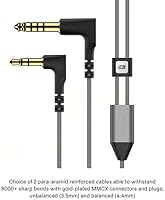
  • Both a 3.5mm single-ended and 4.4mm balanced cable are included, covering most DAC and DAP setups out of the box.
  • Cables are reinforced with para-aramid fibers, rated for thousands of bends, and feel built to genuinely last.
  • Passive noise isolation is effective enough to make active noise cancellation unnecessary in most travel scenarios.
  • A wide selection of silicone and memory foam ear tips is included, giving real flexibility for fit and sound tuning.
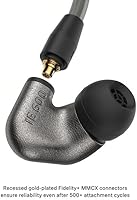
  • The recessed MMCX Fidelity+ connectors hold very securely, reducing accidental disconnects during daily use.
  • At just 6 grams, the IE 600 disappears in the ear during long listening sessions with no fatigue from weight.
  • Two-year manufacturer warranty provides meaningful peace of mind for a premium purchase.

Cons

  • Sound quality is heavily upstream-dependent — a weak source reveals limitations rather than strengths.
  • The recessed MMCX connector design, while secure, makes cable swaps noticeably more fiddly than standard connectors.
  • Many users report the treble benefits from 50 to 100 hours of run-in time, meaning out-of-box impressions can be misleading.
  • The included carry case is functional but feels underwhelming and cheap relative to what you paid for the earphones inside.
  • Fit consistency is not guaranteed — listeners with atypical ear canal shapes may never achieve an optimal seal.
  • No in-line microphone or remote on either included cable, making these impractical for calls or voice use.
  • Tip sensitivity is unusually high, meaning a small tip change can noticeably alter bass response and soundstage perception.
  • No wireless or Bluetooth option exists, which is a hard dealbreaker for wire-free listeners regardless of audio quality.

Ratings

The scores below reflect our AI-driven analysis of verified global user reviews for the Sennheiser IE 600 In-Ear Headphones, with spam, bot-submitted, and incentivized feedback actively filtered out before any scoring was applied. Each category captures both what real buyers genuinely loved and where frustrations surfaced, so you get an honest picture rather than a polished highlight reel. Strengths and pain points are weighted equally — nothing has been glossed over.

Sound Accuracy
94%
Among critical listeners and studio-adjacent users, the tonal neutrality is the single most praised attribute — reviewers consistently describe hearing details in familiar recordings that other IEMs had masked. On long home listening sessions, the flat, honest tuning makes genre-jumping effortless because nothing is artificially colored.
That same neutrality is a dealbreaker for buyers expecting warmth or excitement. A notable portion of reviewers coming from consumer-oriented headphones found the sound clinical on first listen, and some never warmed to it even after extended use.
Detail Retrieval
92%
Micro-detail and instrument separation draw near-universal praise across reviewers — listeners frequently mention catching background textures, room acoustics, and subtle mix decisions they had never noticed before. For mastering engineers or musicians evaluating mixes on the go, this level of resolution is genuinely useful rather than just impressive.
The high resolution is a double-edged characteristic: poorly recorded or heavily compressed audio sounds noticeably rough, and several users noted that low-bitrate streaming services exposed the IE 600s transparency in unflattering ways.
Build Quality
88%
The amorphous zirconium shells generate consistent admiration — reviewers describe a material that feels and looks unlike any plastic or aluminum IEM housing they have handled, with no visible wear after months of daily use. The cables also hold up well, with owners reporting no fraying or connector wobble after heavy regular use.
The overall package feels lighter than many buyers expect at this price tier, which surprises some owners who associate premium cost with physical heft. A small group of reviewers felt that the lightness, while comfortable, made the earphones feel less substantial than competitors with metal or resin bodies.
Cable Quality
86%
The para-aramid reinforced cables feel noticeably more robust than typical IEM cables, and the dual-cable bundle — one single-ended and one balanced — is consistently called out as a thoughtful inclusion that saves buyers an immediate aftermarket purchase. Long-term owners report no significant degradation in either cable after hundreds of hours of use.
The cables are not fully tangle-free, and a number of users found them prone to mild microphonics when walking — cable noise transmitting to the ear during movement is a real annoyance for commuters who do not use a shirt clip.
MMCX Connector Reliability
79%
21%
The recessed Fidelity+ MMCX design is widely credited for being more secure than standard MMCX connectors, with owners noting that accidental disconnects during use are essentially eliminated compared to previous IEMs they have owned.
Swapping cables is noticeably more difficult than with standard MMCX implementations, and a subset of users found the removal process stressful enough that they simply stopped switching cables altogether. A few reported scuffing the housing near the connector while trying to remove cables with fingernails.
Comfort & Fit
74%
26%
For listeners who find the right tip combination on the first try, extended listening sessions of several hours are frequently described as fatigue-free thanks to the minimal 6-gram weight. Memory foam tips in particular receive praise from users with sensitive ear canals who find silicone tips cause discomfort over time.
Fit success is heavily dependent on ear canal geometry, and a meaningful portion of reviewers needed significant tip experimentation before achieving a consistent seal. Some users with narrower canals reported that even the small tips felt loose, and without a proper seal the bass character changes substantially.
Passive Noise Isolation
81%
19%
Reviewers regularly cite the passive isolation as sufficient for plane cabins, commuter trains, and open-plan offices without any active electronics involved. The memory foam tips in particular push isolation to a level that several users described as comparable to entry-level noise-cancelling earbuds.
Isolation quality is entirely seal-dependent, so users who struggle with fit also report noticeably worse isolation. There is no active noise cancellation fallback, which means in very loud environments like construction sites or subway platforms, some ambient noise does penetrate.
Treble Performance
83%
Extended, clean treble is one of the most discussed positives — experienced audiophiles describe the high-frequency reproduction as refined and non-fatiguing during long sessions, especially once the drivers have been run in for 50 or more hours. Cymbal decay and string harmonics in particular draw repeated praise in community forums.
Out of the box, several reviewers found the treble slightly sharp or forward before burn-in, which created mixed early impressions. Treble performance is also source-sensitive — a bright DAC or DAP pairing can push these in-ear monitors into fatiguing territory relatively quickly.
Bass Response
78%
22%
Reviewers who appreciate accurate low-end reproduction consistently describe the bass as tight, textured, and well-controlled — kick drums have punch without bleeding into the midrange, and bass guitar lines are traceable independently. For jazz, acoustic, and classical listeners this is near-ideal.
Bass quantity falls short of what many buyers expect at this price point, and reviewers transitioning from consumer IEMs with boosted low ends frequently describe the IE 600 as bass-light. Tip choice and seal quality have an outsized effect on perceived bass weight, adding another variable buyers must manage.
Soundstage & Imaging
87%
Imaging precision consistently earns strong praise — users describe the ability to place instruments in three-dimensional space with accuracy that makes competitive gaming and orchestral recordings equally rewarding. The soundstage width for a sealed IEM is frequently called out as larger than expected.
Compared to open-back over-ear headphones, the soundstage still feels in-the-head to some reviewers, particularly on densely layered recordings. A handful of users expected a wider stage given the price positioning and were mildly disappointed.
Value for Money
72%
28%
For buyers who already own quality upstream gear, the included dual-cable bundle and comprehensive tip selection meaningfully offset the initial cost compared to competitors that sell accessories separately. Long-term owners frequently justify the price by pointing to years of use without degradation.
For buyers who need to also purchase a DAC, amp, or DAP to extract the intended performance, the total system cost rises sharply and the value proposition weakens considerably. Several reviewers felt the IE 900 offered a more satisfying leap at a modest additional cost, questioning where the IE 600 sits in the lineup.
Accessories & Packaging
63%
37%
The dual-cable bundle is genuinely appreciated, and having both balanced and single-ended options ready to use on day one is a practical advantage most competitors do not offer at any price. The variety of tip sizes and materials also earns consistent positive mentions.
The fabric carry case draws the most repeated criticism in user reviews — owners consistently describe it as underwhelming and unsuitable for protecting a premium investment during travel. Several buyers purchased aftermarket hard-shell cases within weeks of receiving the product.
Upstream Gear Dependency
61%
39%
When paired with a resolving balanced DAP or a desktop DAC/amp, reviewers describe a transformation in performance that justifies the investment — the balanced cable combination in particular is frequently called a meaningful upgrade over single-ended listening.
The dependency on quality upstream gear is a genuine barrier that appears frequently in negative reviews. Buyers who used these in-ear monitors straight from a phone or laptop without a DAC reported disappointment, and several felt misled by marketing that did not communicate this requirement clearly.
Tip-Rolling Flexibility
82%
18%
The standard MMCX-adjacent tip socket accepts a wide range of third-party ear tips, and the audiophile community actively shares tip recommendations that transform the sound to personal preference. SpinFit and Comply tip pairings are particularly well-documented for the IE 600 specifically.
The high sensitivity to tip changes means that the out-of-box sound is not necessarily the best the earphones can deliver, which adds complexity and additional cost for buyers who want to optimize. New users unfamiliar with tip-rolling may not realize the included tips are just a starting point.

Suitable for:

The Sennheiser IE 600 In-Ear Headphones are built for listeners who have outgrown consumer-tuned sound and want something that tells the truth about a recording. They are an ideal daily driver for mastering engineers, session musicians, and serious hobbyists who use their ears as a professional tool and need a neutral, revealing reference point. Home desktop listeners who already own a quality DAC/amp or balanced DAP will unlock the most from these — the 4.4mm balanced cable included in the box makes that pairing straightforward from day one. Frequent travelers who want genuinely effective passive isolation without carrying a separate noise-cancelling device will also find these in-ear monitors punch well above their weight on a plane or train. Anyone already invested in the MMCX cable ecosystem will appreciate the well-engineered connector system, and those who enjoy tip-rolling have a strong platform to experiment from.
Not suitable for:

The Sennheiser IE 600 In-Ear Headphones are a poor fit for buyers who prefer a warm, bass-forward, or V-shaped sound signature — the tuning is neutral by design and will feel lean or clinical to listeners accustomed to consumer headphones. They are equally the wrong choice for anyone planning to drive them directly from a smartphone or laptop without a dedicated amplifier; the sound is functional in that setup, but the investment makes little sense without upstream gear to match. Wireless listeners should look elsewhere entirely — there is no Bluetooth option, no active noise cancellation, and no microphone for calls, which rules these out as everyday commuter or work-from-home headsets for most people. Buyers with unusual ear canal geometry may struggle to achieve a consistent seal, and without a proper seal the low end collapses and the soundstage narrows considerably, so patience with tip fitting is genuinely required. Finally, if you are expecting a luxury unboxing experience in line with the price, the fabric carry case may leave you underwhelmed.

Specifications

  • Driver Type: Each earpiece uses a single 7mm TrueResponse dynamic driver, engineered specifically for in-ear acoustics rather than adapted from a larger headphone platform.
  • Housing Material: The shells are 3D-printed in Germany from ZR01 amorphous zirconium, a glass-like metal alloy that offers triple the hardness and bend resistance of steel.
  • Frequency Response: The IE 600 covers a frequency range extending up to 46,500 Hz, well beyond the limits of human hearing, ensuring no roll-off within the audible spectrum.
  • Sensitivity: Rated at 118 dB, these in-ear monitors are efficient enough to reach high listening volumes without requiring an exceptionally powerful amplifier.
  • Cable Connector: Both included cables terminate at the earphone end with recessed MMCX Fidelity+ connectors, rated for over 500 attachment and detachment cycles.
  • Included Cables: The package includes two detachable cables: a single-ended 3.5mm cable and a balanced 4.4mm Pentaconn cable, both reinforced with para-aramid fibers.
  • Cable Durability: The para-aramid reinforced cable construction is rated to withstand more than 8,000 sharp bends without signal degradation or structural failure.
  • Earpiece Weight: The earphones weigh just 6 grams in total, making them exceptionally light for extended listening sessions without physical fatigue.
  • Noise Control: Isolation is achieved passively through a physical seal between the ear tips and the ear canal, with no active noise-cancellation electronics involved.
  • Ear Tips Included: The box includes both silicone and memory foam ear tip sets in small, medium, and large sizes, allowing listeners to optimize fit and isolation.
  • Connectivity: These in-ear monitors are strictly wired — there is no Bluetooth module, wireless pairing, or active electronics in the earphone housing itself.
  • Carrying Case: A compact fabric carry case in black is included for storage and transport, though it does not have a hard shell for impact protection.
  • Warranty: Sennheiser provides a 2-year manufacturer warranty covering defects in materials and workmanship from the date of original purchase.
  • Country of Origin: The IE 600 is designed and engineered in Germany, with the amorphous zirconium housings also 3D-printed there.
  • Acoustic Design: A dual-chamber absorber system inside the housing is used to suppress internal resonances that would otherwise mask fine detail in the upper frequency range.
  • Cable Interface: The standard listening cable terminates in a 3.5mm stereo jack, while the included balanced cable uses the 4.4mm Pentaconn five-pole standard.
  • Ear Tip Materials: Ear tips are made from medical-grade silicone and memory foam, two materials that differ noticeably in how they seal the ear canal and affect bass response.
  • Carrying Case Weight: The included carry case weighs approximately 100 grams, adding minimal bulk when packed into a bag or jacket pocket.

Related Reviews
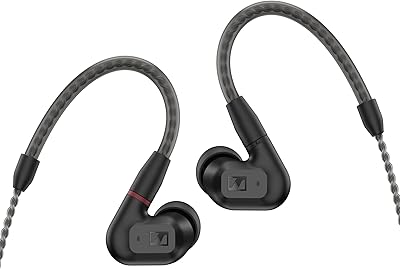
Sennheiser IE 200
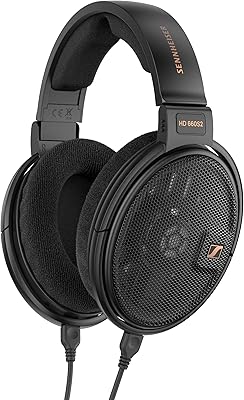
Sennheiser IE 200
81%
91%
Sound Quality
83%
Bass Performance
88%
Soundstage & Imaging
63%
Build Quality
72%
Comfort & Fit
More
Sennheiser HD 300 Over-Ear Headphones
82%
85%
Sound Quality
87%
Comfort & Fit
82%
Noise Isolation
88%
Portability
80%
Build Quality
More
Sennheiser HD 400S
Sennheiser HD 400S
77%
88%
Sound Quality
81%
Comfort & Fit
74%
Passive Noise Isolation
67%
Build Quality
63%
Cable & Connectivity
More
Sennheiser HD 660S2
Sennheiser HD 660S2
80%
93%
Sound Quality
84%
Bass Performance
91%
Soundstage & Imaging
58%
Amplifier Dependency
88%
Comfort & Wearability
More
Sennheiser HD 600
Sennheiser HD 600
75%
94%
Sound Accuracy & Neutrality
91%
Soundstage & Imaging
88%
Comfort & Wearability
61%
Amplifier Dependency
72%
Build Quality
More
Sennheiser CX 300S In-Ear Headphones
71%
84%
Sound Quality
76%
Comfort & Fit
78%
Noise Isolation
57%
Inline Remote & Controls
71%
Microphone Quality
More
Sennheiser HD 820 Over-the-Ear Audiophile Headphones
87%
94%
Sound Quality
92%
Comfort for Long Listening Sessions
90%
Build Quality & Durability
89%
Noise Isolation & Sound Isolation
85%
Ease of Use & Setup
More
Sennheiser IE 900 Audiophile In-Ear Monitors
89%
96%
Sound Quality
91%
Build Quality
88%
Comfort & Fit
89%
Noise Isolation
93%
Cable Flexibility & Durability
More
Sennheiser HD 800 S Over-the-Ear Audiophile Headphones
85%
96%
Sound Quality
85%
Comfort for Extended Use
92%
Build Quality
70%
Impedance Handling (Amplifier Requirement)
88%
Design and Aesthetics
More
Sennheiser IE 100 PRO
86%
92%
Build Quality
88%
Passive Noise Isolation
91%
Wearing Comfort
87%
Upper-Midrange Clarity
84%
Low-End Precision
More

FAQ

Not strictly required, but strongly recommended. The IE 600 will play audio from any 3.5mm source, but it is tuned with a transparency that rewards high-quality upstream gear. Pairing these in-ear monitors with a decent portable DAC/amp or a balanced DAP makes a clearly audible difference — the soundstage opens up and the treble becomes more composed. Running them straight from a smartphone is fine as a temporary solution, but it leaves a lot of the performance on the table.

Neither, by design. These in-ear monitors are tuned for tonal neutrality — the goal is to reproduce what is in the recording accurately rather than to flatter any particular frequency range. Bass is present and well-defined but not boosted, and the treble extends cleanly without being harsh when paired with a good source. If you are used to consumer-oriented headphones with an emphasized low end, the IE 600 may initially sound leaner than expected.

Not practically. Neither of the included cables has an in-line microphone or a remote control button, so hands-free calls are not supported out of the box. Aftermarket MMCX cables with built-in microphones exist and are compatible, but that requires an additional purchase.

Opinions differ in audiophile communities, but a large number of IE 600 owners consistently report that the treble presentation noticeably smooths after around 50 to 100 hours of use. Whether this is true physical driver break-in or simply your ears adjusting to the neutral tuning is debated, but the practical advice is the same: give them time before forming a final opinion.

Fit is genuinely the most critical variable with these in-ear monitors. If the included silicone tips are not sealing well, try the memory foam set first — they conform to the ear canal shape and often solve the problem. If neither works reliably, the MMCX connector means you are not locked into anything proprietary; the wide third-party tip market (SpinFit, Comply, Final Audio) gives you many options to experiment with.

The para-aramid reinforcement makes them more durable than the typical thin rubber cables found on consumer earphones, and day-to-day tangling is manageable. They are not microphonic-free, so you may hear some cable noise when moving, but the build quality overall is notably better than what most competitors include at this tier.

The recessed Fidelity+ MMCX connectors are intentionally designed to hold more firmly than standard MMCX, so they require a bit more deliberate effort to remove. Grip the connector body itself rather than pulling on the cable, and rotate it slightly while pulling straight out. Avoid yanking at an angle, as that puts stress on the connector housing rather than releasing the lock mechanism.

The IE 900 sits above the IE 600 in Sennheiser's lineup and uses a different triple-chamber absorber design alongside a resonator system for even more controlled treble. Most listeners describe the IE 900 as having a slightly warmer low end and a more refined overall tuning. The IE 600 is considered the more neutrally transparent of the two, which some critical listeners actually prefer. Both share the same zirconium housing technology, so build quality is comparable.

It does the job of protecting the earphones from scratches and keeping cables organized in a pocket or bag, but it is a soft fabric pouch rather than a hard-shell case. For a quick trip to the office or a flight, it is adequate. If you are rough with your gear or need crush protection, a third-party hard-shell IEM case would be a worthwhile addition.

Yes, meaningfully. Memory foam tips typically create a deeper, more consistent seal, which tends to increase perceived bass weight and improve passive isolation. Silicone tips generally produce a slightly more open, airy presentation. Neither is objectively better — it depends on your ear shape, preferred sound signature, and how much ambient noise you are trying to block. Trying both in your actual listening environment is the only reliable way to decide.

Where to Buy