


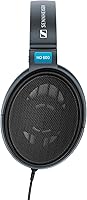
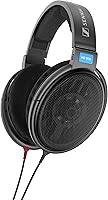
Overview

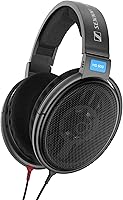
The Sennheiser HD 600 has earned its place as one of the most respected headphones in the audiophile world — not through marketing, but through decades of consistent real-world performance. This is a reference-grade listening tool, built for people who want to hear recordings as they actually are, not colored by consumer-tuned drivers. The open-back design creates a wide, natural soundstage that closed-back cans simply cannot replicate, though it comes with a genuine trade-off: sound leaks in and out freely. At 300 ohms, these open-back headphones will underperform noticeably on a phone or laptop without proper amplification behind them.

Features & Benefits

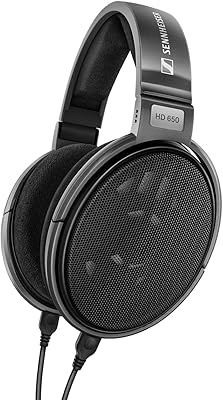
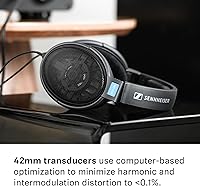
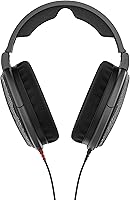
Under the hood, these open-back headphones rely on lightweight aluminum voice coils that respond quickly to transient signals — important for catching the attack of a snare or the pluck of an acoustic string. Neodymium ferrous magnets keep sensitivity steady across the dynamic range, while the detachable Kevlar-reinforced cable reduces handling noise without feeling fragile. The open metal mesh ear cups do more than look distinctive; they allow constant airflow that prevents heat buildup during long sessions. Velour ear pads and an adjustable headband round out the comfort, and the 12–40,500 Hz frequency response handles high-resolution audio without any obvious ceiling.

Best For

This Sennheiser is built for a specific kind of listener: someone at home in a quiet room, connected to a proper DAC and amplifier, wanting music without added coloration. Mixing engineers and producers find the neutral sound signature genuinely useful for making accurate decisions mid-session. Genres like classical, jazz, and acoustic guitar reward you through these headphones, where soundstage and fine detail matter more than raw bass weight. Take them onto the subway or into an open office, though, and sound leakage becomes a real issue for everyone nearby. Portability simply is not what this Sennheiser was designed for.

User Feedback

Long-term owners consistently praise the transparent midrange and how cleanly instruments separate across the soundstage — two qualities that matter most to critical listeners. Comfort during multi-hour sessions is a recurring highlight, which is not guaranteed at any price point. On the downside, buyers who connect these headphones to a weak source often come away disappointed, though that is a setup problem rather than a headphone flaw. A handful of listeners want more bass depth, fair enough given the neutral tuning. The plastic headband draws occasional criticism, yet most owners find reassurance in the fact that replacement parts — pads, cables — remain widely available, making this a headphone worth keeping for years.

Pros

  • Reference-quality midrange transparency that reveals fine details in familiar recordings
  • Soundstage feels genuinely spacious, especially on acoustic and classical material
  • Velour ear pads and balanced clamping force make long listening sessions very comfortable
  • Detachable cable design means a worn-out cable is a minor fix, not a reason to replace the headphone
  • Replacement parts remain widely available, supporting real longevity well beyond the warranty period
  • High-resolution frequency response pairs well with lossless and hi-res audio sources
  • Neutral tuning makes the HD 600 a trustworthy reference tool for home studio mixing decisions
  • Open metal mesh ear cups keep airflow steady, preventing heat buildup during extended use
  • A well-established product with a large community of users sharing amp pairings and setup advice

Cons

  • Requires a dedicated DAC and amplifier — without one, performance is noticeably and significantly compromised
  • Plastic headband construction feels out of place on a headphone positioned as a premium reference tool
  • Zero noise isolation makes these completely impractical in any shared or noisy environment
  • Sound leakage is substantial — those nearby will hear your audio at typical listening volumes
  • Bass response prioritizes accuracy over impact, which will disappoint listeners who want low-end weight
  • The 3-meter cable length is awkward in compact desktop setups and does not coil neatly
  • No wireless option whatsoever — a genuine limitation for buyers who have moved away from wired listening
  • Total cost of ownership rises meaningfully once you factor in the required amplification gear
  • Older aesthetic design looks dated next to more contemporary competitors at a similar price point

Ratings

The Sennheiser HD 600 has accumulated a vast body of verified listener feedback spanning decades, and the scores below reflect an AI-driven analysis of that global data — with spam, incentivized, and bot-generated reviews actively filtered out. What remains is an honest picture of where these open-back headphones genuinely excel and where real buyers have run into friction. Both the strengths and the frustrations are represented transparently here, so you can make an informed decision before committing.

Sound Accuracy & Neutrality
94%
Listeners who spend serious time with these open-back headphones consistently describe the midrange as strikingly transparent — vocals, acoustic instruments, and strings come through without the coloration that plagues many consumer-tuned drivers. For critical listening sessions at home, it is one of the most honest-sounding headphones at this price tier.
The deliberately neutral tuning is a feature for some and a flaw for others. Listeners who prefer boosted bass or a V-shaped signature often find the HD 600 underwhelming straight out of the box, and those coming from bass-heavy consumer headphones may take time to adjust.
Soundstage & Imaging
91%
The open-back construction creates a sense of space that feels closer to listening through speakers than through headphones — instruments are placed convincingly left, right, and center. This quality makes classical and jazz recordings genuinely enjoyable to explore, with depth that closed-back alternatives rarely achieve at this price.
Soundstage width, while impressive for the category, is not quite as expansive as some flagship open-back competitors. A small number of experienced audiophiles note that the imaging, while accurate, feels slightly less layered in complex orchestral passages compared to higher-end alternatives.
Comfort & Wearability
88%
The velour ear pads and lightweight build make this Sennheiser one of the more comfortable options for extended listening — many users report wearing them for three to four hours without noticeable hotspots or pressure fatigue. The adjustable headband distributes weight evenly, which matters a great deal during long studio sessions.
A few users with larger heads or sensitive ears find the clamping force slightly tight during the first few weeks of ownership, though most report it eases with break-in. The headband padding, while functional, feels minimal compared to competitors at a similar price.
Amplifier Dependency
61%
39%
When paired with a quality DAC and amplifier, these open-back headphones open up considerably — dynamics tighten, the low end gains control, and the full frequency range becomes more coherent. Buyers who invest in a proper source chain describe the combination as genuinely transformative.
At 300 ohms, this Sennheiser is effectively unusable at its potential when connected directly to a phone, tablet, or laptop headphone jack. This is the single biggest source of negative buyer experiences, and it is entirely a setup issue — but the product listing does not always make this requirement clear enough up front.
Build Quality
72%
28%
The metal grilles, reinforced cable, and overall structural rigidity of the ear cups feel solid and purposeful. The detachable cable design is a practical long-term advantage — owners replacing worn cables after years of use frequently mention this as a reason they trust the investment.
The plastic used on the headband and some adjustment components draws consistent criticism from buyers who expect premium materials at this price point. It does not feel cheap in hand, but it does feel inconsistent with the overall positioning of the product as a high-end reference tool.
Cable Quality
83%
The Kevlar-reinforced oxygen-free copper cable does its job well — handling noise is noticeably low during movement, and the detachable connection means the cable itself can be replaced without discarding the whole headphone. Third-party cable upgrades are also widely available for those who want to experiment.
The stock cable is fairly stiff and at 3 meters is designed for desktop use rather than mobile or seated listening close to a source. Some users find the length awkward in smaller listening setups, and the cable does not coil particularly neatly for storage.
Noise Isolation
18%
82%
There is essentially no noise isolation to speak of, which is by design — the open-back architecture requires acoustic transparency in both directions. Listeners who understand this trade-off going in have no complaints, and in quiet home environments it is simply a non-issue.
Sound leaks freely in both directions, making these headphones completely unsuitable for office use, commuting, or any shared space where ambient noise or audio bleed would be disruptive. This is the most common source of one-star reviews from buyers who did not research the open-back format before purchasing.
Value for Money
86%
The combination of reference-quality sound, replaceable components, and a track record of lasting well over a decade makes this Sennheiser a compelling long-term investment. Buyers who factor in the repairability and parts availability tend to rate the value highly, viewing it as a one-time purchase rather than a recurring expense.
Without a dedicated amplifier — which adds meaningful cost — the value proposition deteriorates sharply. Buyers on a tight budget who cannot also invest in a proper source chain may find rival headphones at a lower all-in price offer a better real-world experience.
Low-End Performance
67%
33%
The bass on these open-back headphones is accurate and well-controlled rather than exaggerated — upright bass in jazz recordings, for example, sounds natural and properly textured rather than bloated. Listeners with a preference for neutral or reference tuning find this quality genuinely satisfying.
Anyone expecting impactful, visceral bass will be disappointed. Electronic music, hip-hop, and cinematic scores that rely heavily on sub-bass weight feel somewhat thin through this Sennheiser, and no amount of amplification fully compensates for the tuning philosophy at the low end.
High-Frequency Detail
89%
Treble extension is one of the more consistently praised qualities of these open-back headphones — cymbal decay, high-pitched string harmonics, and breathy vocal texture come through with clarity that reveals details many listeners had not noticed in familiar recordings. The frequency response reaching past 40,000 Hz supports high-res audio sources well.
At higher volumes, a small segment of users report that the treble can edge toward brightness, particularly on poorly recorded or compressed source material. This is less a flaw in the headphone and more a reflection of how revealing a neutral driver can be with imperfect recordings.
Longevity & Repairability
93%
Few headphones at any price offer the same level of user-serviceable longevity. Ear pads, cables, and even driver components have remained available for years, and a thriving aftermarket ecosystem supports the product well beyond its official warranty. Long-term owners frequently describe units still in regular use after ten or more years.
The availability of genuine replacement parts, while good overall, is not always consistent through all regions. Some international buyers report difficulty sourcing official Sennheiser pads or cables locally, which slightly undermines the repairability advantage depending on where you live.
Ease of Driving
44%
56%
For listeners who already own a capable headphone amplifier or integrated DAC-amp unit, the 300-ohm load is not a concern — the headphone is designed for exactly that kind of source and responds well to clean, high-current amplification across the board.
For anyone without amplification, this Sennheiser is genuinely difficult to drive to satisfying levels. Sensitivity sits at 97 dB, which combined with the high impedance means most portable devices struggle to produce adequate volume, let alone the dynamic control the headphone is capable of.
Aesthetics & Design
74%
26%
The muted charcoal and gray colorway is understated in a way that suits the professional positioning — it does not look flashy, but it looks intentional. The open metal mesh grilles give the design a distinctive character that most audiophile listeners find appropriately functional and clean.
Compared to newer competitors, the visual design shows its age. The aesthetic has remained largely unchanged for many years, and buyers accustomed to more contemporary headphone design language may find the look dated, particularly given the price point.
Fit for Music Production
87%
Mixing and mastering engineers consistently point to the neutral response as a reliable reference tool — decisions made through these open-back headphones tend to translate well to other playback systems, which is the core requirement for any production-oriented headphone. The detail retrieval at the midrange is particularly appreciated for vocal editing work.
The open-back design means these headphones are impractical for tracking sessions where microphone bleed is a concern. They are a mixing and listening tool, not a tracking headphone, and studios that need one pair to do everything will find that limitation relevant.

Suitable for:

The Sennheiser HD 600 is built for a very specific kind of listener, and when the conditions are right, it is hard to beat at this price tier. If you have a dedicated listening space at home — a desk setup with a quality DAC and amplifier already in the picture — these open-back headphones will reward you with a level of sonic honesty that most consumer headphones never approach. Audiophiles who primarily listen to classical, jazz, acoustic, or vocal-driven music will find the natural midrange and well-organized soundstage particularly satisfying. Mixing engineers and home studio producers who need a reliable reference point for editing decisions will also find this Sennheiser genuinely useful, since the neutral tuning translates well across different playback systems. Anyone who treats headphones as a long-term investment rather than a disposable accessory will appreciate the repairability — replacement pads and cables are readily available, and well-maintained units routinely last a decade or more.

Not suitable for:

The Sennheiser HD 600 is a poor fit for anyone who needs a headphone that works straight out of a phone or laptop without additional equipment — at 300 ohms, the impedance demand is real, and the experience without proper amplification is genuinely underwhelming. Commuters, gym-goers, and remote workers in shared offices should look elsewhere entirely, because the open-back design offers zero noise isolation and broadcasts your audio to everyone nearby. If your music taste leans heavily toward bass-forward genres like hip-hop, EDM, or cinematic scores with deep sub-bass, the neutral tuning of these open-back headphones will likely feel thin and unsatisfying regardless of the source equipment. Buyers on a strict budget who cannot also budget for a dedicated amp are essentially paying a premium price for a fraction of the intended performance. Finally, anyone looking for a wireless or Bluetooth option should simply move on — this Sennheiser is wired-only, full stop.

Specifications

  • Driver Type: Dynamic driver with lightweight aluminum voice coils for accurate transient response.
  • Impedance: 300 ohms, requiring a dedicated headphone amplifier to reach full performance potential.
  • Sensitivity: 97 dB SPL, which combined with the high impedance means portable devices will struggle to drive these adequately.
  • Frequency Response: 12–40,500 Hz, covering the full audible range and extending well into high-resolution audio territory.
  • Ear Design: Over-ear, open-back configuration with open metal mesh ear cup covers allowing free airflow.
  • Cable: Detachable 3-meter Kevlar-reinforced oxygen-free copper cable with a 3.5mm connector and included 6.3mm adapter.
  • Weight: 9.1 ounces (approximately 258 grams), keeping the headphone light enough for extended seated listening sessions.
  • Ear Pad Material: Velour ear pads designed to reduce heat buildup and pressure fatigue during prolonged use.
  • Headband Material: Adjustable headband constructed from plastic and metal components with integrated padding for fit stability.
  • Noise Isolation: None — the open-back design intentionally provides no passive noise isolation and allows sound to pass freely in both directions.
  • Connectivity: Wired only via 3.5mm audio jack; no Bluetooth or wireless functionality of any kind.
  • Compatibility: Works with any wired audio source, though a dedicated DAC and amplifier is strongly recommended for proper performance.
  • Materials: Combination of plastic, metal, and oxygen-free copper used across the headband, grilles, and cable assembly.
  • Included Accessories: Ships with the headphone unit and a 6.3mm adapter plug; no carrying case or extra cable is included.
  • Cable Reinforcement: The cable jacket incorporates Kevlar fiber reinforcement to reduce handling noise and improve long-term durability.
  • Magnet Type: Neodymium ferrous magnets maintain consistent driver sensitivity and dynamic range across the frequency spectrum.
  • Brand Origin: Sennheiser is a German audio manufacturer with a long-standing reputation in professional and audiophile audio markets.
  • Replaceability: Ear pads, cables, and key structural components are available as separate replacement parts through Sennheiser and third-party suppliers.

Related Reviews
Sennheiser HD 650
Sennheiser HD 650
84%
96%
Sound Clarity
88%
Bass Response
94%
Midrange Accuracy
91%
Treble Detail
89%
Comfort
More
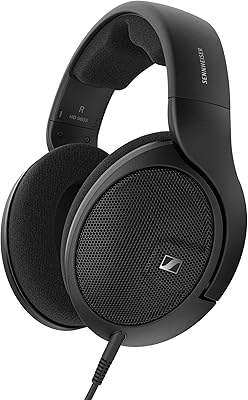
Sennheiser HD 560S
Sennheiser HD 560S
74%
93%
Sound Accuracy
91%
Soundstage & Imaging
88%
Comfort & Fit
63%
Build Quality
71%
Amplifier Dependency
More
Sennheiser HD 25 Special Edition
85%
94%
Build Durability
89%
Ambient Noise Isolation
86%
Professional Sound Accuracy
68%
Ergonomics & Comfort
91%
Overall Value
More
Sennheiser HD 280 Pro
81%
91%
Noise Isolation
88%
Sound Accuracy
86%
Build Quality
63%
Comfort Over Long Sessions
89%
Passive Attenuation Performance
More
Sennheiser HD 300 Over-Ear Headphones
82%
85%
Sound Quality
87%
Comfort & Fit
82%
Noise Isolation
88%
Portability
80%
Build Quality
More
Sennheiser HD 206 Stereo Headphones
82%
92%
Value for Money
85%
Sound Quality
88%
Comfort & Fit
70%
Noise Isolation
80%
Build Quality
More
Sennheiser HD 4.50 SE
82%
91%
Sound Quality
88%
Active Noise Cancellation
76%
Comfort & Fit
85%
Battery Life
79%
Wireless Connectivity
More
Sennheiser HD 400S
Sennheiser HD 400S
77%
88%
Sound Quality
81%
Comfort & Fit
74%
Passive Noise Isolation
67%
Build Quality
63%
Cable & Connectivity
More
Sennheiser HD 660S2
Sennheiser HD 660S2
80%
93%
Sound Quality
84%
Bass Performance
91%
Soundstage & Imaging
58%
Amplifier Dependency
88%
Comfort & Wearability
More
Sennheiser MKE 600
Sennheiser MKE 600
89%
93%
Vocal Clarity
88%
Off-Axis Rejection
96%
Powering Versatility
91%
Build Durability
84%
Environmental Resilience
More

FAQ

Yes, practically speaking. At 300 ohms, the Sennheiser HD 600 demands more power than a phone, tablet, or laptop headphone jack can reliably deliver. You will likely get sound, but it will be low in volume, thin in dynamics, and well below what the headphone is actually capable of. A dedicated headphone amplifier or DAC-amp combo is not optional if you want to hear what these are really about.

These open-back headphones are not a good fit for that use case. Sound leaks out freely, so people around you will hear your audio, and ambient noise bleeds in just as easily. They are designed for quiet home listening environments, not public spaces.

A headphone amplifier capable of driving high-impedance loads cleanly is the main requirement. Popular pairings in the audiophile community include the Schiit Magni, JDS Labs Atom, and various integrated DAC-amps in the mid-range price tier. You do not need to spend a fortune, but you do need something purpose-built for headphone driving rather than a generic receiver output.

More the latter. These open-back headphones are tuned for neutrality with a very slight warmth in the lower midrange — the bass is accurate and controlled rather than boosted or punchy. If you are coming from consumer headphones with an emphasized low end, the transition can feel underwhelming at first. Listeners who prioritize clarity and instrument separation over bass impact tend to love this signature.

Very comfortable for most users. The velour ear pads are breathable, the weight is low enough that the headband does not create significant pressure over time, and the clamping force is moderate once broken in. Most listeners report being able to wear them for two to four hours without discomfort, which is above average for the category.

Yes, and this is one of the more practical advantages of this headphone. Genuine replacement pads are available directly from Sennheiser and through third-party suppliers, and swapping them is straightforward without tools. Many owners have kept their units running for well over a decade by replacing pads and cables as needed.

They can, and the wide soundstage actually helps with positional audio in games and gives film scores a cinematic feel. The main limitation is the open-back design — any sound from the room will compete with your content, and anyone else in the room will hear your audio. For solo listening in a quiet space they work well; for shared or mixed-use environments, less so.

Yes, the cable is fully detachable and uses a standard proprietary two-pin connector at the headphone end. Sennheiser sells official replacement cables, and a large aftermarket of third-party options exists at various price points. This makes a damaged cable a minor inconvenience rather than a reason to replace the whole headphone.

It is a fair concern that comes up regularly in long-term owner feedback. The plastic is functional and has not shown widespread failure issues, but it does not feel as premium as the rest of the build. Sennheiser does sell replacement headband parts, so even if the plastic cracks over many years of use, it is a fixable problem rather than a fatal one.

They are well-regarded as a mixing reference tool, particularly for checking midrange balance, vocal clarity, and instrument separation. The neutral tuning means decisions made through these open-back headphones tend to translate reasonably well to other playback systems. The one caveat is that the open-back design makes them unsuitable for tracking sessions where microphone bleed is a concern — they are a listening and editing tool, not an all-purpose studio headphone.