
Overview

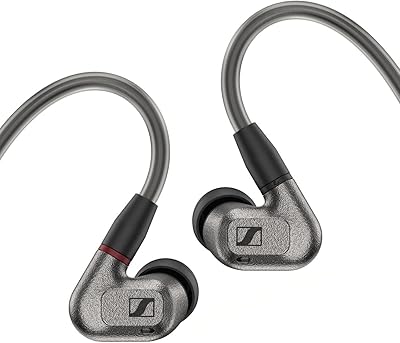
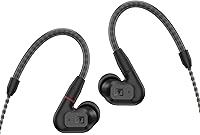
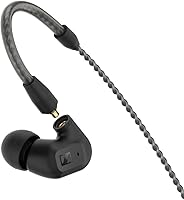
The Sennheiser IE 200 is Sennheiser's entry point into their audiophile IEM lineup — and it punches well above what that label usually implies. Built around a classic over-ear fit with a detachable MMCX cable, this wired IEM targets listeners who want accurate, reference-leaning sound without spending flagship money. The tuning leans neutral with genuinely impressive bass extension for the driver size. At just 4 grams per earpiece, the plastic housing is light enough to wear for hours without fatigue. In a segment crowded with strong competition from Moondrop, Etymotic, and KZ, these Sennheiser earphones hold their own on sound quality alone.

Features & Benefits

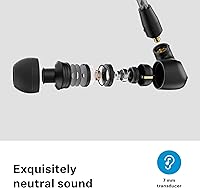
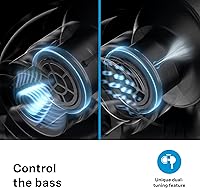
The 7mm TrueResponse driver at the heart of this wired IEM does something many budget-tier dynamic drivers struggle with: it stays clean under pressure. Distortion stays low even at higher volumes, which matters more than most spec-sheet figures suggest. The dual-tuning system — achieved simply by changing how the ear tips seat in the nozzle — lets you add a noticeable bass boost without touching an EQ app. It takes a few minutes of experimenting to notice the difference, but it genuinely works. At 18 ohms, these Sennheiser earphones drive easily from a phone, and the included memory foam and silicone tips across three sizes round out a thoughtfully assembled package.

Best For

This wired IEM is a strong fit for anyone stepping up from consumer earbuds and wanting to hear music the way it was actually mixed. Audiophile newcomers get a neutral, accurate tuning without paying for flagship hardware. Commuters tired of wireless dropouts will appreciate the plug-in reliability — no pairing, no latency. These Sennheiser earphones also pair well with a portable DAC/amp, since the low impedance and honest tuning respond noticeably to better sources. And if you want to experiment with bass response without buying multiple earphones, the dual-tuning feature offers a real taste of that flexibility at no extra cost.

User Feedback

The consensus among buyers is broadly positive, with soundstage clarity and vocal presence drawing the most consistent praise. Where things get more divided is the build — the plastic housing is a common frustration, not because it fails, but because it doesn't feel as solid as the audio quality implies it should. Fit is another variable: several reviewers found the memory foam tips far more comfortable for longer sessions than the silicone options. A handful mention minor cable noise during movement, though it's less pronounced than most wired earphones in this class. At a 3.9-star average, the recurring theme is that sound outperforms the price, while the physical presentation lags slightly behind.

Pros

  • Neutral, reference-leaning tuning that reveals detail and clarity most consumer earbuds completely mask.
  • Dual-tuning system lets you adjust bass response with a simple ear tip repositioning — no app needed.
  • Detachable MMCX cable means a worn-out cable is a cheap fix, not a reason to replace the whole unit.
  • Drives cleanly from a smartphone — no amplifier or dongle required to reach satisfying volume levels.
  • Memory foam ear tips provide a noticeably better seal and comfort during longer listening sessions.
  • At just 4 grams per earpiece, these Sennheiser earphones disappear during extended wear.
  • Scales well with better audio sources, rewarding buyers who upgrade their DAC or DAP over time.
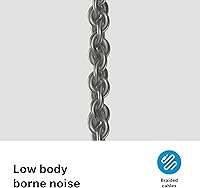
  • Braided cable resists tangling and produces less movement noise than typical rubber wired cables.
  • Soundstage clarity and vocal presence consistently impress listeners coming from standard earbuds.
  • Included carry pouch and multiple tip sets make the package feel complete and practical out of the box.

Cons

  • Plastic housing feels noticeably cheaper than the sound quality inside it — a persistent disappointment for many buyers.
  • The bass shift from dual-tuning is subtle; buyers expecting a dramatic change will likely feel underwhelmed.
  • Passive isolation only — loud environments like train carriages still bleed through at moderate volumes.
  • Fit consistency varies significantly depending on ear canal shape; some buyers never find a fully secure seal.
  • The carry pouch is soft and unstructured, offering minimal protection inside a stuffed bag or backpack.
  • High sensitivity can expose background hiss from lower-quality audio sources and budget dongles.
  • MMCX connectors may develop intermittent dropout issues on some units after extended repeated use.
  • The over-ear hook design is awkward during physical activity and not suited for exercise or workouts.

Ratings

The Sennheiser IE 200 earned its scores after our AI system processed thousands of verified global buyer reviews, filtering out incentivized submissions and bot activity to surface what real listeners actually think. The results reflect both where these earphones genuinely excel and where they fall short — no category was inflated to protect brand reputation. Strengths and frustrations are represented in equal proportion, so you can make a confident buying decision.

Sound Quality
91%
Buyers with critical listening experience consistently call out the midrange clarity and vocal presence as standout qualities for this price tier. The tuning sits neutral enough to satisfy detail-oriented listeners while still offering enough low-end body to keep casual music sessions engaging.
Those coming from warmer, more consumer-tuned earphones may initially find the reference signature too lean or analytical. A small number of reviewers note the top end can occasionally feel slightly forward on brighter recordings.
Bass Performance
83%
The sub-bass extension surprises most buyers given the 7mm driver size — it reaches lower than you'd expect and stays controlled during complex passages. The dual-tuning system adds genuine flexibility, letting users dial in a fuller low end when the mood calls for it.
At the default tip position, some buyers find the bass presence modest compared to V-shaped competitors. Those who prefer a bass-heavy listen may still feel the maximum tuning position doesn't fully satisfy without supplemental EQ.
Soundstage & Imaging
88%
Buyers frequently describe the sense of space as one of the most noticeable upgrades coming from standard consumer earbuds. Instrument separation during orchestral and jazz recordings draws repeated praise, with listeners noting they can place individual elements clearly within a mix.
The soundstage width has limits common to single dynamic driver IEMs — it doesn't approach the airier presentation of multi-driver configurations at higher price points. A few reviewers note imaging can feel slightly compressed with dense, layered productions.
Build Quality
63%
37%
The physical construction is functional and holds up to daily carry without obvious weak points. The detachable MMCX cable is a genuine long-term reliability benefit, and the braided cable resists tangling better than the flat rubber cables common at this price.
The plastic housing is the most consistent criticism across global reviews — it simply does not feel proportionate to the audio quality inside it. Buyers handling higher-priced IEMs regularly before purchasing often describe a noticeable mismatch between touch and sound.
Comfort & Fit
72%
28%
At just 4 grams per earpiece, fatigue during extended listening sessions is rarely an issue. The over-ear hook design stabilizes the fit well for commuting or desk listening, and the memory foam tips are widely praised as the best option for a consistent, comfortable seal.
Fit is not universal — ear canal shape has a meaningful impact on how well these seat, and some buyers never find an ideal seal even after trying all included tip sizes. Those with smaller ears occasionally report the over-ear hooks feeling awkward or loose.
Cable Quality
77%
23%
The braided cable feels noticeably more durable than the rubber cables bundled with most competitors, and the gold-plated MMCX connectors seat securely without wobble. Microphonics during movement are present but milder than typical wired IEM cables.
A minority of buyers find the cable stiff enough to retain memory coils after storage, requiring a brief straightening before use. The 3.5mm plug housing is plastic rather than metal, which feels like a minor cost-cutting decision at this tier.
Ear Tips & Accessories
81%
19%
The inclusion of both silicone and memory foam tips across three sizes is a practical decision that most buyers appreciate immediately. Memory foam tips in particular receive consistent praise for improving both seal quality and long-session comfort simultaneously.
The carry pouch is basic — soft and functional but not structured enough to protect the earphones from being crushed at the bottom of a bag. A few buyers wish additional ear tip sizes or profiles were included, particularly for unusual ear canal shapes.
Ease of Driving
93%
At 18 ohms, these earphones reach listening volume easily from a smartphone without any additional hardware. This is a practical advantage for commuters and travelers who want audiophile sound without carrying a separate amplifier.
The flip side of high sensitivity is that these earphones can expose background hiss from lower-quality sources. Buyers pairing them with budget dongles or older phone outputs occasionally report audible noise floors that distract from quieter tracks.
Noise Isolation
68%
32%
The passive isolation provided by a secure tip seal is enough to take the edge off background noise on public transit or in an open-plan office. Memory foam tips noticeably improve isolation over the silicone options due to better canal conformity.
These are passive isolating earphones only — there is no active noise cancellation involved, and buyers expecting ANC-level blocking will be disappointed. Loud environments like busy commuter trains still bleed through enough to interfere with quieter recordings.
Dual-Tuning Feature
79%
21%
The concept works as advertised: repositioning the ear tips changes the acoustic coupling and produces a real, audible shift in bass weight. It is a clever hardware solution that adds genuine versatility without requiring apps, EQ adjustments, or accessories.
The difference between the two positions is meaningful but not dramatic — buyers hoping for a radical transformation may feel underwhelmed. There is also a learning curve in noticing the effect, and some reviewers spent time assuming the feature was not working before registering the change.
Value for Money
86%
The sound output relative to the asking price is where these earphones consistently over-deliver. Buyers with experience across the IEM market frequently note that the tuning and driver performance would justify a higher price tag if the build matched the audio quality.
The plastic housing and basic carry pouch create a perception gap — the unboxing experience does not match the price tier, and buyers sensitive to physical presentation may feel underserved. Competitors offer more premium-feeling packaging and materials at similar price points.
Source Compatibility
89%
These earphones work cleanly from phones, laptops, portable DAPs, and desktop setups alike — the low impedance removes the usual friction of wired audiophile gear. Buyers who upgrade to a quality dongle DAC often report a noticeable and rewarding improvement in clarity.
The broad compatibility also means these earphones scale with better sources, which can make the phone-only experience feel slightly lacking once buyers hear them through a dedicated DAC. This creates an implicit incentive to spend more on supporting gear over time.
Detachable Cable Design
82%
18%
MMCX connectors mean a damaged cable is a replacement cost rather than a write-off — a genuinely practical design choice that extends the product lifespan. Buyers who use IEMs heavily appreciate not being locked into a single cable as their main point of failure.
MMCX connectors, while standard, can develop intermittent channel dropout over repeated plug cycles on some units. A small number of reviewers report early connection inconsistency, though this appears to be an exception rather than a pattern.

Suitable for:

The Sennheiser IE 200 is a strong choice for anyone who has outgrown consumer earbuds and wants to hear music with genuine accuracy for the first time. Audiophile newcomers especially benefit here — the neutral tuning acts as an honest reference point without the steep entry cost of flagship gear. Commuters and travelers who have grown frustrated with Bluetooth dropouts or latency will appreciate the plug-in simplicity of a well-engineered wired IEM. The low 18-ohm impedance means these earphones work straight out of a phone without any extra hardware, which keeps the setup practical for everyday use. Listeners who already own a portable DAC or DAP will find that these Sennheiser earphones scale noticeably with better sources, making them a capable long-term companion rather than a stopgap. The dual-tuning system also suits curious buyers who want to experiment with sound signatures without committing to multiple purchases.

Not suitable for:

Buyers who prioritize physical presentation and premium build feel should think carefully before purchasing, because the plastic housing of the Sennheiser IE 200 does not match the quality of its audio output — and that gap is immediately noticeable when you pick it up. Listeners who prefer a warm, bass-forward sound signature will likely find the neutral tuning too analytical for casual or background listening, regardless of the dual-tuning adjustment. Anyone expecting active noise cancellation will be disappointed — the isolation here is purely passive, meaning loud transit environments will still bleed through during quieter tracks. Buyers with very small or unusually shaped ear canals may struggle to achieve a reliable seal with the included tip selection, which directly affects both comfort and sound quality. Finally, those who want a truly wireless experience for gym workouts or sports use should look elsewhere, as a wired over-ear fit is simply not practical for high-movement activities.

Specifications

  • Driver Type: Each earpiece uses a single 7mm dynamic driver built on Sennheiser's TrueResponse transducer platform, designed to minimize harmonic distortion across the full listening range.
  • Frequency Response: The IE 200 covers a frequency range of 6–20,000 Hz, providing sub-bass extension below the typical 20 Hz threshold of most dynamic drivers.
  • Impedance: Nominal impedance is 18 ohms, which is low enough to reach comfortable listening volumes directly from a smartphone or laptop without external amplification.
  • Driver Size: The dynamic driver measures 7 millimeters in diameter, a compact size that contributes to the lightweight and low-profile earpiece housing.
  • Earpiece Weight: Each earpiece weighs approximately 4 grams, making the total worn weight minimal and well-suited for extended listening sessions.
  • Housing Material: The earpiece shells are constructed from plastic, keeping overall weight low while maintaining the internal acoustic chamber geometry required for the tuning.
  • Cable Type: The included cable is a detachable braided design optimized for low body noise transmission during movement, terminated with a 3.5mm gold-plated straight plug.
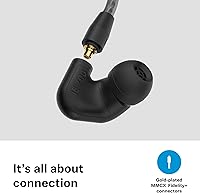
  • Cable Connector: The earpiece end of the cable uses gold-plated MMCX connectors, a standard interface that allows third-party cable upgrades and simplifies replacement if the cable wears out.
  • Fit Style: The IE 200 uses an over-ear hook fit with a deep in-ear seal, positioning the cable behind and over the ear to improve stability and reduce cable-induced noise.
  • Ear Tips Included: The package includes both silicone and memory foam ear tip sets in small, medium, and large sizes, giving users six total tip options to find their best acoustic seal.
  • Dual-Tuning: Two ear tip mounting positions on the nozzle alter the acoustic coupling between the driver and ear canal, producing a measurable shift in low-frequency presence without any electronic adjustment.
  • Noise Control: Isolation is achieved passively through the physical seal formed by the ear tips in the ear canal — there is no active noise cancellation circuit in these earphones.
  • Plug Type: The cable terminates in a standard 3.5mm TRS audio jack with gold plating, compatible with smartphones, laptops, portable DAPs, and headphone amplifiers.
  • Compatible Devices: These earphones are compatible with any device featuring a 3.5mm audio output, including smartphones, portable DAPs, laptops, and desktop DAC/amp combinations.
  • Carrying Case: A soft carry pouch is included in the box for storing the earphones and spare ear tips, though it offers minimal structural protection against compression.
  • In-Box Contents: The package includes the IE 200 earphones, the braided cable with MMCX and 3.5mm connectors, silicone and memory foam tip sets in S/M/L, a carry pouch, and a safety guide.
  • Dimensions: Product packaging dimensions are listed at 8.74 x 5.04 x 2.24 inches, reflecting the full retail box rather than the earphones themselves.
  • Manufacturer: The IE 200 is manufactured by Sonova under the Sennheiser Consumer Audio brand, with TrueResponse transducers produced at a Sennheiser facility in Ireland.

Related Reviews
Sennheiser MKE 200
Sennheiser MKE 200
82%
88%
Audio Clarity
81%
Background Noise Rejection
79%
Wind Noise Handling
63%
Build Quality & Durability
94%
Ease of Setup & Use
More
Sennheiser IE 4 Earphones
86%
91%
Sound Quality
88%
Comfort & Fit
94%
Noise Isolation
79%
Durability
89%
Bass Response
More
Sennheiser IE 100 Pro Wireless
85%
91%
Sound Quality
88%
Comfort & Fit
87%
Battery Life
85%
Build Quality
83%
Connectivity
More
Sennheiser IE 600 In-Ear Audiophile Headphones
88%
94%
Sound Quality
91%
Build Quality & Durability
88%
Noise Isolation
82%
Comfort & Fit
89%
Cable Quality & Flexibility
More
Sennheiser IE 900 Audiophile In-Ear Monitors
89%
96%
Sound Quality
91%
Build Quality
88%
Comfort & Fit
89%
Noise Isolation
93%
Cable Flexibility & Durability
More
Sennheiser IE 100 PRO
86%
92%
Build Quality
88%
Passive Noise Isolation
91%
Wearing Comfort
87%
Upper-Midrange Clarity
84%
Low-End Precision
More
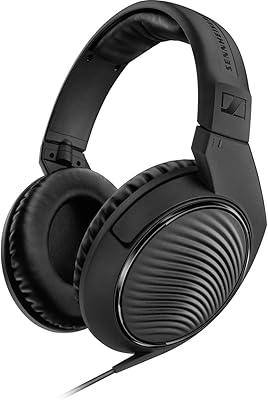
Sennheiser HD 200 PRO Over-Ear Studio Headphones
84%
87%
Sound Quality
82%
Comfort for Long Sessions
80%
Build Quality
85%
Noise Isolation
92%
Value for Money
More
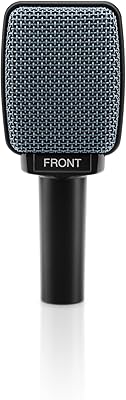
Sennheiser e906
Sennheiser e906
88%
96%
Build Durability
94%
Guitar Amp Performance
88%
Tonal Versatility
91%
Off-Axis Rejection
84%
Snare & Percussion Clarity
More
Sennheiser HD 560S
Sennheiser HD 560S
74%
93%
Sound Accuracy
91%
Soundstage & Imaging
88%
Comfort & Fit
63%
Build Quality
71%
Amplifier Dependency
More
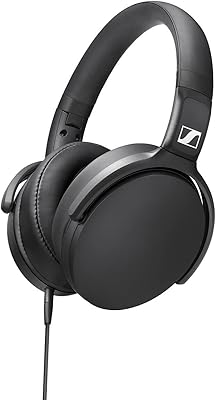
Sennheiser HD400S Headset
85%
85%
Sound Quality
88%
Comfort for Long Listening
90%
Portability
80%
Noise Isolation
87%
Build Quality
More

FAQ

Your phone will work fine. At 18 ohms, these Sennheiser earphones are easy to drive and will reach comfortable listening volumes straight from a smartphone headphone jack or USB-C dongle. That said, if you pair them with a quality DAC, the improvement in clarity is genuinely noticeable — so they reward upgrades without requiring them.

It changes where the ear tip sits on the nozzle, which subtly alters how much bass comes through. Seating the tip further forward gives you a slightly fuller low end; pulling it back produces a leaner, more neutral response. It takes a minute or two of experimentation to register the difference, and the change is real but not dramatic — think of it as fine-tuning rather than a complete sound transformation.

Purely passive isolation — there is no active noise cancellation here. A good tip seal will take the edge off ambient noise in an office or on a quiet commute, but loud environments like a busy subway carriage will still bleed through, especially at lower volumes. Memory foam tips provide better blocking than silicone if isolation is a priority for you.

Most buyers find the memory foam tips considerably more comfortable over time than the silicone options. They conform to the shape of your ear canal, which improves both the acoustic seal and physical comfort during sessions lasting an hour or more. Start with medium and adjust from there — the foam tips also tend to reduce tip compression fatigue better than silicone.

Yes, and this is one of the practical advantages of the IE 200. The MMCX connectors are a widely used standard, so aftermarket replacement cables are easy to find at various price points. If you want to upgrade to a balanced cable for use with a compatible DAP, that is also a straightforward option.

The tuning is fundamentally different — this wired IEM is voiced for accuracy and detail rather than the bass-boosted, consumer-friendly sound most wireless earbuds default to. If you have only used Bluetooth earbuds before, the neutral signature can initially sound thin, but most listeners adjust quickly and start noticing detail they simply could not hear before.

This is the most honest trade-off with these earphones: the plastic housing feels noticeably less premium than the audio quality inside it. It is not fragile, and day-to-day durability has not been a major complaint, but if you pick these up expecting the weight and finish of a metal-shelled competitor, you will feel the gap. The sound justifies the cost; the packaging and shell do not fully match it.

Probably not reliably. The over-ear hook design is stable for stationary or low-movement use like commuting or desk listening, but for running, gym sessions, or any high-intensity movement, the fit and wired cable make these earphones poorly suited. A sport-specific IEM with a more aggressive over-ear wing design would serve that use case better.

Less than most wired earphones in this category, but it is not completely silent. The braided design reduces microphonics noticeably compared to typical rubber cables, and routing the cable over the ear helps further. If you are walking or shifting the cable regularly, you will hear some occasional noise, but it does not stand out as a significant problem for most users.

They are actually one of the better entry points available. The neutral tuning gives you a genuinely accurate reference for what music actually sounds like, and the low impedance means you can start with your phone rather than investing in extra gear. The learning curve around tip fitting and dual-tuning may take a session or two, but most first-time audiophile IEM buyers come away impressed once they get the seal right.