Overview

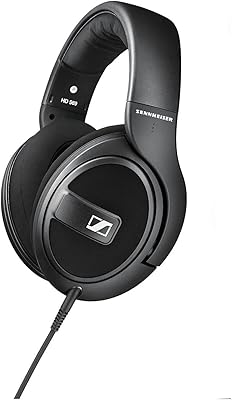
The Sennheiser HD 820 Over-Ear Headphones represent Sennheiser's answer to a long-standing question in high-end audio: can a closed-back headphone genuinely compete with open designs on soundstage and transparency? Built for serious home listeners and studio professionals, these are decidedly desktop headphones — the 300-ohm impedance means you will need a capable amplifier to get anything worthwhile out of them. The metal headband with its inner damping element and soft microfiber ear pads signal that Sennheiser expects you to wear them for hours at a stretch. The box includes both a standard 6.35mm cable and a 4.4mm Pentaconn balanced cable, a clear indication that these are intended for pairing with a proper balanced DAC/amp stack.
Features & Benefits

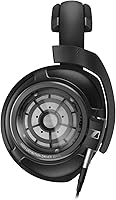
The engineering centerpiece of the HD 820 is its 56mm Ring Radiator driver — larger than most dynamic drivers found at this tier — which keeps distortion remarkably low (0.02% at 1 kHz) while extending frequency response all the way from 6 to 48,000 Hz. That range matters if you listen to hi-res audio formats where ultra-high-frequency content is actually present. More unusual is the concave Gorilla Glass reflector built into each earcup: it redirects the rear wave of the driver outward rather than letting it bounce chaotically inside the shell, which is what typically makes closed-back headphones sound congested. An acoustic absorber system works alongside this to reduce resonance in the mids, keeping vocal and instrumental detail from getting smeared.

Best For

These closed-back flagships are genuinely suited to a specific kind of listener. If you already own a desktop DAC/amp stack and want a closed design for late-night listening without disturbing anyone nearby, the passive isolation here does that job without the tonal compromises of active noise cancellation. Studio engineers who need to track in an environment where open-back bleed is a problem will find the imaging accurate enough for real work. The comfort over multi-hour sessions is legitimately good — the microfiber pads and damped headband hold up well. What they are not suited for is portable use, commuting, or plugging directly into a phone or laptop. Think of them as a stay-at-home, high-impedance specialist.

User Feedback

Among verified buyers, the HD 820 earns consistent praise for its wide, airy soundstage — something genuinely unusual in closed designs — and for long-session comfort that holds up even after four or five hours. The criticism tends to cluster around two areas. A recurring frustration is amplifier dependency: listeners who ran these from underpowered sources reported flat, lifeless sound, which is a real setup risk at this price. The second debate is around bass: compared to the open-back HD 800 S, some reviewers find the low end slightly fuller here, while others consider it a welcome change. Overall ratings sit at 3.9 out of 5, which for a buyer pool this technically demanding reflects a product that delivers — but only in the right context.

Pros

  • Closed-back design achieves a soundstage depth that genuinely rivals many open-back competitors.
  • 56mm Ring Radiator drivers keep distortion exceptionally low even at high listening volumes.
  • Gorilla Glass reflector system reduces the boxed-in feeling common to sealed headphones.
  • Microfiber ear pads and damped metal headband hold up comfortably through multi-hour sessions.
  • Balanced 4.4mm Pentaconn cable included out of the box — no need for an immediate aftermarket purchase.
  • Frequency response extending to 48,000 Hz makes these genuinely capable with hi-res audio formats.
  • Passive isolation is sufficient for late-night home use without the tonal coloring of active noise cancellation.
  • Build quality is exceptional — metal construction and precise fit suggest long-term durability.
  • Acoustic absorber system noticeably cleans up mid-range resonance compared to typical closed designs.
  • Two-year warranty and continued manufacturer support provide reasonable long-term peace of mind.

Cons

  • 300-ohm impedance makes these completely dependent on a powerful external amplifier — no exceptions.
  • At this price tier, open-back alternatives offer competitive or superior soundstage without the isolation trade-off.
  • Bass response is fuller than the open-back HD 800 S, which will not suit listeners accustomed to that leaner signature.
  • No wireless or Bluetooth option whatsoever — wired-only in an era where many buyers expect both.
  • The HD 820 is heavy enough at 360 grams that some users notice fatigue during very extended sessions.
  • Carrying case is microfiber rather than a hard shell, offering limited protection for a high-value item.
  • The value proposition is genuinely debatable — competing closed-back flagships from other brands cost less.
  • Requires careful source matching; pairing with the wrong amplifier can actively hurt the listening experience.
  • No in-line controls or microphone on either included cable, ruling out any voice or call use.
  • Overall user rating of 3.9 out of 5 reflects meaningful dissatisfaction among a technically savvy buyer base.

Ratings

Our AI rating system analyzed verified owner reviews of the Sennheiser HD 820 Over-Ear Headphones from global sources, actively filtering out incentivized submissions, bot activity, and one-off outliers to surface what real long-term users consistently experience. Scores reflect both the genuine strengths that earned this headphone its reputation and the recurring frustrations that prevent a clean sweep — nothing has been softened or inflated.
Sound Quality
91%
Owners who pair the HD 820 with a proper amplifier consistently describe the sound as detailed, composed, and surprisingly open for a sealed design. Late-night listening sessions through hi-res streams are frequently cited as the sweet spot where the Ring Radiator driver's low distortion and wide frequency extension become clearly audible.
A portion of reviewers — particularly those coming from the open-back HD 800 S — find the bass slightly elevated and feel it nudges the tonal balance away from strict neutrality. This is not a flaw for all listeners, but it does mean the HD 820 has its own sonic character rather than being a straight closed-back substitute.
Soundstage & Imaging
88%
For a closed-back headphone, the perceived width and depth of the soundstage draws consistent surprise from new owners. The Gorilla Glass reflector system does measurable work here — studio engineers tracking instruments report that positional cues in the mix are rendered with more air and separation than typical sealed designs allow.
Side-by-side comparisons with open-back flagships at the same price point reveal a ceiling that the closed design cannot fully overcome, regardless of the engineering solution applied. Listeners who prioritize absolute spatial realism over isolation will still find open-back alternatives more convincing.
Build Quality
93%
The metal headband, precision-fitted earcups, and high-grade microfiber contact points communicate a level of physical refinement that matches the price tier. Multiple long-term owners report no material degradation after years of regular use, which is exactly what buyers at this investment level should expect.
The soft microfiber carrying case is the one area where build investment clearly drops off. For a headphone of this value, a hard-shell protective case would be the obvious choice, and the absence of one is a recurring complaint among buyers who travel even occasionally between home and studio.
Comfort
87%
The damped metal headband distributes weight consistently, and the microfiber ear pads remain soft and breathable across sessions lasting three to five hours. Users who spend long periods doing critical listening work — tracking sessions, extended hi-res playback — regularly single out comfort as one of the HD 820's more underrated strengths.
At 360 grams, some users with smaller head sizes or sensitivity to headband clamping notice fatigue during very long sessions beyond four or five hours. Glasses wearers specifically flag that the firm earcup seal can create pressure at the temples where the glasses arms interrupt the pad contact.
Amplifier Dependency
48%
52%
When paired with a capable desktop amplifier, the 300-ohm load is no obstacle at all — the HD 820 scales well with source quality and rewards investment in better upstream components. Owners who went in with their eyes open about this requirement consistently report satisfaction once the right pairing is in place.
This is the single most cited source of buyer disappointment. Reviewers who attempted to drive these from laptops, portable DACs, or smartphone dongle adapters describe the result as noticeably flat and lifeless — a genuinely poor experience that does not reflect the headphone's actual capability. The requirement for a dedicated amplifier is not optional and needs to be factored into the total cost.
Value for Money
61%
39%
Buyers who needed specifically a high-performance closed-back headphone — for studio tracking, shared-space listening, or privacy — and who already owned appropriate amplification tend to feel the price is justified. The engineering investment in the Ring Radiator driver and Gorilla Glass reflector system is genuinely reflected in the listening experience.
The value debate is real and honest: open-back competitors at a comparable or lower price point offer similar or superior technical performance for listeners who do not require isolation. The premium here is specifically for the closed-back engineering, and buyers who do not strictly need that design characteristic are paying for something they may not fully leverage.
Passive Isolation
72%
28%
The physical seal of the closed earcups provides enough ambient noise reduction for focused home listening — background household noise, a running appliance, or moderate street noise through a window are all reduced to a manageable level. For late-night listening where the goal is simply not to disturb others, the isolation works well in both directions.
Buyers expecting active noise cancellation-level isolation will be disappointed — this is purely passive, and it performs accordingly. Busy open-plan offices or commute environments are too demanding for what the closed-back seal alone can achieve, and the headphone was never intended for those scenarios.
Cable & Connectivity
84%
Including both a 6.35mm single-ended cable and a 4.4mm Pentaconn balanced cable in the box is a genuinely useful decision rather than a marketing gesture. Owners with balanced amplifier outputs can use the balanced connection immediately without sourcing an aftermarket cable, which at this price tier is a meaningful convenience.
Both cables are wired only — there is no wireless option, no Bluetooth, and no in-line controls or microphone functionality. For a headphone positioned at this level, that is an expected trade-off rather than a surprise, but buyers who are accustomed to the convenience of wireless use need to accept a full lifestyle change when switching to the HD 820.
Driver Accuracy & Distortion
94%
The 0.02% total harmonic distortion measurement at 1 kHz is among the lowest in any dynamic driver headphone at any price, and owners doing critical audio work — comparing mix revisions, evaluating mastering decisions — report that fine detail in recordings is rendered with real clarity. This is a headphone that exposes source quality honestly.
The clinical accuracy that studio users appreciate can work against casual listeners who prefer a more forgiving, colored presentation. The HD 820 will not flatter a poor recording — it reveals compression artifacts and low-bitrate streaming with the same honesty it applies to well-mastered material.
Hi-Res Audio Compatibility
89%
The frequency response extending to 48,000 Hz makes the HD 820 a credible choice for hi-res audio formats like FLAC 192kHz and DSD, where ultra-high-frequency content is present in the source file. Owners who subscribe to Tidal Masters or maintain a local hi-res library report audible differences compared to listening on standard-resolution headphones.
The practical benefit of the extended frequency response is only realized when the full signal chain supports it — a hi-res capable DAC and amplifier are required to pass that content through. Owners streaming standard quality audio or using limited DAC hardware will not hear a meaningful difference from the extended range.
Headband Adjustability
81%
19%
The metal headband adjusts smoothly across a wide range of head sizes, and the inner damping element prevents the kind of metallic resonance that cheaper headbands can introduce at high volumes. Multiple users with larger or smaller head sizes confirm the fit range is accommodating without feeling sloppy at any setting.
The adjustment mechanism, while solid, is not tool-free for disassembly, and a few owners note that the headband sizing increments are slightly coarse — making fine-tuning to exactly the right fit take a few attempts, particularly for users between the standard notch positions.
Ear Pad Quality
86%
Microfiber was a deliberate material choice here, and it pays off in practice — the pads remain noticeably cooler than leather or leatherette alternatives during extended sessions, and the soft texture does not cause the skin irritation some users experience with synthetic leather at similar clamping pressures.
Microfiber, while comfortable, accumulates dust and skin oils more visibly than smoother materials over time. Cleaning requires care to avoid matting the surface, and some owners note that the pads show cosmetic wear — slight compression and surface sheen — after a year or more of regular use, even if functional performance is unaffected.
Setup & Usability
58%
42%
Once a suitable amplifier is in place, daily use is straightforward — there are no apps to manage, no firmware updates, no pairing sequences, and no batteries to charge. The plug-in-and-listen simplicity is appreciated by users who have grown fatigued by the maintenance overhead of wireless and smart headphones.
The initial setup investment — researching and purchasing a compatible amplifier, understanding balanced versus single-ended connections, and optimizing the source chain — creates a steep entry barrier for buyers new to high-impedance headphones. This is not a product you unbox and immediately enjoy at full potential.
Warranty & Support
77%
23%
A two-year manufacturer warranty with confirmed EU spare part availability signals that Sennheiser views the HD 820 as a long-term product rather than a limited-run release. Replacement parts — including ear pads and cables — are available through authorized channels, which matters for an item buyers expect to use for many years.
Some international buyers report that warranty service logistics vary significantly by region, with repair turnaround times and parts availability less consistent outside of Europe and North America. For a product at this price, buyers in less-served markets should verify local support arrangements before purchasing.

Suitable for:

The Sennheiser HD 820 Over-Ear Headphones are purpose-built for a specific kind of serious listener, and they reward that listener generously. If you already own a capable desktop DAC and amplifier — or are budgeting for one alongside this purchase — and you need a closed-back design for practical reasons like late-night listening, shared living spaces, or studio tracking sessions where sound bleed is unacceptable, these deliver at a level few closed headphones can match. Hi-res audio enthusiasts who stream in high-resolution formats will find the ultra-wide frequency response genuinely relevant, not just a spec-sheet boast. Studio engineers who need accurate stereo imaging while recording live instruments or vocals will appreciate both the isolation and the low distortion. Anyone stepping up from a mid-tier closed-back headphone who wants to understand what reference-grade monitoring actually sounds like in a sealed design will find this a meaningful and educational upgrade.
Not suitable for:

The Sennheiser HD 820 Over-Ear Headphones are a poor fit for a surprisingly large share of buyers who might be drawn to the brand name or the engineering story. Anyone planning to use these on the go, plugged into a phone, laptop, or portable dongle DAC will be disappointed — at 300 ohms, these headphones are severely underpowered by casual sources and will sound flat and lifeless as a result. Buyers who do not already own or plan to invest in a dedicated desktop amplifier should stop here and reconsider. Those expecting active noise cancellation-style isolation will also be let down; the closed-back design reduces ambient noise passively, but it is not a commuter or travel solution. If your primary comparison point is the open-back HD 800 S and you are hoping for an identical sonic signature with added isolation, the bass presentation here is notably different — that gap divides opinion sharply and is worth audition time before committing.
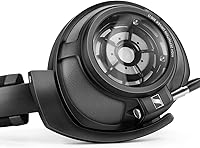
Specifications

  • Driver Type: The HD 820 uses a 56mm Ring Radiator dynamic driver, which is larger than most over-ear headphone drivers and contributes to its low distortion and extended frequency range.
  • Impedance: Rated at 300 ohms, these headphones require a dedicated headphone amplifier to reach their intended performance level.
  • Frequency Response: The stated frequency response spans 6 Hz to 48,000 Hz at -10 dB, covering well beyond the audible range and supporting hi-res audio formats.
  • Distortion: Total harmonic distortion measures just 0.02% at 1 kHz and 1 Vrms, indicating an exceptionally clean signal at reference listening levels.
  • Design: The HD 820 is a closed-back, over-ear (circumaural) headphone with concave Gorilla Glass reflectors built into each earcup to manage rear wave dispersion.
  • Weight: The headphone weighs 360 grams (12.7 oz) without the cable attached.
  • Headband: The adjustable headband is constructed from metal and incorporates an inner damping element to reduce vibration and improve long-session comfort.
  • Ear Pads: Ear pads and headband contact points are finished in soft microfiber, which Sennheiser chose for both comfort and durability over extended use.
  • Included Cables: The package includes two cables: a standard 6.35mm (1/4-inch) single-ended cable and a 4.4mm Pentaconn balanced cable for use with balanced amplifier outputs.
  • Connectivity: These are wired-only headphones; there is no Bluetooth, wireless, or active noise cancellation functionality.
  • Isolation Type: Sound isolation is passive, provided by the physical seal of the closed earcups against the head — not electronic noise cancellation.
  • Carrying Case: A microfiber carrying case is included, though it is soft-sided and does not offer hard-shell protection for transport.
  • Manufacture: The HD 820 is developed in Germany and assembled at Sennheiser's manufacturing facility in Ireland.
  • Warranty: Sennheiser provides a 2-year manufacturer warranty, with EU spare part availability confirmed for the same duration.
  • Water Resistance: The HD 820 carries no water or moisture resistance rating and should be kept away from liquids.
  • Earpiece Shape: The earcups are rounded and circumaural, designed to fully enclose the ear rather than resting on it.
  • Compatible Sources: The HD 820 is compatible with any device featuring a 6.35mm headphone output or a 4.4mm balanced output, including dedicated amplifiers, DAC/amp units, and professional audio interfaces.

Related Reviews
Sennheiser HD 400S
Sennheiser HD 400S
77%
88%
Sound Quality
81%
Comfort & Fit
74%
Passive Noise Isolation
67%
Build Quality
63%
Cable & Connectivity
More
Sennheiser HD 660S2
Sennheiser HD 660S2
80%
93%
Sound Quality
84%
Bass Performance
91%
Soundstage & Imaging
58%
Amplifier Dependency
88%
Comfort & Wearability
More
Sennheiser HD 300 Closed-Back Over-Ear Headphones
77%
82%
Sound Quality
73%
Noise Isolation
76%
Comfort & Fit
62%
Build Quality
86%
Value for Money
More
Sennheiser HD 800 S Open-Back Headphones
72%
96%
Soundstage & Imaging
91%
Sound Accuracy
84%
Comfort
61%
Value for Money
41%
Amplifier Dependency
More
Sennheiser HD 200 PRO Over-Ear Studio Headphones
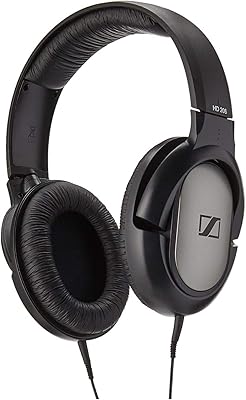
84%
87%
Sound Quality
82%
Comfort for Long Sessions
80%
Build Quality
85%
Noise Isolation
92%
Value for Money
More
Sennheiser HD 600
Sennheiser HD 600
75%
94%
Sound Accuracy & Neutrality
91%
Soundstage & Imaging
88%
Comfort & Wearability
61%
Amplifier Dependency
72%
Build Quality
More
Sennheiser HD 206 Stereo Headphones
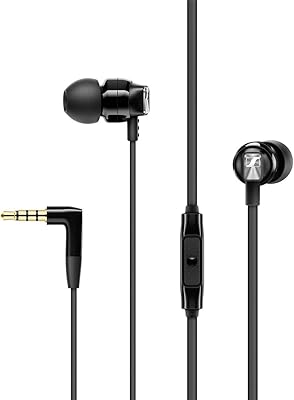
82%
92%
Value for Money
85%
Sound Quality
88%
Comfort & Fit
70%
Noise Isolation
80%
Build Quality
More
Sennheiser CX 300S In-Ear Headphones
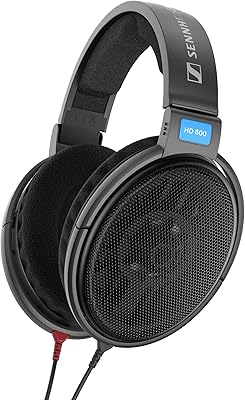
71%
84%
Sound Quality
76%
Comfort & Fit
78%
Noise Isolation
57%
Inline Remote & Controls
71%
Microphone Quality
More
Sennheiser HD 280 Pro
81%
91%
Noise Isolation
88%
Sound Accuracy
86%
Build Quality
63%
Comfort Over Long Sessions
89%
Passive Attenuation Performance
More
Sennheiser HD 490 PRO Plus Headphones
82%
94%
Sound Quality
91%
Comfort for Long Sessions
88%
Build Quality
45%
Noise Isolation
85%
Ease of Setup
More

FAQ

You will need a dedicated amplifier. At 300 ohms, the HD 820 draws far more power than a laptop, phone, or most consumer DACs can reliably supply. Plugging them into an underpowered source will produce sound that is thin, quiet, and lacking in dynamics — nowhere near what the headphone is actually capable of. Budget for a capable desktop headphone amp alongside this purchase.

It is a real engineering solution, not just a talking point. In a conventional closed-back headphone, the driver's rear wave bounces around inside the cup and causes coloration and a closed-in feeling. The concave Gorilla Glass reflector redirects that rear wave outward in a more controlled way, which reduces internal resonance and contributes to the more spacious presentation the HD 820 is known for. Whether you find the result convincing compared to a true open-back design is a matter of personal evaluation.

It will reduce ambient sound noticeably — conversation in another room, a fan running, moderate street noise. What it will not do is block sound the way active noise cancellation does. If you are in a genuinely loud environment like an open office with loud colleagues or a busy cafe, you will still hear background noise. Think of it more as enough isolation to focus during late-night listening at home, not a solution for commuting or travel.

The HD 800 S has a leaner, more neutral bass presentation and an arguably wider sense of space because there are no physical boundaries for the rear wave. The HD 820 has a slightly fuller low end and provides the practical benefit of isolation. If you have no reason to use a closed-back design, many listeners prefer the HD 800 S sonically. The HD 820 is the right choice specifically when you need the closed-back form factor and do not want to give up too much of that open-back character.

Yes, Sennheiser manufactures replacement ear pads for the HD 820 and they are available through authorized dealers and directly from Sennheiser. Given the microfiber material, they do hold up well under regular use, but having replacement parts available is reassuring given the long-term investment involved.

Any well-regarded desktop headphone amplifier capable of driving high-impedance loads comfortably will work well — brands like Schiit, Chord, Beyerdynamic, and Naim all produce units in various price ranges that pair appropriately. If you plan to use the included 4.4mm balanced cable, make sure your amp has a balanced output. Matching the amp quality to the headphone matters here; a budget amp will leave meaningful performance on the table.

Yes, and this is one of the more practical use cases for them. The passive isolation prevents bleed from the headphone mix into a recording microphone, and the low distortion and wide frequency response make them accurate enough for critical listening during tracking and rough mixing. They are not a replacement for near-field monitors for final mix decisions, but for tracking sessions and detailed listening work they perform at a professional level.

If your amplifier has a balanced 4.4mm output, the balanced cable is worth using — balanced connections typically lower noise floor and can improve channel separation, both of which matter at this performance level. If your amp only has a single-ended output, the standard 6.35mm cable is perfectly capable and there is no benefit to chasing an adapter just to use the balanced cable.

This is worth paying attention to. The HD 820 creates a firm seal around the ear, and glasses arms running between the earcup and the head can break that seal, reducing isolation and potentially causing pressure discomfort over time. Many glasses wearers find the soft microfiber pads accommodating enough for moderate sessions, but if you wear thicker frames, it is worth auditioning these in person before committing.

The included microfiber case is really designed for storage at home or very careful transport in a bag where nothing heavy is pressing against it. It is not a protective travel case by any measure. If you plan to carry these between locations regularly, investing in a third-party hard case sized for large over-ear headphones would be a sensible precaution given what these cost.

Where to Buy