Overview

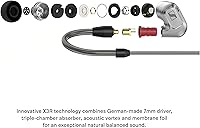
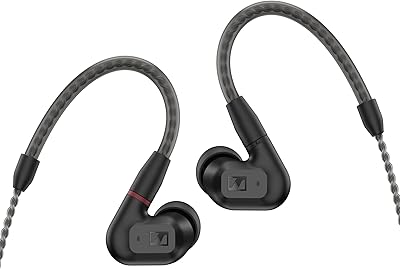
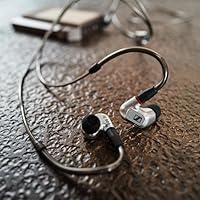
The Sennheiser IE 900 In-Ear Monitors represent Sennheiser's most ambitious single-dynamic-driver IEM, built for listeners who take sound seriously. At this price point, you're not buying convenience — you're buying precision. The 7mm TrueResponse transducer is hand-assembled in Germany, and that heritage matters; this isn't a mass-market earphone dressed up in premium packaging. X3R technology sits at the heart of the design, combining a triple-chamber absorber and acoustic vortex to clean up the sound before it reaches your ear. Worth flagging upfront: the IE 900 is wired-only, carries no water resistance rating, and genuinely needs a quality source to show what it can do. Plug it into your phone's headphone jack and you'll hear a fraction of its potential.

Features & Benefits

The engineering inside the IE 900 is genuinely interesting once you understand what it's trying to solve. In a tiny ear canal, resonances build up and smear fine detail — that's exactly what X3R addresses. The triple-chamber absorber and acoustic vortex work in tandem to suppress those resonances, which translates to a treble range that stays clear without sounding harsh. The detachable cable is reinforced with para-aramid fibers and uses gold-plated MMCX connectors rated for over 500 swaps — serious longevity for a high-use component. Three cables ship in the box: a standard 3.5mm single-ended, plus balanced 2.5mm and 4.4mm options. Six ear tip variations in silicone and memory foam mean most listeners will find a comfortable seal. The unboxing, complete with a signed certificate, feels appropriately considered at this tier.

Best For

These flagship IEMs are at their best in a controlled listening environment — sitting at a desk with a dedicated DAC and amp, or paired with a balanced portable player like a high-quality DAP. Critical listeners and home audiophiles will get the most from them, particularly those who prioritize tonal accuracy and resolution over a bass-heavy sound signature. The IE 900 also suits studio use and reference monitoring where coloration is the enemy. Travelers who want a serious wired option can absolutely bring these along, provided the source is worthy of them. What they're not suited for is casual all-day wear or gym sessions — the lack of water resistance and analytical tuning make these a dedicated listening tool, not an everyday companion. Plan to invest in the right source chain to unlock their ceiling.

User Feedback

With 85 ratings averaging 3.9 out of 5, this Sennheiser monitor sits in genuinely interesting territory. That score doesn't reflect poor build quality — it reflects a polarizing sound signature. Listeners who love the IE 900 tend to rave about its detail retrieval and surprisingly wide soundstage for a closed in-ear design; the aluminum housing and cable construction earn consistent praise too. The friction comes from the tuning: some find it bright and analytical to the point of fatigue on longer sessions, and several note that performance improves considerably through a balanced output. Fit is another variable — tip selection genuinely changes the sound, and getting a proper seal takes real experimentation. Given that most reviewers here are experienced enthusiasts, the debate over price-to-performance is sharper than it would be for a mainstream product.

Pros

  • Exceptional micro-detail retrieval that exposes layers in recordings most earphones simply miss
  • Wide, open soundstage that punches well above what a closed in-ear design typically delivers
  • Three cables included out of the box — single-ended and two balanced options — covering most source setups
  • Gold-plated MMCX connectors rated for 500-plus attachment cycles make cable swapping a long-term non-issue
  • Lightweight aluminum housing at under 5 grams per earpiece causes virtually no ear fatigue during long sits
  • Six ear tip variants in silicone and memory foam give real flexibility for achieving a proper acoustic seal
  • The IE 900 ships with a signed certificate and premium carry case that feel appropriate for the investment
  • Para-aramid reinforced cable resists tangling and wear far better than standard rubber-coated alternatives
  • Passive noise isolation is solid once a proper seal is found, making these viable for quiet travel
  • Two-year warranty from a manufacturer with a strong reputation for honoring it

Cons

  • Bright, analytical tuning is genuinely polarizing — extended listening can cause fatigue for some ears
  • Completely source-dependent; performance will disappoint unless paired with a capable DAC and amplifier
  • No water resistance at all, which limits use scenarios more than you might expect at this price level
  • Achieving an ideal fit requires real experimentation across multiple tip sizes and materials
  • Only 85 reviews available, making it harder to gauge long-term reliability trends with confidence
  • The price-to-performance debate is active even within the enthusiast community, so expectations should be calibrated
  • No wireless option exists, which is a practical limitation for listeners whose setups have moved away from wired
  • Bright treble can expose harshness in poorly mastered recordings, making source material quality a genuine variable

Ratings

The scores below for the Sennheiser IE 900 In-Ear Monitors were generated by our AI system after analyzing verified buyer reviews from global markets, with spam, bot-submitted, and incentivized feedback actively filtered out before scoring. These flagship IEMs attract a passionate and opinionated audience, which means the feedback pool is unusually detailed — and unusually divided. Both the genuine strengths and the real frustrations are reflected transparently in every category score below.
Sound Detail & Resolution
94%
Listeners consistently describe a level of micro-detail that catches them off guard — subtle reverb tails, breath before a vocal phrase, the body of an acoustic guitar string that cheaper IEMs simply compress away. For critical home listening sessions with high-resolution files, the IE 900 retrieves information that keeps experienced audiophiles engaged for hours.
That same resolution is unforgiving with poorly mastered or heavily compressed audio. Streaming at lower bitrates or listening to older recordings can make the analytical character feel like a microscope pointed at flaws rather than a window into the music.
Sound Signature & Tuning
71%
29%
Listeners who prefer an accurate, reference-style presentation — the kind used in studio monitoring — find the tuning highly satisfying. Instruments are separated cleanly, and the treble extension gives cymbals and high strings a lifelike shimmer that warmer IEMs tend to soften.
The bright, analytical tilt is a genuine dealbreaker for a meaningful portion of buyers. Listening fatigue sets in faster than expected for those accustomed to a warmer or V-shaped signature, and the tuning is polarizing enough to directly account for the below-average overall star rating despite strong build and technical performance.
Soundstage & Imaging
89%
For a sealed in-ear design, the spatial presentation is remarkably convincing. Buyers frequently note that the IE 900 places instruments with a sense of width and depth that feels closer to a good open-back headphone than a typical closed IEM, which makes orchestral and jazz recordings particularly compelling.
Some listeners find the imaging, while precise, can feel slightly clinical rather than immersive. The wide stage occasionally makes very intimate recordings — solo voice, close-miked acoustic guitar — feel slightly artificial in their spatial spread.
Build Quality
92%
The machined aluminum housings feel dense and purposeful in a way that communicates real engineering care. Cable connectors are reinforced and rated for hundreds of swaps, and every element from the ear hooks to the carry case suggests a product designed to last well beyond a standard warranty period.
The aluminum shells, while premium, can feel cold to the touch initially and show minor cosmetic scratches after extended pocket or case use. A small number of buyers reported MMCX connector looseness after heavy use, though this appears to be an outlier rather than a systemic issue.
Cable Quality & Versatility
88%
Shipping three cables out of the box — including two balanced options — is a practical gesture that most competitors at this tier do not match. The para-aramid reinforcement genuinely reduces the tangles and microphonics that plague softer cables, and the over-ear routing keeps things tidy during seated listening.
The cables, while well-built, are stiffer than some listeners prefer, which can feel slightly awkward during the first few days of use. A small number of buyers also noted that the memory wire in the ear hooks holds its shape a bit too rigidly, making initial adjustment fiddly.
Fit & Comfort
73%
27%
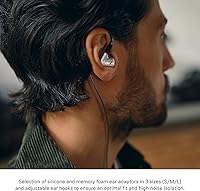
When the right tip is found — and six options across two materials and three sizes gives a decent chance of finding it — the IE 900 seats securely and comfortably for long sessions. The lightweight aluminum shells mean there is no significant ear canal fatigue even after an hour or more of seated listening.
Fit is not a given, and this catches some buyers off guard. Getting a proper acoustic seal requires patient experimentation, and listeners with smaller or irregularly shaped ear canals report that none of the included tips produce a consistent result. A poor seal meaningfully degrades bass response and soundstage width.
Passive Noise Isolation
76%
24%
With a proper seal achieved, the IE 900 blocks enough ambient noise to make quiet environments — a home office, a library, a plane cabin — feel genuinely isolated without any electronic noise cancellation involved. This is purely a function of the physical seal, and it works well once tip selection is dialed in.
Isolation is entirely dependent on fit, so buyers who struggle to find a sealing tip will get very little noise attenuation. Unlike active noise-cancelling earphones, there is no fallback if the passive seal fails, which makes this an inconsistent experience across different users.
Source Dependency
58%
42%
On a quality balanced DAP or a desktop DAC and amplifier stack, these IEMs genuinely reward the investment in upstream gear. Buyers who already have a capable source chain report that the IE 900 scales noticeably with better equipment, showing improvements in dynamics and tonal density that entry-level sources cannot unlock.
This is the single biggest practical pain point reported by buyers. Listeners who expected strong performance from a laptop headphone jack or smartphone output were frequently disappointed. The source dependency is real, not audiophile mythology, and buyers without an existing quality source should factor additional equipment costs into their decision.
Value for Money
62%
38%
For listeners who value German engineering heritage, single-dynamic-driver coherence, and the included balanced cable package, the pricing feels justifiable as a long-term investment. Buyers in this camp tend to view the IE 900 as a final IEM purchase rather than one step on a longer upgrade path.
The price-to-performance debate is active and unresolved even among enthusiasts. At this tier, competition from both established and emerging brands is intense, and several reviewers candidly note that comparable or arguably superior technical performance is available for considerably less. The value case depends heavily on personal tuning preference.
Unboxing & Accessories
86%
The presentation box with a signed certificate is a small but effective touch that makes the purchase feel like an event rather than just another online order. The carry case, cleaning tool, and full cable set mean buyers are genuinely equipped to start listening immediately without sourcing additional accessories.
The carry case, while attractive, is on the compact side and requires some care when packing in cables and ear tips together. A few buyers noted that the cable clip feels slightly lightweight compared to the overall quality level of the rest of the package.
Durability & Longevity
87%
The materials and construction choices — machined aluminum, reinforced cables, high-cycle MMCX connectors — all point toward a product designed to outlast most of the competition. Buyers who have owned the IE 900 for multiple years report no significant degradation in build integrity or sound quality.
The lack of any water or sweat resistance means durability is entirely conditional on how and where the earphones are used. A single wet commute or gym session introduces a real risk that no manufacturer warranty will cover, which limits the IE 900's practical lifespan for less careful users.
Frequency Extension
91%
The stated range of 4 Hz to 48 kHz is backed up by what listeners actually report: a bass extension that reaches deep without bloating, and a treble that stretches into air frequencies that most dynamic drivers roll off. Pipe organ recordings and high-hat detail both benefit from this full-range behavior.
The extended treble, while technically impressive, can sound slightly emphasized relative to the midrange on certain tracks. Listeners sensitive to upper-frequency energy may find specific genres — bright pop productions, certain electronic music — uncomfortable without EQ adjustment.
Ease of Use
69%
31%
Once the IE 900 is set up with the right tips and a compatible source, the daily listening experience is straightforward. Cable swapping is genuinely simple thanks to the MMCX system, and the over-ear fit stays in place well enough that repositioning mid-session is rarely needed.
The initial setup curve is steeper than most earphones at any price. Between tip selection, ear hook adjustment, and source pairing, new owners often spend a meaningful amount of time before the product sounds the way it should. For listeners expecting plug-and-play performance, this process can feel frustrating.
Midrange Clarity
83%
Vocals and instruments in the midrange are rendered with a transparency that is one of the IE 900s most consistently praised characteristics. Acoustic guitar body, piano key weight, and vocal breath control all come through with a sense of presence that rewards attentive listening.
Some listeners feel the midrange sits very slightly behind the treble in overall emphasis, which can make vocals sound slightly recessed on certain recordings. This is a tuning preference issue rather than a technical flaw, but it is a recurring observation in more detailed user feedback.

Suitable for:

The Sennheiser IE 900 In-Ear Monitors are built for a specific kind of listener: someone who has already invested in a quality source — a dedicated DAC and amplifier setup, or a balanced digital audio player — and wants an in-ear monitor that can actually reveal what that chain is capable of. Audiophiles who prioritize tonal accuracy and micro-detail over warm, bass-forward sound will find the IE 900 deeply rewarding, particularly during focused home listening sessions where there are no distractions. Studio musicians and mixing engineers looking for a portable reference tool will appreciate the analytical tuning and the wide soundstage, which is genuinely uncommon at this form factor. The included balanced cables mean buyers with high-end portable rigs can hit the ground running without sourcing aftermarket accessories. Anyone planning to own a flagship IEM for years rather than months will also respect the build quality and the durability engineering behind the connectors and cable construction.

Not suitable for:

The Sennheiser IE 900 In-Ear Monitors are a poor fit for casual listeners who primarily use a smartphone as their audio source — plugging these into a standard headphone jack or Bluetooth adapter will leave most of their capability untapped, and the investment simply will not make sense. Listeners who prefer a warm, musical, or bass-emphasized sound signature should look elsewhere; the tuning here is analytical and bright, which can cause listening fatigue over long sessions for those not accustomed to that style. The lack of any water resistance rules them out for workouts, commutes in uncertain weather, or any active outdoor use — these are not earphones you want to sweat into. Buyers who swap between earphones frequently or want a no-fuss daily driver will find the careful tip-fitting process and source dependency more burden than benefit. Anyone expecting near-universal acclaim at this price tier should know the 3.9-star average reflects real debate among enthusiasts, not just casual buyers leaving quick ratings.
Specifications

  • Driver Type: Each earpiece uses a single 7mm dynamic TrueResponse transducer, hand-crafted in Germany for in-ear acoustic performance.
  • Technology: X3R technology combines a triple-chamber absorber and acoustic vortex to reduce resonance and extend treble clarity across the frequency range.
  • Frequency Response: The IE 900 covers a wide frequency range from 4 Hz to 48 kHz, spanning well beyond standard audible limits on both ends.
  • Impedance: At 18 Ohms, the IE 900 is relatively easy to drive by IEM standards, though a quality source is still strongly recommended.
  • Housing Material: The earpiece shells are machined from aluminum, providing a rigid, acoustically inert enclosure that also contributes to the lightweight build.
  • Weight: Each earpiece weighs just 4.54 g, making the overall assembly light enough for extended listening sessions without physical discomfort.
  • Cables Included: Three detachable cables ship in the box: one single-ended 3.5mm and two balanced options terminated in 2.5mm and 4.4mm connectors respectively.
  • Cable Construction: All included cables are reinforced with para-aramid fibers, offering significantly better durability and tangle resistance compared to standard rubber-jacketed cables.
  • Connectors: Gold-plated MMCX connectors feature a recessed, reinforced design rated for over 500 attachment and detachment cycles without degradation.
  • Ear Tips: Six pairs of ear tips are included — silicone and memory foam in small, medium, and large — to accommodate a wide range of ear canal sizes.
  • Ear Hooks: Adjustable over-ear hooks are included and designed to stabilize fit during use, reducing cable microphonics and improving passive seal.
  • Noise Control: Isolation is achieved passively through a sealed in-ear fit rather than active noise-cancelling circuitry, making it dependent on proper tip selection.
  • Water Resistance: The IE 900 carries no water or sweat resistance rating and is not designed for use during exercise or in wet conditions.
  • Connectivity: These are wired-only monitors with no Bluetooth or wireless capability; connection is made via the detachable MMCX cable system.
  • Accessories: In the box: three cables, six ear tip pairs, a cable clip, cleaning tool and cloth, carry case, and a signed customer certificate.
  • Carry Case: A silver protective carry case is included, offering a secure, compact option for storing and transporting the earphones and accessories.
  • Warranty: Sennheiser covers the IE 900 with a two-year manufacturer warranty against defects in materials and workmanship.
  • Compatibility: The 3.5mm cable is compatible with standard headphone outputs on laptops, DAPs, and amplifiers; balanced cables require a source with a matching balanced output.
  • First Available: The IE 900 was first made available in May 2021 and remains an active, non-discontinued product in Sennheiser's lineup.
  • Unit Contents: Each purchase includes one set of IE 900 earphones along with all cables, tips, accessories, and documentation as a complete package.

Related Reviews
Sennheiser IE 100 PRO
86%
92%
Build Quality
88%
Passive Noise Isolation
91%
Wearing Comfort
87%
Upper-Midrange Clarity
84%
Low-End Precision
More
Sennheiser IE 600 In-Ear Headphones
80%
94%
Sound Accuracy
92%
Detail Retrieval
88%
Build Quality
86%
Cable Quality
79%
MMCX Connector Reliability
More
Sennheiser IE 200
Sennheiser IE 200
81%
91%
Sound Quality
83%
Bass Performance
88%
Soundstage & Imaging
63%
Build Quality
72%
Comfort & Fit
More
Kiwi Ears Orchestra Lite
88%
93%
Tonal Neutrality
89%
Build Quality & Materials
91%
Imaging & Soundstage
76%
Long-Term Comfort
88%
Value for Money
More
Linsoul Kiwi Ears Quartet 2DD+2BA Hybrid In-Ear Monitor
88%
94%
Sound Quality
91%
Bass Performance
83%
Treble Clarity
88%
Comfort & Fit
89%
Build Quality
More
Kiwi Ears KE4 Hybrid In-Ear Monitor
80%
88%
Sound Quality
86%
Bass Performance
91%
Midrange Clarity
83%
Treble Extension
78%
Soundstage & Imaging
More
Sennheiser IE 4 In-Ear Earphones
74%
88%
Sound Quality
84%
Bass Response
86%
Comfort & Fit
57%
Source Compatibility
71%
Passive Noise Isolation
More
KZ ZA12 Hybrid In-Ear Monitors
81%
89%
Sound Quality & Bass
85%
Tuning Switch Versatility
87%
Cable & Build Quality
84%
Comfort & Fit
82%
Value for Money
More
KBEAR KB02 In-Ear Monitors
85%
90%
Sound Quality
88%
Comfort & Ergonomics
75%
Bass Performance
85%
Build Quality
89%
Fit & Isolation
More
CCZ Melody In-Ear Monitors
84%
89%
Sound Quality
91%
Comfort and Fit
77%
Build Quality
68%
Cable Durability
84%
Ease of Use
More

FAQ

Your phone will technically drive the IE 900, but you will not hear what it is truly capable of. These monitors are source-sensitive, and a dedicated DAC and amplifier — or a quality balanced digital audio player — makes a meaningful difference. Running them from a standard smartphone output is a bit like buying a sports car and only ever driving it in a parking lot.

A balanced connection reduces crosstalk between left and right channels and can lower noise from the source, which matters most in quiet, high-resolution listening. If your DAP or amp has a 4.4mm or 2.5mm balanced output, using the included cables is worth trying. If your only source is a standard 3.5mm output, the single-ended cable is perfectly fine to start with.

It is genuinely critical, not just a comfort issue. A poor seal changes the bass response and narrows the soundstage noticeably. Spend time trying each of the six included tip options before settling — some listeners find memory foam produces a better seal, while others prefer silicone for a cleaner treble presentation.

They can work for travel, especially with a good passive seal blocking ambient noise, but there are trade-offs. They have no water resistance, so be cautious in wet weather. The analytical tuning is also better suited to quiet environments where you can focus on the music rather than noisy transit surroundings.

Yes, and this is one of the practical strengths of these IEMs. The MMCX connector is a widely used standard, so third-party replacement cables are easy to find. The connectors are rated for over 500 cycles, so normal use should not wear them out quickly.

Bright and analytical would be the most accurate description. The IE 900 is tuned for detail retrieval and accuracy rather than a warm, relaxed sound. Listeners who enjoy picking apart the layers of a recording will appreciate this; those who prefer a smoother or more bass-forward presentation may find it fatiguing over time.

The earpieces are light enough that physical fatigue is rarely an issue, and the adjustable ear hooks help keep things stable. The main variable is tip fit — once you find the right combination, comfort during hour-long sessions is generally reported as very good. The over-ear cable routing also minimizes any rubbing or movement noise.

Technically possible, but not where these shine. The IE 900 is optimized for music listening with a focus on tonal accuracy and detail. Gamers looking for positional audio enhancement or a more exciting, bass-heavy response would likely find purpose-built gaming IEMs a better use of their budget.

That depends heavily on your tuning preference. The IE 900 stands out for using a single dynamic driver rather than multi-balanced-armature or hybrid configurations, which some listeners feel produces a more coherent, natural timbre. Whether it outperforms competitors is genuinely a matter of debate within the enthusiast community, which is reflected in the range of opinions found in reviews.

The silver carry case is sized to fit the earphones with one cable attached, plus some small accessories. It is rigid enough for a bag or backpack but not designed for heavy outdoor use. For most listeners using these at a desk or on structured travel, it provides adequate protection.