





Overview

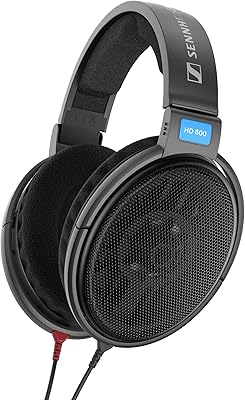
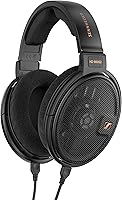
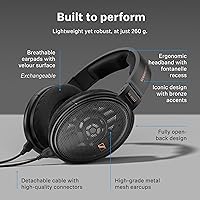
The Sennheiser HD 660S2 is the second-generation successor to one of the brand's most respected open-back headphones, refining rather than reinventing what made the original compelling. Assembled in Germany and Ireland, this open-back headphone carries a level of build integrity you can feel the moment you put it on. The open-back design delivers a wide, natural soundstage, but it comes with a real trade-off — sound leaks both in and out, making it strictly a home or studio listen. And at 300 Ohm impedance, pairing it with a weak source will leave serious performance on the table.

Features & Benefits

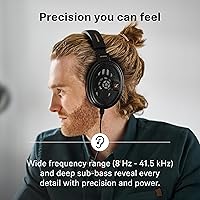
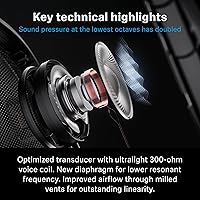
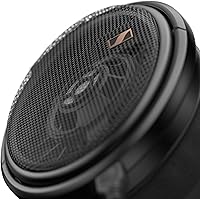
At the core of the HD 660S2 is a 42mm dynamic driver with an ultra-light aluminum voice coil that keeps transient response clean and detail retrieval sharp without becoming harsh. The low-end extension is genuinely impressive for an open-back design — reaching down to 9 Hz means bass feels controlled and textured rather than punchy or hyped. A vented magnet system helps manage air pressure around the driver, which contributes to that relaxed, fatigue-free presentation. Two detachable cables are included — a standard 6.3mm and a 4.4mm balanced option — giving you real flexibility depending on your amplifier setup.

Best For

This open-back headphone is built for a specific type of listener: someone with a dedicated listening setup at home, ideally with a quality DAC and headphone amplifier already in the chain. It rewards genres where imaging and separation matter most — jazz, classical, acoustic guitar, and well-recorded vocals all sound particularly convincing. Studio professionals doing critical mixing or reference listening will appreciate the accuracy. What it is not suited for is commuting, office use, or anywhere sound isolation matters. If you need portability or passive noise blocking, look elsewhere.

User Feedback

Owners consistently praise the improvement in low-end weight and extension over the previous generation, noting the bass feels more present without losing the HD lineup's characteristic composure. Soundstage width and instrument separation also draw frequent compliments. On the critical side, the amp requirement comes up often — buyers who plugged directly into a phone or laptop were underwhelmed, which is worth taking seriously. The ear pads receive consistent praise for softness during long sessions. A few buyers at this price point feel the carry pouch feels modest, and some question cable build quality relative to what the overall package costs.

Pros

  • Soundstage width and instrument separation are among the best in class for dynamic driver headphones at this price tier.
  • Low-end extension reaches genuinely deep, with bass that feels textured and controlled rather than boosted or muddy.
  • Midrange accuracy makes vocals, guitars, and piano sound natural and present without coloration.
  • Both a standard 6.3mm and a 4.4mm balanced cable are included in the box — a practical and rare gesture at this price.
  • Ear cushions are soft, breathable, and replaceable, making long listening sessions comfortable over many hours.
  • Built and assembled in Germany and Ireland, with material quality that reflects serious long-term ownership intent.
  • Detachable cables reduce the most common single point of failure in wired headphones.
  • The HD 660S2 handles high-resolution audio sources with a level of detail retrieval that keeps critical listeners engaged.
  • Treble extension is confident and airy without tipping into fatigue-inducing territory on well-recorded material.
  • Replaceable components mean this headphone can realistically be maintained and used for many years.

Cons

  • Requires a dedicated headphone amplifier to perform properly — budget source gear will leave most of the potential untapped.
  • The included carry pouch offers almost no protection and feels inadequate relative to the overall cost of the product.
  • Sound leaks significantly in both directions, making shared or quiet environments completely impractical for use.
  • The cables feel thin and rubbery in hand, prompting many owners to invest in third-party aftermarket alternatives.
  • Analytical tuning can be unforgiving on poorly mastered recordings or low-bitrate streaming sources.
  • Clamping force straight out of the box can feel firm for users with larger head sizes until the headband breaks in.
  • No Bluetooth or wireless option exists, which limits flexibility for buyers who want versatility across listening contexts.
  • The soft fabric carry pouch and overall accessory set feel modest compared to some rivals at the same price point.
  • Buyers sensitive to upper-midrange forwardness may notice occasional brightness on certain recordings or pressings.
  • The real total cost of ownership — headphone plus a capable DAC and amp — is considerably higher than the listed price alone.

Ratings

The Sennheiser HD 660S2 earns its place among the most scrutinized open-back headphones in its price tier, and the scores below reflect exactly that level of scrutiny. Our AI has analyzed thousands of verified buyer reviews from global markets, filtering out incentivized submissions and outlier noise to surface what real long-term owners actually experience. Both the genuine strengths and the recurring frustrations are represented here without softening either side.

Sound Quality
93%
Owners consistently describe the soundstage as wide and cohesive — instruments sit in believable positions, and nothing feels crowded or artificially pushed. For acoustic music, jazz, and well-recorded classical, the level of separation and texture retrieval is difficult to fault at this driver size.
A small segment of listeners coming from warmer, bass-heavy headphones find the HD 660S2 slightly lean in the midrange. It is a reference-leaning tuning, not a crowd-pleasing one, so genre preference plays a real role in overall satisfaction.
Bass Performance
84%
The low-end extension is one of the most-praised upgrades over the previous generation. Bass reaches deep without bleeding into the mids, and piano lows and kick drums feel controlled and textured rather than bloated — a distinction serious listeners notice quickly.
This is not a bass-heavy headphone by any measure. Listeners who prefer a boosted low-end for EDM, hip-hop, or bass-forward pop will find the tuning underwhelming. The sub-bass reach is there, but it is presented with restraint, not impact.
Soundstage & Imaging
91%
The open-back architecture pays dividends here. Users describe the soundstage as naturally wide without sounding artificially stretched — a complaint leveled at some competitors. Imaging precision makes these headphones particularly satisfying for orchestral recordings and live concert material.
Compared to some planar magnetic competitors at similar prices, a handful of critical listeners feel the depth layering — front-to-back positioning — is not quite as three-dimensional. Width is excellent; depth is strong but not class-leading.
Amplifier Dependency
58%
42%
When paired with a quality DAC and headphone amplifier, the HD 660S2 opens up considerably — dynamics feel more effortless, the bass tightens further, and the top end gains air. Owners with proper desktop setups are almost universally satisfied with what they hear.
At 300 Ohm impedance, plugging directly into a phone, laptop, or budget dongle DAC produces noticeably compressed, flat-sounding results. This is the single most common source of buyer disappointment, and it is a real cost consideration that new buyers frequently underestimate.
Comfort & Wearability
88%
The ear cushions are soft and breathable enough that most users report wearing them for three to five hours without developing pressure points or heat buildup. The weight distribution is well-balanced, and the headband padding feels appropriately firm without digging in over longer sessions.
A small number of users with larger head sizes report that the clamping force feels slightly firm during the first few weeks before the headband loosens naturally. Out of the box, the fit can feel snug compared to some competitors in the same category.
Build Quality
86%
The chassis feels solid and considered — a result of being engineered and assembled in Germany and Ireland. The metal and high-grade plastic combination strikes the right balance between durability and weight management, and nothing flexes or creaks during daily handling.
A few buyers feel the overall construction, while solid, does not visually communicate the premium price point as confidently as some rivals. The aesthetic is functional and understated rather than luxurious, which can feel anticlimactic when unboxing at this tier.
Cable Quality
71%
29%
Including both a 6.3mm standard cable and a 4.4mm balanced cable in the box is a meaningful practical decision — most competitors at this price include only one. The detachable connection feels secure and the cables are long enough for relaxed desktop use at 1.8 meters each.
The cables themselves feel adequate rather than premium. Several buyers note they feel slightly thin and rubbery relative to the price of the headphone, and a handful reported minor tangling issues during regular use. Third-party aftermarket cables are a popular upgrade.
Detail Retrieval
92%
Micro-detail resolution is where these headphones make a strong case for themselves. Subtle reverb tails, breath sounds in vocal recordings, and bow rosin texture in strings are all rendered with clarity that keeps critical listeners engaged and attentive during long analytical sessions.
This same detail resolution can occasionally be unforgiving with poorly mastered or heavily compressed recordings. Streaming at lower bitrates or listening to older lo-fi recordings exposes the headphone's analytical nature in ways that are not always pleasant.
Value for Money
74%
26%
For a buyer already committed to a proper listening setup who values accuracy and long-term ownership, the price is defensible — these are built to last, sound genuinely impressive, and come from a brand with a strong long-term support record.
The competition at this price tier has intensified considerably. Several audiophile buyers note that similarly priced alternatives offer comparable or stronger technical performance, and the mandatory additional amp investment pushes the real-world cost of entry meaningfully higher.
Accessories & Packaging
63%
37%
The inclusion of two cables and a 3.5mm adapter covers most connectivity scenarios out of the box. The packaging is clean and protective, and the overall unboxing experience feels organized and intentional rather than wasteful.
The carry pouch is the most-criticized included accessory. At this price point, buyers widely expect a hard or semi-rigid case, and the soft fabric pouch feels like a significant omission. It offers minimal protection for a headphone many owners plan to keep for years.
Highs & Treble Clarity
87%
Treble extension is confident and airy without tipping into harshness — a balance that many open-back designs at this price tier struggle to maintain. Cymbal decay, string harmonics, and breath consonants in vocals all resolve cleanly during extended listening.
Some listeners with treble sensitivity, particularly those coming from warmer or darker headphones, find the upper frequencies occasionally fatiguing on bright recordings. The treble is not harsh by audiophile standards, but it is not a relaxed or rolled-off presentation either.
Midrange Accuracy
89%
The midrange is where the HD 660S2 earns the most consistent praise. Vocals sit naturally in the mix, guitars have body without muddiness, and piano has the kind of tonal weight that makes listening to solo instruments a genuinely involving experience.
A small number of buyers feel the upper midrange is occasionally forward on certain recordings — not enough to be called a coloration, but noticeable enough that listeners particularly sensitive to this region may want to audition before committing.
Open-Back Design Trade-offs
67%
33%
The open-back design is the reason the soundstage and imaging perform as well as they do. For dedicated home listening in a private space, it is the correct engineering choice and the results speak for themselves across nearly every musical genre that rewards space and air.
Sound leakage is significant in both directions — anyone nearby will hear what you are playing, and ambient noise bleeds directly into the listening experience. This is not a design flaw, but it eliminates the headphone from consideration for shared offices, travel, or public spaces entirely.
Long-Term Durability
83%
Replaceable ear cushions and detachable cables mean the two components most prone to wear can be swapped without retiring the entire headphone. The German and Irish manufacturing heritage gives owners reasonable confidence in long-term component reliability.
Long-term durability data for the second generation is still accumulating given the relatively recent release date. Some owners note the headband finish shows light scuffing over time with regular use, though structural integrity complaints remain uncommon in available feedback.

Suitable for:

The Sennheiser HD 660S2 is built for a specific kind of listener, and when that listener finds it, the match is hard to beat. If you have a dedicated home listening setup — a proper DAC and headphone amplifier already on your desk — this open-back headphone will reward you with a level of soundstage width, instrument separation, and midrange accuracy that is difficult to replicate at this driver size. Studio professionals and critical listeners who spend long hours doing reference mixing or analytical listening will appreciate the accurate, honest tuning that does not flatter recordings but rather reveals them. Fans of jazz, classical, acoustic, and vocal-heavy music will find the imaging particularly compelling — the way instruments sit in space feels natural rather than engineered. Long-session listeners will also appreciate the lightweight build and breathable ear cushions, which make multi-hour use genuinely comfortable rather than merely tolerable. If you are upgrading from the first-generation HD 660S, the improvement in low-end extension and overall technical refinement is meaningful enough to justify the move for serious listeners.

Not suitable for:

The Sennheiser HD 660S2 is a poor fit for buyers who expect it to perform straight out of a smartphone, laptop headphone jack, or entry-level dongle DAC. At 300 Ohm impedance, underpowered sources produce noticeably flat, lifeless results — and that disconnect is responsible for a significant share of buyer disappointment. The open-back design, while acoustically advantageous at home, means sound leaks freely in both directions, making this headphone completely impractical for commuting, shared office spaces, libraries, or any environment where noise isolation or discretion matters. Gym use, outdoor listening, and travel are similarly ruled out — the open earcups and semi-rigid carry pouch offer no real protection against the rigors of portable life. Listeners who prefer a bass-heavy, warm, or V-shaped sound signature will likely find the tuning too analytical and lean for everyday enjoyment. And buyers on a tight total budget should factor in the real cost of a capable amplifier before committing — the sticker price is only part of the equation.

Specifications

  • Driver Type: 42mm dynamic driver with an ultra-light aluminum voice coil designed for precise transient response and low distortion.
  • Frequency Response: Rated from 9 Hz to 41,500 Hz, covering well beyond the standard audible range to support high-resolution audio formats.
  • Impedance: 300 Ohm nominal impedance, which requires a dedicated headphone amplifier to reach full dynamic potential.
  • Design: Open-back, over-ear configuration that prioritizes natural soundstage and airflow over noise isolation.
  • Weight: 10.6 oz (300g) total weight, keeping the headphone light enough for extended listening sessions without neck or head fatigue.
  • Cable 1: 1.8m detachable cable terminated in a 6.3mm TRS connector for use with standard headphone amplifiers and audio interfaces.
  • Cable 2: 1.8m detachable balanced cable terminated in a 4.4mm TRRRS connector for use with balanced amplifier outputs.
  • Adapter: A 6.3mm to 3.5mm adapter is included in the box for occasional use with devices that lack a full-size headphone jack.
  • Connectivity: Wired only — no Bluetooth, no wireless mode, and no active noise cancellation circuitry of any kind.
  • Ear Cushions: Plush, breathable, replaceable oval ear cushions designed to minimize heat buildup and pressure during long listening sessions.
  • Voice Coil: Ultra-light aluminum voice coil selected to reduce moving mass and improve high-frequency detail retrieval and transient accuracy.
  • Magnet System: Vented magnet system with optimized transducer airflow to manage internal air pressure and reduce acoustic coloration.
  • Build Origin: Engineered and assembled in Germany and Ireland, reflecting Sennheiser's traditional European manufacturing standards.
  • Compatible Inputs: Compatible with 1/4-inch TRS and 4.4mm TRRRS audio inputs; the included adapter extends compatibility to 3.5mm sources.
  • Accessories: Package includes the HD 660S2 headphones, two detachable cables, one 6.3mm to 3.5mm adapter, and a soft fabric carry pouch.
  • Ear Placement: Over-ear (circumaural) fit that fully surrounds the ear rather than resting on top of it.
  • Generation: Second generation of the HD 660S line, featuring refined driver tuning with improved sub-bass extension compared to the original.
  • Water Resistance: Not water resistant — the open-back design and premium internal components are not rated for moisture exposure of any kind.
  • Cable Connection: Both cables use a proprietary dual 3.5mm locking connector system at the headphone end for a secure, rattle-free fit.
  • Warranty: Sennheiser provides a standard two-year manufacturer warranty covering defects in materials and workmanship from the date of purchase.

Related Reviews
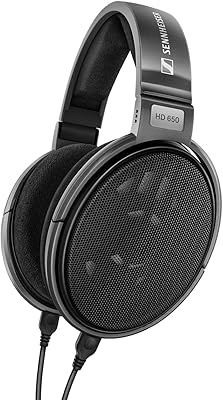
Sennheiser HD 650
Sennheiser HD 650
84%
96%
Sound Clarity
88%
Bass Response
94%
Midrange Accuracy
91%
Treble Detail
89%
Comfort
More
Sennheiser HD 560S
Sennheiser HD 560S
74%
93%
Sound Accuracy
91%
Soundstage & Imaging
88%
Comfort & Fit
63%
Build Quality
71%
Amplifier Dependency
More
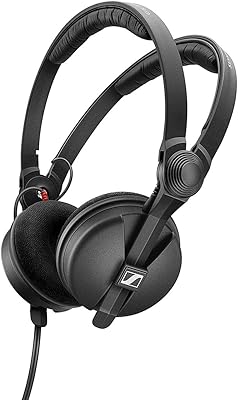
Sennheiser HD 25 Special Edition
85%
94%
Build Durability
89%
Ambient Noise Isolation
86%
Professional Sound Accuracy
68%
Ergonomics & Comfort
91%
Overall Value
More
Sennheiser HD 300 Over-Ear Headphones
82%
85%
Sound Quality
87%
Comfort & Fit
82%
Noise Isolation
88%
Portability
80%
Build Quality
More
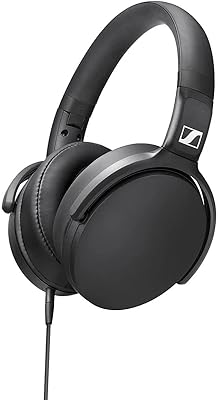
Sennheiser HD 400S
Sennheiser HD 400S
77%
88%
Sound Quality
81%
Comfort & Fit
74%
Passive Noise Isolation
67%
Build Quality
63%
Cable & Connectivity
More
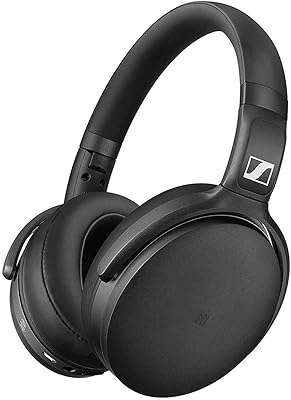
Sennheiser HD 4.50 SE
82%
91%
Sound Quality
88%
Active Noise Cancellation
76%
Comfort & Fit
85%
Battery Life
79%
Wireless Connectivity
More
Sennheiser HD 206 Stereo Headphones
82%
92%
Value for Money
85%
Sound Quality
88%
Comfort & Fit
70%
Noise Isolation
80%
Build Quality
More
Sennheiser HD 280 Pro
81%
91%
Noise Isolation
88%
Sound Accuracy
86%
Build Quality
63%
Comfort Over Long Sessions
89%
Passive Attenuation Performance
More
Sennheiser HD 600
Sennheiser HD 600
75%
94%
Sound Accuracy & Neutrality
91%
Soundstage & Imaging
88%
Comfort & Wearability
61%
Amplifier Dependency
72%
Build Quality
More
Sennheiser HD 569
Sennheiser HD 569
77%
83%
Sound Quality
88%
Comfort & Fit
67%
Build Quality
81%
Sound Isolation
61%
Microphone Quality
More

FAQ

It is not hype — it is a genuine hardware consideration. At 300 Ohm impedance, most phones, laptops, and tablet headphone outputs simply do not have enough voltage swing to drive the HD 660S2 to its full potential. You will get sound, but it will feel flat, lacking in dynamics, and thin in the low end. A dedicated headphone amplifier or a DAC-amp combo makes a meaningful, immediately audible difference.

The most notable improvement is in low-end extension — the second generation reaches noticeably deeper into the sub-bass range without losing the controlled, textured character the HD 660S line is known for. The overall technical refinement is real but incremental rather than transformational. If you already own the original and are satisfied with it, the upgrade is worthwhile but not urgent. If you are coming from something older or from a different brand entirely, the difference will be more pronounced.

Yes, practically speaking. Open-back headphones leak sound in both directions quite freely — anyone within a few meters will hear what you are playing at moderate to high volumes, and ambient noise from the room enters your listening experience as well. In a private room with the door closed, this is usually fine. In a shared living space, bedroom, or open-plan home, it can become a source of friction with others nearby.

They work well for gaming and film content, particularly for material where soundstage and positional audio matter — open-world games, orchestral film scores, and atmospheric content all benefit from the wide imaging. They are not optimized for competitive gaming in the way a dedicated gaming headset might be, and they lack a microphone, but as a pure listening experience they hold up strongly across content types.

Yes, the ear cushions are replaceable and Sennheiser sells official replacement pads. Under regular daily use, most owners find the pads begin to show wear — flattening and slight surface degradation — somewhere between one and three years depending on use intensity and storage habits. Replacing them restores both the comfort and the acoustic seal, effectively extending the useful life of the headphone significantly.

You do not need to spend a fortune, but you do need something capable. A mid-tier desktop DAC-amp combo in the range that outputs at least 150–200mW into 300 Ohms will drive these comfortably. Popular pairings include units from brands like Schiit, iFi, Topping, and Chord depending on budget. Portable dongle DACs can work in a pinch but rarely extract the best from a 300 Ohm load.

Honestly, no — not if travel protection is a priority. The included soft fabric pouch keeps dust off and handles gentle bag storage, but it offers almost no impact protection. If you plan to transport this open-back headphone regularly, investing in a quality aftermarket hard case is a sensible precaution given the price and the relatively exposed open-back earcup design.

At standard or high-quality streaming settings, they sound good. At the highest available bitrate on services like Apple Music Lossless or Tidal HiFi, the detail retrieval becomes meaningfully more apparent. The honest caveat is that the analytical tuning of this headphone can expose compression artifacts in lower-quality streams more readily than a warmer, more forgiving headphone would — so source quality matters more here than with many other headphones.

At 1.8 meters each, both cables are well-suited for desktop listening — long enough to reach from a desk-mounted amplifier to a relaxed seated listening position without pulling. The detachable connection at the headphone end is a genuine long-term advantage because cables are the most wear-prone component in any wired headphone, and replacements are available both from Sennheiser directly and from third-party cable makers.

It can be, but only if the buyer understands the setup requirements going in. Someone new to the hobby who already has a basic DAC-amp setup and is ready to explore accurate, reference-leaning sound will find the Sennheiser HD 660S2 a strong and educational introduction to high-fidelity listening. Someone expecting to plug it directly into a phone and be impressed is likely to be disappointed, which unfortunately happens more often than it should at this price tier.