Overview

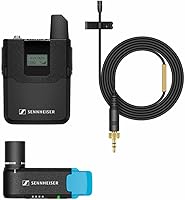
The Sennheiser AVX-MKE2 Wireless Lavalier Microphone System has been a go-to choice for serious video producers since its 2015 release, and it has held that reputation through years of real-world use. The AVX-MKE2 system plugs directly into XLR — no separate receiver body, no cable runs, no additional mounting hardware required. What genuinely sets it apart is how it behaves with phantom power: the system switches on and off automatically with your camera, cutting out one more step on a busy shoot. Worth stating upfront: this is a single-channel system, designed for one speaker at a time, which matters if you're planning multi-person interview setups.
Features & Benefits

The heart of the AVX-MKE2 system is the MKE2 lavalier capsule, a broadcast-grade omnidirectional mic that Sennheiser has used in high-stakes production environments for years. Paired with the digital AVX transmission protocol, it covers a full 20 Hz to 20 kHz frequency range, capturing speech with clarity that holds up against many wired setups. On the practical side, automatic frequency selection scans and locks onto clean RF channels without you touching a menu, and the auto input sensitivity feature adjusts gain on the fly — critical when recording in unpredictable acoustic environments. A built-in mute function and voice-activated recording round out a feature set that prioritizes real on-set usability.

Best For

This wireless lavalier kit is ideally matched to the solo run-and-gun filmmaker — someone shooting documentary content, corporate interviews, or event coverage without a dedicated audio engineer standing by. ENG journalists and broadcast crews will appreciate how fast the system is ready to record: clip the lav, plug in the receiver, and you're rolling. It also makes a compelling upgrade path for anyone moving away from consumer wireless systems and wanting reliable digital transmission without buying into a full wireless rack. If your camera or field recorder has an XLR input and you need dependable wireless audio for a single speaker, the AVX-MKE2 system fits that use case well.

User Feedback

Across a substantial pool of long-term owners, Sennheiser's AVX setup earns consistent praise for its audio clarity and reliability, particularly in RF-congested venues like conference halls and trade shows where cheaper systems tend to drop out. Setup speed is another recurring theme — buyers repeatedly mention getting clean audio without any of the usual wireless troubleshooting. On the critical side, two concerns come up honestly: the price is steep, and newer competitors have since entered this space offering multi-channel options. Some users with lighter mirrorless bodies have also flagged that the direct-plug receiver puts mechanical stress on the XLR port over time. That said, long-term owners consistently cite the mic capsule quality as the main reason they stick with it.

Pros

  • The MKE2 capsule is a broadcast-proven lavalier that captures natural, full-range speech with very little coloration.
  • Automatic frequency selection means zero manual RF scanning, even in congested wireless environments like conference halls.
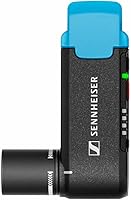
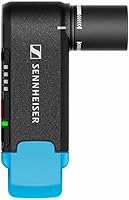
  • The receiver plugs directly into XLR with no extra cables, boxes, or mounting arms cluttering your rig.
  • Phantom power integration turns the system on and off with the camera, removing one more step from a rushed setup.
  • Auto input sensitivity adjustment takes gain staging largely off your plate in unpredictable acoustic situations.
  • Long-term owners consistently report that build quality holds up well under regular professional use.
  • A 20 Hz to 20 kHz frequency response keeps this wireless kit competitive with many wired lavalier alternatives.
  • The 2-year warranty from authorized dealers provides real peace of mind for a professional-tier investment.

Cons

  • Single-channel only — anyone needing to mic two or more people simultaneously will need a separate system entirely.
  • The price is a significant commitment, and newer competitors now offer comparable wireless performance at lower cost.
  • The direct-plug XLR receiver can put mechanical stress on the port of smaller, lighter camera bodies over time.
  • No multi-channel expansion path exists within the AVX ecosystem, limiting scalability for growing productions.
  • Cameras without native XLR inputs require an additional adapter, adding cost and complexity to the setup.
  • At 1.8 pounds packaged, the kit is not the most travel-light option for run-and-gun shooters packing minimal gear.
  • Voice-activated recording, while handy in theory, can be unreliable in environments with inconsistent ambient noise levels.

Ratings

The scores below reflect our AI-driven analysis of verified buyer reviews for the Sennheiser AVX-MKE2 Wireless Lavalier Microphone System, sourced globally and filtered to remove incentivized, duplicate, and bot-generated submissions. Each category captures what real working professionals actually experienced — both the genuine strengths and the frustrations that came up repeatedly. Nothing has been softened or inflated to favor the brand.

Audio Quality
93%
The MKE2 capsule consistently earns top marks from users who have compared it directly against wired lavaliers on professional shoots. Reviewers note that dialogue captured in noisy conference rooms and outdoor environments retains clarity and natural tone without post-processing correction.
A small number of experienced audio engineers point out that the digital AVX encoding, while clean, introduces a very subtle character that purists can detect when A/B testing against high-end wired capsules in controlled studio conditions.
Ease of Setup
91%
Reviewers who shoot solo consistently call this the fastest wireless lav system they have used — plug the receiver into the XLR port, power on the camera, and the system is ready without any menu diving or frequency coordination. For run-and-gun documentary work, that speed is genuinely valuable.
A handful of users coming from analog systems needed a short adjustment period to trust that the automatic setup was actually complete. There are also occasional reports of the system needing a power cycle to re-establish connection in venues with extremely dense RF activity.
RF Reliability
88%
Operating in the 1.9 GHz DECT band gives this wireless lavalier kit a meaningful practical advantage in crowded Wi-Fi and UHF environments like trade show floors and hotel ballrooms, where cheaper 2.4 GHz systems frequently drop out. Long-term users specifically cite this stability as a core reason they have not switched.
Range is rated at around 30 meters and users confirm that real-world performance in reflective indoor spaces — think tiled lobbies or stairwells — can fall noticeably short of that figure. Shooters who regularly work at distance from their subject should factor this in.
Build Quality
86%
Both the transmitter and receiver units feel solid and purposefully built, with a material quality that matches the premium positioning. Owners who have used the AVX-MKE2 system through multiple years of regular production work report no meaningful wear on connectors, housing seams, or the lav cable.
The MKE2 lavalier cable, while durable for most use cases, has drawn some criticism for being slightly stiff in cold weather, which can create minor handling noise if the cable is not properly routed and secured under clothing.
Value for Money
61%
39%
For professionals who bill out their work and need a wireless system that simply does not fail on a paid shoot, the investment makes practical sense over time. The broadcast-grade capsule, reliable RF performance, and long-term durability collectively justify the cost for working videographers shooting regularly.
Casual users and part-time creators will find it very difficult to rationalize the price relative to newer competitors that offer dual-channel systems at a substantially lower cost. The market has matured considerably since 2015, and buyers owe it to themselves to compare current alternatives before committing.
Phantom Power Integration
89%
The automatic power-on and power-off behavior tied directly to the camera's phantom power state is one of those small workflow details that adds up over a long shoot day. Users report never accidentally leaving the transmitter on and draining the battery, which was a persistent annoyance with their previous wireless systems.
Because the system is entirely dependent on phantom power to operate, it is non-functional with cameras or recorders that do not supply P48 — a detail that has caught a few buyers off guard when pairing with compact field recorders that offer switchable or limited phantom power outputs.
Transmitter Battery Life
67%
33%
The included Lithium Polymer battery comfortably covers half-day shoots and standard interview sessions without needing a swap. Users on corporate video assignments typically report getting through a full morning of back-to-back interviews on a single charge.
The roughly 4-hour runtime becomes a real constraint on full-day productions, events, or conference coverage where recharging mid-session is not practical. Several reviewers specifically flag this as a planning consideration and recommend carrying at least one spare battery for any shoot longer than half a day.
Microphone Placement Flexibility
78%
22%
The 5.25-foot lav cable gives sufficient length for standard chest placement across most body types, and the omnidirectional capsule is forgiving of minor positional shifts during movement, which matters when subjects are not media-trained and tend to turn their heads.
Users who prefer to run the transmitter at the small of the back or at a greater distance from the mic clip will find the cable length occasionally limiting, particularly when miking taller subjects or routing the cable under layered clothing.
Camera Compatibility
74%
26%
For users with professional camcorders, cinema cameras, or mirrorless bodies paired with XLR audio adapters, the direct-plug design integrates cleanly without any additional hardware. The system works consistently across a wide range of XLR-equipped cameras from Sony, Canon, Panasonic, and Blackmagic.
Compatibility drops to zero for cameras without native XLR inputs unless an external XLR adapter or preamp is added, which introduces additional cost and negates the simplicity of the direct-plug design. This catches some buyers by surprise who assume broader connector compatibility.
Receiver Form Factor
82%
18%
The plug-on XLR receiver eliminates the cluttered look of traditional wireless systems with separate receiver bodies, cables, and cold-shoe mounts. Users consistently comment that it keeps their camera rig clean and travel-friendly, particularly when shooting handheld or in tight spaces.
The receiver does add a small but real amount of physical leverage to the camera's XLR port, and a meaningful number of users with lightweight mirrorless bodies or field recorders have raised long-term concerns about connector stress from regular handheld shooting.
Latency Performance
84%
At approximately 19 milliseconds of transmission latency, the AVX system sits well within the threshold where lip-sync drift becomes visible in standard video playback. Professional users shooting at 24 or 25 frames per second consistently report no perceptible sync issues straight out of camera.
The latency, while acceptable for camera recording, is not suitable for live monitoring applications like in-ear mixes for on-camera talent. Users expecting to use this system as part of a live audio chain were occasionally disappointed to discover this limitation after purchase.
Wind and Handling Noise
71%
29%
The included windshield performs well for controlled indoor environments and lightly breezy outdoor conditions. Users shooting sit-down interviews outdoors in mild conditions report clean results without needing additional accessories.
In genuinely windy outdoor conditions or when subjects are walking briskly with the mic clipped to lightweight fabric, handling noise becomes more noticeable. Several reviewers recommend investing in a higher-grade furry windshield for any regular outdoor shooting scenario.
Channel Scalability
38%
62%
For single-speaker applications — which represent the majority of corporate interview, documentary, and ENG use cases — the single-channel design is entirely adequate and removes any complexity around channel coordination or transmitter pairing.
The hard single-channel limitation is the most frequently cited structural drawback in long-term reviews. There is no upgrade path within the AVX ecosystem to support two or more simultaneous speakers, which forces users with evolving production needs to supplement or replace the system entirely rather than expand it.
Included Accessories
72%
28%
The kit arrives with everything needed to start recording immediately — lav clip, windshield, carry pouch, and a pre-installed battery. Users appreciate not having to source basic accessories separately before their first shoot, which is a common frustration with some competing systems.
Beyond the basics, the accessory package is fairly minimal. There is no hard case for travel protection, and the carry pouch, while functional, offers limited padding. Users who frequently pack their gear in larger bags or check equipment on flights typically invest in third-party protection.

Suitable for:

The Sennheiser AVX-MKE2 Wireless Lavalier Microphone System is purpose-built for working video professionals who need reliable wireless audio fast, without babysitting the setup. Solo documentary filmmakers and ENG journalists will get the most from it — the kind of shooters who are already rolling before most wireless rigs have finished scanning for a clean channel. Corporate video producers and event videographers using XLR-equipped DSLRs or mirrorless cameras will appreciate how the system disappears into their workflow: plug in the receiver, clip the lav, and the camera's phantom power handles the rest. It also makes a strong case as a step-up system for anyone who has outgrown budget-tier wireless and wants broadcast-grade mic capsule performance without building out a full audio rig.
Not suitable for:

If you regularly record two or more speakers at the same time, the Sennheiser AVX-MKE2 Wireless Lavalier Microphone System is not the right tool — it is a single-channel system, full stop, and there is no workaround for that. Filmmakers working with cameras that lack an XLR input, or those relying on 3.5mm-only mirrorless bodies, will need an additional adapter or preamp to make it work, which undercuts the simplicity argument. Budget-conscious buyers or hobbyists stepping into wireless audio for the first time will likely find the investment hard to justify when several capable multi-channel systems exist at a significantly lower price point. And if you are shooting handheld on a compact, lightweight camera body, be aware that the direct-plug receiver adds physical leverage to the XLR port — something worth factoring in for long-term durability.
Specifications

  • Manufacturer: Made by Sennheiser, a German professional audio company with decades of broadcast and studio equipment history.
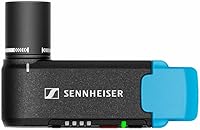
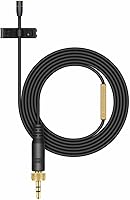
  • Form Factor: The system consists of a compact XLR plug-on receiver and a MKE2 lavalier microphone capsule on a 5.25-foot (1.6 m) cable.
  • Connectivity: The receiver connects via a direct XLR plug-in, requiring no separate receiver body, mounting adapter, or additional audio cables.
  • Transmission: Audio is transmitted digitally using Sennheiser's proprietary AVX protocol, which operates in the 1.9 GHz DECT frequency range.
  • Polar Pattern: The MKE2 capsule uses an omnidirectional polar pattern, picking up sound evenly from all directions around the mic element.
  • Frequency Response: The system covers a full 20 Hz to 20,000 Hz frequency range, capturing the complete spectrum of human speech and ambient audio.
  • Channels: This is a single-channel system supporting one transmitter and one receiver at a time; it cannot operate multiple mics simultaneously.
  • Power Source: The receiver draws power from the camera's P48 phantom power supply; the bodypack transmitter uses one included Lithium Polymer battery.
  • Auto Features: The system automatically selects clean operating frequencies, adjusts input sensitivity for optimal gain, and powers on and off with the camera's phantom power state.
  • Special Functions: A mute function and voice-activated recording mode are built into the transmitter, providing additional on-set control without touching the camera.
  • Cable Length: The lavalier microphone cable measures 5.25 feet (1.6 m), giving reasonable placement flexibility between the bodypack and mic clip position.
  • Dimensions: The packaged kit measures 12.6 x 6.7 x 2.9 inches, with the receiver and transmitter units being notably compact in actual use.
  • Weight: The complete packaged kit weighs 1.8 pounds, though the individual receiver and transmitter units are significantly lighter during real-world deployment.
  • Compatibility: The AVX-MKE2 system is compatible with any XLR-equipped camera, field recorder, or audio interface that supplies standard P48 phantom power.
  • Warranty: A 2-year manufacturer warranty is included when the product is purchased from an authorized Sennheiser dealer.
  • Color: Both the receiver and transmitter units are finished in black, consistent with professional broadcast equipment aesthetics.
  • Voltage: The Lithium Polymer transmitter battery operates at 3.7 volts and is included in the box ready for use.
  • Model Number: The official Sennheiser model designation is AVX-MKE2 SET-4-US, with item model number 505862.

Related Reviews

Sennheiser AVX Digital Wireless Microphone System
81%
94%
Ease of Setup
89%
Audio Quality
91%
Interference Resistance
83%
Build & Portability
72%
Receiver Fit & Compatibility
More
Sennheiser EW 112P G4 Wireless Lavalier Microphone
80%
91%
Audio Clarity
93%
Build Quality
86%
RF Performance
74%
Ease of Setup
67%
Value for Money
More
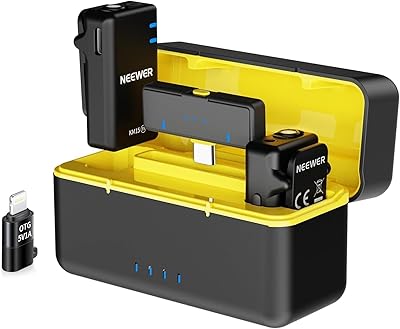
NEEWER KM15 Wireless Lavalier Microphone System
87%
89%
Sound Quality
92%
Ease of Use
87%
Battery Life
83%
Build Quality
90%
Portability
More
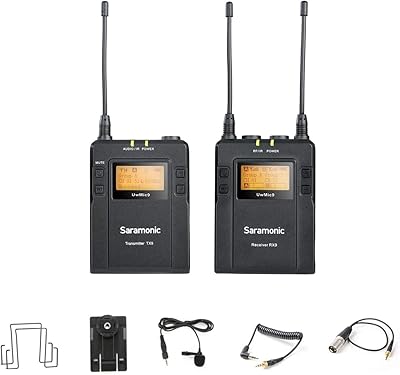
Saramonic UwMIC9 UHF Wireless Lavalier Microphone System
78%
78%
Audio Quality
74%
Signal Stability
84%
Build Quality
86%
Ease of Setup
88%
Value for Money
More
7RYMS iRay DW40 4-Channel Wireless Lavalier Microphone
79%
88%
Multi-Channel Recording Performance
74%
AI Noise Cancellation
83%
Audio Clarity & Resolution
71%
Wireless Range & Stability
86%
Battery Life & Charging Case
More
Saramonic SR-WM4C
Saramonic SR-WM4C
68%
88%
Ease of Setup
67%
Audio Quality
61%
Wireless Range
54%
Build Quality
79%
Value for Money
More
Comica CVM-WM200A Wireless Lavalier Microphone System
77%
74%
Audio Clarity
61%
Wireless Range
88%
Ease of Setup
83%
Build Quality
53%
Battery Performance
More
Comica CVM-WM100 PLUS
83%
92%
Signal Stability
86%
Audio Quality & Clarity
94%
Post-Production Flexibility
61%
Portability & Form Factor
68%
Power Management & Battery Life
More
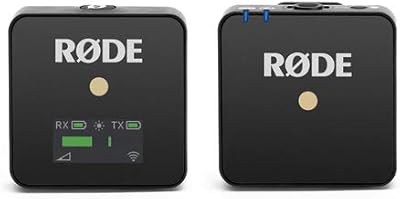
Rode Wireless GO Wireless Microphone System
78%
91%
Audio Quality
94%
Ease of Setup
63%
Build Quality
88%
Battery Life
58%
Wireless Range
More
Neewer CM28 Pro Wireless Lavalier Microphone System
79%
88%
Audio Clarity
91%
Standalone Recording
67%
Wireless Range & Stability
86%
Battery Life
83%
Charging Case Design
More
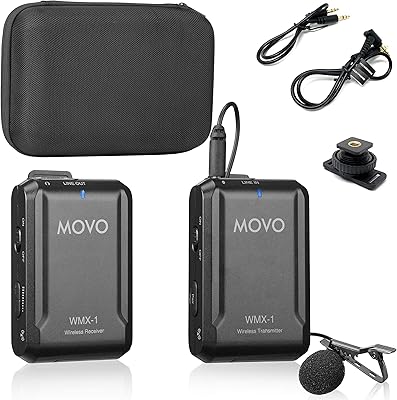
Movo WMX-1 Wireless Lavalier Microphone System
87%
88%
Audio Quality
94%
Ease of Use
85%
Wireless Range
91%
Battery Life
93%
Portability
More

FAQ

Yes, the AVX-MKE2 system works with any camera or adapter that provides a standard XLR input with P48 phantom power. That includes XLR adapter units for mirrorless bodies. Just make sure phantom power is enabled on the input channel — the system will not power on without it.

Sennheiser rates the bodypack transmitter for approximately 4 hours of continuous use on a full charge. That covers most half-day shoots comfortably, though it is worth keeping a spare battery on hand for full-day productions or long event coverage.

In principle, you could run two separate AVX-MKE2 kits simultaneously into two XLR inputs, but each system operates on a single channel independently and is not designed as a coordinated multi-channel solution. If dual-speaker recording is a regular part of your workflow, a purpose-built two-channel wireless system would be a more reliable and cost-efficient choice.

No — that is one of the practical advantages of this wireless lavalier kit. The system scans for and locks onto a clean frequency automatically every time it powers on, so there are no menus to navigate or frequency coordination steps to complete before rolling.

The MKE2 capsule connects via a standard Sennheiser locking connector, and replacement capsules and cables are available separately through Sennheiser and authorized dealers. This is actually a meaningful advantage over systems where the mic element is proprietary or non-serviceable.

This is a legitimate concern that some long-term users have raised, particularly with lighter camera bodies. The receiver is compact, but it does add leverage to the XLR connector when the camera is moved around. Using a small support brace or cable strain relief is a reasonable precaution if you are shooting handheld regularly with a lightweight rig.

The Sennheiser AVX-MKE2 Wireless Lavalier Microphone System is rated for a range of up to approximately 98 feet (30 meters) in open, unobstructed conditions. In real-world shooting environments with walls, people, and competing RF signals, effective range will typically be shorter — plan conservatively for indoor shoots.
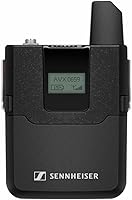
The AVX digital transmission system has a latency of approximately 19 milliseconds, which is low enough that it does not cause audible sync issues in standard video production workflows. It is not zero-latency, so it would not be appropriate for live in-ear monitoring, but for camera recording purposes it is a non-issue.

The SET-4-US variant is specifically certified for use in the United States. The AVX system operates in the 1.9 GHz DECT band, which has different regulatory approval status by country. If you are purchasing for use outside the US, check Sennheiser's regional listings to confirm the correct variant for your country's RF regulations.

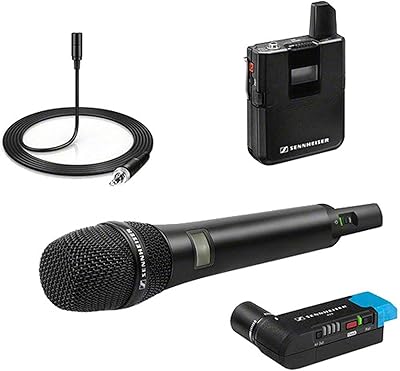
The kit includes the AVX plug-on XLR receiver, the MKE2 lavalier microphone with cable, the AVX bodypack transmitter, a Lithium Polymer battery, a windshield for the lav capsule, a mic clip, a carry pouch, and a warranty card. Everything needed to start recording is in the box.

Where to Buy