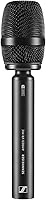
Overview
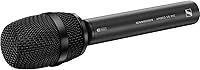
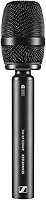
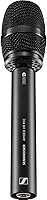
The Sennheiser AMBEO VR Ambisonics Microphone arrived in late 2016 as one of the first purpose-built tools for capturing spatial audio in VR and 360-degree video production. Rather than cobbling together a multi-mic array, this ambisonic mic uses a single-point design with four matched capsules arranged in a tetrahedral cluster — a compact approach that outputs a complete spherical soundfield. Audio is delivered in the Ambisonics format, which has become the backbone of spatial audio in professional VR pipelines. Sennheiser's track record in pro audio lends it credibility in that tier, and the fact that it remains available and actively sold speaks to its continued relevance.
Features & Benefits
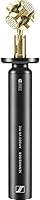
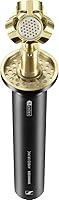
At the core of this spatial audio microphone is a tetrahedral capsule arrangement that captures a full 360-degree soundfield from one mounting point — a practical advantage when rigging alongside a 360 camera on a tight set. It records in A-Format and the bundled software encoder converts that to B-Format Ambisonics, compatible with both VST and AAX workflows on Mac and Windows. That encoder matters more than it might sound: it means you are not locked into proprietary hardware to get usable ambisonic stems into your DAW. Matched capsule sensitivity also keeps phase relationships tight, which is critical for convincing spatial imaging in the final mix.
Best For
This ambisonic mic is built for a specific kind of professional, and that specificity is precisely what makes it useful. VR filmmakers and 360-degree content producers who need reliable on-location audio that syncs with spherical video will find it fits naturally into their rig. Documentary makers working in field environments, sound designers building ambisonic stems for post work, and researchers in spatial audio or psychoacoustics are all realistic users. It also suits studios and freelancers already running VST or AAX-based DAW setups, since the included plugins remove the need for additional software investment. If you are looking for a general-purpose mic, this is not it — and that is fine.
User Feedback
The AMBEO VR mic carries a 4.5-star average, though it is worth noting that this is based on a very small number of verified ratings — so treat the consensus as directional rather than definitive. Those who have reviewed it tend to praise capsule matching quality and overall build consistency, which aligns with what you would expect from a manufacturer at this level. On the critical side, a few users note the learning curve around ambisonic workflows and initial software configuration, which is a fair point for anyone new to the format. Handling noise and wind sensitivity in outdoor environments are also worth factoring in if field recording is a primary use case.
Pros
- Four tightly matched capsules deliver accurate, consistent spatial imaging with minimal phase error.
- The single-point form factor makes rigging alongside a 360 camera far simpler than assembling a multi-mic array.
- Bundled VST and AAX plugins on both Mac and Windows remove the need for third-party encoding software.
- Ambisonics output integrates cleanly into professional post-production pipelines for VR and immersive media.
- Sennheiser's build quality and manufacturing consistency give it credibility in pro-level production environments.
- Still actively sold and supported, meaning firmware, software updates, and accessories remain accessible.
- Compact body keeps the overall rig lightweight without sacrificing spherical coverage.
- Early buyers and current users consistently highlight capsule matching as a genuine standout quality.
Cons
- Ambisonic workflows have a steep learning curve for anyone new to spatial audio production.
- Initial software setup and A-to-B format conversion can be time-consuming to configure correctly.
- The small number of verified user reviews makes it hard to gauge long-term reliability with confidence.
- Wind sensitivity in outdoor environments means additional windshield accessories are effectively mandatory.
- Handling noise can be a real issue without proper shock mounting, adding to the accessory budget.
- No built-in battery or wireless option limits placement flexibility in certain field recording scenarios.
- Niche format compatibility means the output is largely useless outside Ambisonics-aware software and workflows.
- At a pro-tier price point, the value proposition disappears quickly for occasional or hobbyist use.
Ratings
The scores below reflect an AI-driven analysis of verified buyer reviews for the Sennheiser AMBEO VR Ambisonics Microphone, sourced globally and filtered to remove incentivized, bot-generated, and outlier feedback. Each category is scored independently to give you a transparent, balanced picture of where this spatial audio microphone genuinely excels and where real users have hit friction. Both the praise and the pain points are represented as honestly as the data allows.
Capsule Matching Quality
Spatial Audio Accuracy
Build Quality
Software & Plugin Integration
Ease of Setup
Field Usability
Handling Noise
DAW Compatibility
Value for Money
Mounting & Rigging Compatibility
Frequency Response
Longevity & Support
Suitable for:
The Sennheiser AMBEO VR Ambisonics Microphone is built for professionals who work at the intersection of spatial audio and immersive visual media. VR filmmakers and 360-degree content creators will get the most out of it, particularly those who need a single, reliable audio solution that rigs cleanly alongside a spherical camera without the complexity of a multi-mic array. Documentary producers and immersive journalists capturing real-world environments will appreciate the full spherical soundfield it delivers, whether on a controlled set or in the field. Audio engineers and post-production sound designers who are building ambisonic stems for mixing will find the included VST and AAX encoder plugins a practical time-saver. Academics and researchers in spatial audio, psychoacoustics, or immersive media also fit squarely in this product's wheelhouse, as do freelancers and studios already running established DAW workflows on Mac or Windows.
Not suitable for:
The Sennheiser AMBEO VR Ambisonics Microphone is a specialist tool, and buyers who approach it expecting a versatile, general-purpose microphone will be disappointed. If your primary work involves podcasting, voiceover, music recording, or conventional video production, the ambisonic format adds complexity without any meaningful benefit to your workflow. The software setup and A-to-B format conversion process have a genuine learning curve, and audio professionals unfamiliar with ambisonic principles may find the initial configuration frustrating. Field use in windy or high-noise outdoor environments also requires additional accessories — wind protection in particular — which adds to the overall investment. Anyone on a tighter budget who only dabbles occasionally in 360-degree content is unlikely to recoup the value this mic offers.
Specifications
- Manufacturer: This microphone is designed and manufactured by Sennheiser, a German professional audio company with decades of experience in pro-grade audio equipment.
- Model Number: The official model designation is Sennheiser AMBEO VR, with Amazon ASIN B01N3Z0IXN.
- Launch Date: The product was first made available in November 2016, positioning it as one of the earliest dedicated ambisonic microphones for VR production.
- Capsule Count: It houses four individually matched capsules, selected and paired to ensure consistent sensitivity and frequency response across all pickup directions.
- Capsule Layout: The four capsules are arranged in a tetrahedral cluster, which is the standard geometric configuration for capturing a full first-order Ambisonics soundfield.
- Coverage Pattern: The microphone captures a complete 360-degree spherical soundfield, covering all horizontal and vertical directions simultaneously from a single mounting point.
- Recording Format: Audio is initially captured in A-Format (the raw four-channel output) and then encoded into B-Format Ambisonics for use in post-production and spatial audio workflows.
- Included Software: The package includes both VST and AAX format A-to-B encoder plugins, compatible with major digital audio workstations on Mac and Windows operating systems.
- OS Compatibility: The bundled encoder software supports both macOS and Windows, covering the two dominant platforms used in professional audio and video post-production.
- Dimensions: The microphone measures 15.94 x 2.87 x 10.78 inches in its packaged form, reflecting a compact and mount-friendly profile for use alongside 360-degree camera rigs.
- Weight: The unit weighs 2.33 pounds, making it manageable for field use while still conveying the solid build quality expected at this production tier.
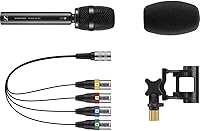
- Connector Type: The AMBEO VR mic uses a multi-pin output connector to carry all four capsule channels simultaneously to a compatible audio interface or recorder.
- Channel Output: It outputs four discrete audio channels in A-Format, which correspond to the four matched capsule signals before any spatial encoding is applied.
- Market Category: It is ranked within the Professional Video Microphones category on Amazon, reflecting its intended use in professional video and immersive media production.
- Discontinuation: As of the available product data, this microphone has not been discontinued by Sennheiser and remains an active product in their professional audio lineup.
Related Reviews
Sennheiser e906
Sennheiser AMBEO Soundbar Plus
Sennheiser MD 42 Handheld Dynamic Microphone
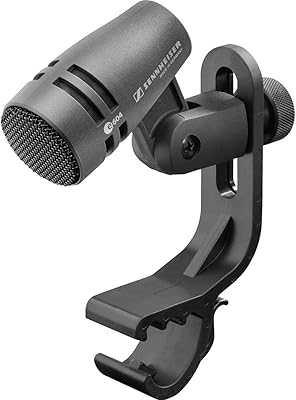
Sennheiser e 604
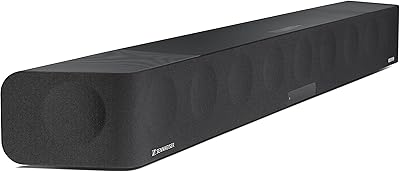
Sennheiser AMBEO Soundbar Max

Sennheiser ME66 Short Shotgun Microphone Capsule
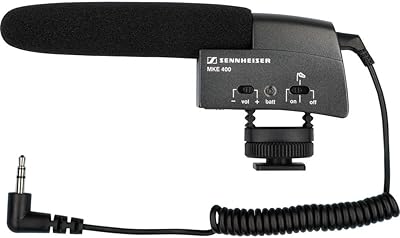
Sennheiser MKE 400 Shotgun Microphone
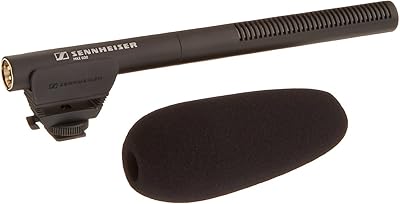
Sennheiser MKE 600
Sennheiser e 845-S