Overview

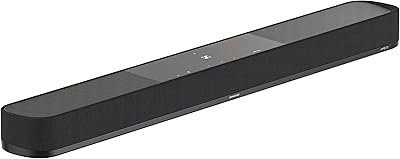
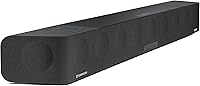
The Sennheiser AMBEO Soundbar Max is Sennheiser's most ambitious single-unit audio product — a genuine attempt to deliver a 5.1.4 surround experience from one bar sitting beneath your TV. Achieving that kind of channel configuration without satellite speakers is genuinely rare, and the AMBEO room calibration technology, developed in partnership with Fraunhofer, is a big reason this flagship soundbar can pull it off. That said, honesty matters here: this is a large, heavy unit that weighs over 40 pounds and stretches nearly 50 inches wide. It is built for serious home theater setups, not for someone looking for a modest TV audio upgrade.
Features & Benefits

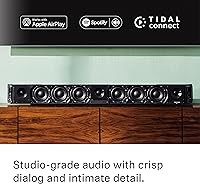
The AMBEO Max packs 13 speakers into a single enclosure, including six 4-inch woofers capable of reaching bass as low as 30Hz — territory where most soundbars simply hand off to a dedicated subwoofer. The included calibration microphone works with Fraunhofer-developed software to analyze your room acoustics and adjust output accordingly, which makes a noticeable difference in real-world listening. Three AMBEO 3D modes give you control over how aggressively the soundstage is processed, and the built-in upmix engine can breathe spatial life into older stereo recordings. Connectivity is thorough: four HDMI ports, one eARC, optical, RCA, Wi-Fi, Bluetooth, AirPlay 2, Chromecast, Spotify Connect, and Tidal Connect.

Best For

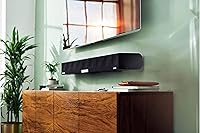
This all-in-one Atmos bar is purpose-built for home theater enthusiasts who want genuine surround performance but have no interest in running cables to rear speakers or finding shelf space for satellite units. It fits naturally in living rooms where aesthetics matter and a clean, single-bar look is preferred. Dolby Atmos films, DTS:X game audio, and streamed music all benefit from the processing on offer. That said, this is not a casual purchase. The physical footprint alone rules it out for smaller rooms, and buyers accustomed to mid-tier soundbars will need to adjust their expectations significantly. It rewards commitment to setup.

User Feedback

With roughly 170 ratings averaging 4.0 stars, this flagship soundbar earns consistent praise but not universal enthusiasm. Owners frequently highlight the soundstage width and the effectiveness of room calibration as genuine standouts. The criticism, though, is just as consistent: at nearly 50 inches wide, the bar does not fit on many standard TV stands, and the initial setup can frustrate less technical users. Several reviewers in large rooms note that the bass claim weakens without adding the optional wired subwoofer — worth knowing before committing. App stability has also drawn scattered complaints, which rounds out an ownership picture that is strong overall but not without real friction.

Pros

  • Genuine 5.1.4 surround performance from a single bar is a rare achievement that holds up in real-world listening.
  • The Fraunhofer-developed room calibration makes a measurable difference, especially in acoustically challenging living rooms.
  • Full Dolby Atmos, DTS:X, and MPEG-H decoding means no format compatibility gaps for modern content.
  • Four HDMI inputs make the AMBEO Max a capable hub for TVs, consoles, and streaming devices simultaneously.
  • Bass reaches convincingly deep in medium-sized rooms without requiring an external subwoofer.
  • AirPlay 2, Chromecast, Spotify Connect, and Tidal Connect cover virtually every wireless streaming scenario.
  • Three AMBEO 3D sound modes give real flexibility depending on whether you are watching films, sports, or listening to music.
  • The upmix engine adds meaningful spatial presence to older stereo and 5.1 content, not just native Atmos sources.
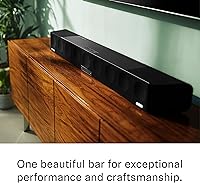
  • Build quality feels appropriately premium — the aluminum chassis and metal grille hold up to daily handling without issue.
  • A premium remote is included in the box, so basic control does not require reaching for your phone.

Cons

  • At nearly 50 inches wide, this flagship soundbar will not physically fit on many standard TV stands or cabinets.
  • The companion app has a documented history of connectivity drops and post-update instability on both iOS and Android.
  • Subwoofer expansion is wired only — buyers expecting wireless connectivity at this price tier will be disappointed.
  • Initial setup, including calibration and HDMI ARC configuration, can take hours and confuse less technical users.
  • Bass performance thins out noticeably in larger open-plan rooms, making the no-subwoofer claim conditional at best.
  • The remote does not expose the full range of settings available through the app, forcing users to rely on both.
  • At over 40 pounds, moving or repositioning the unit is cumbersome, and returns are logistically difficult.
  • Height channel virtualization, while effective, is still processed rather than physical — dedicated ceiling-bounce drivers can still outperform it.
  • Upmixed stereo content occasionally introduces a subtle reverb quality to dialogue that some users find distracting.
  • The review sample size remains relatively modest, which means long-term reliability patterns are not yet fully established.

Ratings

The scores below reflect an AI-driven analysis of verified global user reviews for the Sennheiser AMBEO Soundbar Max, with spam, bot-generated, and incentivized feedback actively filtered out before any scoring was applied. Ratings are drawn from real ownership experiences across diverse room sizes, content types, and technical skill levels. Both the standout strengths and the friction points that matter to real buyers are represented honestly here.

Sound Quality
91%
Owners consistently describe the soundstage as genuinely wide and tall — something most single-bar setups fail to deliver convincingly. During action films and orchestral recordings alike, the spatial separation between audio layers draws repeated praise from users with high-end listening expectations.
A small but vocal group of audiophiles feel that the processing occasionally adds an artificial quality to the sound field, particularly at higher AMBEO 3D intensity settings. Purists who prefer a flat, unprocessed output may find themselves toggling modes more than expected.
Bass Performance
78%
22%
For a bar-only setup, the low-end reach is genuinely impressive — users in medium-sized rooms report feeling impact during explosions and deep electronic music without reaching for a separate subwoofer. The six woofers working in unison produce a fullness that outperforms most competitors in this form factor.
In larger rooms, the bass claim starts to show its limits. Multiple owners of open-plan living spaces or rooms exceeding roughly 400 square feet report that the low-end thins out noticeably, and several ended up purchasing the optional wired subwoofer to close that gap.
Room Calibration
88%
The Fraunhofer-developed calibration system, paired with the included microphone, is one of the most frequently praised aspects of ownership. Users who ran the calibration process describe a clear before-and-after improvement, particularly in rooms with reflective surfaces or asymmetric furniture layouts.
The calibration process itself can take 15 to 20 minutes and requires careful microphone placement — steps that are not always clearly explained in the manual. A handful of users report needing to run the process multiple times before the results felt optimal.
Dolby Atmos & Format Support
93%
Full decoding of Dolby Atmos, DTS:X, and MPEG-H means this all-in-one Atmos bar handles every major modern audio format without compromise. Streaming Atmos content from services like Apple TV Plus or Disney Plus through the eARC connection delivers a noticeably more layered and dimensional experience compared to mid-tier alternatives.
Some users note that the height channel virtualization, while effective, is still perceived virtualization — not physical upward-firing drivers — and dedicated Atmos setups with ceiling-bounce speakers can still produce a more convincing overhead effect in ideal room conditions.
Build Quality & Materials
84%
The aluminum chassis and metal mesh grille give the AMBEO Max a premium, substantial feel that matches its positioning. At over 40 pounds, it does not move or vibrate during high-volume playback, and the finish holds up well to everyday handling and dust.
The plastic components on the rear panel and connection bay feel slightly inconsistent with the premium front presentation. A few users also note that the mesh grille attracts dust visibly and is not straightforward to clean without risking damage.
Physical Size & Fit
61%
39%
The nearly 50-inch width is a deliberate design choice that allows for the wide speaker array, and owners with large TV consoles or wall-mounted setups generally appreciate that the bar visually matches a 65-inch or larger display without looking undersized.
This is one of the most recurring complaints across reviews. Many buyers discover only after delivery that the bar is simply too wide for their existing furniture. At over 40 pounds and almost 50 inches across, returns are logistically difficult, and the surprise factor has frustrated a meaningful portion of owners.
Connectivity & Inputs
89%
Four HDMI inputs — rare on a soundbar — make this a genuine hub for home theater gear without needing an external switch. Add AirPlay 2, Chromecast, Spotify Connect, and Tidal Connect, and the AMBEO Max handles virtually every source a modern household is likely to use.
Wi-Fi setup can be finicky on certain network configurations, and a small number of users report intermittent connection drops requiring the bar to be restarted. The lack of a USB audio input is also occasionally noted as a gap given the breadth of other connection options.
Setup & Initial Configuration
63%
37%
Users with prior experience setting up AV receivers or complex audio gear tend to find the process manageable and appreciate the depth of control available through the companion app. The included HDMI cable and calibration microphone mean you have everything needed out of the box.
For buyers coming from plug-and-play soundbars, the setup process is a genuine hurdle. Between HDMI ARC configuration, room calibration steps, and app-based sound mode selection, less technically confident users report spending several hours before achieving satisfying results.
App & Firmware Stability
67%
33%
The companion app provides meaningful control over EQ, sound modes, and calibration that the remote alone cannot offer. When it works reliably, it adds a layer of personalization that owners with specific audio preferences genuinely use and appreciate.
App stability has been a recurring criticism. Users on both iOS and Android report occasional failures to connect, controls becoming unresponsive, and firmware updates that temporarily disrupted previously working features. Sennheiser has addressed some issues via updates, but the app experience remains inconsistent enough to be a legitimate concern.
Upmixing Performance
76%
24%
The built-in upmix engine does a credible job of expanding older stereo and 5.1 content into a wider soundscape. Owners who watch a lot of cable TV, older Blu-rays, or standard-definition streaming content find genuine value in how the upmixing adds presence to otherwise flat audio.
Upmixed content is noticeably less convincing than native Atmos or DTS:X material, which is expected but still worth noting. Some users find the upmixing adds a slight reverb-like quality to dialogue-heavy content, and prefer to disable it for talk shows or news programming.
Subwoofer Expandability
58%
42%
The wired mono subwoofer pre-out provides a clear upgrade path for users who eventually want to close the bass gap in larger rooms. Owners who invested in the optional Sennheiser AMBEO Subwoofer report a meaningful improvement in low-end authority and overall system cohesion.
The wired-only subwoofer connection is a significant limitation for buyers who expected wireless expandability — which is the norm at this price tier. The additional cost of the optional subwoofer, combined with the need to run a physical cable, has disappointed buyers who assumed wireless compatibility.
Dialogue Clarity
82%
18%
The five dedicated tweeters and midrange tuning give spoken dialogue a natural, grounded presence that holds up well even at moderate listening volumes. Users who find themselves frequently rewinding to catch missed lines report this is much less of an issue with the AMBEO Max than with previous soundbars they have owned.
At very high volume levels, some users observe that the center channel presence becomes slightly diffuse compared to a dedicated center speaker in a discrete surround setup. This is a narrow criticism but one that dedicated home cinema viewers do occasionally raise.
Remote Control
79%
21%
The premium remote included in the box feels proportionate to the product tier — solid, responsive, and well-laid-out. Owners appreciate being able to switch sound modes and adjust key settings without reaching for a phone, especially during movie watching.
The remote does not expose the full depth of settings available through the app, which means some users end up using both depending on what they want to adjust. A few users also report that the IR range is somewhat limited compared to remotes bundled with competing products.
Value for Money
69%
31%
For buyers who genuinely want 5.1.4 audio performance without the complexity of a full discrete speaker system, the AMBEO Max offers a level of immersion that would otherwise require significantly more hardware and cabling. Owners who use it daily in well-matched rooms tend to feel the investment was justified.
At its price point, the expectation bar is high — and the app instability, wired-only subwoofer expansion, and fit challenges make the value calculation complicated. Buyers in smaller spaces or those who encounter setup friction are more likely to question whether the premium was warranted.

Suitable for:

The Sennheiser AMBEO Soundbar Max was built for a specific kind of buyer, and if you fit that profile, it is genuinely hard to beat. This is the right choice for home theater enthusiasts who want true Dolby Atmos and DTS:X immersion without the hassle of mounting rear speakers, running cables across the room, or managing a multi-component audio system. It works especially well in medium-to-large living rooms — think dedicated viewing spaces with 65-inch or larger displays — where the nearly 50-inch bar fits naturally and the room calibration system has real acoustic work to do. Frequent streamers, Blu-ray collectors, and gamers who switch between multiple sources will also appreciate the four HDMI inputs and the breadth of wireless options, which make this a genuine hub rather than a passive add-on. If you are upgrading from a mid-tier soundbar and want a meaningful, noticeable step up in spatial audio performance without building a full discrete surround system, this all-in-one Atmos bar is a compelling destination.
Not suitable for:

The Sennheiser AMBEO Soundbar Max has real limitations that make it the wrong fit for a wide range of buyers, and it is worth being direct about them. At nearly 50 inches wide and over 40 pounds, this bar will not physically fit on many standard TV consoles or below smaller televisions — and discovering that after delivery is a painful experience given its size and weight. Small rooms also work against it acoustically; the low-end performance that impresses in a medium-sized space starts to thin out in compact apartments or bedrooms, and the bar's sheer presence can feel overwhelming in tighter environments. Buyers who are not comfortable with a multi-step setup process involving room calibration, HDMI ARC configuration, and app-based sound management will likely find the experience frustrating rather than rewarding. Those expecting wireless subwoofer expandability should know that the optional AMBEO Subwoofer connects only via a wired pre-out — there is no wireless option. And if you are simply looking for a cleaner alternative to your TV's built-in speakers without a major investment of time or money, this is not the product to start with.
Specifications

  • Channel Config: The bar delivers a 5.1.4 channel surround sound configuration from a single enclosure without requiring satellite speakers.
  • Total Speakers: Thirteen individual speaker drivers are built into the unit, including six 4″ woofers, dedicated tweeters, and midrange drivers.
  • Output Power: Maximum combined audio output is rated at 500 watts, providing substantial headroom for large room listening at high volumes.
  • Frequency Response: The system reproduces audio from 30Hz upward, reaching into genuine low-bass territory without the need for an external subwoofer in most rooms.
  • Dimensions: The unit measures 49.8″ wide, 6.73″ deep, and 5.31″ tall, making it one of the largest single-bar soundbars currently available.
  • Weight: At 40.7 pounds, this is a heavy, stationary unit that requires a sturdy surface or a purpose-built wall mount bracket.
  • HDMI Inputs: Four HDMI inputs are included, with one supporting eARC for lossless audio passthrough from compatible televisions.
  • Analog Inputs: Optical digital and RCA analog inputs are available for connecting legacy or non-HDMI source devices.
  • Wireless Connectivity: Built-in Wi-Fi and Bluetooth allow wireless streaming, with additional support for Chromecast, AirPlay 2, Spotify Connect, and Tidal Connect.
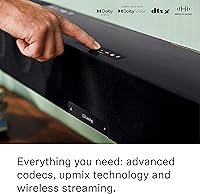
  • Audio Formats: The bar natively decodes Dolby Atmos, DTS:X, and MPEG-H, covering every major immersive audio format used in streaming, disc, and broadcast content.
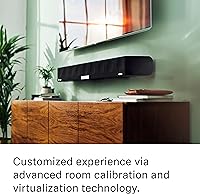
  • Room Calibration: An advanced room calibration system, developed in partnership with Fraunhofer, uses the included measurement microphone to adapt audio output to the specific acoustics of the listener's space.
  • Sound Modes: Three selectable AMBEO 3D processing modes let users adjust the intensity of spatial sound processing to match content type or personal preference.
  • Subwoofer Output: A mono subwoofer pre-out port allows a wired connection to the optional Sennheiser AMBEO Subwoofer; wireless subwoofer connectivity is not supported.
  • Body Materials: The enclosure is constructed from a combination of aluminum, metal mesh, and plastic, with the aluminum chassis forming the primary structural frame.
  • Control Methods: The unit is controllable via the included premium remote control and the companion AMBEO app, available on iOS and Android.
  • Included Accessories: In the box: the soundbar itself, a calibration microphone, a premium remote control, an HDMI cable, a power cable, and the owner's manual.
  • Power Source: The unit runs on corded AC power and is not battery-operated; a power cable is included in the package.
  • Upmix Technology: An integrated upmixing engine converts standard stereo and 5.1 audio sources into a widened spatial soundscape compatible with the 5.1.4 speaker layout.
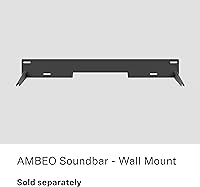
  • Wall Mount: A wall mount option is officially supported, though the bracket is sold separately and installation requires accounting for the unit's substantial weight.
  • Warranty: The product carries a limited manufacturer warranty; buyers should confirm regional warranty terms directly with Sennheiser at the time of purchase.

Related Reviews

Sennheiser AMBEO Soundbar Plus
86%
94%
Sound Quality
91%
Bass Performance
88%
Ease of Setup
90%
Streaming & Connectivity
93%
Build Quality
More
Sennheiser AMBEO VR Microphone
86%
95%
Sound Quality
88%
Ease of Use
90%
Durability
93%
Spatial Audio Capture
89%
Professional Integration
More
Sennheiser HD400S Headset
85%
85%
Sound Quality
88%
Comfort for Long Listening
90%
Portability
80%
Noise Isolation
87%
Build Quality
More
BlueAnt Soundblade Soundbar
86%
89%
Audio Quality
92%
Value for Money
87%
Setup & Installation
91%
Connectivity Options
84%
Build Quality
More
Sennheiser HD 560S
Sennheiser HD 560S
74%
93%
Sound Accuracy
91%
Soundstage & Imaging
88%
Comfort & Fit
63%
Build Quality
71%
Amplifier Dependency
More
Sonos Ray Compact Soundbar
73%
88%
Dialogue Clarity
54%
Bass & Low-End Output
91%
Setup Experience
47%
Connectivity & Input Options
86%
Sonos Ecosystem Integration
More
LITTOAK SE04 Soundbar
84%
85%
Sound Quality
93%
Ease of Setup
88%
Connectivity Options
68%
Bass Performance
81%
Design & Build Quality
More
OXS S5 Soundbar
OXS S5 Soundbar
85%
88%
Sound Quality
75%
Bass Performance
93%
Ease of Setup
84%
Build Quality
90%
Connectivity Options
More
ZVOX SB500 TV Soundbar
81%
93%
Dialogue Clarity
67%
Bass Performance
91%
Ease of Setup
74%
Value for Money
84%
Build Quality
More
Sennheiser e906
Sennheiser e906
88%
96%
Build Durability
94%
Guitar Amp Performance
88%
Tonal Versatility
91%
Off-Axis Rejection
84%
Snare & Percussion Clarity
More

FAQ

For most medium-sized living rooms, the built-in bass performance is genuinely satisfying — the six 4-inch woofers reach low enough that you will not feel an obvious gap during films or music. That said, in larger open-plan spaces or rooms with high ceilings, the low-end can start to feel thin at higher volumes, and several owners in those situations do end up adding the optional AMBEO Subwoofer via the wired pre-out connection. If your room is on the larger side, budget for that possibility rather than assuming the bar alone will fully deliver.

The bar is nearly 50 inches wide — 49.8 inches to be precise — which is wider than many standard TV consoles and media units. Before ordering, measure your furniture carefully. It pairs best visually with 65-inch or larger displays, and buyers who do not measure first are among the most common sources of negative feedback on this product.

It is genuinely one of the better implementations in the soundbar category. The calibration system, developed with Fraunhofer, uses the included microphone to measure your room's acoustic characteristics and adjusts the output accordingly. The difference is most noticeable in rooms with hard floors, exposed brick, or asymmetric layouts — environments where reflections and standing waves would otherwise muddy the sound. It takes 15 to 20 minutes to complete properly, but most owners who do it carefully report a clear improvement over the default settings.

Wired only. The Sennheiser AMBEO Soundbar Max has a mono subwoofer pre-out port, and the optional AMBEO Subwoofer connects through that physical cable — there is no wireless pairing option. If you were expecting the kind of wireless subwoofer setup common in other premium soundbar systems, this is an important limitation to factor into your decision.
It handles it well. Connect your streaming device or smart TV via HDMI eARC, and the bar will receive and decode Atmos audio directly. The spatial processing adds genuine height and width to Atmos-mixed content, and most users find the overhead virtualization convincing enough for immersive film watching. Native Atmos material sounds noticeably better than upmixed stereo, so the more Atmos content you consume, the more value you will get out of this all-in-one Atmos bar.

It is more involved than a typical plug-and-play soundbar. Between configuring HDMI ARC or eARC on your TV, running the room calibration, and using the app to select sound modes and EQ preferences, there are several steps that can trip up less experienced users. The manual covers the basics, but some owners find it lacking in detail. If you are comfortable setting up a router or a streaming device, you will likely manage fine; if technology generally frustrates you, set aside an evening and consider having a patient friend nearby.

The AMBEO Max supports Spotify Connect, Tidal Connect, Chromecast built-in, and AirPlay 2, which covers the vast majority of mainstream streaming scenarios. You can stream directly to the bar from your phone or tablet without the TV needing to be on at all, which makes it a reasonably capable music system on its own, not just a TV companion.

The app experience has been a consistent source of mixed feedback. When it works, it provides meaningful control over EQ, sound modes, and calibration that the remote alone cannot offer. However, users on both iOS and Android have reported intermittent connection failures, unresponsive controls, and occasional disruption following firmware updates. Sennheiser has addressed some issues through updates over time, but if app reliability is important to you, it is fair to say this area has not been as polished as the hardware itself.

It gets closer than most soundbars, but it is not a perfect substitute for a discrete system with physical rear speakers. The 5.1.4 configuration is achieved through advanced virtualization, and the result is convincing — especially for film watching — but listeners who have lived with properly positioned rear speakers in a calibrated room will notice a difference in precise surround localization. Think of it as the best single-bar approximation of that experience rather than a strict replacement for it.

It holds up well for music, particularly if you adjust the AMBEO 3D processing mode or dial it back entirely for a more direct stereo presentation. The midrange clarity and tweeter detail make vocal-forward recordings sound natural, and the bass extension means electronic and orchestral music both have real body to them. It is primarily engineered around home theater content, but committed music listeners have found it satisfying — especially when streaming via AirPlay 2 or Tidal Connect in high-resolution formats.

Where to Buy

Best Buy
In stock $2,999.99
Sweetwater
In stock $2,384.10
Newegg.com
In stock $2,999.95
B&H Photo-Video-Audio
In stock $2,999.95
RockonAV
In stock $2,499.95
Crutchfield
In stock $2,999.95
Electronics Expo
In stock $2,999.95