Overview

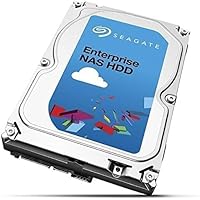
The Seagate Enterprise Capacity v7 12TB Hard Drive is a refurbished enterprise-grade unit pulled from data center environments and resold after testing. That last part matters — fully tested and functional tells you it powered on and passed a basic health check, not that it has a clean slate like a brand-new drive. You are getting genuine enterprise hardware at a fraction of the cost, which is a real draw if you need bulk storage on a budget. That said, realistic expectations are essential here. Refurbished drives carry inherent uncertainty around remaining lifespan, and warranty coverage is typically far thinner than what you would get buying new.
Features & Benefits

At 12TB, this refurbished enterprise drive lands in a capacity tier that still requires real investment even in the refurb market. The 7200 RPM spindle speed combined with a 256MB cache means the drive handles sustained read/write cycles without buckling under pressure — useful for NAS arrays cycling through large file transfers or overnight backup jobs. The SATA 6Gb/s interface keeps compatibility broad, working with virtually any modern motherboard or enclosure without fuss. At 3.5 inches, it drops straight into standard bays with no adapters needed. The shock-resistant chassis is a small but practical detail for drives mounted in less-than-perfect home lab setups.

Best For

This high-capacity SATA drive hits its stride in home lab and NAS builds where cost-per-terabyte matters more than warranty peace of mind. If you are running a Plex server, building out a multi-drive backup array, or expanding a small business archival setup, the sheer capacity here is hard to argue with. Buyers who are comfortable with refurbished hardware and know their way around SMART data checks will get the most from it. Skip it for primary OS drives or anything running workloads where drive failure has real consequences — this is not a substitute for a new, fully warrantied unit in any mission-critical role.

User Feedback

The 3.4-star average across over 700 ratings tells a story worth reading carefully before purchasing. Positive reviews highlight value for capacity — buyers who received drives with low power-on hours and healthy SMART readings tend to be satisfied. The problem is consistency. A meaningful portion of reviews flag DOA units or drives that failed within months, and several buyers found their drives arrived with thousands of hours already logged — expected in refurb territory, but still a shock if you are unprepared. Seller responsiveness around defective unit replacements comes up repeatedly as a frustration. Test thoroughly on arrival and never rely on it as your only copy of important data.

Pros

  • 12TB of capacity at a refurbished price makes the cost-per-terabyte genuinely compelling.
  • Enterprise-grade hardware typically means these drives were built to handle sustained, heavy workloads.
  • The 7200 RPM speed and 256MB cache deliver solid throughput for NAS and backup use cases.
  • SATA 6Gb/s interface works with virtually every modern motherboard and enclosure without extra adapters.
  • Standard 3.5-inch form factor means zero compatibility headaches in towers, DAS units, or rack setups.
  • Many buyers report receiving units with healthy SMART data and low power-on hours.
  • Shock-resistant build adds practical durability for less controlled home lab environments.
  • Strong rank in the Internal Hard Drives category suggests consistent sales and decent buyer volume.

Cons

  • Refurbished condition means some units arrive with high power-on hours, significantly reducing expected remaining lifespan.
  • DOA units are a recurring complaint — a notable portion of buyers received non-functional drives out of the box.
  • Seller responsiveness on defective unit replacements is frequently called out as slow or frustrating.
  • No meaningful warranty coverage compared to new drives, leaving buyers with little protection if failure happens early.
  • Refurb quality is inconsistent — two buyers can have completely different experiences with the same listing.
  • A 3.4-star average across hundreds of reviews is a meaningful warning sign for reliability-conscious buyers.
  • Not suitable as a standalone backup destination — drive failure risk without redundancy could mean permanent data loss.
  • The listing description offers limited transparency about actual refurbishment standards or acceptable power-on hour thresholds.

Ratings

Our AI rating system analyzed hundreds of verified buyer reviews for the Seagate Enterprise Capacity v7 12TB Hard Drive from global sources, actively filtering out incentivized, bot-generated, and low-signal feedback to surface what real users actually experienced. The scores below reflect both the genuine strengths this refurbished enterprise drive delivers and the recurring pain points that cannot be ignored. Where buyers disagreed sharply — especially around unit consistency and seller support — those tensions are fully reflected in the numbers.
Value for Money
74%
26%
For buyers building out bulk NAS or archival storage, the cost-per-terabyte on this refurbished unit is legitimately hard to beat at this capacity tier. Home lab users frequently cited it as one of the most affordable ways to hit 12TB without buying new, and many received drives that performed exactly as expected at a fraction of retail price.
The value proposition falls apart quickly if you receive a DOA unit or one with high power-on hours, since the limited seller warranty means you absorb more of the risk. Several buyers felt the savings were wiped out by the hassle and delay of navigating a replacement — a real cost that does not show up in the sticker price.
Reliability
47%
53%
Buyers who received units with low power-on hours and clean SMART readings reported solid day-to-day reliability over several months of NAS operation, with no unexpected failures or read errors. When the refurb lottery lands in your favor, the underlying enterprise build quality does show through in sustained workloads.
The reliability picture is deeply inconsistent across the buyer pool. DOA units, drives failing within weeks, and wildly varying power-on hour counts on arrival are recurring themes across reviews — a pattern that is difficult to dismiss as outliers when the overall rating sits at 3.4 out of 5.
Refurb Condition Consistency
41%
59%
A meaningful share of buyers reported receiving drives in surprisingly good shape — clean exteriors, low logged hours, and SMART data showing no reallocated sectors or pending errors. For those buyers, the refurbishment process clearly delivered a unit that performed well out of the box.
Far too many buyers found the opposite: drives arriving with tens of thousands of power-on hours, physical signs of heavy prior use, or SMART warnings already present. The lack of any published standard for what constitutes an acceptable refurb condition makes every purchase feel like a gamble.
Sequential Read/Write Performance
78%
22%
The 7200 RPM spindle speed combined with a 256MB cache buffer delivers respectable sequential throughput for a mechanical drive, which buyers noticed during large file transfers and multi-drive NAS rebuilds. Plex server users running large 4K media libraries found it handled concurrent streams without obvious bottlenecking.
Random I/O performance, as expected from any spinning disk, lags behind what even an entry-level SSD would offer, and some buyers noted inconsistent response times under heavy simultaneous workloads. This is not a drive for anything that needs fast random access — its strength is sequential bulk throughput, full stop.
Compatibility
88%
The standard SATA 6Gb/s interface and 3.5″ form factor make this high-capacity SATA drive a plug-and-play fit for an enormous range of hardware — from Synology and QNAP NAS units to desktop towers and server rack bays. Buyers rarely reported any detection or compatibility issues across modern systems.
A small number of users with older NAS enclosures encountered issues where the firmware did not correctly recognize drives above 8TB or 10TB, requiring a firmware update before the full capacity was available. It is a solvable issue but an annoying extra step that caught a few buyers off guard.
Seller Support & Returns
38%
62%
A handful of buyers reported smooth and prompt resolutions when they flagged defective units, with replacements shipped quickly and without significant friction. When the process works, it works — and those buyers tended to leave more positive overall impressions despite the initial issue.
Seller responsiveness is a consistent sore point in the reviews. Buyers dealing with DOA drives frequently described slow replies, unclear return instructions, and extended waits for replacements. For a product category where early failure is a known risk, weak post-sale support is a serious strike against the overall ownership experience.
Power-On Hours Transparency
33%
67%
Some buyers were pleasantly surprised to find their drives arrived with relatively low logged hours — in the low thousands — suggesting the units had seen limited prior use before being pulled and resold. Those buyers felt the transparency risk ultimately paid off in their favor.
There is no disclosed standard for maximum acceptable power-on hours in this listing, and buyers have reported everything from 2,000 hours to well over 40,000. Without knowing what you are getting before it arrives, buyers must rely entirely on their own SMART audit post-delivery — a process many casual buyers do not even know to perform.
Noise & Vibration
63%
37%
Buyers using this drive in enclosed NAS units with rubber-dampened bays found the noise levels acceptable during normal operation, with the standard mechanical hum staying in the background during media playback or overnight backup jobs.
At 7200 RPM, this is not a quiet drive by any measure, and users who mounted it in open desktop cases or poorly dampened enclosures noticed the vibration and seek noise more than they expected. In quiet home office environments, the acoustic profile of this drive can be distracting during active read/write cycles.
Heat Management
67%
33%
Under moderate workloads in adequately ventilated NAS enclosures, most buyers found the drive's operating temperatures stayed within acceptable ranges without requiring special cooling measures. The enterprise-class chassis handles sustained heat reasonably well in structured deployments.
In cramped enclosures or setups with poor airflow, some users reported temperatures climbing higher than comfortable over extended operation — particularly during long RAID rebuild cycles. Dense multi-drive configurations may need active cooling to keep this drive within its rated thermal range.
Packaging & Arrival Condition
55%
45%
A portion of buyers noted that drives arrived well-packed with anti-static bags and foam padding that provided adequate protection during shipping. For those buyers, the physical condition on arrival matched what a careful refurb reseller should deliver.
Other buyers described receiving drives with minimal protective packaging — no foam, loose anti-static bags, or standard cardboard with little cushioning — which is a real concern for a mechanical drive sensitive to shock during transit. Physical shipping damage was mentioned in several negative reviews as a contributing factor to DOA reports.
NAS & RAID Suitability
71%
29%
Buyers running this drive in RAID 5 or RAID 6 arrays within home NAS setups generally found it handled the sustained sequential workloads well, and the enterprise-class duty cycle rating gives it more headroom than a typical desktop drive in the same role.
The inconsistency of refurb unit quality introduces meaningful risk into any RAID array context — if one drive in an array starts accumulating read errors, it places stress on all other drives during a rebuild. Several buyers flagged that they lost confidence in the drive as a RAID member after experiencing early SMART warnings.
Long-Term Durability
44%
56%
Users who received units with genuinely low prior usage reported no issues after six to twelve months of operation, suggesting that healthy units from this batch can deliver a reasonable service life when used in appropriate non-critical storage roles.
The broader pattern in reviews points to a durability concern that is hard to ignore — a notable share of buyers experienced failures within the first year, which is well below expectations even for refurbished hardware at this price tier. Without knowing a drive's actual history, predicting its remaining lifespan is genuinely difficult.

Suitable for:

The Seagate Enterprise Capacity v7 12TB Hard Drive is a strong fit for budget-conscious buyers who need serious storage capacity and understand the trade-offs of buying refurbished. Home lab builders setting up multi-drive NAS enclosures, Plex media servers, or large backup arrays will find the cost-per-terabyte hard to beat in this capacity tier. Small businesses looking to expand archival or cold storage without the expense of an all-new drive array can put this to good use as a secondary or tertiary storage layer. It also appeals to technically confident buyers who know how to run a SMART data check on arrival and factor potential wear into their storage planning. Essentially, if you are treating this as a non-critical bulk storage drive and have a backup strategy already in place, the value proposition here is real.
Not suitable for:

The Seagate Enterprise Capacity v7 12TB Hard Drive is not the right call for anyone who needs dependable, warrantied storage in a high-stakes environment. Using this as a primary OS drive, a sole backup destination, or any kind of production storage where downtime has real consequences is a genuine risk — the refurbished status introduces too much uncertainty around remaining drive life. Buyers who are not comfortable pulling up SMART data tools or interpreting power-on hours should be cautious, since the condition of any individual unit can vary significantly. If you are expecting the reliability and return experience you would get from a brand-new retail drive, the 3.4-star rating and recurring DOA reports in user reviews suggest this listing may not meet that bar consistently. First-time NAS builders who lack a secondary redundancy plan should also look elsewhere until they have a more predictable storage foundation in place.
Specifications

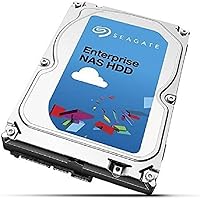
  • Brand: This drive is manufactured by Seagate, one of the most established names in mechanical hard drive production.
  • Model: The specific model number is ST12000NM0127, part of the Enterprise Capacity v7 series.
  • Capacity: Total formatted storage capacity is 12TB, suitable for large-scale archival, backup, and media storage workloads.
  • Condition: This unit is sold as refurbished — it has been previously used, tested for basic functionality, and inspected before resale.
  • Form Factor: The drive uses a standard 3.5″ form factor, compatible with most desktop towers, NAS enclosures, DAS units, and 1U or 2U server bays.
  • Interface: Connectivity is provided via SATA 6Gb/s (Serial ATA-600), offering broad compatibility with modern motherboards and HBA cards.
  • Spindle Speed: The drive spins at 7200 RPM, which supports consistent sequential throughput and lower average latency compared to 5400 RPM alternatives.
  • Cache: A 256MB onboard cache buffer helps manage sustained read and write operations with reduced response time variability.
  • Installation: Designed for internal installation only; it is not intended for use in external USB enclosures without a compatible SATA-to-USB adapter.
  • Weight: The drive weighs 1.56 pounds, which is typical for a 3.5″ enterprise-class mechanical hard drive.
  • Dimensions: Packaged dimensions are approximately 8.11 x 5.87 x 1.61 inches, consistent with standard 3.5″ drive bay requirements.
  • Shock Resistance: The drive includes a shock-resistant design feature intended to reduce the risk of damage from minor vibrations or incidental impacts during operation.
  • Compatible Devices: Rated as compatible with desktop computers, NAS systems, and direct-attached storage servers that support SATA interfaces.
  • Power Requirements: As an enterprise SATA drive, it draws power through a standard SATA power connector and typically requires both 5V and 12V rails.
  • Workload Rating: Enterprise Capacity drives are rated for high-duty-cycle environments, originally designed to handle significantly higher annual workloads than consumer desktop drives.
  • Warranty: As a refurbished unit, warranty terms are determined by the seller rather than Seagate directly, and are typically limited compared to new retail drives.
  • Operating Temp: Standard enterprise SATA drives in this family are rated to operate within a temperature range of 0°C to 60°C.

Related Reviews
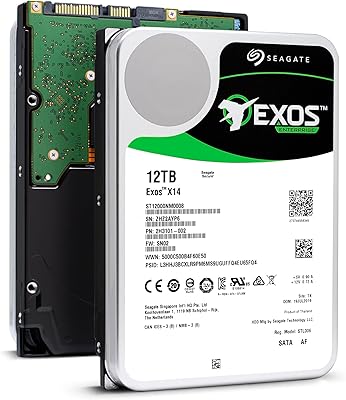
Seagate Exos X14 12TB Hard Drive
88%
91%
Performance
94%
Reliability & Durability
88%
Value for Money
89%
Energy Efficiency
92%
Build Quality
More
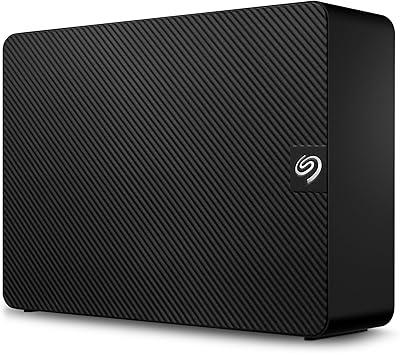
Seagate IronWolf 12TB NAS Internal Hard Drive
82%
93%
NAS Compatibility
84%
Long-Term Reliability
91%
Data Integrity & CMR Technology
82%
Read/Write Performance
88%
Vibration & Noise Management
More
Seagate Expansion 12TB Portable External Hard Drive
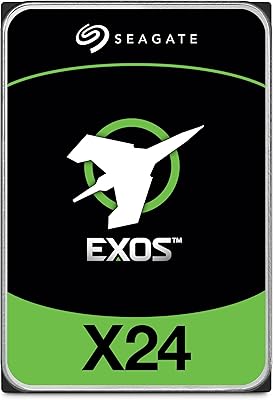
70%
94%
Storage Capacity
82%
Value for Money
91%
Ease of Setup
48%
Portability
61%
Long-term Reliability
More
Seagate Exos X24 24TB Enterprise Hard Drive
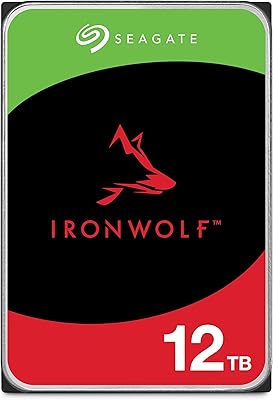
83%
97%
Storage Capacity
88%
Read/Write Performance
91%
Reliability & Longevity
86%
Thermal & Acoustic Performance
83%
Value for Money
More
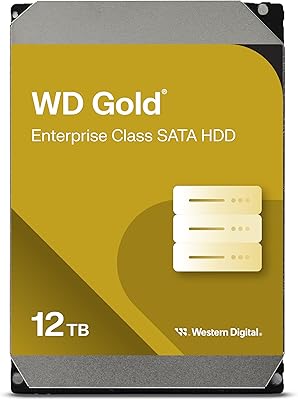
Western Digital 12TB WD Gold Enterprise Class Internal Hard Drive
86%
88%
Performance under Load
93%
Storage Capacity
91%
Reliability
85%
Ease of Integration
90%
Endurance for Demanding Workloads
More
Seagate Game Drive for PlayStation 2TB
79%
94%
Ease of Setup
91%
Storage Capacity
93%
PS4 Compatibility
72%
PS5 Compatibility
74%
Transfer Speed
More
Seagate ST1000NM0023 1TB Enterprise SAS Hard Drive
77%
88%
Reliability in RAID Arrays
91%
Interface & Connectivity
83%
Sequential Throughput
57%
Random I/O Performance
86%
RAID Firmware Behavior
More
Seagate BarraCuda ST1000DM010 1TB Internal Hard Drive
77%
91%
Value for Money
74%
Reliability & Longevity
79%
Read & Write Performance
93%
Installation Ease
68%
Noise & Vibration
More
Seagate IronWolf 3TB NAS Hard Drive
88%
91%
Performance in RAID Setups
87%
Reliability Over Time
85%
Ease of Setup
88%
Data Transfer Speed
84%
Noise and Vibration
More
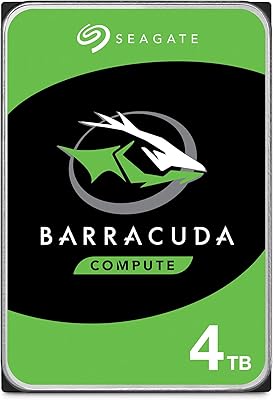
Seagate Barracuda 6TB Internal Hard Drive
77%
93%
Value for Money
91%
Storage Capacity
74%
Reliability & Longevity
89%
Installation Ease
61%
Read/Write Performance
More

FAQ

It generally means the drive was powered on, passed a basic read/write health check, and showed no immediately critical SMART errors at the time of testing. It does not mean the drive has been wiped back to zero hours or restored to like-new condition. You may still receive a unit with significant power-on hours logged from its previous life in a data center, so running your own SMART check immediately on arrival is strongly recommended.

In most cases, yes. The 3.5″ form factor and SATA interface are standard across nearly all consumer and prosumer NAS enclosures from Synology, QNAP, and similar brands. That said, some NAS manufacturers publish compatibility lists, so it is worth checking whether your specific model supports drives above 8TB or 10TB if you have an older enclosure.

Use a free tool like CrystalDiskInfo on Windows or smartmontools on Linux and macOS to pull the SMART data immediately after installing the drive. Pay close attention to the power-on hours, reallocated sector count, and any pending uncorrectable sectors. If any of those figures look concerning, contact the seller right away rather than waiting — most return windows are short.

Yes, SATA drives of this type are fully compatible with Windows 10, Windows 11, and most Linux distributions without any additional drivers. Your motherboard just needs an available SATA port and a free SATA power connector from the PSU, both of which are standard on any desktop system built in the last decade.

Technically it will work, but it is not a great idea with a refurbished unit. A drive with unknown usage history is not something you want holding your operating system and active applications. The risk of failure is simply too unpredictable. This drive is much better suited as a secondary storage or backup volume where a failure, while inconvenient, is not catastrophic.

That is genuinely hard to predict with refurbished enterprise drives — it varies widely. Some buyers report receiving units with only a few thousand hours, which is relatively low. Others have found drives with 30,000 hours or more, which represents several years of near-continuous operation. Enterprise drives are typically rated for very long duty cycles, but high hours does increase failure probability over time.

Your recourse will depend entirely on the seller's return policy rather than any Seagate warranty. Document the issue immediately with SMART screenshots or a diagnostic report, and open a return or replacement request as soon as possible. User reviews for this listing specifically call out slow or difficult seller responses to defective units, so acting quickly and keeping records will work in your favor.

Enterprise 7200 RPM drives are generally louder than desktop or NAS-optimized drives, especially during heavy read and write cycles. You will likely notice a faint hum and some vibration, which is normal. Heat output is moderate but manageable in any well-ventilated enclosure. If you are putting multiple drives in a tight NAS bay, make sure your enclosure has adequate airflow.

Yes, and this is actually one of the stronger use cases for it. Enterprise-class drives are built for the kind of sustained, parallel I/O that RAID arrays generate. Just keep in mind that RAID is not a backup strategy — if you lose an array due to a controller failure or multiple simultaneous drive failures, RAID will not save your data. Treat this drive as part of a broader redundancy plan, not the whole plan.

The main advantage here is cost — you get a lot of storage capacity for significantly less than a new equivalent. The trade-offs are real though: no manufacturer warranty, unknown usage history, and a statistically higher risk of early failure. If your data is important and hard to replace, a new drive with a full warranty is the safer investment. If you are building out bulk cold storage or a non-critical media server, the value of this refurbished unit is genuinely hard to dismiss.

Where to Buy