Overview

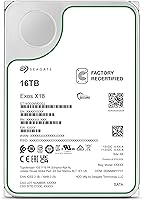
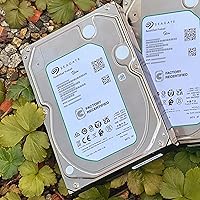
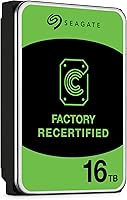
The Seagate Exos X18 16TB Internal Hard Drive is an enterprise workhorse that has found a second life in the hands of home lab builders and prosumer storage enthusiasts — at a fraction of its original data center price. The Exos X18 lineage was built for hyperscale environments: think cloud infrastructure, dense server racks, and round-the-clock workloads. Buying refurbished means accepting some trade-offs. Warranty coverage is typically limited compared to new, and cosmetic wear is possible. That said, the 3.5-inch SATA form factor slots cleanly into NAS enclosures, desktop workstations, and DIY builds. One critical note for Windows users: this drive does not auto-initialize. You will need to manually format it through Disk Management before it shows up as usable storage.
Features & Benefits

At the core of this refurbished enterprise drive is CMR recording technology, which matters more than it might sound. Unlike SMR drives that rewrite surrounding data during updates — a real problem in RAID arrays — CMR handles random writes cleanly, making it a far better choice for multi-drive setups. The 7200 RPM spindle speed, paired with improved caching, keeps latency tighter than many NAS-optimized drives at this capacity. The SATA 6Gb/s interface supports both 512e and 4Kn sector formats, covering older controllers and modern systems alike. The 550TB annual workload rating dwarfs typical desktop and NAS drive limits. One honest trade-off: noise levels run noticeably higher than consumer alternatives, so rack or closet placement is advisable.

Best For

The Exos X18 16TB is squarely aimed at buyers who need serious raw capacity without serious new-drive pricing. Home lab enthusiasts building self-hosted Plex or Nextcloud servers will appreciate the write endurance headroom that a drive rated for enterprise workloads provides. Multi-bay NAS users on Synology or QNAP systems running RAID arrays will find CMR far less frustrating than SMR alternatives at rebuild time. For small businesses building a cost-effective archival or backup tier, the cost-per-terabyte math here is hard to argue with. That said, this high-capacity SATA hard drive is not a fit for everyone. If you sit in a quiet home office, dislike manual disk initialization, or just want something plug-and-play, a consumer NAS drive is a better starting point.

User Feedback

With a 4.1-star average across over 340 ratings, buyer satisfaction is solid — particularly among NAS builders and home server enthusiasts who consistently praise the drive's sequential read speed and capacity-to-price ratio. The refurbished condition draws mixed reactions: a meaningful portion of buyers report units arriving in essentially pristine condition, while others note cosmetic wear or, in fewer cases, drives that were dead on arrival. Compatibility complaints and confusion over RAID rebuild times at 16TB also appear in negative reviews. Noise remains a recurring friction point — several reviewers flag it as too loud for living or open office spaces. Long-term reliability feedback skews positive, but the DOA risk is real and worth weighing before you buy.

Pros

  • CMR recording technology makes the Exos X18 16TB a dependable choice for RAID arrays and write-heavy server workloads.
  • A 550TB annual workload rating dwarfs most consumer NAS drives, built for sustained, intensive around-the-clock operation.
  • The refurbished price point delivers exceptional cost-per-terabyte value compared to buying equivalent capacity new.
  • Sequential read performance draws consistent praise from buyers running large Plex libraries or multi-drive media servers.
  • The 7200 RPM spindle speed keeps latency tighter than many NAS-optimized drives at this capacity tier.
  • SATA 6Gb/s with 512e and 4Kn sector format support covers both legacy controllers and modern systems.
  • Enterprise-grade vibration compensation makes this high-capacity SATA hard drive well-suited for multi-drive enclosures.
  • A meaningful portion of buyers report units arriving in essentially like-new physical condition despite the refurbished label.
  • Rated for 24/7 continuous operation, unlike desktop drives designed for lighter, intermittent workloads.

Cons

  • Refurbished units carry a real — if minority — risk of arriving dead on arrival with limited recourse.
  • Noise output is noticeably louder than consumer NAS alternatives like the WD Red Plus or Seagate IronWolf.
  • Windows users must manually initialize and format the drive through Disk Management — it will not appear automatically.
  • Warranty coverage on refurbished units is typically far shorter and more restricted than buying a drive new.
  • There is no way to verify the drive's prior workload history, total powered-on hours, or previous operating conditions.
  • RAID rebuild times at 16TB are lengthy, and some buyers report controller compatibility quirks during the process.
  • A portion of negative reviews mention cosmetic wear or inconsistent packaging quality, suggesting variable grading standards.

Ratings

The Seagate Exos X18 16TB Internal Hard Drive has been evaluated across 14 performance and ownership categories using AI-driven analysis of verified global buyer reviews, actively filtering out incentivized, bot-generated, and low-signal feedback. Scores reflect the genuine consensus of real-world users — from home lab builders and NAS enthusiasts to IT professionals repurposing enterprise hardware — rather than manufacturer specifications alone. Both the drive's standout strengths and its most consistent pain points are transparently reflected in the ratings below.
Value for Money
91%
Buyers consistently highlight the cost-per-terabyte as the single strongest argument for choosing this refurbished enterprise drive over consumer NAS alternatives. Getting 16TB of CMR storage at a fraction of the new-drive price — or what a comparable IronWolf Pro costs — makes it a compelling option for home lab and NAS builders watching their budget.
The value calculation only holds if the drive arrives functional and stays that way. A real percentage of buyers in refurbished batches receive DOA units, and with limited warranty coverage, a single failed drive can quickly cancel out the savings that made the purchase attractive over buying new.
RAID Compatibility
87%
Multi-drive NAS users specifically cite CMR as the reason they chose this drive for their RAID arrays — and for good reason. The write behavior is consistent and predictable, which directly reduces the risk of drive failure causing RAID degradation during rebuild operations, a scenario where SMR drives have a documented poor track record.
Some buyers running RAID 5 or RAID 6 configurations on older or entry-level NAS controllers report longer-than-expected rebuild times at this capacity, occasionally accompanied by timeout errors. These issues tend to be controller-specific rather than a fault of the drive itself, but they require TLER or error recovery settings to be verified before deployment.
Workload Endurance
88%
The 550TB per year workload rating is where this drive genuinely separates itself from prosumer NAS alternatives. For context, a standard IronWolf at this capacity is rated for 180TB annually — roughly a third. For Plex servers juggling multiple streams or Nextcloud deployments under heavy upload traffic, that extra endurance headroom is meaningfully reassuring.
The workload rating is a manufacturer figure for a new drive — a refurbished unit has already consumed some of that rated capacity in prior service. Without access to the drive's powered-on hours or previous workload data via its S.M.A.R.T. history, buyers have no way to gauge how much endurance actually remains.
Sequential Read Speed
83%
NAS and home server users consistently praise the drive's sequential read performance when streaming large media libraries or reading multi-gigabyte backup files. The combination of 7200 RPM and a large cache buffer keeps sustained transfer speeds competitive, particularly in Plex and Nextcloud deployments where throughput directly affects streaming quality.
This is still a mechanical drive, and no amount of cache compensates for the inherent latency ceiling of spinning platters. Buyers running random read-heavy workloads — like a database or virtual machine host — will hit the limits of mechanical storage more quickly than the sequential specs suggest.
Vibration Tolerance
84%
Enterprise vibration compensation gives this drive a real edge in dense multi-drive enclosures where adjacent drive vibrations can degrade read and write accuracy over time. Buyers running four-bay or eight-bay NAS units consistently report stable performance without the vibration-related read errors that occasionally surface with consumer drives crammed into close quarters.
Some buyers have noted that the drive's physical vibration output — rather than its resilience to external vibration — can be felt through certain lightweight NAS enclosures or thin desktop cases at 7200 RPM. Enclosures with rubber-mounted drive sleds or isolation dampeners mitigate this effectively, but not all enclosures include them.
Write Performance
81%
19%
CMR technology is the key reason write performance scores well here. Unlike SMR drives that throttle writes to rewrite overlapping tracks, this high-capacity SATA hard drive handles sustained write operations cleanly — a quality that home lab users building backup servers or archival arrays notice immediately during large file transfers.
At 16TB, RAID rebuild write operations take a significant amount of time, and some buyers report compatibility quirks with certain RAID controllers during the rebuild process. Dedicated write-intensive workloads that push the drive hard around the clock can also expose the fact that this is a refurbished unit with an unknown prior usage history.
Compatibility
78%
22%
The SATA 6Gb/s interface with 512e and 4Kn sector format support covers an impressively broad range of systems, from legacy desktop motherboards to modern server platforms and popular NAS enclosures. Most Synology and QNAP multi-bay systems detect and initialize the Exos X18 16TB without any special configuration or firmware updates required.
A small subset of buyers reports compatibility friction with certain RAID controllers, particularly older HBA cards that do not handle drives over 8TB without specific firmware updates. A few reviews also call out the 4Kn sector format as a source of confusion when connecting to legacy systems that only support 512-byte native sectors.
Thermal Management
74%
26%
In well-ventilated server chassis and NAS enclosures with active airflow, buyers report stable operating temperatures without thermal throttling or fan speed spikes. The drive's enterprise origin means it was designed to run continuously at elevated ambient temperatures that would stress most consumer drives.
A 7200 RPM mechanical drive at 16TB generates real heat under sustained workloads, and buyers using it in desktop towers with poor airflow report noticeably warmer internal temperatures. Without adequate ventilation, the drive will run hotter than a 5400 RPM NAS drive at the same capacity, which becomes a concern in sealed or under-ventilated enclosures.
Build & Reliability
72%
28%
When functioning as intended, this refurbished enterprise drive earns strong reliability marks from buyers using it in continuous NAS and server roles over extended periods. The enterprise-grade internal construction — including vibration compensation and error recovery tuning — holds up well in multi-drive enclosures running 24/7, where cheaper consumer drives have been known to degrade faster.
The refurbished condition introduces a reliability variable that cannot be ignored. A meaningful subset of buyers received drives that failed within days or weeks of setup, and with no visibility into prior powered-on hours, S.M.A.R.T. history, or workload intensity before resale, there is no reliable way to predict which units are the risky ones.
Refurbished Condition
66%
34%
A meaningful portion of buyers describe their units arriving in what amounts to like-new condition — no cosmetic damage, no scratches, packaged carefully, and passing initial S.M.A.R.T. diagnostics without issues. For these buyers, the refurbished label felt largely symbolic, and the drives performed identically to what they would expect from a new unit.
The experience is inconsistent, and that inconsistency is the core concern. Some buyers report obvious cosmetic wear, loose packaging, or drives that arrived dead. The lack of standardized refurbishment grading — no clear indication of whether a drive was returned unopened, lightly used, or pulled from a high-workload server environment — makes every purchase feel like a lottery.
Power Efficiency
69%
31%
In active operation, buyers using this drive inside existing NAS enclosures or desktops report no power-related issues — the standard SATA power connector works without adapters, and the drive coexists with other components without tripping PSU capacity limits in typical builds.
A 7200 RPM enterprise drive at 16TB draws more power than lower-RPM consumer alternatives, which matters in power-constrained NAS units or multi-drive arrays where total system wattage adds up quickly. Buyers building high-density storage arrays with eight or more drives should verify their power supply can handle the combined idle and peak draw.
Setup & Ease of Use
58%
42%
Buyers with prior experience installing internal hard drives — particularly those who have set up NAS enclosures or server chassis before — consistently describe the physical installation as easy and familiar. The standard 3.5-inch form factor slots in without adapters in most NAS bays, and initial drive detection is reliable.
The most consistent setup complaint across reviews is the Windows formatting requirement — the drive will not appear in File Explorer until you manually initialize it through Disk Management, assign a volume, and format it. For buyers who expected plug-and-play behavior like a USB drive, this step causes real confusion and fuels a disproportionate share of one-star reviews.
Noise Level
44%
56%
For buyers with the drive mounted inside a closed server rack, a dedicated closet, or a basement NAS enclosure, the acoustic output becomes largely irrelevant. In those environments, multiple reviewers note that they quickly tuned out the operational hum and found it easy to forget the drive was even running.
This is a genuinely loud drive by consumer standards. Buyers who placed it in an open home office or on a desk report clearly audible spin-up noise and seek chatter during active use — noticeably louder than a WD Red Plus or IronWolf at the same capacity. Anyone sensitive to ambient noise will find it disruptive in a quiet workspace.
Warranty Coverage
41%
59%
Buyers who purchase through reputable sellers with clear return policies do have some recourse if a DOA unit arrives, and the short return window at least provides an early opportunity to catch and replace a failing drive before long-term investment is made in the unit.
New Exos drives from Seagate come with a five-year manufacturer warranty — refurbished units typically ship with coverage measured in months, and seller terms vary significantly. For any buyer storing important or irreplaceable data, this gap in protection is a genuine concern that meaningfully changes the risk profile compared to buying new.

Suitable for:

The Seagate Exos X18 16TB Internal Hard Drive is an excellent match for technically confident buyers who need maximum storage density at a reasonable cost and are comfortable working with enterprise-class hardware. Home lab enthusiasts running self-hosted Plex, Nextcloud, or similar services will find the CMR recording technology and 550TB annual workload rating far more capable than anything in the consumer NAS drive category. Multi-bay Synology or QNAP users building RAID arrays benefit directly from CMR's ability to handle rewrite-heavy rebuild operations without the performance degradation that SMR drives exhibit at high capacities. Small businesses assembling cost-effective archival or backup servers will appreciate the cost-per-terabyte value that refurbished enterprise hardware unlocks. IT professionals already comfortable with manual disk initialization, SMART health checks, and refurbished hardware workflows will feel right at home putting this drive to work in a secondary storage tier.
Not suitable for:

The Seagate Exos X18 16TB Internal Hard Drive is a poor fit for anyone expecting a consumer-grade, out-of-the-box experience. On Windows, the drive does not auto-initialize — you must manually open Disk Management, format the volume, and assign a drive letter before the storage is accessible, a step that consistently surprises buyers unfamiliar with internal drive setup. Beyond that friction, the 7200 RPM enterprise spindle produces noticeably more noise than a WD Red Plus or Seagate IronWolf at the same capacity, making it a bad choice for quiet home offices, bedrooms, or any space where the enclosure sits within earshot. The refurbished status also means limited warranty coverage and no visibility into the drive's prior workload history — a real consideration for anyone storing irreplaceable data without a solid backup strategy in place. Casual desktop users who simply need extra local storage for everyday files or games will get more peace of mind from a purpose-built consumer drive.

Specifications

  • Capacity: This drive provides 16TB of raw storage capacity, formatted using CMR technology for full, consistent usable space.
  • Form Factor: The 3.5-inch internal form factor fits standard desktop drive bays, rack-mounted server chassis, and most multi-bay NAS enclosures.
  • Interface: Connectivity is provided via SATA 6Gb/s (SATA III), which is backward compatible with SATA II and SATA I ports at reduced throughput.
  • Spindle Speed: A 7200 RPM rotational speed delivers lower average latency and higher sustained sequential throughput than 5400 RPM NAS-class drives at the same capacity.
  • Recording Tech: Conventional Magnetic Recording (CMR) is used throughout, ensuring predictable write behavior and reliable performance during RAID rebuilds and sustained write workloads.
  • Sector Format: The drive supports both 512e (512-byte emulation) and native 4Kn sector formats, switchable via the Fast Format feature for compatibility with legacy and modern controllers alike.
  • Workload Rating: Rated for up to 550TB of data written per year, which is roughly five to ten times the annualized workload rating of a typical consumer or prosumer NAS drive.
  • Cache: A 256MB multi-segmented data cache buffer reduces latency and improves throughput during sustained sequential read and write operations.
  • MTBF: Seagate rates this drive's mean time between failures (MTBF) at 2,500,000 hours, reflecting its design for continuous 24/7 enterprise operation.
  • Operating Temp: The drive operates reliably within a temperature range of 5°C to 60°C, suitable for ventilated home server builds and standard data center rack environments.
  • Model Number: The official Seagate model designation is ST16000NM000J, belonging to the broader Exos X18/X20/X24 enterprise drive family.
  • Condition: This unit is sold as refurbished, meaning it has been previously used or returned; cosmetic wear may be present and warranty terms differ significantly from new drives.
  • Weight: The drive weighs 1.43 pounds, consistent with a standard 3.5-inch mechanical hard drive and within the tolerance of most NAS and server enclosures.
  • Dimensions: Physical dimensions measure 1.03 x 4.01 x 5.79 inches (H x W x D), conforming to the industry-standard 3.5-inch drive footprint.
  • Compatible Devices: Designed for use in desktop computers, rack-mounted servers, and multi-bay NAS enclosures from manufacturers including Synology, QNAP, and comparable platforms.
  • Installation Type: This is a bare internal hard drive requiring physical installation inside a desktop tower, server chassis, or NAS enclosure — it is not a plug-in external storage device.
  • Amazon Rating: At the time of this writing, the drive holds a 4.1 out of 5 star rating based on 343 verified Amazon customer reviews.

Related Reviews
Seagate Exos 1TB Internal Hard Drive
80%
91%
Reliability & Uptime
67%
Value for Money
78%
Sequential Performance
88%
Noise Level
84%
Build & Durability
More
Seagate Exos X20 20TB Recertified Hard Drive
77%
88%
Value for Money
93%
Storage Capacity
79%
Drive Performance
74%
Reliability & Build
51%
Warranty Coverage
More
Seagate SkyHawk AI 16TB (ST16000VE004)
89%
98%
Recording Capacity
94%
Continuous Workload Endurance
93%
Frame Consistency
91%
AI Processing Support
87%
RAID Integration
More
Seagate Exos X10 10TB Internal Hard Drive
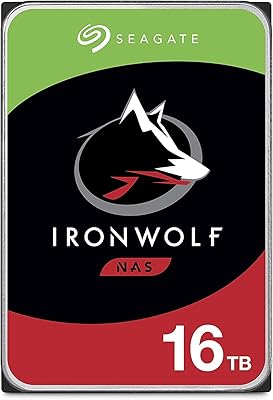
85%
88%
Performance
91%
Reliability
82%
Ease of Installation
86%
Data Transfer Speed
65%
Power Consumption
More
Seagate IronWolf 16TB NAS Hard Drive
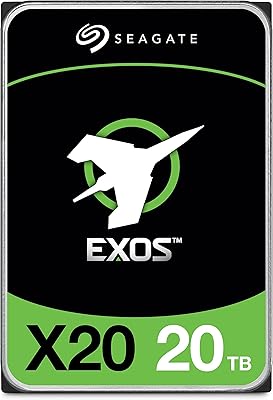
80%
91%
RAID Compatibility
88%
NAS Enclosure Compatibility
83%
Sustained Read/Write Performance
74%
Long-Term Reliability
86%
Noise & Vibration
More
Seagate BarraCuda 4TB Internal Hard Drive
87%
86%
Performance
90%
Reliability
93%
Setup & Installation
95%
Storage Capacity
72%
Data Transfer Speed
More
Seagate Exos 7E10 4TB Internal Hard Drive
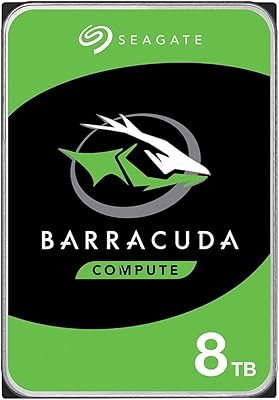
75%
83%
Sustained Reliability
81%
Read/Write Performance
78%
Value for Money
89%
NAS Compatibility
61%
Vibration & Noise
More
Seagate BarraCuda ST8000DM004 8TB Internal Hard Drive
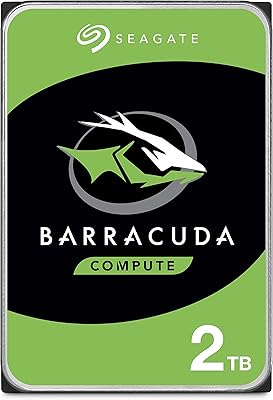
73%
93%
Storage Capacity Value
67%
Reliability & Longevity
61%
Read & Write Performance
89%
Installation & Compatibility
63%
Noise & Vibration
More
Seagate BarraCuda 2TB Internal Hard Drive
79%
91%
Value for Money
74%
Transfer Speed
77%
Reliability & Longevity
93%
Installation Ease
79%
Noise Level
More
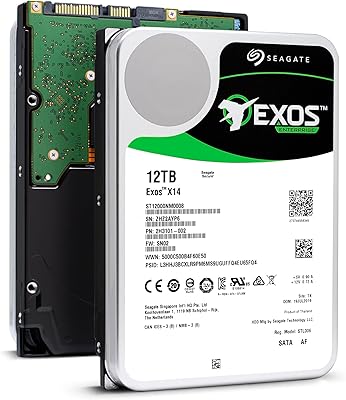
Seagate Exos X14 12TB Hard Drive
88%
91%
Performance
94%
Reliability & Durability
88%
Value for Money
89%
Energy Efficiency
92%
Build Quality
More

FAQ

Yes, the 3.5-inch SATA form factor is directly compatible with multi-bay Synology and QNAP enclosures. Exos-series drives are widely used in NAS builds because CMR recording handles RAID rebuild operations far better than SMR alternatives. It is worth checking your enclosure manufacturer's official compatibility list, though in practice most modern NAS systems recognize it without issue.

This is one of the most common points of confusion with internal hard drives on Windows. Unlike USB drives, internal drives do not auto-initialize — you need to open Disk Management (right-click the Start menu to find it), initialize the disk, create a new volume, format it, and assign a drive letter. Once those steps are complete, the drive will appear normally in File Explorer.

CMR stands for Conventional Magnetic Recording, which writes data to non-overlapping tracks on the disk platter. The alternative, SMR (Shingled Magnetic Recording), layers tracks to squeeze in more data but has to rewrite surrounding tracks whenever data is updated — causing painful slowdowns during RAID rebuilds. For any NAS RAID array, CMR is the more predictable and dependable choice, and it is a meaningful reason to pick this drive over cheaper SMR options at the same capacity.

Honestly, it is noticeably louder than consumer NAS alternatives like the Seagate IronWolf or WD Red Plus, which are specifically tuned for quieter acoustic output. Enterprise 7200 RPM drives generate more noise during both spin-up and active seeking. If your setup is in a closet, basement, or dedicated rack room, this is unlikely to bother you. In an open home office or bedroom, you will hear it — plan accordingly.

There is a real but manageable risk involved. A meaningful number of buyers receive units in essentially like-new condition with zero functional issues. That said, a smaller portion of refurbished drives arrive dead on arrival or fail sooner than expected, and you have no visibility into the drive's prior workload history. The smart approach is to run a full surface scan using a tool like CrystalDiskInfo or Seagate's SeaTools immediately after setup, and never treat any single drive — refurbished or new — as a substitute for a proper backup.

Yes, SATA 6Gb/s is fully backward compatible with SATA II (3Gb/s) and SATA I (1.5Gb/s) ports. You will not hit the theoretical ceiling of the faster interface, but at 16TB the mechanical platter speed is the real bottleneck anyway — the SATA interface will not be what limits your throughput in normal use.

Typically no — refurbished drives like this one usually ship bare, without accessories such as mounting screws, drive sleds, or SATA data cables. Check what your enclosure or server chassis includes, and pick up any additional hardware separately if needed before you start the installation.

Download CrystalDiskInfo on Windows or run Seagate's own SeaTools utility to pull the drive's S.M.A.R.T. data right after setup. The most important values to review are the reallocated sector count, pending sector count, and uncorrectable sector errors — elevated numbers on any of those suggest prior damage or wear. Running a short diagnostic test gives you a much clearer picture of what you received before you start storing anything important on it.

Warranty coverage on refurbished units varies by seller and is typically much shorter than the five-year guarantee Seagate provides on new Exos drives sold through authorized channels. Read the seller's terms carefully before purchasing, and factor the shorter coverage window into your decision — especially if you plan to use this in a role where downtime or data loss would be costly.

The Seagate Exos X18 16TB Internal Hard Drive was originally engineered for hyperscale data center environments, giving it a workload rating of 550TB per year that exceeds what either the IronWolf Pro or WD Gold are designed for. On raw endurance specs, the Exos wins. However, the refurbished status changes the equation — you are trading a full factory warranty and quieter acoustics for a meaningfully lower cost per terabyte. If warranty coverage and noise levels are priorities, the IronWolf Pro or WD Gold bought new are the safer bets; if cost-per-terabyte and workload headroom matter more, the Exos refurbished is hard to beat.

Where to Buy